

Subtotal: £33.50
Waiting for cancer test results like ca 15 3 can be nerve-wracking and confusing. You might find yourself searching for answers and wondering what those numbers really mean.
This guide is here to demystify the ca 15 3 test. We'll explain how it works, what your results can tell you, and how this marker is used in cancer care.
You'll find out what ca 15 3 is, how healthcare teams interpret it, what can influence your levels, and the latest advances in monitoring and management.
By the end, you'll feel more confident understanding your results and ready to have clearer conversations with your healthcare team.
Trying to make sense of your ca 15 3 results? You’re not alone. This marker can seem mysterious, but when you understand its science, things become much clearer.
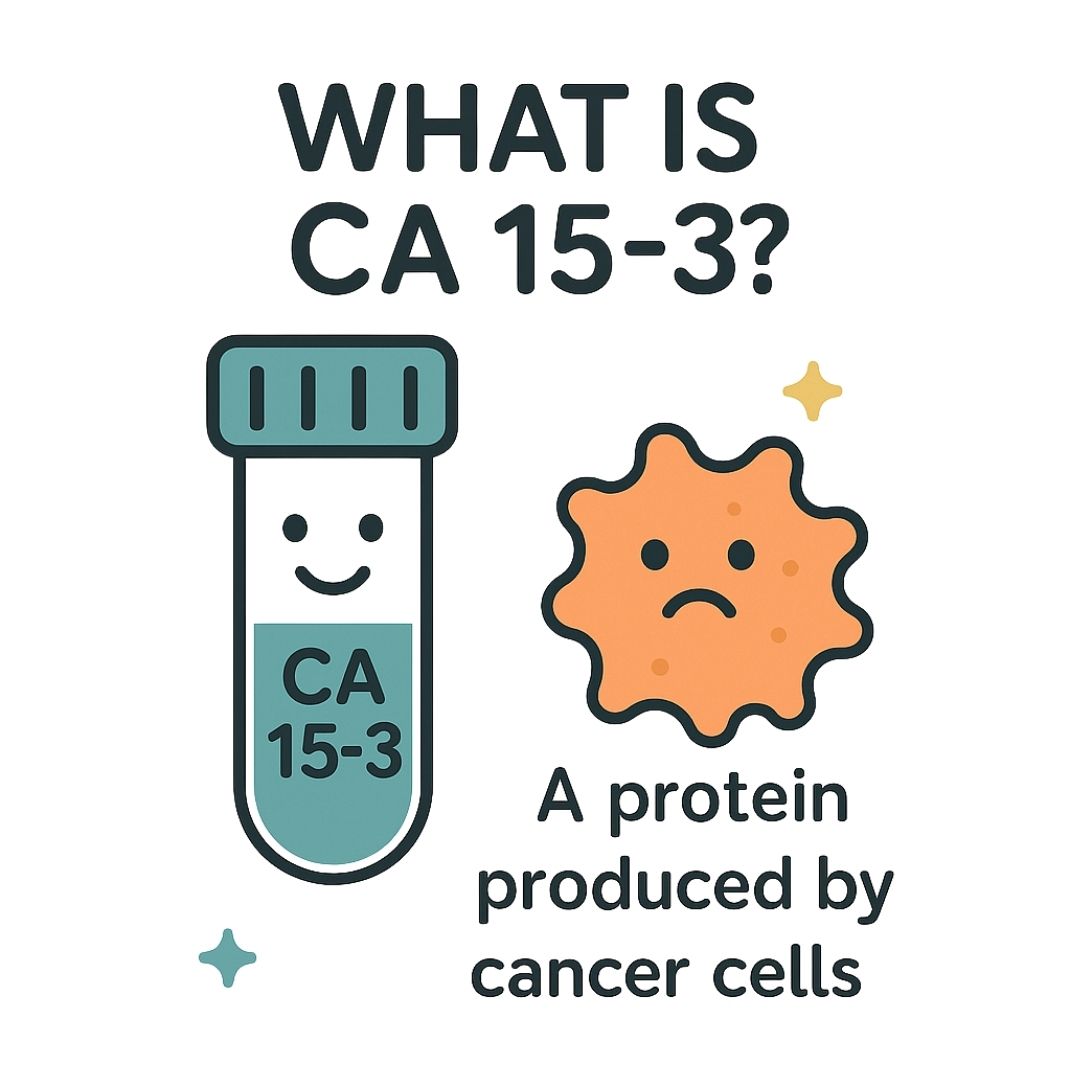
Let’s start with the basics. CA 15-3 is a tumour marker, which means it’s a substance found in higher amounts in the blood when certain cancers are present. Specifically, ca 15 3 is an epitope (a tiny recognisable part) of the MUC1 glycoprotein. MUC1 is a protein that sits on the surface of many normal epithelial cells, but in cancer, especially breast cancer, things change.
In healthy cells, MUC1 helps protect and lubricate the cell surface. However, in cancerous cells, especially those in the breast, the structure of MUC1 can become abnormal and overproduced. This leads to fragments, including ca 15 3, being shed into the bloodstream. This is why ca 15 3 is often used to monitor breast cancer.
But here’s something important: not every breast cancer produces high levels of ca 15 3. Some tumours don’t shed this marker at all, so a normal result doesn’t always mean you’re in the clear. On the other hand, the marker tends to be much higher in metastatic breast cancer (cancer that has spread), compared to early-stage disease. For example, studies have shown that patients with metastases are far more likely to have ca 15 3 levels above the standard reference point.
It’s also useful to know how ca 15 3 compares with other markers. Here’s a quick table for clarity:
| Marker | Main Use | Sensitivity for Breast Cancer | Also Raised In |
|---|---|---|---|
| CA 15-3 | Breast cancer monitoring | Moderate (especially late) | Liver, lung, ovarian cancers |
| CA 27.29 | Breast cancer monitoring | Similar to CA 15-3 | Other adenocarcinomas |
| CEA | Multiple cancers | Lower for breast cancer | Colon, lung, pancreatic, etc. |
Table: Comparison of common tumour markers.
If you want to dig deeper into the role of ca 15 3 and its connection to breast cancer, check out these breast cancer awareness insights for a broader context.
So, how do doctors actually measure ca 15 3? It’s pretty straightforward. A blood sample is taken, usually from a vein in your arm (a process called venipuncture). The sample is then sent to a lab, where specialised assay kits are used to detect and measure the amount of ca 15 3 in your serum.
Most labs use highly standardised methods, but there can still be slight differences depending on the equipment and kits used. That’s why it’s best to have your ca 15 3 levels checked at the same lab each time, if possible, to keep things consistent.
The typical reference range for ca 15 3 is less than 30 units per millilitre (U/mL), but this can vary slightly from one lab to another. It’s also important to know that ca 15 3 might be measured on its own or as part of a broader test panel. Sometimes, your doctor will request other markers like CEA or CA 125 alongside ca 15 3 to get a more complete picture.
Understanding these basics makes it easier to interpret your results and have informed discussions with your care team. The science behind ca 15 3 isn’t just about numbers—it’s about what those numbers can tell you about your health.
Waiting for ca 15 3 results can feel like holding your breath. What do those numbers really mean for you? Let’s break down how to interpret ca 15 3 results, so you can feel more confident and informed when you get your test report.
You might wonder, what’s a “normal” ca 15 3 level? In most labs, a ca 15 3 value below 30 U/mL is considered within the standard reference range. However, each lab may have slight differences in their cut-offs, so it’s always worth checking your own report or asking your healthcare team for specifics.
It’s important to remember that ca 15 3 results aren’t just about a single number. Your baseline level—what your ca 15 3 was before or early in your diagnosis—matters. Doctors also look at the “velocity,” or how quickly your ca 15 3 changes over time. For example, a study found that a velocity greater than 2.5 U/mL per year could predict cancer recurrence, even if your ca 15 3 isn’t technically “high” yet.
Here’s a quick summary:
| Range (U/mL) | Interpretation | Considerations |
|---|---|---|
| < 30 | Normal | Most healthy, early-stage |
| 30-50 | Mild elevation | Could be benign or early cancer |
| > 50 | High | Often linked to advanced cancer |
So, if your ca 15 3 is creeping up, but still under 30, your doctor will likely watch the trend rather than react to a single result.
Seeing a high ca 15 3 level on your results can be alarming. What could cause this? The most common reason is advanced or metastatic breast cancer, where ca 15 3 is often elevated due to increased tumour activity. But it’s not the only reason.
Other cancers can also raise ca 15 3, including lung, ovarian, liver, colon, pancreatic, and endometrial cancers. Sometimes, even benign conditions can result in a higher ca 15 3—think chronic hepatitis, liver cirrhosis, benign breast disease, endometriosis, pregnancy, lactation, or autoimmune diseases.
Context is everything. Your ca 15 3 must be interpreted alongside your medical history, imaging, and other test results. For instance, a retrospective study found that 62% of patients with metastatic breast cancer had ca 15 3 above 30 U/mL. If your ca 15 3 is rising fast, it could signal recurrence or progression. Some research, like the findings in CA 15-3 Predicts Response and Recurrence in Locally Advanced Breast Cancer, shows this marker can even predict relapse before symptoms appear.
Quick list of possible causes for high ca 15 3:
Always ask your doctor what’s driving your ca 15 3, since a high number is just one piece of the puzzle.
If your ca 15 3 is low or “normal,” you might feel relieved. But what does this actually mean? Early-stage breast cancer often doesn’t push ca 15 3 above the normal range, so a low result doesn’t guarantee you’re cancer-free. Some breast cancers simply don’t produce much ca 15 3 at all.
It’s also key to look at the pattern over time. A single low ca 15 3 result is less meaningful than a series of measurements. Your team will track ca 15 3 trends to spot any subtle upward movement, which could suggest recurrence or treatment resistance.
Here’s what normal or low ca 15 3 might indicate:
Remember, it’s the story your ca 15 3 tells over time that counts, not just one “snapshot.”
Interpreting ca 15 3 isn’t always straightforward. False positives can occur when benign conditions, like pregnancy or liver disease, cause a temporary rise. On the flip side, false negatives may happen if your tumour doesn’t produce ca 15 3 or if you’re in the early stages of disease.
There’s also a phenomenon where ca 15 3 might spike shortly after you start treatment—usually within the first four to six weeks—before it settles down. This can be confusing, so it’s best not to panic over one unexpected result.
Doctors never rely on ca 15 3 alone. Instead, they use it as part of a bigger diagnostic picture, combining it with imaging, physical exams, and other tumour markers. Your healthcare team will help put your ca 15 3 result in context, guiding you through what it means for your own cancer journey.
Feeling a bit lost about how ca 15 3 fits into your cancer care journey? You are not alone. This marker is more than just a number on a report. ca 15 3 is a vital tool for monitoring, prognosis, and even guiding treatment decisions. Let us break down how it is used in real life, what the numbers mean for you, and where it fits alongside other tests.
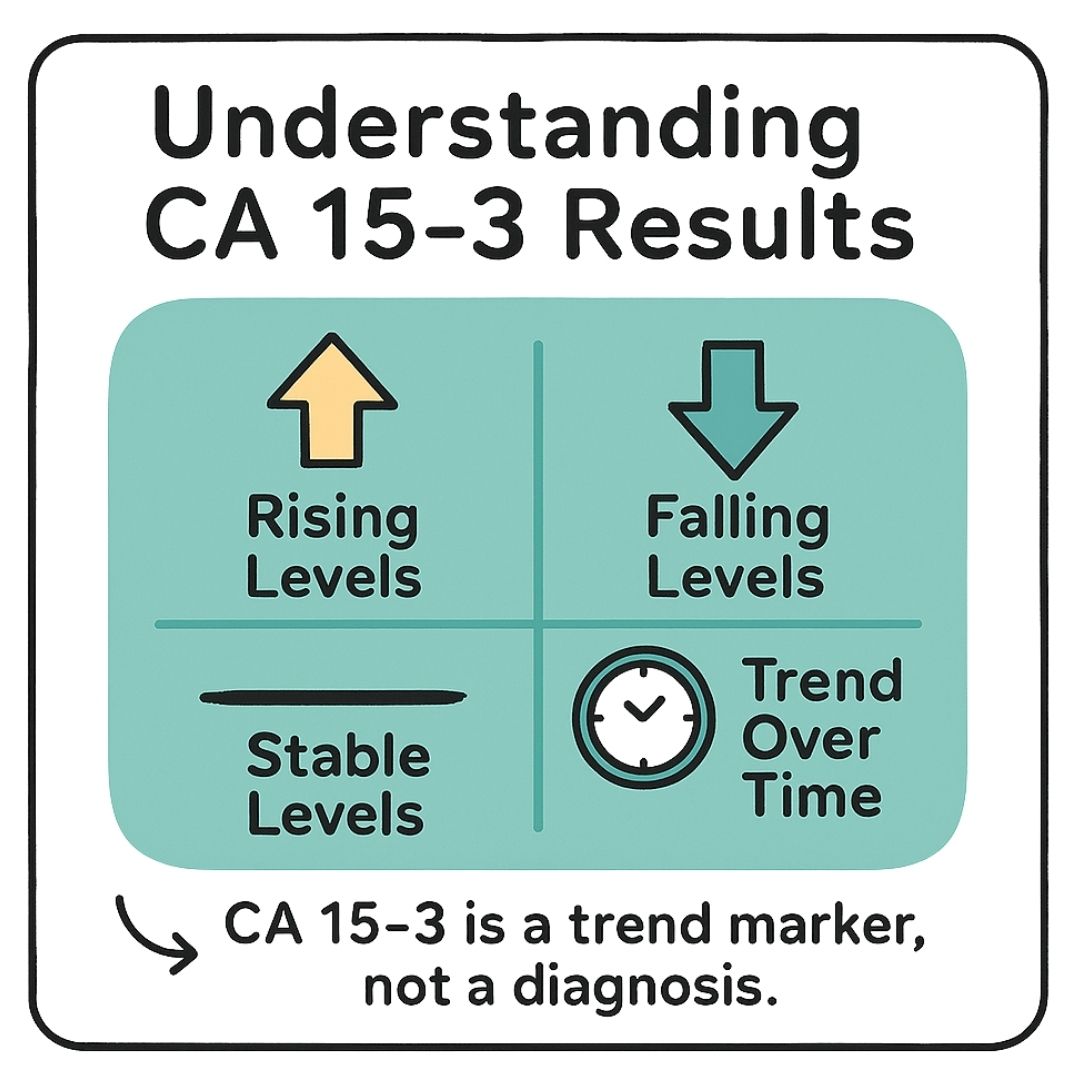
Have you ever wondered how doctors know if your therapy is working? For many people with metastatic breast cancer, serial ca 15 3 measurements offer valuable clues. When treatment is effective, ca 15 3 levels often decrease over time. If the marker stays the same or rises, it could mean the cancer is not responding as hoped or might be progressing.
Typically, your oncologist will order ca 15 3 tests at regular intervals. They will look for trends, not just single results. A steady drop in ca 15 3 can be reassuring, while a sudden jump may prompt further scans or a change in treatment approach.
Here is a quick summary:
| Scenario | What ca 15 3 May Indicate |
|---|---|
| Falling levels | Response to treatment |
| Stable levels | Disease under control |
| Rising levels | Possible progression/recurrence |
Always remember, ca 15 3 is just one piece of the puzzle. Imaging and clinical exams are essential for a full picture.
After you finish breast cancer treatment, the question of recurrence can linger in your mind. This is where ca 15 3 sometimes steps in. Regular checks might help spot a recurrence before symptoms appear. In some studies, a rise in ca 15 3 has been noted months before scans confirm a relapse.
However, the use of ca 15 3 for routine surveillance is debated. While some experts find value in early detection, there is no strong evidence that it improves overall survival. For this reason, your care team will consider your individual risk and preferences before recommending ongoing ca 15 3 monitoring.
If your ca 15 3 begins to climb, your doctor will look at the rate of change and combine this with your history and other results. This helps avoid unnecessary worry from false alarms.
Did you know your ca 15 3 level can sometimes predict the road ahead? High ca 15 3 levels before surgery, or a persistent elevation after surgery, often signal a higher risk of recurrence or poorer outcomes. Recent research highlights the importance of tracking ca 15 3 over time, especially during follow-up.
For example, a study on the prognostic value of ca 15 3 during breast cancer follow-up found that sustained elevation could indicate a greater chance of disease coming back. Your oncologist might use this information to tailor your follow-up plan or discuss additional treatments.
Still, it is important to remember that not every patient with high ca 15 3 will have a poor prognosis. Your results must be viewed in context, alongside other tumour markers and clinical findings.
Although ca 15 3 is best known for its role in breast cancer, it can rise in other cancers too. Elevated levels have been reported in ovarian, lung, colon, liver, endometrial, and pancreatic cancers. Sometimes, ca 15 3 helps monitor disease or treatment response in these conditions, though it is not specific enough for diagnosis.
Non-cancerous conditions, such as chronic liver disease or benign breast issues, can also push ca 15 3 higher. That is why your healthcare team will always interpret ca 15 3 results with caution, taking your full medical history into account.
To get the clearest picture, doctors often combine ca 15 3 with other tests. Common partners include CEA (carcinoembryonic antigen), CA 125, and CA 19-9. Using a panel of markers can improve accuracy, especially when tracking metastases or distinguishing between recurrence and benign changes.
For example, if both ca 15 3 and CEA are rising, it raises the likelihood that cancer activity is present. When used together with imaging and genetic testing, ca 15 3 becomes a powerful tool in personalised cancer care.
Ultimately, ca 15 3 is most useful as part of a wider strategy, helping your team make informed decisions at every step.
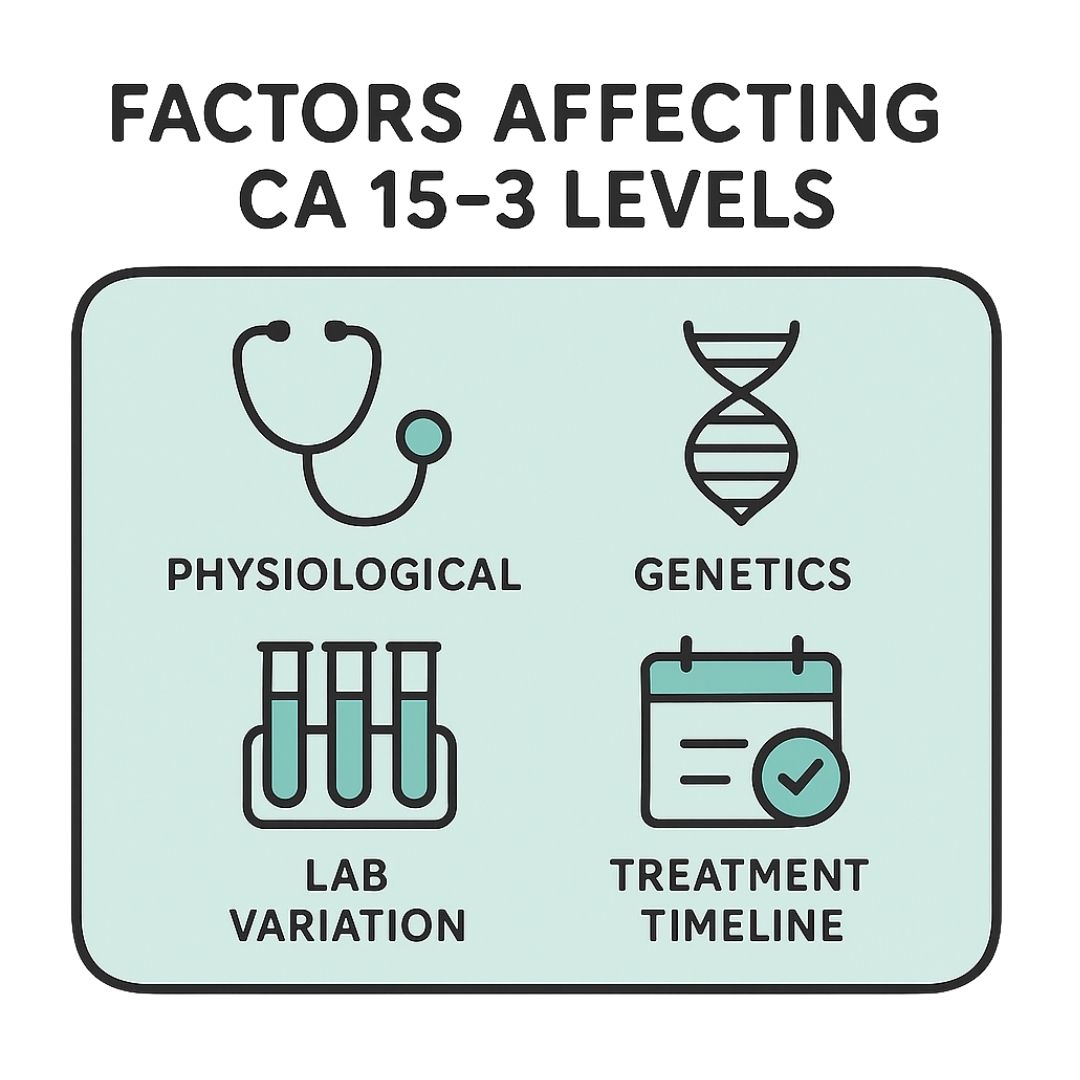
When you see your ca 15 3 numbers, you might wonder what’s really behind those results. It’s not always just about cancer. Many different factors, from your health history to the type of test you have, can influence your ca 15 3 levels.
Here’s a quick look at what can affect ca 15 3:
| Factor | Examples |
|---|---|
| Physiological/Benign | Pregnancy, lactation, benign breast disease |
| Malignant | Breast, lung, ovarian, liver, colon, pancreatic |
| Technical/Laboratory | Different assay kits, lab standards |
| Patient-Specific | Age, genetics, menopausal status, comorbidities |
| Recent Treatment/Procedures | Surgery, chemotherapy, radiotherapy |
Did you know that everyday life events can change your ca 15 3 levels? For example, pregnancy and breastfeeding often lead to a mild increase. Benign breast disease and conditions like endometriosis or autoimmune disorders can also nudge your ca 15 3 upwards.
Chronic liver problems, such as hepatitis or cirrhosis, sometimes cause elevated ca 15 3 too. Even infections like tuberculosis or sarcoidosis might play a role. So, a raised ca 15 3 does not always mean bad news.
While ca 15 3 is most closely linked to breast cancer, several other cancers can also push levels higher. These include ovarian, liver, colon, endometrial, and pancreatic cancers. Among these, lung cancer is particularly important, as it can also lead to significant ca 15 3 elevation. If you want to learn more about how lung cancer can affect tumour markers, see Understanding lung cancer spread.
It’s important to remember that, although ca 15 3 is a useful clue, it’s rarely used alone to diagnose these other cancers.
Have you ever wondered why your ca 15 3 results might change from one lab to another? Different laboratories may use different assay kits or measurement techniques. This can cause small differences in your results.
To avoid confusion, it’s best to stick with the same lab and method when tracking ca 15 3 over time. Consistency helps your healthcare team spot real changes, not just technical noise.
Everyone’s body is a little different, and that includes how we produce and clear ca 15 3. Your age, menopausal status, and any other health issues can influence your levels naturally.
Genetic differences, especially those that affect MUC1 expression, might also impact ca 15 3. This is why your doctor looks at your whole health picture, not just a single number.
Starting a new treatment or recovering from surgery? These moments can temporarily change your ca 15 3 levels. For instance, therapy can cause a short-lived rise in ca 15 3 during the first few weeks.
That’s why trends over time matter more than a single reading. If you see a sudden jump or dip, your medical team will consider recent procedures, medications, and overall progress before drawing any conclusions.
The world of cancer monitoring is changing fast, and if you have been keeping an eye on ca 15 3, you are probably wondering what the future holds. From smarter technology to more personalised care, the next wave of breakthroughs is all about making results clearer and more useful for you. Let us dive into the latest advances and where ca 15 3 is headed.
Right now, ca 15 3 tests are getting a high-tech makeover. Labs are using new assays that offer better sensitivity and specificity, reducing the risk of false alarms. Liquid biopsy is a game changer, because it can spot tumour DNA and proteins like ca 15 3 with just a tiny blood sample.
Multi-marker panels, combining ca 15 3 with other markers, help paint a more complete picture for your care team. Artificial intelligence is also stepping in, analysing trends and patterns in ca 15 3 levels to spot changes earlier than ever. If you are curious about what is coming next, check out Cancer care research advancements for a closer look at the latest breakthroughs.
Imagine having your ca 15 3 results tailored just for you. That is the direction cancer care is heading. By combining ca 15 3 data with your unique genetic and protein profiles, doctors can create a surveillance and treatment plan that fits your needs, not just the average patient.
This personalised approach means your care can be more precise and proactive. For example, if your genes suggest a higher risk of recurrence, regular ca 15 3 checks can be timed to catch any changes early. ca 15 3 is becoming a key player in personalised medicine, helping you and your team stay one step ahead.
Even with all this progress, ca 15 3 still has its challenges. Sensitivity and specificity are better, but not perfect. That means ca 15 3 alone cannot always confirm or rule out cancer, especially in early stages or for tumours that do not release much marker.
The need for large, randomised trials is pressing. Experts want to know if catching changes in ca 15 3 sooner actually leads to longer survival or just more tests. Until these questions are answered, ca 15 3 remains a helpful tool, but not the only one you should rely on.
Guidelines for using ca 15 3 are shifting as new research comes out. In some cases, doctors are moving away from routine ca 15 3 checks, while in others, they are using it alongside imaging and other markers for a more complete view.
What will not change is the importance of teamwork. Interpreting ca 15 3 results takes input from oncologists, pathologists, and sometimes genetic counsellors. As cancer management becomes more multidisciplinary, ca 15 3 will continue to find its place in the bigger picture, helping you make informed decisions about your health.
Wondering what the ca 15 3 test involves or how your results might impact your care? Let’s answer the most common questions people have about this important marker.
What is the CA 15-3 test used for?
The ca 15 3 test measures a protein in your blood that can be elevated with certain cancers, especially breast cancer. Doctors use it mainly for monitoring how well treatment is working or to check for signs of recurrence.
Can CA 15-3 be used to screen for breast cancer?
No, ca 15 3 is not recommended for routine breast cancer screening. It is not sensitive or specific enough to detect early cancer in people without symptoms. Mammograms and clinical exams remain the gold standard for screening.
What does an elevated CA 15-3 level mean for me?
A raised ca 15 3 result may indicate cancer activity, but it is not proof of cancer on its own. Levels can be higher due to other conditions like liver disease, benign breast issues, or even pregnancy. If your levels are up, your healthcare team will consider your full medical picture. For more on how ca 15 3 relates to prognosis, you might find this Prognostic Impact of CA 15-3 in Early Breast Cancer study helpful.
How often should CA 15-3 be tested during and after treatment?
Testing frequency depends on your situation. If you are undergoing treatment for breast cancer, your doctor may check ca 15 3 every few months. After treatment, tests might be done less often or only if there is a concern about recurrence.
Are there risks or side effects to the test?
The ca 15 3 test is a simple blood draw, so risks are minimal. You may feel a pinch or have a small bruise. There are no side effects from measuring this marker itself.
Can lifestyle or diet influence CA 15-3 levels?
Usual lifestyle choices or diet do not directly affect ca 15 3 results. However, some benign health conditions can cause mild increases, so it is always best to discuss your results in context.
How should I discuss CA 15-3 results with my healthcare team?
Bring your questions and concerns to your care team. Ask what your ca 15 3 numbers mean for your specific case, and how they fit with other findings like scans or symptoms.
Where can I find support and reliable information about cancer markers?
Reliable information and support are essential. For practical guidance on navigating a breast cancer diagnosis and understanding tests like ca 15 3, visit Tips after breast cancer diagnosis.
So, after learning all about CA 15 3 and how it fits into cancer care, you might be wondering what your next step should be—especially if you feel a bit overwhelmed by all this new information. You’re not alone in this. If you’re looking for practical advice, emotional support, or just want to connect with others who truly understand what you’re experiencing, I’d encourage you to check out our dedicated page for people navigating a cancer diagnosis. Here, you’ll find trusted resources, tips, and a genuine sense of community to help you move forward: I Have Cancer
We strongly advise you to talk with a health care professional about specific medical conditions and treatments.
The information on our site is meant to be helpful and educational but is not a substitute for medical advice.
Taking You Through My Life On A Day-To-Day Basis As A 19 Year Old Cancer Patient, During The Height Of The Coronavirus Pandemic.
Feeling anxious about your mammogram? This clear, step-by-step guide walks you through preparation, the procedure, and how to understand your results.
My name is Sabine Brannan. Born and raised in the Netherlands in the late sixties, I grew up in a family interwoven in the tradition of fabric trading, working on the markets of the Netherlands. Before starting as an entrepreneur, I worked for a bridal couture designer I designed bespoke wedding dresses when one of […]