When faced with a cancer diagnosis, choosing the right research centre can feel overwhelming, especially given the complexity of healthcare systems that vary from country to country. For instance, in the UK, the National Health Service (NHS) provides a structured system of cancer care that may simplify some choices, whereas in countries like the United States, patients often navigate a more fragmented system that requires careful selection and consideration of treatment centres.1
This article aims to support patients and families around the world by highlighting key factors to consider when choosing a cancer research centre, acknowledging that each healthcare system brings its own challenges and opportunities. No matter where you are, the goal is to empower you with the information you need to make an informed and confident choice that best supports your health and well-being.
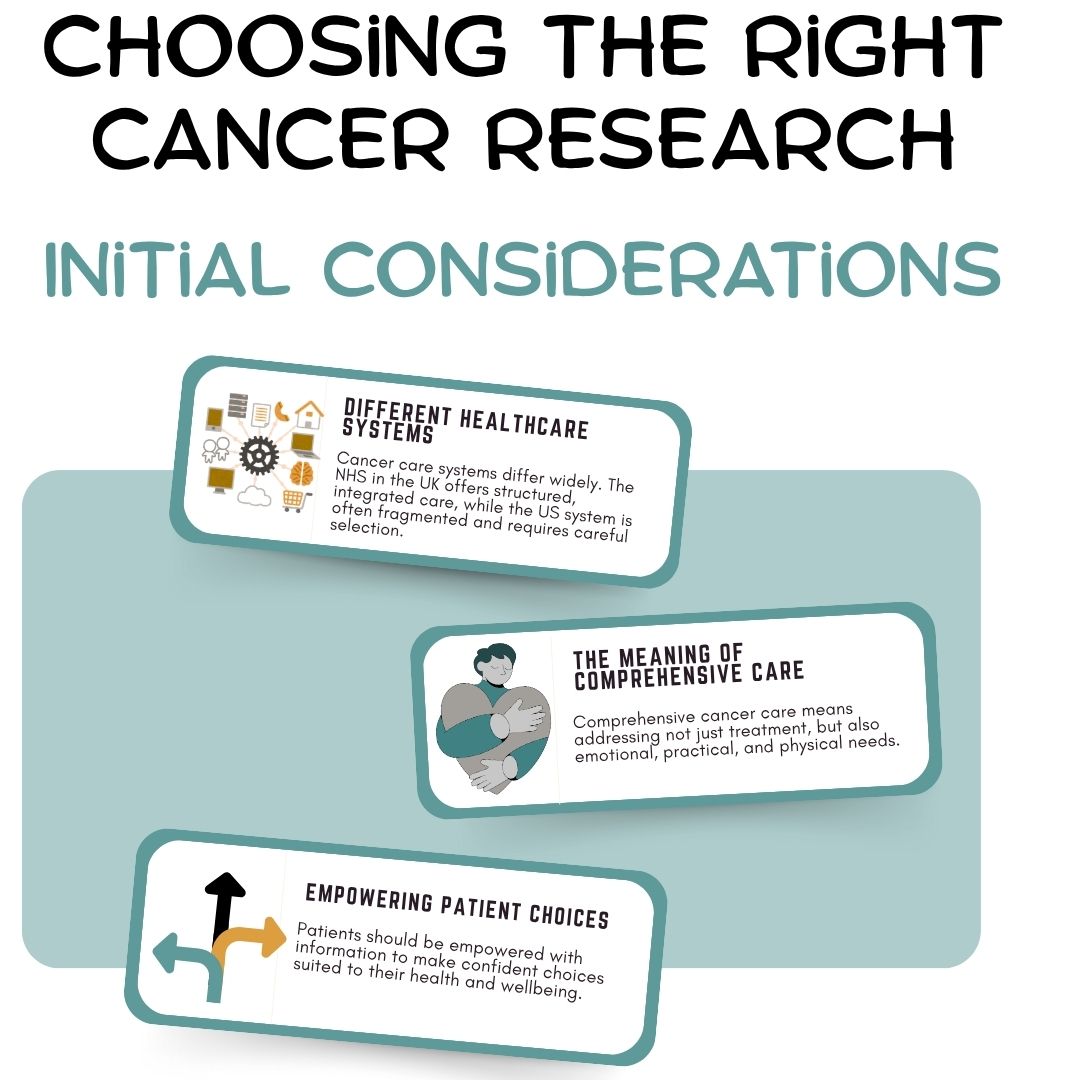
Comprehensive cancer care goes beyond treating the disease itself. It’s an integrated approach that looks after the whole person, addressing not just medical treatment but also the supportive, physical, and emotional needs of patients and their families.2
This approach acknowledges that a cancer diagnosis can affect many aspects of life: mental health, relationships, nutrition, and day-to-day living. By offering coordinated services under one umbrella, such as medical care, counselling, nutrition advice, pain management, and rehabilitation, comprehensive cancer care aims to ease the burden on patients and their loved ones.
Importantly, what “comprehensive care” looks like can vary depending on the healthcare system in place. In countries with public healthcare systems like the NHS in the UK, patients might experience a more structured, integrated model, where many services are coordinated within a single framework. In contrast, in countries like the US, patients may need to navigate multiple providers and insurance systems to access these services, making it even more critical to choose a centre that truly prioritises a holistic approach to cancer care.
A multidisciplinary care team is a group of medical experts who work collaboratively to address every aspect of a patient’s health.3 This team approach ensures that the patient receives comprehensive, well-coordinated care, reducing the stress of navigating complex medical systems alone.
Typically, a multidisciplinary team includes oncologists who oversee medical treatments, surgeons who manage surgical interventions, and nurses who provide day-to-day support and symptom management. Nutritionists help patients maintain strength and manage dietary challenges, while therapists, such as physiotherapists or occupational therapists, support recovery and improve quality of life. Social workers play a crucial role by helping patients navigate emotional, financial, and practical challenges, connecting them with community resources and support groups.
This collaborative approach fosters better communication between specialists and ensures that care plans are tailored to each patient’s unique needs, preferences, and values. Depending on the country’s healthcare system, these teams may be more or less integrated. For example, in the NHS in the UK, multidisciplinary teams often meet regularly to discuss patient cases and coordinate care, streamlining the process for patients. In countries like the US, where patients may see providers in different locations, the importance of choosing a centre that actively coordinates multidisciplinary care cannot be overstated.
No matter where you live, a well-functioning multidisciplinary team can make a significant difference in your cancer journey, ensuring that you’re treated as a whole person, not just a diagnosis.
Access to advanced treatments is a critical factor in choosing a cancer research centre.1 These state-of-the-art therapies include targeted therapies, immunotherapies, and precision medicine that tailor treatment to a patient’s genetic profile. Access, however, can vary by country and healthcare system; for example, the NHS in the UK may require referrals to specialised centres, while in the US, availability may depend on insurance coverage and the resources of the chosen facility.
Equally important is a centre’s commitment to cutting-edge research. Leading centres integrate innovation directly into patient care by participating in clinical trials, developing new therapies, and bridging the gap between laboratory science and bedside treatment. Clinical trials not only give patients early access to promising options but also contribute to the progress of cancer research worldwide.
By combining access to the latest approved therapies with active involvement in research and innovation, a strong cancer centre ensures patients benefit from both today’s most effective treatments and tomorrow’s breakthroughs.
Cancer is not a single disease but a collection of over 100 different types, each with its own behaviour, treatment options, and prognosis. That’s why it’s important to choose a cancer centre that specialises in treating your specific type of cancer.
Specialised centres have teams of experts who understand the unique characteristics and challenges of your particular cancer. This includes oncologists, surgeons, and other specialists who focus on the latest treatments and research for your type of cancer, ensuring that you receive the most effective and up-to-date care possible.
For example, a centre with a breast cancer team might have dedicated surgeons, medical oncologists, radiologists, and support staff who focus exclusively on breast cancer, allowing them to stay at the forefront of new therapies and clinical trials. Similarly, a centre specialising in lung cancer would have expertise in immunotherapies, targeted treatments, and advanced imaging tailored to that cancer type.
This specialisation is often supported by participation in national or international research networks, giving patients access to innovative treatments that may not be available at more general hospitals.
The level of specialisation can vary depending on the healthcare system. In the UK, NHS cancer centres are often designated as specialist hubs for certain types of cancer, ensuring that patients have access to expertise and resources. In the US, comprehensive cancer centres accredited by organisations like the National Cancer Institute often have specialised departments for different cancer types.2
No matter where you are, choosing a centre with expertise in your specific cancer type ensures that your treatment plan is informed by the latest research and tailored to your individual needs, maximising your chances for the best possible outcome.
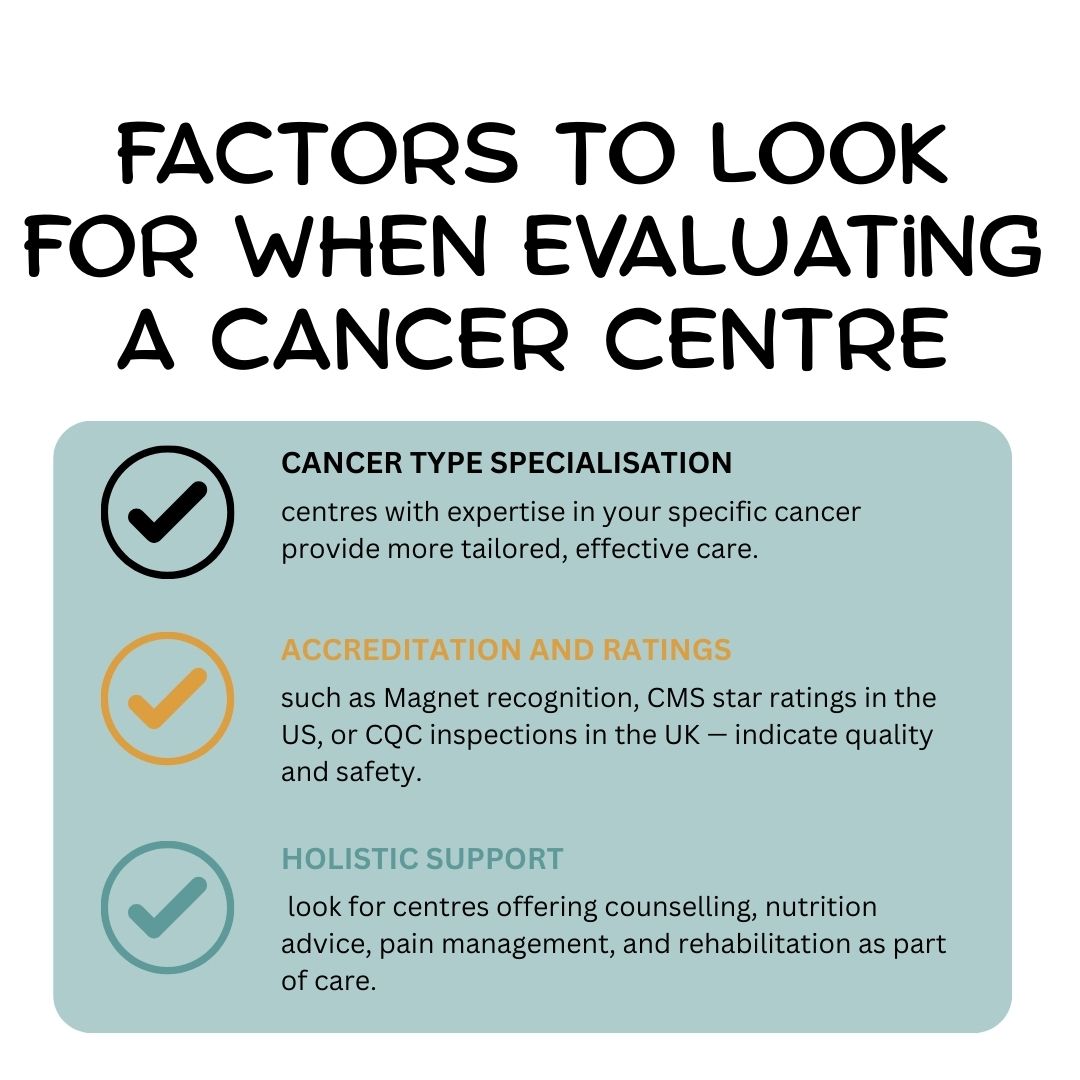
Accreditations and ratings can serve as important indicators of a cancer research centre’s commitment to high-quality care.1,4 These honours are awarded by respected independent organisations based on rigorous evaluations of patient care, treatment outcomes, and overall performance.
One such example is Magnet recognition, awarded by the American Nurses Credentialing Center (ANCC). Magnet status signifies excellence in nursing care, strong patient outcomes, and a commitment to ongoing improvement, a hallmark of patient-centred, supportive treatment.
In the United States, organisations like the Centers for Medicare & Medicaid Services (CMS) provide star ratings that reflect patient experiences and quality measures, helping patients make informed decisions about where to seek care. High ratings from CMS indicate strong performance in areas like timely treatment, effective communication, and patient safety.
While these specific accreditations may be more common in the US, similar quality indicators exist in other countries. In the UK, for example, NHS cancer centres are evaluated based on Care Quality Commission (CQC) inspections, which assess safety, effectiveness, and patient satisfaction. Other countries may have their own systems for assessing cancer centres, such as accreditation bodies or patient feedback mechanisms.
Regardless of where you live, looking for accreditations and high ratings can provide reassurance that the centre is dedicated to delivering outstanding patient care, investing in staff development, and continuously improving its services. Choosing an accredited and highly-rated centre helps ensure that you receive the best possible support and treatment during your cancer journey.
References
Edited by: Katheeja Imani
We strongly advise you to talk with a health care professional about specific medical conditions and treatments.
The information on our site is meant to be helpful and educational but is not a substitute for medical advice.
It’s probably one of the worst things for someone to be told: “You have cancer,”
This Article Highlights Some Common Chemo Side Effects With Tips On Overcoming And Coping With Issues Should They Arise.
Explore The Causes And Timeline Of Chemotherapy Hair Loss And Discover Many Tips and Strategies For Coping.