When facing a cancer diagnosis, patients often encounter an overwhelming number of tests, procedures, and medical terms. Among these, laboratory tests play a central role in understanding the disease, planning treatment, and monitoring progress. From biopsies to advanced genetic analysis, these tests provide critical insights that shape every aspect of cancer care.
Laboratory medicine, though largely behind the scenes, is the cornerstone of modern cancer treatment. It provides doctors with the information they need to make accurate diagnoses, determine the best treatment options, and predict patient outcomes. Understanding the role of these tests can help patients and caregivers feel more confident and informed about their treatment journey.
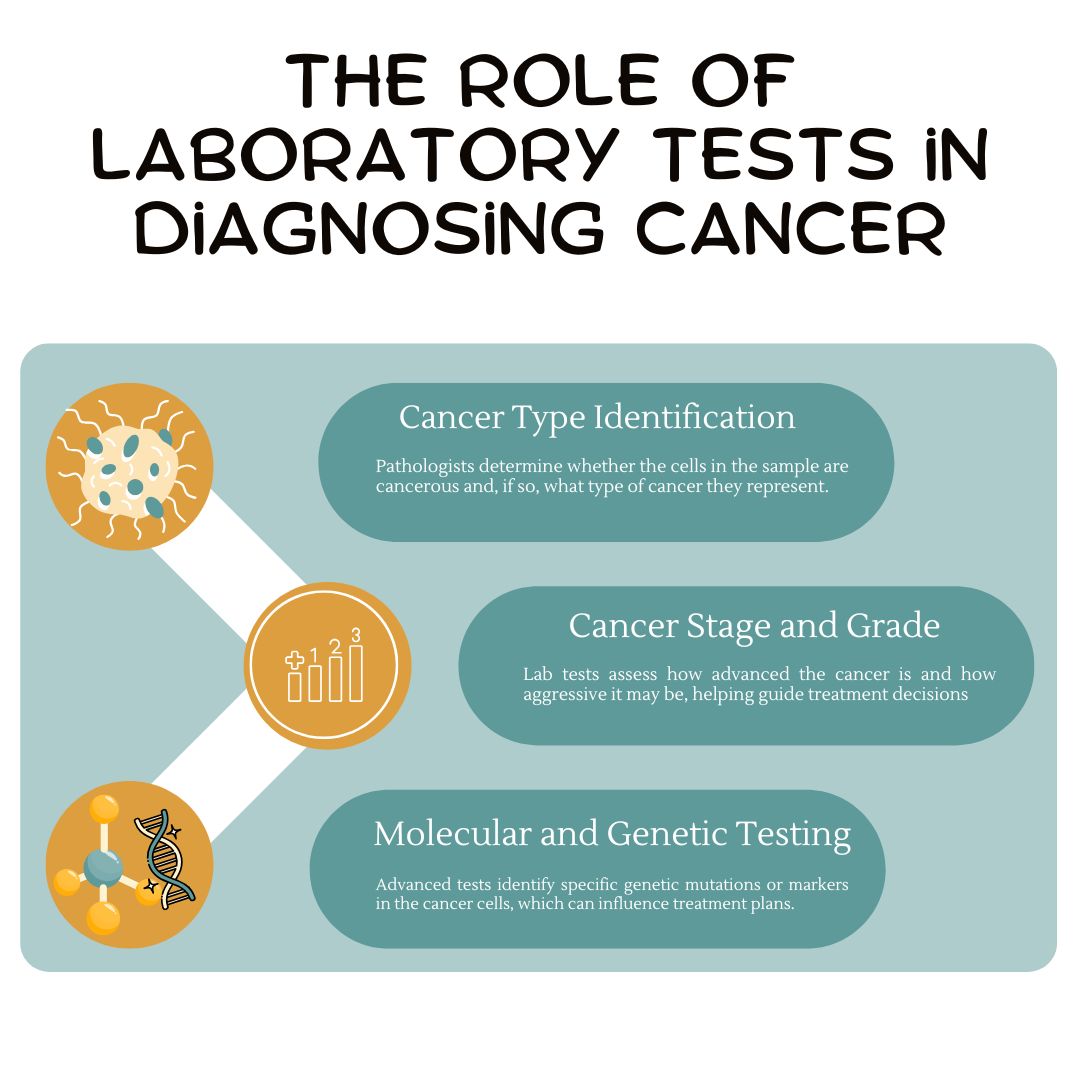
The cancer journey often begins with a biopsy—a small sample of tissue taken from the body to be examined for abnormalities. This sample undergoes a meticulous process in the lab, where pathologists study it under a microscope and use a variety of tests to determine whether cancer is present.
Key insights from these tests include:
Once a diagnosis is made, laboratory tests continue to play a vital role in guiding treatment. One of the most significant advancements in cancer care is the use of precision medicine, where treatments are tailored to the unique characteristics of a patient’s cancer.
Lab tests also play a role in estimating prognosis—the likely outcome of treatment. By analyzing specific markers in the blood or tissue, doctors can predict how aggressive the cancer may be and how likely a treatment is to succeed.
During treatment, laboratory tests continue to provide valuable information:
Cancer care is a team effort, with laboratory medicine playing a key role in the collaboration among pathologists, oncologists, surgeons, and radiologists. Lab test results are discussed in multidisciplinary meetings where experts from different fields work together to create a comprehensive care plan. This ensures that every aspect of a patient’s condition is considered, leading to more effective and personalized treatment.
Dr. Joya Pawade, a distinguished pathologist with nearly 30 years of experience in cancer diagnosis, recently delivered a talk emphasizing the critical role of laboratory medicine in cancer care. Dr. Pawade has spent her career helping patients understand the complexities of their diagnoses and the science behind their treatment plans.
In her discussion, Dr. Pawade highlighted key topics such as what happens after a biopsy, how genetic testing shapes treatment decisions, and how lab results influence prognosis. She also shared her perspective on the advancements in laboratory medicine, including how new technologies have drastically improved the speed and accuracy of cancer diagnosis and treatment.
Dr. Pawade’s passion for patient education shines through in her message:
“Understanding the role of laboratory tests can bring comfort and empowerment during a difficult time. My goal is to help patients and their loved ones feel informed and confident about their care.”
For anyone navigating a cancer journey, learning more about the science of lab tests and their role in treatment is an invaluable step toward empowerment and clarity. Dr. Pawade’s insights provide a deeper appreciation for the behind-the-scenes work that transforms lives every day.
To hear more about the role of laboratory medicine in cancer care, including Dr. Joya Pawade’s detailed explanations and advice for patients and caregivers, watch her full talk below.
We strongly advise you to talk with a health care professional about specific medical conditions and treatments.
The information on our site is meant to be helpful and educational but is not a substitute for medical advice.
It’s a common misconception that Plastic Surgeons only perform cosmetic procedures. Plastic surgery is actually an incredibly broad speciality, covering a wide range of conditions.
Help a cancer patient feel like themselves again. Learn how to donate hair: length rules, preparation steps, what happens next, and alternatives if you can't donate.
Ultimately You Have To Drive The Pace Of The Process, Ignore The Stigma Of Cancer And Stay Hugely Positive Keeping Strong For Those Around You And For Your Own Emotions And Sanity.