Being diagnosed with breast cancer at 41 years old was probably the worst day of my life. My world crashed in around me, and I immediately went into fight mode.
People that never had cancer but are close to you will want to offer very intrusively and often non-solicited advice or their own breast cancer tips. They believe it's well-meaning, but when I was diagnosed, my world crashed around me, and I only had enough bandwidth to deal with my doctors.
I had to be okay telling people that I didn't want their advice.
It's sad to say, but I had to be stern with many healthcare workers I came in contact with. To them, it's a job, and they don't think twice about it. They have lost the human factor completely. But, it's my life, and I take it seriously, so I needed to remind them that I wasn't there to joke or play around. It' was all business for me, and that's what I expected in return.
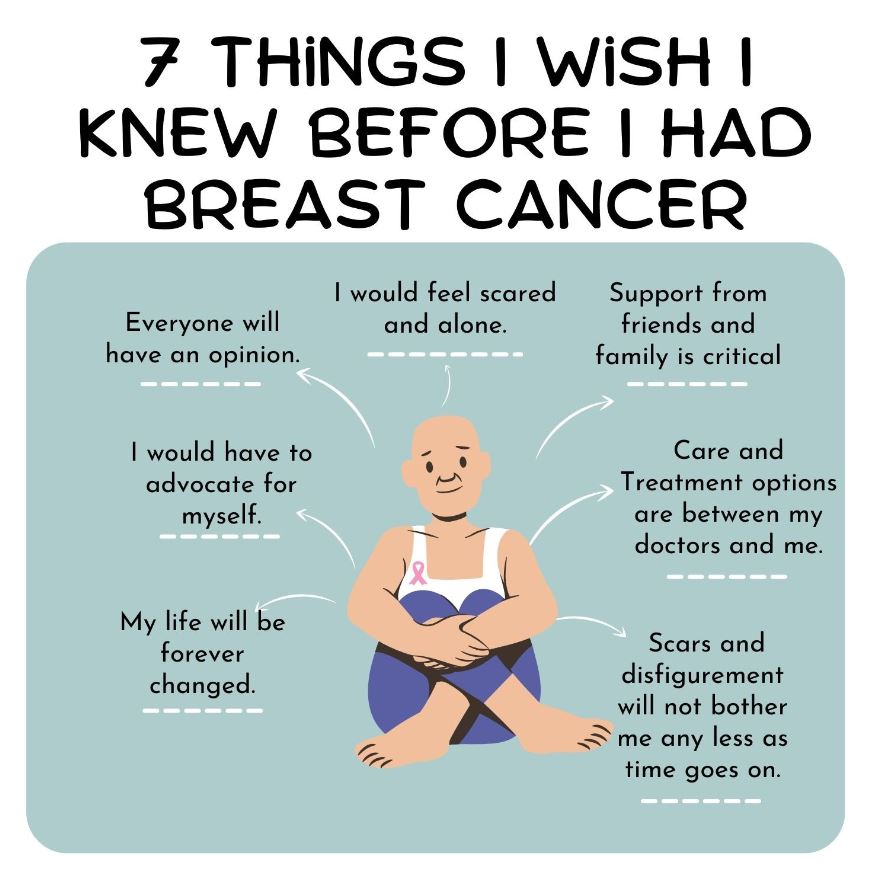
It changed in so many ways, and many things I will probably never talk about. For example, now I worry about all lumps, bumps, even if I know they are not cancer, clothes no longer fit the same, and I also worry about what my life will be like in 5 or 10 years.

This is normal; everyone I talked to felt this way. I had to develop and become a pro at my coping skills to get through the day.
I was probably one of the rare people that did not solicit much outside advice. I asked thoughtful questions to my doctors, who were well informed about all of my other medical issues, and then gave myself time to think and decide.
It's something I am still working on, and will most likely never get over. However, I am working with a plastic surgeon to get a more desirable outcome.
I would not have made it through breast cancer without them. They were my lifeline and kept me going every day! I've told them how much I appreciate them, but I often wonder if they know just how important they were to my survival.
I wanted to share what I learned along the way, so maybe it can help someone think about something they haven't before. Cancer is all-consuming, and I hope that, however, you decide to tackle it, that you will find what works best for you and have people that love you to help you!
[simple-author-box]
Here are some questions to ask your healthcare practitioner
*What stage is my cancer and what does that mean for my treatment options?
*What are my treatment options and what are the pros and cons of each?
*What is the expected outcome of each treatment option?
*How will the treatment affect my daily life and activities?
*What are the potential side effects of the treatment and how will they be managed?
*Is there a specialist or center that you would recommend for my care?
*Can you explain the surgical options and what they entail?
*How will my treatment plan be tailored to my specific needs and situation?
*How will follow-up care and monitoring be managed after treatment?
*Can you provide any resources or support groups for me and my family?
Below are some resources that we offer that are specific for breast cancer patients (just click on the resource and follow the link)
* Breast Cancer Guides
* Breast Cancer Freebies Directory
* Breast Cancer Gifts and Products To Help
We strongly advise you to talk with a health care professional about specific medical conditions and treatments.
The information on our site is meant to be helpful and educational but is not a substitute for medical advice.
Cancer Dehydration Is A Risk For People Undergoing Cancer Treatments, This Can Be Life-Threatening If Left Untreated. Find Out More From Cancer Care Parcel.
Gain Confidence In Yourself With Meditative Movements. Experience Healing And Empowerment Through The Mind-Body Connection.
For The Past Year Tanya Louise Has Been Having Treatment For Cancer And She Very Kindly Accepted Our Love Box To Review On Her Youtube Channel