Cancer Care Parcel Logo
Search
FAQ
Join
My Wishlist
GBP ^
Currency

No products in the basket.

Cancer Care Parcel Logo

No products in the basket.

For Everyone Touched By Cancer

How to Eat When Nothing Tastes Right During Cancer Treatment

Written by Dana Stonerock on 
12th June, 2025
Last revised by: Cancer Care Parcel
Updated: 12th November, 2025
Estimated Reading Time: 5 minutes

Changes in taste and smell are common during cancer treatment. Learn why they happen and how to maintain good nutrition, strength, and overall well-being.

The Importance of Nutrition During Cancer Treatment

Everyone’s cancer journey is unique, and each person will experience different challenges along the way. However, when it comes to nutrition and cancer, many people will face similar challenges. Proper nutrition is vital to maintain health and strength so that the body’s immune system can function properly, as well as help the body to heal and recover from treatment. 1Patients with cancer typically need more calories and key nutrients, such as protein, to prevent malnutrition and maintain the best quality of life.2

How Cancer Affects Eating and Nutrition

Eating can become a real struggle when something as simple as food no longer tastes or smells the way it used to. This can turn meals into an unpleasant experience, causing patients to eat less, which could lead to unintended weight loss.1
Understanding Dysgeusia: Taste and Smell Changes

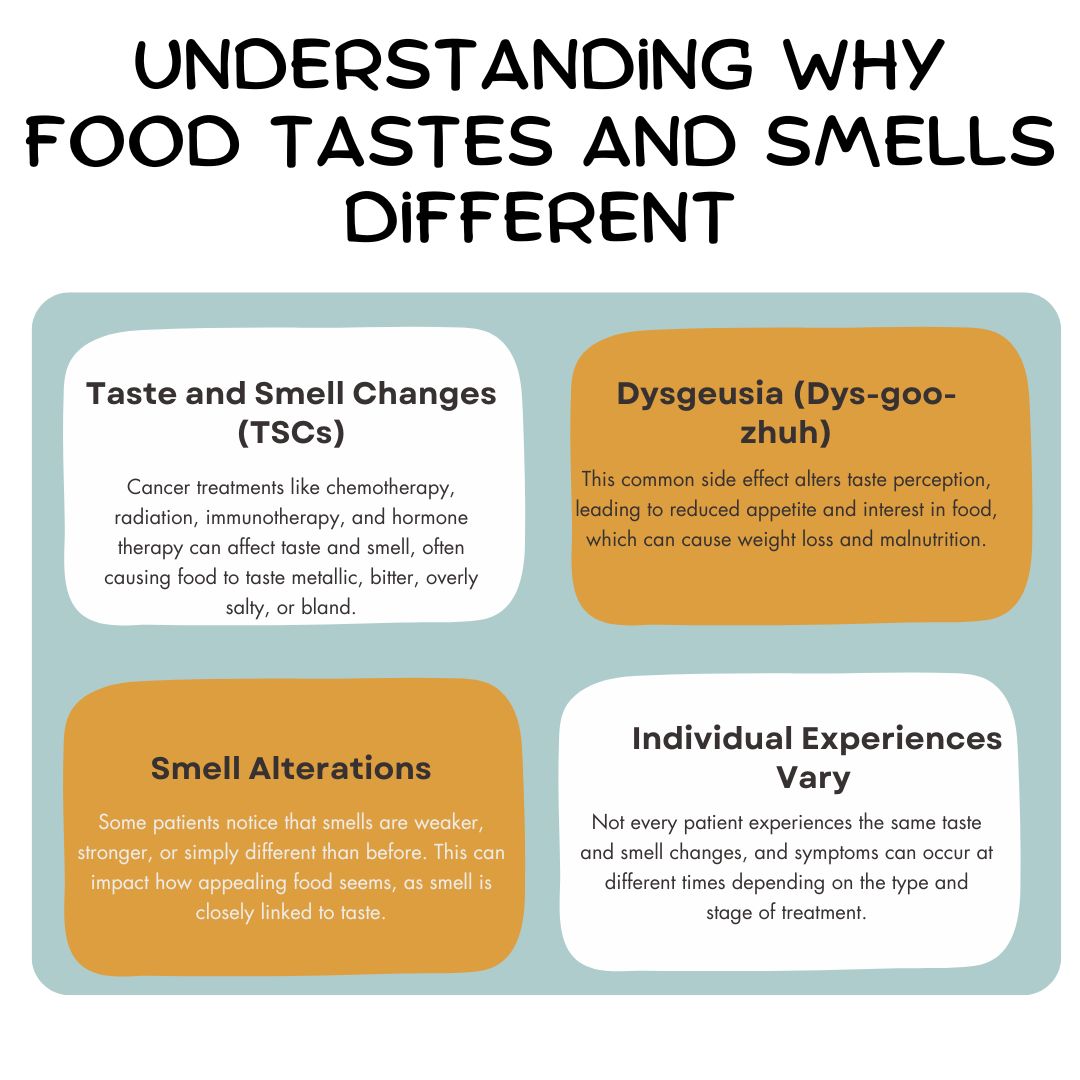
Understanding Why Food Tastes and  Smells Different

One common side effect of cancer treatment is dysgeusia, which refers to the impairment of taste and/or smell.3 Dysgeusia can be described as having a metallic, bitter, overly salty, or unpleasant taste. These changes can reduce appetite and interest in eating, leading to poor nutrition and weight loss. When it comes to changes in smell, some patients have reported that things don’t smell the way they used to, or the smell isn’t as strong.

How Treatment Type Influences Taste and Smell Changes

While there is a vast amount of research regarding the topic of cancer treatment and its side effects causing tastes to change, not every patient will experience it at the same time or have all of the common symptoms. It is important to consider the various types of treatment that patients are receiving, as this side effect can occur with any type of treatment, but when and how often is still unclear.

A review explored how changes in taste and smell during treatment can be subjective and objective, evaluating the TSCs (taste and smell changes) and how prevalent this is in cancer.4 The study authors investigated taste and smell changes in chemotherapy, radiation therapy, immunotherapy, and hormone therapy in patients who were survivors. The outcome in this review showed that TSC varied depending on what stage the cancer was at, as well as what type of treatment regimens were being utilised. TSC ranged anywhere from 16% to 70% during chemotherapy and radiation.

Patients who took hormone therapy or immunotherapy post-cancer treatment, who were also survivors, were not studied frequently enough. It was also noted in the review that TSCs are often linked to impaired nutritional status, but the relationship between treatment side effects and nutrition is still not fully understood.4 The authors of the review make it clear that TSCs should be included in all nutritional assessments for patients with cancer to help guide care and further research.

Strategies to Manage Challenges

Fortunately, there are several strategies patients can try in order to cope with these changes. While not every approach works for everyone, experimenting with different techniques could help make eating more tolerable and even enjoyable again.
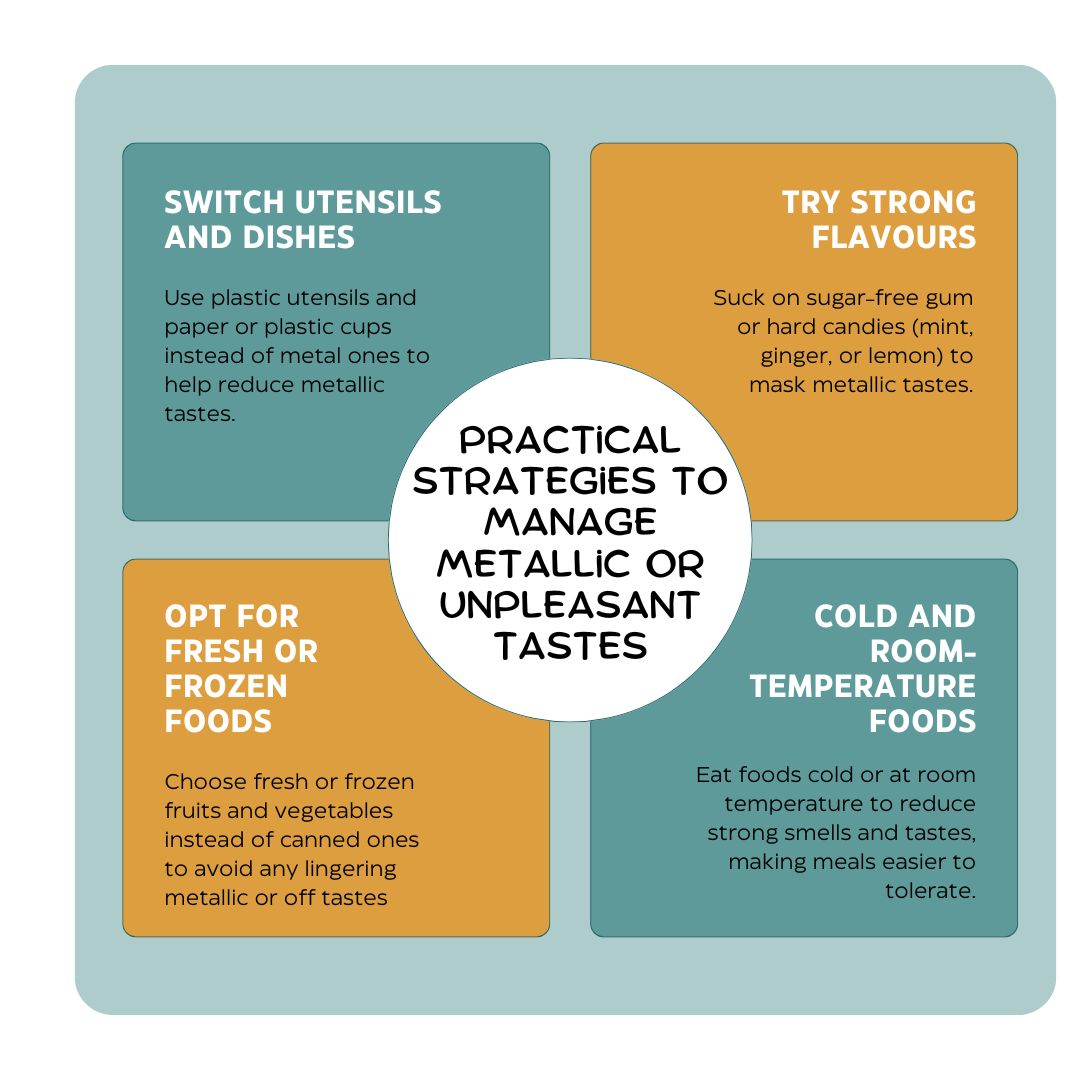
Practical Stratergies to Manage Metallic or Unpleasnt Tastes

If you’re experiencing metallic tastes

  • Use plastic utensils, as well as paper or plastic cups and plates instead of metal.
  •  Sugar-free gum or hard candies such as mint, ginger, or lemon flavours can help reduce the metallic taste in the mouth.
  • Try frozen fruits or vegetables instead of canned foods.1

If food has no taste or does not taste good

  • Add herbs, sugar or spices, lemon juice, lemonade, citrus, vinegar, or pickled foods for flavour.
  • Use sugar to balance bitterness or saltiness.
  • Maintain good oral hygiene (brush your teeth, rinse your mouth regularly).
  • Eat foods cold or at room temperature to reduce the smell and taste potency.  
  • Marinate meats in fruit juices, salad dressings, or any sauce.
  • Try other protein sources (chicken, fish, tofu, beans, eggs, nuts, cheese, or nut butters).
  • Blend fresh fruit into smoothies, yoghurt, or ice cream. This provides a different texture and flavour. 1

If food smells bad

  • Choose foods that do not need to be cooked.
  • Keep foods covered or sealed, lifting lids away from your face.
  • Drink from cups with lids or use straws.
  • Avoid eating in rooms that are too warm or have no ventilation.1

Nutrient-Dense Food Options for Low Appetite

Certain foods can help improve calorie and nutrient intake, especially if the appetite is low:

  • Smoothies: Blend fresh or frozen fruit with yoghurt or a scoop of protein powder. Protein shakes are a great addition as well.5  
  • Soft foods: Mashed potatoes, oatmeal, yoghurt, and avocados provide important nutrients.
  • High-potassium foods: Bananas, avocados, and potatoes support nerve, muscle, and immune function.6
  • Soups and broths: Chicken, vegetable, or bone broth adds hydration and protein.

If food alone is not enough, nutrition shakes or supplements can help provide extra calories and protein.7,8 Consult your doctor or dietitian before adding supplements to your routine.

Strategies to Prevent Malnutrition and Maintain Strength

Eating enough is critical, even when it feels difficult. Malnutrition is a serious risk during cancer treatment, and when not managed, can lead to cancer cachexia, a wasting syndrome that causes weakness, weight loss, muscle loss, and fatigue.2 This can occur even if a patient is eating well, making it important to stay proactive.
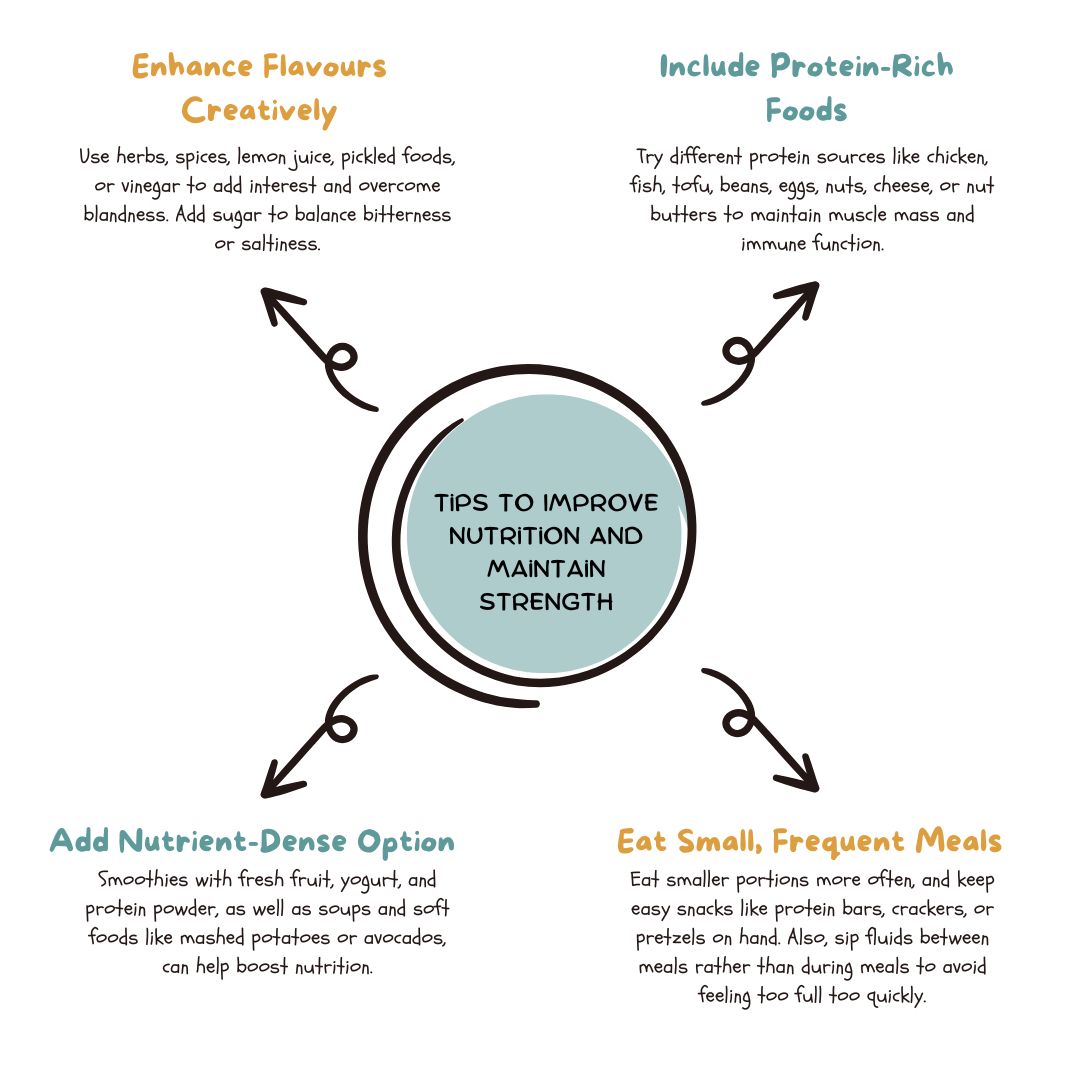
Tips to Improve Nutrition and Maintain Strength

Some strategies that can help combat any unwanted weight loss, appetite loss, and provide satiety can include:

  • Eating foods high in protein and meeting daily caloric needs.
  • Start the day with your most protein-dense meal.
  • Sip fluids between meals, not during.
  • Eat foods that appeal to your senses.
  • Try new foods or new recipes.
  • Aim to eat smaller meals and snacks throughout the day (for example, carrot sticks and hummus, apple slices and peanut butter, cheese sticks, turkey wraps, etc).
  • Keep easy, portable snacks on hand (for example, crackers, protein bars, etc).
  • Find an exercise that you enjoy and can stick with, such as yoga or walking. This is great for daily movement and circulation, and it can help increase appetite.

Your Strength Shines Through the Struggles

If you are navigating changes in taste and smell during cancer treatment, please know that you are not alone, and there are strategies that can help. Eating might feel hard right now, but small changes can make a big difference in how you feel.  With the right support, it can get easier to eat well and stay strong, both mentally and physically.  

References

  1. Taste and Smell Changes | Managing Cancer-related Side Effects. www.cancer.org. https://www.cancer.org/cancer/managing-cancer/side-effects/eating-problems/taste-smell-changes.html
  2. National Cancer Institute. Nutrition During Cancer. Cancer.gov. Published October 15, 2024. https://www.cancer.gov/about-cancer/treatment/side-effects/nutrition
  3. Kulsoom Ghias, Jiang Yanping, Gupta A. The impact of treatment-induced dysgeusia on the nutritional status of cancer patients. Clinical Nutrition Open Science. 2023;50:57-76. doi:https://doi.org/10.1016/j.nutos.2023.06.004
  4. Spotten LE, Corish CA, Lorton CM, et al. Subjective and objective taste and smell changes in cancer. Annals of Oncology. 2017;28(5):969-984. doi:https://doi.org/10.1093/annonc/mdx018
  5. smithbrosagency.com SBA |. Protein Shakes. Premier Protein. https://www.premierprotein.com/products/protein-shakes
  6. National Institutes of Health. Office of Dietary Supplements - Potassium. Nih.gov. Published 2022. https://ods.od.nih.gov/factsheets/Potassium-HealthProfessional/
  7. Nutrition Drinks and Shakes for Adults. www.ensure.com. https://www.ensure.com/
  8. Nestlé Health Science - Shop BOOST® Nutritional Products. Nestlenutritionstore.com. Published 2019. https://www.nestlenutritionstore.com/shop-by-brands/boost.html

Senior Editor: Katheeja Imani

Written by Dana Stonerock

Dana has been interested in nutrition and fitness for over a decade, but it was only more recently—through personal experiences, formal education, and extensive reading—that she began to truly understand how to support her body in a sustainable and thoughtful way. While she has always enjoyed strength training and staying active, living with chronic back and neck pain due to scoliosis has given her a more grounded, realistic perspective on health. As her curiosity and passion for learning continue to grow, Dana is committed to sharing simple, practical insights that may help others—whether they’re navigating their own health challenges or supporting someone else on their journey.


We strongly advise you to talk with a health care professional about specific medical conditions and treatments. 
The information on our site is meant to be helpful and educational but is not a substitute for medical advice.

Help us continue supporting people affected by cancer.
We create clear, trusted information to make the cancer experience a little easier to navigate. We also reinvest our time and resources to send free comfort parcels to people who cannot afford one.  If you would like to support this work, you can make a contribution or explore ways to get involved.

Related Posts

Cancer Care Parcel Comfort Box Won The "Live Better With Spotlight Award"

We Are Very Pleased To Tell You That Our Cancer Comfort Gift Hamper Is A Joint Winner Of The Best Mind & Brain Product Awarded By Live Better With

Read More
Giving Back to Help Children with Cancer: A Personal Story From Ghana

I am Prince Senyo Kwasi Nyamadi and a childhood cancer survivor and it has been my ardent wish to do whatever I can to give something back to children with cancer.

Read More
Understanding Chemotherapy Dehydration And How To Reduce The Risk

Cancer Dehydration Is A Risk For People Undergoing Cancer Treatments, This Can Be Life-Threatening If Left Untreated. Find Out More From Cancer Care Parcel.

Read More
All profit is reinvested into the company to further our mission of providing and signposting readers to reliable and compassionate support.
Embracing Corporate Social Responsibility

We provide fact-based, reliable resources for the cancer community, funded through sales, sponsorships, and donations. All profits are reinvested to ensure trustworthy, compassionate support
Organisation for Responsible Businesses.
Recycle
EcoFriendly
Cancer Care Parcel Ltd. Registered in England and Wales.
Trading Address: Highstone House, 165 High Street, Barnet, Herts. EN5 5SU, UK. Registered Office: 7a High Street, Barnet, Herts, EN5 5UE.
Company Number 14415197, VAT number is GB428826076,  EORI number is XI428826076000
SITEMAP
cartmagnifiercrosschevron-downquestion-circle