Gentle, practical guidance on navigating relationships during cancer and how to set boundaries, ask for help, and receive support without guilt.
Living with cancer reshapes how we see ourselves and how we relate to others. Relationships can become a source of strength, but they can also bring unexpected pain, distance, or overwhelm. What once felt easy may now feel heavy. What used to bring comfort might now stir guilt, exhaustion, or frustration.
This article gently explores six emotionally real dynamics people face while navigating relationships during cancer treatment. Through lived stories, quiet insights, and compassionate suggestions, we hope to offer space for healing connection without pressure or judgement. Because at Cancer Care Parcel, we believe emotional well-being is just as essential as physical care. You don’t have to face this alone, and you shouldn’t have to carry others while you’re trying to survive yourself.
Here is what might help you:
In the early weeks after her diagnosis, Sandra always wanted people around. Her phone buzzed with check-ins, and her flat rarely sat in silence. Friends dropped off food. Her partner, James, cleared his evenings to sit with her. It felt good. Comforting.
But after her second round of chemotherapy, the noise began to feel like too much. She flinched when the doorbell rang. Texts became exhausting to answer. She loved everyone deeply, but now she wanted silence, space, and stillness.
“I started hiding under blankets when people knocked. I felt so guilty. They were only trying to help. But I just... couldn’t.”
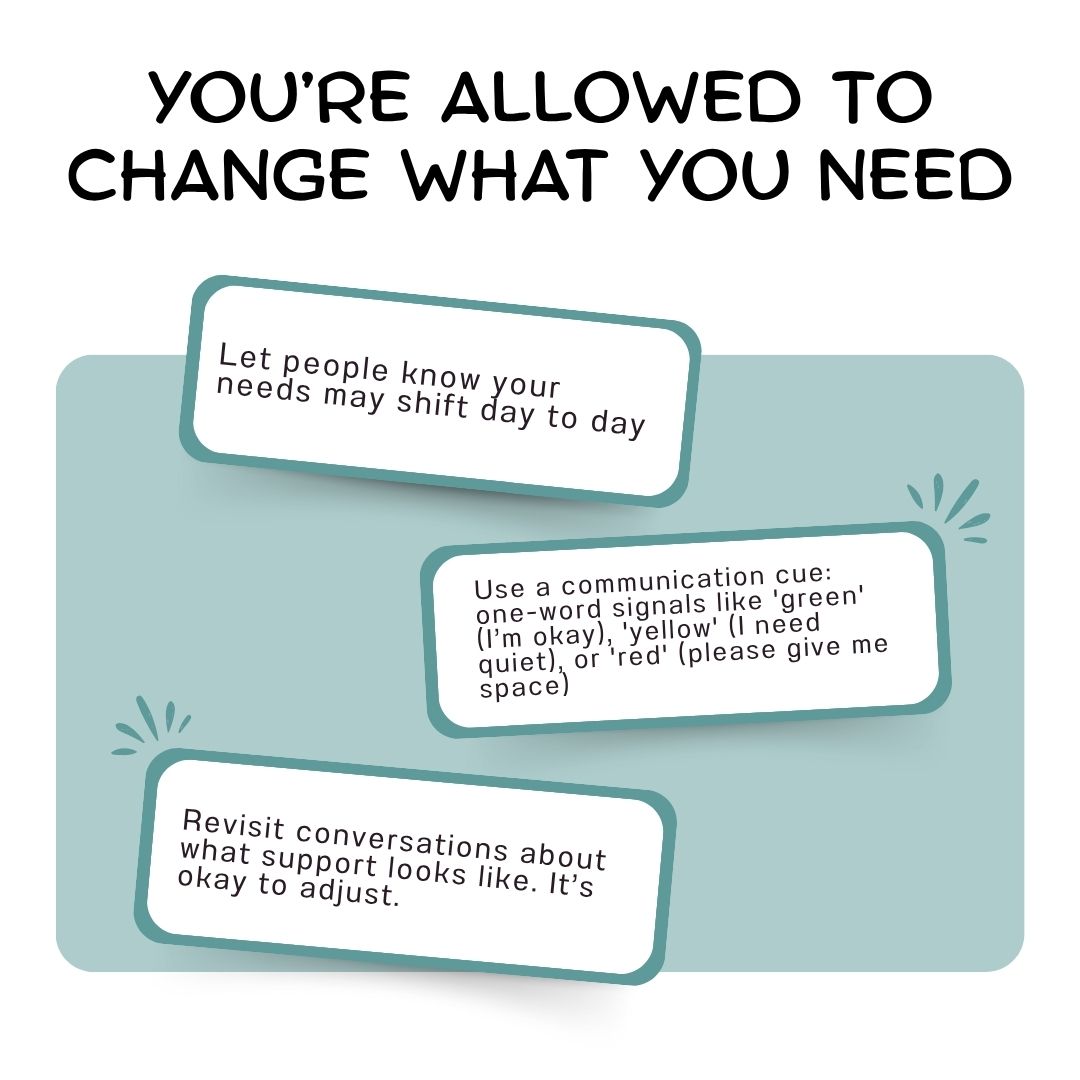
What you need changes. Sometimes fast. Sometimes without warning. But needing something different doesn’t make you unreliable or ungrateful. It makes you human.
• Let people know your needs may shift day to day. Try: 'I appreciate you checking in. Today I need some quiet, but that might change tomorrow.'
• Use a communication cue: one-word signals like 'green' (I’m okay), 'yellow' (I need quiet), or 'red' (please give me space).
• Revisit conversations about what support looks like. It’s okay to adjust.
After Marcus told his friend he had throat cancer, the messages stopped coming. They’d known each other for years. Marcus tried not to take it personally, but every silence felt louder.
“It was like my diagnosis made me contagious,” he said. “I didn’t expect everyone to know what to say, but I didn’t think I’d be forgotten.”
When people pull away, it can reopen old wounds: Am I too much? Did I do something wrong? But often, it’s not about you. It’s about their fear, discomfort, or not knowing how to hold space.
Grieve what you lose, but don’t let someone else's distance shrink your worth.
• Know that silence from others is often about them, not you.
• Mourn the relationships that fade, but open yourself to new, quieter forms of support.
• Focus on those who remain present in small, consistent ways.
Nora needed help getting to her radiotherapy appointment. She almost cancelled because she didn’t want to ‘bother’ anyone. Her brother drove three hours to take her and said, “Why didn’t you just ask?”
“Because I feel like I’m always asking.”
There’s a vulnerability in asking. A fear of overreaching. But asking for help isn’t overstepping. It’s trusting someone enough to let them in.
You’re not a burden. You’re a person navigating something hard.
• Be honest about what you need, even if it feels small.
• Use language like 'Would you be open to helping with…' instead of 'Sorry to bother you.'
• Remind yourself: receiving is part of a relationship, not just giving.
There were days Elijah didn’t know what he needed. When his partner asked how he was, he’d shrug. Words felt like a task.
Eventually, he started saying, 'I don’t know how to talk about it today.' And somehow, that helped.
Honesty doesn’t have to be polished. You don’t owe perfect updates. What matters is truth, even in fragments.
• Use short, clear phrases when energy is low: 'I’m overwhelmed,' 'I need time,' or 'I don’t have the words today.'
• Let loved ones know silence doesn’t mean they’ve failed; it means you trust them to hold space.
• Try texting instead of talking when conversation feels hard.
Tasha’s mom wanted to talk every morning. Tasha didn’t have the energy, but she also didn’t want to hurt her.
Eventually, she said, ‘I love you. But I can’t talk every day. It drains me.' Her mom cried but later thanked her for the honesty.
Setting boundaries isn't pushing people away. It’s protecting what little energy you have left. It’s love in its most sustainable form.
• Start with reassurance: 'I value you, and this is something I need to stay well.'
• Create soft schedules: specific times for connection that work for you.
• Remember: boundaries protect relationships; they don’t end them.
Mohamed stopped going to game nights with friends. He didn’t have the stamina. But he missed them.
One night, his friend sent him a voice note: just five minutes of laughter and a story. Mohamed played it on loop.
He wasn’t physically there, but he felt connected. And that was enough.
Relationships don’t have to look the same. Intimacy can be reimagined. Shared playlists. Emojis. A silly meme. These things count.
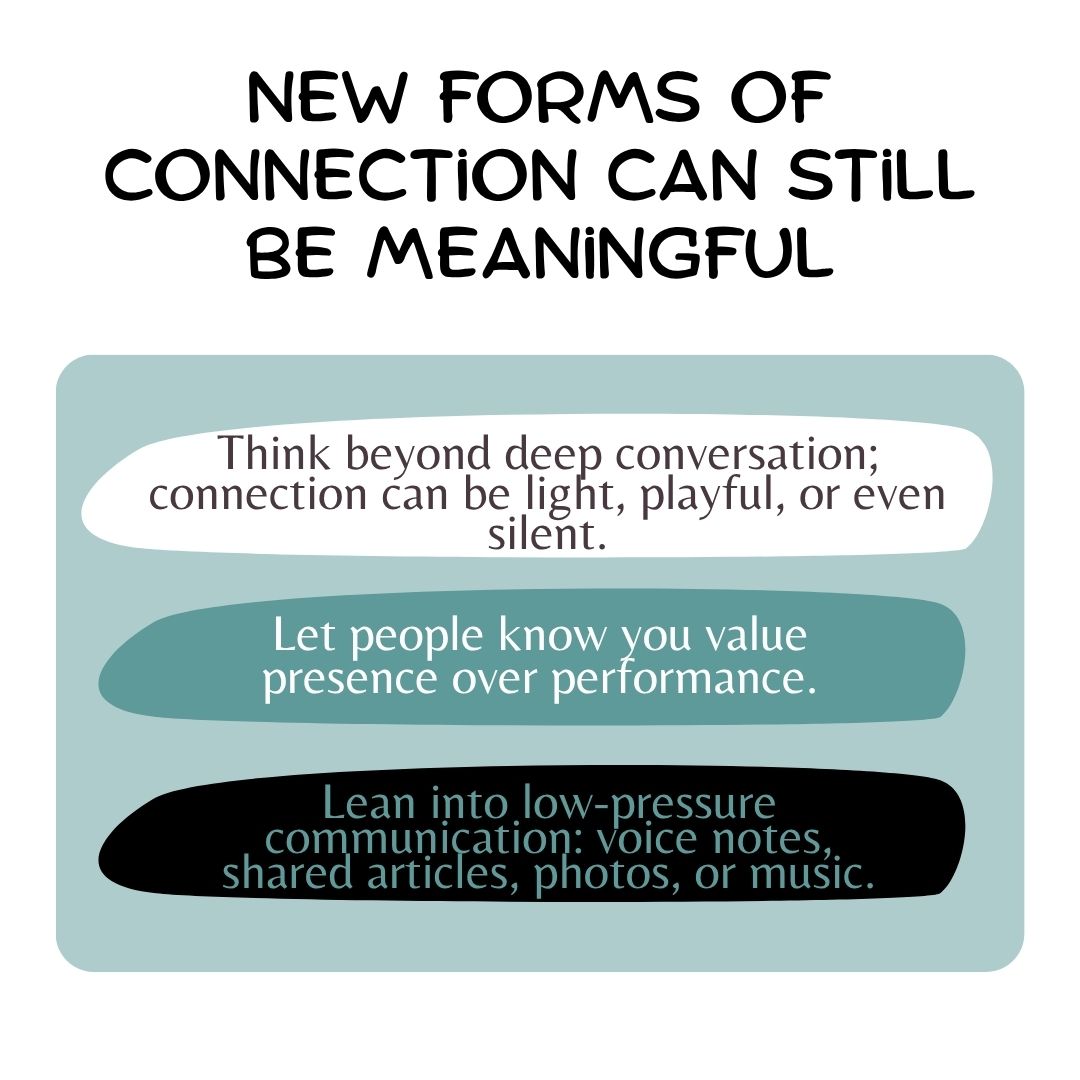
• Think beyond deep conversation; connection can be light, playful, or even silent.
• Let people know you value presence over performance.
• Lean into low-pressure communication: voice notes, shared articles, photos, or music.
Here is a podcast for you to watch and learn more about navigating relationships.
Cancer changes many things, but it doesn't erase your right to connection, honesty, or space. You’re allowed to be overwhelmed. To protect your energy. To ask for more. To pull back. To reach forward. There’s no perfect script for navigating relationships during treatment, only truth and kindness.
At Cancer Care Parcel, we’re committed to supporting your emotional well-being. We believe your story matters, especially the messy, vulnerable, human parts. Let us walk with you through silence, through struggle, through connection.
You’re not alone. And you never have to pretend to be.
Senior Editor: Katheeja Imani
We strongly advise you to talk with a health care professional about specific medical conditions and treatments.
The information on our site is meant to be helpful and educational but is not a substitute for medical advice.
Learn How To Prioritize Sleep And Rest After Cancer Surgery. Discover Tips For Creating A Restful Environment, Managing Pain, And Supporting Your Body's
War On Cancer Help People To Build Connections With Others, By Sharing What They’re Going Through. We Are A Strong Community,
We need to pay attention and have a positive attitude. We literally need to take our own bodies into our own hands to protect ourselves.