Immunotherapy is a fascinating approach to treating cancer that works with your body, not against it. Instead of using external treatments to attack cancer directly, immunotherapy empowers your own immune system to do the job it was designed for: finding and destroying dangerous cells.
Think of it as giving your body’s natural defence system a major upgrade.
Your immune system is like a vigilant security team, constantly on patrol for anything that shouldn't be there, like viruses or bacteria. It's incredibly smart and usually does a fantastic job of neutralising threats before they can cause harm.
The problem is, cancer cells are masters of disguise. They can often trick the immune system into thinking they're just normal, healthy cells. By flying under the radar, they can multiply and spread, completely unchecked by your body's security patrol. This clever trick is a key reason cancer can be so difficult to fight.
This is where immunotherapy steps in. It's not about introducing a foreign substance to poison the cancer, like chemotherapy. Instead, it’s about retraining your immune system’s soldiers, teaching them to see through the cancer's disguise and recognise it as a threat.
This "retraining" can happen in a few different ways:
"Immunotherapy leverages the patient's immune system to fight cancer. It activates and pushes it to find the tumours and kill them. You can use different tools... but they all use the patient's immune cells to fight their tumours." Dr. Haidong Dong, Cancer Immunologist.
Getting your head around this core idea is key. Immunotherapy isn’t an external force destroying the cancer; it’s a method for unlocking the incredible cancer-fighting power you already have inside you. Cancer's ability to hide is a significant challenge, and you can learn more about how cancer evades immune system treatments in our detailed guide.
This whole approach shifts the perspective, reminding us that our own bodies can be the most powerful allies in the fight against cancer. This fundamental concept is the perfect starting point for understanding all the different types of immunotherapy and how they work.
Immunotherapy isn’t just one treatment. Think of it as a whole family of smart strategies, each using your body’s own immune system in a slightly different way to fight off cancer. Getting to grips with these different approaches can make conversations with your oncology team much clearer when figuring out what might be right for you.
It’s a bit like having a specialised toolkit. A mechanic wouldn’t use a spanner for every single problem; they pick the right tool for the job. In the same way, doctors select a type of immunotherapy based on the unique details of the cancer they’re up against.
This diagram gives you a bird's-eye view of how the immune system can be nudged into action against cancer cells.
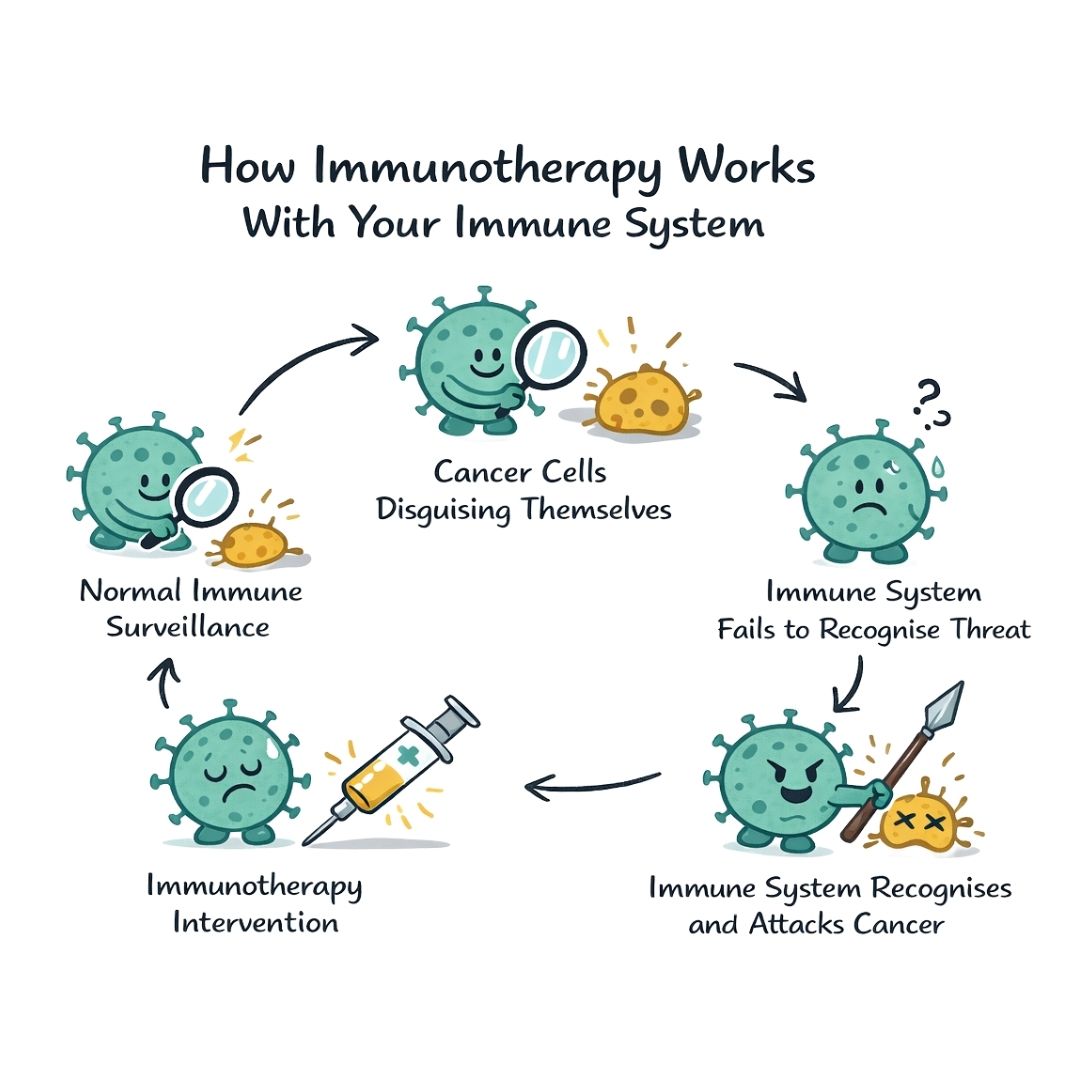
As you can see, immunotherapy acts as that crucial middle-man, helping your immune system to see past cancer’s clever disguises and get to work.
One of the most widely used forms of immunotherapy involves drugs called immune checkpoint inhibitors. To stop it from going haywire and attacking healthy tissue, your immune system has natural 'brakes' or checkpoints. They’re absolutely vital for keeping everything in balance.
The problem is, many cancer cells have figured out how to use these checkpoints to their advantage. They put specific proteins on their surface that hit the brakes on any immune cells that get too close, essentially telling them, "Nothing to see here, move along." This sneaky trick allows the cancer to grow undisturbed.
Checkpoint inhibitors are designed to stop this from happening. They block the 'brake' signals, giving your immune cells—especially your T-cells—the green light to recognise and attack the cancer cells with everything they've got. It’s like telling your security team to go after a threat they were previously told to ignore. This method has shown great success in treating cancers like melanoma and certain lung cancers.
Another really powerful strategy is CAR T-cell therapy, a form of cell-based treatment. You can think of this as creating a highly specialised team of super-soldiers, engineered specifically to hunt down your particular cancer.
Here's how it generally works:
This is a truly personalised treatment and represents a huge step forward, especially for certain blood cancers that haven't responded to other therapies.
Monoclonal antibodies are proteins created in a lab that behave like guided missiles. They are designed to seek out and attach to very specific targets, called antigens, which are found on the surface of cancer cells.
Once an antibody locks onto a cancer cell, it can fight back in a few different ways. Some of them 'mark' the cancer cell, making it more obvious so the rest of the immune system can find and destroy it. Others work by blocking proteins that the cancer cells need to grow, essentially cutting off their supply lines.
Because they are so targeted, monoclonal antibodies can be incredibly effective while often having fewer side effects on healthy cells than more widespread treatments. They have become a real cornerstone of modern cancer therapy.
Before we look at a few more types, here’s a quick summary of the main approaches in a table to help keep things clear.
| Immunotherapy Type | How It Works (Simplified) | Common Cancer Examples |
|---|---|---|
| Checkpoint Inhibitors | Blocks signals that cancer cells use to hide, 'releasing the brakes' on the immune system. | Melanoma, Lung, Kidney, Bladder Cancer |
| CAR T-cell Therapy | A patient's T-cells are taken, re-engineered in a lab to find cancer, and returned to the body. | Leukaemias, Lymphomas, Multiple Myeloma |
| Monoclonal Antibodies | Lab-made proteins that are designed to attach to specific targets on cancer cells to mark or kill them. | Breast, Colorectal, Lung Cancer, Lymphoma |
| Cancer Vaccines | Stimulates the immune system to recognise and attack cancer cells by introducing cancer antigens. | Prostate, Melanoma |
| Oncolytic Viruses | Uses a virus to infect and kill cancer cells directly, which also helps alert the immune system. | Melanoma |
This table is just a snapshot, but it shows the variety of ways we can now encourage the immune system to join the fight.
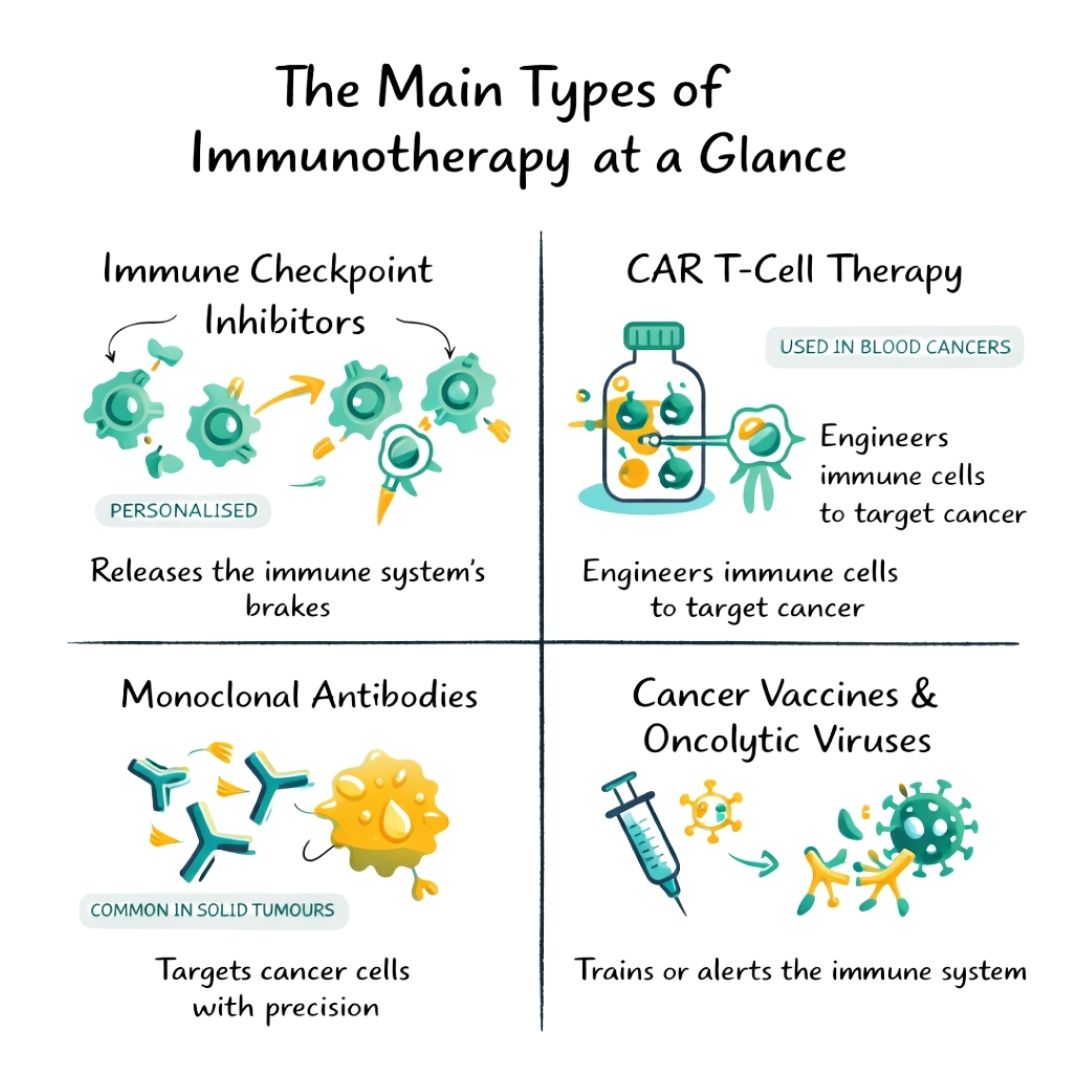
The world of immunotherapy is always growing, and there are other promising methods being used and developed. If you'd like to take a deeper dive, you can explore our cancer immune webinar, where experts discuss how these treatments work in more detail.
Here are a couple of other important types worth knowing about.
Cancer Vaccines
These aren't like the vaccines you get to prevent illnesses like the flu. Instead, cancer treatment vaccines are given to people who already have cancer. They work by introducing cancer-specific molecules (antigens) into the body to train the immune system to launch a much stronger attack against any cells that carry them. The research into creating personalised vaccines, tailored to a person's individual tumour, is a particularly exciting area.
Oncolytic Viruses
This therapy uses viruses, either found in nature or modified in a lab, to infect and kill cancer cells. When the virus gets inside a cancer cell, it copies itself over and over until the cell bursts and dies. This doesn't just destroy the cancer cell; it also releases more cancer antigens, which can trigger a much broader immune response against any other cancer in the body. It’s a clever two-in-one approach that kills tumour cells directly while also flagging them for the immune system.
Each of these immunotherapies highlights a different way of empowering your body's own natural defences, showing just how flexible and full of potential this approach to cancer treatment truly is.
It’s only natural to wonder if a particular treatment could work for you. When it comes to immunotherapy, it's important to know that while it’s a powerful tool, it isn't a one-size-fits-all solution. For some people, it can be incredibly effective, but it’s not yet a standard option for every person or every type of cancer.
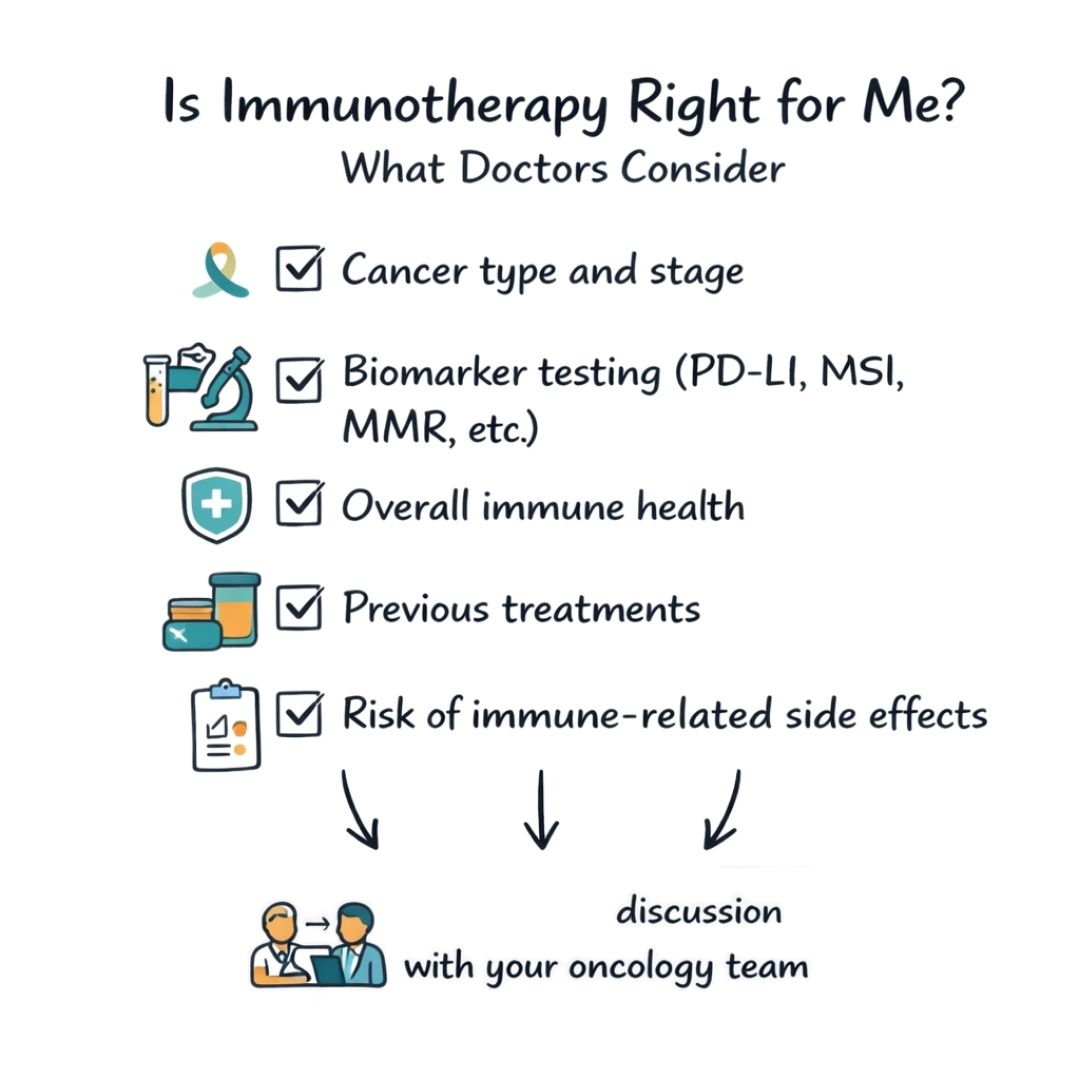
Deciding whether to go ahead with immunotherapy involves a careful look at several key elements. Your oncology team will piece together a complex puzzle, considering every aspect of your health and your specific cancer before making a recommendation.
Modern healthcare now uses incredible tools to help with these big decisions. Technologies like Clinical Decision Support (CDS) in modern healthcare help doctors analyse complex information to create the most personalised and effective care plans possible.
So, what are the pieces of that puzzle? Your doctors will look at a few main factors to see if immunotherapy is a suitable path for you. These aren't just medical stats; they’re vital clues that help predict how your own immune system might respond to the treatment.
The main things they’ll assess are:
While these points give a good overview, the most critical clues often come from studying the cancer cells themselves.
To get a much clearer picture, your oncologist will likely recommend biomarker testing. Think of biomarkers as unique flags or signals on the surface of cancer cells. These specific molecules, like proteins or genes, give us a detailed biological fingerprint of your cancer.
One of the most important biomarkers for immunotherapy is a protein called PD-L1. If your tumour cells have high levels of PD-L1, it’s often a very strong sign that a checkpoint inhibitor drug could work well. Why? Because cancer cells use PD-L1 to put the brakes on the immune system and hide. A drug that blocks this protein essentially takes the brakes off, allowing your immune cells to see and attack the cancer.
This kind of testing is at the heart of personalised medicine. It moves us away from a generalised approach, allowing your treatment to be shaped around the unique biology of your cancer. This dramatically improves the odds of a positive outcome.
We can see the real power of this approach in some incredible clinical trial results. For instance, recent studies have shown remarkable success in treating bowel cancer for patients who share a specific genetic profile.
In a trial for MMR deficient/MSI-High bowel cancer, a staggering 59% of patients had no signs of cancer left after being treated with the immunotherapy drug pembrolizumab. This really shows why understanding your cancer’s specific genetic makeup through biomarker testing is so vital.
To learn more about the science behind these tests, you can explore the world of laboratory medicine and see how it guides these critical treatment decisions. It’s this data that empowers you and your doctor to have a truly informed discussion about whether immunotherapy is the right choice for you.
Waking up the immune system to fight cancer is a brilliant strategy, but this powerful boost can sometimes cause ripples elsewhere in the body. When your body’s defenders go on high alert, they can occasionally get a bit overzealous and start affecting healthy tissues, not just cancer cells.
In many ways, these reactions are a sign that the treatment is working and your immune system is responding. Think of it as your body's security team being so enthusiastic that they start double-checking everyone's ID, even the familiar faces.
Side effects from immunotherapy are often called immune-related adverse events. They can be mild or more significant, and since everyone's immune system is unique, your experience might be completely different from someone else's, even on the exact same treatment.
Some of the most common things people experience include:
The most important thing to know is that your oncology team is well-prepared to help you manage these. Most side effects are treatable, and you won’t have to go through them alone.
Your most powerful tool during treatment is open communication with your healthcare team. It might be tempting to downplay a minor symptom, but reporting everything early is absolutely vital. A small rash or a bit of diarrhoea is much easier to manage right away than if it’s left to get worse.
Keeping a simple diary of your symptoms can be a game-changer. Just jot down what you’re feeling, when it started, and how it’s affecting you. This gives your care team a clear picture and helps them find the best solution.
Your doctors and nurses need to know about any new or changing symptoms as soon as they appear. This allows them to provide supportive care, like creams for skin issues or medication for an upset stomach, or even adjust your treatment. Quick action is the key to staying comfortable and keeping your treatment safely on track.
Being informed about how treatments can affect your body is empowering. To dig deeper into this, you can learn more about how cancer treatments affect the immune system in our detailed guide. By being an active, informed partner in your own care, you can help minimise disruptions and focus on your quality of life.
Immunotherapy isn't a field that's standing still; it's one of the most exciting and fast-moving areas in cancer research today. The pace of discovery is breathtaking, with scientists constantly uncovering new ways to fine-tune these treatments, making them more powerful and accessible for more people.
Every breakthrough builds on the last, driven by an ever-deepening understanding of the incredible complexity of our own immune systems. Researchers are always looking over the horizon, asking, "How can we make this even better?" This forward momentum is what brings new hope to patients and their families every single day.
Two of the most promising avenues of research are personalisation and combination therapies. Imagine a treatment designed just for you. That's the idea behind personalised cancer vaccines, where scientists analyse the unique genetic signature of a person's tumour. This information is then used to create a vaccine that trains their own immune system to hunt down and destroy those specific cancer cells. It's the ultimate bespoke medicine.
At the same time, we're learning that two (or more) treatments are often better than one. Researchers are seeing fantastic results from combining different types of immunotherapy or pairing them with other treatments like targeted therapy. This strategy launches a multi-pronged attack, hitting cancer from different angles and making it much harder for it to escape or resist.
The confidence in this field is clear when you look at the investment pouring into it. The global cancer immunotherapy market is projected to grow at a significant rate in the coming years. This isn't just a number; it reflects a massive global commitment to pushing the boundaries of what's possible. You can discover more insights about these market projections for a deeper look.
A huge focus for researchers right now is figuring out how to make treatments both smarter and safer. The key lies in finding better ways to predict who will respond best to immunotherapy while also reducing the risk of side effects. This is where biomarkers come in—subtle clues in the body that can tell us how a person might react to a specific drug.
The ultimate aim is to give the right treatment to the right patient at the right time. This not only improves outcomes but also helps avoid unnecessary side effects for those who are unlikely to respond.
By refining these approaches, the goal is to create therapies that are not only more lethal to cancer cells but also gentler on the patient. This constant drive for improvement shows a worldwide commitment to bringing the benefits of immunotherapy to more people, for more types of cancer, and to improve the quality of life for everyone on this journey. The future is all about helping our own bodies win the fight in a smarter, safer, and more effective way.
Talking to your doctor about cancer treatment can feel like a whirlwind. It’s easy to walk out of an appointment and realise you forgot to ask something important. To get the most out of these conversations, it helps to go in prepared.
Bringing a list of questions makes you an active participant in your own care. It turns a one-sided conversation into a real partnership with your oncology team, ensuring you and your family feel clear and confident about the path ahead.
Before you start any new therapy, it’s crucial to understand why it’s being recommended for your specific situation. Every cancer is different, and the unique characteristics of your tumour will play a huge role in determining the best approach.
Here are a few questions to get that conversation started:
These questions help clarify the "why" behind your proposed treatment plan and set realistic expectations right from the beginning.
Getting a handle on the day-to-day practicalities can do wonders for reducing anxiety. When you know what’s coming, you can plan your life, manage your energy, and feel more in control.
Think about asking these logistical questions:
This is also the perfect time to ask whether a clinical trial might be a good option for you. If you're curious, our guide on what to expect from a clinical trial offers more information.
A helpful tip: Jot your questions down in a notebook before your appointment. It’s amazing how easily things slip your mind in the moment! It can also be a huge help to bring a friend or family member along to be a second set of ears and take notes.
The world of immunotherapy is moving incredibly fast, with new discoveries changing how we treat cancer all the time. Researchers are working hard to figure out which biomarkers can predict who will respond best to these treatments.
Right now, it’s estimated that about one in ten cancer patients receive immunotherapy, but scientists are determined to make these therapies work for more people. Asking your doctor about the latest research can help you understand how new developments might shape your own cancer journey down the line.
Starting a new treatment can feel overwhelming, and it’s completely normal to have a lot on your mind. To help clear things up, we've put together some straightforward answers to the questions we hear most often from patients and their loved ones.
Getting to grips with the practical side of immunotherapy can make the whole process feel a bit less mysterious and a lot more manageable. Having this information helps you focus on what really counts—you and your health.
One of the first things most people ask is what a treatment day actually involves. The way you’ll receive your immunotherapy comes down to the specific drug you’ve been prescribed, but most fall into a few common methods.
Many immunotherapy drugs, particularly checkpoint inhibitors and monoclonal antibodies, are given as an intravenous (IV) infusion. This just means the medicine is delivered through a small tube into a vein, dripping in slowly over anywhere from 30 to 90 minutes. You'll typically be in a comfortable chair in a clinic or hospital day unit for these sessions.
Other ways you might receive treatment include:
During an IV infusion, you can usually relax with a book, listen to some music, or just rest. The nurses will keep a close eye on you to make sure you’re comfortable and watch for any immediate reactions.
This is a really individual thing, and the honest answer is: it varies a lot. Unlike some treatments that have a set endpoint, your immunotherapy plan is designed just for you. It all depends on how your body and the cancer are responding.
How long you’ll be on treatment is influenced by the type of cancer you have, the specific drug you’re taking, and, most importantly, how well it’s working. For some, treatment might last for a fixed time, say one or two years. For others, if the therapy is keeping the cancer in check and the side effects are manageable, it might continue for much longer as a maintenance treatment. Your oncology team will use regular scans and tests to track your progress and decide on the best course of action together with you.
This is the big one, isn't it? The answer is filled with hope, but it’s also quite nuanced. For a growing number of people with certain cancers, immunotherapy has led to what we call a durable, long-term remission. This means the cancer disappears and doesn't come back for many, many years. In those situations, you could certainly say it has been cured.
That said, the primary goal of immunotherapy is often to control the cancer. The idea is to turn it into a manageable, chronic condition that you can live with for a long time, while maintaining a good quality of life. It’s about stopping the cancer from growing or spreading, even if it doesn't vanish entirely.
The incredible advances in this field mean that immunotherapy is offering people outcomes that were simply out of reach just a decade ago. It’s all about setting realistic expectations while holding onto that very real hope for effective, long-term control of the disease.
We strongly advise you to talk with a health care professional about specific medical conditions and treatments.
The information on our site is meant to be helpful and educational but is not a substitute for medical advice.
There are no rights or wrongs when it comes to the language you use to describe how you feel..
My name is Sabine Brannan. Born and raised in the Netherlands in the late sixties, I grew up in a family interwoven in the tradition of fabric trading, working on […]
Some people love the heat and others loathe it, but whatever you feeling towards a hot sweltering hot sun, when someone has cancer they need to be careful. There is no denying […]