When someone you care about is diagnosed with cancer, the instinct to “do something” is powerful. Many people turn to gifts as a tangible expression of love and support. Yet not all gifts for cancer patients are helpful. Some can be impractical. Others may be emotionally tone-deaf. A few can even create risk.
There are countless articles recommending spa treatments for breast cancer patients or beanies for people undergoing chemotherapy. It is time to introduce nuance into that conversation.
The most important principle is this:
Do not buy gifts for someone with cancer unless you are confident they are appropriate. Your time, presence, and willingness to listen are often far more valuable than a poorly considered present.
This guide explains the common physical and emotional effects of cancer and treatment, outlines the worst gifts for cancer patients, and offers practical guidance on choosing something genuinely supportive.
Cancer is not a single experience. It varies by type, stage, treatment plan, age, co-existing conditions, and personal outlook. Chemotherapy, radiotherapy, immunotherapy, hormone therapy, surgery, and targeted therapies all affect the body differently.
A thoughtful gift acknowledges these realities. An ill-considered one may:
• Exacerbate side effects
• Increase infection risk
• Trigger nausea or discomfort
• Undermine emotional wellbeing
• Impose additional responsibility
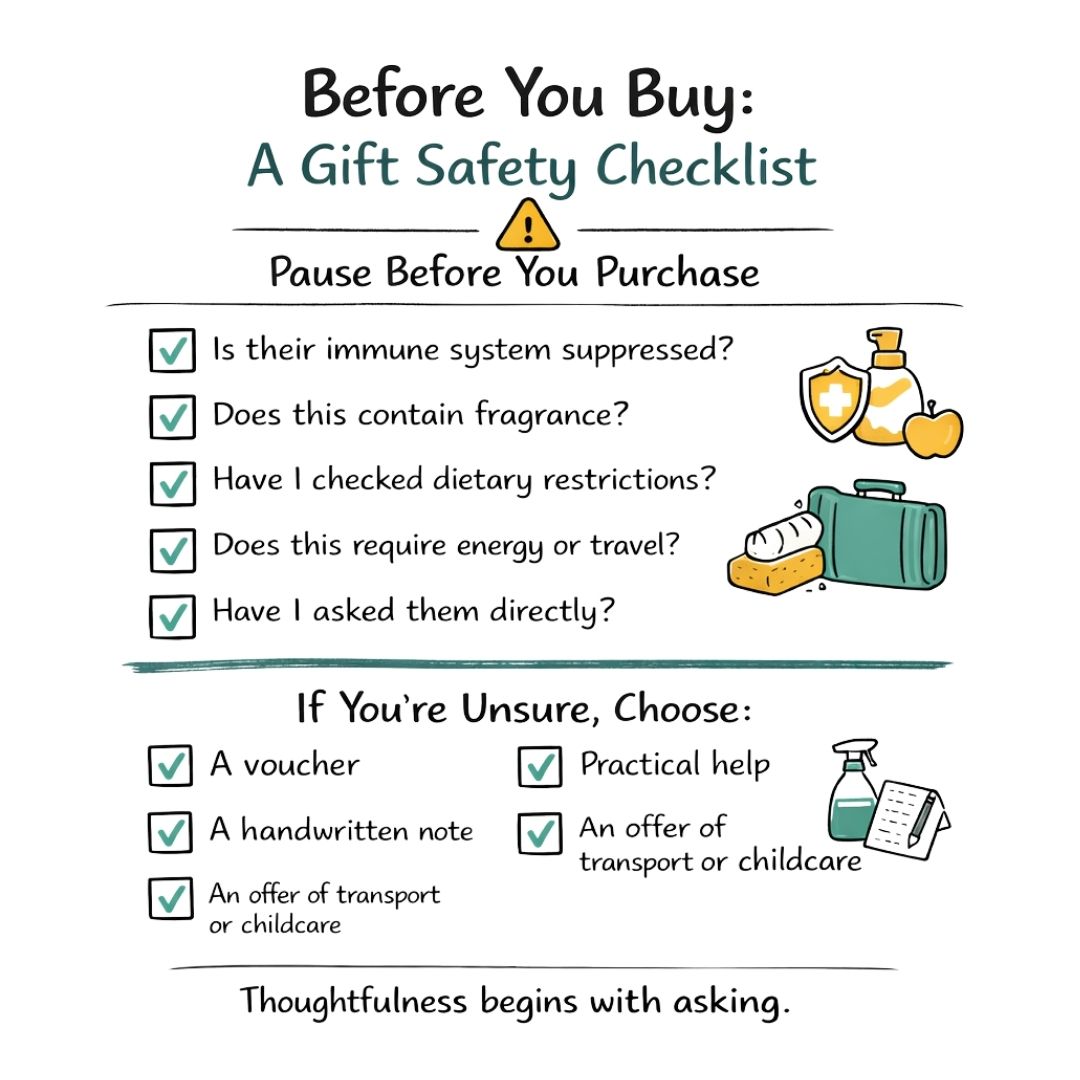
Understanding what someone is experiencing physically and emotionally is essential before selecting any gift.
When choosing gifts for cancer patients, it is critical to understand how illness and treatment affect the body and mind. These factors directly influence what is safe, comfortable, and appropriate.
Physical side effects vary considerably. However, several common themes should guide your decision-making.
Chemotherapy, radiotherapy, and even prolonged hospital stays in dry environments can lead to:
• Dry, fragile skin
• Increased sensitivity
• Rashes
• Irritation
• Peeling
This means that heavily fragranced products, perfumed lotions, or skincare with active ingredients may cause irritation.
Plain, fragrance-free moisturisers and lip balms can be helpful. Strongly scented items are rarely appropriate.
Many people undergoing chemotherapy experience:
• Sore gums
• Mouth ulcers
• Tongue sensitivity
• Dry mouth
Acidic foods, crunchy snacks, alcohol-based mouthwashes, and strong flavours may be painful or intolerable.
Even practical items such as toothbrushes need to be ultra-soft during treatment. If you are considering food or oral care products, check first.
Chemotherapy frequently alters taste and smell. Foods previously enjoyed may taste metallic, bitter, or simply “wrong.” Familiar perfumes may suddenly trigger nausea.
This makes scented candles, perfumes, and flavoured gift hampers potentially problematic.
Cancer treatments often disrupt appetite. Some individuals experience nausea, while others feel full quickly. Some adopt new dietary approaches after diagnosis.
In addition, if the immune system is compromised, certain foods become unsafe, including:
• Unpasteurised cheeses
• Raw or undercooked meats
• Certain soft cheeses
• Unwashed fruits
If you are planning to cook or send food, always ask first.
Different treatments affect temperature control.
• Chemotherapy may cause cold sensitivity and chills
• Hormone therapy may cause hot flushes
• Radiotherapy can increase skin warmth and irritation
This means a heated blanket may be welcome in one situation and uncomfortable in another.
Cancer may affect mobility directly, or temporarily through surgery and fatigue. Shortness of breath, weakness, neuropathy, and pain can all limit activity.
Gifts that require physical exertion or attendance at crowded venues may be unrealistic during treatment.
Chemotherapy and some other treatments suppress immune function. This increases vulnerability to infections.
Gifts such as:
• Fresh flowers
• Soil-based plants
• Certain foods
• New pets
can carry microbial risks.
Always consider infection control when choosing gifts for someone undergoing active treatment.
A cancer diagnosis can provoke:
• Anxiety
• Fear
• Uncertainty
• Low mood
• Irritability
• Emotional volatility
Hormonal therapies can amplify mood changes. Gifts that unintentionally highlight mortality, body changes, or lost identity can be distressing.
Cancer treatment can be financially burdensome. Even in countries with public healthcare, indirect costs accumulate:
• Time off work
• Travel to appointments
• Parking
• Childcare
• Prescriptions
• Specialist products
Practical financial support is often more helpful than luxury items.
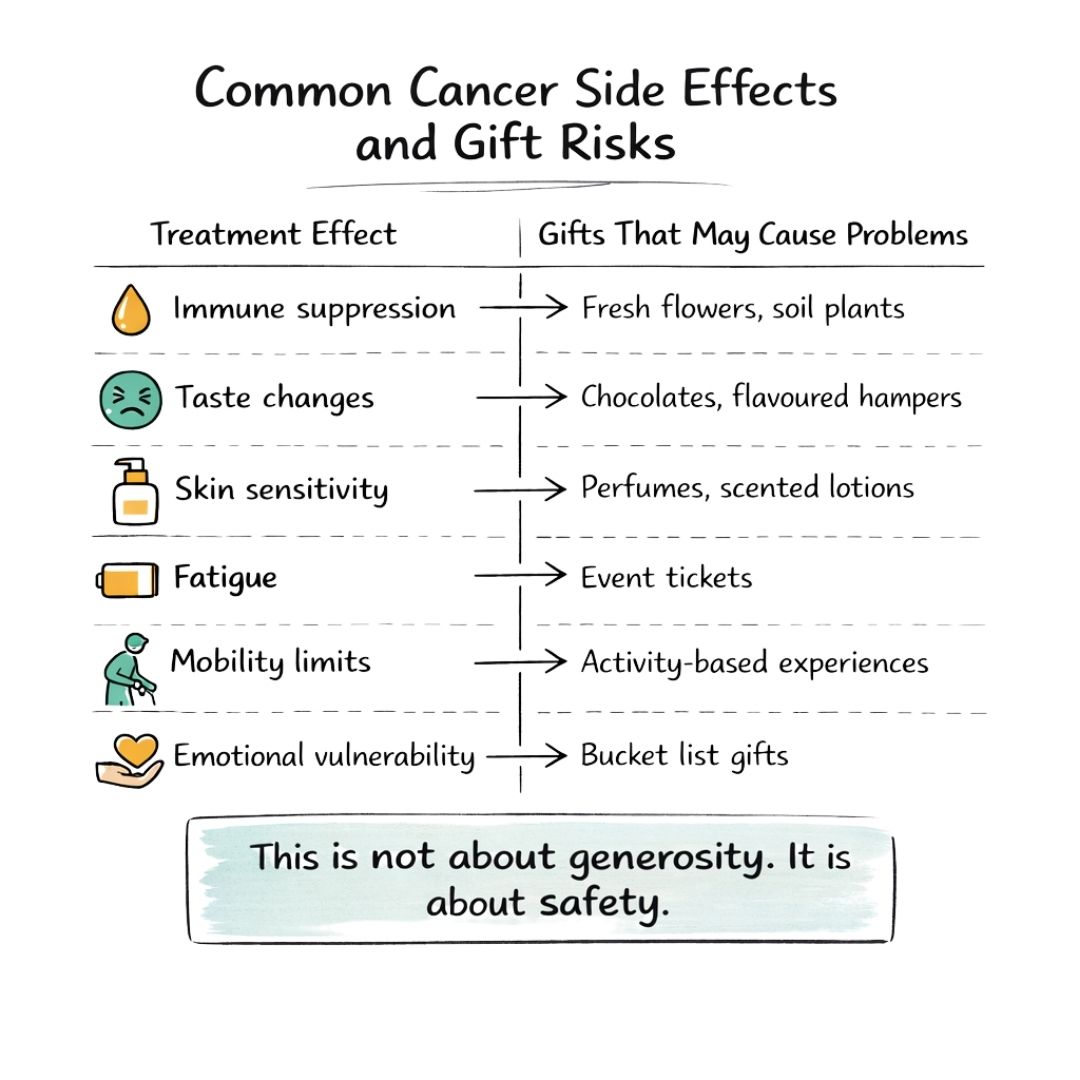
The following list outlines common gift ideas that are often inappropriate during cancer treatment. Not every item is wrong for every individual. However, each requires careful consideration.
When in doubt, ask the patient or caregiver directly.
One of the worst gifts for cancer patients is advice they did not request.
Books about “beating cancer,” articles on miracle cures, or anecdotal treatment suggestions can feel overwhelming or intrusive.
Every cancer journey is different. Unless someone specifically asks for information, do not provide medical advice. Their oncology team is guiding treatment.
Not all chemotherapy causes hair loss. Even when it does, the extent varies.
Buying wigs, hats, or beanies prematurely may:
• Create anxiety about hair loss
• Imply assumptions
• Undermine personal control
If hair loss becomes an issue and your friend expresses interest, then support becomes appropriate.
Spas were historically reluctant to treat people with cancer, often for good reason.
Risks include:
• Heat exposure exacerbating lymphedema
• Massage triggering swelling in areas where lymph nodes were removed
• Skin damage after radiotherapy
There are now cancer-trained therapists in some facilities. If you are considering a spa gift:
• Confirm the spa has oncology-trained staff
• Discuss it with the recipient first
• Ensure their medical team approves
Never surprise someone with a spa booking during active treatment.
Flowers are traditionally associated with care. However, for someone undergoing chemotherapy, they may pose infection risks due to bacteria and fungi in soil and stagnant water.
In neutropenic patients, even low-level microbial exposure can become serious.
Consider alternatives such as:
• Artificial arrangements
• Artwork
• Non-biological décor
Food gifts can be helpful if appropriate. However, random food hampers may include:
• Unpasteurised cheeses
• Raw ingredients
• Alcohol
• High-sugar treats
• Strong flavours
Some individuals eliminate sugar. Others cannot tolerate dairy. Some experience severe nausea.
Always ask first.
Chocolate is often seen as a safe gift. Yet taste changes during chemotherapy are common. What once tasted comforting may now taste metallic or unpleasant.
Additionally, some people reduce sugar intake after diagnosis.
Never assume previous preferences still apply.
Massage during cancer treatment requires specialist knowledge. Deep pressure in areas where lymph nodes were removed may increase lymphedema risk.
Massage should avoid:
• Radiotherapy-treated areas
• Fragile skin
• Bruised regions
If offering massage, ensure it is delivered by an oncology-trained therapist.
Unsolicited alternative therapies can be one of the most frustrating experiences for cancer patients.
Suggesting unproven remedies may imply that the individual is not doing enough. It can also create tension.
Leave treatment discussions to medical professionals unless specifically asked.
Chemotherapy can dramatically alter smell sensitivity. Scents once loved may provoke nausea.
This includes:
• Perfume
• Scented candles
• Strongly fragranced lotions
• Room sprays
If gifting skincare, choose fragrance-free products.
A “bucket list” gift may unintentionally imply impending death. Most people with cancer are not at end of life.
Such gifts can:
• Heighten mortality anxiety
• Feel presumptive
• Shift focus away from treatment
Only consider this if explicitly requested.
Body image changes are common during cancer treatment. Surgery, hair loss, weight changes, and scars affect confidence.
Attempting to “restore sexiness” through clothing may feel invalidating rather than supportive.
A new pet requires:
• Daily care
• Veterinary visits
• Financial responsibility
• Physical energy
During treatment, energy is unpredictable. Hospital admissions may occur. A pet can become an added burden.
Sporting events, concerts, and cinemas involve:
• Crowds
• Noise
• Infection risk
• Physical stamina
While appropriate during remission, these may be overwhelming during treatment.
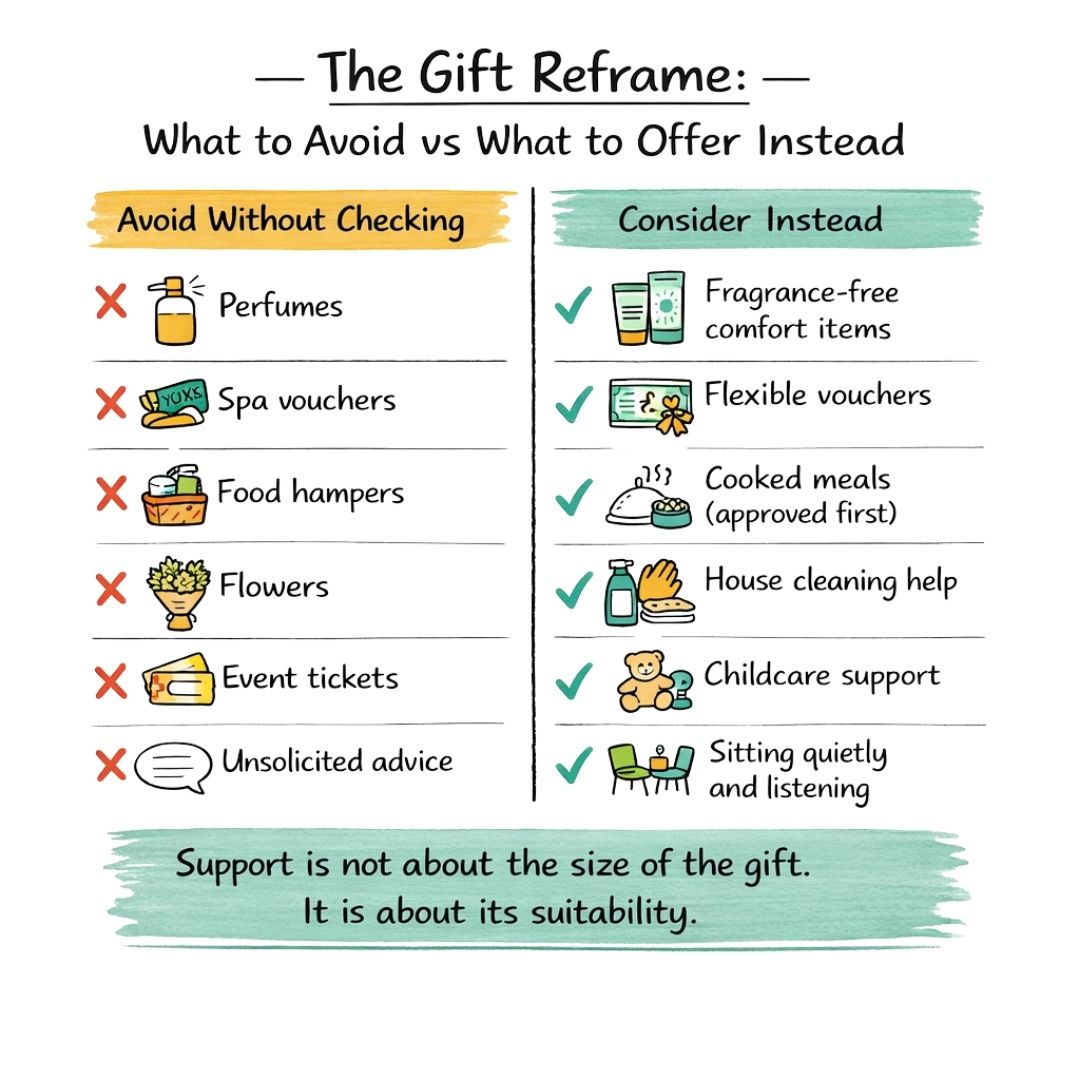
After outlining the worst gifts for cancer patients, it is important to focus on what is genuinely supportive.
Often, the most appreciated support includes:
• Cooking meals aligned with dietary needs
• School runs
• Hospital transport
• Prescription collection
• House cleaning
These reduce cognitive and physical load.
Gift cards for:
• Groceries
• Fuel
• Online shopping
• Meal delivery
provide flexibility without imposing assumptions.
When chosen carefully, comfort items can help:
• Fragrance-free moisturisers
• Soft blankets
• Hydration bottles
• Gentle lip balms
• Unscented skin care
Ensure products are appropriate for sensitive skin.
Perhaps the most meaningful gift is presence.
Cancer can be isolating. Being willing to:
• Sit quietly
• Listen without offering solutions
• Respect emotional fluctuations
is invaluable.
If you want to choose well, follow these principles:
A simple message such as:
“I would love to send something helpful. Is there anything that would make this period easier?”
prevents missteps.
• Newly diagnosed
• During chemotherapy
• Post-surgery recovery
• Radiotherapy
• Remission
Each phase carries different needs.
Do not assume:
• Hair loss
• Terminal prognosis
• Dietary preferences
• Emotional state
Let the individual guide you.
If immune suppression is present, avoid:
• Soil
• Unpasteurised foods
• Large gatherings
Practical support is usually more appreciated than symbolic gestures.
Cancer changes identity, routines, and relationships. Gifts that centre the giver’s need to feel helpful can miss the mark.
Effective support requires:
• Sensitivity
• Permission
• Listening
• Adaptability
Before purchasing anything, pause and reflect:
Is this about what I think they need, or what they have told me they need?
If you are unsure, keep your support simple and low-risk:
• A handwritten note
• A flexible voucher
• An offer of childcare
• An offer to sit during chemotherapy
Complex gifts are not necessary.
This article is not designed to discourage kindness. It is designed to refine it.
Choosing the right gift for a cancer patient requires thoughtfulness, medical awareness, and emotional intelligence. What helps one person may distress another.
The safest and most meaningful approach is always to:
• Ask
• Listen
• Adapt
Cancer is unpredictable. Support should be flexible.
We strongly advise you to talk with a health care professional about specific medical conditions and treatments.
The information on our site is meant to be helpful and educational but is not a substitute for medical advice.
Help a cancer patient feel like themselves again. Learn how to donate hair: length rules, preparation steps, what happens next, and alternatives if you can't donate.
Just Average Jen is an average woman who is actually anything but average! Check out Just Average Jen's review of our Luxury Breast Cancer Gift for Women for us. A snippet from Just Average Jen's Review: Should a company be selling items like this? Is it not profiting from the sick? This is a question that was raised amongst […]
Discover The Benefits Of Palliative Care For Cancer Patients. Learn How It Manages Symptoms, Provides Emotional Support, And Improves Overall Quality Of Life.