When you first hear the words “you have prostate cancer", it can feel as though the ground has shifted beneath your feet. Suddenly, you’re surrounded by unfamiliar medical language, and among all those terms, prognosis often carries the heaviest weight, feeling like some sort of final verdict. But it's not. It's simply the starting point of a conversation, a map to help you and your doctors navigate the road ahead. It’s a framework for planning, not a sentence.
This guide is here to help you understand what a prognosis truly means in the context of prostate cancer, giving you clear, reliable knowledge so you can feel more informed and in control of your journey.
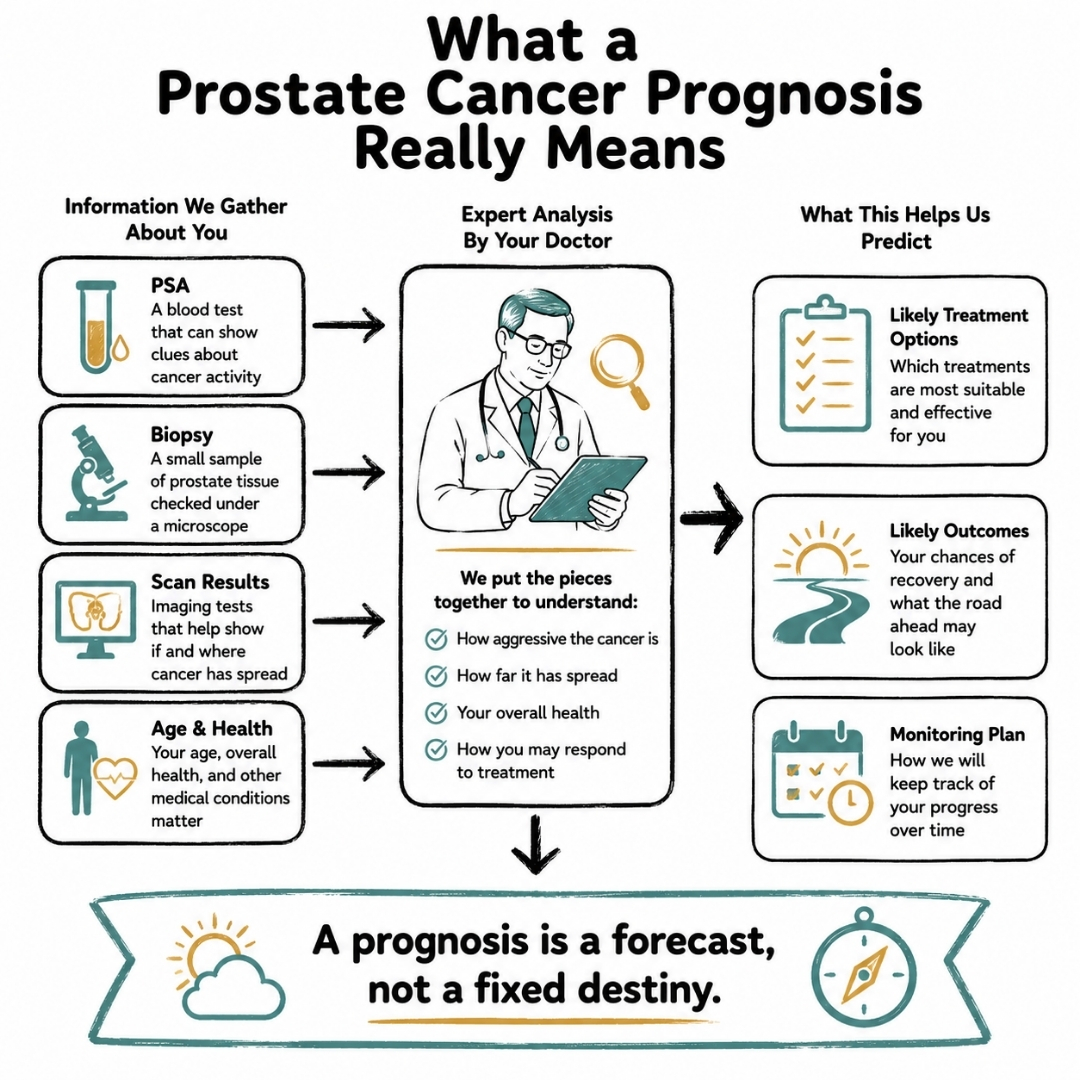
Hearing the word prognosis after a prostate cancer diagnosis can be one of the most daunting moments. Many people immediately assume it means being told exactly how long they have left to live, but that’s a common misunderstanding. A much better way to think about your prognosis with prostate cancer is to see it as a detailed weather forecast, not a fixed destiny.
Just as a meteorologist uses data like wind speed and atmospheric pressure to predict the weather, your doctor looks at very specific information from your tests to predict the likely behaviour of your cancer. It’s not guesswork; it's an expert, evidence-based opinion on the probable course of the disease and your chances of recovery.
Your prognosis is not a one‑size‑fits‑all statement. It is unique to you. It’s a personalised medical forecast built by combining several key pieces of information about you and your specific cancer. Your medical team will carefully consider:
Combining these factors gives your doctor a clearer picture of how your cancer is likely to behave and which treatments are most effective for you.
A prognosis is best understood as a medical prediction that guides treatment decisions. It provides a probable outcome based on current data, helping both you and your doctor choose the best path forward. It’s a tool for planning, not a final verdict.
It’s important to understand that a prognosis is not carved in stone. It can, and often does, change as more information becomes available and as you respond to treatment. For instance, a very favourable initial prognosis might give you and your medical team the confidence to choose a path like active surveillance. On the other hand, a more serious initial outlook might point towards starting a more decisive treatment right away.
Ultimately, your prognosis is the start of an ongoing, informed conversation with your healthcare team. It gives you the context you need to make informed decisions about your health that align with your own goals and values. It empowers you to ask the right questions and truly understand the reasoning behind every step on your treatment path.
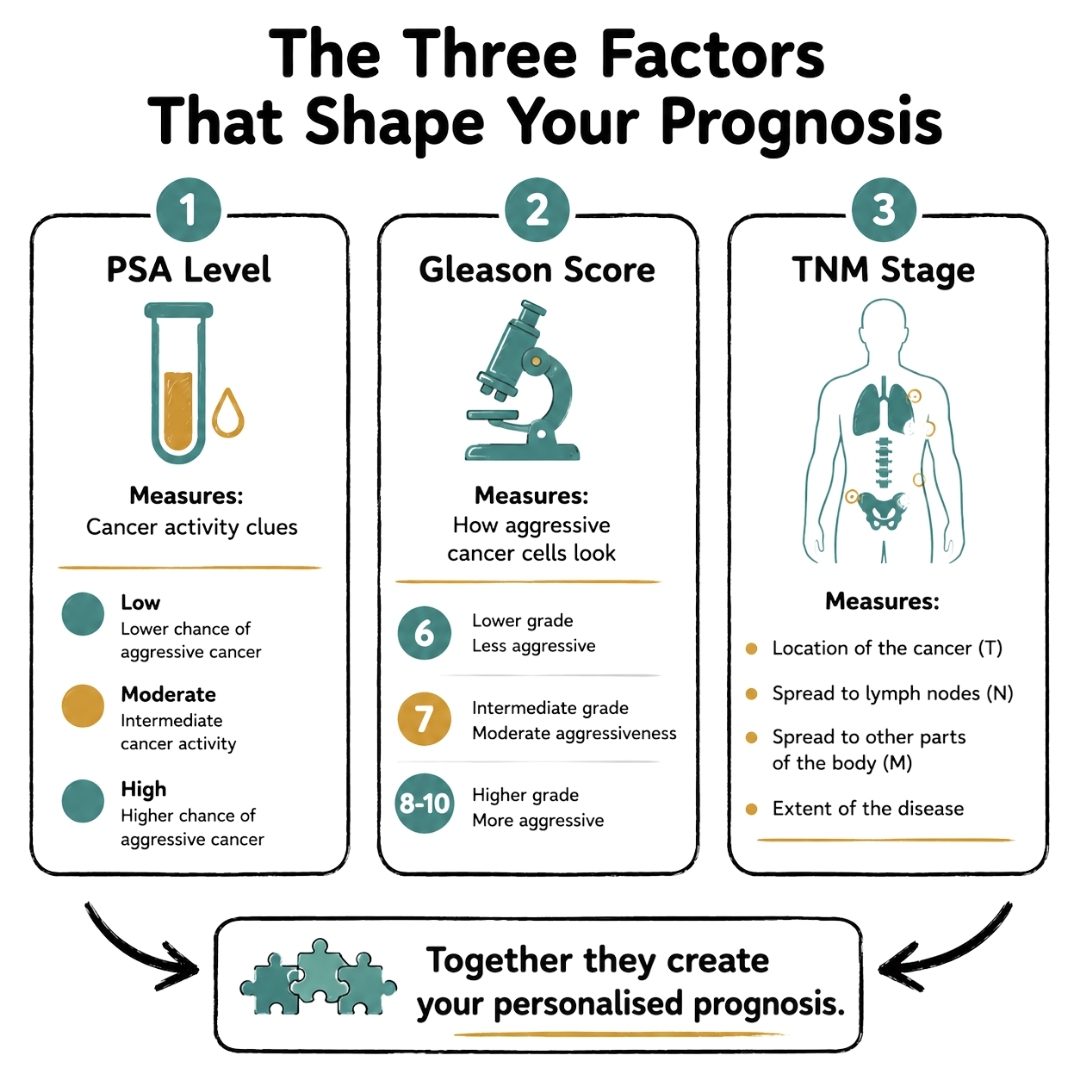
A prognosis for prostate cancer is never just a doctor's hunch or the result of a single test. It's a comprehensive picture, built from several crucial pieces of information gathered during your diagnosis. Each factor gives your medical team vital clues about the unique character of your cancer.
Think of it like solving a puzzle. You need every piece in place before the full picture emerges. When it comes to your prognosis with prostate cancer, the three most important pieces are your PSA level, the cancer’s grade, and its stage. Let’s explore how each one helps create your personal prognostic profile.
One of the first tests you likely had was the Prostate-Specific Antigen (PSA) blood test. PSA is a protein naturally produced by the prostate, and it’s perfectly normal for a small amount to be in your bloodstream. However, a raised PSA level can be a sign of prostate cancer, although it can also occur for several non-cancerous reasons. PSA is therefore interpreted alongside other tests rather than on its own.
For a man already diagnosed, the PSA level provides important context. A very high PSA might suggest a larger tumour or that the cancer has started to spread. It's one of the first indicators that helps your medical team understand the scale of the disease.
But the PSA number is just one part of the story. It’s most powerful when it's considered alongside other key factors, such as the Gleason score and cancer stage, as this gives a much clearer picture of the cancer's activity.
The next critical piece of the puzzle comes directly from your biopsy. When a specialist (a pathologist) examines your prostate tissue under a microscope, their job is to see how different the cancer cells look compared to healthy ones. This assessment is captured in what’s known as the Gleason score.
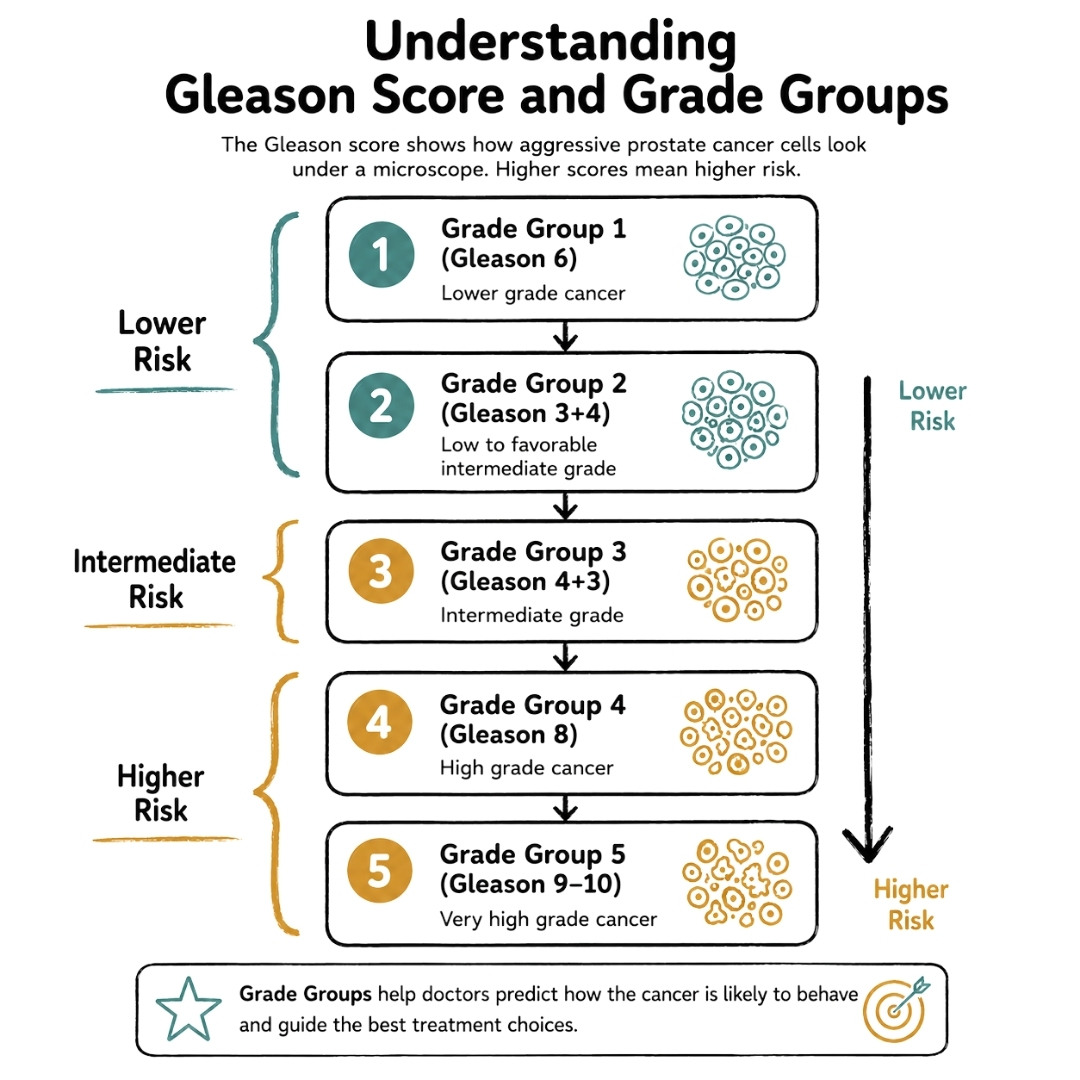
You can think of the Gleason score as a 'report card' for the cancer cells. The pathologist identifies the two most common patterns of cancer cells in the sample and assigns each a grade from 1 to 5, reflecting how abnormal and aggressive they appear.
Your Gleason score is calculated by adding together the two most common grades seen in your biopsy sample, usually resulting in a score between 6 and 10. For example, a score of 3+4=7 means the main pattern was Grade 3, but a secondary, more aggressive pattern of Grade 4 was also present. This combined score is a direct measure of how aggressive the cancer is likely to be.
To make things simpler, this system is now often translated into ISUP (International Society of Urological Pathology) Grade Groups. This converts the Gleason scores into a straightforward 1-to-5 scale, making it much easier to understand the cancer’s likely behaviour.
ISUP Grade Group System
The final core component of your prognosis is staging. While the Gleason score explains how aggressive the cancer is likely to be, staging tells you about its location and spread (where it is). It answers the fundamental question: "How far has the cancer travelled?"
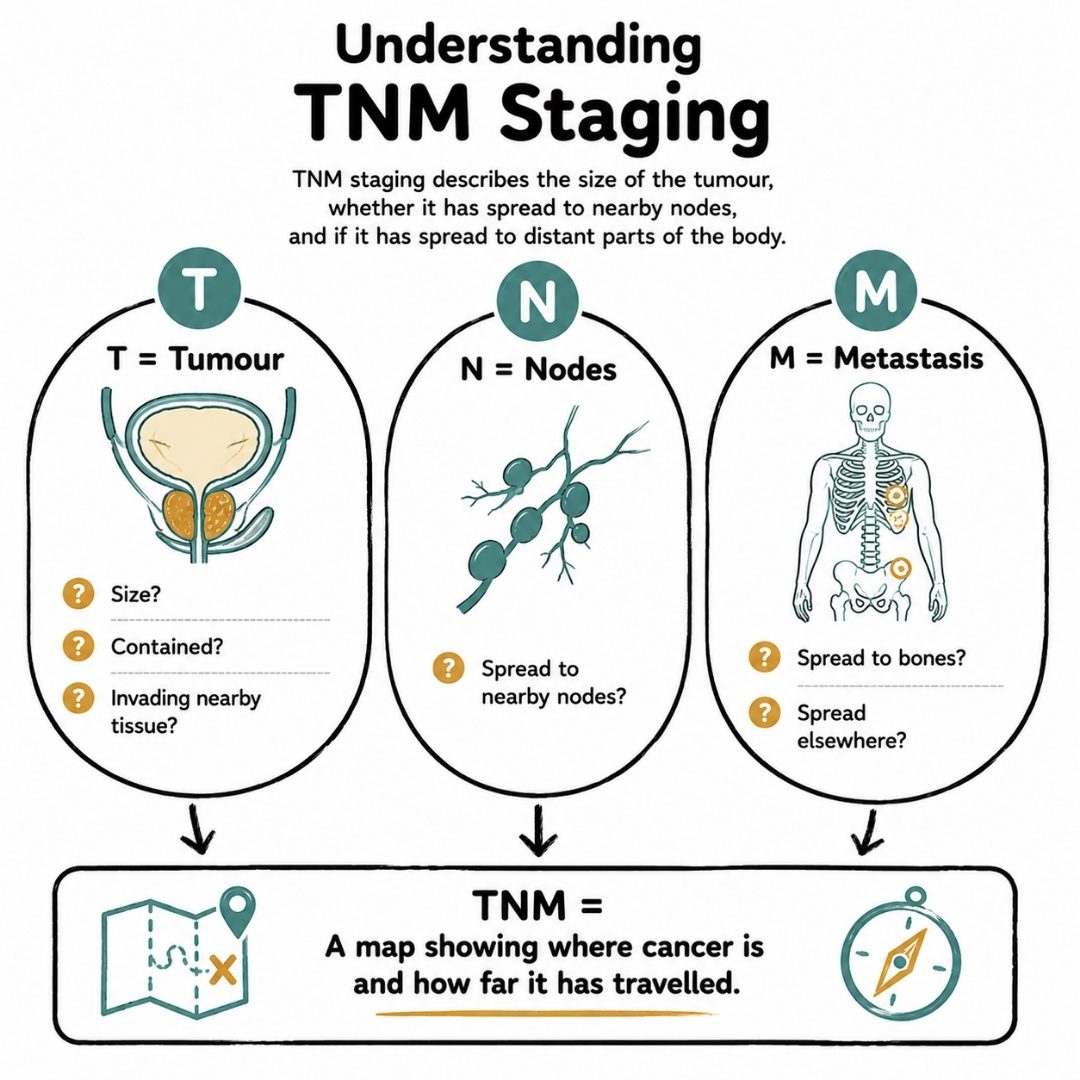
Clinicians use the TNM system to stage prostate cancer, creating a detailed map of the disease.
A full TNM stage gives your medical team a precise map of the cancer's physical footprint in your body. This classification is essential because it points directly toward the most suitable treatment options and helps define your overall prognosis. To learn more about how staging works, you can read our guide on the stages of prostate cancer.
Coming face-to-face with statistics like the ‘5-year survival rate’ can feel cold and frightening. It’s natural to see these stark numbers and feel a wave of anxiety. But here’s the important thing to remember: those statistics are not about you or your future. They are historical averages, a snapshot of what happened to groups of men in the past.
Think of it like looking in a car’s rear-view mirror. It shows you where you’ve been, not the open road ahead. A prognosis with prostate cancer today is built on a foundation of treatments and knowledge that are far more advanced than they were even a decade ago. The outlook is genuinely much more hopeful.
These numbers are just averages, drawn from the experiences of thousands of men. They can't possibly capture your unique situation, your age, overall health, the exact stage and grade of your cancer, or the cutting-edge treatments now available. Those personal factors are what shape your individual prognosis and guide the decisions you and your doctors make together.
So, what do these survival statistics really mean? When you see that the five‑year survival rate is 90%, it simply means that out of 100 men diagnosed, 90 were still alive five years later. It’s a group measure, not a personal stopwatch.
For the vast majority of men, particularly when the cancer is localised (meaning it hasn’t spread beyond the prostate gland), the prognosis is excellent. According to data from the National Cancer Institute's SEER Program, the five-year relative survival rate for localised prostate cancer is nearly 100%. This means men in this situation are, on average, just as likely to live for at least five years as men their age who don't have cancer.
You might also come across the term median survival. This is just the statistical halfway point. If the median survival for a group is ten years, it means half of those men lived longer than ten years, and half lived less. It’s the middle of a very wide range of outcomes, not a ceiling on your own life expectancy.
The world of prostate cancer detection and treatment has changed dramatically for the better in recent years. This constant progress means that survival statistics from five or ten years ago are already out of date and no longer reflect the outlook men can expect today.
Data from the UK highlights just how far things have come. Over the past 15 years, survival rates have risen significantly, showing the impact of better testing, earlier detection, and more effective treatments.
| Survival Period | Diagnosed 2000-2004 | Diagnosed 2015-2019 | Improvement |
|---|---|---|---|
| One-Year | 90.8% | 94.8% | +4.0% |
| Five-Year | 65.3% | 75.3% | +10.0% |
Source: UK population-based prostate cancer survival data published in JAMA Network Open (2024). Figures represent overall survival across men of all ages and disease stages.
As you can see, the chances of living for at least one year after diagnosis rose from 90.8% to 94.8%. Even more impressively, the five-year survival rate jumped a full 10 percentage points, from 65.3% to 75.3%.
These figures confirm that a man diagnosed with prostate cancer today has a significantly better outlook than a man diagnosed in the past.
This upward trend is driven by huge strides in diagnostics, like more sensitive PSA testing, and more effective, targeted treatments that are continually rewriting what's possible. Our guide to the Prostate-Specific Antigen (PSA) test can help you get to grips with this key health marker.
Your prognosis is never just about the cancer itself; your overall health and age are a massive part of the conversation. A clinician always considers the whole person when discussing an outlook, because these factors can dramatically influence treatment decisions and long‑term expectations.
Let's look at two very different examples:
Imagine an older man in his 80s who has other significant health problems. If he's diagnosed with a low-risk, slow-growing prostate cancer, he is far more likely to live out his natural life and pass away from other causes, rather than the cancer itself.
Now, consider a fit and healthy man in his 50s with the same diagnosis. His life expectancy is much longer, so his medical team will likely recommend proactive treatment to make sure the cancer doesn't become a problem decades down the line.
This is why your personal prognosis is a tailored assessment. It places the facts about the cancer into the context of you as an individual. General statistics can be useful, but they should always be taken with caution. Your personal health profile is what truly defines your outlook.
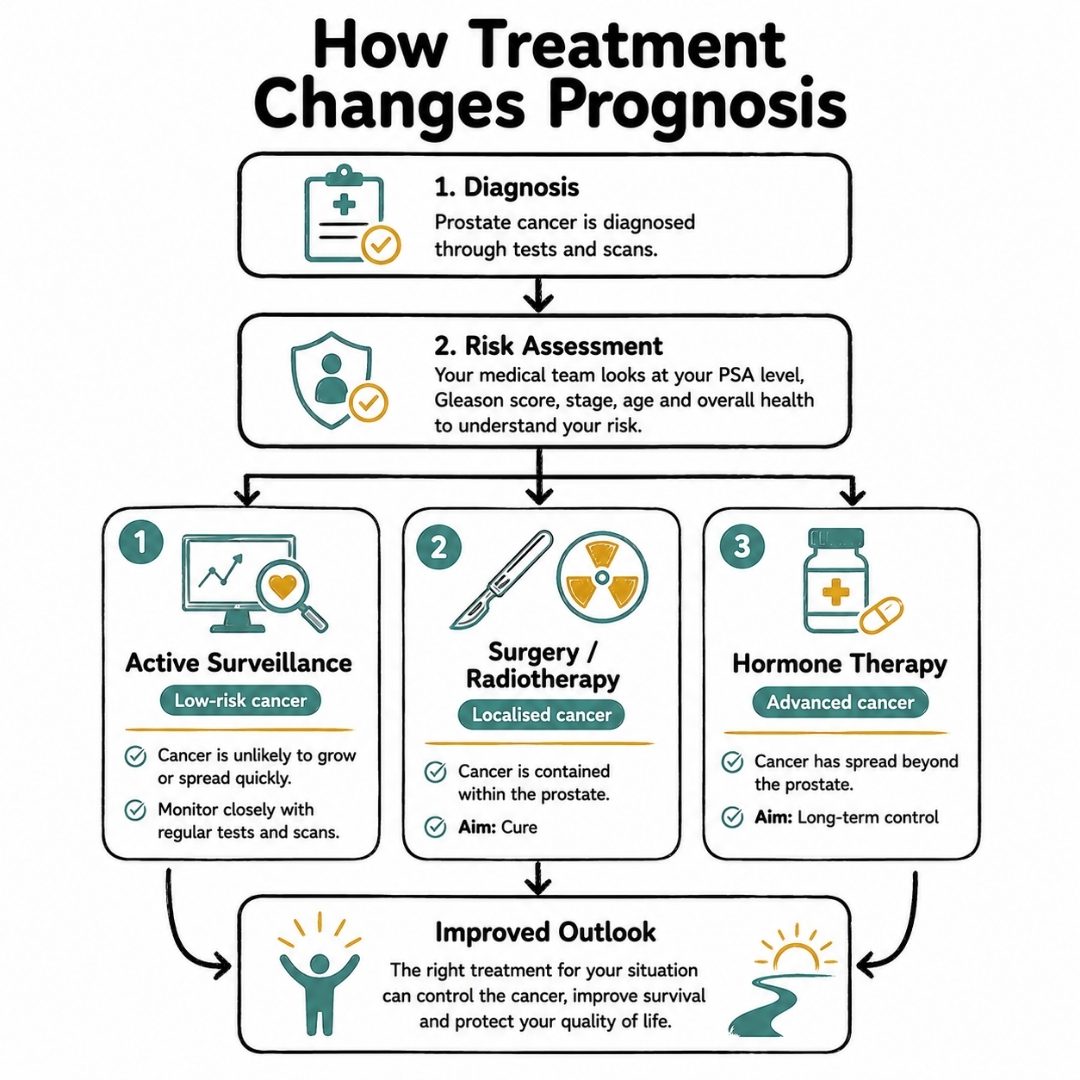
It’s important to remember that your initial prognosis is not a final verdict. Think of it as a starting point on a map. The direction you take from here, the treatments you choose, and the monitoring you undergo have a massive impact on your long-term outlook.
Modern prostate cancer care gives you powerful tools to manage your future actively. Your outcome isn't set in stone by your first set of test results; it evolves through the decisions you and your healthcare team make together. Let’s look at how different treatment strategies can positively influence your prognosis with prostate cancer.
For many men diagnosed with a low-risk, slow-growing prostate cancer (typically Grade Group 1), the best initial step can be, surprisingly, to do nothing at all. This is not ignoring the problem; it's a carefully planned strategy called Active Surveillance. This approach is based on the understanding that many prostate cancers grow so slowly that they may never cause any harm in a man's lifetime.
Rather than jumping straight to treatments that may have side effects, your condition is monitored closely and systematically.
Your follow-up schedule under active surveillance would typically include:
This approach puts your quality of life first, helping you avoid or significantly delay the side effects of surgery or radiotherapy, while the cancer is carefully monitored. The goal is to intervene only if the cancer shows signs of becoming a genuine threat.
When prostate cancer is more advanced or starts showing signs of progression, the focus often shifts towards a cure. For cancer that hasn't spread beyond the prostate, the two main treatment routes are surgery and radiotherapy. Both are highly effective and can lead to an excellent long-term prognosis for many men.
Both approaches have a long, proven history of success and remain central to curative treatment strategies for prostate cancer.
Choosing between these treatments isn't always straightforward. It will come down to a detailed conversation with your doctor about your specific cancer, your age and health, and what matters most to you regarding potential side effects.
Even when prostate cancer has spread beyond the gland, it's far from the end of the road. Modern treatments can often control the disease for many years, effectively turning it into a manageable long-term condition. The main tool for this is Hormone Therapy, also known as androgen deprivation therapy (ADT). While hormone therapy can be highly effective, some cancers eventually develop resistance and require additional treatments.
Think of the male hormone testosterone as fuel for prostate cancer cells. Hormone therapy works by cutting off that fuel supply, either by stopping your body from producing testosterone or by blocking it from reaching the cancer cells. This effectively starves the cancer, slowing its growth or even shrinking tumours, no matter where they are in your body.
While it is not usually a cure on its own, hormone therapy can be remarkably effective at controlling symptoms and keeping the disease in check for years. This significantly improves the prognosis for men with advanced cancer. It’s a powerful strategy that can transform a difficult diagnosis into a treatable, chronic condition. For a deeper understanding, see our guide on Hormone Therapy for Prostate Cancer.
Once you understand the statistics and clinical details, it’s easy to assume that prognosis is all about numbers. But the truth is that the most important part of this journey isn't a statistic. It’s you. Your day-to-day quality of life, how you feel physically, mentally, and emotionally, is what truly matters.
Living with a prostate cancer prognosis means finding a way to shift from merely surviving to truly living. A good care plan is not just about treating the cancer; it's about supporting you as a whole person and helping you live as fully and meaningfully as possible.
Even the most effective prostate cancer treatments can bring side effects that change your daily life. Talking openly about these possibilities from the start helps you and your family prepare, and tackling them head-on is an essential part of your long-term wellbeing.
For many men, the most common challenges after treatment involve urinary and sexual function.
You don't have to endure these side effects. Specialist nurses and physiotherapists are there to provide practical strategies and much‑needed support to help you regain confidence and quality of life.
Hearing you have cancer and getting a prognosis can unleash a whirlwind of emotions. Fear, anxiety, and a deep uncertainty about what lies ahead are all completely normal reactions. Your mental health is just as important as your physical recovery.
It's okay not to feel okay. Simply acknowledging the emotional weight of a cancer diagnosis is a powerful first step toward regaining some balance. Your care team can put you in touch with counsellors, psychologists, or support groups such as those offered by Macmillan Cancer Support, who understand what you’re going through and can provide guidance, encouragement, and a safe space to share.
Finding healthy ways to cope is personal; what works for one man may be different for another. For some, it might be practising mindfulness, taking a gentle walk in the park, or spending quiet time outside. For others, it's about reconnecting with friends or immersing themselves in a hobby. The goal is to create space to process everything without feeling overwhelmed.
If you're navigating a more advanced diagnosis, equipping yourself with knowledge can also provide a sense of control. Understanding your options and what lies ahead can make the journey feel less daunting. You can learn more in our detailed guide to metastatic prostate cancer.
When it comes down to it, you are the expert on yourself. You're the most important person on your care team, and your voice matters most. It is vital to speak up and make sure your care plan reflects what you need to live well.
Don't be afraid to tell your doctor about a side effect that is troubling you or to ask what support is available. Whether it’s pain, fatigue, or emotional distress, your healthcare team has a duty to help improve your quality of life. By working closely with them, you can ensure the path forward aligns with your own goals for a meaningful and fulfilling life.
Feeling prepared for your medical appointments can make all the difference. It helps you shift from simply receiving information to actively participating in your own care. Clear communication with your doctor is one of the most powerful tools you have for understanding your prognosis with prostate cancer and making decisions you feel good about. The aim is to walk out of every consultation feeling clearer and more in control than when you walked in.
It’s completely normal to feel overwhelmed when you meet with your doctor. You're often hit with a huge amount of complex information in a very short window, and it’s so easy for the questions you had in mind to just vanish. This is exactly why a little bit of preparation goes such a long way; it helps you stay focused, ask what matters most, and ensure your voice is heard.
Before each appointment, set aside some quiet time to think about what you truly want to know. Writing your questions down ensures you won’t forget something important in the moment, and it also shows your doctor that you’re ready to dive into the details together.
If you’re not sure where to start, here are some of the most important questions you can ask:
Never hesitate to ask your doctor to explain something again. If the language is too clinical or you didn't fully understand it the first time, speak up. It’s your health, and you have every right to understand what’s happening.
Beyond having a list of questions, a few simple tactics can dramatically change the dynamic of your appointments.
Bringing a friend, partner, or family member can be invaluable. They can be a second pair of ears, a dedicated note-taker, and a source of emotional support. They might even think of questions that hadn't occurred to you.
I recommend bringing a dedicated notebook and pen to every appointment. Jot down the answers to your questions, key terms your doctor uses, and any next steps. This becomes your personal health logbook, a vital resource you can look back on when you're trying to process everything later.
When your doctor talks about statistics, ask them to bring those numbers to your situation. For instance, if a survival rate is mentioned, a good follow-up is, "How does that statistic apply to someone of my age and general health?" This helps transform abstract data into information you can actually relate to.
To help you get ready, we’ve put together a much more detailed list of topics. You might find our guide on the top questions to ask your oncologist really useful. By taking these steps, you ensure your voice is heard and that you are at the centre of every decision made about your care.
It’s completely normal to have more questions pop up after you’ve had time to process your diagnosis and initial prognosis. Let's walk through some of the most common ones that men ask, providing clear, reassuring answers to help you feel more informed and confident about the journey ahead.
Yes, it absolutely can and often does change. Think of your initial prognosis as a starting point, a forecast based on the information available right now. It is not fixed.
For many men, the outlook improves significantly following successful treatment. If surgery or radiotherapy manages to clear all the cancer, your long-term prognosis becomes very positive. On the other hand, if the cancer returns or spreads later, your prognosis would be reassessed to reflect that new situation. This is precisely why ongoing monitoring with PSA tests and regular check-ins with your healthcare team is so important; your prognosis evolves alongside your health, ensuring your care plan always reflects your current needs.
Not necessarily, and this is a really important point. A high Gleason score (8-10) or an ISUP Grade Group of 4-5 indicates that the cancer cells are aggressive and need to be taken seriously. But that's only one part of the overall picture.
Your prognosis is shaped by several factors together: the grade, the stage (whether the cancer has spread), and your PSA level. Considering all of these elements provides a more accurate and personal outlook than any single measure alone.
It's entirely possible to have a high-grade cancer that is still contained entirely within the prostate gland. While this is a clear signal that we need to act decisively, it's often still curable with treatments like surgery or radiotherapy. For many men in this position, a cure is still the number one goal.
Your age and overall health are huge factors in how a prostate cancer diagnosis is viewed. Since many prostate cancers grow very slowly, a low-risk diagnosis in a man in his 80s, who may have other health conditions, might never actually cause him any harm during his lifetime. In such cases, his general health is a much bigger factor in his life expectancy than the cancer itself.
By contrast, a younger, healthy man with the same diagnosis is viewed with more urgency simply because there's a longer potential lifespan for the cancer to grow and cause problems. This is why more proactive treatment is often recommended for younger men; the goal is to secure a long-term, curative outcome.
Your doctor will always put your age and overall health at the centre of the conversation, ensuring your care plan is tailored to your unique circumstances.
These terms are easy to mix up, but they measure two very different things.
For understanding your personal outlook, survival rates are far more relevant. It's also worth noting that in countries like the UK, about 75% of prostate cancer deaths happen in men aged 75 and older, showing the strong link with advancing age. Encouragingly, projections show that mortality rates are expected to continue falling. You can explore the data further in this evidence review of prostate cancer mortality.
A prostate cancer prognosis is not a final verdict; it is a starting point and a guide to help you and your healthcare team make the best decisions for your health. While the statistics, test results, and medical details can feel overwhelming at first, remember that every person's experience is unique. Your future is shaped by far more than numbers alone. It is influenced by the treatment choices you make, how you respond to care, and the support you receive along the way.
With ongoing advances in diagnosis, treatment, and supportive care, many men go on to live full, active, and meaningful lives after a prostate cancer diagnosis. By staying informed, working closely with your healthcare team, managing side effects, and looking after your emotional well-being, you give yourself the best possible chance to live well for as long as possible. Above all, remember that you are not alone on this journey. With the right information, support, and mindset, there is every reason to face the future with hope and confidence.
We strongly advise you to talk with a health care professional about specific medical conditions and treatments.
The information on our site is meant to be helpful and educational but is not a substitute for medical advice.
Support lymphatic health during cancer recovery. Learn practical tips and expert advice from Kirsty Wales, the Award-Winning Lymphatic Drainage Therapist
Understand normal PSA levels by age with our clear guide. Learn what the numbers mean, what factors affect them, and when to speak with your doctor.
"Since My Diagnosis I Have Had Many Conversations With Men About Their Risk, The Need To Be Screened And Prostate Cancer Survival".