Hearing the words “metastatic prostate cancer” can feel overwhelming and, frankly, a bit frightening. Let’s break down what it actually means. In simple terms, the cancer that started in the prostate gland has travelled to other parts of the body.
It’s a bit like a dandelion that has gone to seed. The original tumour is the dandelion head, and metastatic cancer is what happens when the wind carries those seeds to new spots in the garden, where they start to grow.
That word, "metastatic," brings a lot with it, a rush of difficult emotions and a hundred new questions. That’s a completely normal reaction. The aim of this guide is to cut through the clinical jargon, explain what’s happening in a clear way, and show you that while this is a serious diagnosis, there are many good ways to manage it.
This news does signal a change in gear. For early-stage prostate cancer, the conversation often revolves around a cure. With metastatic disease, the goal shifts to managing it as a long-term, chronic illness. The focus becomes controlling its spread, easing any symptoms, and protecting your quality of life for as long as possible.
It's so important to remember that this diagnosis isn't an end point. For many men, it’s the start of a new treatment path, one with advanced therapies that can offer years of good-quality life. You are not walking this path alone.
When prostate cancer cells break away, they typically travel through the bloodstream or the lymph system. While they could theoretically go anywhere, they have a few preferred destinations. Knowing these common spots helps your care team stay one step ahead in managing any symptoms that might pop up.
The main areas include:
Here’s a really crucial point: even when prostate cancer is found in your bones, it’s still prostate cancer. It's not bone cancer. The cells in that new location are the same as the ones from the prostate, which means they respond to treatments specifically designed to fight prostate cancer.
This diagnosis marks a significant moment, but it's one you’ll face with a whole team of experts right beside you. Medicine has come a long way in treating advanced prostate cancer. You can learn more about what a metastatic cancer diagnosis means in our detailed guide. The focus now is on building a personalised plan just for you, helping you move forward with clarity, hope, and the best support possible.
It feels like we’re hearing more about prostate cancer than ever before, which is a massive step forward. But when you dig into what that really means, you find two very different stories playing out. On one side, we have incredible progress in awareness. On the other, there’s the tough reality that for thousands of men each year, a diagnosis only comes when the cancer has already spread.
The numbers certainly paint a vivid picture of how much awareness has grown. For instance, recent data shows prostate cancer has become the most commonly diagnosed cancer in England, even more so than breast cancer. This isn't a sudden blip, either; it’s part of a significant rise over the last decade, mostly thanks to brilliant campaigns that have encouraged more men to get a simple PSA blood test. You can explore more about these significant trends and what they mean.
But there’s a flip side to this success story. For too many men, the conversation about prostate cancer starts too late. A diagnosis that comes after the cancer has already advanced and spread is a completely different ball game. When it becomes metastatic, the road ahead is more complex, and the goalposts for treatment have to shift.
The difference between an early-stage and a late-stage diagnosis is stark, and it gets right to the heart of why we talk about this so much. If prostate cancer is found while it’s still tucked away inside the gland, you generally have a wider menu of treatment options, many of which aim to cure it completely. Once it escapes and travels to other parts of the body, the focus changes from a cure to managing it as a long-term, chronic illness.
This is why getting to grips with the current situation is so vital. It’s not about scaremongering, but about driving home the importance of:
When we look at the whole picture, we see the amazing strides being made in treatment, but we also see the gaps that still need filling. It’s important to remember that every statistic is a person, a family, and a story.
Behind every one of those statistics is a real person trying to make sense of a life-changing diagnosis. The surge in diagnoses means more men, partners, and families are desperately searching for clear information and genuine support. It highlights just how badly resources are needed—not just to explain the medical jargon, but to help with the emotional rollercoaster and the practical challenges of daily life.
And that’s exactly why we’ve put this guide together. We wanted to create a place where you can find straight answers, feel seen, and connect with people who just get it. Boosting awareness is a fantastic start, but the real work lies in making sure every single person diagnosed has the support they need to navigate what comes next. Facing this with knowledge and a solid support system can make all the difference in feeling more in control of your journey.
Getting to the bottom of what’s going on is the first step toward feeling more in control. When it comes to metastatic prostate cancer, the diagnostic process is a bit like detective work. Your medical team carefully gathers clues from different tests to build a complete picture of your health, allowing them to create a care plan that’s right for you.
Each test provides a unique piece of the puzzle. Together, they help answer three critical questions: Is it cancer? If so, where has it spread? And what's its character, is it slow-moving or more aggressive?
Let's walk through the key steps your team will take.
The journey often begins with a simple blood test to check your Prostate-Specific Antigen (PSA) level. PSA is a protein made by the prostate, and a high level can be a flag that something isn’t quite right. While it’s a vital clue, it doesn't confirm cancer on its own.
You can learn more in our detailed breakdown of the prostate-specific antigen test.
If your PSA is raised or other signs point towards cancer, the next step is usually a biopsy. This involves taking tiny samples of tissue from the prostate to be looked at under a microscope. A biopsy is the only way to be 100% sure.
During this analysis, a pathologist also assigns a Gleason score.
Think of the Gleason score like a personality rating for the cancer. It ranges from 6 (less aggressive, slower-growing) to 10 (more aggressive, faster-growing). This score is crucial because it helps your team predict how the cancer might behave and what treatments will be most effective.
Once prostate cancer is confirmed, the next job is to see if it has travelled beyond the prostate gland. This is where imaging scans come in. They act like a sophisticated set of maps, charting out exactly where the cancer is located in your body.
To get a clearer picture of your situation, your team will likely use a combination of tests. Here’s a quick look at the most common ones.
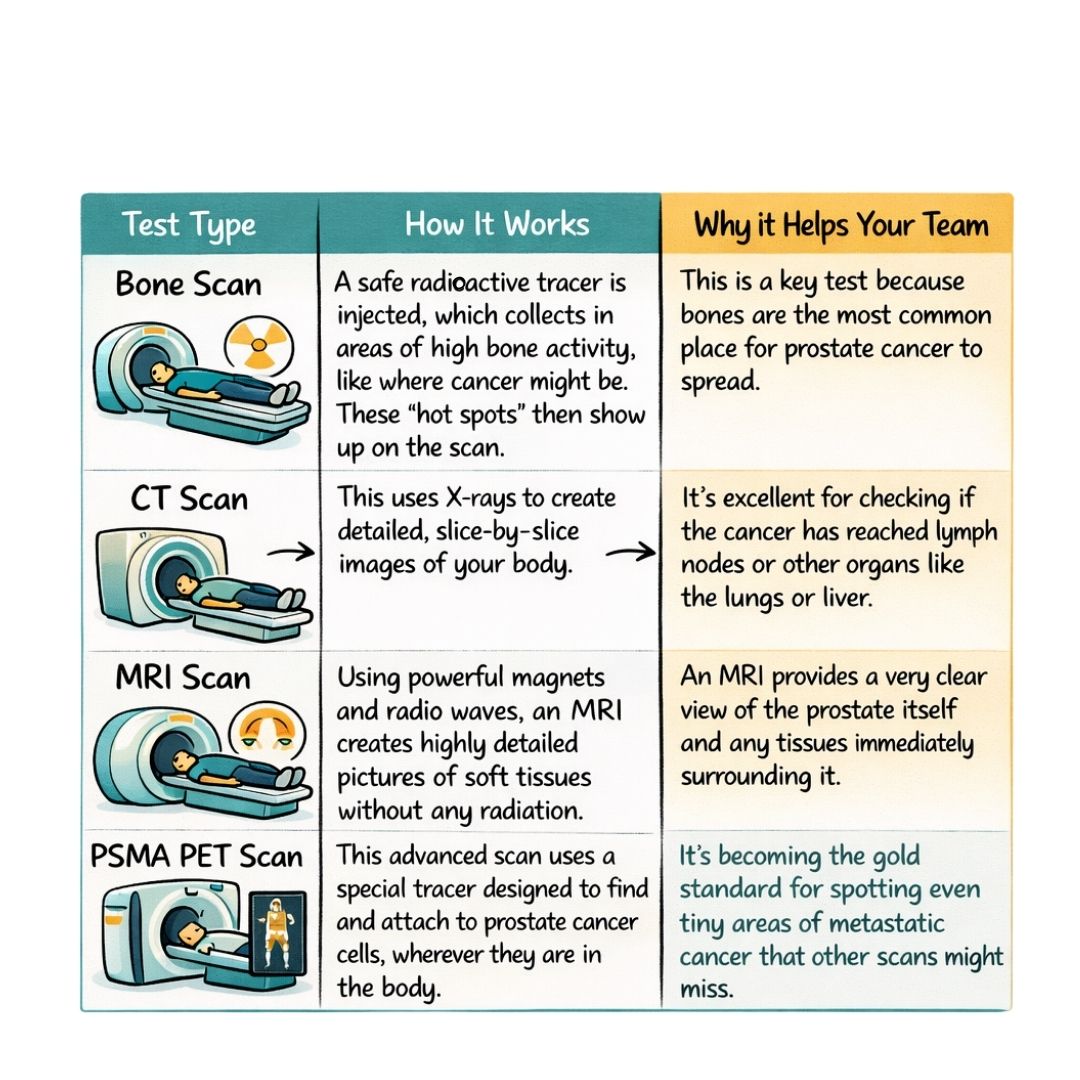
These scans are the eyes of your medical team, allowing them to see what’s happening inside your body with incredible detail.
After gathering all this information, from blood tests, the biopsy, the Gleason score, and the imaging scans, your medical team can finally put the whole puzzle together. This is called staging.
Staging provides a complete summary of the cancer's extent, which is vital for planning the most effective treatment for you. With a clear diagnosis and a detailed understanding of your specific cancer, you and your doctors can have a meaningful conversation about the best path forward. This knowledge empowers you to ask the right questions and be an active partner in your care.
Hearing the words "metastatic prostate cancer" is a lot to take in, and it's completely normal for your first thought to be, "What happens now?" The most important thing to know is that we're in a completely different era of treatment than we were even a decade ago. The focus now is on managing the cancer as a long-term condition, using a whole toolbox of therapies to keep it in check and protect your quality of life.
Try to think of it less like a single, decisive battle and more like a long-term strategy. You and your care team will work together to map out a plan that’s right for you. The goal is always to slow the cancer down, keep symptoms at bay, and help you live well for as long as possible.
And this approach is genuinely working. While metastatic prostate cancer is a serious challenge, the outlook is getting brighter. A large study of nearly 200,000 men showed five-year survival for all prostate cancers has climbed significantly in recent years. Even more encouragingly, one-year survival is now over 94%, a big leap forward driven by these better treatments. You can read up on these encouraging survival trends on JAMANetwork.com.
For most men with metastatic prostate cancer, the first and most important line of defence is hormone therapy. You might also hear it called Androgen Deprivation Therapy, or ADT. It’s based on a simple fact: prostate cancer cells need male hormones, like testosterone, to grow. Hormone therapy's job is to cut off that fuel supply.
It’s a bit like taking the batteries out of a toy – without the power source, it just can't work. This is an incredibly effective way to shrink tumours and slow the cancer’s progress, often keeping it under control for years.
There are a few different ways to receive hormone therapy. To get a better handle on the specifics, our dedicated guide on hormone therapy for prostate cancer is a great place to start. It's true that there can be side effects like hot flushes or tiredness, but your team will be right there with you to help manage them.
Sometimes, hormone therapy isn't quite enough on its own, or the cancer might be more aggressive right from the get-go. This is when your team will bring in other systemic treatments – therapies that travel through your bloodstream to hunt down and fight cancer cells no matter where they are in your body.
Chemotherapy: This uses powerful medicines to destroy fast-growing cells. It’s a common choice when the cancer stops responding to standard hormone therapy. While chemo has a tough reputation, the support medications we have today are much better at helping you manage the side effects.
Novel Hormone Therapies (ARPIs): Think of these as a new and improved generation of hormone therapy. They are incredibly good at blocking testosterone, mopping up even the tiniest amounts that older treatments might miss. This makes them a fantastic second line of defence.
Targeted Therapy: These are clever, newer drugs designed to exploit specific weaknesses found only in the cancer cells. They are often an option if your cancer has certain genetic markers.
The modern approach is often to use these treatments in combination. For instance, combining traditional hormone therapy with a newer hormone drug or chemotherapy right from the start has been shown to improve outcomes and help people live longer, healthier lives.
While systemic therapies tackle the bigger picture, sometimes a particular spot needs some direct attention. This is where local treatments shine. Their main job is to relieve symptoms, like pain from a tumour that has spread to a bone, and improve your day-to-day comfort.
Radiotherapy: Using focused beams of high energy, radiotherapy can target and shrink a tumour in a very precise location. It’s a fantastic tool for easing bone pain and can also help strengthen the bone to prevent fractures.
Surgery: While an operation to remove the prostate gland can't cure metastatic cancer, it might be used in specific cases to relieve symptoms, like fixing a blockage that's making it difficult to pass urine.
Your treatment plan isn’t set in stone. It will be flexible, changing and adapting as your situation evolves. This ensures you’re always getting the most effective care, allowing many men to manage metastatic prostate cancer as a chronic condition for years while still enjoying their lives.
When you’re living with metastatic prostate cancer, the big-picture treatments are only half the story. The other half is about your day-to-day life, managing your comfort, keeping your energy up, and simply feeling as good as you can. It’s a partnership between you and your medical team, focused on proactively handling both the cancer’s symptoms and the side effects of your treatment.
Everyone's journey is different, but many men run into similar challenges along the way. Knowing what to expect and having a few practical strategies up your sleeve can make all the difference, helping you feel more in control. This isn't just about major medical appointments; it's about the small, daily adjustments that improve your quality of life.
Often, the most pressing issues come directly from where the cancer has spread or from the very treatments designed to control it. The good news is, there are some really effective ways to get relief.
Two of the most common hurdles you might face are:
It’s so important to be open with your care team about any new or worsening symptoms. Don't ever feel like you just have to "tough it out." Your doctors have a whole toolbox of options to help, but they can't use them if they don't know what you’re going through.
The therapies that are so good at keeping metastatic prostate cancer in check can bring their own set of challenges. Hormone therapy, for instance, is a cornerstone of treatment but can cause things like hot flushes, mood swings, and a lower sex drive.

The reality of metastatic prostate cancer is that thousands are diagnosed at this incurable stage every year. Healthcare bodies closely monitor post-treatment complications – like urinary issues after surgery or bowel problems from radiotherapy – which is vital for patients often juggling multiple therapies. For families, this means navigating prolonged uncertainty, with hundreds of thousands affected. Cancer Care Parcel is here to support this community with practical, evidence-based guides on everything from managing bone pain to tackling chemo fatigue, alongside workshops for caregivers. To get a better sense of the national picture, you can review the full report from the National Cancer Audit.
Our guide on managing cancer pain offers further practical tips for dealing with physical discomfort.
The emotional journey is just as real and just as important as the physical one. It's not just about the body; understanding the powerful mind-body connection for total wellbeing is key to feeling whole and managing the emotional rollercoaster.
Sometimes, the most powerful thing you can do is connect with people who just get it. Support groups, whether you find them online or in person, are a safe place to share your story and learn from others who are on a similar path. Finding what works for you is what matters most, whether it’s talking, writing in a journal, or practising mindfulness, as you build your resilience for the road ahead.
Hearing you have metastatic prostate cancer can feel incredibly isolating, but you absolutely don't have to face this journey alone. In fact, putting together a strong support system is one of the most important things you can do for yourself.
This isn't just about leaning on family and friends. It's about consciously building a team that can help with your medical care, emotional wellbeing, and all the practical day-to-day stuff. Think of it like assembling your own personal crew, with you firmly in the captain's chair. This way, everyone – including you – has the backup they need.
A key part of your support network, and one that's often misunderstood, is the palliative and supportive care team. There's a persistent myth that this is just for end-of-life care, but that simply isn't true.
Supportive care is all about improving your quality of life, right from day one. The goal is to help you manage symptoms, ease treatment side effects, and navigate any emotional or spiritual challenges that come up. It works hand-in-hand with your cancer treatment, not as a replacement for it.
This team of specialists can make a world of difference, helping with everything from bone pain and fatigue to the emotional toll of a diagnosis. Bringing them in early helps you feel as good as you possibly can, for as long as you can.
The emotional impact of living with metastatic prostate cancer is every bit as real as the physical side. It’s so important to find a safe outlet to work through all the feelings that will inevitably surface.

Sometimes friends and family are desperate to help but just don't know what to do. Pointing them towards resources on thoughtful gifts for cancer patients can give them simple, practical ideas to show they care.
Lastly, it’s okay to ask for help with the practical stuff. Life keeps moving, and you might need a hand with transport to appointments, sorting out finances, or even just doing the weekly shop.
Many cancer charities and local groups offer these kinds of services. A great starting point is to chat with the hospital social worker or a cancer support nurse. They can connect you with resources that can take some of the pressure off, leaving you more energy to focus on what matters most: your health.
When you or someone you care about is diagnosed with metastatic prostate cancer, questions are completely natural. It’s a lot to take in. This section aims to provide straightforward answers to some of the things we hear most often, hopefully bringing a bit more clarity to your journey.
Right now, metastatic prostate cancer isn't considered curable, but it is absolutely treatable. The focus of modern medicine has shifted to managing it like a long-term, chronic illness—much like how we treat conditions such as diabetes or heart disease.
The goal is to keep the cancer under control, manage any symptoms, and ensure you can live well for as long as possible. And the good news is, with the range of advanced treatments available today, many men are living full lives for many years after their diagnosis.
It helps to think of them as different tools in a toolkit, each with a specific job.
Hormone therapy (also known as Androgen Deprivation Therapy or ADT) is usually one of the first treatments used. Its job is to cut off the fuel supply to the cancer cells. It works by reducing the levels of male hormones, like testosterone, which prostate cancer needs to grow.
Chemotherapy, on the other hand, is a more direct approach. It uses powerful medicines that are designed to find and destroy rapidly dividing cells throughout the body, which includes cancer cells. It's often brought in when the cancer has stopped responding to hormone therapy, or if it's particularly aggressive right from the start.
Your oncology team will look at the big picture, your overall health, the specific details of your cancer, and how you've responded to other treatments, to figure out which approach, or combination of approaches, is the right fit for you.
Supporting a loved one through this is one of the most important things you can do, and it doesn't require you to have all the answers. Your support can be both practical and emotional.
Here are a few ways you can make a genuine difference:
We strongly advise you to talk with a health care professional about specific medical conditions and treatments.
The information on our site is meant to be helpful and educational but is not a substitute for medical advice.
Facing a stage 4 bowel cancer diagnosis? This clear guide explains what it means, how it spreads, treatment options, managing symptoms, and ways to protect your quality of life, empowering you with facts and next steps.
A clear, compassionate guide to stage 4 lung cancer. Understand advanced treatments, symptom management, diagnosis, and finding meaningful support.
Understanding lung cancer stages helps guide treatment decisions and support personalised patient care.