An extract from‘ From Both Ends of the Stethoscope: Getting through breast cancer—by a doctor who knows'
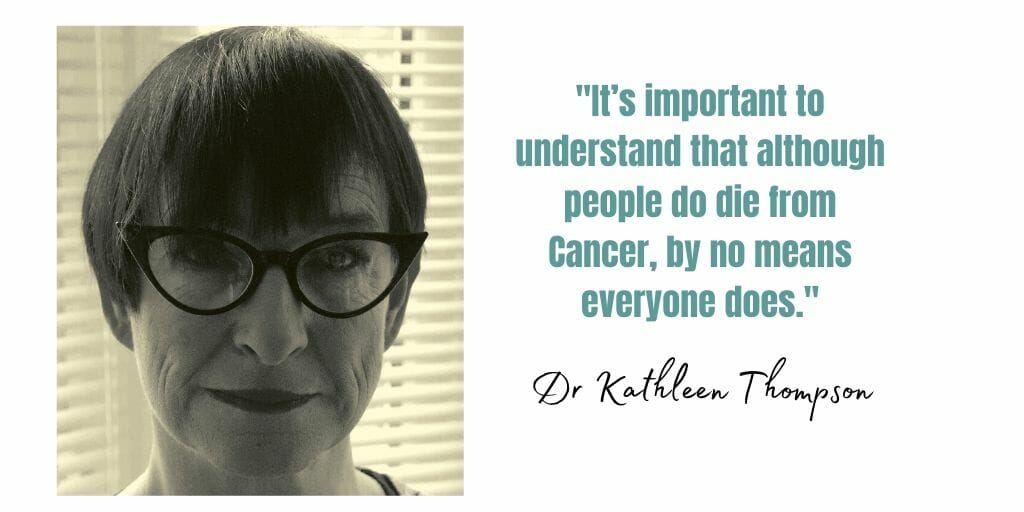
by Dr Kathleen Thompson
When I was a newly-qualified doctor, the medical profession used a series of euphemisms for it. This way, we could talk about a patient’s illness in front of them, without them understanding the horror of what we were saying. First we called it carcinoma, but when this word became more generally recognized for what it was, we switched to neoplasia — always one step ahead of public knowledge. Just thirty years on, this behaviour is totally unacceptable, and quite rightly. Doctors and other medical staff are expected to be as frank and honest as possible with their patients. At the time, though, we truly believed we were being kind.
It was hushed up as something too shocking to share. Many people didn’t even know they had cancer; their relatives would be told, but they would be kept in the dark.
This made the Cancer Demon even bigger and more scary than it actually was, because the only time people knew someone had cancer was when they were about to die or had already died. This compounded the myth that cancer was always a death sentence.
Some cancers can be cured, and even where they’re not cured, one can often continue to lead a full and active life for many years.
Many people still don’t know this though, or if they know it at an intellectual level, it still hasn’t sunk in at an emotional one. Deep in our psyche, cancer is synonymous with Death, Suffering, Pain, Horror and Hopelessness. People’s experiences of learning they have cancer will differ, influenced partly by circumstances, past experiences and individual personalities. However, human reaction to extremely difficult situations has been researched, and it seems that there are some common threads.
Her book On Death and Dying, published in 1969, talks about different stages that people go through when faced with death. These have become known as the Five Stages of Grief because we now realise that people go through these stages in many catastrophic life situations such as bereavement, or finding out that they have a life-threatening disease. Knowledge of these stages can help us understand people’s occasionally bizarre reactions to the extremely bad news, and can also give us insight into our own behaviour.
Kübler-Ross named the five stages:
These stages are normal, and the hope is that people will work their way through them all until they finally reach an acceptance of their situation. However, people in terrible situations haven’t always attended a How-to-Behave-in-Dire-Situations course and (as Kübler-Ross herself realised), they don’t always go through the stages in neat order, or at all. Sometimes they skip stages or go back and forth between them, and some people become permanently stuck and never achieve acceptance.
‘There must be some mistake’. People may demand second, third and fourth opinions. At a subconscious level most of us consider ourselves immortal — dying is something that happens to other people. Sometimes the news is accepted on one level, whilst denial is demonstrated in other ways, such as terminally ill cancer patients making future plans which are blatantly unrealistic.
People may become angry with their doctors, accusing them of delay in diagnosis or poor care; angry with God or with someone who they feel may have contributed to their illness; angry with other people who are fit and well. ‘Why me? Look at him, he’s smoked all his life, stuffed himself with pies and beer and he’s over eighty and still here. Bloody not fair.’ Someone with cancer may become unreasonably angry with people close to them — who naturally will be confused and upset by this reaction. It’s important to understand that this anger isn’t ‘personal’, it’s just the result of someone struggling to deal with an impossible situation, and sometimes the people closest are the easiest target.

The Bargaining stage is just what it says: ‘God, just let me live until my daughter’s wedding’, ‘Just give me one more year God’, ‘If I give up smoking, let me get better’ and so on.
Eventually, as the realization sinks in, Depression replaces the numbness of denial and the anger and hopeful bargaining. There are many obvious reasons why someone faced with devastation will be depressed, and this stage is necessary as the person faces the true realization of their situation, just remember Loving Yourself Can Be Hard, But It’s Already Inside You so don't give up just yet.
Ideally, if someone has had the time and support to work through the stages successfully, they will start to accept their fate, without denial or anger. It’s possible to lose even the fear of death — trust me, I did. For those who get stuck in a stage though, experienced counseling may be helpful.
Their friends and loved ones will be experiencing the grief of having someone close to them suffering from cancer too, and they may react strangely due to their own denial or anger. It is important to understand this, as these reactions can seriously affect a relationship at a time when you really need each other.
We strongly advise you to talk with a health care professional about specific medical conditions and treatments.
The information on our site is meant to be helpful and educational but is not a substitute for medical advice.
A Young Woman’s Dreams Of Motherhood Are Derailed By Cancer—But What Follows Is A Moving Journey Of Resilience, Love, And Redefining Family.
I Was Presented with A Non-Typical Case It was late one evening when my dear friend Giovanni, an embryologist from Italy, called me. His voice was more serious than usual, and there was a weight to his words that I could tell was both emotional and reflective. Giovanni and I had known each other for […]
Read The Personal Story Of One Mans Love And The Cancer Diagnosis That Shifted His World View | Learning To Laugh At Cancer And Finally Letting Go.