Hearing you have testicular cancer is a lot to take in, but it’s so important to know that this is one of the most treatable cancers there is. Your testicular cancer treatment plan will be built around you, usually starting with surgery. After that, your team might recommend a period of observation, chemotherapy, or radiotherapy. The whole focus is on setting out a clear path to getting you well, building on the fantastic outcomes we see for most men.
Getting a cancer diagnosis can feel like the world has been turned upside down. You're suddenly dealing with a new language of medical terms, a calendar full of appointments, and big decisions to make. It can be overwhelming. But the first thing to hold onto is this: testicular cancer has incredibly high cure rates. It's genuinely one of the biggest success stories in modern cancer care.
You won't be navigating this alone. A dedicated healthcare team will be with you every step of the way, creating a plan that’s specific to the type and stage of the cancer. They’re there to explain every step and make sure you feel confident about the road ahead. Right now, it’s all about getting the right information and building your understanding. That knowledge is powerful—it can turn fear and uncertainty into a feeling of control.
It’s completely normal to feel anxious, but the numbers for testicular cancer really do give solid reasons to be optimistic. When you look at all the different stages and types together, the overall cure rate is over 95%.
For men diagnosed at Stage I, where the cancer hasn't spread beyond the testicle, the cure rate is an amazing 99%. In many developed countries, long-term survival rates are similarly high, showing just how effective the treatments are.
This success is down to a combination of catching it early and having highly effective treatments ready to go. Your medical team will talk you through the options that are right for your specific situation.
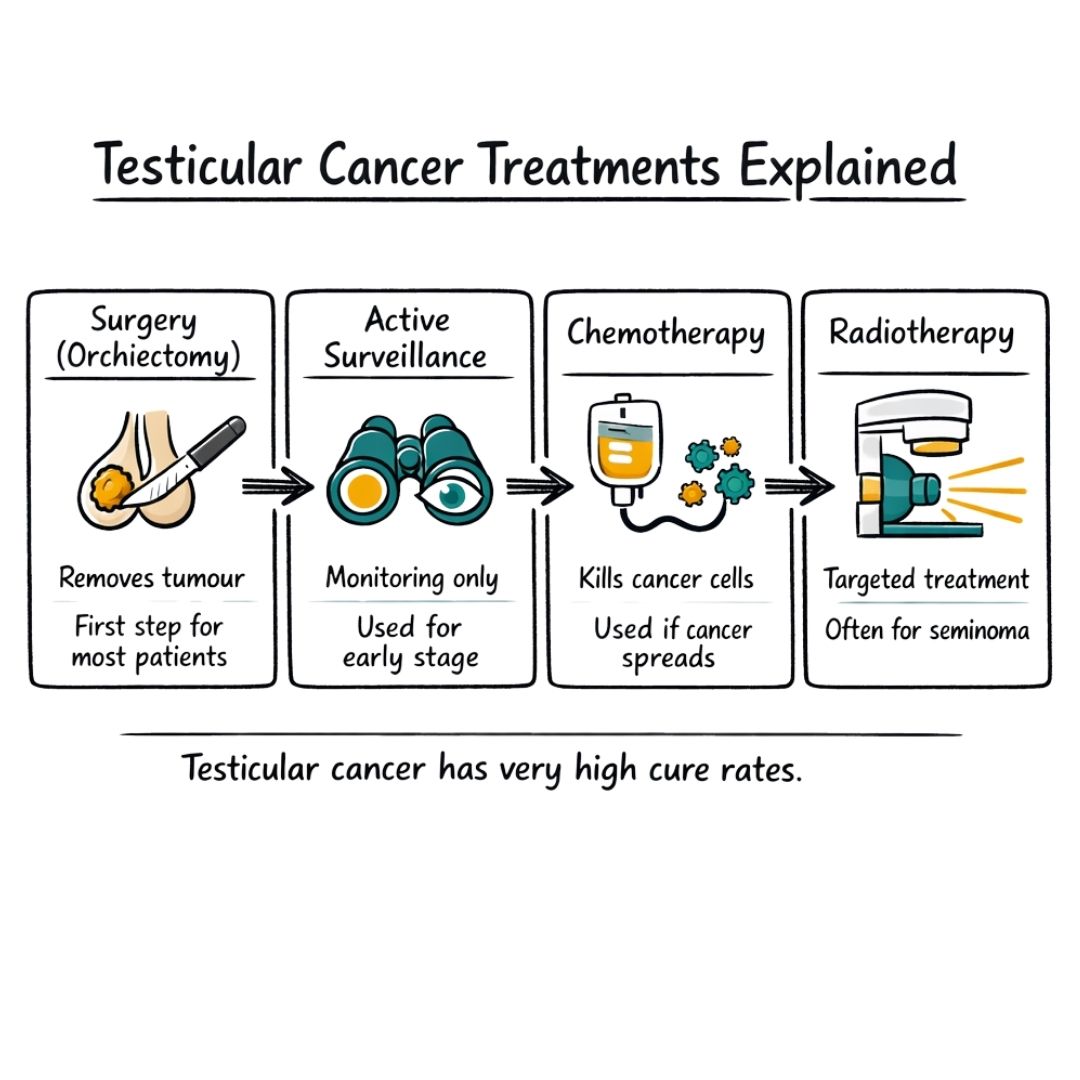
To give you an initial idea of what to expect, here’s a quick summary of the main treatments that are used to manage testicular cancer.
| Treatment Type | Primary Goal | Commonly Used For |
|---|---|---|
| Surgery (Orchiectomy) | Remove the tumour, confirm the cancer type, and prevent spread. | The first step for nearly all testicular cancer diagnoses. |
| Active Surveillance | Closely monitor for any signs of recurrence without immediate treatment. | Low-risk, early-stage cancers after surgery. |
| Chemotherapy | Destroy cancer cells that have spread or might be left after surgery. | Cancers that have spread or are at a higher risk of returning. |
| Radiotherapy | Use high-energy rays to kill cancer cells in specific areas. | Treating seminoma that has spread to nearby lymph nodes. |
These are the core strategies your doctors will consider when putting together your personalised treatment plan.
Coping with a cancer diagnosis is tough, and having good support around you makes all the difference. There are excellent resources out there to help you handle the emotional side of things. You can find practical advice on managing your feelings and getting the right support in our guide to coping with a cancer diagnosis. Your journey forward is a team effort, between you, your doctors, and your friends and family.
When it comes to treating testicular cancer, the journey almost always begins with surgery. This procedure is called a radical inguinal orchiectomy. It might sound a bit intimidating, but it’s a very standard and safe operation that serves as the cornerstone of your treatment.
The surgery involves removing the entire affected testicle through a small incision in the groin, rather than through the scrotum. There’s a very important reason for this approach. By going through the groin, the surgeon can carefully clamp off and remove the whole spermatic cord along with the testicle. This technique dramatically lowers the risk of any cancer cells escaping and spreading elsewhere during the operation.
The orchiectomy does two critical jobs at once. First and foremost, it removes the primary tumour, which is the most immediate and effective way to deal with the cancer. For many men diagnosed with very early-stage cancer, this operation might be the only active treatment they need.
Secondly, the tissue that's removed holds vital clues for your medical team. It’s sent straight to a laboratory where a pathologist, a specialist doctor who acts like a detective for diseases—examines it under a microscope. This deep dive into the cancer’s makeup is absolutely essential for mapping out what comes next. To get a better grasp of this crucial step, you can learn more about the role of laboratory medicine in a cancer diagnosis.
The pathologist's report gives your oncology team the concrete answers they need to move forward. They identify the exact type of cancer cells, which is a game-changer because different types of testicular cancer respond differently to treatments.
There are two main types:
Pinpointing whether you have a seminoma or a non-seminoma is the first piece of the puzzle in creating a treatment plan that’s right for you. It informs every single decision, from whether "watchful waiting" is an option to which follow-up treatments might be best.
At the same time as identifying the cancer type, the pathologist helps to 'stage' it. Staging is just a way of determining how far the cancer has spread from where it started. It answers key questions: How big is the tumour? Has it grown into nearby blood vessels? Has it reached the lymph nodes or travelled to other organs?
Staging is like creating a map of the cancer within your body. This map is essential for your medical team to navigate your treatment journey effectively, ensuring you receive the right level of care for your specific situation.
Your cancer's stage is one of the biggest factors influencing what happens after your operation. For example, a Stage I cancer, which is confined entirely to the testicle, might just need close monitoring after surgery. On the other hand, if the cancer has spread to lymph nodes in your abdomen or further afield, additional testicular cancer treatment like chemotherapy or radiotherapy will be recommended to track down and destroy any remaining cancer cells. This meticulous process ensures your care is tailored precisely to your situation.
Once the surgery is done and the pathology report is back, your medical team will have a much clearer picture of what they’re dealing with. This analysis is crucial because it helps map out the next steps. The main goal now is to settle on the best strategy to make sure the cancer is gone for good.
For a lot of men, especially if the cancer was caught very early, the journey might continue with careful monitoring rather than more treatment straight away. For others, a preventative round of therapy is the surest route to a long-term cure. You and your doctor will sit down and talk through all of these options, weighing up the pros and cons of each to build a plan that feels right for you.
For many men with Stage I testicular cancer, the odds of it returning after surgery are quite low. When this is the case, your doctor may suggest active surveillance. This isn't just a "wait and see" approach; it's a deliberate and proactive strategy to keep a very close eye on your health.
Think of it like having a high-tech security system installed in your body. Instead of jumping into more treatment, you'll stick to a strict schedule of check-ups.
This usually involves a combination of:
The schedule is tightest at the beginning and then gradually spaces out over several years. Surveillance lets you avoid the potential side effects of chemo or radiotherapy while still having a robust safety net. If any trace of cancer does reappear, it’s caught early and can be treated very effectively.
Another path you might discuss is adjuvant therapy. The word 'adjuvant' simply means 'in addition to'. Here, it refers to treatment given after surgery specifically to lower the risk of the cancer coming back. The most common type is adjuvant chemotherapy.
It’s best to think of this as an insurance policy. Even after the main tumour has been removed, there's a small possibility that some microscopic cancer cells have escaped and are hiding elsewhere in the body. Adjuvant chemotherapy is designed to hunt down and eliminate these rogue cells.
This approach involves a short course of chemotherapy, often just one or two cycles. It’s far less intensive than the treatment needed for more advanced cancer. The goal is purely preventative, giving you the best possible peace of mind.
This preventative testicular cancer treatment is proven to significantly drop the chances of recurrence. Your team will look at factors like the type of cancer you had and whether it was growing into nearby blood vessels when deciding if this is the right move for you.
Radiotherapy uses high-energy rays to destroy cancer cells, and it's another vital tool in the toolbox. However, it’s usually reserved for a very specific situation: treating seminoma tumours that have spread to the lymph nodes at the back of the abdomen, near the kidneys.
Seminoma cells are incredibly sensitive to radiation, which makes this treatment highly effective at clearing cancer from these specific areas. It's a focused attack, a bit like using a spotlight to hit a precise target.
This method is rarely used for non-seminoma tumours because they simply don't respond as well to radiation. For men with seminoma, radiotherapy can be a fantastic option to treat localised spread after the initial surgery. Research is always moving forward, and you can learn more about what's on the horizon by reading about future cancer treatments. Your oncologist will be able to explain if this targeted treatment should be part of your plan.
When testicular cancer has spread beyond the testicle, or if there’s a high chance it might, your treatment plan needs to step up. This doesn't mean the outlook is any less positive; it just means we need a more robust approach to secure a cure. These advanced treatments are incredibly effective and are the very reason survival rates are so high, even when the cancer has travelled elsewhere.
The two main strategies here are combination chemotherapy and a highly specialised operation. Your medical team will walk you through which is best for your specific situation, based on the cancer’s type, stage, and where it might be. Let's break down what these powerful treatments actually involve.
If cancer cells have reached the lymph nodes or other organs, chemotherapy becomes the primary tool to fight them. Instead of relying on a single drug, doctors use combination chemotherapy. Think of it like sending in a highly coordinated team of specialists to track down and destroy cancer cells, no matter where they're hiding in the body.
The most common and successful combination for testicular cancer is known as BEP. The name is simply an acronym for the three drugs used:
These drugs work together beautifully, attacking cancer cells in different ways to make the treatment far more powerful than any single one would be alone. BEP is given in cycles, usually lasting three weeks each. You might need three or four of these cycles, depending on how far the cancer has spread. During each cycle, you'll receive the drugs through a drip over several days, followed by a rest period to let your body recover.
Because chemo is a 'systemic' treatment, meaning it travels through your whole body, managing side effects with good supportive care is a core part of the process.
Chemotherapy for testicular cancer is one of the great success stories in oncology. The development of cisplatin-based regimens like BEP completely changed the game, turning a once-feared disease into one with an exceptionally high cure rate.
It’s reassuring to know that despite the power of these advanced treatments, most cases are caught very early. The majority of testicular cancer cases are found at Stage I, which is a huge reason for the excellent overall survival rates.
Another crucial treatment is a complex operation called a Retroperitoneal Lymph Node Dissection, or RPLND. This surgery focuses on the retroperitoneum, an area deep inside the abdomen, behind the intestines and near the major blood vessels. This is where the lymph nodes that drain the testicles are located, and it's often the first place testicular cancer spreads.
An RPLND is a highly specialised procedure that can only be done by surgeons with specific expertise in this area. The operation involves carefully removing these lymph nodes to both treat the cancer and get a crystal-clear picture of its spread.
This surgery actually serves two vital purposes:
RPLND is a major operation that requires a significant recovery period, but it plays a key role in curing many men. It’s often considered for those with non-seminoma cancers where scans show suspicious lymph nodes, or it might be done after chemotherapy to remove any tissue that’s left over.
Newer, less invasive techniques, including robotic-assisted surgery, are sometimes an option and can help to shorten recovery time.
Both chemotherapy and RPLND are powerful tools that have made even advanced testicular cancer highly curable. While these are the mainstays, other therapies are always being explored. For example, you might be interested in our guide on what is immunotherapy, which looks at another way of encouraging the body to fight cancer.
Going through testicular cancer treatment is about more than just fighting the disease; it's also about looking after yourself and safeguarding your quality of life for the years ahead. We need to tackle the immediate side effects, of course, but it’s just as important to think about the future you’re fighting for—including the possibility of starting a family.
Practical support is absolutely key here. Side effects like fatigue and nausea are common with chemotherapy, but you don't have to just grit your teeth and bear it. Be open with your medical team. They have a whole range of medications and coping strategies that can make a real difference to your comfort levels. Similarly, after surgery, you’ll need to take it easy for a few weeks and avoid heavy lifting to give your body the time it needs to heal properly.
One of the first and most important conversations to have before treatment begins is about fertility. While removing one testicle usually doesn't affect your ability to have children, both chemotherapy and radiotherapy can. These treatments can damage sperm production, sometimes temporarily and, in some cases, permanently.
This is why your healthcare team will almost certainly bring up sperm banking before you start chemo or radiotherapy. It's a straightforward and empowering step. You simply provide a few sperm samples, which are then frozen and stored, securing your option to have biological children later on.
Think of sperm banking not as a complication, but as a proactive insurance policy for your future family plans. It gives you control and peace of mind, ensuring that your cancer journey doesn't close doors you might want to open later.
Timing is everything, so this is a conversation you’ll want to have with your doctor right after your diagnosis.
It's completely normal to wonder how treatment will affect your sex life and even your sense of self. The good news is that for the vast majority of men, the long-term impact is minimal, and there are great solutions available for any concerns you might have.
Here are a few key things to remember:
Beyond the physical side, the emotional journey is just as important. A cancer diagnosis is a stressful experience, and it's natural to feel anxious. If you find these feelings are becoming overwhelming, exploring options like psychotherapy for anxiety can be a really helpful step towards supporting your mental health.
Taking care of your body and mind is all part of the healing process. For more detailed guidance, feel free to explore our resources on maintaining sexual wellness both during and after cancer treatment.
Getting to the end of your main treatment for testicular cancer is a huge moment, and one you should definitely celebrate. It’s the end of a really tough chapter, but it’s not the end of your story with the medical team. Now, your care shifts into a new phase, one that’s all about looking after your long-term health and wellbeing.
Your doctors will put together a follow-up plan, which you'll often hear called surveillance. Don't let the name worry you; think of it as a safety net designed just for you. It's simply a proactive schedule to keep a close eye on your health, catch any potential issues early, and give you the peace of mind you deserve.
After you finish treatment, you’ll start a structured surveillance schedule. This plan is most intensive at the beginning and then gradually becomes less frequent as the years go by. The whole point is to watch for any signs that the cancer might have returned and to help manage any lingering side effects from your treatment.
So, what does this actually look like? Your follow-up care will likely involve a mix of a few key things:
This routine monitoring creates a reassuring rhythm, making sure you and your medical team are always on the front foot.
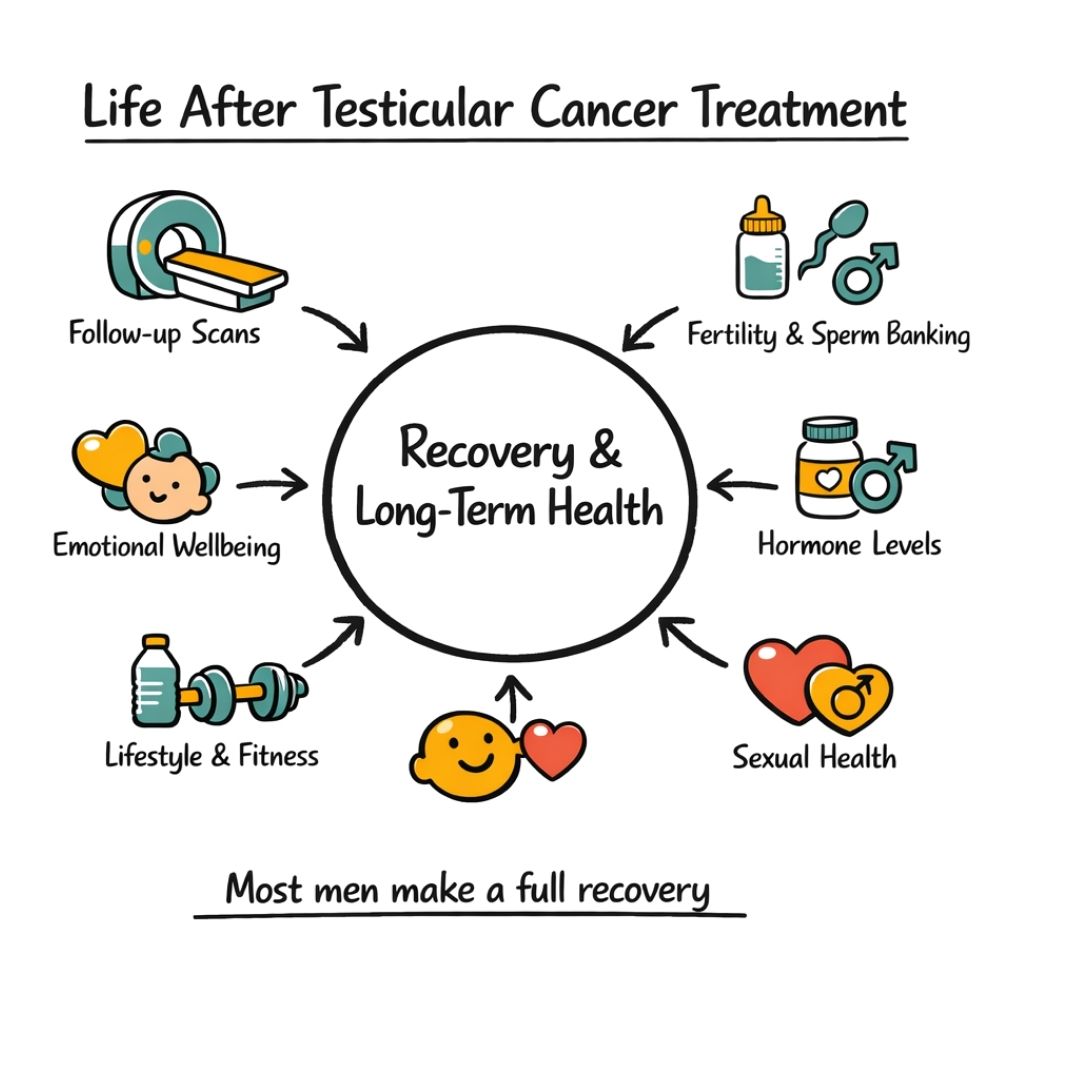
Survivorship is about so much more than just hospital appointments. It’s your chance to reclaim your life and focus on your overall health. This is the perfect time to build healthy habits that will support you for decades to come, things like eating a balanced diet, getting regular exercise, and giving up smoking.
It's also a time to think about the future you want. If you're thinking about starting a family, it’s important to understand how treatment may have impacted your fertility. There are great resources available on topics like how to increase sperm count after your treatment has finished.
Living well after cancer means looking after both your body and your mind. It's about stepping confidently into the future you fought for, equipped with the knowledge and support you need to thrive.
Everyone's journey after treatment is different. By staying on top of your follow-up care and focusing on a healthy lifestyle, you can move forward with confidence and strength.
When you're first diagnosed, it's completely normal for your mind to be racing with questions. We've put together some straightforward answers to the things we're asked most often, helping to clear up some of the uncertainty for you and your family as you prepare for what’s ahead.
For most men, the answer is a reassuring yes. The first step in treatment is usually an orchiectomy (surgery to remove the affected testicle). This typically has no effect on your fertility, as the remaining testicle can easily produce enough testosterone and sperm on its own.
However, if your treatment plan involves chemotherapy or radiotherapy, these can sometimes impact sperm production. Because of this, your medical team will almost certainly recommend sperm banking before you start. It’s a simple, routine process where you provide samples to be frozen and stored, safeguarding your option to have biological children in the future.
Recovery from the initial orchiectomy is usually quite swift. Most men are able to head home either the same day or the day after the procedure. You can expect some swelling and soreness around the area for a week or two, but this is easily managed with standard pain relief.
The most important thing is to give your body time to heal properly. You’ll need to avoid any heavy lifting or intense exercise for about a month. For those with desk jobs or less physical roles, you’ll likely feel ready to get back to work and your normal routine within two to four weeks.
These are the two main types of testicular germ cell tumours, and figuring out which one you have is a crucial piece of the puzzle for your treatment plan. A pathologist will determine the type by carefully examining the tissue from the testicle after your surgery.
Knowing whether you have a seminoma or non-seminoma is fundamental. It’s what helps your oncologist decide on the best path forward, whether that's surveillance, radiotherapy, or a particular type of chemotherapy.
Here’s a quick look at the key differences:
We strongly advise you to talk with a health care professional about specific medical conditions and treatments.
The information on our site is meant to be helpful and educational but is not a substitute for medical advice.
Learn to identify all testicular cancer symptoms, from a painless lump to less common signs. Our guide provides clear steps for self-exams and what to do next.
After Cancer In My Balls I Started An NGO To Encourage Lads To Put Their Hands In Their Pants, Check For Irregularities And Act Upon Them.