Did you know that testicular cancer has one of the highest cure rates of all cancers when caught and treated early? For many men and their loved ones, this offers real hope and reassurance.
This guide is here to provide clear, evidence-based information about testicular cancer treatment. Our aim is to support you and your family in making confident, informed choices at every step of your journey.
Testicular cancer is more common than many realise, but understanding its types, stages, and risk factors can make a huge difference in early detection and effective testicular cancer treatment. Feeling overwhelmed is normal, but knowledge is a powerful ally on this journey.
Most testicular cancers (about 90 percent) are germ cell tumours. These are split into two main types: seminomas and non-seminomas. Seminomas tend to grow slowly and are often found in men in their 40s or 50s. Non-seminomas, which include embryonal carcinoma, yolk sac tumour, choriocarcinoma, and teratoma, usually develop in younger men and are more aggressive.
Some tumours are mixed, containing both seminoma and non-seminoma cells. Rarely, stromal tumours (from supportive tissue) or secondary cancers (spread from another part of the body) can occur. Knowing the type helps guide testicular cancer treatment, as each responds differently.
The stage describes how far the cancer has spread. Stage 0, called GCNIS, means abnormal cells are only inside the testicle. Stage I means the cancer is limited to the testicle, though it may involve nearby blood or lymph vessels. In Stage II, cancer has reached the lymph nodes in the abdomen. Stage III means it has spread beyond the abdomen or to other organs.
Staging is essential for testicular cancer treatment planning. For detailed, up-to-date guidance on staging and management, see the Testicular Cancer Treatment (PDQ®) resource from the National Cancer Institute.
Testicular cancer is most common between ages 15 and 35. Having undescended testicles (cryptorchidism) at birth increases risk, as does a family or personal history of testicular cancer. Race and ethnicity matter too, with non-Hispanic white men at higher risk. Some genetic conditions and a history of infertility may also play a role.
Still, most men diagnosed with testicular cancer have no obvious cause. Recognising these risk factors can be the first step towards seeking testicular cancer treatment at the right time.
The most common symptom is a painless lump or swelling in one testicle. Some men notice a feeling of heaviness, a sudden fluid build-up in the scrotum, or a dull ache in the lower abdomen or groin. Changes like a shrinking testicle or unexplained discomfort can also be warning signs.
Early detection is crucial for successful testicular cancer treatment. Regular self-examination makes it easier to spot changes and seek help quickly.
Diagnosis starts with a physical examination and a review of your medical history. An ultrasound scan helps assess any lump or swelling. Blood tests check for tumour markers such as AFP, HCG, and LDH.
If cancer is suspected, a biopsy is done using an inguinal orchiectomy (removal of the testicle). Further imaging, like CT, MRI, or X-rays, helps determine the stage and guide the next steps in care.
Making the right choice for testicular cancer treatment can feel overwhelming, but you are not alone in this journey. A collaborative, patient-focused approach ensures that each individual receives care tailored to their specific needs and circumstances.
When you begin your testicular cancer treatment journey, a multidisciplinary team (MDT) becomes your core support network. This team typically includes urologists, oncologists, clinical nurse specialists, pathologists, pharmacists, radiologists, and social workers.
Each expert brings a unique perspective, helping to create a personalised plan that addresses your type and stage of cancer, as well as your emotional and practical needs. The MDT meets regularly to discuss your progress and adapt recommendations, ensuring your testicular cancer treatment remains evidence-based and up to date.
Open communication is encouraged, so you feel involved and confident in your care. The MDT also coordinates with your GP and local services, making sure you have seamless support throughout your treatment.
Several factors guide the selection of your testicular cancer treatment. The exact stage of the cancer is crucial—whether it is localised to the testicle or has spread further.
The type of tumour, such as seminoma or non-seminoma, affects which therapies are most effective. Tumour markers in your blood and the presence of lymphovascular invasion also provide important clues. Your risk of recurrence is assessed using pathology results.
Your general health, age, and personal preferences matter too. The MDT will discuss these elements to recommend options that balance effectiveness and side effects. This ensures your testicular cancer treatment is not only medically sound but also fits your life.
Your voice is central in the testicular cancer treatment process. Shared decision-making means you work alongside your healthcare team to weigh the risks, benefits, and possible side effects of each option.
It is perfectly normal to seek a second opinion, especially if you have doubts or want reassurance. In the UK, both NHS and private pathways support this, and your team can help facilitate it.
Reliable information is essential. For those seeking evidence-based guidance, the AUA Guideline on Early-Stage Testicular Cancer offers a comprehensive overview of diagnosis and treatment options, helping you feel empowered to make the best choice for your situation.
Open discussion with your team ensures your questions are answered and your values are respected every step of the way.
To illustrate how testicular cancer treatment is individualised, consider these scenarios:
Every plan is adjusted to your unique needs, taking into account not just the biology of your cancer but also your lifestyle, goals, and potential impact on fertility. The MDT’s flexibility ensures your testicular cancer treatment adapts as your situation changes.
Facing decisions about testicular cancer treatment can be stressful and emotional. It is normal to feel anxious or uncertain. Specialist nurses are available to guide you, answer questions, and provide reassurance.
Support groups, both in person and online, offer a safe space to share experiences and advice. Family and friends play a vital role, giving emotional backup and helping with practical arrangements.
Reliable resources, such as UK support lines and Cancer Chat forums, provide information and a sense of community. You are never alone—there is a network ready to support you as you make informed decisions about your testicular cancer treatment.
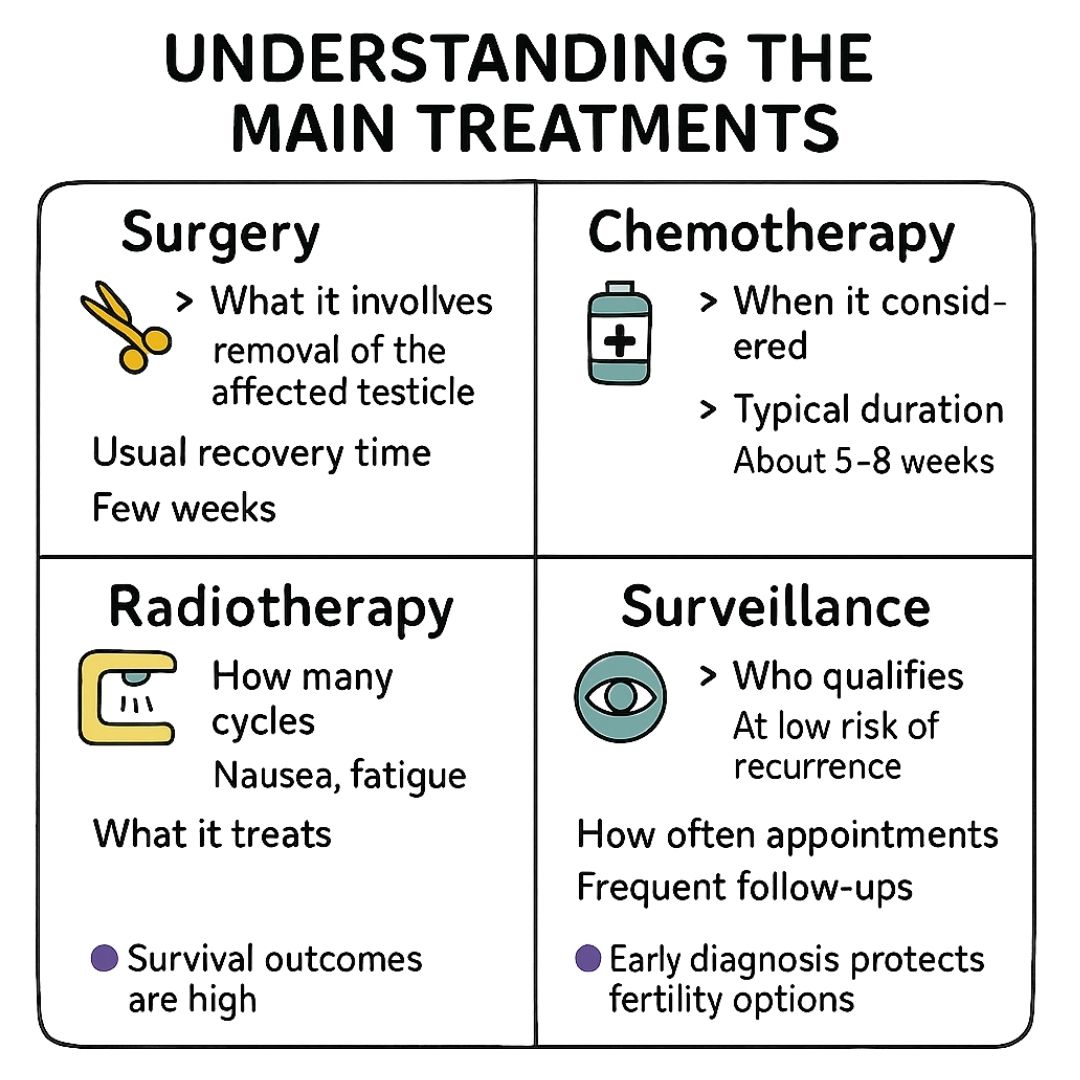
When facing a testicular cancer treatment decision, understanding all main options is crucial. Each approach is tailored to the cancer type, stage, and personal circumstances, offering hope for high cure rates and a return to normal life.
Surgery is almost always the first step in testicular cancer treatment. The standard procedure is a radical inguinal orchidectomy, which removes the affected testicle through a small groin incision. This operation is vital for both diagnosis and cure.
In some cases, removal of abdominal lymph nodes is also recommended, especially for non-seminoma types or when cancer has spread. This procedure, called retroperitoneal lymph node dissection (RPLND), is more complex but can be crucial in testicular cancer treatment plans.
Surgery might also be needed for metastatic disease, such as removing tumours from the lungs or liver after chemotherapy. Recovery from orchidectomy is usually quick, with most people going home the next day. RPLND requires a longer stay and more recovery time.
Risks include:
Most men need only one testicle removed, which does not affect testosterone levels or sexual function. For more details about surgical options and what to expect, see this Understanding cancer surgery options guide.
Surveillance is a testicular cancer treatment approach suitable for men with low-risk, early-stage disease after surgery. Instead of immediate further treatment, you are closely monitored with regular blood tests, imaging scans, and physical exams.
This strategy aims to catch any recurrence early, reducing the need for unnecessary treatment. The frequency of follow-up is highest in the first two years, then gradually decreases.
Benefits include:
However, some people feel anxious about not having active treatment. Open communication with your team can help manage these feelings. Surveillance is often recommended for stage I seminoma and selected non-seminoma cases. It remains a safe and effective testicular cancer treatment for many.
Chemotherapy is a mainstay of testicular cancer treatment, especially when there is a higher risk of spread or recurrence. It uses powerful drugs to destroy cancer cells throughout the body, even those that cannot be seen on scans.
The most common regimen is BEP (bleomycin, etoposide, and cisplatin), given in cycles through a drip. Treatment is usually outpatient, but side effects can include nausea, hair loss, lowered immunity, and risk of infertility.
It is normal to feel concerned about chemotherapy. Discuss side effect management and fertility preservation with your team before starting. Remember, chemotherapy is a shighly effective testicular cancer treatment for many patients.
Radiotherapy uses high-energy X-rays to target and destroy cancer cells. This testicular cancer treatment is mainly used for seminoma tumours, especially when cancer has spread to lymph nodes in the abdomen.
Potential side effects include fatigue, nausea, and a small risk of secondary cancers later in life. The use of radiotherapy has declined in favour of chemotherapy for some groups, but it remains an important option for certain cases. Your team will discuss the best approach for your individual testicular cancer treatment plan.
Some testicular cancer treatment options, like chemotherapy and radiotherapy, can affect fertility. Before starting treatment, it is essential to discuss sperm banking with your healthcare team.
Both NHS and private clinics offer sperm storage. The process is simple and quick, but should be done before treatment begins. If both testicles are removed, testosterone replacement therapy will be discussed to maintain health and wellbeing.
Talking openly about fertility and future family plans is a key part of testicular cancer treatment. Your team can offer guidance and support every step of the way.
Coping with testicular cancer treatment can be overwhelming. You do not have to face it alone. There are free care packages, support groups, and helplines available for practical and emotional help.
Many resources rely on donations and product sales to provide free support. Reach out and take advantage of all the help available as you navigate testicular cancer treatment.
Navigating testicular cancer treatment can feel overwhelming, but personalised care at each stage offers hope and clarity. Every phase brings unique decisions, and knowing what to expect helps you and your family feel more confident. Here, we break down testicular cancer treatment options by stage, highlighting how your care team tailors each approach to your specific needs.

When testicular cancer is caught very early, treatment is usually straightforward and highly effective. For stage 0 (germ cell neoplasia in situ, or GCNIS), your care team may recommend active surveillance or a simple orchidectomy. The risk of progression is low, so close monitoring is often enough.
For stage I testicular cancer, surgery to remove the affected testicle is standard. After surgery, the next steps depend on your risk factors and tumour type. If you have a seminoma, you might be offered surveillance, a single dose of carboplatin, or radiotherapy. For non-seminoma, choices include surveillance or short chemotherapy (BEP), especially if there are high-risk features.
Here’s a quick comparison of typical options:
| Stage | Main Treatment | Additional Options | Recurrence Risk |
|---|---|---|---|
| Stage 0 (GCNIS) | Surveillance or Surgery | N/A | Low |
| Stage I Seminoma | Surgery | Carboplatin, Radiotherapy | Low-Moderate |
| Stage I Non-Sem | Surgery | Surveillance, BEP Chemo | Moderate |
Testicular cancer treatment at this stage aims to balance cure rates with minimising side effects. For most low-risk patients, surveillance is preferred, while adjuvant therapy is considered if the risk of recurrence is higher.
Stage II marks the spread of cancer to nearby lymph nodes in the abdomen. Testicular cancer treatment now often involves a combination of therapies, tailored to tumour type and node involvement.
For both seminoma and non-seminoma, surgery to remove the testicle remains standard. If you have stage 2A or 2B seminoma, your options include chemotherapy (usually 3 cycles of BEP or 4 cycles of EP) or radiotherapy targeting the abdominal lymph nodes. Non-seminoma cases may require chemotherapy or a retroperitoneal lymph node dissection (RPLND).
Stage 2C disease is more advanced, so chemotherapy is typically the mainstay for both types. Your healthcare team will closely monitor tumour markers to assess how well the testicular cancer treatment is working. This approach helps ensure the best chance of cure while adapting to your body’s response.
When testicular cancer spreads beyond the abdomen or to distant organs, the journey can feel daunting. However, even at this stage, testicular cancer treatment remains highly effective for most people.
Treatment usually begins with multiple cycles of chemotherapy, such as BEP or EP regimens. If there are any remaining masses after chemotherapy, surgery may be performed to remove them and confirm no cancer cells remain. Regular scans and blood tests form a crucial part of follow-up, checking remission status and catching any signs of recurrence early.
It’s reassuring to know that the prognosis remains favourable for many, with more than 95 percent of patients achieving cure, even in advanced cases. For the latest clinical recommendations, the NCCN Guidelines Insights: Testicular Cancer offers up-to-date guidance on testicular cancer treatment protocols, helping patients and clinicians make informed choices.
Facing a recurrence can be stressful, but there are still effective options for testicular cancer treatment. Most relapses are managed with chemotherapy, sometimes using higher doses or different drug combinations than before. Surgery or radiotherapy may be considered in specific cases, especially if the tumour is localised.
Your team will individualise care based on your previous treatments, the type of cancer, and your overall health. Second-line chemotherapy regimens are often successful in achieving remission again. Open communication with your specialists helps ensure that every aspect of your testicular cancer treatment is tailored to your unique circumstances.
Some situations require extra consideration. Bilateral testicular tumours, where both testicles are affected, bring challenges related to fertility and hormone production. Your care team will discuss options for preserving fertility and managing hormonal health, such as sperm banking and testosterone replacement.
Paediatric testicular cancer is rare but demands a tailored approach, often involving paediatric oncologists and a multidisciplinary team. Emotional and psychological support is just as vital as medical care, ensuring young patients and their families feel heard and supported throughout every step of testicular cancer treatment.
Adjusting to life after testicular cancer treatment is a journey that brings both relief and new questions. Many men find themselves eager to return to normal, yet unsure about what to expect during recovery. Understanding follow-up care, managing side effects, and seeking support can make this transition much smoother.
After testicular cancer treatment, regular follow-up is crucial for early detection of any recurrence. Typically, your care team will schedule physical exams, tumour marker blood tests, and imaging scans. These appointments are most frequent in the first two years, then become less often as time goes on.
The aim is to catch any changes early, so you can act quickly if needed. Some men feel anxious before appointments, which is completely normal. Having a clear plan and knowing what to expect can help reduce stress and make the process feel more manageable.
Testicular cancer treatment can lead to both short- and long-term side effects. You might experience fatigue, numbness in hands or feet, or changes in hormone levels. Emotional challenges such as anxiety, depression, or fear of recurrence are also common.
Practical tips and support can make a big difference. For those who had chemotherapy, learning more about chemotherapy side effects and tips can help you manage symptoms and regain confidence. Always let your healthcare team know about any new or ongoing issues, as there are often ways to ease discomfort and improve your quality of life.
Fertility can be affected by testicular cancer treatment. Some men may notice changes in sperm count or testosterone levels, especially if both testicles were removed. Hormone replacement therapy may be recommended to maintain energy, mood, and sexual health.
If you are thinking about starting a family, speak with your team about sperm banking or other options before treatment begins. Even after treatment, many men go on to have children naturally. Open conversations about intimacy and emotional wellbeing can help you navigate any changes and feel supported.
Getting back to daily life after testicular cancer treatment often happens gradually. Recovery times vary, depending on the type of treatment you received. Many return to work or studies within a few months, while others may need longer to regain full strength.
Gentle exercise, such as walking or swimming, can boost your mood and help rebuild stamina. Listen to your body and set realistic goals. If you need adjustments at work, speak with your employer about your rights and possible accommodations. Remember, every recovery journey is personal, so be kind to yourself as you heal.
You are not alone after testicular cancer treatment. Connecting with support networks can ease feelings of isolation and provide practical advice. Support groups, specialist nurse helplines, and online forums offer a safe space to share experiences and ask questions.
Accessing emotional and wellbeing support can make a real difference to your recovery and resilience. Many national charities and local organisations also offer free care packages, educational materials, and financial guidance. Reaching out is a sign of strength, and there is always help available for you and your loved ones.
The field of testicular cancer treatment is advancing rapidly, with researchers focusing on more effective therapies and reducing long-term side effects. Recent innovations include new chemotherapy combinations, improved imaging, and surgical techniques that spare healthy tissue. Scientists are also working on targeted therapies designed to attack cancer cells more precisely, which could mean fewer side effects for patients.
Survivorship research is gaining momentum, aiming to improve quality of life after treatment. For those interested in the latest developments, Advances in cancer research offers up-to-date information on breakthroughs and ongoing clinical trials in testicular cancer treatment.
Clinical trials are crucial for shaping the future of testicular cancer treatment. They offer patients a chance to access promising new therapies before they become widely available. In the UK, your cancer specialist or nurse can help you find suitable trials, and resources like the National Institute for Health and Care Research (NIHR) provide listings.
Benefits include access to cutting-edge treatments, closer monitoring, and contributing to medical progress. However, it is important to understand the risks and requirements, as not every trial will be suitable for every patient. Discussing options with your healthcare team is always recommended.
Looking ahead, the future of testicular cancer treatment is guided by personalisation and hope. Genetic profiling is beginning to inform how therapies are chosen, allowing doctors to tailor care based on the unique features of each tumour. Researchers are also exploring new ways to preserve fertility and minimise late effects from treatment.
Long-term follow-up and survivorship care are becoming central to recovery, ensuring that patients not only survive but thrive after testicular cancer treatment. Ongoing research gives reason for optimism, with the goal of even higher cure rates and better quality of life for everyone affected.
If you’ve just finished reading this guide, you might still be feeling a bit overwhelmed, or maybe just looking for that next step to help you feel more in control. Remember, you’re not alone in this. We know that a cancer diagnosis brings a lot of questions and emotions, and sometimes you just want real, practical support from people who truly understand. That’s why we’re here. to offer you a caring hand and trusted resources every step of the way. If you’ve been diagnosed with cancer and need support for yourself, please take a look at I Have Cancer.
We strongly advise you to talk with a health care professional about specific medical conditions and treatments.
The information on our site is meant to be helpful and educational but is not a substitute for medical advice.
Discover How To Recognise And Manage Lymphoedema After Cancer Treatment With Expert Guidance From Sylwia Labecka-Czarnik. Learn About Early Signs, Treatment Options, And Self-Care Strategies.
Learn how radiation therapy affects the body, differences between early and late side effects, symptoms to expect, and ways to stay comfortable.
There is no doubt that it is sometimes hard to know what to say when you find out that someone has cancer. Here are three basic tips for how to handle it when you are not sure.