Stomach cancer, commonly referred to as gastric cancer, is a condition that impacts thousands of people worldwide. It's a complex and often challenging diagnosis that can affect not only the individual but also their loved ones. In this article, we'll explore five essential insights into stomach cancer, offering guidance and focusing on supporting yourself and your loved ones throughout the journey.
Stomach cancer occurs when abnormal cells in the stomach grow and multiply uncontrollably, forming a tumour. According to the American Cancer Society,1 stomach cancer is one of the leading causes of cancer-related deaths worldwide. Understanding the disease, its symptoms, and treatment options can help individuals and their loved ones make informed decisions.
There are several types of stomach cancer, including adenocarcinoma, which is the most common type and accounts for about 90-95% of stomach cancer cases; gastrointestinal stromal tumours (GISTs), which are rare tumours that begin in the stomach's nerve cells and can spread to other parts of the body; lymphoma, which is cancer that begins in the immune cells of the stomach; and carcinoid tumours, which are slow-growing tumours that produce hormones and can lead to carcinoid syndrome due to hormone release.2,3
Several risk factors can increase the likelihood of developing stomach cancer, including Helicobacter pylori (H. pylori) infection; age, as stomach cancer is more common in people over 60; sex, with men being more commonly affected than women; diet, particularly a diet high in smoked, sodium, or pickled foods and low in fruit; family history of stomach cancer; ethnicity, with higher incidence in Hispanic Americans, African Americans, Native Americans, Asian Americans, and Pacific Islanders compared to non-Hispanic White people in the United States; and smoking, which is a significant risk factor for stomach cancer.4
A stomach cancer diagnosis can be overwhelming, and emotional support is vital. It's essential to acknowledge and validate feelings rather than suppressing them. Support groups, counselling, and online resources can provide a safe space for individuals to express their emotions and connect with others who understand their experience.
Emotional expression is critical for individuals with stomach cancer. Internalising feelings can lead to increased stress, strained relationships, decreased well-being, anxiety, and depression. By acknowledging and expressing emotions, individuals can process their feelings and emotions, develop coping strategies, improve mental health and well-being, and enhance relationships with loved ones.
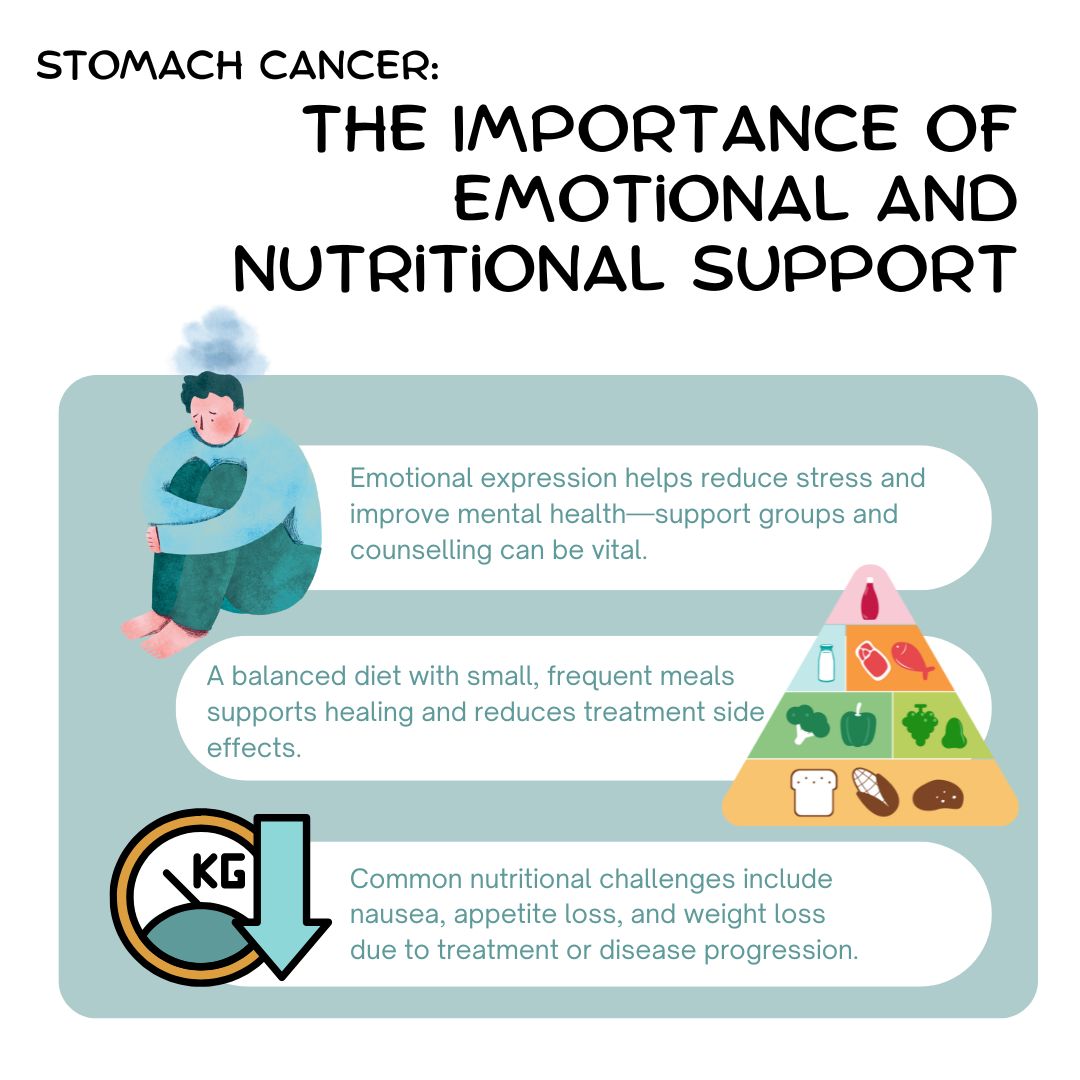
Nutrition plays a significant role in managing stomach cancer. It can make a big difference in both treatment and quality of life. A balanced diet rich in nutrients can help manage side effects like vomiting, nausea or fatigue, maintain energy, and support the body’s ability to heal and fight.5
Key aspects might include:
*To help with digestion, small, frequent meals are easier on the stomach.
*To help boost the immune system and aid in tissue repair, it’s good to eat protein-rich foods.
*To stay hydrated by drinking plenty of water.
*If the stomach is sensitive, choosing low-fat and low-fibre food choices can be helpful.
Individuals with stomach cancer may face nutritional challenges, including unintentional weight loss, as stomach cancer can lead to significant weight loss in a short time, malnutrition, and cachexia; nausea and vomiting, which may be caused by chemotherapy, some stomach cancer medications, radiation, and surgery; diarrhoea or constipation, as treatment can disrupt bowel habits; taste changes, with some people experiencing changes in taste or smell; and suppressed appetite.
Supporting loved ones with stomach cancer requires empathy, understanding, and patience. These qualities can help your loved one navigate the challenges of stomach cancer and improve their overall quality of life. It's good to listen actively, offer practical help, physical support, and informational support, and respect their boundaries. By being a supportive and caring presence, loved ones can help individuals with stomach cancer feel more comforted and less isolated.
There are many practical ways to support loved ones with stomach cancer, including cooking meals, as preparing healthy meals can help alleviate nutritional challenges; running errands or helping with errands, such as grocery shopping or picking up prescriptions, can reduce stress; and accompanying them to appointments, as having a loved one present during appointments can help them remember important information.
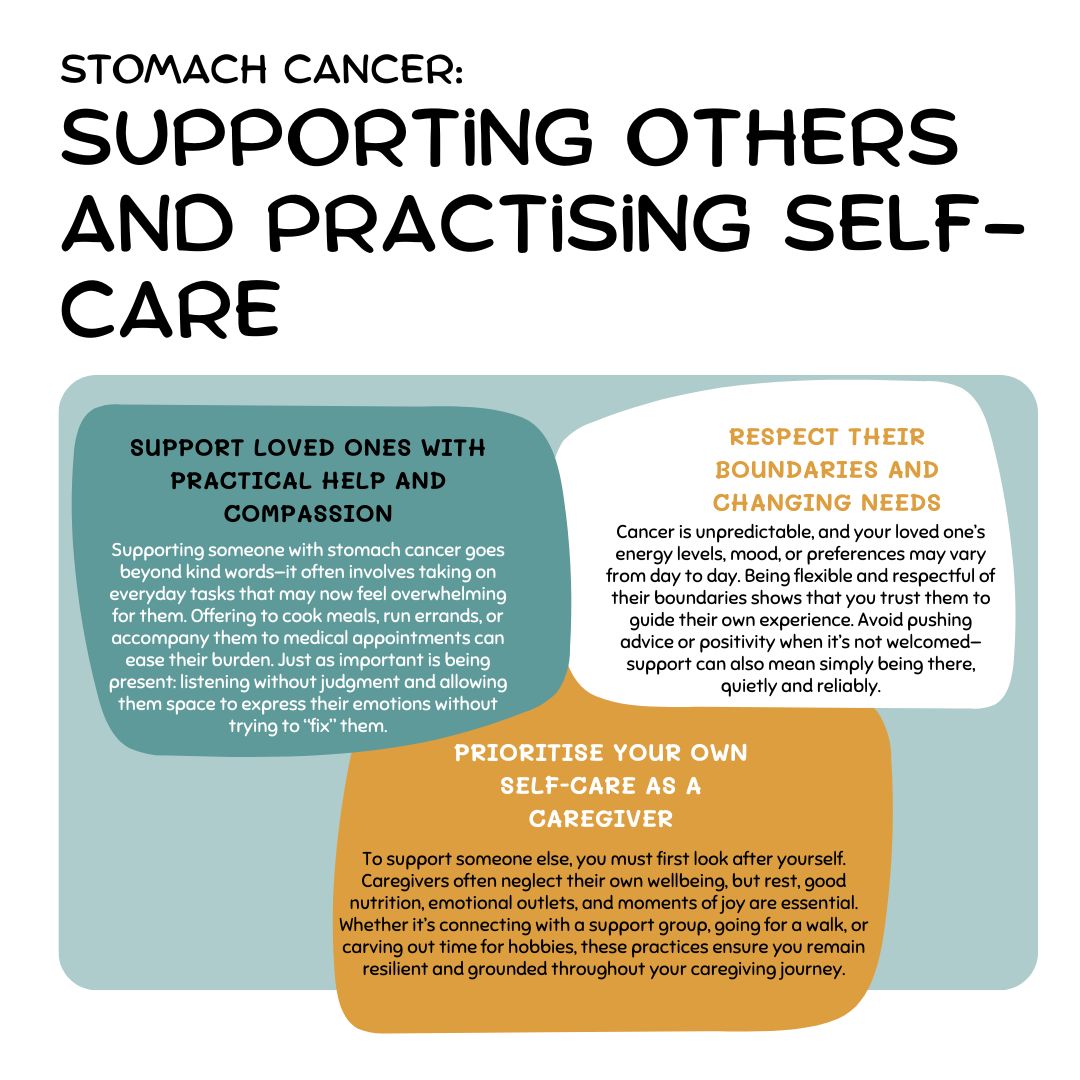
Caring for oneself is crucial when supporting a loved one with stomach cancer. It's essential to prioritise self-care, seek support from others, and take breaks when needed. By taking care of themselves, caregivers can maintain their physical and emotional well-being, ensuring they can continue to provide support.
Caregivers can prioritise self-care by getting enough rest, as adequate rest can help reduce stress and fatigue; seeking support and connecting with others, such as friends, family, or support groups, can provide emotional support; engaging in activities and participating in hobbies can help reduce stress and improve mood; and prioritising nutrition, eating a balanced diet can help maintain physical and emotional well-being.
Stomach cancer is a complex and challenging diagnosis, but with the right support and resources, individuals and their loved ones can navigate the journey with greater ease. By understanding the disease, prioritising emotional support, and focusing on nutrition and self-care, individuals can improve their overall well-being and quality of life.
1. Stomach (Gastric) Cancer Key Statistics | American Cancer Society
2. Bond-Smith, G., Banga, N., Hammond, T. M., & Imber, C. J. (2012). Pancreatic adenocarcinoma. BMJ: British Medical Journal, 344(7857), 45–50. http://www.jstor.org/stable/23231957.
3. Carcinoid Tumor | Johns Hopkins Medicine
4. What Are the Risk Factors for Stomach Cancer? | American Cancer Society
5. Comprehensive Cancer Information - NCI
Edited by: Katheeja Imani
We strongly advise you to talk with a health care professional about specific medical conditions and treatments.
The information on our site is meant to be helpful and educational but is not a substitute for medical advice.
Discover Psychological Tools To Ease Cancer-Related Fear, Anxiety, And Distress While Building Resilience And Inner Peace.
Telling Your Children You Have Cancer Can Be Hard To Navigate. It Is Important To Be Honest With Them, And Not Be Afraid To Use The Word, “Cancer.” Prepare Yourself To Answer Their Questions, And Reassure Them While They Process Your Diagnosis.
Cancer is a word that begins with "c" but for me, it is not, and never will be "The Big C". This is my story of hope & recovery.