Cancer Care Parcel Logo
Start Here
Help
Join
Contribute
Partnerships
Donate
My Wishlist
GBP ^

No products in the basket.

Contact
Cancer Care Parcel Logo

No products in the basket.

Talking to Children About Cancer

Written by Dr Shara Cohen on 
6th October, 2025
Last revised by: Cancer Care Parcel
Updated: 16th February, 2026
Estimated Reading Time: 5 minutes

Contents

When someone in a family is diagnosed with cancer, one of the hardest moments is explaining it to the children. Whether you’re the parent facing the diagnosis, a co-parent, grandparent, or close family member, finding the right words can feel overwhelming. How much should you share? Will it frighten them? How do you strike a balance between honesty and reassurance?

In this guide, we’ll walk you through how to talk to children about cancer in a way that’s age-appropriate, emotionally supportive, and grounded in trust. We’ll cover why telling them matters, how to tailor conversations by age, ways to keep communication open, and how to handle the tough questions like “Are you going to die?” with honesty and compassion.

Why Telling Them Matters


https://cancercareparcel.com/the-emotional-impact-of-cancer/

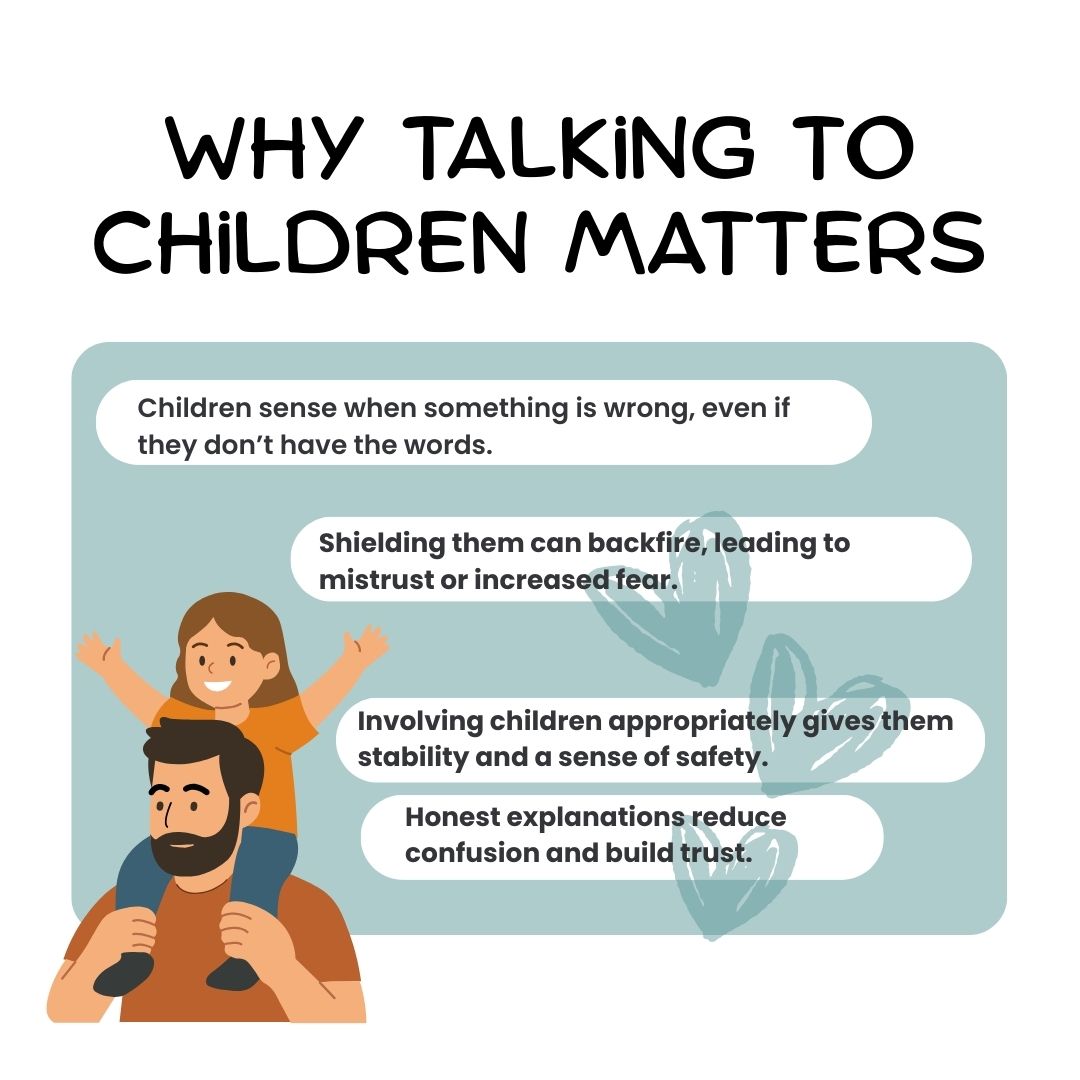
Many families choose to shield children from the truth, hoping to protect them from worry or pain, but children are incredibly perceptive. Even if they can’t name what’s happening, they notice changes: whispers in the next room, cancelled plans, shifts in routines, and changes in your mood. When left in the dark, their imaginations often fill in the blanks with scenarios that may be even more frightening than reality.

Talking to them, honestly but gently, can:

  • Reduce confusion and anxiety.
  • Build trust in the adults around them.
  • Provide them with a sense of stability and inclusion.
  • Create opportunities for ongoing dialogue and support.

Hiding the truth can backfire, leaving children feeling isolated or mistrustful later. By involving them in an age-appropriate way, you help them feel safer and more secure.
Start With What’s True, Not What’s Final

You don’t need to share every detail or know every outcome, but you do need to offer an honest explanation that they can trust. Children should hear the word “cancer” from you, rather than picking it up in a hushed conversation or from the Internet.

Some simple, honest openers include:

  • “Something is going on with my body, and I want to tell you about it.”
  • “I’ve been going to the doctor a lot because they’ve found something called cancer.”
  • “I’m going to have some treatment that might make me tired or look different, but we’re doing everything we can to help me get better.”

Don’t worry about saying the word “cancer”. Naming it helps reduce fear and mystery.

For additional support, explore Parenting with Cancer, which includes real-life examples, parent stories, and supportive strategies.¹

Tailoring the Conversation by Age

Children’s ability to understand and cope with illness depends heavily on their age and developmental stage.
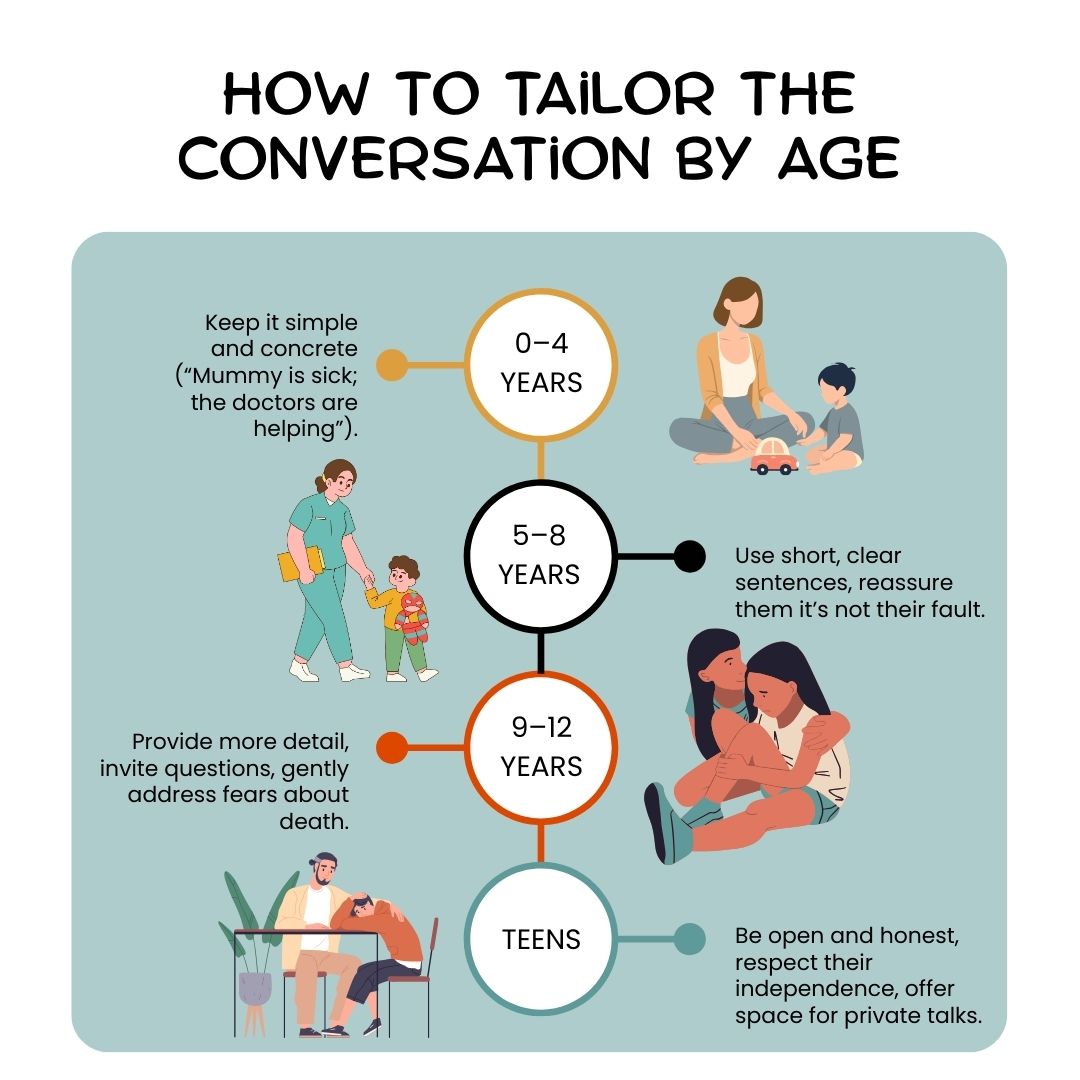
Ages 0–4: Toddlers and Preschoolers

  • Keep explanations simple and concrete.
  • Use a soft, calm tone.
  • Focus on what they’ll see and experience. Example: “Mummy is sick right now. The doctors are helping her. You might see me resting a lot or looking different, but I still love you very much.”

Ages 5–8: Early Primary School

  • Use short, honest sentences.
  • Be prepared for repeated questions.
  • Reassure them that it’s not their fault. Example: “I have something called cancer. It means I need special medicine. The medicine might make me look or feel different, but I’m being looked after.”

Ages 9–12: Tweens

  • Offer more detail while maintaining a calm tone.
  • Address fears about death gently but honestly.
  • Ask what they’ve heard and what they think. Example: “I have cancer. That means something in my body isn’t working right, and the doctors are giving me strong treatment to help. I might feel tired or lose my hair, but we’re doing our best to get better.”

Teens (13+)

  • Involve them in what’s happening as appropriate.
  • Acknowledge their maturity and independence.
  • Offer opportunities to talk privately, without pressure. Example: “I want to be honest with you. I’ve been diagnosed with cancer, and I’ll be starting treatment soon. There will be tough days, but I want you to know you can ask me anything, at any time.”
How to tailor the conversation by age

Reassure, Reassure, Reassure

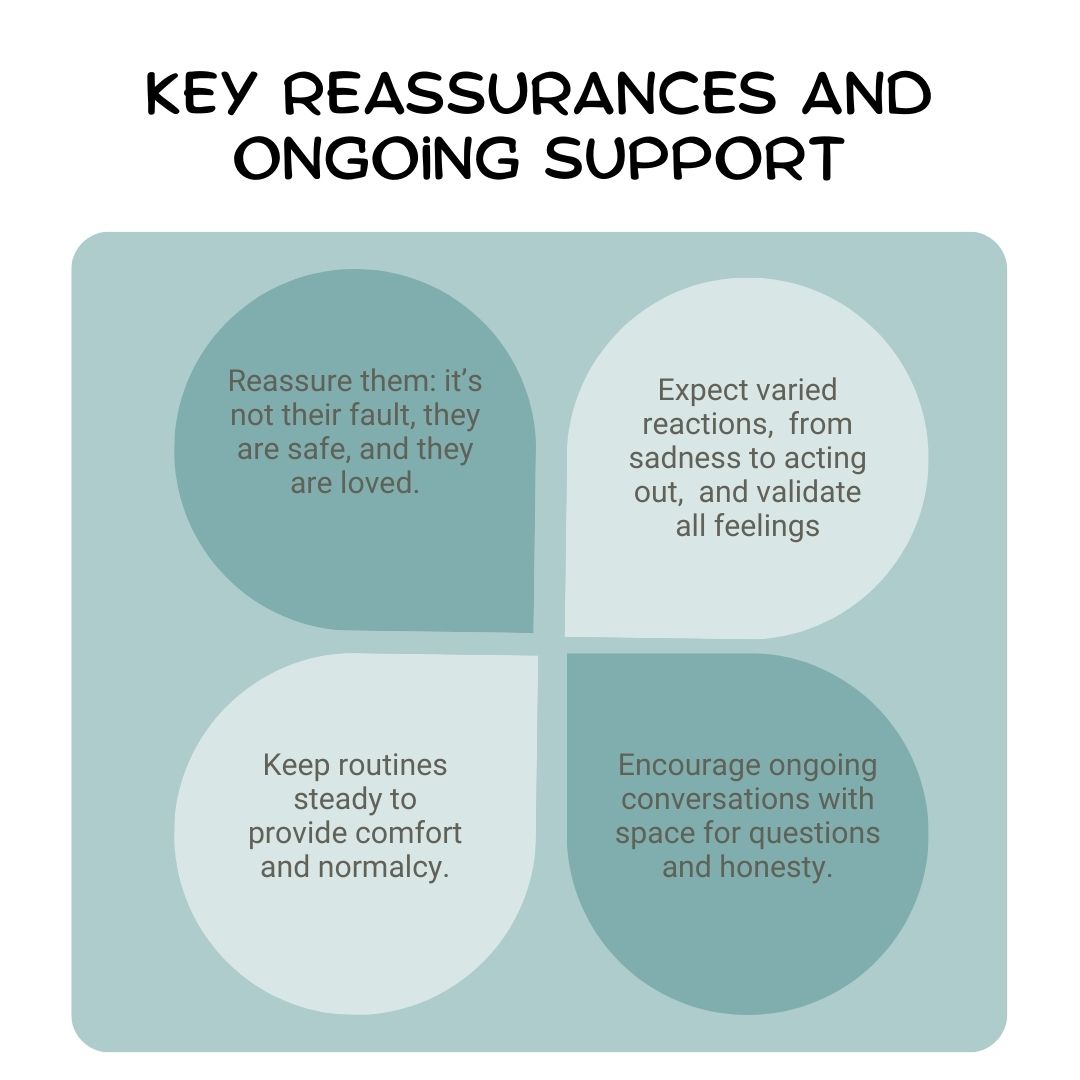
No matter their age, children need to hear:

  • They did not cause this.
  • They are still loved and safe.
  • They will be taken care of.
  • It’s okay to feel worried, angry, or sad.
  • They can ask questions whenever they need.

Keep repeating these messages. Children need to hear things more than once to feel secure.

For more help, visit:

  • How to Help Someone With Cancer.²
  • Navigating Difficult Conversations During Cancer.³

Making Space for Emotions

Children react differently. Some cry; some act out; some go quiet; others might seem unfazed. Let their reaction be what it is. There’s no “right” way to feel.

Support them by saying things like:

  • “It’s okay to be scared. I feel scared sometimes, too.”
  • “If you ever want to talk or draw about what you’re feeling, I’m here.”
  • “You can ask me anything, even if you think it might upset me.”

Sometimes children act out feelings they can’t put into words. A behavioural change might be a sign they’re struggling. Approach it with curiosity, not punishment.

For more tools to help children process emotions, see:

  • The emotional impact of cancer.⁴

Keeping the Conversation Going

This isn’t a one-time talk. Children need ongoing updates as treatment progresses.

Ask open-ended questions:

  • “Do you have any new questions?”
  • “Is there anything about this that’s confusing or scary?”
  • “Would you like to hear how my treatment is going, or would you like to do something fun together today?”

Let them take the lead on how much they want to know and when. Respect their boundaries and leave the door open for later.

Routines, Roles, and Reassurance

One of the best ways to support children through uncertainty is to maintain routines wherever possible:

  • Keep regular bedtimes, meals, and school schedules.
  • Allow familiar comfort items, like a favourite blanket or toy.
  • Explain changes before they happen.
  • Let them help with small tasks if they want to feel involved (like choosing snacks for a chemo bag).

These small points of normalcy can make a big difference in how children cope.

When They Ask, “Are You Going to Die?”

This is one of the hardest questions you may face. It’s okay to feel unprepared.

For younger children:

“We don’t know everything yet, but the doctors are doing everything they can to help me get better.”

For older children and teens:

“I don’t know exactly what will happen, but I’m getting good care. Right now, we’re focusing on the treatment, and I’ll always be honest with you along the way.”

Your calmness and honesty matter more than perfect words.

When Professional Help Is Needed

If your child shows signs of intense distress, prolonged sadness, regression (e.g., bedwetting, sleep disruption), or sudden withdrawal from school or friends, it may be time to involve a therapist or school counsellor.

There’s no shame in asking for help. You are not failing, you are responding with care. Ask your oncology team or GP for recommendations. Many cancer centres have child-life specialists or family therapists.
Key reassurances and ongoing support

Support for You as a Parent

Supporting your children while managing your treatment or emotions can feel impossible at times. Please know:

  • You are doing your best.
  • It’s okay to cry in front of your children.
  • It’s okay to ask someone else to help explain something.
  • It’s okay to say “I don’t know.”

Let others support you, too. For guidance and resources specifically for parents, visit:

Cancer Caregivers.⁵

Final Thoughts

Talking to your children about cancer is one of the hardest things you may ever do. But it’s also an act of profound love and trust. You’re showing them that even in difficult times, they can rely on you for honesty, safety, and connection.

Remember, you don’t need perfect words, you just need presence. This conversation, however it unfolds, is part of how you’re holding your family together in the face of something incredibly hard, and that is something to be proud of.

References

  1. Parenting with Cancer: https://cancercareparcel.com/parenting-with-cancer/
  2. How to Help Someone With Cancer: https://cancercareparcel.com/how-to-help-someone-with-cancer/
  3. Navigating Difficult Conversations During Cancer: https://cancercareparcel.com/navigating-difficult-conversations-during-cancer/
  4. Cancer Caregivers: https://cancercareparcel.com/cancer-caregivers/

Edited by: Macey Tocher

We strongly advise you to talk with a health care professional about specific medical conditions and treatments.
The information on our site is meant to be helpful and educational but is not a substitute for medical advice.

Written by Dr Shara Cohen

With over 30 years of experience in medical research, business, and patient advocacy, Shara combines her scientific expertise with deep empathy to create thoughtful care packages and educational resources that address the emotional and physical challenges of cancer. Before founding Cancer Care Parcel, Shara built a distinguished career as a biomedical scientist and entrepreneur, publishing extensively and leading successful ventures in life sciences communication and community engagement. Recognised with the British Empire Medal (BEM) for her services to cancer patients and women in STEM, she continues to champion awareness, dignity, and compassion in cancer care, ensuring that no one feels forgotten during or after treatment.

Related Posts

Exercise as a Treatment for Cancer

Discover How Exercise Reduces Cancer Risk, Improves Treatment Results, And Supports Long-Term Recovery

Read More
What Is Triple Negative Breast Cancer? And Why Does It Matter?

Learn About Triple Negative Breast Cancer (TNBC), How It Differs From Other Types, Symptoms To Watch For, Treatment Options, And Support Resources Available.

Read More
A Patient's Guide to Radiotherapy Side Effects

A clear guide to managing radiotherapy side effects. Learn about short-term and long-term symptoms and find practical strategies for your recovery.

Read More
Cancer Care Parcel Logo
Cancer Care Parcel
Practical support and trusted information for people affected by cancer
Cancer Care Parcel Ltd | Registered in England and Wales.
Company Number 14415197 @ Cancer Care Parcel
heartcartmagnifiercrosschevron-down