Prostate cancer affects a huge number of families, yet many people still don’t know when to ask questions, what screening involves, or how to support someone through the process. In the UK alone, there are around 55,914 new cases annually, which works out to roughly 150 diagnoses daily. That scale is exactly why prostate cancer awareness month matters.
Awareness isn’t only about wearing blue or sharing a post. It’s about helping people spot risk earlier, start informed conversations, and feel less alone if a diagnosis arrives.
Prostate cancer awareness month matters because this disease is common, often confusing, and emotionally loaded. Many men put off talking about urinary symptoms, family history, or screening because they feel well, feel embarrassed, or don’t know what questions to ask.
A dedicated awareness month creates a prompt. It gives families, friends, workplaces, and community groups a reason to start conversations that might otherwise never happen.
For newly affected people, awareness also reduces panic. It helps separate fear from facts. It reminds people that early detection changes options, and that support exists at every stage. If you want a simple overview of why timing matters, this guide on early detection and prostate cancer survival is a helpful place to begin.
Practical rule: Awareness is most useful when it leads to one concrete action, such as booking a GP appointment, talking to a relative about family history, or learning what a PSA test means.
Prostate cancer awareness month is observed in September in the USA and March in the UK, and the light blue ribbon is the symbol commonly associated with it. You’ll often see campaigns focused on education, fundraising, support services, and encouraging men to speak to a doctor about their risk.
Think of the month as a global health reminder. Individuals often have jobs, family responsibilities, and daily routines that push health conversations down the list. Awareness month brings them back to the surface.
That matters because prostate cancer can raise questions that people often avoid:
At its best, prostate cancer awareness month does two things at once.
First, it encourages earlier and more informed conversations about symptoms, risk, and screening. Second, it helps raise support for research, education, and patient services.
For people living through diagnosis or treatment, personal stories can make the subject feel less abstract. This first-person account of my prostate cancer journey can help readers feel grounded and understood.
Awareness month works best when it turns a silent worry into a spoken question.
Some statistics are worth sitting with, because they explain why this topic needs sustained attention rather than occasional publicity.
In the UK, prostate cancer incidence rates have risen by approximately 6% over the last decade, with around 55,914 new cases annually and roughly 150 diagnoses daily, making it the most common cancer in males, according to Cancer Research UK’s prostate cancer statistics.
Incidence means how often a disease is newly diagnosed. A rise in incidence doesn’t always mean the disease itself is suddenly becoming more aggressive. In prostate cancer, part of that rise is linked to improved detection through prostate-specific antigen, or PSA, testing.
That’s an important distinction. More diagnosis can reflect better case-finding, not just more disease.
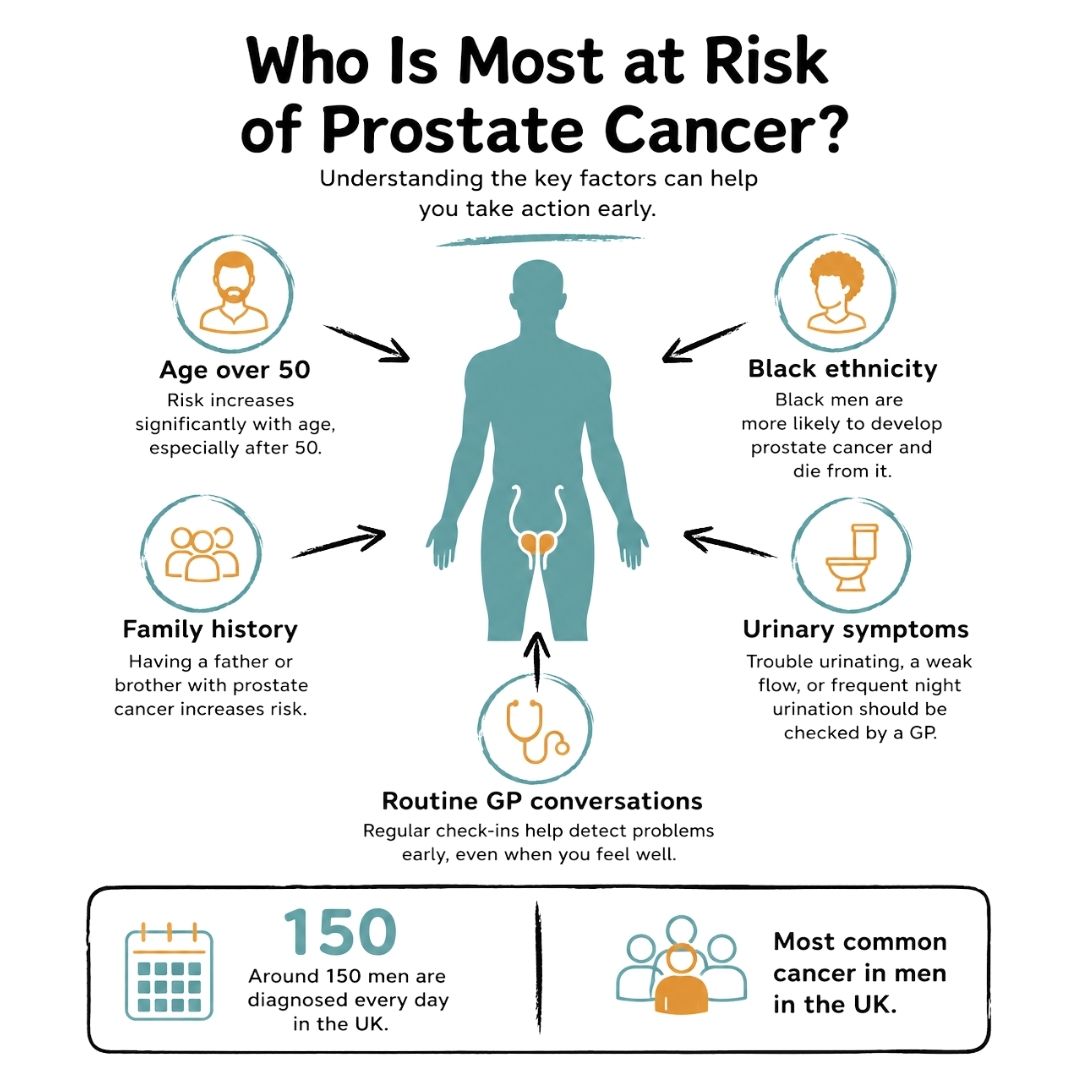
The most important practical message is this: stage at diagnosis matters.
Cancer Research UK notes that localised prostate cancers have age-adjusted 5-year survival exceeding 100%, while outcomes are poorer in late-stage disease. For patients and families, that contrast explains why clinicians and charities keep returning to screening discussions, symptom awareness, and prompt follow-up.
If you’re new to interpreting cancer data, it helps to learn the language behind incidence, survival, and risk. This overview of cancer research and biostatistics makes those terms easier to understand.
| Statistic | Why it matters |
|---|---|
| Approximately 6% rise in incidence over the last decade | Shows that prostate cancer remains a growing public health issue |
| Around 55,914 new UK cases annually | Reflects how many families are touched each year |
| Roughly 150 diagnoses daily | Shows this isn’t rare or unusual |
| Most common cancer in males in the UK | Explains why broad awareness is needed |
| Localised disease has much better outcomes than late-stage disease | Reinforces the value of early detection |
Not everyone faces the same level of risk, and awareness efforts fall short if they treat all communities as though they start from the same place.
Some men need earlier, more direct conversations because their chance of poor outcomes is higher or because barriers to care are harder to overcome. That can include age, family history, ethnicity, and where someone lives.
In the UK, Black men face a 2.5 times higher mortality rate from prostate cancer compared to white men. Men in the most deprived areas of England have a 24% higher risk of dying from the disease than those in the least deprived areas.
Those figures aren’t just abstract inequalities. They point to real-world obstacles such as delayed help-seeking, reduced access to consistent primary care, mistrust, and lower uptake of screening conversations.
What supportive outreach looks like: trusted conversations in familiar settings, clear language, enough time for questions, and messages shaped for the community receiving them.
If you’re supporting someone in a higher-risk group, practical help matters more than broad slogans.
Real awareness includes equity. It means noticing who gets reached by mainstream messaging and who gets missed.
That’s especially important in prostate cancer awareness month, because a campaign can be visible without being accessible. If information doesn’t reflect the needs of higher-risk communities, the people who most need support may still be left out.
For many people, the hardest part isn’t hearing about prostate cancer. It’s figuring out what to do next.
A good first step is understanding that screening and diagnosis aren’t the same thing. A test can suggest that something needs a closer look. It doesn’t automatically mean cancer is present, and it doesn’t automatically mean treatment must start immediately.
A PSA test is a blood test that measures prostate-specific antigen. A GP may discuss it with you if you have symptoms, a family history, or other risk factors. The result is only one part of the picture. Doctors also consider age, symptoms, examination findings, and whether further tests are needed.
If you want a broader refresher on why regular checks matter across different conditions, this explanation of general health screenings is useful background. For a more prostate-specific guide, Cancer Care Parcel also explains prostate-specific antigen in plain language.
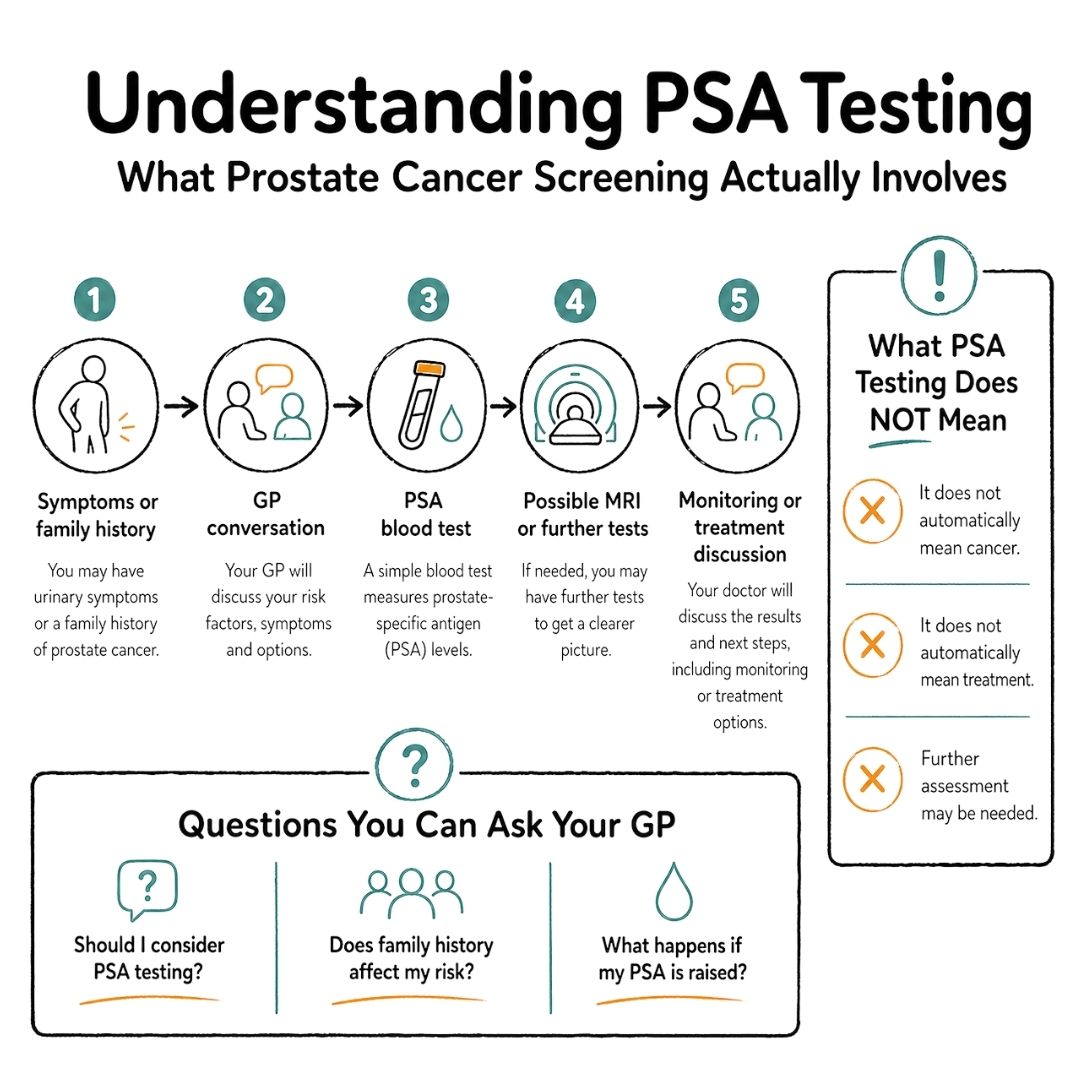
Not every prostate cancer needs immediate surgery or radiotherapy. For some people with low-risk prostate cancer, active surveillance is a well-established approach. That means careful monitoring over time, with treatment held back unless there are signs that it’s needed.
A 2024 PROSTAGENE trial found that active surveillance yields a 98% 10-year survival rate, comparable to surgery, with 70% fewer incontinence and impotence side effects. The same data notes that only 40% of eligible UK men opt in, showing how strongly anxiety can shape treatment choices. See the PROSTAGENE trial report in The Lancet Oncology00589-9/fulltext).
That can be hard to hear at first. Many people assume “doing something now” must be safer. In reality, the right choice depends on the cancer’s features and the person’s priorities.
Some men need treatment quickly. Others may benefit more from careful monitoring that protects quality of life.
A short explainer can help make that idea less abstract:
Awareness becomes meaningful when someone turns it into action. You don’t need medical training, a large platform, or a fundraising team to make a useful contribution.
Some of the most effective actions are small and direct.
Supporting someone with possible or confirmed prostate cancer often means managing information as much as emotion.
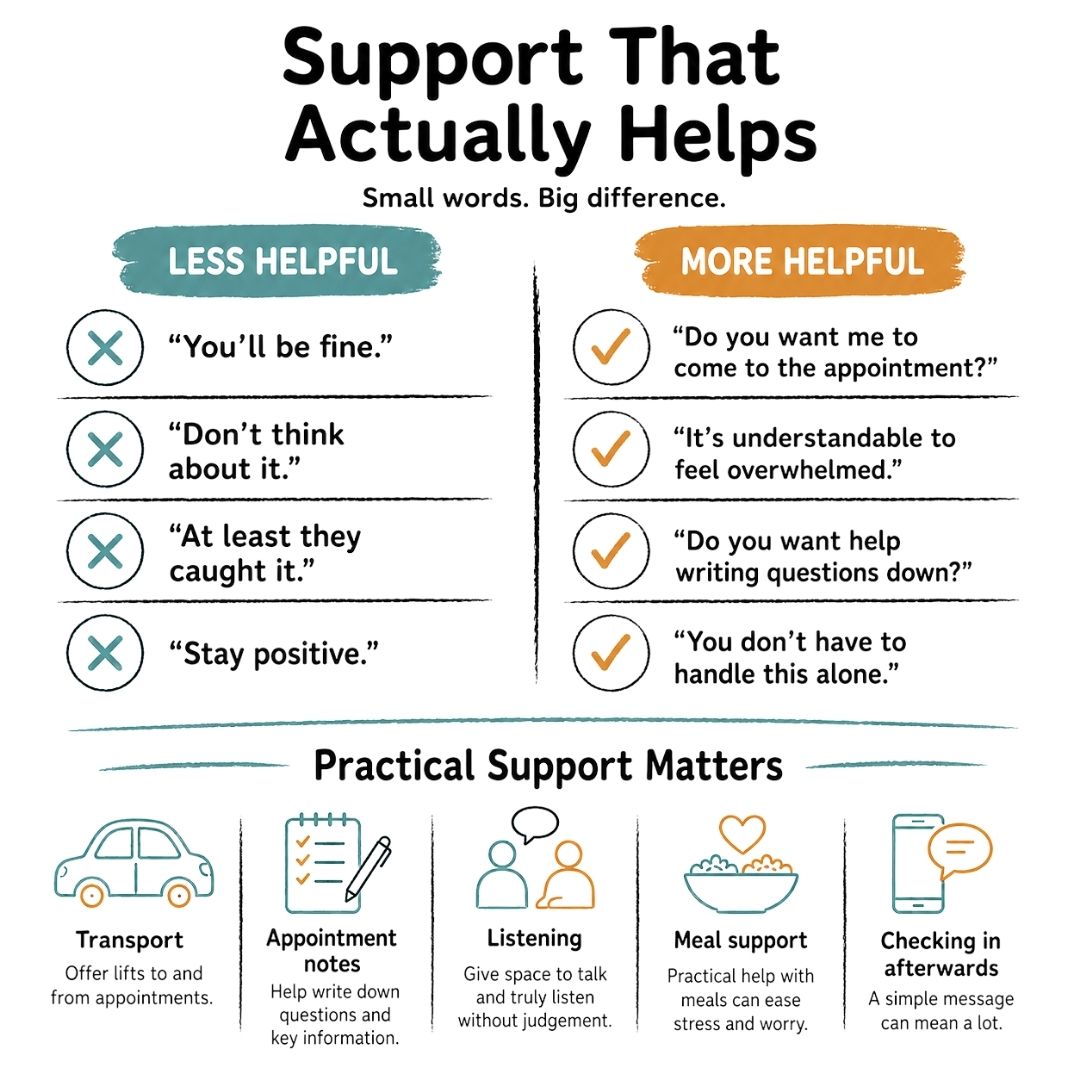
Workplaces can play a quiet but powerful role, especially where men may not discuss health easily.
| Who | Easy Action | Next-Level Action |
|---|---|---|
| Individual | Start a conversation with a family member about risk | Book a GP appointment to discuss symptoms, family history, or screening |
| Caregiver | Help write down questions before an appointment | Attend the appointment and take notes |
| Friend or relative | Share a reliable article or video | Check in again a week later and ask if they’ve acted on it |
| Employer | Add awareness information to staff communications | Organise a workplace session or fundraiser |
| Community leader | Mention the topic in an existing group setting | Arrange a dedicated discussion in a trusted local space |
Awareness doesn’t need to be dramatic. It needs to be repeated, specific, and easy to act on.
Prostate cancer awareness month is about more than recognition. It’s about acting sooner, asking better questions, and making sure support reaches the people who need it most.
If you take one step today, make it a practical one. Speak to a GP, encourage a loved one to do the same, or share this guide with someone who’s been avoiding the subject. If you’re supporting a person with advanced disease, this overview of metastatic prostate cancer can help you understand what that stage may involve.
We strongly advise you to talk with a health care professional about specific medical conditions and treatments.
The information on our site is meant to be helpful and educational but is not a substitute for medical advice.
Learn About Hormone Therapy For Prostate Cancer: Benefits, Risks, And What To Expect. Understand How To Manage Side Effects And Optimize Treatment.
Support lymphatic health during cancer recovery. Learn practical tips and expert advice from Kirsty Wales, the Award-Winning Lymphatic Drainage Therapist
Understand normal PSA levels by age with our clear guide. Learn what the numbers mean, what factors affect them, and when to speak with your doctor.