When someone we care about is going through cancer treatment, our instinct is often to wrap them in bubble wrap and keep them safely at home. However, many people with cancer still want to travel: whether it's a healing sightseeing, family visiting, or simply maintaining some sense of normalcy. As their friend, you can play a crucial role in making these journeys not just possible, but genuinely enjoyable and safe.
Travel during cancer treatment isn't impossible, but it does require thoughtful planning and extra support. Your friend might feel overwhelmed by all the considerations involved, from medical clearances to medication management. That's where you come in: not to take over their decisions, but to help navigate the practical aspects so they can simply focus on the joy of the journey ahead.
Before any bags are packed or reservations made, the most important conversation happens in the doctor's office. Help your friend understand that getting medical clearance isn't just a formality, it's essential for their safety and peace of mind. You can refer to this guide for more information about the essential questions to ask during an oncologist appointment.
Encourage your friends to discuss their travel plans openly with their oncology team. The timing of treatment cycles, current health status, and destination are all factors of whether the planned travel is advisable. Some treatments can increase infection risk or cause fatigue that makes travel particularly challenging, others might require strict scheduling that doesn't allow for time away.
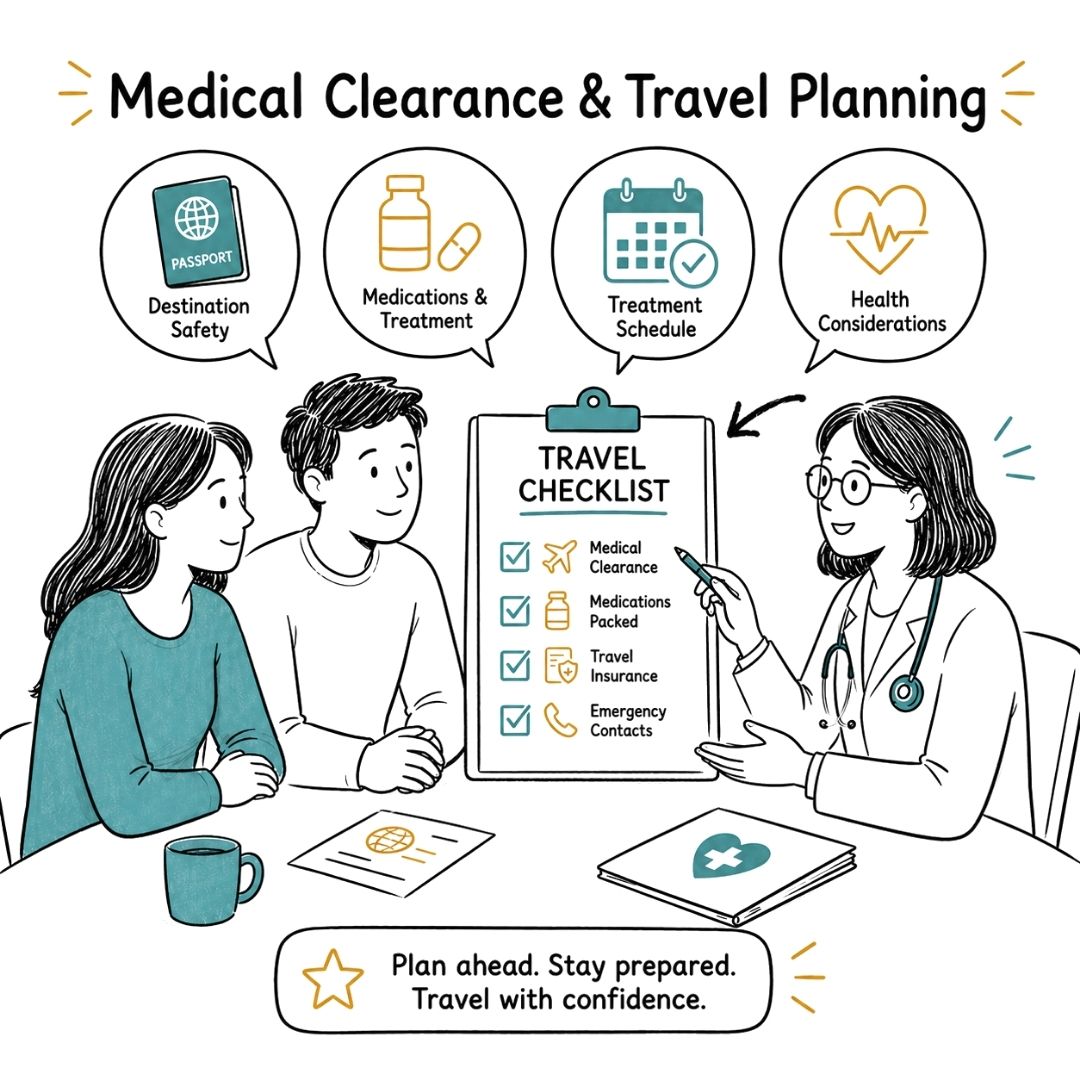
You can support your friend by helping them prepare questions for their medical team. What specific precautions should they take? Are there any destinations they should avoid? How will travel affect their treatment schedule? Should they pack any special medications or equipment?
Remember that medical clearance isn't a one-size-fits-all approval. Your friend's doctor might greenlight a relaxing week at a beach resort but recommend against a strenuous hiking adventure. The key is honest communication about what the trip will actually involve.
Not all travels are equally suitable when your friend is managing cancer treatment. You can help your friend evaluate the pros and cons of different options based on their specific needs and circumstances.
Car travel often emerges as a safe choice. It eliminates exposure to airport crowds, allows control over the environment, and provides flexibility to stop whenever needed. If your friend is considering a road trip, offer to share driving duties or help plan rest stops that accommodate their energy levels.
For longer distances, recreational vehicles offer unique advantages. Your friend can bring all their medications and comfort items, prepare meals according to dietary restrictions, and maintain their own schedule without worrying about airline timetables or hotel policies.
When traveling by flight is the only practical option, you can help make the experience more manageable. Research airlines' policies about medical equipment and medications. Some airlines offer priority boarding for passengers with medical conditions, while TSA Cares provides additional support at security checkpoints. Book aisle seats near the front of the plane when possible: they offer easier bathroom access and quicker boarding and deplaning.
One of the most valuable ways you can support your friend is by helping organize all their medical information in one accessible place. This might seem like administrative busy work, but it becomes invaluable if any health issues arise during travel.
Work together with your friend to compile a complete list of current medications, including dosages and timing. Include information about any allergies, previous surgeries, and current treatment protocols. Make sure you have contact information for their entire medical team: oncologist, primary care physician, specialists, and their preferred hospital.
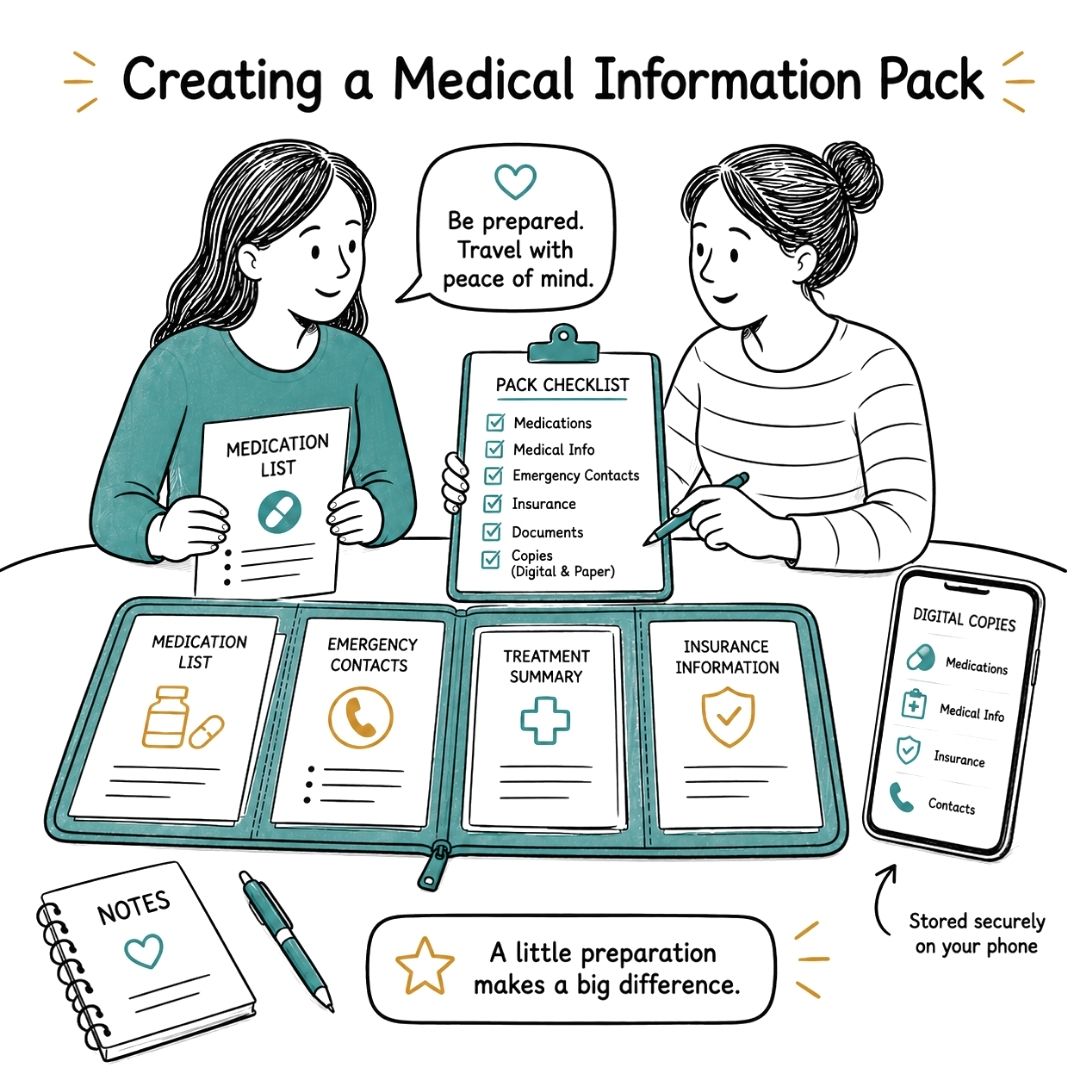
If your friend uses medical devices like ports, feeding tubes, or mobility aids, help them obtain letters from their doctors explaining these devices. These letters smooth the way through airport security and help hotel staff understand any special accommodation needs.
It is necessary to create both physical and digital copies of all information. Store copies on your friend's phone, share them with trusted family members, and keep hard copies in easily accessible locations. You never know when this information might be needed quickly.
Managing medications while traveling presents unique challenges, but with careful planning, it becomes much more straightforward. Your assistance in medication management is crucial, since medication errors during travel can have serious consequences.
Help your friend organize medications in their original pharmacy containers: this prevents confusion and satisfies legal requirements. For air travel, all medications needed during the flight should go in carry-on luggage. Pack extra supplies beyond what the trip requires in case of delays or unexpected extensions.
For car travel, be mindful of storage conditions. Medications shouldn't be left in hot cars or exposed to extreme temperatures. A small cooler might be necessary for certain prescriptions.
If travel involves crossing time zones, work with your friend to create a new medication schedule that maintains proper medication intervals. This might require consulting with their pharmacist or medical team, but it's worth the effort to maintain therapeutic effectiveness.
The key to supporting your friend during their actual journey is finding the balance between helpful attentiveness and giving them space to enjoy the experience. Your role is to reduce their stress and physical burden while still allowing them to feel independent and capable.
It is important to plan for flexibility in your itinerary. What looks manageable on paper might feel overwhelming when dealing with treatment fatigue or unexpected side effects. Build in rest days and be prepared to modify plans based on how your friend feels each day.
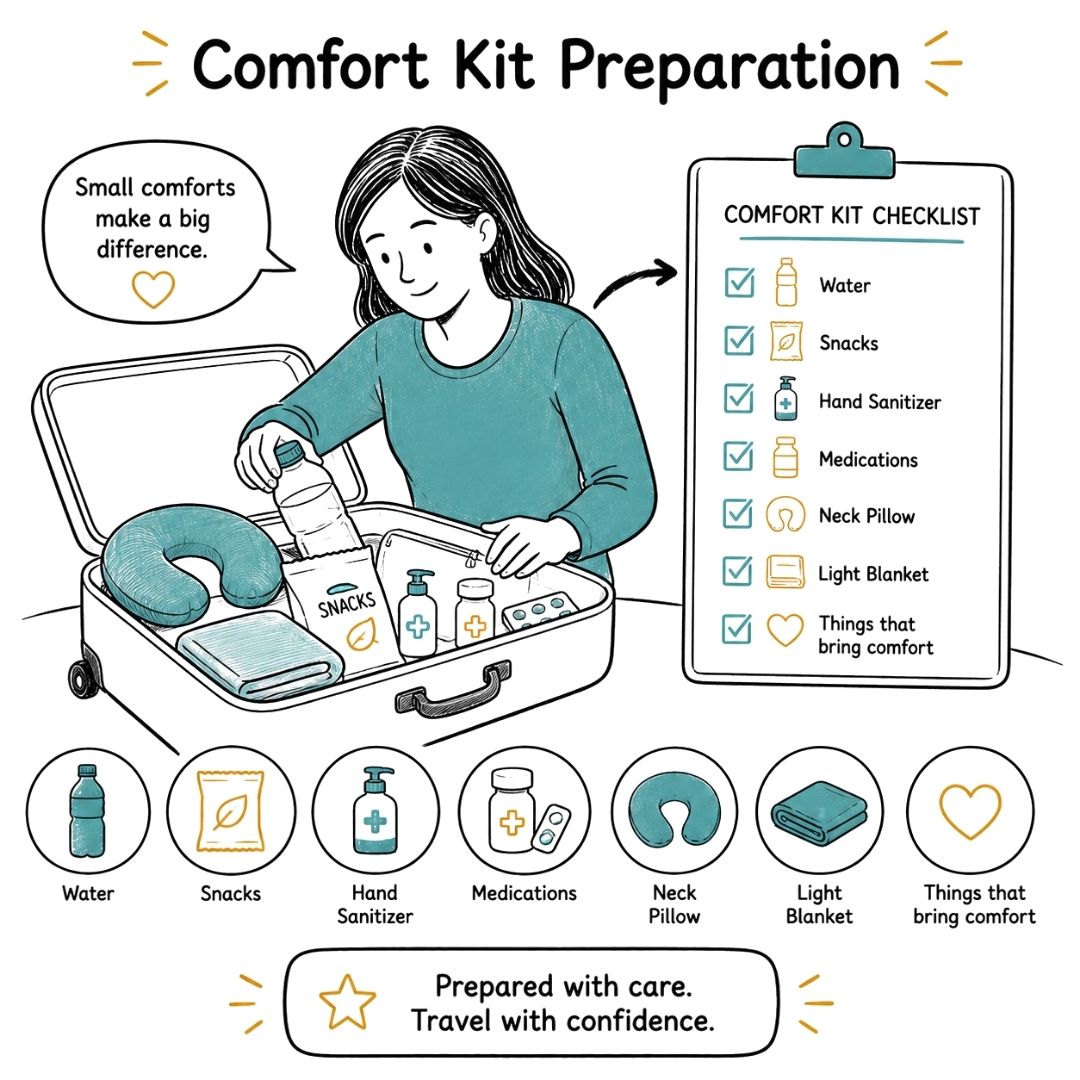
A travel comfort kit helps to addresses common travel challenges for people with cancer. Anti-nausea medications, easy-to-digest snacks, disposable bags, hand sanitizer, and extra face masks are all useful. A small pillow and light blanket can make long car rides or flights much more comfortable.
Please help manage practical logistics without taking over completely. Offer to handle luggage, navigate airports, or deal with hotel check-ins, but also give your friend opportunities to make decisions and maintain control over their own experience.
Nobody wants to think about medical emergencies while planning a fun trip, but being prepared provides tremendous peace of mind for both you and your friend. Having a clear plan removes panic from already stressful situations.
Research medical facilities at your destination before you leave. Know where the nearest hospital is located and whether it has oncology services if needed. Find out if your friend's insurance provides coverage in the area you're visiting, or if additional travel insurance makes sense.
Remember to create an emergency contact list that includes family members, friends, medical team, and insurance providers. Program these numbers into phones and keep written copies as backup. In an emergency, you don't want to be searching through phones or trying to remember important numbers.
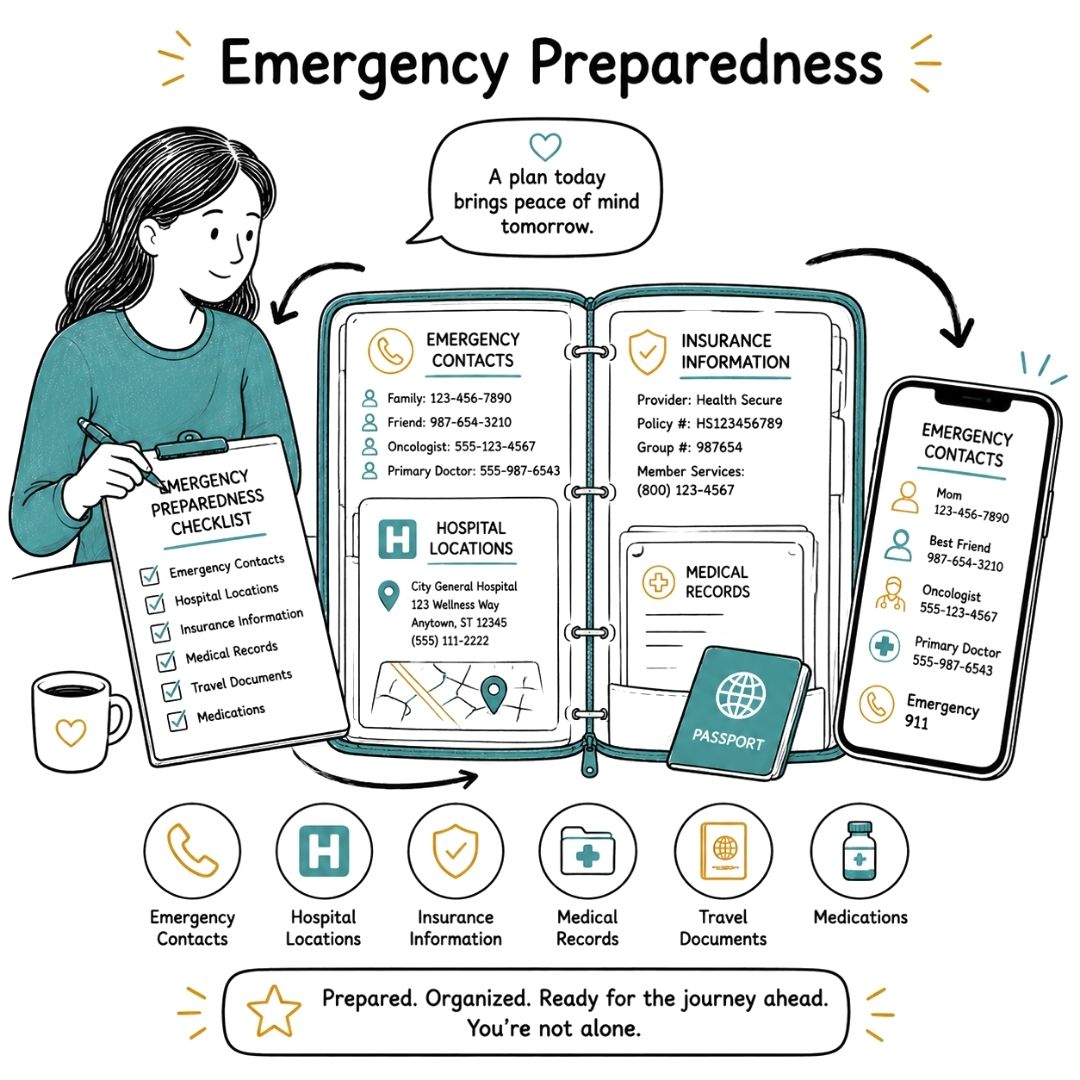
Discuss with your friend what they would want you to do in various emergency scenarios. Who should be called first? What hospitals should be avoided if possible? Are there any specific medical directives you should be aware of? These conversations might feel uncomfortable, but they're much easier to have calmly at home than in the middle of a crisis.

Edit Template
Travel insurance becomes particularly important when cancer is part of the equation, but it also becomes more complicated. Standard travel insurance often excludes pre-existing conditions, which can leave your friend vulnerable to significant financial losses if health issues force trip cancellation or require medical care while traveling.
Help your friend research travel insurance options specifically designed for people with pre-existing medical conditions. These policies typically cost more but provide much better protection. Some require a doctor's letter confirming fitness for travel, which ties back to the importance of medical clearance.
Review your friend's existing health insurance coverage to understand what's covered during travel, especially if you're traveling internationally. Medicare, for example, typically doesn't cover medical care outside the United States, which could leave your friend facing enormous medical bills if something goes wrong abroad. To understand more about travel insurance for cancer, this guide provides essential insights.
Perhaps the most important thing you can offer your friend is the gift of normalcy: the chance to be a traveler rather than a patient, to create new memories rather than focus solely on treatment schedules and medical appointments. Your support makes this possible. You can find more tips in this guide that helps your friend maintain a state of peace and joy.
Some days will be harder than others. Your friend might feel energetic and eager to explore one day, then need to rest and recover the next. Your flexibility and understanding make the difference between a successful trip and a source of additional stress.
Remember that this journey isn't just about reaching a destination: it's about maintaining your friend's sense of adventure and connection to the wider world. With thoughtful planning, practical support, and genuine care, you can help create an experience that nourishes their spirit while keeping them safe and comfortable.
Travel during cancer treatment requires more planning and consideration than typical trips, but it's absolutely possible with the right support system. Your friendship and practical assistance can transform what might feel like an overwhelming challenge into a meaningful, restorative experience that reminds your friend of all the beautiful possibilities in their life.
We strongly advise you to talk with a health care professional about specific medical conditions and treatments.
The information on our site is meant to be helpful and educational but is not a substitute for medical advice.
If You Think You Have Received Negligent Treatment For Your Oral Cancer This Post Explains How You Can Go About Getting Compensation.
A massive thank you to Emma from Free From Farmhouse for her honest review of our cancer care package for men. Emma's Thoughts: I really liked the simplicity of the packaging and […]
A Moving Cancer Survival Story Highlighting Love, Resilience, And The Miraculous Power Of Hope In Healing.