When your friend receives a cancer diagnosis, and you can't be there in person to help, it can feel heartbreaking. Maybe they're in another city, country, or simply too unwell for in-person visits. The distance might make you feel helpless, like you're letting them down. But here's the truth: you don't need to be in the same room to be a real source of support. Technology has completely transformed how we can show up for people we care about, share moments, and remind them they're not alone.
Your friend doesn't need you to be in the same room to feel your support. In fact, some of the most meaningful connections happen through a video call, a shared playlist, or a simple text that arrives at just the right moment can carry immense weight. Let's explore practical ways to use technology to bridge that gap and be genuinely present for your friend during their cancer journey.
Video calls create a sense of presence that phone calls and texts simply can't match. Seeing your friend's face, noticing their expressions, catching small smiles, and sharing visual cues enriches the conversation. FaceTime, Zoom, WhatsApp video, Facebook Messenger, or Google Meet: pick whatever platform works best for both of you.
The key is establishing a routine. Your friend's world might feel chaotic right now, filled with unpredictable symptoms (fatigue and nausea), and constantly changing treatment schedules. Having a regular video chat to look forward to, maybe Tuesday evenings or Saturday mornings, gives your friend something reliable to look forward to.
Don't worry about always having the perfect thing to say. Sometimes the most impactful thing you can do is simply show up consistently. Let them guide the conversation. Some days they might want to talk about their treatment, other days they might want a normal conversation about your day or a funny story about your cat's latest antics.
If they’re too tired for video, suggest a short voice call or voice message. Hearing your voice can be comforting when seeing a screen feels like too much.
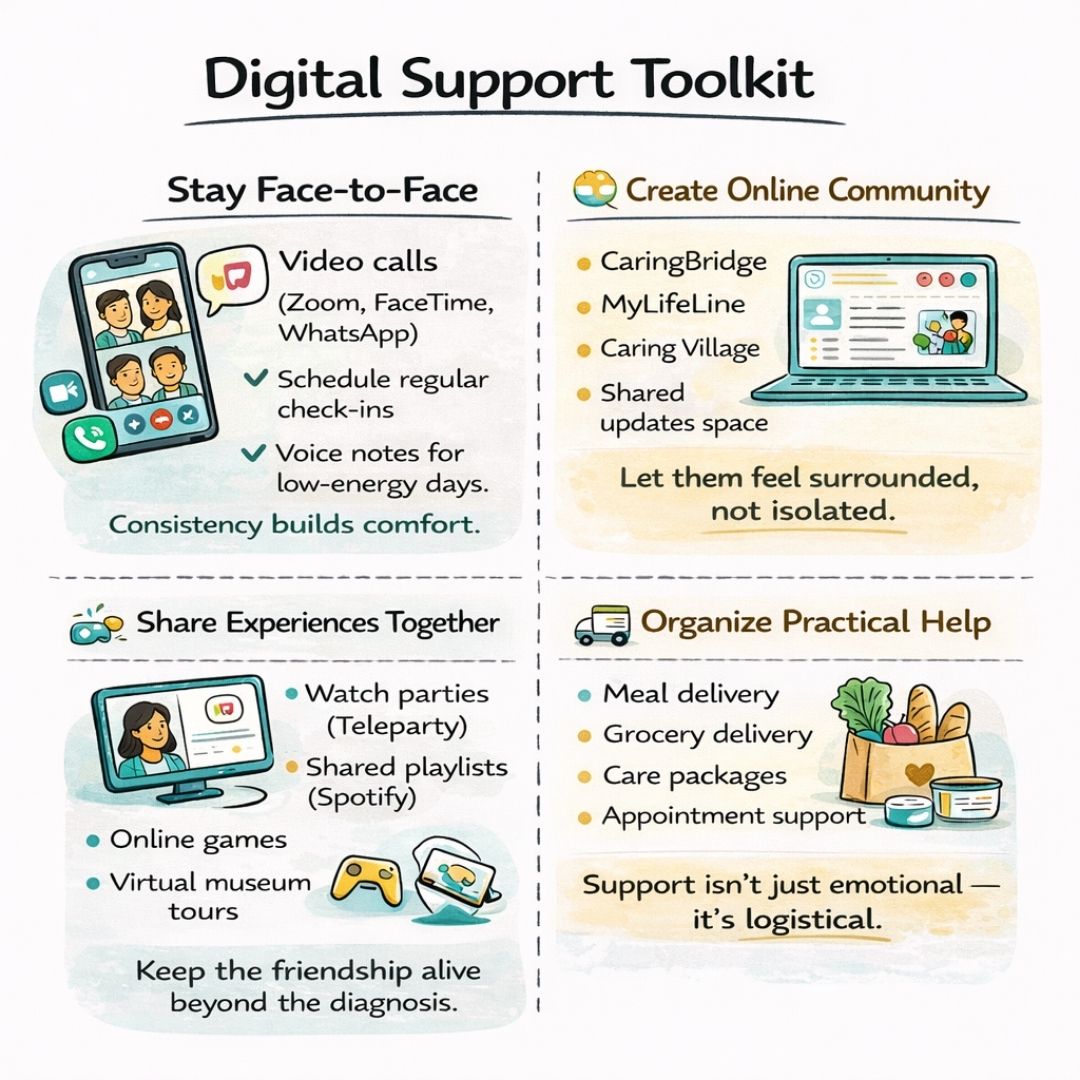
One person checking in is wonderful, but imagine if your friend could feel surrounded by their entire network of support. Platforms like CaringBridge, MyLifeLine, or Caring Village allow you to create a private online space where family and friends can stay updated without your friend having to repeat the same information dozens of times.
These platforms do more than share medical updates. They become places where people can leave messages, share photos, or send encouragement. Your friend can post when they have energy and read messages when they need a lift, all on their own terms.
If you're the one setting up these platforms, take on the role of community coordinator. Share the link with mutual friends, encourage people to participate, and help maintain the space so it stays active and supportive.
These spaces do more than share news. They help your friend feel surrounded by love, even when they're physically isolated. For more ideas on practical ways to show support, see 34 Meaningful Ways to Support a Loved One Living With Cancer.
Cancer treatment can make your friend feel isolated from normal life, but technology offers amazing ways to experience things together despite the distance. Watch shows or movies at the same time with Netflix Party (now Teleparty), Disney+ GroupWatch, or similar tools while simultaneously chatting about them. Create collaborative Spotify playlists where you both add songs that remind you of good memories or ones they might need on hard days. Play online games together: even simple word games, trivia, or board games on apps like Board Game Arena can provide a wonderful distraction.
These shared activities serve a deeper purpose than entertainment. They help maintain your friendship beyond the cancer diagnosis. When you're laughing together about a ridiculous reality TV show or debating whether to add that cheesy 80s song to your playlist, you're both connecting as the people you've always been to each other.
Consider joining them for virtual museum tours, watching live-streamed concerts, or doing guided meditation together through apps like Calm or Insight Timer. The specific activity matters less than the fact that you're experiencing it together.
Technology doesn't just help with emotional support: it's incredibly powerful for organizing practical help. Even from hundreds of miles away,
If your friend agrees, you might even join their telemedicine appointments virtually. You can listen, take notes, ask questions they might forget to ask, and help them advocate for their needs. Sometimes having a friend present (even virtually) during medical conversations provides crucial emotional support.
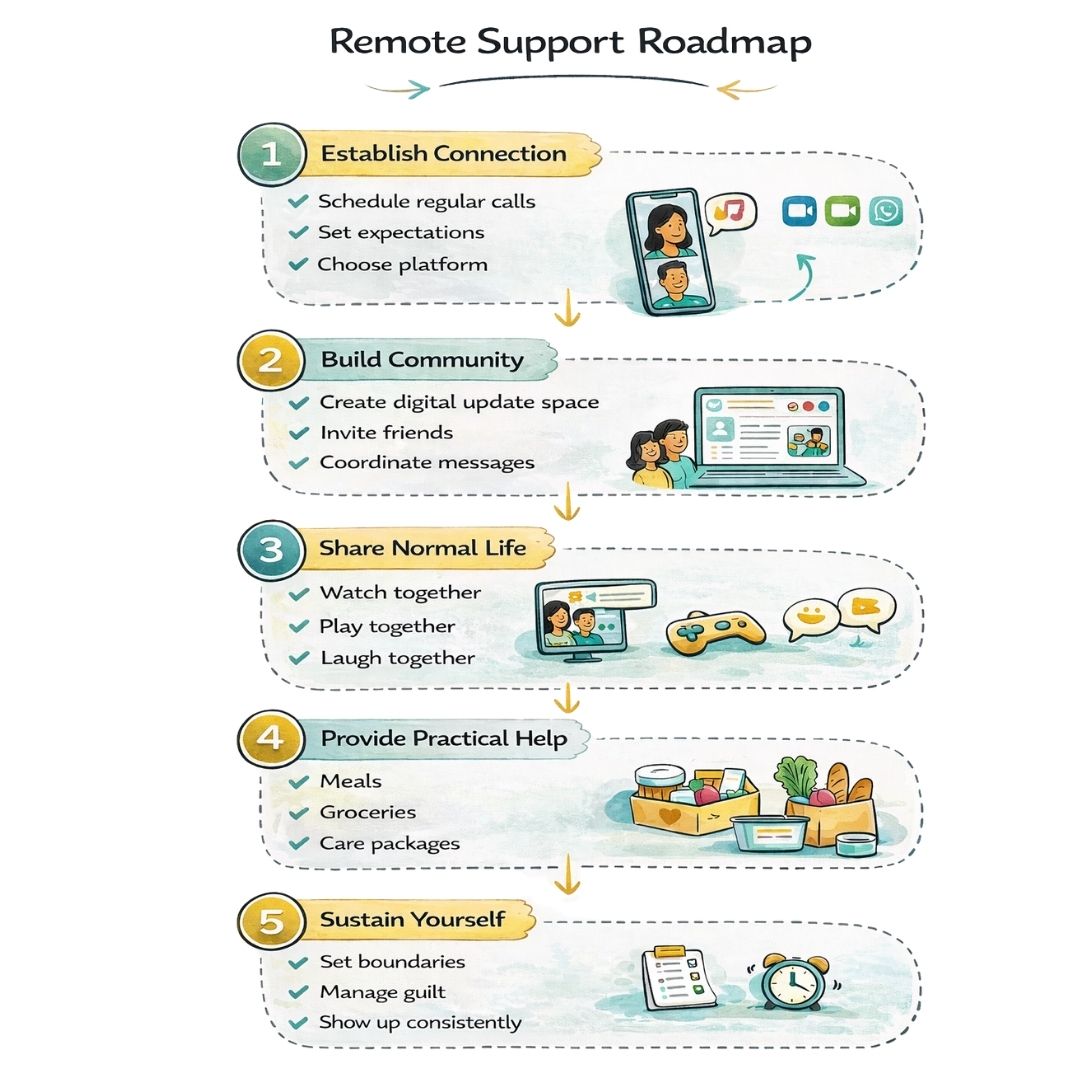
Your role as a long-distance supporter includes helping build a local support team around your friend who can step in physically.
You might also research local services they could benefit from, such as cleaning services, dog walkers, lawn care, or grocery delivery options they might not know about. Sometimes the person going through treatment doesn't have the energy to research these things, but you can do that legwork from anywhere.
Let's be honest: supporting someone from a distance can leave you feeling frustrated and guilty. You might worry you're not doing enough or feel helpless when you can't physically be there during difficult moments. These feelings are completely normal and valid.
Set boundaries that work for both of you. Maybe you're available for calls during certain hours, or perhaps you check their CaringBridge page at specific times rather than obsessively refreshing it all day. Taking care of your own emotional well-being isn't selfish; it’s essential if you want to keep showing up for your friend in a meaningful, sustainable way.
Remember that your physical presence is not the only meaningful form of support. That video call where you made them laugh, the playlist you created together, the groceries you arranged to be delivered: these actions have a real impact on their daily experience. For more on how cancer affects relationships and emotions, see Navigating Relationships During Cancer
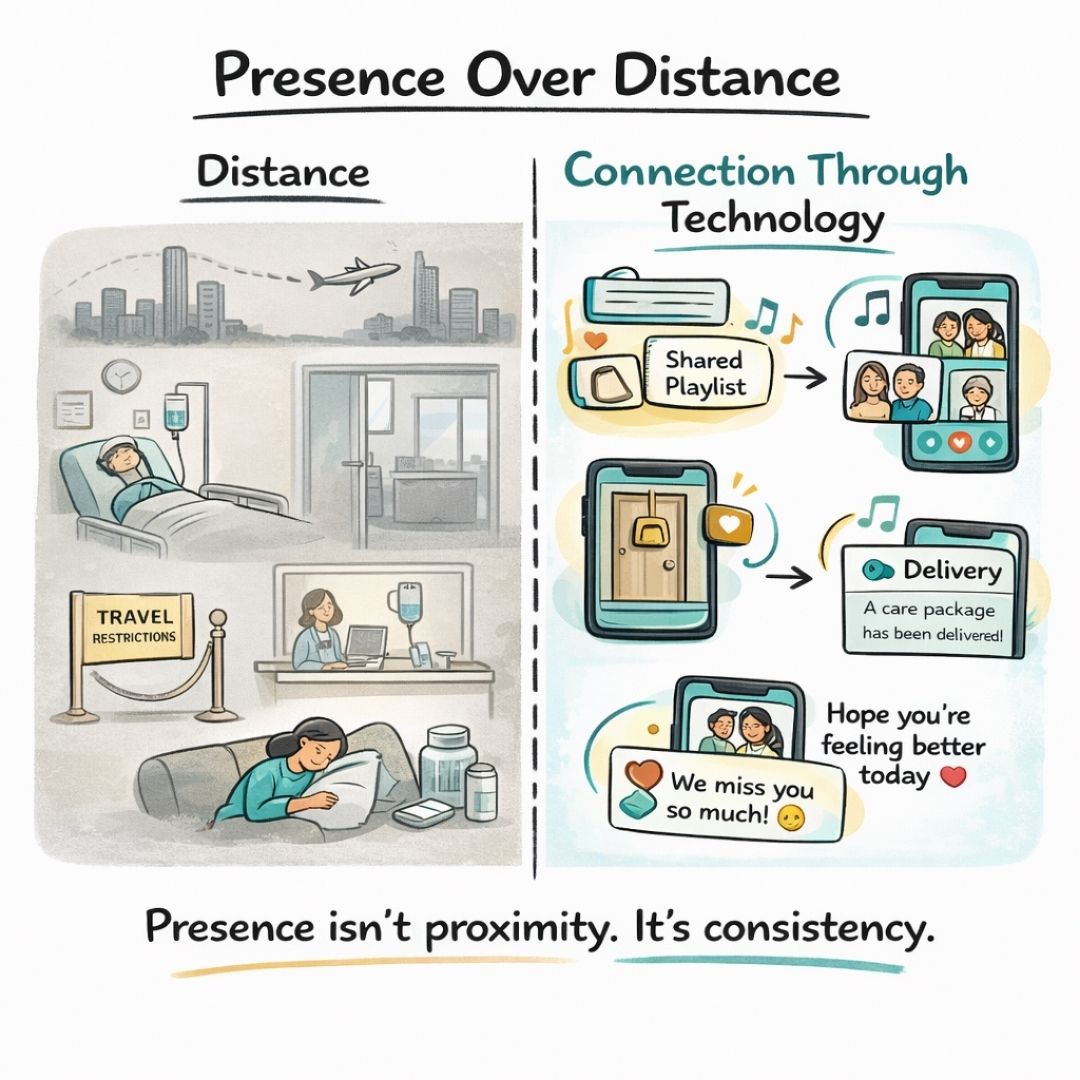
Here's what we often forget: being present isn't about physical proximity. It's about showing up consistently, listening without trying to fix everything, and helping your friend feel connected to life beyond their diagnosis.
Technology provides incredible tools to create genuine intimacy across distance.
The goal isn't to replicate in-person support: it's to create something uniquely valuable that works within the constraints of distance. These small gestures remind your friend that they matter to you, that their experience matters to you, and that physical distance doesn't diminish your care for them.
Your consistent digital presence can make a powerful difference. Whether through messages, video calls, or shared online activities, showing up regularly reminds your friend that they are not alone. In a world where technology often gets blamed for creating distance between people, you have the opportunity to flip the narrative. By using it intentionally, you can bridge gaps and create meaningful connections exactly when it matters most.
If you'd like more ideas and inspiration, check these related articles on the site:
We strongly advise you to talk with a health care professional about specific medical conditions and treatments.
The information on our site is meant to be helpful and educational but is not a substitute for medical advice.
Being diagnosed with cancer in the UK in 2016 does not have to mean a death sentence and cancer survival in the UK has doubled in the last 40 years.
Explore How Cancer Affects Relationships, And Learn Practical Strategies For Strengthening Emotional Bonds Through Communication, Compassion, And Support.
Discover the key characteristics of melanoma, how it's detected, and the available treatments for this serious type of skin cancer