Cancer care is often framed in terms of treatment pathways, clinical outcomes, and survival statistics. While these are essential, they do not fully capture the lived experience of individuals navigating diagnosis, treatment, and recovery. The day-to-day reality of cancer is shaped just as much by practical needs as it is by medical intervention. What people require, consistently and predictably, is support that functions in real life.
Practical support is not an adjunct to care. It is a core component of it. When designed well, it reduces stress, improves adherence to treatment, and enables individuals and families to function during periods of significant disruption. When designed poorly, or absent entirely, the burden shifts onto patients and caregivers, often at the point when they are least able to manage it.
This article explores what practical support in cancer care looks like in operational terms, why it matters, and how it can be delivered at scale without losing relevance or effectiveness.
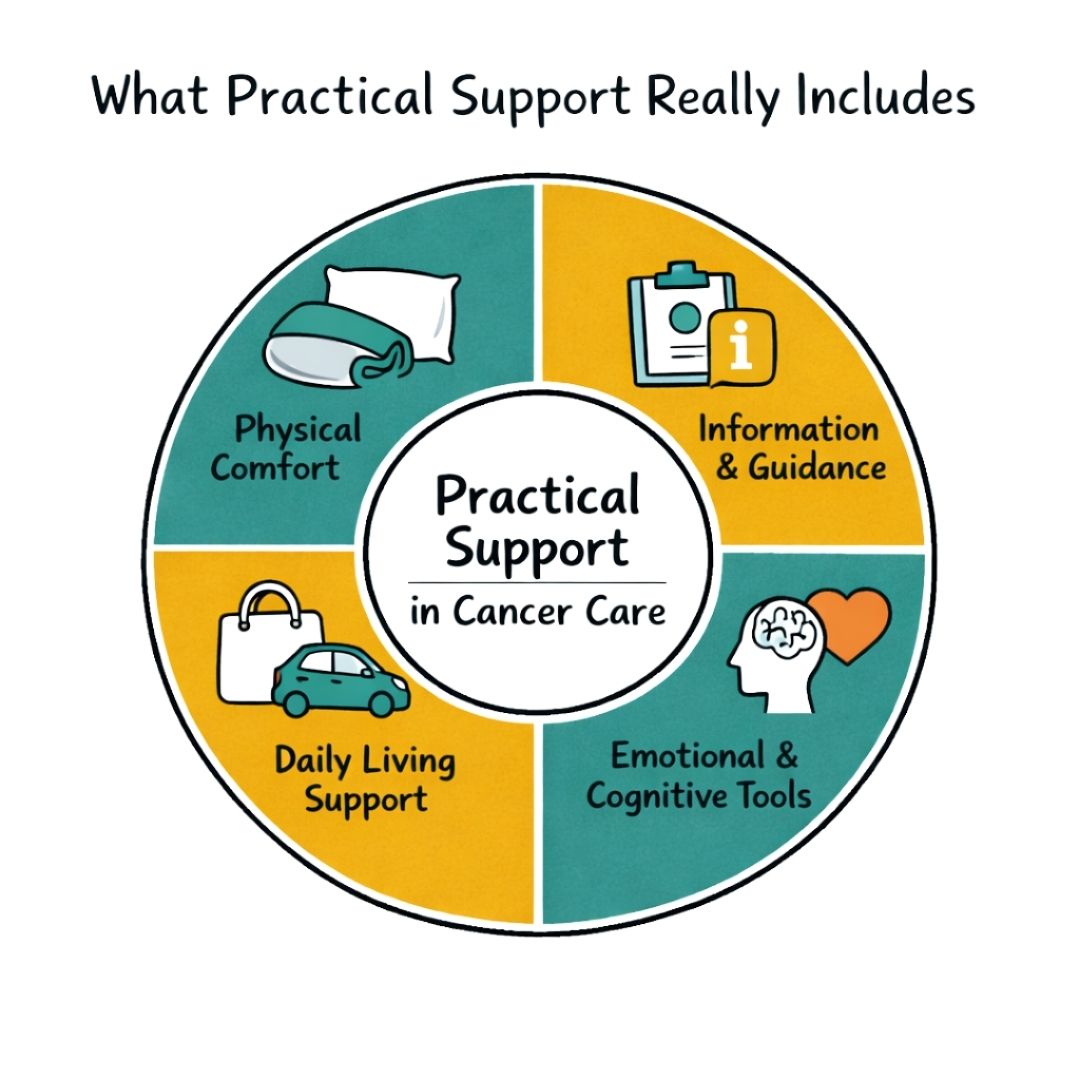
Practical support refers to tangible, functional assistance that helps individuals manage the realities of living with cancer. This includes physical items, services, and structured resources that address immediate needs.
It typically falls into several categories:
1. Physical comfort and symptom management
Items that alleviate treatment side effects or improve daily comfort. Examples include hydration aids, skin care products for radiotherapy, temperature regulation items, and sleep support tools.
2. Daily living support
Tools and resources that make routine activities easier. This can include meal support, transport coordination, or simple aids that reduce physical strain.
3. Information and guidance
Clear, structured, and accessible information that helps individuals understand what to expect and how to respond. This is particularly important in navigating side effects and recovery phases.
4. Emotional and cognitive support tools
While emotional support is often discussed abstractly, practical formats include journals, structured reflection tools, and guided resources that help individuals process their experience.
The defining characteristic of practical support is utility. It must be immediately usable, contextually relevant, and require minimal effort to access or understand.
The impact of practical support is not theoretical. It directly influences outcomes across several dimensions:
Cancer treatment introduces a series of logistical and physiological challenges. Patients often manage complex medication schedules, side effects such as nausea or fatigue, and frequent clinical appointments. Practical support reduces the cognitive and physical load associated with these tasks.
For example, providing a pre-prepared set of items for managing chemotherapy side effects eliminates the need for patients to research, source, and purchase products individually. This is particularly important when energy levels and executive function are reduced.
When individuals are better supported in managing side effects and daily routines, they are more likely to adhere to treatment protocols. Hydration, nutrition, and rest are not abstract recommendations. They require practical enablement.
A simple example is access to an appropriate water bottle or hydration system. If hydration is easier, it is more likely to occur. This has direct implications for recovery and tolerance of treatment.
Uncertainty is a significant contributor to distress in cancer care. Practical support introduces elements of predictability. When individuals know they have the tools to manage expected challenges, the perceived risk decreases.
Structured care packages or guidance frameworks can act as stabilising mechanisms, particularly in early stages of diagnosis when information overload is common.
Practical support does not only benefit patients. It reduces the burden on caregivers, who are often responsible for sourcing items, coordinating logistics, and providing day-to-day assistance.
By externalising some of these responsibilities into structured support systems, caregivers are able to focus on relational and emotional support rather than operational tasks.
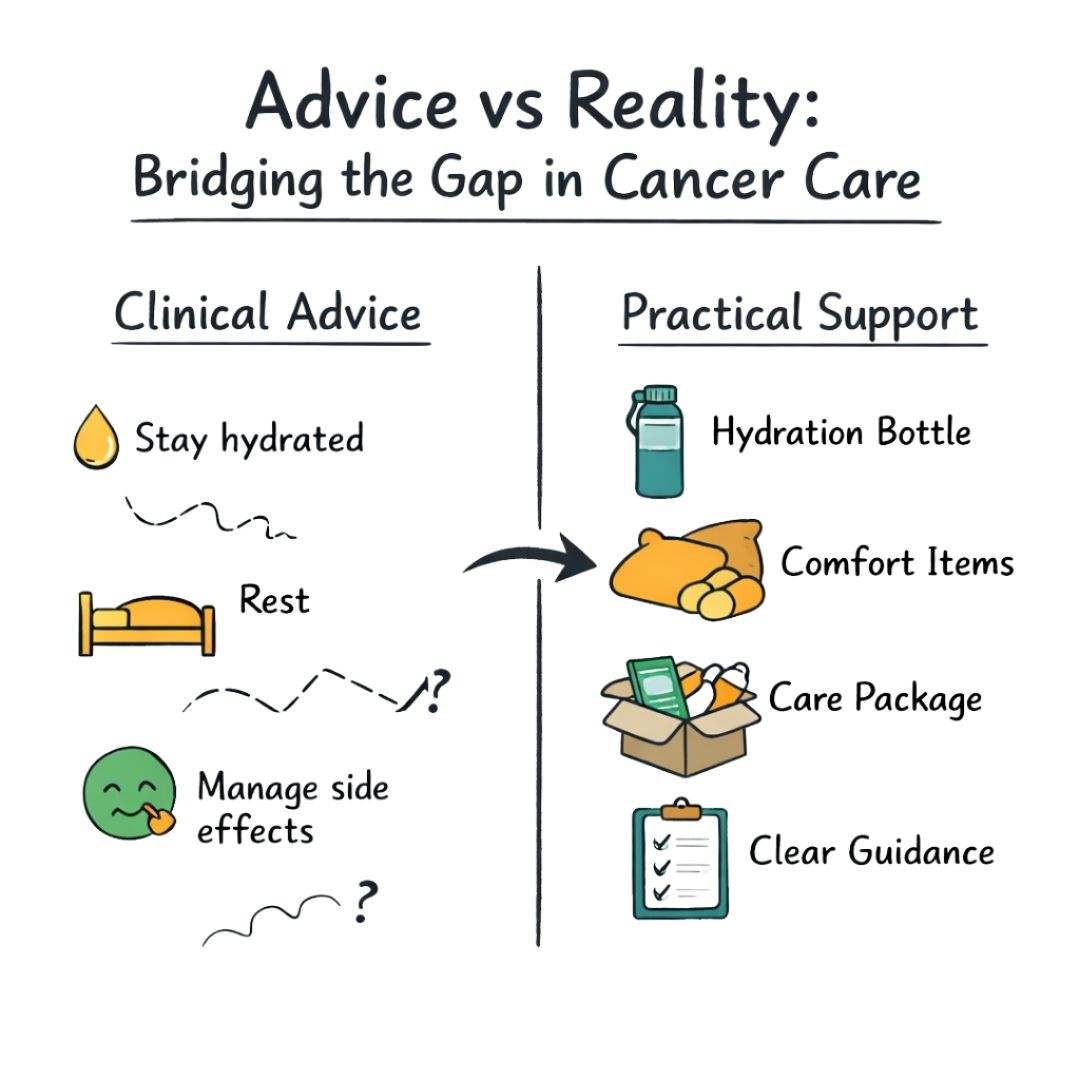
Healthcare systems are designed primarily around diagnosis and treatment. This is appropriate given their mandate. However, it creates a structural gap between clinical care and daily living.
Patients are typically discharged with general advice:
While accurate, this guidance is not operationalised. It assumes that individuals have the resources, knowledge, and capacity to translate advice into action.
This is where practical support models become critical. They bridge the gap between instruction and implementation.
Without this bridge, patients are effectively required to design their own support systems at a time when their capacity to do so is compromised.
Not all support is equally effective. For practical support to make a meaningful difference, it must meet specific criteria:
Support must be tailored to the stage of treatment and the likely needs associated with it. A generic approach reduces effectiveness.
For example, the needs of someone undergoing chemotherapy differ from those recovering from surgery or receiving radiotherapy. Effective models segment support accordingly.
Complexity reduces utilisation. Items and resources should be intuitive, with minimal setup or instruction required.
Support must be easy to obtain. Barriers such as cost, availability, or complicated application processes reduce impact.
The value of support is highly time-dependent. Providing the right support at the wrong time significantly reduces its usefulness.
For example, receiving guidance on managing side effects after they have already occurred is less effective than receiving it in advance.
Support should be designed in a way that respects the individual. This includes thoughtful presentation, neutral or appropriate aesthetics, and avoidance of language that may feel patronising or overly clinical.
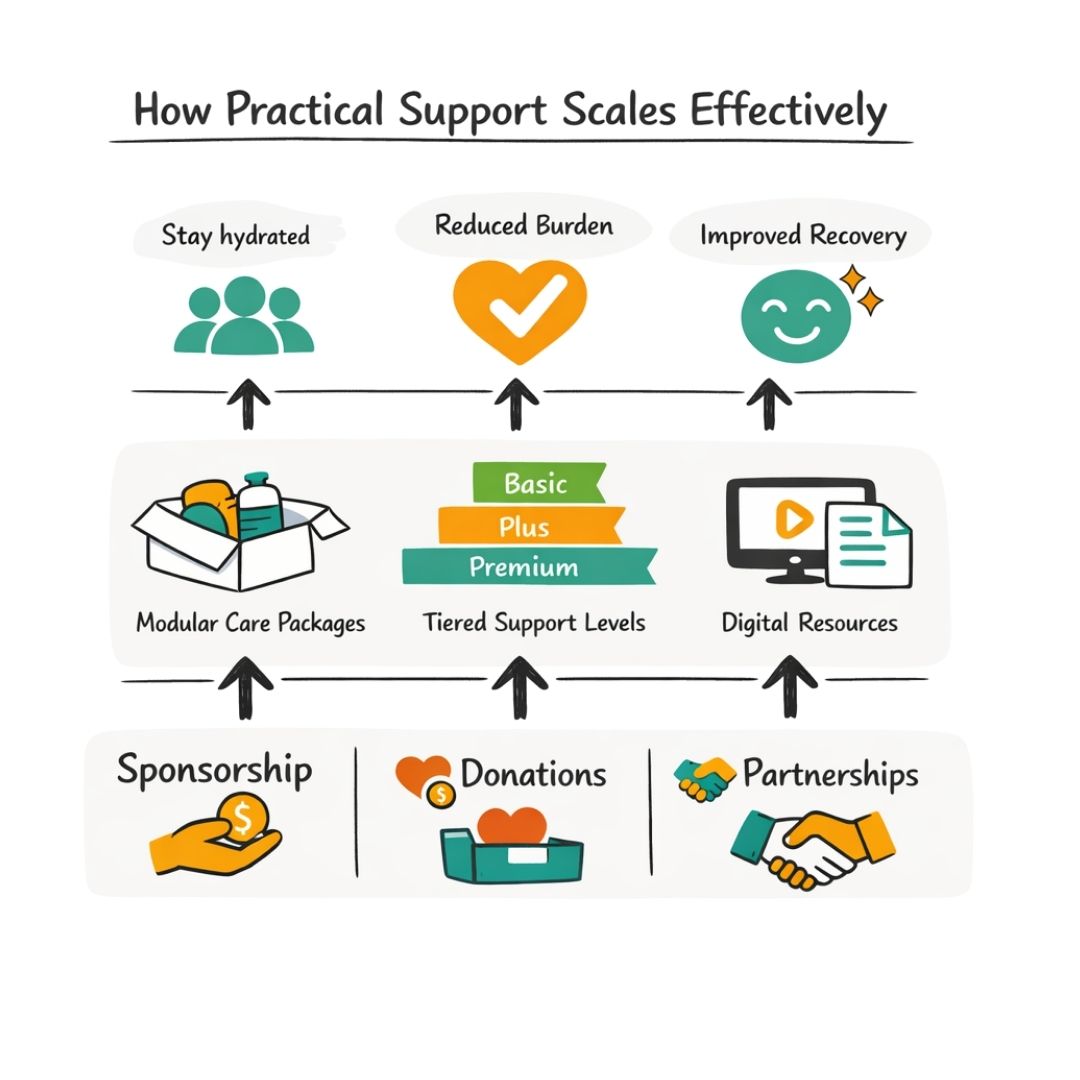
One of the primary challenges in delivering practical support is scalability. Individualised support is effective but resource-intensive. To reach larger populations, models must balance personalisation with efficiency.
Several scalable approaches have emerged as effective:
Care packages provide a structured way to deliver multiple forms of support simultaneously. To scale effectively, they should be designed using a modular approach.
This involves:
This allows for both efficiency in production and relevance in delivery.
Not all individuals require the same level of support. Tiered models allow for differentiation based on need, resources, or funding availability.
For example:
This approach supports scalability while maintaining flexibility.
Collaboration with healthcare providers, charities, and community organisations enables broader reach without centralised infrastructure expansion.
Hospitals, clinics, and support groups can act as distribution points, integrating practical support into existing care pathways.
Digital platforms can support scalability by providing:
While digital tools cannot replace physical support, they enhance accessibility and continuity.
Sustainable scaling requires financial models that do not rely solely on direct payment from patients.
Approaches include:
These models allow support to reach individuals regardless of financial position.
A common failure point in support design is the assumption of ideal conditions. In reality, individuals undergoing cancer treatment may experience fatigue, cognitive impairment, and reduced capacity for decision-making.
Designing for real-world use means accounting for these constraints.
This includes:
It also means testing support systems with real users and incorporating feedback into iterative design improvements.
To ensure that practical support is not only well-intentioned but effective, it must be evaluated.
Key metrics include:
Qualitative feedback is particularly valuable in this context, as it captures nuances that quantitative metrics may miss.
The long-term objective is not to position practical support as a separate layer, but to integrate it into standard cancer care pathways.
This requires:
When practical support is embedded within the system, it becomes consistent, predictable, and accessible to all who need it.
Practical support in cancer care is not a peripheral concern. It is central to how individuals experience treatment and recovery. The difference it makes is measurable in reduced burden, improved adherence, and enhanced quality of life.
What distinguishes effective support is not complexity, but precision. It is the alignment of support with real needs, delivered in a way that is usable, timely, and accessible.
Scalable models are not only possible but necessary. By combining standardisation with thoughtful design, and efficiency with relevance, it is feasible to deliver meaningful support at scale.
The challenge is not identifying what makes a difference. The evidence is already clear. The challenge is building systems that deliver it consistently.
We strongly advise you to talk with a health care professional about specific medical conditions and treatments.
The information on our site is meant to be helpful and educational but is not a substitute for medical advice.
If You Think You Have Received Negligent Treatment For Your Oral Cancer This Post Explains How You Can Go About Getting Compensation.
Why Celebrate Father’s Day With Cancer? Should I Buy A Fathers Day Gift For A Cancer Patient? These Questions And More Are Discussed
My Heart Goes Out To Anyone Caring For A Loved One. It’s A Tough Role, Sadly One That’s Not Acknowledged As Much As It Should Be.