When you hear "breast cancer," most people immediately think of finding a hard, round lump. But that's not the whole story, especially when it comes to lobular breast cancer. This type starts in a different part of the breast – the lobules, which are the tiny glands that produce milk.
What makes it so different is how it grows. Instead of forming a tight, noticeable lump, lobular cancer cells often spread out in single-file lines through the breast tissue. It’s less like a solid rock and more like a subtle web or a thickening that can be incredibly difficult to feel. This unique growth pattern is why it can be missed on routine mammograms and often isn't found until it's a bit larger.
So, let's break down what's really going on inside the breast. Imagine the breast's milk-producing system as a bunch of grapes on a vine. The grapes are the lobules, and the stems are the ducts that carry milk to the nipple. Lobular breast cancer begins right inside those "grapes."
The real defining feature is that these cancer cells tend to lose their "stickiness." Healthy cells clump together, but lobular cells often break free and invade the surrounding tissue in a line, almost like ants marching one by one. This is why the primary symptom isn't a distinct lump but rather a vague area of thickening, fullness, or even a change in the breast's shape that you can't quite put your finger on.
When you get a diagnosis, you'll likely hear a couple of specific terms. It's crucial to know what they mean because they describe very different situations.
Invasive Lobular Carcinoma (ILC): This is the one we classify as "true" breast cancer. The word invasive is key – it means the cancer cells have broken out of the lobules and are now in the surrounding breast tissue. Once there, they have the potential to travel to the lymph nodes and other parts of the body. When someone talks about having lobular breast cancer, they are almost always referring to ILC.
Lobular Carcinoma in Situ (LCIS): This one can be confusing because of the word "carcinoma," but LCIS is not cancer. Instead, it’s a collection of abnormal cells that are still contained entirely within the lobules. It’s best thought of as a marker – having LCIS signals that you have a higher risk of developing invasive breast cancer (either ductal or lobular) in either breast down the road. It means you and your medical team will need to be extra vigilant with screening.
While it might not get as much attention as ductal cancer, lobular breast cancer is by no means rare. It’s actually the second most common type of invasive breast cancer.
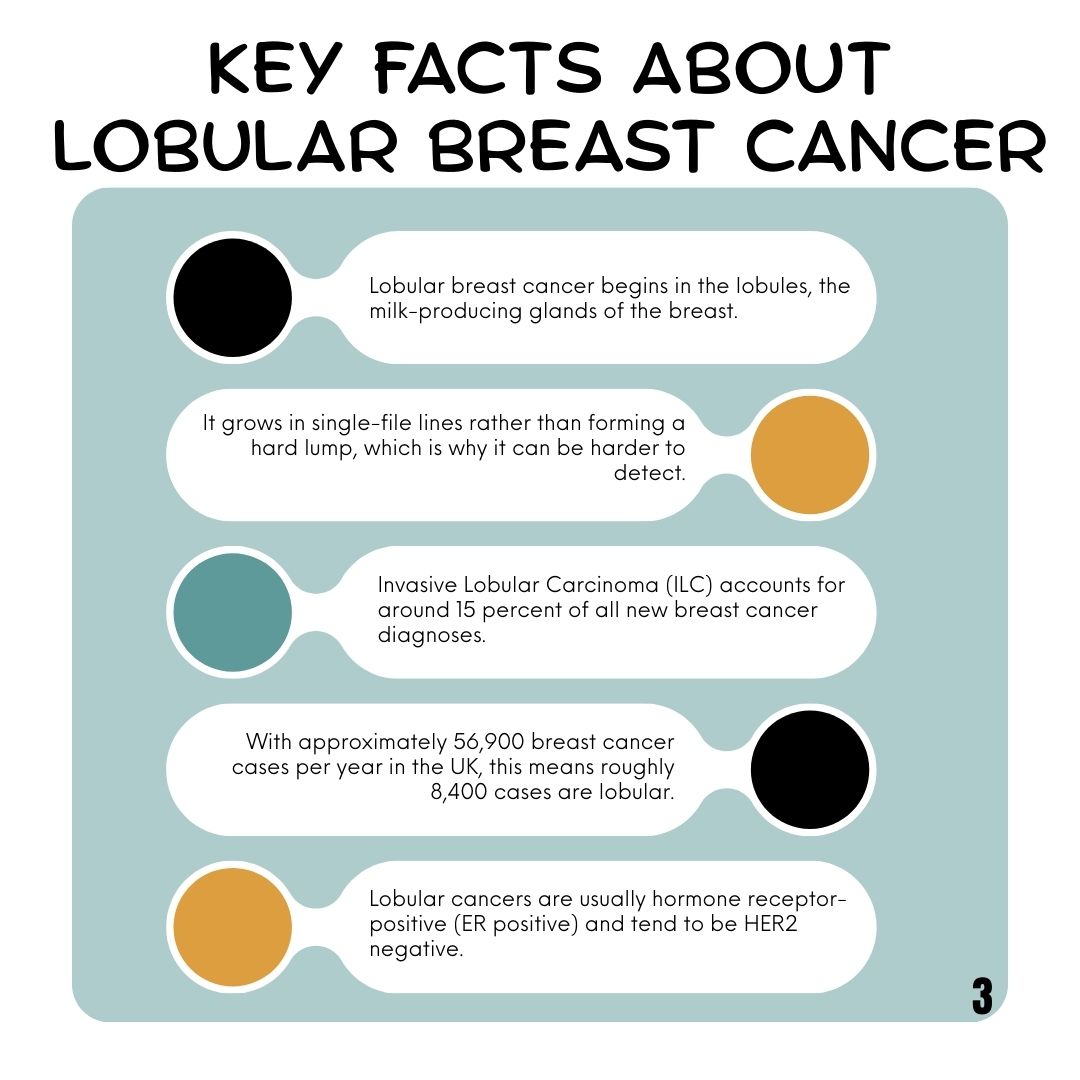
Invasive Lobular Carcinoma (ILC) makes up around 15% of all new breast cancer diagnoses. To put that into perspective, with about 56,900 new cases of breast cancer diagnosed each year in the UK alone, that means roughly 8,400 of them are lobular. For more details, you can look at the first-ever NHS England statistics on lobular breast cancer, compiled by Lobular Breast Cancer UK.
The key takeaway is that lobular breast cancer grows differently. Its single-file cell pattern explains why symptoms can be subtle and why specialised imaging is sometimes needed for an accurate diagnosis.
Getting your head around the specifics of your diagnosis is the very first step toward taking back a sense of control. For a wider look at different types of diagnoses and what they all mean, our comprehensive breast cancer guide is a great starting point. This foundation of knowledge can help demystify the journey ahead and empower you for the conversations with your care team.
One of the trickiest things about lobular breast cancer is that its signs can be frustratingly subtle. We're all taught to look for a hard, distinct lump, but lobular cancer rarely plays by those rules. Instead, it often shows up as a vague thickening or a feeling of fullness in one area of the breast.
You might just feel that something is "off" – perhaps one breast feels a bit heavier, looks slightly bigger, or the skin has an unusual texture, almost like the peel of an orange. Because of its sneaky single-file growth pattern, these changes can creep up so slowly you might second-guess yourself. Some people describe it as a hardened or dense patch rather than a proper lump. An inverted nipple that wasn't there before or swelling in just one breast are also things to watch out for. The most important thing is to trust your gut. If a change persists, it’s always worth getting it checked out.
Figuring out if it’s truly lobular cancer is a step-by-step process. It's not a one-and-done test; your medical team needs to build a complete picture of what's happening inside your breast tissue, especially since this type of cancer can be so elusive.
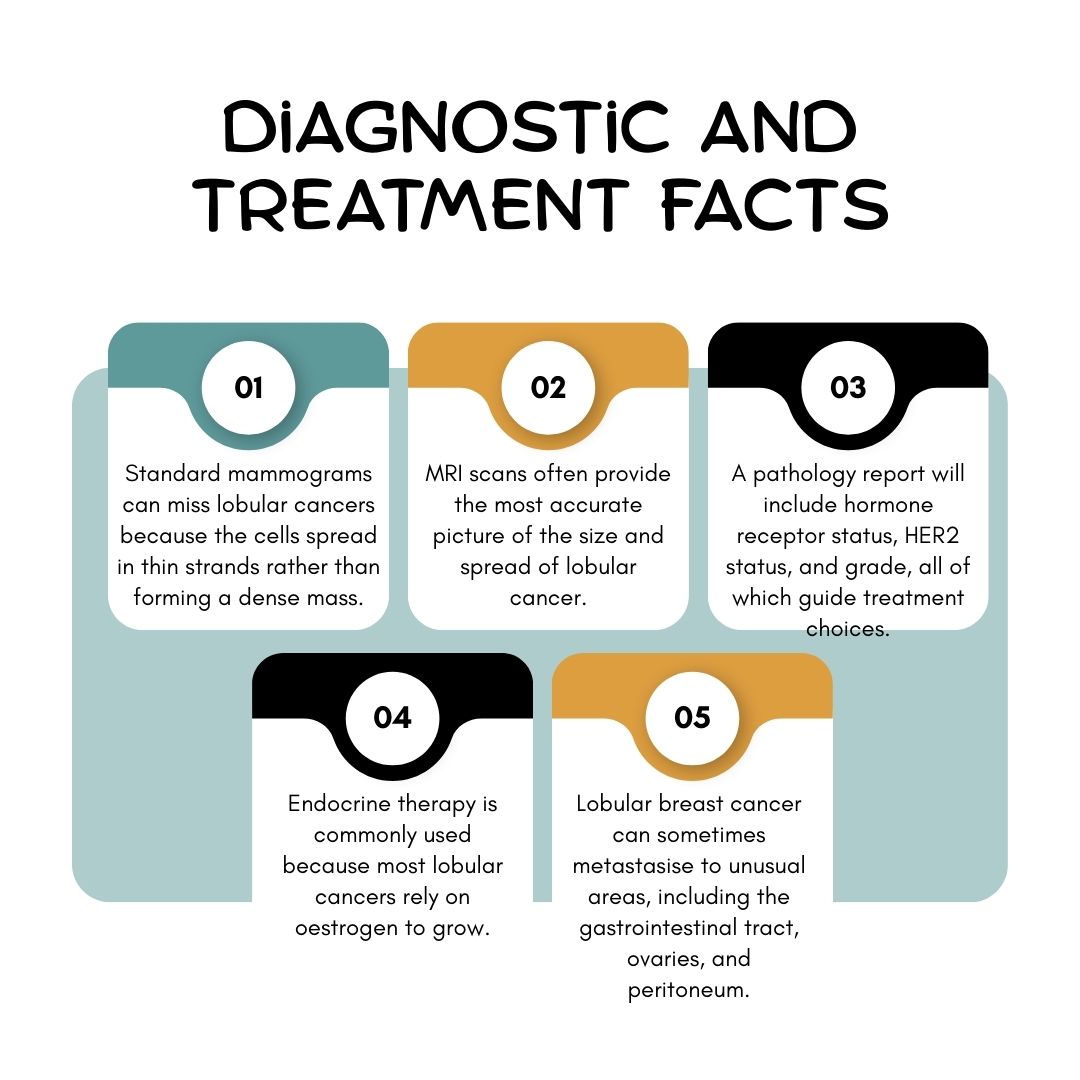
The journey usually starts with a physical examination, but imaging is where the real detective work begins. Standard mammograms, while essential, are known to sometimes miss lobular cancer. Its diffuse, web-like structure doesn’t always form the dense mass that shows up clearly on a mammogram, which is why other types of scans are often brought in to get the full story.
The infographic below really helps to show how lobular cancer starts in the milk-producing lobes and then spreads out in these single-file lines, almost like a web weaving through the breast tissue.
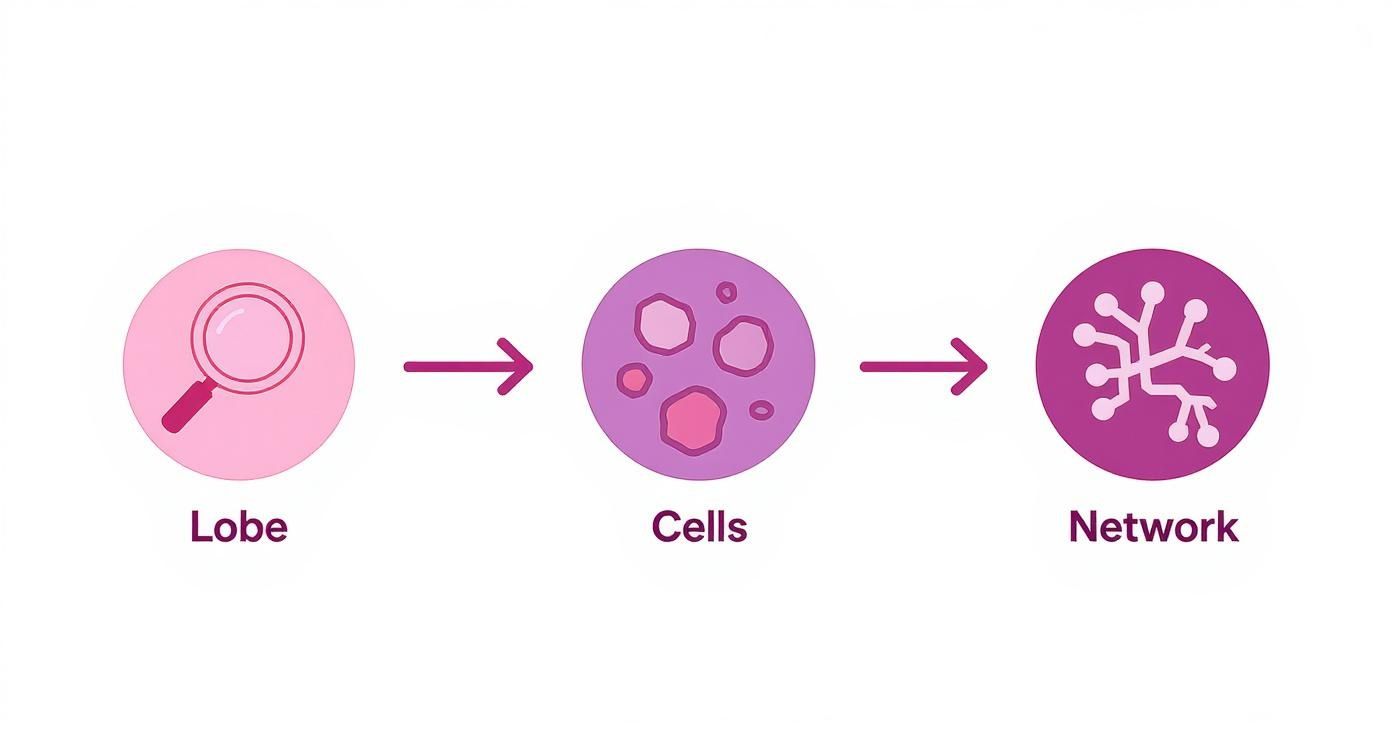
This visual explains exactly why it often doesn't form a classic lump, making it harder to feel with your fingers and sometimes harder to spot on a standard mammogram.
To get a much sharper view, your team will likely recommend more advanced imaging:
If any of these scans show a concerning area, the only way to know for sure is with a biopsy. This is a simple procedure where a tiny sample of tissue is removed and sent to a pathologist, who will examine it under a microscope. There are a few different ways to do this; our guide on what to expect from a stereotactic breast biopsy explains one common method in detail. Getting an accurate measurement of the cancer's size is also vital, and for those interested in the technical details, a clinician's guide to tumor volume calculation shows how specialists get this precise information.
That biopsy leads to what is arguably the most important document in your diagnosis: the pathology report. Think of it as the blueprint for your cancer. It doesn't just confirm the diagnosis; it provides all the crucial details your team needs to build the most effective treatment plan for you.
Your pathology report is the roadmap for your personalised treatment. It tells your oncology team not just what the cancer is, but how it behaves, allowing them to choose the therapies that will work best.
Here are the key things to look for in the report:
Getting your head around these results is the first big step. It empowers you to have a meaningful conversation with your care team about what comes next and how you’ll tackle it together.
Getting a lobular breast cancer diagnosis can feel like having the rug pulled out from under you. It’s a lot to take in. The next step, though, is about regaining a sense of control by building a clear, strategic plan to tackle it. This isn't a one-size-fits-all situation; your treatment plan is a strategy designed specifically for you, factoring in the unique features of your cancer, your overall health, and what matters most to you.
This plan is carefully pieced together by a multidisciplinary team—a group of specialists including surgeons, oncologists, and radiologists who collaborate to figure out the most effective combination of treatments for you. Understanding what each part of the plan involves can empower you to ask better questions and feel more involved in the decisions being made. It can also be helpful to know who does what, so take a look at the different roles within your cancer care team to see how they all contribute to your journey.
For most people diagnosed with early-stage lobular breast cancer, surgery is the first, and often most important, step. The main goal is simple: to get the cancer out of the breast.
There are two main ways to do this:
Lumpectomy (Breast-Conserving Surgery): This is where the surgeon removes just the tumour and a small safety border of healthy tissue around it, called a margin. The rest of the breast is preserved. Radiation therapy almost always follows a lumpectomy to catch any stray cancer cells that might have been left behind.
Mastectomy: This surgery involves removing the entire breast. In certain situations, like if there's a high genetic risk of a new cancer, your team might recommend a double mastectomy (removing both breasts).
Lobular cancer presents a real challenge for surgeons because of the sneaky way it grows—often in thin, single-file lines rather than a neat lump. This web-like pattern makes it tough to see the true extent of the cancer and to achieve clear margins, which is that all-important border of healthy tissue with no cancer cells. That’s why a breast MRI is often done before surgery to create a better map. Even with the best planning, sometimes a second operation is needed to make sure every last bit of cancer is gone.
While surgery deals with the cancer you can see in the breast, systemic therapies are designed to travel throughout your entire body. Their job is to find and destroy any cancer cells that may have escaped and started to travel elsewhere. The right systemic therapy for you is determined by the details in your pathology report, especially your hormone receptor and HER2 status.
The good news is that the vast majority of lobular cancers are hormone receptor-positive, which opens up some really effective treatment avenues.
Think of your cancer's specific "fingerprint"—its receptor status and grade—as the key that unlocks the most effective systemic therapies for you. This is why that pathology report is the foundation of your entire treatment plan.
Since most lobular cancers use oestrogen as fuel to grow, hormone therapy is a cornerstone of treatment. The whole idea is to cut off the cancer’s fuel supply, essentially starving it.
Chemotherapy uses powerful drugs to kill any cells that divide quickly—a classic characteristic of cancer. But it isn't always needed for lobular breast cancer, particularly if the cancer is slow-growing (low-grade) and was caught early on.
Your oncologist will weigh things up. They might recommend chemotherapy if the cancer is larger, has spread to your lymph nodes, or has other features that suggest it’s more aggressive and has a higher chance of returning.
This is a much smarter, more precise way of treating cancer. Unlike chemotherapy, which can affect many types of fast-growing cells (including healthy ones), targeted drugs are engineered to attack specific weaknesses found only in the cancer cells.
For hormone receptor-positive lobular cancers, a key group of targeted drugs are CDK4/6 inhibitors. These work hand-in-hand with hormone therapy to block specific proteins that cancer cells need to grow and divide. Adding them into the mix can make the hormone therapy even more powerful.
Once you’re through the most intensive phase of treatment, your focus will naturally shift. You’ll start thinking more about the future, what your long-term health looks like, and what comes next. This is all about understanding your prognosis and the follow-up care plan designed to keep you well for years to come.
"Prognosis" is simply the medical term for the expected outcome of a disease. For lobular breast cancer, the outlook is generally very positive, particularly when it's caught early. Your care team uses several key details from your pathology report—like the cancer's stage, grade, and hormone receptor status—to build a clearer picture of your specific situation.
The great news is that the vast majority of lobular cancers are hormone receptor-positive and tend to grow more slowly. This often makes them very responsive to long-term treatments like endocrine (hormone) therapy, which dramatically reduces the chance of the cancer coming back.
One of the unique quirks of lobular breast cancer is its pattern of recurrence. While many cancers that return tend to do so within the first five years, hormone-positive lobular cancer can sometimes reappear 10 or even 15 years after the initial diagnosis.
This is exactly why your long-term follow-up isn't just a friendly suggestion—it’s an absolutely essential part of your ongoing care plan. Your follow-up schedule is your health safety net, designed to monitor your recovery, help manage any lingering side effects, and, crucially, spot any potential recurrence at the earliest possible moment.
Being an active partner in your long-term health is empowering. Knowing what to watch for and consistently attending follow-up appointments gives you the best chance for continued wellness and peace of mind.
Think of it as a proactive partnership between you and your medical team, working together to keep you healthy.
Your long-term wellness plan will be tailored to you, but it usually involves a few key elements working together to keep a close eye on your health.
Regular Clinical Check-ups: You’ll have appointments with your oncologist or breast surgeon at set intervals. These are the perfect opportunities to chat about how you’re feeling, mention any new or unusual symptoms, and get answers to your questions.
Ongoing Hormone Therapy: If your cancer was hormone receptor-positive, you’ll likely continue taking endocrine therapy for 5 to 10 years. Taking this medication as prescribed is one of the single most powerful things you can do to lower your risk of recurrence.
Surveillance Imaging: You’ll continue to have annual mammograms on any remaining breast tissue. Depending on your individual risk factors and breast density, your doctor might also suggest an occasional breast MRI for a more detailed look.
Managing Side Effects: Your team is also there to help you manage any long-term side effects. For example, surgery and radiation can sometimes lead to swelling in the arm or chest. If you're experiencing this, you can learn more in this guide to all you need to know about lymphedema.
Knowing what to expect from your follow-up care helps you stay engaged and confident. It’s so important to report any new or persistent symptoms—like unexplained pain, digestive issues such as bloating, or changes in your weight—to your doctor right away. Your own awareness is one of the most powerful tools you have on your long-term health journey.
Going through treatment for lobular breast cancer is a marathon, not a sprint. While the medical side of things is crucial, looking after yourself as a whole person—both body and mind—is just as important. It can genuinely change how you feel day-to-day, help you handle side effects, and set you up for a healthier future. This is all about finding what works for you to get through the tough days and feel strong again.
Let's be honest: many treatments come with a downside. Hormone therapy, which is a key treatment for most lobular cancers, can leave you with achy joints and a deep sense of fatigue. Chemotherapy might bring on waves of nausea or that frustrating "chemo brain." The first step is just acknowledging that these things are real. The next is to start building your personal toolkit to manage them.
Feeling wiped out or stiff is incredibly common, but you don't have to just put up with it. Small, consistent efforts can make you feel more like yourself and improve your quality of life. The key is to start with gentle, restorative activities.
Movement is your friend here, even when it feels like the last thing you want to do. It sounds backwards, I know, but gentle exercise is one of the best ways to fight fatigue and ease joint pain. We’re not talking about anything intense; it’s all about listening to your body.
After surgery, it’s vital to follow a safe, structured exercise plan to get your movement back. For some simple but effective ideas, take a look at our guide on exercises after breast surgery to help you on your way.
What you eat can have a direct impact on your energy levels and how well you feel. Fuelling your body with a balanced diet full of fruits, vegetables, lean protein, and whole grains gives it the building blocks it needs to heal and stay strong. Drinking plenty of water is also a must, especially if you’re dealing with fatigue or constipation.
Looking after your emotional health is just as critical. The whole experience of a lobular breast cancer diagnosis and treatment can bring a great deal of stress and anxiety. Finding good strategies for coping with anxiety can be a lifeline for your mental well-being.
Finding moments of calm isn't a luxury—it’s a necessary part of healing. Whether it's mindfulness, a walk in the park, or a chat with a friend, actively managing stress will support your physical recovery, too.
You don't have to go through this alone. Connecting with people who truly get it can be an incredible source of comfort. There are so many online communities, local support groups, and patient organisations that provide a safe space to share what you’re feeling and realise you’re not the only one.
Sometimes, a bit of practical comfort makes all the difference. Thoughtful gifts can offer physical relief and a much-needed emotional lift, reminding you that people care. This is where services like Cancer Care Parcel come in. They create care packages designed specifically to make the treatment journey a little easier. These parcels often contain things like gentle skincare for sensitive skin, soothing teas to help with nausea, or a cosy blanket for long hospital appointments. It’s a simple, tangible way to show support and bring a moment of comfort when it’s needed most.
Getting a diagnosis of lobular breast cancer naturally brings a flood of questions. It's a confusing and anxious time, and having clear, straightforward answers can make a world of difference. Think of this section as a conversation with an expert, tackling the most common concerns we hear from patients.
Every person's journey is different, but arming yourself with this knowledge will help you feel more in control and make your discussions with your healthcare team more effective. Let's dive into some of the key questions that are likely on your mind.
This is one of the first things people ask, and for good reason. Lobular breast cancer is often diagnosed later than other types, and it all comes down to how it grows. Unlike ductal cancer, which usually forms a distinct, firm lump, lobular cancer cells grow in sneaky single-file lines, like a web spreading through normal breast tissue.
This unusual pattern doesn't create a lump you can easily feel. Instead, you might notice more subtle changes, like a general area of thickening, unexplained swelling, or a feeling of fullness in one breast. These signs are also incredibly difficult for a standard mammogram to pick up, which can delay a diagnosis. By the time it's found, the cancer may be larger or more advanced.
The stealthy, web-like growth of lobular cancer cells is its defining characteristic. This explains why it can be harder to detect through both self-exams and routine screening, often leading to a later-stage diagnosis.
Hearing you have Lobular Carcinoma in Situ (LCIS) is understandably worrying, but it’s crucial to understand what it actually means. The short answer is no, having LCIS doesn't guarantee you will get invasive cancer. In fact, LCIS isn't considered cancer at all, nor is it seen as a pre-cancerous condition.
So, what is it? Doctors view LCIS as a major risk marker. It's a red flag indicating that you have a higher-than-average risk of developing invasive breast cancer—either lobular or ductal—in either breast down the line. Because of this, your medical team will put a more vigilant surveillance plan in place. This often means more frequent check-ups and alternating screening tools like mammograms and breast MRIs to catch any potential changes as early as possible.
Finding out your cancer is hormone receptor-positive (ER+) is a game-changer for your treatment plan. The vast majority of lobular cancers are ER+, which is good news because it means they have an Achilles' heel: they can be treated very effectively with endocrine (hormone) therapy.
Think of it as cutting off the cancer's fuel supply.
For the small number of lobular cancers that are hormone receptor-negative, this treatment isn't an option because their cells don't need hormones to grow.
Yes, this is something that sets lobular breast cancer apart. While it can spread (metastasise) to the more common places like the bones, liver, and lungs, it has a strange tendency to show up in less expected areas of the body.
These unusual locations can include:
It’s so important for both patients and their doctors to be aware of this. Symptoms of metastasis in these areas can be frustratingly vague—things like bloating, indigestion, or a change in bowel habits that are easily dismissed. That’s why you should always report any new or persistent symptoms to your oncology team. They will know to investigate them properly, sometimes with specific scans that aren’t part of a routine follow-up.
We strongly advise you to talk with a health care professional about specific medical conditions and treatments.
The information on our site is meant to be helpful and educational but is not a substitute for medical advice.
How Does Lung Cancer Spread and Where Does It Go? Discover the Warning Signs, Common Sites of Spread, and Life-Saving Treatments.
Men Can Develop Breast Cancer Too. Learn About The Risks, Symptoms, And Treatment Options To Stay Informed And Find Support.
There Was A Noticeable Lack Of LGBT Awareness Related To Oncology So I Created An Inclusive LGBT Platform For People With Cancer, Their Friends And Family.