Let's be honest, "advance care planning" can sound a bit formal and even intimidating. But really, it’s just about having a say in your future healthcare, making sure your own voice is heard, even if you can't speak for yourself.
Forget thinking of this as some scary legal document. A better way to see it is as a personal roadmap for your health. It’s all about an ongoing conversation – with yourself, and with the people who matter most – about what a good quality of life looks like for you. What are your values? Your beliefs? What treatments would you want, or not want?
By thinking about this now, you’re giving an incredible gift to your loved ones and your doctors: clarity. It lifts the immense weight of guesswork from their shoulders during what could be a very emotional and stressful time. It puts you in the driver’s seat of your own healthcare journey, no matter what twists and turns lie ahead.
Imagine you're setting off on a long trip, but you don't know the exact route or even the final destination. You wouldn't just throw a few things in a bag and hope for the best, would you? You'd probably think about your travel style. You'd tell your travel companion that you prefer scenic country lanes to motorways, that you love small, cosy guesthouses over big, anonymous hotels, and that there are a few landmarks you absolutely must see.
Advance care planning is exactly like that, but for your health. It’s your personal set of instructions for the 'journey', explaining the kind of care you’d want if you weren't able to make those decisions yourself.
Taking the time to do this brings so much peace of mind, not just for you but for your family too. And it’s not just about the final stages of life; it’s about making sure you can live well, on your own terms, at every stage. You can explore this topic in more depth in our guide to end-of-life care.
Here’s why it makes such a difference:
An advance care plan isn't a "one-and-done" task. It’s a living thing. You should look at it again if your health changes, your feelings shift, or something significant happens in your life.
If you're looking for a bit more background, this resource explains in detail What Is Advance Care Planning. The whole point is to have these important conversations now, long before a crisis hits, to make sure the care you receive is a true reflection of who you are.
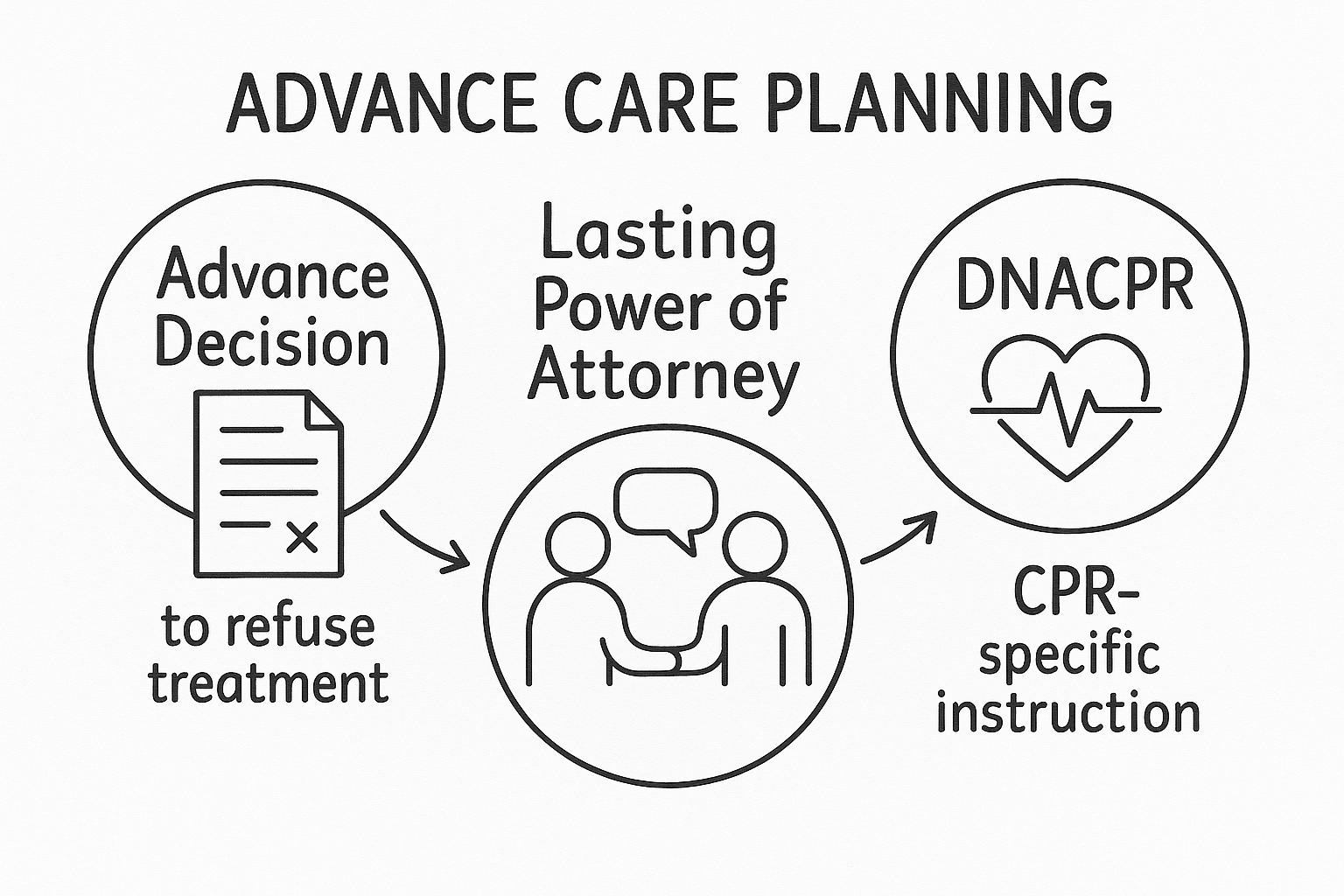
When you start thinking about advance care planning, you'll come across a few key legal documents. It's easy to see them as just paperwork, but they're much more than that. They are powerful tools that give your wishes legal weight, ensuring your medical team and loved ones have a clear, official guide to follow for your future care.
This simple diagram shows the whole point of advance care planning: to make sure your plan can speak for you if a time comes when you can't.
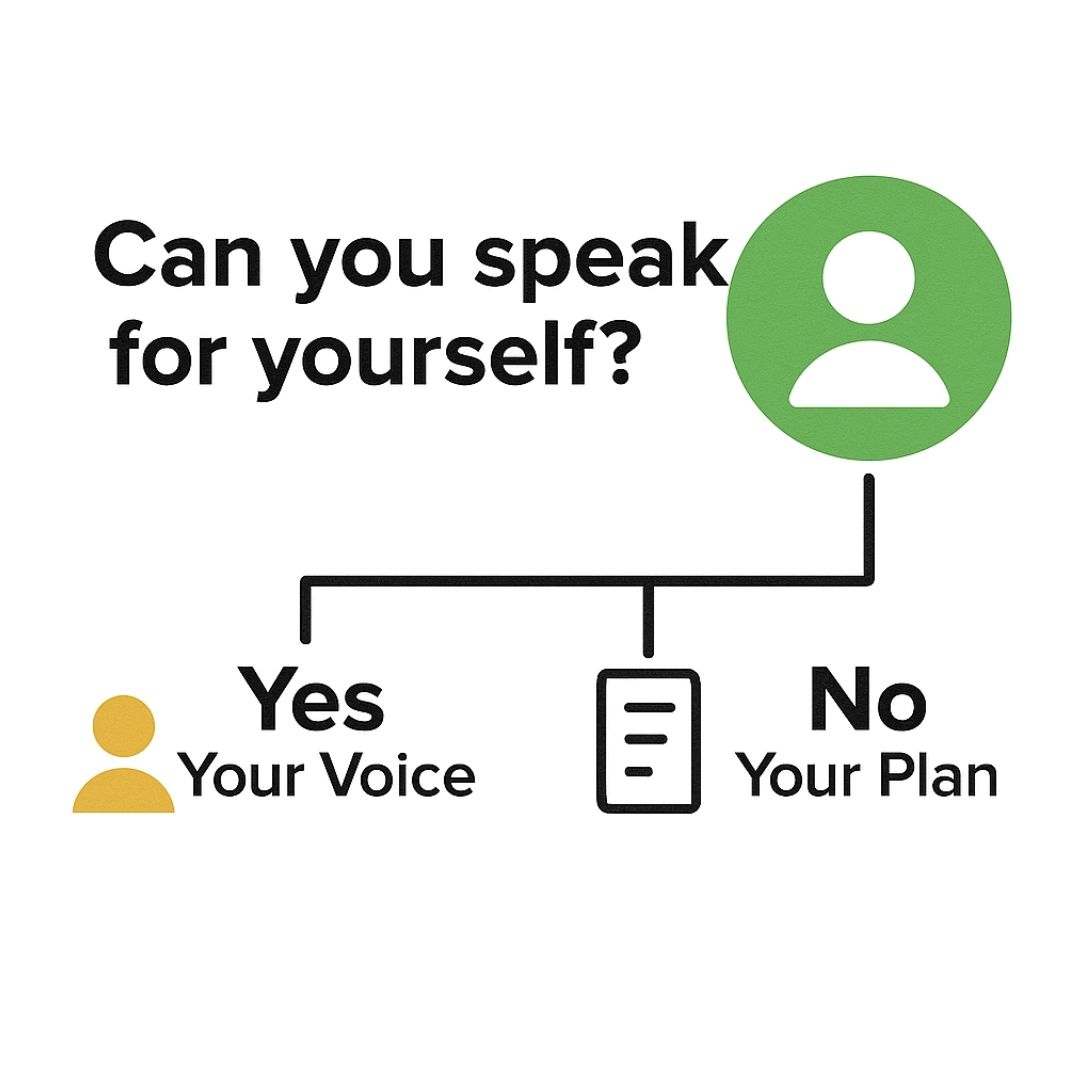
As the infographic shows, whether your voice is heard directly from you or through the documents you've prepared, you always stay at the heart of your own care decisions.
You might hear this called an 'Advance Decision' or sometimes a 'Living Will'. It's a legally binding document where you can clearly state which medical treatments you would want to refuse in the future.
For it to be valid, you need to be an adult who has the mental capacity to make the decision when you write it down. It only kicks in if you later lose the ability to make or communicate that specific treatment choice for yourself.
Clarity is absolutely vital here. For instance, you could state that you would not want to be put on a ventilator if you were in a permanent coma with no chance of recovery. If you're refusing life-sustaining treatment, the Advance Decision must be written down, signed, and witnessed to be legally sound.
A Lasting Power of Attorney (LPA) for Health and Welfare works a bit differently. Instead of listing specific treatments you don't want, you choose a trusted person—or even a couple of people—to make those decisions for you. In some countries this person is called an 'attorney' or 'proxy'.
Think of this person as your advocate. They are empowered to make choices about everything from your day-to-day care (like your diet or daily routine) right up to major medical decisions, including life-sustaining treatment if you give them that specific authority.
Choosing your advocate is a deeply personal decision. It should be someone who understands your values, is willing to have difficult conversations, and whom you trust completely to act in your best interests.
Unlike an Advance Decision, which is all about refusing treatment, an LPA gives your advocate the power to consent to treatment on your behalf. If you happen to have both, the one you made most recently will usually take priority for any decisions it covers. Understanding the nuances of these documents is crucial, as illustrated by guides on legal instruments like a Living Will and Power of Attorney in Texas.
A DNACPR (Do Not Attempt Cardiopulmonary Resuscitation) order is a very specific medical instruction. It isn't part of an Advance Decision, but it's a conversation that often comes up during advance care planning. It simply means that if your heart or breathing stops, CPR will not be attempted.
This decision is usually made when doctors believe CPR is very unlikely to work or could cause more harm and suffering, ultimately reducing your quality of life. That conversation should always involve you, or your chosen proxy if you have one.
It’s really important to know what a DNACPR does not do:
To help clarify how these documents differ, here’s a quick summary.
| Document Type | Primary Purpose | When It Applies |
|---|---|---|
| Advance Decision (Living Will) | To legally refuse specific medical treatments in advance. | When you can no longer make or communicate that specific decision for yourself. |
| Lasting Power of Attorney (Health) | To appoint a trusted person ('attorney' or 'proxy') to make health and care decisions for you. | When you lose the mental capacity to make your own decisions. |
| DNACPR Order | A specific medical instruction to prevent CPR from being performed if your heart or breathing stops. | When your heart or breathing stops and CPR is deemed medically inappropriate or unwanted. |
Each of these tools offers a different kind of protection, working together to form a safety net that ensures your care truly reflects what matters to you.
The evidence for this is strong; systematic reviews show that advance care planning significantly improves the chances of patients receiving care that is consistent with their wishes. It leads to better documentation of preferences and helps more people spend their final days at home if that's what they want. Putting these plans in place provides a clear, legally sound foundation for your future wellbeing.
"When is the right time to start?" It's one of the first questions people ask about advance care planning. The most straightforward answer? Now. The best time to have these conversations is when you're feeling relatively well and can think clearly, not in the middle of a medical emergency.
Waiting until a crisis hits piles stress and emotion on top of an already difficult situation. It makes clear thinking tough for everyone. Instead, try to see this as a positive, proactive step. It's just like writing a will or sorting out your finances – you're simply putting a plan in place for a future 'what if' moment, giving yourself and your loved ones peace of mind.
You don't need to schedule a big, formal meeting to kick things off. In fact, these conversations often work best when they grow out of ordinary moments. This helps the whole process feel more natural and a lot less intimidating.
Good opportunities to gently introduce the topic could be:
The goal is to make these discussions a normal part of life management – a responsible and caring thing to do. This approach is becoming more and more central to healthcare, showing a clear shift towards making advance care planning a standard part of good patient care.
Deciding who to bring into these conversations is just as important as deciding when to have them. Your plan will only be effective if the key people in your life and in your medical team know about it and understand your thinking. When everyone is on the same page, they can support your wishes with confidence.
Your support circle should ideally include a few key groups of people.
Involving others isn't about getting their permission; it's about giving them the clarity and confidence to honour your choices when it matters most. This shared understanding is a profound gift.
Your Healthcare Team
Your doctors and nurses are vital partners in this. They can walk you through treatment options, explain potential outcomes, and make sure your plan is medically sound and clearly noted in your records. Make sure you talk to:
Your Loved Ones
These are the people who will likely be by your side if you become seriously unwell. Sharing your plan with them now helps prevent future confusion, guilt, and arguments. It's so important they understand not just what you want, but why you want it.
Consider talking to:
Being open about your wishes can also help your loved ones prepare for the role they might have to play, which can reduce some of the emotional strain. Supporting them is just as crucial, which is why resources on preventing caregiver burnout can be so helpful for everyone involved in your care.
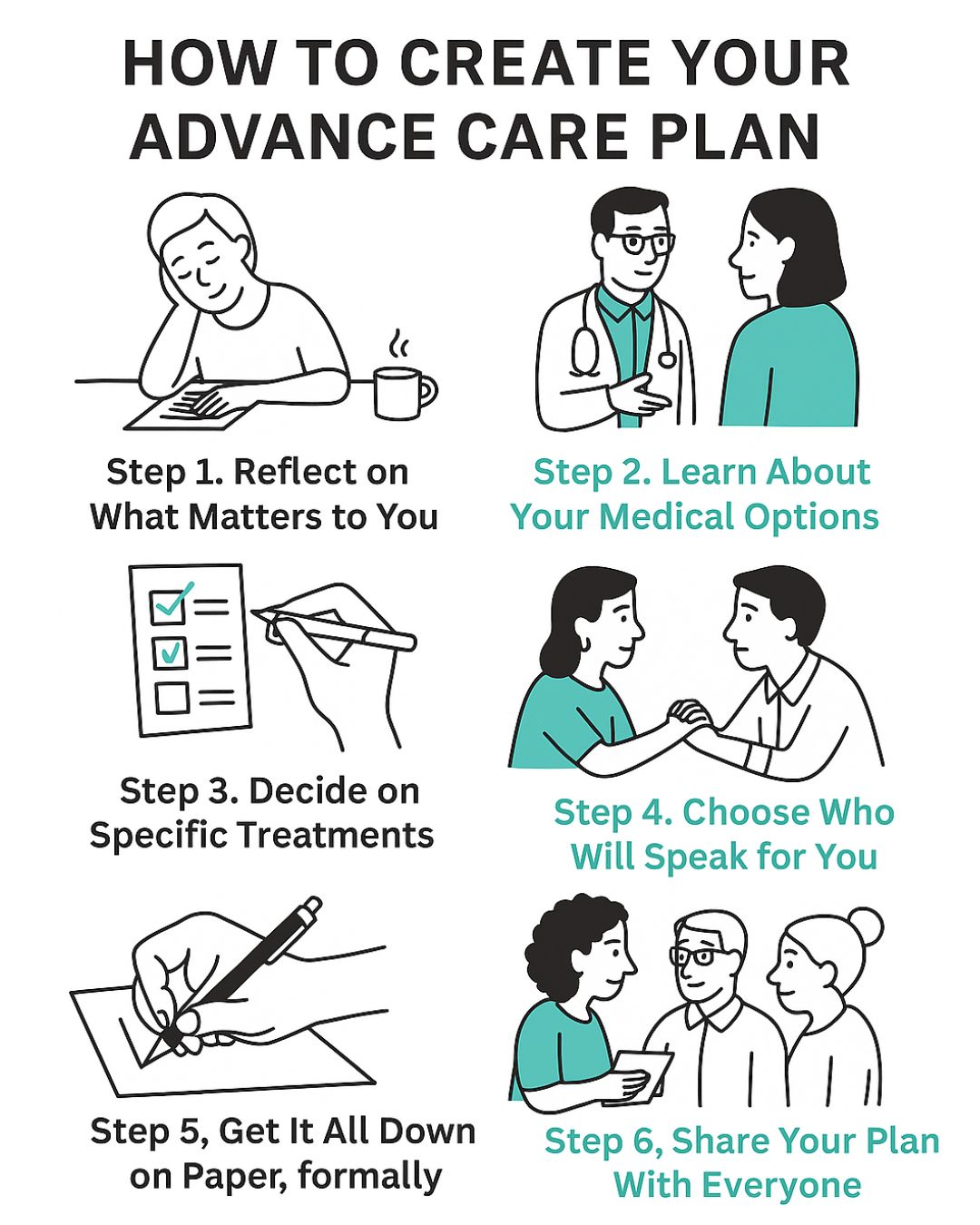
Putting together an advance care plan is probably one of the most powerful things you can do for your future. It's a chance to do some deep thinking and practical prep, turning those vague worries into a clear guide for everyone to follow. Breaking the process down into smaller stages makes it feel much less overwhelming and a lot more manageable.
Think of this as a step-by-step framework to help you build a plan that truly reflects who you are. The goal is to make sure your voice is heard loud and clear in your own care, no matter what twists and turns lie ahead.
Before you even begin to think about specific medical treatments, you need to start with what makes your life feel like your life. This isn't about medicine at all; it’s about what's important to you as a person. Your personal values are the bedrock of your entire plan, guiding every decision that comes later.
Take some proper time to think about what a 'good day' really looks like for you. Is it being free from pain? Is it being able to sit in the garden with a cup of tea, or spend quality time with family? Getting clear on these things helps you define what quality of life means to you.
Here are a few questions to get you started:
Mulling over these points gives you a personal compass. It helps you find the words to explain what you want your life to look like, even if your health takes a different turn.
Once you have a firm grip on your values, the next stage is to get a clearer picture of the medical side of things. This means having some really open and honest chats with your healthcare team about your diagnosis, what the future might hold, and the kinds of decisions you may need to make.
You don’t need to become a medical expert. The idea is just to get enough good information to make choices that feel right for you. Ask your doctors direct questions about what could happen in different scenarios and what various treatment paths might look and feel like.
A huge part of advance care planning is shifting from a place of uncertainty to one of informed choice. When you understand your options, you can make decisions based on what you know and prefer, rather than on fear.
This is where you get practical, turning your values into specific instructions for your care. Think about the treatments you would and would not want in different situations. This is the heart of an Advance Decision, where you can formally state your refusal of certain treatments.
For example, would you want treatments such as:
It's really important to be specific about the circumstances. For instance, you might refuse a ventilator if you were in a permanent coma, but be happy to have one for a short-term illness that you were expected to recover from. Being crystal clear prevents any confusion about your wishes.
If you decide to set up a document appointing a healthcare proxy or attorney, you’ll need to choose someone to be your voice. This person would be trusted to make decisions for you if you lost the capacity to make them yourself.
This should be someone who gets you, who understands your values inside and out. They need to be a confident communicator who won’t be afraid to speak up for you, especially when things get stressful. Make sure you have a proper chat with them first to see if they're willing and able to take on this massive role. A strong support network is vital, and our guide to building your cancer care team can help you think about the key people in your life.
Once you’ve made these big decisions, the next job is to make them official. This usually means filling out the correct legal forms for your region, whether that’s for an Advance Decision, a healthcare proxy, or a Power of Attorney. Using the right paperwork is what makes your wishes legally binding.
It is crucial to get the details right – making sure the document is written down, signed, and witnessed correctly according to local laws. This is especially true if you are refusing life-sustaining treatment. Following official guidance from trusted sources like national health services or patient advocacy groups is the best way to ensure your plan is watertight and will be respected.
A plan is no good if it's a secret. The final, and perhaps most important, step is to share your completed documents and talk about them with everyone involved in your life and care. This one simple action makes sure everyone is on the same page and ready to honour your choices.
Make sure these people have a copy of your plan or know exactly where to find the original:
By working through these steps, you’re creating so much more than a document. You’re building a clear, compassionate, and legally sound plan that protects your right to choose and brings peace of mind to you and everyone who cares about you.
Starting the conversation about your future care is often the biggest hurdle in advance care planning. It’s a profoundly personal subject, and the fear of upsetting the people you care about most can feel like a huge barrier.
But reframing this can help. These aren't conversations about dying; they're about how you want to live. Sharing your wishes is an act of love that provides clarity, strengthens relationships, and ultimately brings immense relief to everyone involved.
The secret is to see it not as one big, scary talk, but as an ongoing dialogue. You don't need to figure everything out in one go. The aim is simply to open the door, share what’s on your mind, and create a safe space for everyone to feel heard.
Finding the right words to start can be tricky. Often, the best approach is simple and honest, coming straight from the heart. This signals that you're thinking about the future and you want to include your loved ones, making the topic feel much less alarming.
Think of it as gently easing into the subject. You could try saying something like:
Choosing a quiet, calm moment where you won’t be rushed is just as vital as the words you use. This helps turn what could be a stressful task into a meaningful and reassuring experience for you all.
It’s completely normal for these conversations to stir up strong emotions—both for you and your loved ones. People might feel sad, anxious, or even a little resistant at first. Sometimes, they might try to change the subject because they find it too painful to think about you being unwell.
Acknowledging these feelings without judgement is key. You could say, "I know this is difficult to hear, and I completely understand why you feel that way." This simple act of validation can help them feel safe enough to listen and engage.
Your own emotions are valid, too. Give yourself permission to feel whatever comes up. If things get too intense, it is perfectly okay to press pause and agree to come back to the conversation another time. The goal is progress, not perfection in a single sitting.
Finding the right language in these moments isn't easy. Exploring guides on comforting words for someone with cancer can offer helpful ideas for everyone taking part in the discussion.
Remember, this isn't a one-way street where you simply list your demands. It's an opportunity to connect and understand each other on a much deeper level.
Encourage your loved ones to share their own thoughts and concerns. Ask them how they feel about the role they might need to play. This shared understanding builds an incredible foundation of trust. When your family knows not just what you want but why you want it, they’ll feel so much more confident about honouring your choices if that time ever comes.
In the end, these tough conversations can become one of the most profound and loving gifts you ever give each other.
It’s completely natural to have practical questions when you start thinking about advance care planning. Once you get into the details of formalising your wishes, all sorts of "what-if" scenarios pop into your head. Let's walk through some of the most common queries to give you that extra bit of confidence.
Getting your head around these points is often the final piece of the puzzle. It’s about making sure the plan you’ve so thoughtfully created is solid, flexible, and ready to speak for you, whatever comes next.
Yes, absolutely. An advance care plan isn't something you sign and forget about. Think of it as a living document—one that should change and grow with you as your health, life circumstances, or even your personal values shift.
You have every right to review, change, or completely cancel your plan at any time, as long as you have the mental capacity to make that decision. In fact, it's a really good idea to revisit it every few years. It's also wise to take another look after a big life event, like a change in your diagnosis, a shift in your family situation, or if the person you appointed to help you can no longer do so.
So, how do you make a change?
This built-in flexibility is key. It means your plan will always be a true reflection of what you want right now.
This is a big worry for many people, but the law is on your side. In many countries, a legally valid Advance Decision to Refuse Treatment is legally binding. What that means is if a doctor or nurse is aware of it and can see that it's valid and applies to the current situation, they must follow it. Ignoring it could lead to serious legal trouble for them.
It's a similar story with documents that appoint a healthcare proxy or attorney. These documents give your chosen person the legal power to make decisions for you. Healthcare teams have to respect their decisions just as they would respect your own. The only time this wouldn't happen is if there's a real concern that your representative isn't acting in your best interests. In that rare case, a legal authority like a court might get involved to check things over.
That's a really important question. The legal standing of advance care planning documents can change dramatically once you cross a border. A plan you've made under the laws of one country might not be legally recognised in another.
Even if it's not legally binding elsewhere, your plan is still incredibly useful. It can act as a clear guide for your family and any medical teams about what you would want. If you're planning on spending a lot of time in another country, it's worth getting some local legal advice on how to best record your wishes according to their laws.
For your plan to hold up when it's needed most, it has to meet a few specific legal requirements for your region. These rules are there to make sure your wishes are crystal clear and that you made them freely, without any pressure.
A valid plan is more than just a piece of paper; it's your legally protected voice. Taking the time to get the details right ensures that voice will be heard and respected when it matters most.
Here’s a quick checklist of what makes a plan legally sound:
Following official guidance from trusted sources like government health websites or patient advocacy charities is the best way to get the paperwork right.
Getting to grips with these practicalities is vital for caregivers, too. They often deal with a unique form of anticipatory grief, and having a clear plan can bring a huge amount of comfort. You can learn more about this in our pre-grief cancer caregivers' guide.
And we know this works. Research backs it up time and again. A service evaluation in UK care homes found that a massive 79.5% of residents offered the chance to make a plan did so. More importantly, it made a real difference. A stunning 88% of those with a plan died in their preferred place (the care home), compared to just 67% of those without one. You can read more about the positive impact of advance care planning in care settings and see the data for yourself.
We strongly advise you to talk with a health care professional about specific medical conditions and treatments.
The information on our site is meant to be helpful and educational but is not a substitute for medical advice.
Learn About The Healing Path To Reclaiming Sexuality And Intimacy Needs During All Types Of Cancer And Illness
As the year closes we wanted to give a shout out to some of the charities that we supported in 2019. Hoping to continue our partnerships in years to come.
Learn how to manage peripheral neuropathy from chemo with practical tips, symptom relief strategies, and daily self-care to improve quality of life.