Hello, I’m Helen Ruckledge from FadFree Nutrition and I would love to share my cancer story with you and how it lead to me discovering the best nutrition for cancer patients .....*takes a deep breath*
A mum of four, tea lover and freelance nutritionist, I provide fad-free, scientifically-backed nutritional advice, within the constraints of real life (and believe me, I understand the ‘real life’ thing). Last, but by no means least, I am a breast cancer previvor, turned survivor.
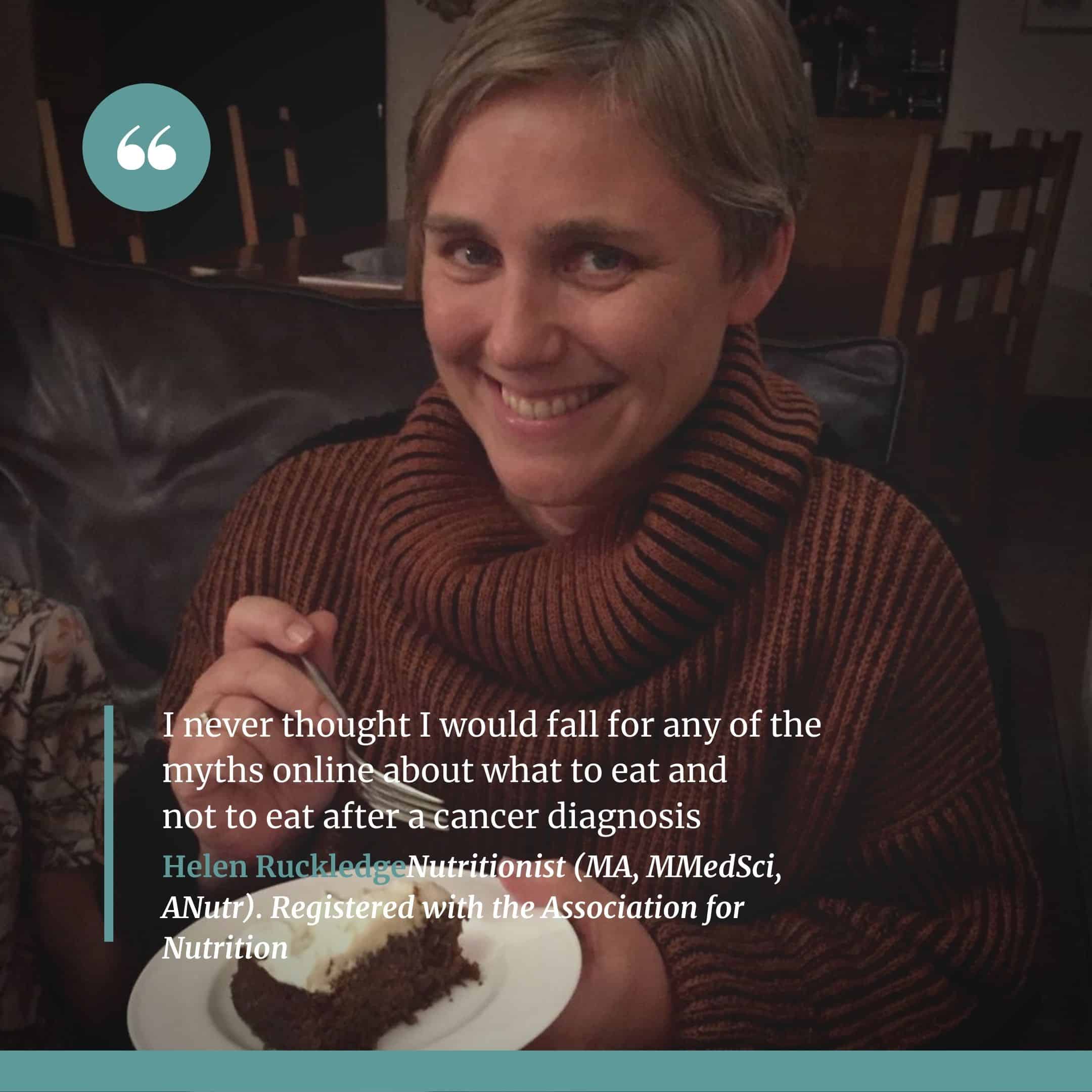
As a highly qualified nutritionist working within mainstream NHS recommendations, I never thought I would fall for any of the myths online about what to eat and not to eat after a cancer diagnosis. What I didn’t bargain for is how utterly desperate you can feel when diagnosed with cancer, especially when you have four young children to stay alive for.
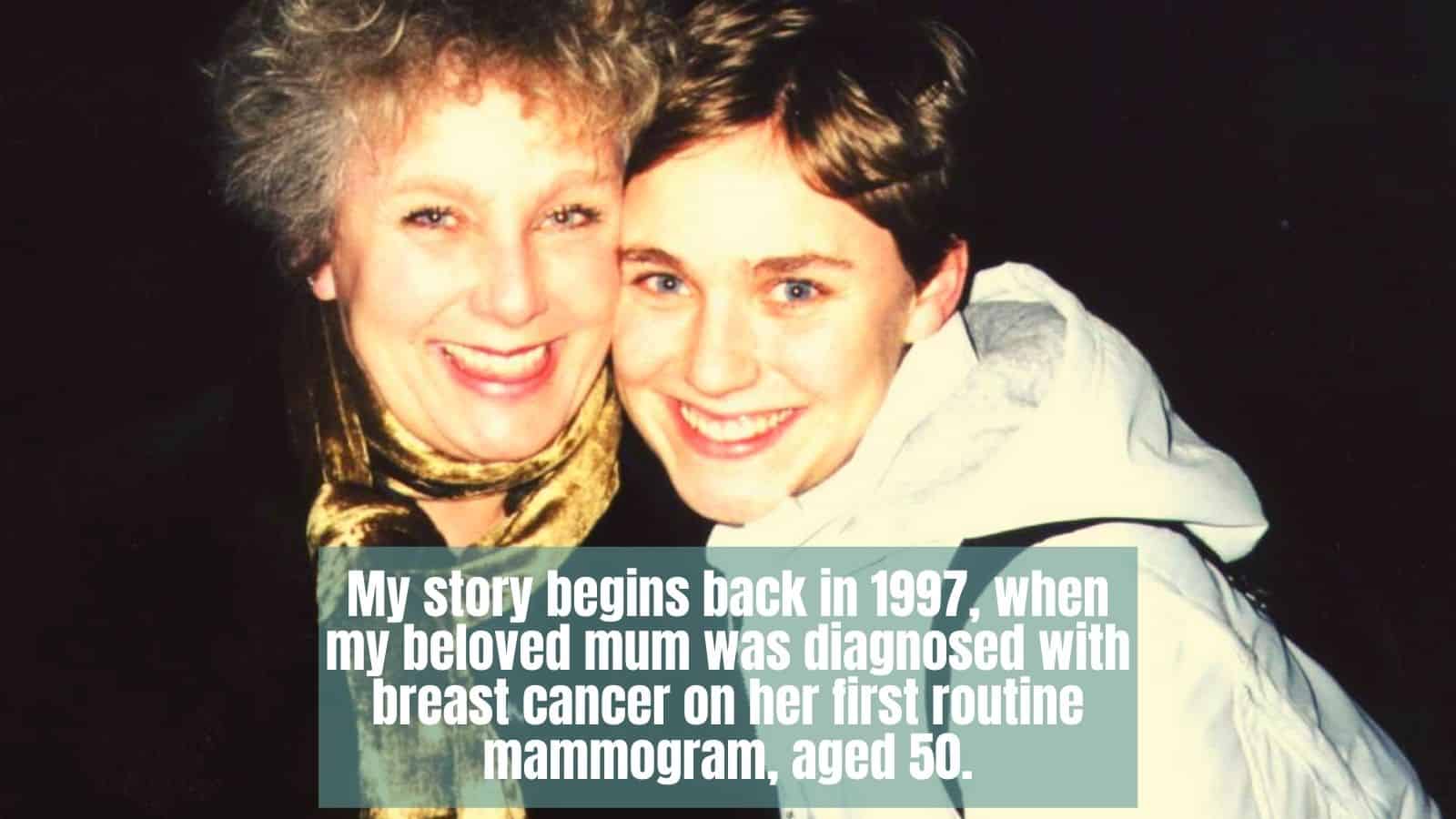
My story begins back in 1997, when my beloved mum was diagnosed with breast cancer on her first routine mammogram, aged 50. Despite embracing every treatment offered to her, less than three short years later, my mum’s cancer was back and it was not going to go away. We lost her in 2006 and I am still grieving. But that’s another story.
On her death, my mum’s oncologist advised me that around my 40th birthday I should approach my genetics service about a possible genetic link, which I dutifully did.
A strong family history of breast cancer emerged after my mum’s death, but despite this, my local genetics service put me at low/moderate risk of breast cancer because I did not carry the BRCA gene mutations. However, a bit of schoolgirl maths (I always was partial to facts and figures), quickly revealed that the probability the breast cancers in our family occurring by chance was extremely slim. Almost negligible in fact. Having witnessed my mum’s long-suffering experience with breast cancer, I knew instantly that I wanted risk-reducing surgery.
Cutting a long story short, with the help of the National Hereditary Breast Cancer Helpline (NHBCH), which I can highly recommend if you find yourself in a similar predicament, I was eventually referred to a genetics team outside of my area. They immediately classed me as high risk, due to an unknown gene mutation, and eligible for risk-reducing surgery.
I was chomping at the bit and desperate to get on with it for the sake of my children, but there was a bit of a wait. Expressing my anxiety to my surgeon, he reassured me that ‘nobody ever gets breast cancer waiting for risk reducing surgery’. How wrong he turned out to be. I had my bilateral mastectomy as soon as the first available slot was offered to me, a few weeks before my 43rd birthday.
One autumn day, nine weeks after my surgery, I was in the hospital for a routine check-up. My consultant appeared with a Macmillan nurse (I thought it was a bit weird at the time), sat me down and told me that when the histology came back from the tissue removed in my operation, it showed I already had breast cancer.
The room span. I didn’t even register the doctor’s optimistic opinion that I was very lucky to have caught it so early and had an excellent prognosis.
Feeling disorientated and scared, my partner and I dragged ourselves out of the hospital and back home to hang on tight to our four innocent children.
I went on to undergo five further surgeries; to clear the margins (a second invasive tumour was found that had been left in following the mastectomies), to dismantle the reconstruction due to an infection and then to reconstruct my breasts again in several stages.
I was desperate not to follow in the footsteps of my unfortunate mum who I missed so much, so I started to look at lifestyle changes that may reduce my risk of breast cancer recurrence.
I soon learned that there’s a minefield of nutritional information for cancer patients, online and in books. Much advice is well-intentioned but unfortunately, frequently it is not grounded in scientific evidence.
There are so many persuasive voices, claiming certain foods are ‘superfoods’ that will stop your cancer coming back and others claiming that you must eliminate certain foods or food groups as they are likely to send you to an early grave. Some advice is born out of emotive personal stories like my own and individual experiences of diet and cancer. But this doesn’t make it true for everyone.
Even with two Masters degrees, one in Human Nutrition and one in Philosophy and Psychology, I can vouch for the fact that it is so difficult to think clearly about nutrition after a cancer diagnosis, when you feel vulnerable and are desperate to stay alive. It’s so easy to believe the hype and to get swept along by fad diets and false hope.
Like many breast cancer patients, I was desperate to regain some control at a time when surgeons and oncologists were making all the decisions in my life. If you’ve had cancer, I’m sure you’ll agree that changing what you eat is an easy way to take back some control.
I found myself giving up dairy, just to hedge my bets. What can be the harm in that, I thought? The hardest thing was drinking black tea, because I adore a traditional Yorkshire brew with a splash of milk and drink it pretty much all day, every day. It was difficult, but worth it for my kids, I told myself.
After a few months, when I managed to reign in some of my anxiety and focus back on my academic knowledge, I realized that I was far more at risk eliminating dairy than I would be eating it. The scientific evidence is just not convincing that eliminating dairy does not improve prognosis, this is also the opinion of the NHS and the World Cancer Research Fund. Furthermore, I was taking Tamoxifen, which increased my risk of osteoporosis, so reducing my calcium intake was the last thing I should be doing.
So I sat down with a proper Yorkshire cuppa and some cheese on a buttered teacake, just as my mum had found so comforting when she was diagnosed all those years ago. What a relief.
As a nutritionist, I would suggest three simple steps for cancer patients to help you navigate nutritional nonsense.
Maximizing your energy, supporting your immune system, helping you cope with the physical demands of treatment, stabilizing your mental health and ultimately improving your prognosis, are all of huge importance to anyone with a primary or secondary cancer diagnosis. Eating well and good nutrition can assist with all of these issues and can make a huge difference to your health, wellbeing, and quality of life.
My mum was always determined to eat what made her happy throughout her cancer ordeal (think afternoon tea…. most days!). She thought sharing and enjoying food with others made a big impact on her health and wellbeing at a difficult time. I would agree that the importance of food for comfort and enjoyment cannot be underestimated either.
This chapter is where you appear in my story!
As a breast cancer survivor myself, I have researched the scientific literature about cancer and nutrition in fine detail for my own benefit. Now I am six years post-diagnosis, I love to share this knowledge with others, with a bucketful of empathy.
If you are feeling confused by the conflicting nutritional messages, scared about eating well and eating the wrong things and feel you need individualized nutritional support, I can help you. I can listen and respond to what you have heard or read (I do love a bit of myth-busting!). I can also guide you in how to eat following a cancer diagnosis, to maximise your energy, health, nutrition and quality of life through treatment and beyond.
Would you feel relieved if all the confusion over what to eat would evaporate and you were empowered to make informed decisions about your diet with complete confidence? If so, the simple act of contacting me may be a dramatic turning point in your cancer story.
I am pleased to offer you a completely FREE 15 minute discovery call in which you can tell me about your cancer story (now you know mine, it’s only fair!) and we can discuss the best nutrition in cancer and nutritional practices for cancer patients and how I can help you. If you are interested in whether particular dietary suggestions you’ve heard about could benefit your health, you can leave those with me to research, if I don’t already know the answers.
There is absolutely no obligation to proceed to a full consultation, but if you choose to, I will offer a rigorous and detailed analysis of your nutritional situation, followed up with a written summary of everything we have discussed (memory isn’t at its best when undergoing the stress of cancer treatment, is it?). I’ll throw in some simple cancer-friendly meal and snack ideas too.
In the meantime, you may be interested in signing up to my FREE monthly newsletter for nutrition support. I supply lots of evidence-based nutritional inspiration, including FadFree Nutrition tips, myth-busting, easy recipes, practical ideas, exclusive offers and more.
Cancer patients signing up to the newsletter from this website will receive a FREE pdf containing some easy, nutritious, cancer-friendly recipes.
Sign up to the FadFree Nutrition Monthly Newsletter
Thank you so much for reading my story. Now it’s over to you to write the next chapter.
We strongly advise you to talk with a health care professional about specific medical conditions and treatments.
The information on our site is meant to be helpful and educational but is not a substitute for medical advice.
Supporting Students With Cancer Through Flexible Learning, Inclusive Policies, And Compassionate Academic Environments.
‘Yes it is cancer but the good news is that it is curable and we’ll start the treatment plan on Friday’ The words I was told on my follow up […]
Discover What Lung Cancer Treatment Looks Like in 2025, From Cutting-Edge Research and Targeted Therapies to Practical Tips and Emotional Wellbeing.