

Subtotal: £13.00

Subtotal: £13.00
Subtotal: £13.00
The main symptoms of ovarian cancer are often subtle and can be easy to miss. They typically include persistent bloating, feeling full quickly, pelvic or abdominal pain, and changes in your urinary habits. Because these signs can easily be mistaken for less serious issues, simply knowing what to look for is a powerful first step.
When you ask, "what are the symptoms of ovarian cancer?", it helps to think of them less like a loud, obvious fire alarm and more like a quiet but persistent hum in the background. On its own, a bit of bloating or a tummy ache is easy to write off as just another part of life.
The problem is, when these things become new for you, happen frequently, and just don’t seem to go away, they’re signalling that it’s time to listen more closely to what your body is telling you.
The real challenge with ovarian cancer is that its symptoms often hide in plain sight. They can feel a lot like everyday digestive problems or period pains. This is why it’s sometimes called a "silent killer" – not because there are no symptoms, but because its voice is so easy to tune out.
While everyone’s experience is different, experts agree on four main symptoms that should always prompt a chat with your doctor, especially if they stick around.
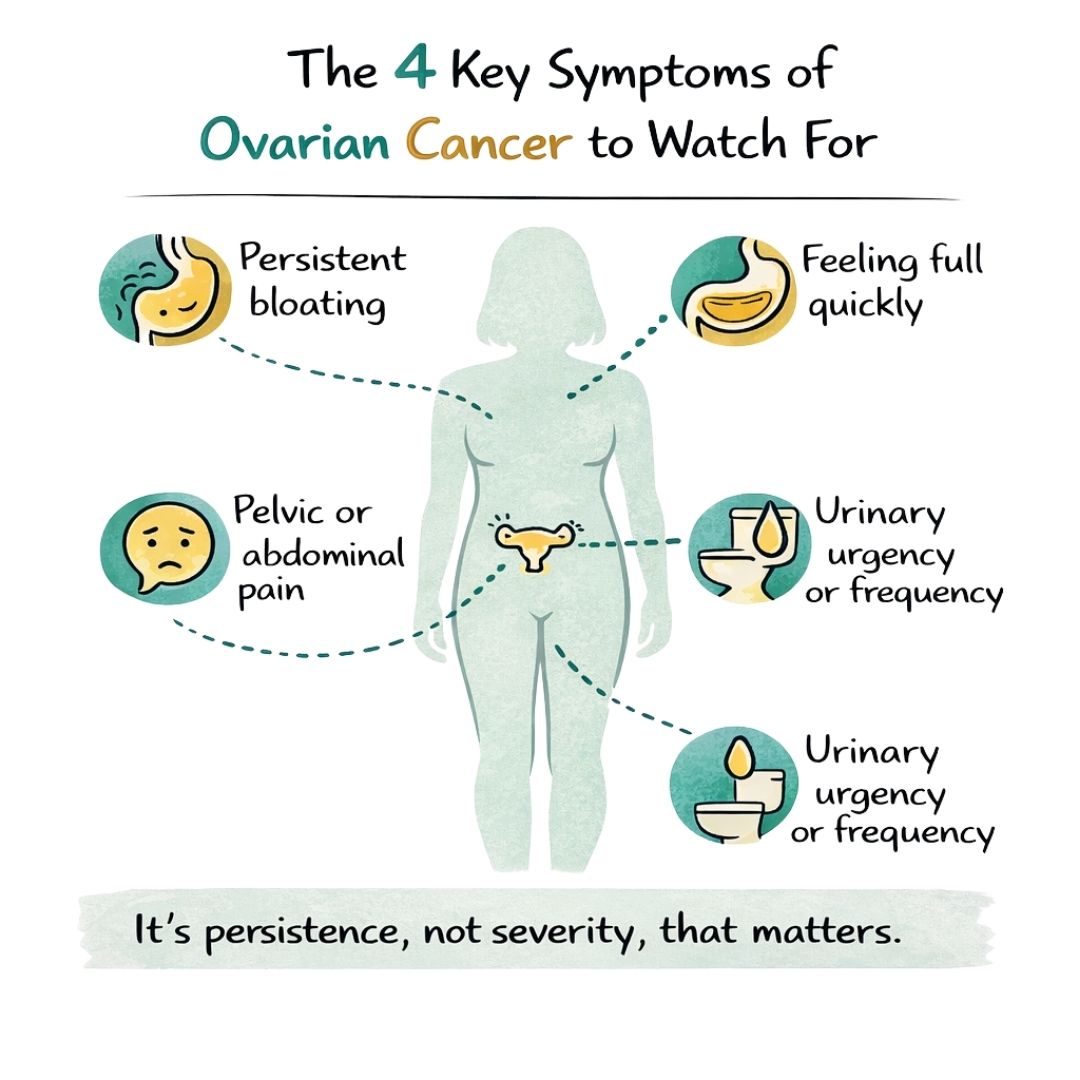
This really drives home the point that it’s the persistence and frequency of these symptoms that matter. If bloating, fullness, pain, or urinary changes are new for you and happen more than 12 times a month, they are no longer minor annoyances – they're important health signals you shouldn’t ignore.
To make this even clearer, here's a quick summary table.
| Symptom | What It Feels Like | The 'Persistence' Red Flag |
|---|---|---|
| Bloating | A constant, uncomfortable swelling or pressure in your abdomen. | It doesn't come and go; it's there most days. |
| Feeling Full Quickly | You can only eat small amounts before feeling uncomfortably full. | This is a new and consistent change in your appetite. |
| Pelvic/Abdominal Pain | A dull ache or persistent pain in your lower tummy or between your hips. | The pain is present almost every day. |
| Urinary Changes | Needing to wee urgently or much more frequently than is normal for you. | This change happens suddenly and sticks around for weeks. |
This table shows how an everyday issue can become a red flag when it becomes persistent and out of the ordinary for you.
A crucial takeaway is that you are the expert on your own body. If a change feels consistently wrong or different from your personal norm, that feeling is valid and worth exploring with a healthcare professional.
Learning how to talk about these concerns is a vital skill. For tips on preparing for your appointment and making sure you're taken seriously, check out this practical advice on how to make yourself heard with your medical team. Advocating for your health is the most important step you can take.
One of the biggest challenges with ovarian cancer is just how easily its symptoms can hide in plain sight. They often look and feel like everyday aches, pains, and digestive issues, which makes them incredibly easy to brush off. Understanding why these signs are so subtle is the first step toward trusting your gut when something feels wrong.
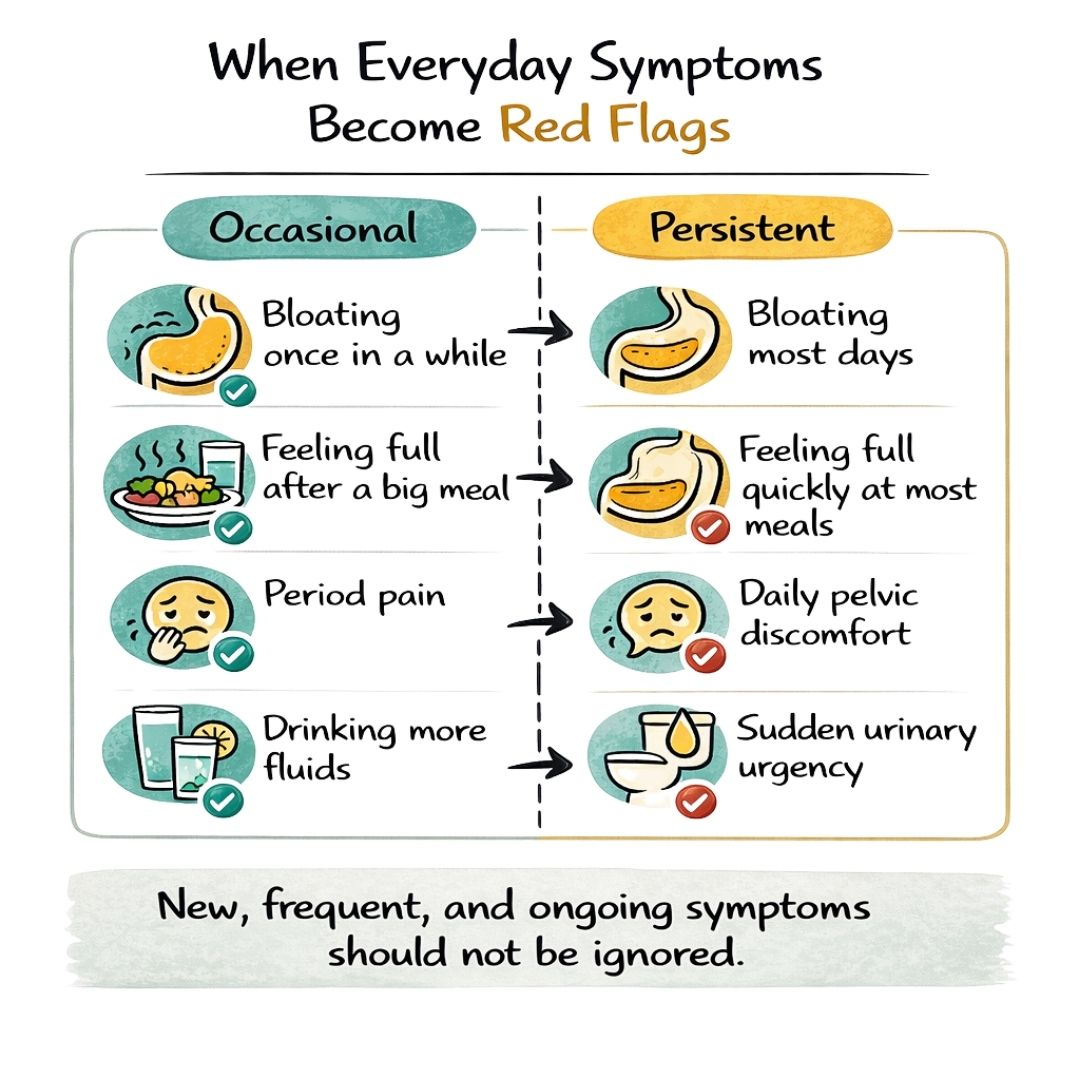
Think of it as 'background noise'. It’s that familiar physical feedback you might blame on a rich meal, your period, stress, or just a hectic week. A bit of bloating, a few pelvic twinges, feeling tired—these are things most of us experience from time to time. This very familiarity is what makes ovarian cancer symptoms so deceptive.
Because the signs are often vague and non-specific, it’s all too easy to explain them away. This can unfortunately delay a diagnosis, as many people understandably wait to see if things will just get better on their own.
Unlike a sudden, sharp pain that sends you straight to the doctor, ovarian cancer symptoms tend to creep up on you. They might start as a small annoyance and slowly become more frequent or intense over weeks, or even months. This slow burn makes it tough to pinpoint when things really started to change.
It's a bit like someone turning up the volume on a radio one tiny click at a time. The sound gets louder so gradually that you don't really notice until it's become quite loud. The symptoms can be just like that, building so subtly that you only realise something is persistently wrong after a good deal of time has passed.
This gradual nature can also make you second-guess yourself, wondering if what you're feeling is real or important enough to bring up with a doctor.
It's a common misconception that cancer always arrives with a loud, unmistakable bang. For ovarian cancer, the reality is often a quiet build-up of vague feelings that just don't feel quite right.
This is why it's so helpful to understand what's true and what's not. You can explore some common cancer myths and controversies that sometimes stop people from seeking advice when they need it.
Knowing what’s 'normal' for your body is your best defence. We all have a unique baseline for how our digestion works, our energy levels, and the day-to-day sensations we feel. Getting in tune with your baseline is what helps you spot when a change isn't just a blip, but a real shift.
To get a clearer picture of your baseline, think about what's typical for you:
Once you have a strong sense of your personal normal, a new and persistent symptom will stand out more. It’s no longer just 'bloating'; it becomes 'bloating that feels different and is happening way more than usual'. That subtle but crucial distinction is often the catalyst that pushes someone to finally seek medical advice—a vital step in taking control of your health.
It’s one thing to see a list of symptoms, but it's another thing entirely to understand what they actually feel like day-to-day. Let's dig a little deeper into the four main signs of ovarian cancer, because knowing the specifics can help you tell the difference between a passing problem and a persistent pattern that needs checking out.
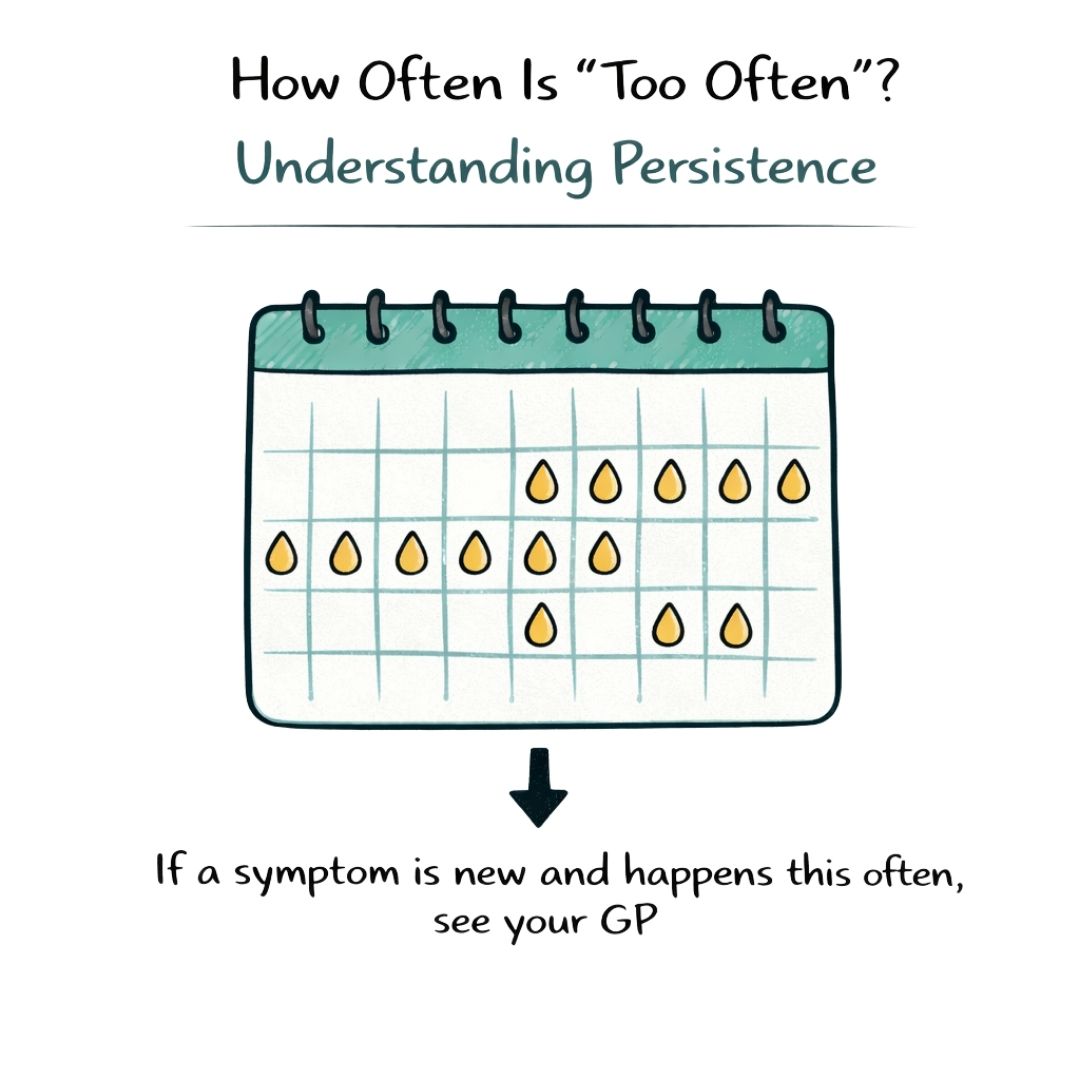
When it comes to ovarian cancer symptoms, two words are more important than any others: frequency and persistence. We all have off days with a bit of bloating. But experiencing these signs more than 12 times a month is your body’s way of telling you that something has changed.
This isn't the kind of temporary fullness you get after a big Sunday roast. Persistent bloating is a constant, uncomfortable swelling in your abdomen that just doesn't seem to go away, even when you first wake up in the morning.
Imagine your favourite jeans suddenly feeling tight around the waist—not just for an evening, but for days or even weeks on end. This kind of bloating often comes with a feeling of pressure in your lower tummy and makes you feel constantly full. It’s a stubborn feeling that doesn't ease up after you’ve been to the loo or changed what you’re eating.
Worryingly, awareness of this key symptom is still very low. Research shows that only 1 in 5 UK women recognises persistent bloating as a major red flag for ovarian cancer. Catching this early is vital, so if bloating has become a new and daily feature of your life, it's so important to speak to your GP. You can read about the findings on symptoms-triggered testing to learn more about why this matters.
This symptom, sometimes called early satiety, can be really confusing. It’s when you find you can’t finish meals that you’d normally have no problem with. You might sit down feeling hungry, take just a few bites of a small portion, and suddenly feel uncomfortably stuffed, as if you’ve just eaten a three-course meal.
It’s not quite a loss of appetite—you might feel ravenous beforehand. The problem is that the "full" signal arrives way too soon, which often leads to unintentional weight loss over time simply because you're taking in fewer calories.
Think of your stomach as a container that suddenly feels like it has shrunk. Even when you're hungry and want to eat, your body signals that it's "full" far too early, making mealtimes frustrating and unsatisfying.
This is a definite change from just having a small appetite. It’s a new pattern of feeling prematurely full that sticks around for weeks.
The pain linked to ovarian cancer is often more of a dull ache than a sharp, stabbing sensation. It's a persistent discomfort that you feel in your pelvic region (the area between your hip bones) or lower abdomen.
This isn't like a fleeting period cramp or a stitch from jogging. It’s more of a background pain that’s there most days, a constant niggle that something isn't quite right. While it can feel similar to menstrual cramps, the key difference is that it happens outside of your normal cycle and doesn't go away.
It's also worth knowing that pelvic pain can be a symptom of other conditions. In rare cases, similar symptoms can come from related cancers; you can learn more about one such condition in our guide to primary peritoneal cancer.
The last of the four main symptoms involves new and persistent changes to your urinary habits. This isn’t about needing the loo a bit more often because you’ve had an extra cup of tea; it’s a noticeable shift in your body's routine.
This can show up in two main ways:
These changes can happen when a growing tumour presses on the bladder, reducing how much it can hold and creating that constant feeling of needing to go. If you suddenly find your day is being planned around trips to the bathroom and this lasts for more than a few weeks, it’s a symptom worth discussing with your doctor.
Beyond the four main symptoms, your body can send out other signals that something isn't quite right. While things like bloating and pelvic pain are the most common culprits, knowing about the less frequent—but just as important—changes gives you a fuller picture.
These additional signs can easily be mistaken for other, more benign health issues. That’s why, once again, the key is persistence. It’s about listening to your body when it’s telling you that a new change is sticking around.
Have you noticed new and persistent digestive issues that just aren't normal for you? This isn't about an occasional bout of constipation or an upset stomach after a takeaway. We're talking about a consistent shift in your bowel patterns that hangs around for several weeks.
This might look like:
These symptoms can pop up if a tumour is physically pressing on your bowel or interfering with how your digestive system works.
This is a big one, and it’s not just about feeling tired after a long day. The fatigue linked to ovarian cancer is often described as a profound, relentless exhaustion. It's the kind of tired that rest doesn't fix, making it a real struggle to get through your daily routine.
You might feel completely wiped out for no clear reason. This kind of deep fatigue can be a sign that your body is pouring a huge amount of energy into fighting off cancer cells.
A key indicator that fatigue is a serious red flag is when it starts getting in the way of your life. If you feel too exhausted to work, see friends, or do things you once enjoyed, it's time to take it seriously.
Sometimes, this exhaustion is coupled with other symptoms like night sweats. To get a better handle on this specific sign, you can read our guide on the connection here: https://cancercareparcel.com/ovarian-cancer-night-sweats/
Two other signs are significant red flags that need immediate attention. One is losing weight when you aren't trying to, and the other is any bleeding at all after you’ve been through the menopause.
Unintentional Weight Loss: If you find the number on the scale dropping without any changes to your diet or exercise, it could signal an underlying health issue. This often happens alongside feeling full quickly, simply because you might be eating less without even realising it.
Postmenopausal Bleeding: This is non-negotiable. Any vaginal bleeding or spotting after the menopause—no matter how light—is never normal. It should always be checked out by a doctor straight away.
To help you see how these all fit together, this table gives a quick comparison of the primary symptoms versus other potential indicators to be aware of.
| Symptom Category | Examples | Key Consideration |
|---|---|---|
| Primary Symptoms | Persistent bloating, feeling full quickly, pelvic or abdominal pain, urinary changes. | These are the most common. See a GP if they are frequent and persistent (happening more than 12 times a month). |
| Secondary Signs | Changes in bowel habits (constipation/diarrhoea), extreme fatigue, unexplained weight loss. | Also very important, especially if they are new, persistent, and show up alongside any of the primary symptoms. |
| Urgent Gynaecological Sign | Any postmenopausal bleeding. | This should always be investigated by a GP immediately, with or without any other symptoms. |
It might surprise you to learn just how common gut-related issues are, especially for postmenopausal women. A study revealed that in early-stage cases, 1 in 3 (35%) women reported changes in their bowel habits or indigestion, and 1 in 4 (27%) experienced unexplained tiredness. In contrast, only 8% had typical gynaecological signs like vaginal bleeding.
This really highlights why recognising these "other" symptoms is so vital. For a more comprehensive look at persistent discomfort in this area, a detailed guide on pelvic pain can provide some extra insight into what might be going on.
Knowing the symptoms of ovarian cancer is one thing, but turning that awareness into action is what truly matters for your health. It's completely normal to feel a bit nervous about speaking to a doctor, but a little preparation can make all the difference in getting your concerns across clearly.
Remember, any new symptom that sticks around and happens frequently is always worth a conversation with your GP.
The problem is, many people simply don't know what to look for. A recent study revealed a pretty worrying gap in awareness, showing that most people could only name 1.24 symptoms on average. While pelvic pain was a familiar sign, fewer than 40% realised that feeling full quickly could be a red flag. This really highlights why we need to talk more about these symptoms to encourage those vital, timely GP visits. You can discover more about the research findings on symptom awareness to see the full picture.
Walking into your appointment with clear, organised information can be a game-changer. It helps your doctor see what's really going on and ensures you feel properly heard.
Here’s a simple checklist to help you get ready:
Your voice is the most important tool in the room. You are the expert on your body, and a clear, factual account of your symptoms is powerful information that a doctor needs to hear.
Knowing what might happen next can help ease some of the anxiety around your appointment. If your GP shares your concerns, they’ll likely suggest a few initial checks to get more information. This is standard procedure and doesn't automatically mean something is seriously wrong; it's just about being thorough.
Common first steps often include:
Each step provides another piece of the puzzle. For example, you can learn more about what an ultrasound can show in our detailed guide. Being informed about these tests can take some of the mystery out of the process, helping you feel more in control.
When you're worried about your health, it's natural to have a lot of questions. Let's clear up some of the most common ones about ovarian cancer symptoms, so you can feel more informed and in control.
This is a really common point of confusion, but the answer is no. A Pap smear, or cervical screening test, is not designed to detect ovarian cancer.
These tests are fantastic at what they do: they look for abnormal cells on the cervix to prevent cervical cancer. But because there’s no routine screening test for ovarian cancer right now, paying attention to your body and understanding the symptoms is our best defence.
Definitely not. In fact, most of the time, symptoms like bloating, pelvic pain, or needing to wee more often are caused by something far less serious. Think of common issues like Irritable Bowel Syndrome (IBS), benign ovarian cysts, or a straightforward urinary tract infection.
The real clue is in the pattern. Are the symptoms new for you? Do they stick around, happening almost every day for three weeks or more? That's when it's time to book an appointment with your GP to get things checked out.
The goal isn’t to jump to the worst conclusion, but simply to be thorough. Getting persistent symptoms investigated is one of the best ways to look after your health, whatever the cause turns out to be.
Most cases of ovarian cancer are 'sporadic', meaning they aren't inherited. However, for a small number of people, a strong family history can significantly increase their risk.
Your risk might be higher if you have two or more close relatives on the same side of your family who have had ovarian or breast cancer. This is often linked to inherited gene mutations like BRCA1 and BRCA2. It’s so important to talk to your doctor about your family’s health history. They can help you understand your personal risk and decide if something like genetic counselling could be a good next step.
We strongly advise you to talk with a health care professional about specific medical conditions and treatments.
The information on our site is meant to be helpful and educational but is not a substitute for medical advice.
“Discovering the reality of my situation through research. Didn't consider keeping PICC line dry while showering. Now diving into the world of cover-ups and waterproofing. Excitement awaits!”
Prepare For Your First Day Of Chemo With Our Essential Packing Guide. Learn What To Bring To Stay Comfortable, Hydrated, And Entertained During Your Treatment.
Imogen Beecroft Introduces "Cancer. We’re Done". And Tells Us About Their Fundraising Efforts Supporting Vital Immunotherapy Research.