This can have a devastating impact, even resulting in death. Some examples where a patient may have received substandard cancer treatment includes:
In cases where there has been a delayed and/or misdiagnosis of mouth cancer, this may have resulted in the patient experiencing further complications and/or he/she requires more invasive treatment which could have otherwise been avoided.
Some of the signs and/or symptoms of mouth cancer and when they should be further investigated.
According to The National Institute for Health and Care Excellence (NICE) Guidelines, a suspected cancer pathway referral (for an appointment within 2 weeks) should be considered when there is either:
Consider an urgent referral for assessment for possible oral cancer by a dentist in people who either have:
Your GP and/or dentist should carry out a physical examination and ask you about your symptoms. If mouth cancer is suspected and/or indicated, you should be referred to hospital for further investigation including speaking to a specialist oral and maxillofacial surgeon. It is thereafter likely that a biopsy will be taken to confirm the diagnosis.
You can contact the Dental Negligence Team for an initial consultation if you think you have a negligence claim. When they receive your enquiry, their dedicated team will listen to your concerns and confirm exactly what they think has gone wrong with your dental care. Following this, prospects of success will be considered and methods of funding discussed.
Once funding is in place, your case will be transferred to a different member of the Dental Negligence Team, who will be responsible for your claim from start to conclusion. They will be available to answer any questions, provide detailed advice, and guide you through the claim process.
A claim for compensation will normally have to be brought within three years of the alleged negligent treatment, or three years from your date of knowledge. There are some exceptions, such as for children who have until their 21st birthday to bring a claim, or adults with mental difficulties who have no time limit.
In cases where a loved one has sadly passed away, the three-year limit often starts from the date of death but provided that the date of death is within three years of the alleged negligent treatment.
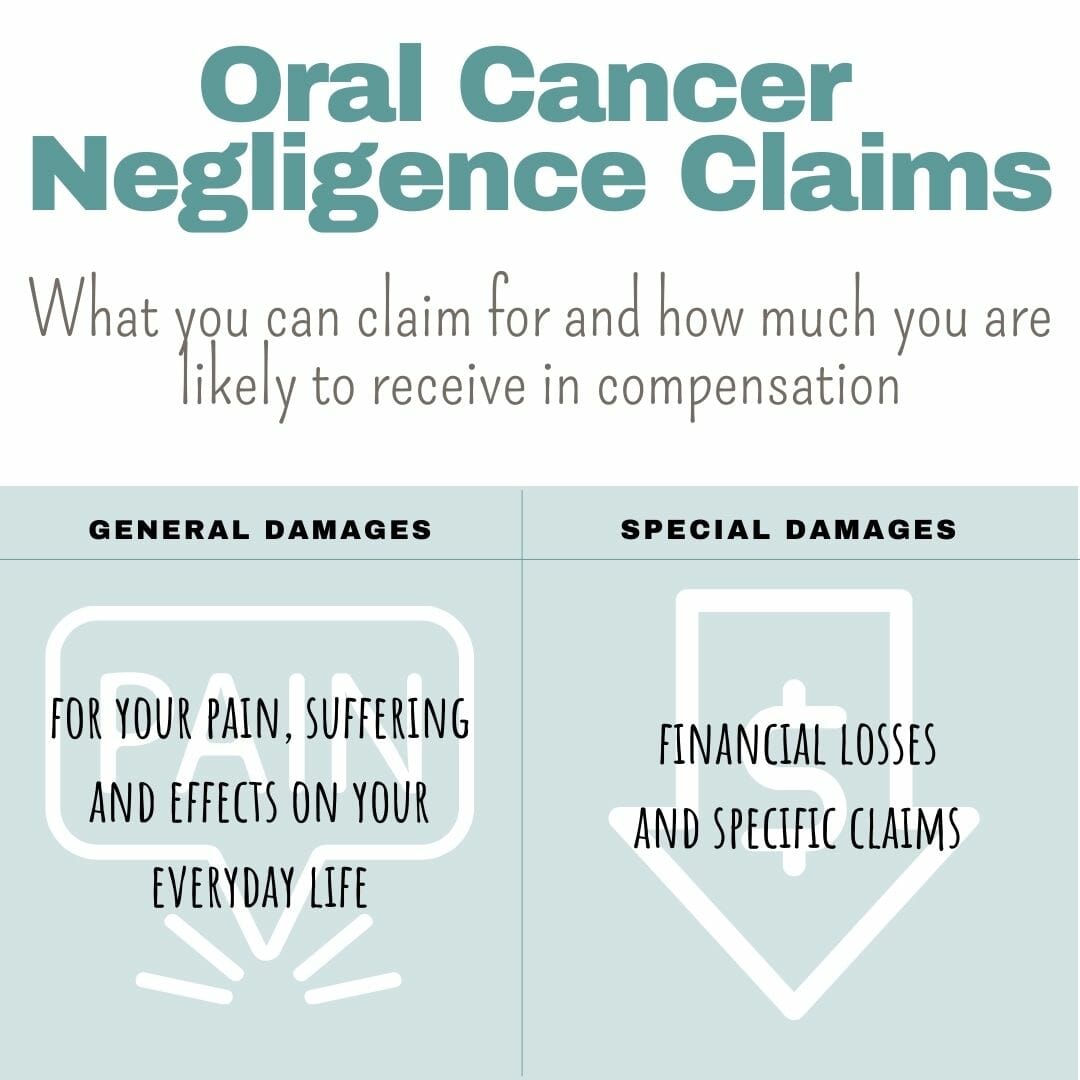
A compensation claim is made up of two parts:
Depending on the seriousness of your injury, we may be able to pursue a compensation claim for continuing future loss. For example, you may be unable to earn as much as you did before the incident or need help with personal and household tasks.
In cases where you are claiming on behalf of a deceased loved one, you can claim for the pain and suffering experienced by the deceased before they died, bereavement damages (which are usually limited to the spouse or civil partner of the deceased) and funeral expenses. If you were financially dependant on the deceased as you were either a spouse or child of the deceased, you may be able to recover compensation for loss of dependency. We come across these cases quite often especially in instances where the surviving spouse must now cope with additional costs and/or expenses which he/she could have otherwise avoided.
The Dental Negligence Team have been working in the field of dental negligence for over 30 years. Our team have expert knowledge of the field and are specialists in seeking maximum, and sometimes record-breaking, levels of compensation.
The majority of cancer negligence cases are due to delayed diagnosis or misdiagnosis of cancer, advice given about proper treatment, management decisions or medical intervention performance.
Examples that might give rise to a claim
*Not recognizing signs or symptoms being potentially due to cancer
*Not asking appropriate questions, arranging examinations, and/or making an appropriate or urgent referrals due to a potential cancer diagnosis
*Not acting on or delaying test results or recommendations
*Wrong test result interpretation
*Performing tests badly
*Organising inaproriate tests
*Not giving appropriate advice
*technical error in tests or medical treatment
*not providing appropriate follow-up
You will need to prove two things for compensation claims
1. Negligence: the professionals proving care did so in a way that would not be supported by any responsible body of such practitioners in those circumstances
2. Damage: the negligence you are claiming for has caused damage that you can prove
We strongly advise you to talk with a health care professional about specific medical conditions and treatments.
The information on our site is meant to be helpful and educational but is not a substitute for medical advice.
A clear guide to managing radiotherapy side effects. Learn about short-term and long-term symptoms and find practical strategies for your recovery.
Life Doesn’t Come With Guarantees, But In The Depths Of My Soul I Feel That My Body Will Heal, In Divine Timing.
Asking 'does an ultrasound show cancer?' This guide explains what ultrasound can detect, its limitations, and what the next steps are in the diagnostic process.