Lung cancer screening is a specialised check-up designed to find any early signs of cancer, well before a person would ever feel unwell. It uses a low-dose CT scan to look for tiny abnormalities in the lungs of people considered to be at higher risk.
Think of it as a smoke alarm for the body. It’s designed to go off at the very first sign of trouble, giving you the best possible chance to address the issue when it's small and manageable. This early warning can make all the difference, dramatically improving the odds of successful treatment.
The unfortunate reality with lung cancer is that it’s often a silent disease in its early stages. By the time someone develops a persistent cough, chest pain, or unexpected weight loss, the cancer has often had time to grow and spread. At that point, treatment becomes much more complex and the outlook less certain.
Screening turns this entire situation on its head. Instead of waiting for symptoms to appear, we go looking for the problem. This isn't the same as a diagnostic test, which is what a doctor orders when you already have symptoms and they need to find the cause. Screening is for people who feel perfectly fine but, due to their history, carry a higher risk.
The whole philosophy behind screening is simple but incredibly powerful: catching cancer early saves lives. When we find a tumour at stage 1 or 2, there are more treatment options available, they tend to be less aggressive, and the chances of a cure are significantly higher.
The ultimate goal of programmes like the NHS Targeted Lung Health Check in the UK is to reduce the number of people who die from lung cancer. The strategy is to focus these checks on the people who are most likely to benefit—typically, those who have a long history of smoking and fall within a specific age bracket.
By targeting this high-risk group, we can use resources effectively and save more lives. It's why awareness campaigns are so vital. During events like Lung Cancer Awareness Month, the focus is on getting this crucial information out to the public. You can read more about why these initiatives are so important in our article on Lung Cancer Awareness Month.
Over the next few sections, we'll walk you through everything you need to know about the screening process. We'll cover who is eligible for screening, what actually happens during the low-dose CT scan, and how the results are interpreted.
We’ll also take a balanced look at the very real benefits alongside the potential downsides, so you have a complete picture. By the end, you should have a solid grasp of how lung cancer screening works and whether it’s a step you or someone you care about should consider. And if you're interested in broader lung wellness, you can find more information on general respiratory health topics.
Lung cancer screening isn't a one-size-fits-all check-up. The goal is to focus our efforts on those who stand to benefit the most—individuals whose lifestyle and history place them at a higher risk. It's a calculated approach, designed to catch the disease at its earliest, most treatable stage.
To do this, experts have developed clear guidelines based on the two biggest risk factors: age and smoking history. These criteria act as a starting point, helping you and your doctor decide if screening is the right step for you.
In the UK, the NHS has rolled out the Targeted Lung Health Checks (TLHC) programme. This is a huge step forward, offering screening to those most likely to be affected by lung cancer. If you're invited to take part, it's because your GP records show you fit the high-risk profile.
The main criteria for an invitation to the NHS TLHC programme are quite specific:
Many countries, including the USA, have similar programmes based on age and smoking history, though the specific criteria may vary. This targeted strategy is making a life-saving difference globally, catching many cancers far earlier than they would have been otherwise. For more detail on the UK's approach, you can explore the official UK recommendations for lung cancer screening on the government's health screening website.
While national programmes provide a clear pathway, they don't tell the whole story of someone's personal risk. A number of other factors can significantly increase the chances of developing lung cancer. It’s well worth having a conversation with your doctor about these, even if you don't perfectly match the national criteria.
This diagram shows how screening fits into the bigger picture. It's a proactive step for people without symptoms, whereas diagnostic tests are for those who are already feeling unwell.
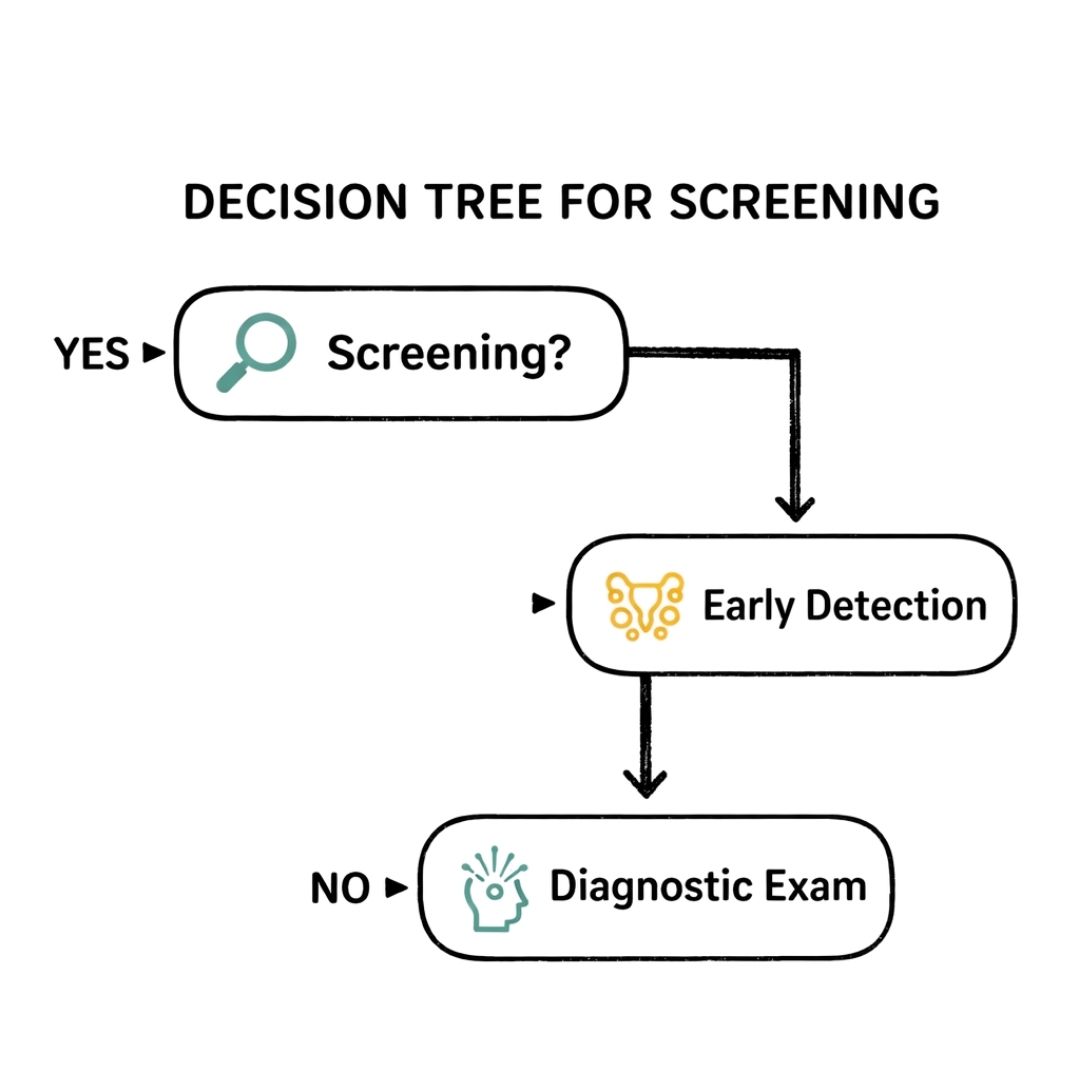
The key takeaway is that screening is all about looking for potential problems before they cause trouble.
It's crucial to remember that risk is more than just smoking. Your unique risk profile is a blend of genetics, environmental factors, and your personal health history.
Other important risk factors to keep in mind include:
It's how these factors combine that really matters. For instance, smoking and being exposed to asbestos creates a risk far greater than either factor on its own. It's also worth noting that risk profiles can differ between sexes; you can explore this further in our guide to lung cancer in women vs men.
If any of these sound familiar, it's a good reason to speak with your GP about whether lung cancer screening could be right for you.
This table helps compare the formal UK NHS TLHC criteria against the wider risk factors we've discussed. Use it to get a clearer picture of where you might stand.
| Factor | UK NHS TLHC Criteria | General High-Risk Indicators |
|---|---|---|
| Age | Between 55 and 74 | Primarily over 50, but risk increases with age |
| Smoking History | Registered with a GP as a current or former smoker | Significant history (e.g., 20+ pack-years) |
| Occupational Exposure | Not a primary criterion | History of exposure to asbestos, radon, silica, etc. |
| Family History | Not a primary criterion | A first-degree relative (parent, sibling, child) had lung cancer |
| Personal Health History | Not a primary criterion | History of COPD, pulmonary fibrosis, or chest radiation |
Even if you fall outside the official NHS programme, a strong combination of these other risk factors could make you a candidate for screening. The best first step is always a conversation with a healthcare professional who knows your history.
At the heart of modern lung cancer screening is a specific type of imaging called a low-dose computed tomography (LDCT) scan. Knowing what to expect can help demystify the process and ease any nerves you might have. It’s a quick, straightforward, and non-invasive procedure designed to give a clear picture of your lungs with very little fuss.
An LDCT scan is a sophisticated X-ray that takes multiple images from different angles as it moves around your body. A computer then stitches these pictures together to create a detailed, cross-sectional map of your lungs. This incredible level of detail allows radiologists to spot tiny nodules or other changes that a standard chest X-ray would almost certainly miss.
Many people rightly wonder about radiation exposure. The key feature of an LDCT scan is right there in its name: low dose. It uses significantly less ionising radiation than a conventional CT scan used for diagnosis—in some instances, up to 90% less.
This does mean the images aren't quite as sharp as a standard CT, but they provide more than enough clarity for screening. Think of it this way: a security camera can easily spot someone walking into a room, which is its purpose. You don't need a high-resolution portrait camera to capture every eyelash. The LDCT scan works on the same principle, providing all the necessary information to find small lung nodules.
A low-dose CT scan is a surveillance tool. Its primary job is to spot potential issues early, not to provide a definitive diagnosis. It strikes a crucial balance between getting a clear image and keeping radiation exposure to an absolute minimum.
This lower radiation dose is what makes LDCT a safe and suitable choice for the annual checks recommended for those in high-risk groups. While various imaging techniques exist, exploring how different scans like ultrasound show cancer makes it clear why LDCT is the gold standard for this specific type of screening.
Walking into your appointment with a clear idea of what happens next can make the whole experience feel far less intimidating. Here’s a simple run-through of the process, from the moment you arrive to when you leave.
Before the Scan:
During the Scan:
After the Scan:
As soon as it’s over, you can get up, get dressed, and carry on with your day. There are no side effects or recovery period to worry about.
Your scan will be carefully examined by a radiologist—a doctor who specialises in interpreting medical images. They will compile a report and send it to your GP or the consultant who referred you. Your doctor will then contact you to discuss the results and outline any next steps.
Deciding whether to go forward with lung cancer screening is a major health decision. It's not something to be taken lightly, and like any significant medical test, it's about balancing the very real benefits against some potential downsides. Taking the time to understand both sides of the coin is the best way to make a choice that feels right for you.
The most powerful argument for screening is its ability to find lung cancer at its earliest, most treatable stage. When cancer is caught before it has a chance to cause any symptoms, it's typically smaller and hasn't spread. This early discovery opens the door to more effective and often less intensive treatments, which dramatically improves the chances of a cure.
Large-scale clinical trials have backed this up time and again. By spotting tumours when they're just tiny nodules, doctors can step in decisively. This single factor—catching it early—is our most effective weapon in reducing deaths from lung cancer.
The whole idea behind screening is simple: finding a problem early makes it far easier to fix. Think of it like spotting a small, contained fire in a kitchen versus only getting an alarm when the entire house is engulfed in flames. Early intervention is quicker, more effective, and much more likely to succeed. This is exactly the principle behind lung cancer screening.
When a low-dose CT scan picks up a small, localised tumour, a person's outlook improves tremendously. Research consistently shows that people diagnosed through screening have far better survival rates than those who are diagnosed only after symptoms have appeared. This isn't just a number on a chart; it represents countless lives being extended and improved.
While the benefits are clear, it's just as important to be realistic about the potential risks and limitations. Acknowledging these challenges doesn’t undermine the value of screening; it simply helps you build a complete picture to inform your decision. In fact, these considerations are a normal part of any well-run medical screening programme.
The most common challenges include:
The emotional side of screening shouldn't be underestimated. The waiting period for results, or going through further tests after a false-positive, can be a stressful time for you and your family.
It's also crucial to separate fact from fiction when thinking about these risks. Many common beliefs about cancer are simply not supported by the evidence. You can learn more about this by exploring common cancer myths and controversies in our detailed guide.
To help you see the balance more clearly, the table below gives a straightforward comparison of the key benefits and potential harms of a low-dose CT scan for lung cancer screening.
| Potential Benefits (Pros) | Potential Harms (Cons) |
|---|---|
| Finds Cancer Early Greatly improves chances of successful treatment and survival. | False-Positive Results Can cause anxiety and lead to unnecessary follow-up tests. |
| Less Invasive Treatment Early-stage cancers may be treated with less aggressive therapy. | Overdiagnosis May find slow-growing cancers that would never have caused harm. |
| Reduces Cancer Mortality Proven to lower the risk of dying from lung cancer in at-risk groups. | Radiation Exposure Involves repeated, though small, doses of radiation over time. |
| Peace of Mind A clear scan result can provide significant reassurance. | Psychological Stress The process and waiting for results can be an emotional burden. |
Ultimately, the choice to take part in a lung cancer screening programme is a personal one. It's a conversation to be had with a healthcare professional who understands your personal health history and risk factors, so you can make a truly informed decision together.
The wait for any medical result can feel long, so when the report from your lung cancer screening arrives, it’s natural to feel a mix of anxiety and anticipation. Understanding what the findings mean is the crucial first step in moving forward with clarity and confidence.
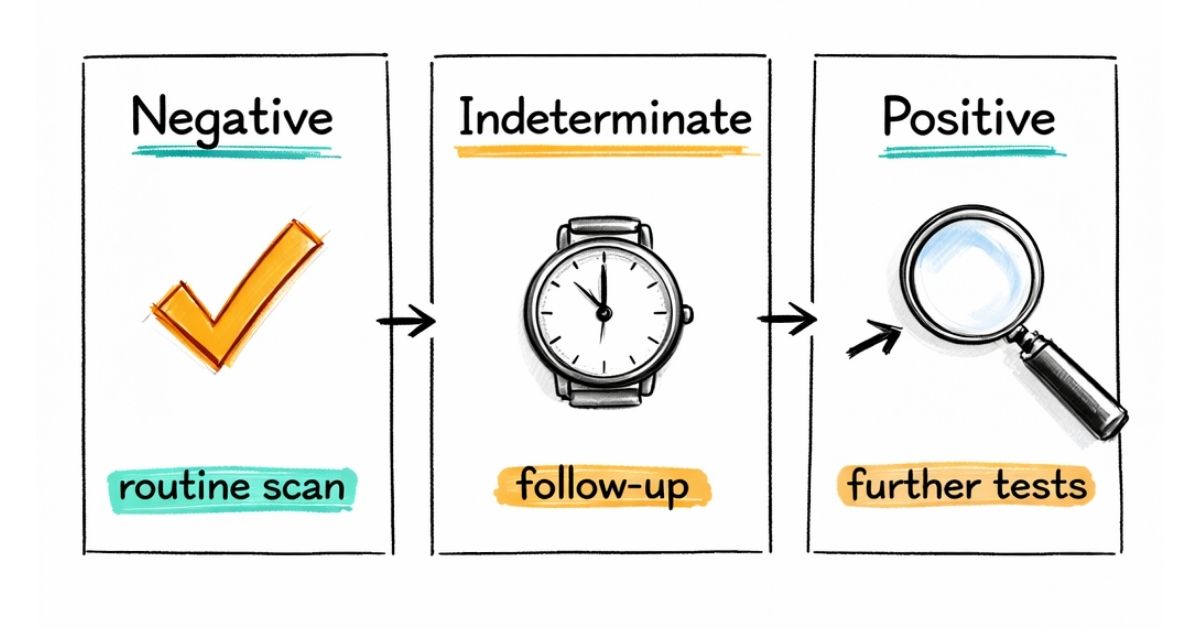
Your low-dose CT scan results will generally fall into one of three main categories. Each outcome has its own clear and well-established pathway, designed to ensure you get the right care at the right time. Let’s walk through what each of these results means for you.
Getting a negative result is the most common outcome, and it’s certainly the news everyone hopes for. It means the radiologist who reviewed your scan found no nodules or other signs that raise any suspicion of cancer. Put simply, there is no evidence of lung cancer at this time.
While this is a huge relief, it’s important to see screening as an ongoing health commitment rather than a one-off check. If you're in a high-risk group, staying in the screening programme is key.
A negative result brings immediate peace of mind, but it also highlights why regular checks are so important. Your clinical team will almost certainly recommend you return for your next scan, usually in a year, to keep a watchful eye on your lung health.
This regular monitoring is the cornerstone of effective screening. It’s what allows doctors to spot any slow-growing cancers that might have been too small to see on an earlier scan.
An indeterminate result is also very common, especially on a first-time scan. This simply means that the scan has picked up one or more small lung nodules, but they aren't large enough or don't have the features to be considered suspicious. Most of these nodules are completely harmless, often just leftover scar tissue from old chest infections.
It's vital to remember that an indeterminate finding is not a cancer diagnosis. Think of it as a flag for your medical team to monitor things a bit more closely. The typical next step is to schedule a follow-up low-dose CT scan in a few months, usually three to six, to see what, if anything, has changed.
This careful "watchful waiting" approach allows your doctor to see if the nodule:
This staged approach is designed to be thorough without being overly aggressive, avoiding unnecessary invasive tests while ensuring nothing important is missed.
A positive result means your scan has identified a nodule or mass with characteristics that make it suspicious for lung cancer. This could be due to its size, its irregular shape, or other features a radiologist is trained to spot. The most important thing to know is that even a positive result is not a definite diagnosis.
What it does mean is that more tests are needed to get a conclusive answer. Your situation will be discussed by a multidisciplinary team (MDT) – a dedicated group of specialists including lung doctors, radiologists, oncologists, and surgeons who collaborate to plan the best course of action.
The next steps will likely involve one or both of the following:
Once you have your screening results, it’s a good idea to discuss them with your GP. This article on how to effectively communicate with your GP offers some great practical tips. This collaborative process ensures you remain at the heart of every decision, fully informed and supported by expert guidance.
The benefits of catching lung cancer early are clear for any one person, but the true power of screening comes to light when we look at how it works on a community-wide scale. These programmes aren't just ideas on paper; they are practical, life-saving initiatives with proven results. By concentrating on those most at risk, targeted screening is dramatically changing outcomes, finding more cancers at a treatable stage and ultimately reducing the number of people who die from the disease.
When you look at the evidence from organised screening efforts, the story is compelling. Compare an area with a screening programme to one without, and you’ll see a distinct pattern: communities with screening have far fewer people being diagnosed at a late stage. This is the most critical measure of success because finding cancer before it has had a chance to spread is the single biggest factor in giving someone the best possible chance of survival.
The public health benefits of this focused approach were brilliantly shown in a project in North and East Manchester. This programme deliberately targeted people in a high-deprivation area, where engaging with healthcare services can often be a real challenge.
By offering community-based low-dose CT scans to residents aged 55-80, the project achieved a remarkable 22% reduction in the number of late-stage lung cancer diagnoses. The full findings, which you can read in this detailed report on the initiative, prove that screening can make a huge difference even in tough socioeconomic environments. It’s a powerful lesson: taking screening directly to the people who need it most works. It overcomes barriers and saves lives.
To measure how effective a screening programme is, experts often refer to a statistic called the "number needed to screen" (NNS). This tells us how many people have to be screened to prevent one death from lung cancer. For lung cancer screening, this figure is incredibly encouraging and shows just how efficient the process is.
For every few hundred high-risk people screened regularly with low-dose CT scans, one death from lung cancer is prevented. This makes it one of the most effective cancer screening tools we have.
This is precisely why organised, national programmes are so important. They turn screening from a hit-and-miss activity into a systematic effort designed to save as many lives as possible.
When someone who is eligible decides to take part, they are doing more than just looking after their own health. They are contributing to a much bigger public health success story that eases the immense burden of this disease on families and healthcare systems. If a diagnosis does occur, knowing what comes next is crucial. Our guide to lung cancer spread, symptoms, and treatment offers vital information for that journey. The real-world results are in, and they confirm that participating in lung cancer screening is one of the most powerful steps you can take toward a healthier future.
It's completely normal to have questions when you're thinking about any kind of medical check or procedure. To help you get a clearer picture and feel more confident, we've put together answers to some of the most common queries we hear about lung cancer screening.
Yes, the low-dose CT (LDCT) scan is considered very safe for screening. It's important to know that it uses a much smaller amount of radiation than a standard, diagnostic CT scan would.
To give you a bit of context, the radiation from one screening scan is about the same as what you'd naturally absorb from our environment over six months. For those at high risk, experts agree that the life-saving benefit of catching cancer early is far greater than this very small risk.
Absolutely. Giving up smoking is the most powerful step you can take for your health, but the risk of developing lung cancer doesn't disappear overnight. It remains higher than a non-smoker's for many years.
Screening programmes like the UK's NHS Targeted Lung Health Check look at your "pack-year" history to work out your eligibility. If you fit the criteria, screening is still a very good idea.
While smoking history is a major factor in assessing risk, it’s not the only one. Past exposure remains a significant part of the picture, even long after someone has quit.
A chest X-ray isn't a suitable alternative for lung cancer screening. The simple reason is that X-rays just aren't sensitive enough to spot the tiny, early-stage nodules that an LDCT scan can pick up.
Major clinical trials have confirmed this, showing that X-rays can miss many early tumours. That's precisely why the low-dose CT scan is now the established gold standard for lung screening.
For people who fall into the high-risk category, the standard recommendation is for annual screening with a low-dose CT scan.
This yearly timing is seen as the best balance. It allows doctors to spot any new or growing nodules as early as possible while keeping the overall radiation exposure very low over time. Your own doctor will advise on the best schedule for you, based on your personal risk factors and the results of any previous scans.
We strongly advise you to talk with a health care professional about specific medical conditions and treatments.
The information on our site is meant to be helpful and educational but is not a substitute for medical advice.
Learn about wheezing with lung cancer, key symptoms, and when to seek help. Discover diagnosis, treatment, and support in this essential guide.
Discover The 10 Crucial Questions To Ask After A Lung Cancer Diagnosis. Empower Yourself With Knowledge And Make Informed Decisions About Care And Treatment.
Discover What Lung Cancer Treatment Looks Like in 2025, From Cutting-Edge Research and Targeted Therapies to Practical Tips and Emotional Wellbeing.