This article will give you an insight into how certain foods and nutrients may help support brain health during and after cancer treatment, specifically for those experiencing chemo brain.
Often when patients begin their cancer treatment, diet becomes something they think about more frequently- whether it is to manage nausea, maintain energy, or just to feel strong enough day-to-day. However, the foods we consume do not seem to be associated or discussed as often when it comes to supporting brain health during chemotherapy. It’s understandable not to think about diet as playing a role in managing chemo brain-most patients, as well as their family members or caregivers, do not.
Why does this matter, and what exactly is chemo brain? Chemo brain involves changes in cognitive function, such as memory lapses, trouble focusing, or slower thinking.1 Chemo brain or “brain fog” is a complex side effect, and a very well-documented, real condition linked to cancer and various treatments.
Chemo brain or brain fog can seem indescribable- but usually when cancer patients talk about experiencing “chemo brain”, they often describe it as a kind of mental fog or hazy feeling, trouble remembering names, losing their train of thought mid-sentence, and struggling to juggle everyday tasks. For years, that term would be brushed off by some as an exaggeration or a catch-all complaint. But make no mistake: chemo brain is real. It’s a recognised form of cognitive impairment that affects many people living with and beyond cancer, and it’s finally getting the attention it deserves. It’s also important to understand that these changes in cognitive function are not signs of a more serious condition like Alzheimer’s disease.1
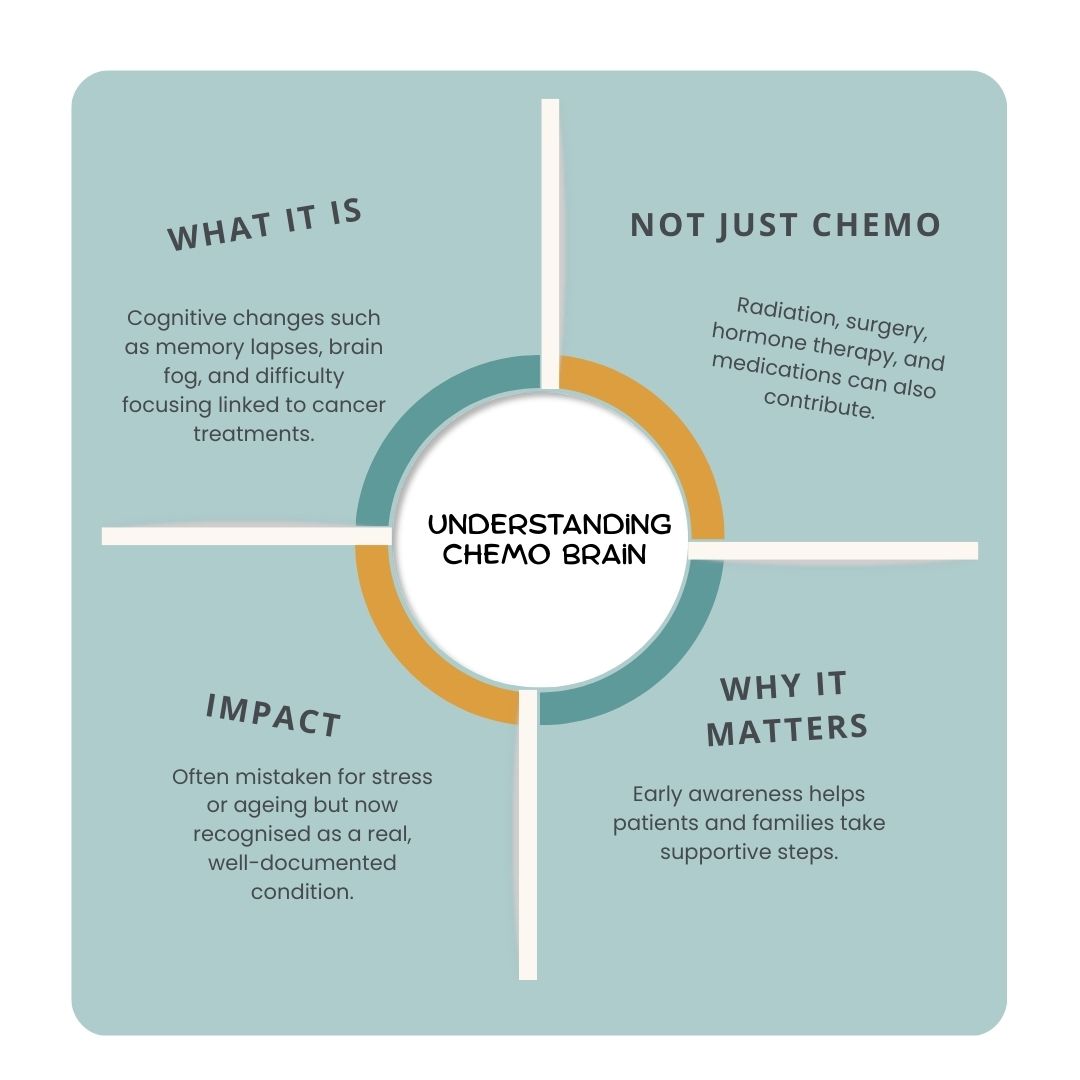
The American Cancer Society states that these symptoms can happen before, during, and after cancer treatment, and not just to people who receive chemotherapy. Radiation, surgery, immunotherapy, hormone therapy, targeted drugs, as well as pain and anti-nausea medications, can all contribute to cognitive changes.1
When it comes to the foods we eat, what can feel frustrating is that chemo brain is yet another thing to add to the cancer patient’s plate, but there is some growing evidence that shows how certain nutrients, like healthy fats and certain vitamins, can help support brain function and perhaps ease some cognitive fog. A secondary data analysis study from 2022 explored the relationship between diet quality before chemotherapy and changes in self-reported cognition during treatment.2 The researchers looked at different diet patterns, including the DASH diet (dietary approaches to stop hypertension), Mediterranean diet and low-carb diets, to see if any were linked to less cognitive decline.
The study’s findings suggest that while overall diet scores did not predict cognitive changes, a higher ratio of monounsaturated fats (foods like nuts, olive oil and avocados) compared to saturated fats (butter, fatty meats and packaged foods) was associated with less cognitive decline shortly after chemotherapy infusions. This suggests that consuming a diet higher in healthy fats may offer some protection against chemo brain symptoms. While there still needs to be more research conducted regarding definitive recommendations, these insights highlight the importance of nutrition for cancer care.2 That being said, this does not mean one should overhaul their diet completely or stress about being perfect with their eating. Instead, one can think of this as a gentle approach to give their brain a bit more support, along with still getting adequate rest, gentle movement, and asking for help when needed.
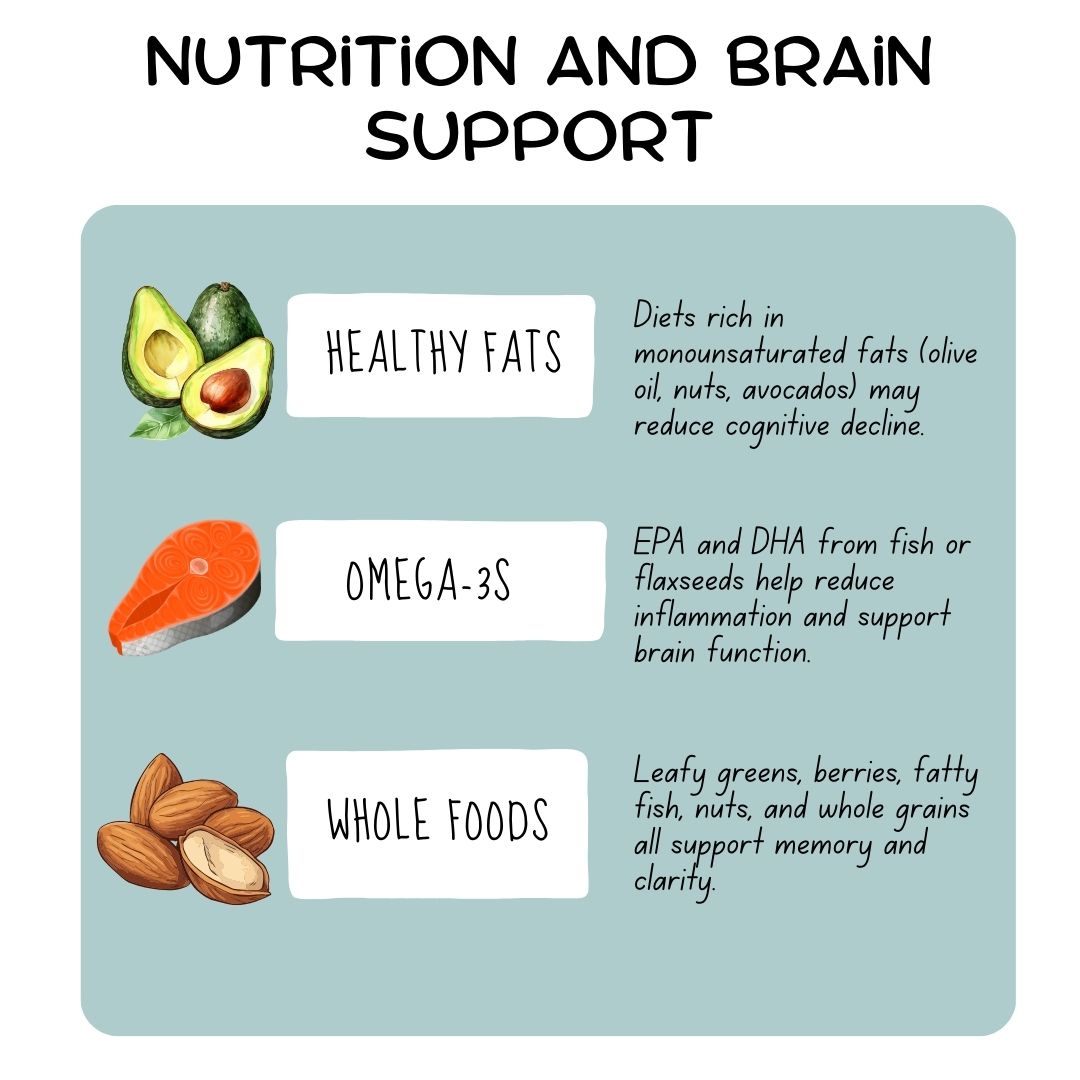
A review from 2017 investigated dietary strategies used as tools to mitigate the effects of brain fog.3 The researchers specifically looked at omega-3 fatty acids (especially long-chain, marine-derived EPA and DHA). In short, Omega-3 fatty acids (often called omega-3s) are a type of healthy fat that our bodies need but cannot make on their own.4 This means that we have to get them from foods such as walnuts, fatty fish (such as salmon) or flaxseeds; or we can take supplements like fish oil. There are a few types of omega-3s, but the most important ones for our health include the following:
EPA AND DHA are longer in terms of how many carbon atoms they contain (20-22) compared to ALA, which has shorter carbon atoms at 18. This is why EPA and DHA are called long-chain omega-3s.4 These long-chain types are especially important for heart, brain and eye health.
The key takeaway from this particular review is that a diet rich in omega-3 fatty acids and low in added sugars may protect cognitive function during chemotherapy by reducing inflammation and oxidative stress, which is basically when there are too many unstable molecules called free radicals in the body, and not enough antioxidants to get rid of them.5 While the 2017 review highlighted breast cancer patients, it is still important to note that consuming omega-3 fatty acids can be a potential dietary intervention to help support brain health and benefits across various types of cancer, not just breast cancer.
While research is still evolving on this topic, especially regarding supplements that would pertain to cancer patients and support brain fog, there are some simple and practical ways to support your brain through nutrition during treatment.
Harvard Health Publishing highlighted various brain-supportive foods that may benefit brain health in general, and could be especially helpful during or after cancer treatment.6 Their recommendations include leafy greens, berries, fatty fish, nuts and whole grains, all of which help reduce inflammation, support memory, and fuel the brain, while providing steady energy. Implementing these principles could offer extra support to those who are dealing with chemo brain, too.
Harvard Health Publishing also provides a useful guide regarding certain micronutrients that have the largest impact on our health.7 Below are certain food sources and the micronutrients they contain:
These vitamins and minerals don’t just support general health; they also play a specific role in brain function. For instance, vitamin B6 helps the body produce neurotransmitters that regulate mood and memory. It is basically ‘maintenance mode’ for normal brain function.8 Vitamin C is a powerful antioxidant that protects brain cells from oxidative stress. Vitamin E, another antioxidant, has been linked to slower cognitive decline in older adults. Magnesium supports nerve transmission and muscle function, which can help with relaxation and sleep, two things that often impact brain clarity. Magnesium can also help to enhance cognitive functions and reduce the risk of dementia.8 Finally, zinc plays a key role in neuroplasticity, which is the brain’s ability to adapt and form new connections.
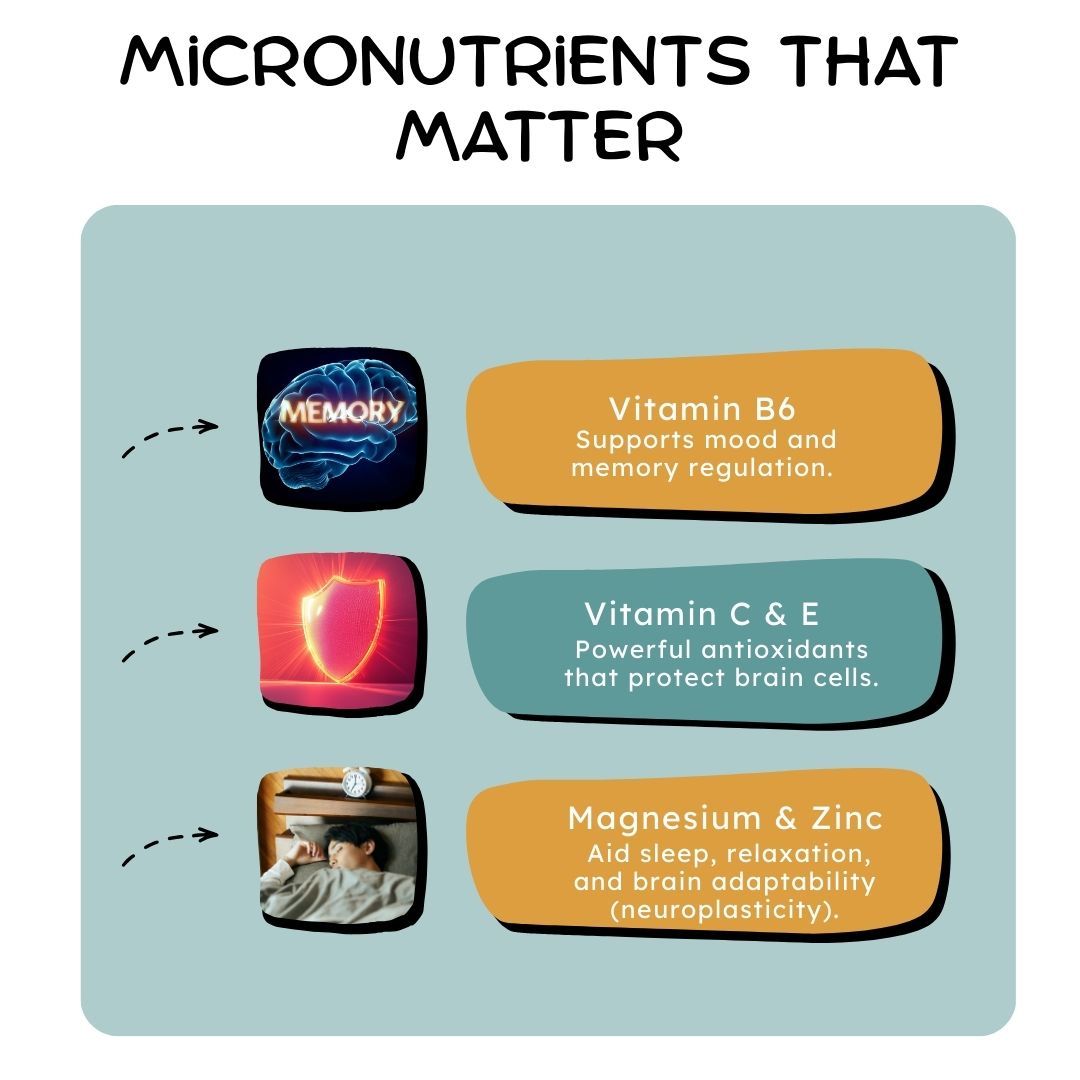
While there is no single nutrient that can cure chemo brain completely, getting a balance of these nutrients from whole foods may provide foundational support during and after cancer treatment.
Chemo brain can be incredibly frustrating; your mind is simply not working the way it used to. And when you’re already dealing with so much, adding nutrition to the mix might feel like just one more thing to think about. Here’s the good news: it does not have to be an all-or-nothing approach. Small, simple choices-like adding a handful of walnuts to a salad, drinking more water, or dipping apple slices in some yoghurt or peanut butter, can gently support your brain without adding stress. It’s not about being perfect; it’s about giving your brain a little extra help while your body works hard to heal. If you’re not sure where to begin, a dietitian or member of your care team can help guide you in a way that feels doable for you.
Edited by: Katheeja Imani
We strongly advise you to talk with a health care professional about specific medical conditions and treatments.
The information on our site is meant to be helpful and educational but is not a substitute for medical advice.
Whilst Some Information About Cancer Is Important, Misinformation Is Not. This Article Unravels 20 Common Cancer Myths.
A clear, compassionate guide to stage 4 lung cancer. Understand advanced treatments, symptom management, diagnosis, and finding meaningful support.
Support lymphatic health during cancer recovery. Learn practical tips and expert advice from Kirsty Wales, the Award-Winning Lymphatic Drainage Therapist