Receiving a cancer diagnosis is overwhelming enough without having to deal with the host of other challenges that can come with it. One of the most common is anaemia, a condition that can leave you feeling profoundly tired and weak, making even simple daily tasks feel like a struggle.
But what exactly is anaemia? Essentially, it means your body doesn't have enough healthy red blood cells to ferry oxygen to all your tissues.
Imagine your bloodstream is a busy motorway. Your red blood cells are like delivery vans, and their crucial cargo is oxygen. When you have anaemia, it's as if there's a major shortage of vans on the road. Deliveries slow to a crawl, and your body's cells are left starved of the oxygen they need to function properly. This is what causes that deep-seated fatigue.
The connection between anaemia and cancer is a two-way street. Sometimes, anaemia is actually one of the first clues that something is wrong. For instance, colorectal cancer often causes slow, chronic bleeding that leads to anaemia. In fact, studies have shown that nearly 47% of patients discover they have anaemia around the same time they are diagnosed with colorectal cancer.
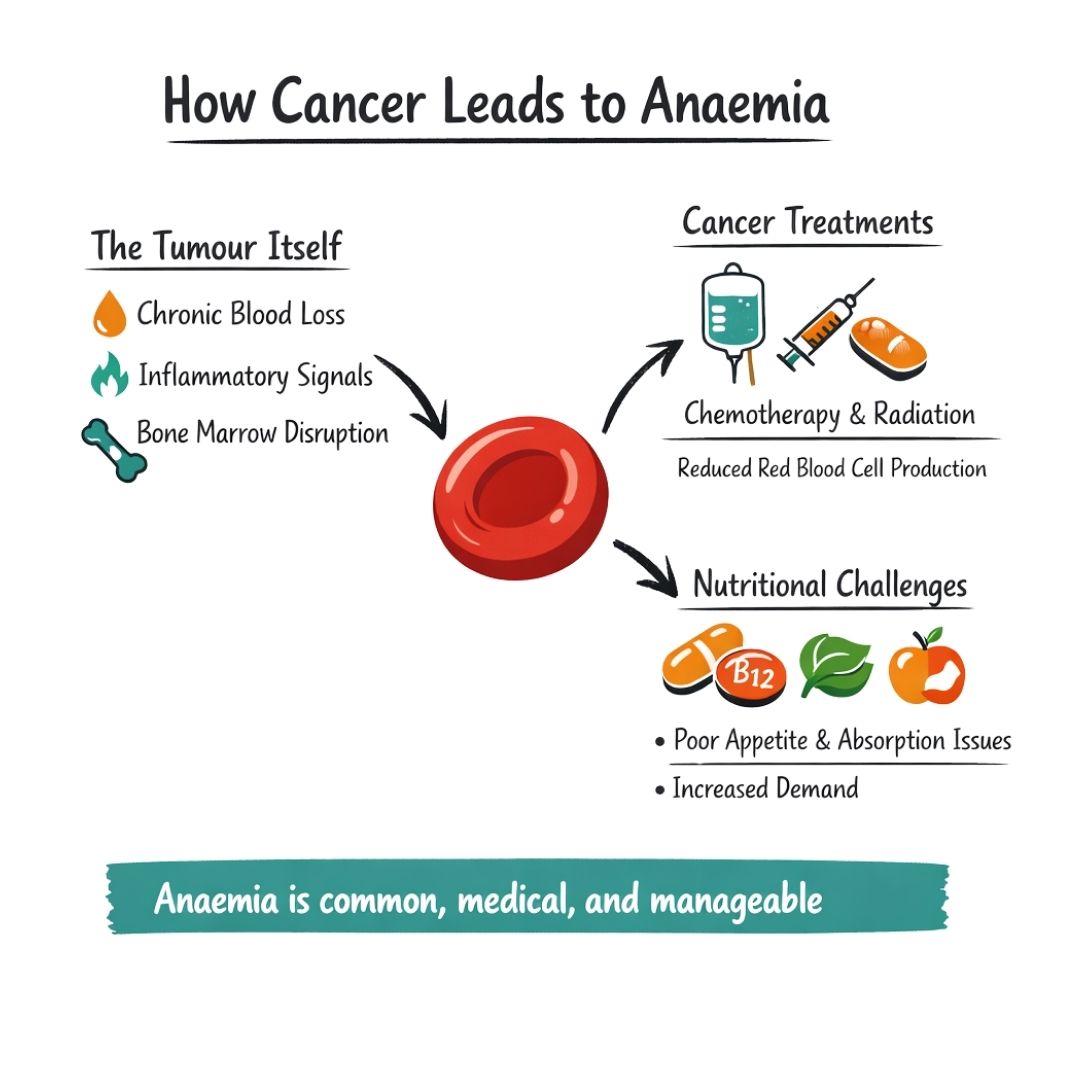
More commonly, though, anaemia develops because of the cancer itself or as a side effect of the treatments designed to fight it.
Getting to grips with this link is the first real step towards managing your symptoms and improving your quality of life during treatment. It helps you ask the right questions and play an active role in your own care.
This isn't just a minor side effect; it's a significant condition that can affect how well you tolerate treatment and influence your overall health. By understanding its importance, you and your medical team can tackle it head-on. To delve deeper into how blood cells are made, you can learn more about the role of bone marrow in our article.
It’s not just one thing that leads to anaemia when you have cancer. Think of it as a combination of factors all working against your body's ability to maintain healthy red blood cells. The cancer itself, the treatments used to fight it, and even related nutritional problems can all play a part.
Sometimes, the cancer is the direct culprit. Tumours in the digestive system, like bowel or stomach cancer, can cause slow, persistent bleeding. You might not even notice it, but this gradual blood loss slowly drains your body of the iron needed to make haemoglobin.
Cancer can also fight a more subtle battle. Certain tumours release inflammatory substances called cytokines. These chemicals can disrupt your body’s normal functions, telling the bone marrow to slow down the production of red blood cells. In more advanced cases, cancer can spread to the bone marrow, physically taking over the space where healthy blood cells are made.
Cancer treatments are powerful by design, but they aren't always precise. Both chemotherapy and radiation are built to attack fast-growing cells, which is a key feature of cancer. The problem is, the cells in your bone marrow, the very factory that produces your red blood cells, also divide rapidly.
This collateral damage to the bone marrow can cause a significant dip in red blood cell production, a condition called myelosuppression. It’s one of the most common reasons people develop anaemia during their treatment. To learn more, you can explore how to handle the various chemotherapy side effects in our detailed guide.
Feeling tired is a near-universal part of having cancer, but the exhaustion that comes with anemia is something else entirely. It's a deep, persistent lack of energy that sleep just doesn't seem to touch. Knowing what to look for is the first step, and while some people use initial home tests for anemia, a proper diagnosis from your medical team is essential.
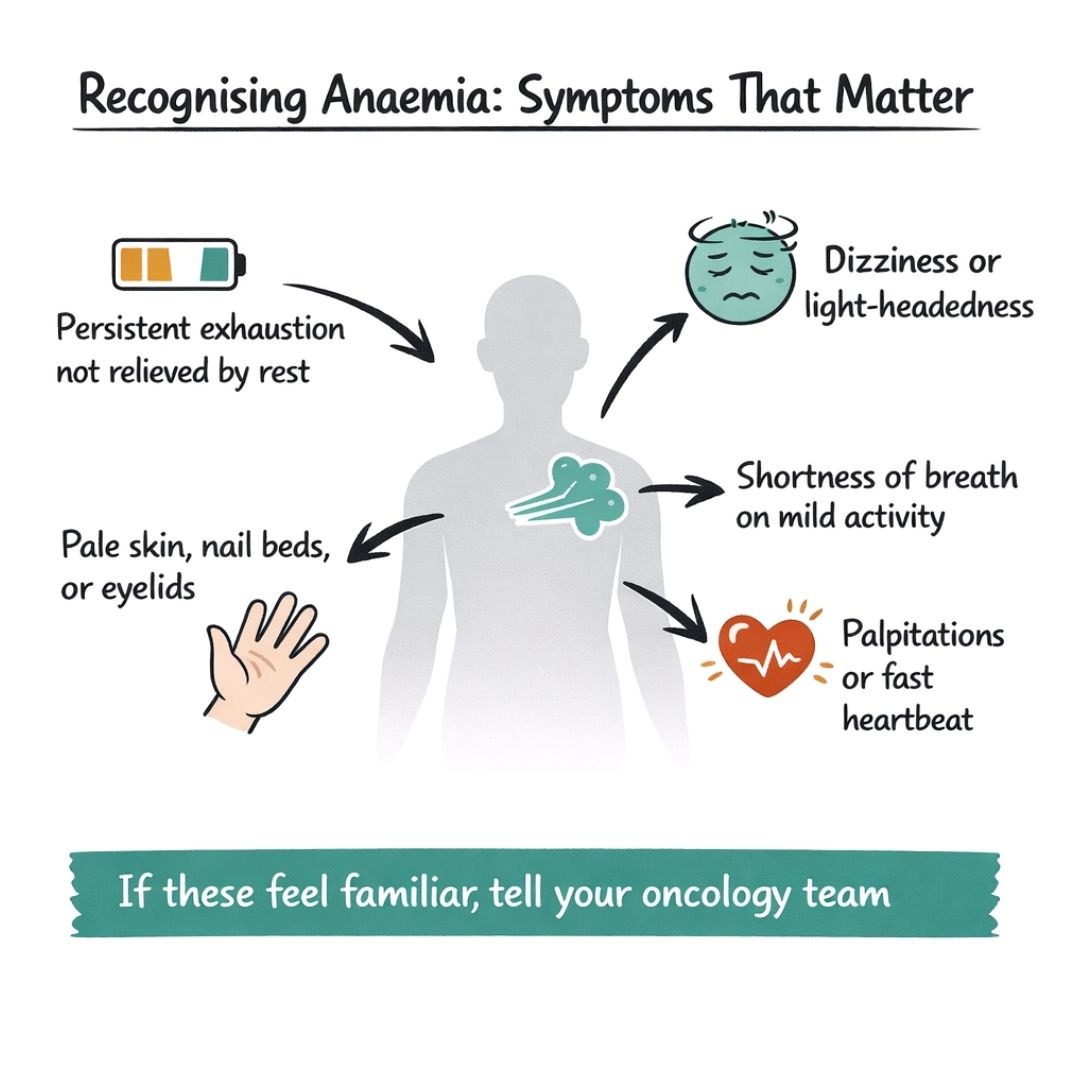
Beyond the profound fatigue, there are other tell-tale signs to watch for:
If any of these symptoms feel familiar, it's really important to bring them up with your oncology team.
Diagnosing anemia is quite straightforward. It starts with a simple blood test called a Complete Blood Count, or CBC. This common test gives your doctor a detailed snapshot of your blood, focusing on key markers like haemoglobin (the protein that carries oxygen) and haematocrit (the proportion of red blood cells).
These numbers tell us exactly how well your blood is equipped to transport oxygen around your body. To learn more about how these tests work, you can discover more about laboratory medicine and blood tests in our helpful guide.
It's also worth knowing that context matters. For instance, some research has highlighted that ethnic background can influence how test results are interpreted. These kinds of insights help medical teams take a more nuanced and personalised approach to diagnosis.
Tackling anaemia is a vital part of your cancer care plan, and your oncology team has several ways to get your red blood cell count back on track. The right approach for you will depend on your specific circumstances, particularly how low your levels have dropped and how much your symptoms are affecting you.
For immediate relief, especially when symptoms are severe, a blood transfusion is often the first port of call. It’s a fast and effective way to boost your haemoglobin, easing that overwhelming fatigue or breathlessness while your team works on a longer-term solution.
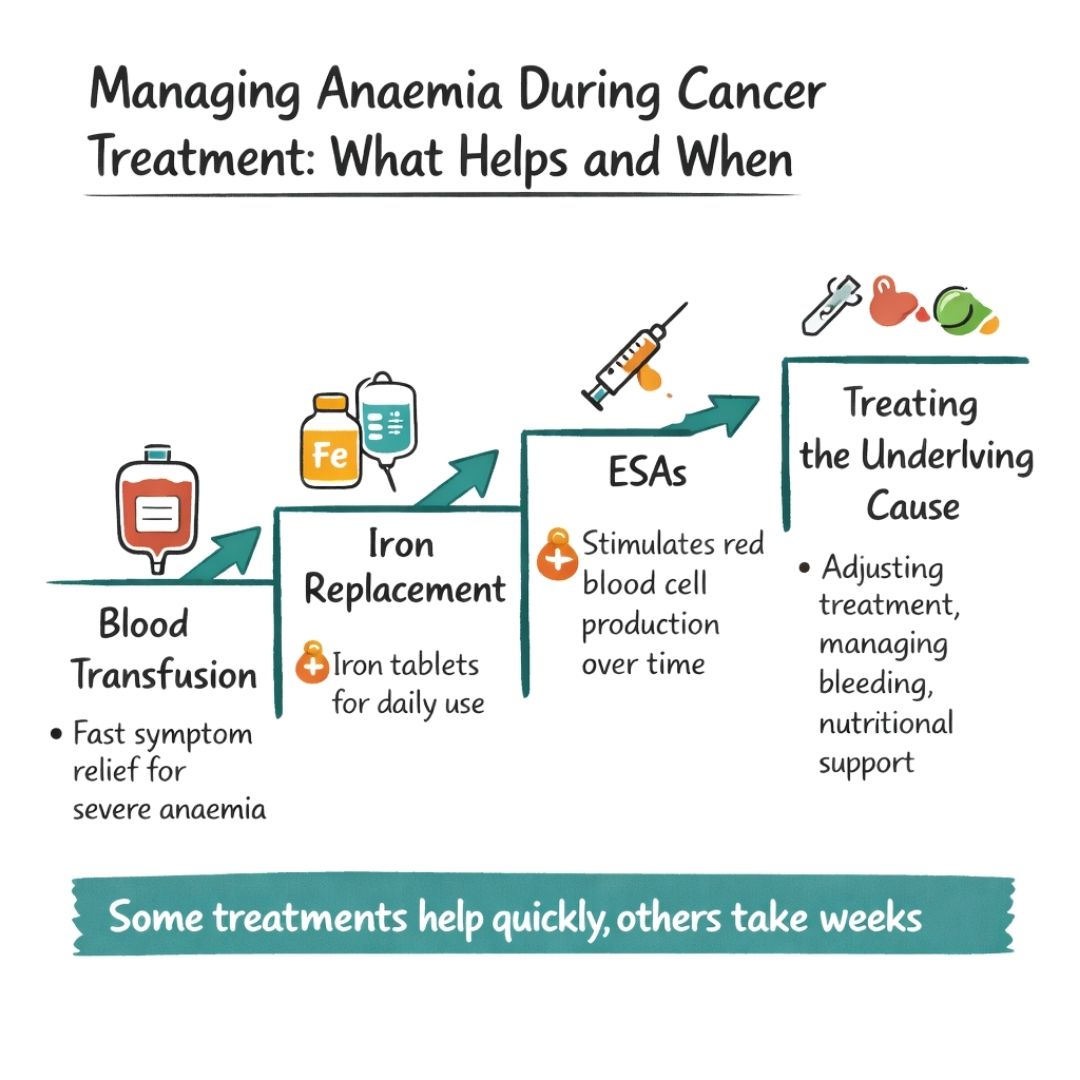
When the anaemia is down to an iron shortage, the solution is to replenish your body’s iron stores. Your doctor will typically recommend one of two options:
Another powerful tool in the toolkit is a group of medications called Erythropoiesis-Stimulating Agents, or ESAs. These are given as injections and essentially send a message to your bone marrow, prompting it to start producing more red blood cells on its own.
Ultimately, the best strategy is always to treat the underlying cause of the anaemia. This might involve adjusting your cancer treatment, managing any bleeding, or correcting a nutritional gap.
Your care team will guide you on the best path forward, which may include dietary advice. It's always a good idea to chat with your doctor before starting anything new, but you might find it helpful to read about which supplements to consider during cancer treatment.
Living with the deep-seated fatigue of anaemia while navigating cancer treatment is a real challenge, but there are practical, everyday steps you can take to manage your energy levels. The goal is to work with your body, not push against it.
Think of your energy like a battery with a limited charge. Try to schedule your most important activities for times when you typically feel your best. It's also incredibly helpful to build short, planned rests into your day—don’t wait until you’re completely exhausted. Learning to say "yes" when friends and family offer a hand can also be a game-changer. For those who need more structured support, professional home care services can provide invaluable assistance with daily tasks.
When you’re feeling wiped out, the thought of exercise might seem impossible. However, gentle movement, like a slow walk or some simple stretching, can genuinely boost your circulation and improve both your energy and mood.
Your diet is another powerful tool in your arsenal. Making a conscious effort to include iron-rich foods can make a real difference. Good options include:
Here’s a brilliant little tip: always try to pair your iron-rich foods with a source of vitamin C, like a glass of orange juice or some sliced peppers. Vitamin C dramatically boosts how well your body absorbs iron, especially from plant sources.
If you’re looking for more in-depth nutritional advice, our guide on what to eat during chemotherapy is a fantastic resource.
When you're dealing with a cancer diagnosis, a lot of practical questions pop up. Let's walk through some of the most common ones that patients and their families have about anaemia, with clear answers to help you feel more in control.
Can anaemia affect my cancer treatment schedule?
Yes, it absolutely can. If your red blood cell count gets too low, your body might not be strong enough to handle the next round of treatment, particularly chemotherapy.
In these situations, your oncology team may decide to delay your treatment for a short while. This pause gives your body a much-needed chance to recover and rebuild its red blood cell supply, ensuring you're strong enough to continue. It's a key reason why we monitor and manage anaemia so carefully—it helps keep your main cancer treatment on track.
Are iron supplements safe to take during cancer treatment?
This is a really important question. The short answer is that you should only ever take iron supplements if your oncology team specifically prescribes them for you.
While iron is vital for treating certain types of anaemia, just grabbing a supplement off the shelf can be risky. Some supplements might interfere with how well your chemotherapy or other treatments work. Always have a conversation with your doctor first.
Always consult your healthcare provider before starting any new supplement. Open communication ensures that everything you take works in harmony with your primary cancer treatment, rather than against it.
How long will it take to feel better after starting anaemia treatment?
How quickly you'll notice a difference really depends on the type of treatment you're having. A blood transfusion usually provides the fastest relief, and you might feel your energy levels lift within a day or two.
Other approaches, like iron infusions or Erythropoiesis-Stimulating Agents (ESAs), work more gradually. These treatments encourage your body to make its own red blood cells, which takes time. It might be several weeks before you feel a significant improvement in your symptoms.
Can I prevent anaemia while undergoing cancer treatment?
Since anaemia is such a common side effect of both the cancer itself and its treatments, preventing it completely isn't always realistic. But there's a lot you can do to manage the risk and its impact.
Focusing on a balanced diet with plenty of iron-rich foods, staying well-hydrated, and letting your doctor know as soon as you feel unusual fatigue or shortness of breath can make a huge difference. Being proactive is your best defence. For more advice, take a look at our guide on how to support your recovery from chemotherapy.
We strongly advise you to talk with a health care professional about specific medical conditions and treatments.
The information on our site is meant to be helpful and educational but is not a substitute for medical advice.
My Advice For Anyone Undergoing Investigations Or Treatment Dont Let The Cancer Scare You Into A Corner, Stand Up And Come Out Fighting.
Discover the 7 essential qualities every chemotherapy doctor should have. Learn how to choose the best expert for effective, compassionate cancer care.
A clear guide to managing radiotherapy side effects. Learn about short-term and long-term symptoms and find practical strategies for your recovery.