When your friend tells you they have testicular cancer, the world can feel like it’s ground to a halt. It’s a gut-punch moment, leaving you feeling shocked, scared, and completely unsure of what to say or do.
Your first instinct might be to find the perfect words or jump into problem-solving mode. But honestly, the most powerful thing you can do right now is just be there and listen. This first conversation isn't about having all the answers; it's about showing up.
That initial moment when your friend shares their diagnosis is a big deal. It sets the tone for everything that follows. It's completely normal for you to feel a bit scared or helpless, but right now, your job is to create a safe space for your friend to work through their own whirlwind of emotions.
Try to resist the urge to fill the silence with advice or stories about someone else you know who had cancer. Instead, a simple, heartfelt response can mean everything. Something like, "Thank you for telling me. That sounds so tough, and I'm here for you, whatever you need," shows them they're not alone. It's about genuine connection, not a perfect speech.
While your focus is, and should be, on your friend, it can be helpful to understand a little bit about testicular cancer. This isn't about becoming a medical expert overnight, but about arming yourself with some quiet reassurance.
For instance, rates of testicular cancer have risen in many Western countries in recent decades. It’s most common in younger men, especially those in their late 20s and early 30s. What this means is that while the diagnosis is scary, healthcare teams have a huge amount of experience and well-established ways of treating it effectively.
This knowledge can be a quiet comfort in the background, a reminder that your friend is on a path that many have walked before, with proven treatments available. You can learn more about this in our guide covering the different types of testicular cancer treatment.
The goal in these first moments is not to fix anything. It is to sit with your friend in their reality, listen without judgment, and make it clear that your friendship is a constant they can rely on.
There's no straight line for processing a cancer diagnosis. Both you and your friend are probably going to experience a real rollercoaster of emotions in the coming weeks and months.
It’s so important to allow space for all of these feelings to exist without judgment. Your role isn’t to manage your friend’s emotions, but simply to be a steady presence who can listen. Just being there, calmly and consistently, is one of the most powerful things you can do.
When you find out a mate has testicular cancer, the first thing that hits you is often a sense of helplessness. It’s natural to want to say the right thing, but we often fall back on the same old lines: "Let me know if you need anything" or "Just shout if I can help."
While the heart is in the right place, these phrases put the onus entirely on your friend. They’re already dealing with a mountain of physical and emotional stress; the last thing they have energy for is figuring out what they need and then having to ask for it. The real art of support is moving past these well-meaning but empty offers.
A simple "How are you?" is almost guaranteed to get you a one-word answer: "Fine." It’s a defence mechanism. To get past it, you need to ask questions that invite a genuine response.
Shifting your language like this shows you’re actually ready to hear the real answer, whatever it is. Learning how to improve communication in your relationship, particularly when things get tough, is what separates surface-level support from the stuff that really counts.
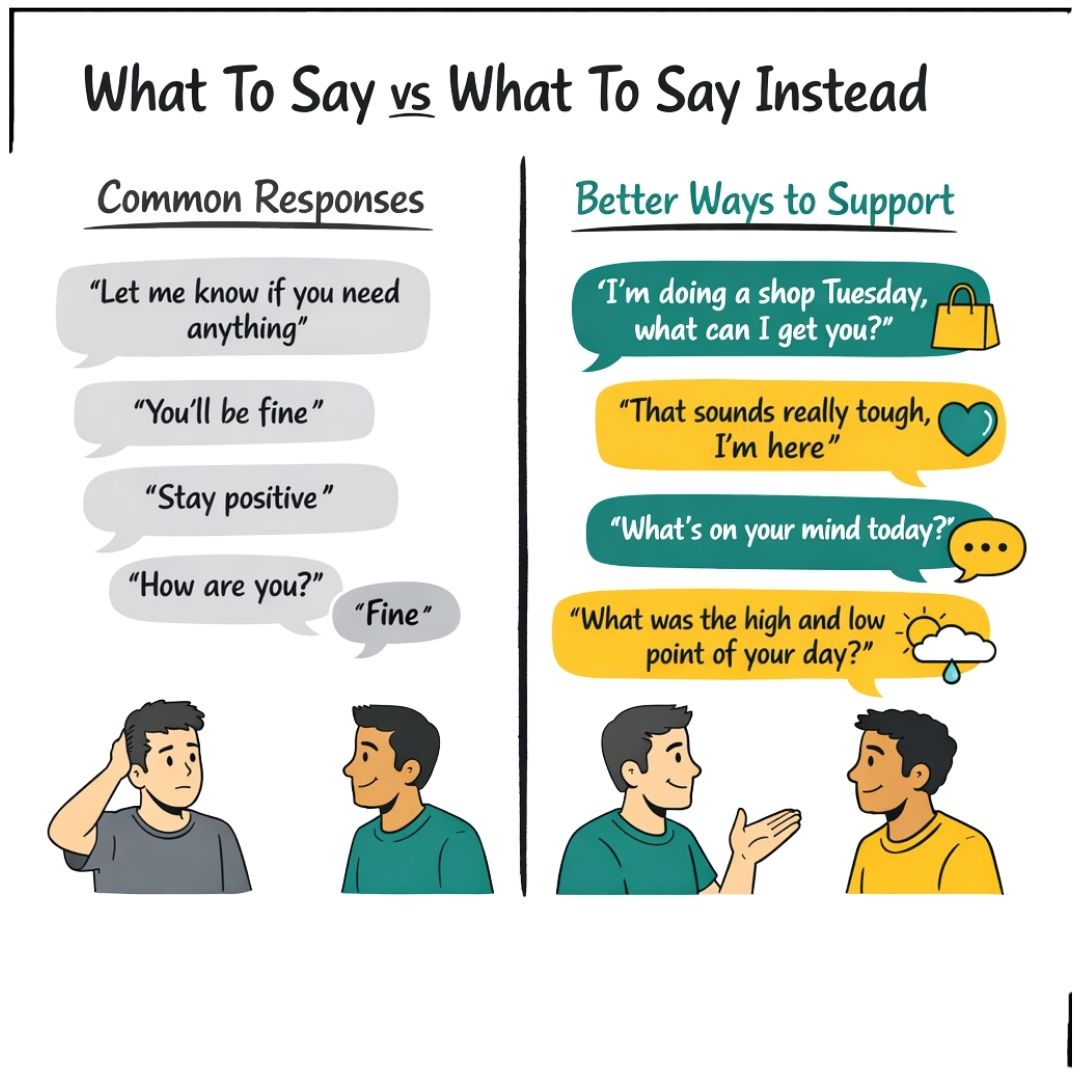
The most helpful support is nearly always the most specific. A vague offer requires your friend to do all the work: identify a need, decide who to ask, and then summon the energy to reach out. A specific offer, on the other hand, only requires a "yes" or "no."
Think about the difference:
This direct approach takes the mental load completely off his shoulders. He doesn't have to feel like he's putting you out or being a burden; he just has to accept the help you're already offering.
Don't underestimate the power of simply continuing your friendship as normal. Your friend is still the same person, and they need breaks from being a "cancer patient."
While being there for the heavy conversations is vital, it’s just as important to be a source of normality. Your mate with testicular cancer is still the same guy who loves football, gets obsessed with video games, or will argue with you for hours about the latest film.
Don't let every single conversation circle back to the diagnosis. Honestly, sometimes the best support you can give is an hour or two where cancer isn't mentioned at all. Send him a stupid meme, have a moan about work, or make plans to watch a match together.
Being that "cancer-free" zone when he needs it provides a crucial mental escape. It reinforces that your friendship is so much bigger than his illness. It's also worth reading about the problem with saying 'stay positive' to truly understand the nuances of supportive chat.
When your friend is diagnosed with testicular cancer, your first instinct might be to offer words of support. And while that's important, practical, hands-on help is often the real lifeline. It’s the difference between saying "I'm here for you" and actually being there in a way that lightens their load.
Think about it: when someone is dealing with treatment, even small, everyday tasks can feel overwhelming. The mental energy it takes to figure out what needs doing, then ask someone for that specific favour, is often more than they can spare. Making a concrete offer that just requires a simple 'yes' is one of the most powerful things you can do.
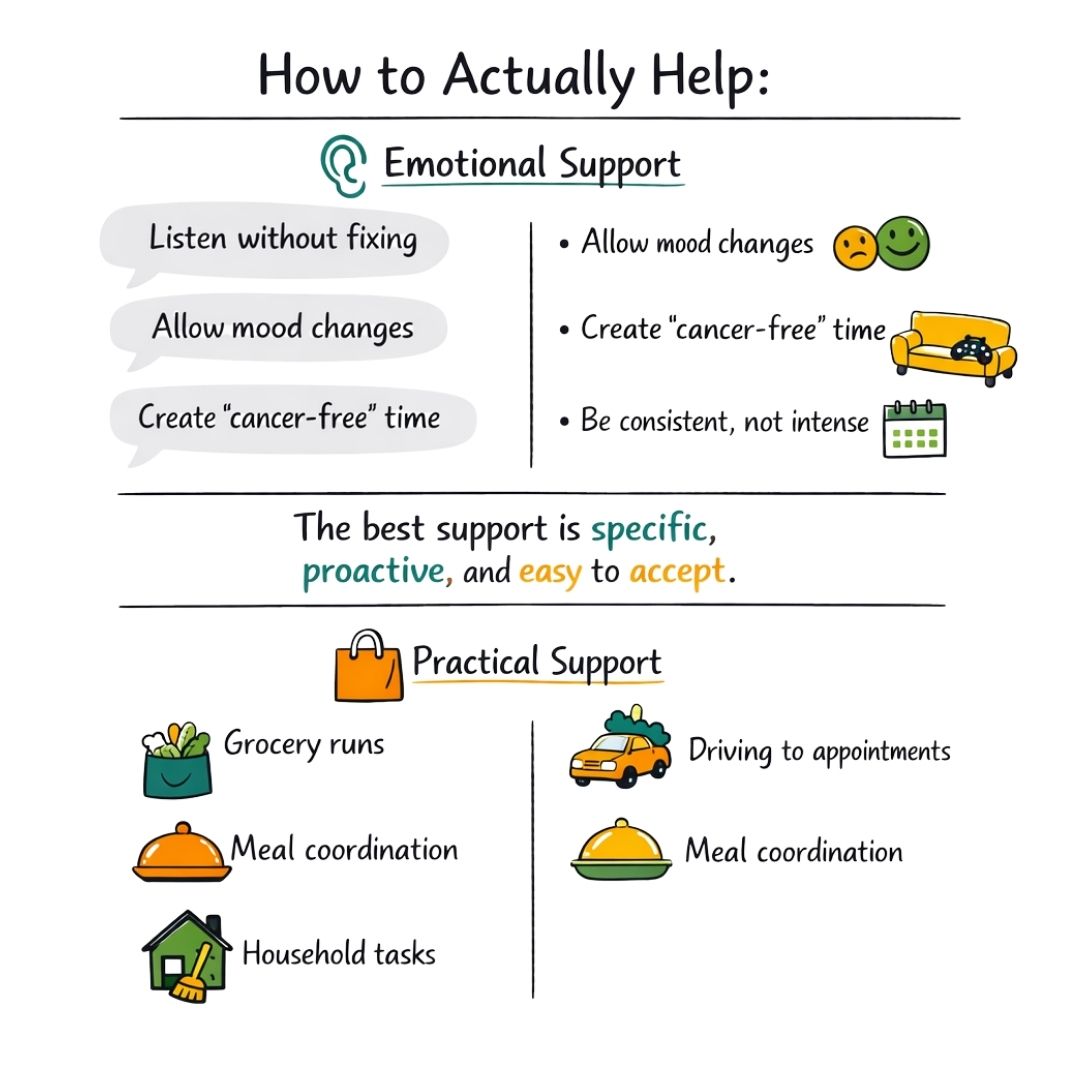
During treatment, simple errands can suddenly feel like climbing a mountain. Chemotherapy, for example, often leaves a person feeling nauseous and completely wiped out. This is your chance to step in and make a tangible difference.
Here are a few ways to offer practical, hands-on support:
By tackling these jobs, you're giving your friend the gift of time and energy, allowing them to focus completely on getting better. For more ideas, you can explore our guide detailing 34 ways to support a loved one with cancer.
The best help is specific, proactive, and only requires a simple 'yes' from your friend. It's the difference between saying, "Shout if you need anything," and, "I'm driving past the pharmacy tomorrow, what can I pick up for you?"
While practical help is a game-changer, don't underestimate the power of just hanging out and keeping things normal. Your friend is still the same person, and they’ll need a break from the world of cancer treatment.
This doesn't have to mean a big day out. Sometimes, the quiet, low-key moments are the most meaningful. Think about organising a chilled-out game night, watching a film on the sofa, or even just sitting in comfortable silence while you both work or read.
The goal is simply to offer companionship without any expectation. It’s a powerful reminder that they are more than their diagnosis and that your friendship is a constant, stable force in their life. This blend of practical action and emotional presence is the core of being a truly supportive friend.
A testicular cancer diagnosis is more than just a medical issue. It throws up a lot of deeply personal, and often very tough, conversations around body image, sex, and the chance of having kids down the line. As a friend, you’re not expected to be an expert on any of this. Your job is simply to be a trusted, non-judgemental ear.
Your mate might be feeling anxious, embarrassed, or just completely floored by these thoughts. The best thing you can do is create an environment where he knows he can talk about these fears without being shut down—if and when he’s ready. You don’t need to bring it up first, but you can definitely let him know the door is open.
For many young men, one of the most immediate and stressful worries is how treatment might affect their fertility. Chemotherapy and radiotherapy can sometimes cause temporary or permanent infertility, which makes it an incredibly time-sensitive conversation that has to happen before treatment begins.
This is where sperm banking comes in. It’s a process of freezing and storing sperm for future use, but the window to get it done is often tiny, squeezed into the whirlwind of appointments between diagnosis and the first day of treatment.
Simply letting your friend know you're there to listen can be a huge relief. Something like, "If you ever want to talk about the tough stuff, like fertility or anything else, I'm here and I won't be weird about it," can open the door without adding any pressure.
Your support can be practical as well as emotional. He might need a lift to an appointment or just someone to sit with who won’t get awkward. Exploring options like local sperm banks for preservation is a vital step, and your calm presence can make a hugely stressful process feel a bit more manageable.
Physical changes, from surgery scars to the side effects of treatment, can deliver a real blow to your friend’s self-esteem and how he feels about intimacy. He might be worried about how he looks, how his body will work, or how a future partner might react.
You don't need the answers. Honestly, the most powerful thing you can do is just listen with maturity and empathy. Reassure him that his worth as a person and as your friend hasn't changed one bit. Knowing your friendship is a solid, safe zone is a massive comfort.
If these topics come up, the goal is to listen well:
These conversations aren't easy, but they are a real part of the cancer journey. For a bit more guidance, we have some great insights on maintaining sexual wellness during and after cancer. Being there for your friend means showing up for all of it—the practical, the emotional, and the deeply personal.
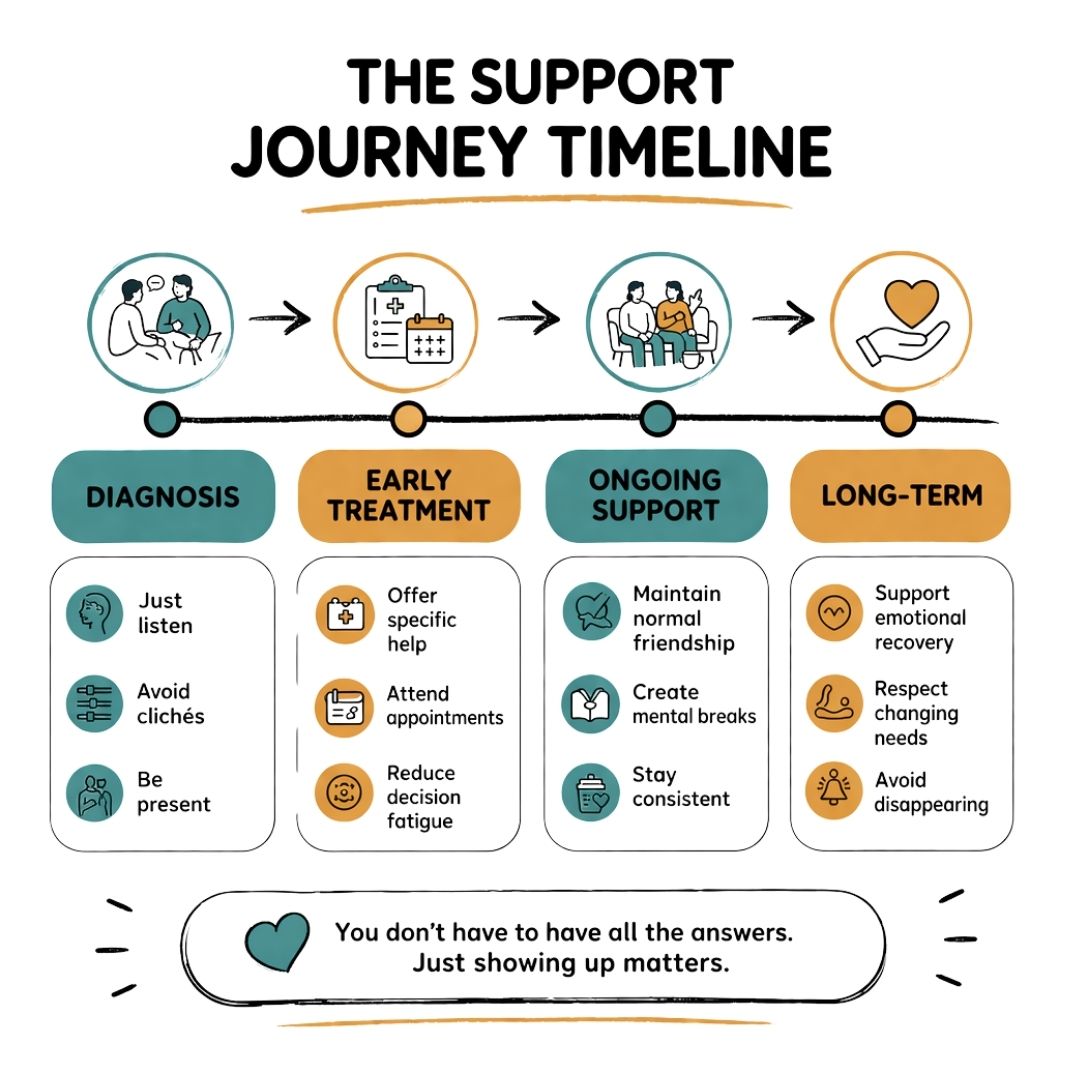
When your friend is diagnosed with testicular cancer, it’s all hands on deck. But it’s crucial to remember this is a marathon, not a sprint. While your instinct is to pour all your energy into helping them, you can't be a reliable source of support if you're running on empty yourself.
Ignoring your own needs doesn't make you a better friend; it’s a fast track to burnout. Supporter fatigue is very real, and it has a sneaky way of creeping up on you. Acknowledging that your capacity to help isn't infinite isn’t selfish—it’s just plain sensible.
One of the kindest things you can do—for both you and your friend—is to set some healthy boundaries. This is all about knowing when to say ‘yes’ and, just as importantly, realising it's okay to sometimes say ‘no’. You simply can't pour from an empty cup.
For instance, you might feel you have to be at every single hospital appointment, but that might not be realistic with your own job or family commitments. A more sustainable approach? Offer to attend the big, milestone appointments and then help coordinate a rota with other friends to cover the routine check-ins.
Prioritising your own mental and physical health is not a selfish act. It is the only way to ensure you can provide consistent, meaningful, and long-term support for your friend without becoming overwhelmed yourself.
Learning to spot the signs of emotional exhaustion in yourself is a vital first step. Are you feeling unusually irritable, perpetually tired, or even a little resentful? These are major red flags telling you to take a step back and recharge. Our guide on preventing caregiver burnout has some fantastic, practical strategies for managing this.
You’re busy supporting your friend, but who is supporting you? It's essential to have your own people to lean on, whether that’s a partner, other mates, or family. You need a safe space where you can be brutally honest about how tough you're finding it all.
Here are a few ways to protect your own well-being:
Remember, you're a key player on your friend's support team, but you're not the entire team. Sharing the load with others not only builds a stronger network for your friend but also gives you the breathing room you need to look after yourself.
When your friend gets a cancer diagnosis, it can feel like you've both been thrown into a world of medical jargon and uncertainty. The good news is, you don't have to figure it all out on your own. Knowing where to find reliable information and connect with others who've been through it can make an enormous difference.
This isn't just about reading facts on a screen. It's about finding a community and expert advice that can help you both feel less alone and more in control.
When you're searching for information to help your friend, you want to know it's coming from a trusted source. Thankfully, there are several fantastic charities around the world that offer free, expert support for patients, their families, and friends like you.
These organisations are a lifeline, offering both practical guidance and the emotional reassurance that you and your friend are not isolated in this experience.
Connecting with a dedicated support network means you're getting advice from people who have deep experience with testicular cancer. This professional and peer support is invaluable and can help demystify the medical jargon and emotional challenges.
Sometimes, the best support comes from people who have walked the same path. Beyond the big charities, online forums and communities offer a space to connect with other young men who’ve had testicular cancer or friends who have been in your exact position.
These are the places where you can have honest conversations about anything and everything—from the exhaustion of chemo to the anxiety that comes with recovery. It’s where you can ask the questions you think are silly or share the small wins with people who just get it.
Reaching out to these groups isn't a sign of weakness; it’s a sign of strength. It shows you’re committed to building the best support system you can for your friend, and for yourself. A friend with testicular cancer needs a strong, informed, and resilient network, and these resources are here to help you build exactly that.
We strongly advise you to talk with a health care professional about specific medical conditions and treatments.
The information on our site is meant to be helpful and educational but is not a substitute for medical advice.
Though most people are supportive about cancer research, there remains a small minority who upholds the idea that cancer research is just one big lie.
Flowers may seem thoughtful, but they can pose risks for chemotherapy patients. Learn why they’re discouraged and discover safer, more supportive gift options.
When facing a cancer diagnosis, patients often encounter an overwhelming number of tests, procedures, and medical terms. Among these, laboratory tests play a central role in understanding the disease, planning treatment, and monitoring progress. From biopsies to advanced genetic analysis, these tests provide critical insights that shape every aspect of cancer care. Laboratory medicine, though […]