
Subtotal: £102.50
Subtotal: £102.50
Subtotal: £102.50
When you first receive an ovarian cancer diagnosis, the path ahead can feel overwhelming. It’s completely natural to have a million questions running through your mind. The first step towards taking back control is understanding the treatments available and how your medical team will create a plan specifically for you.
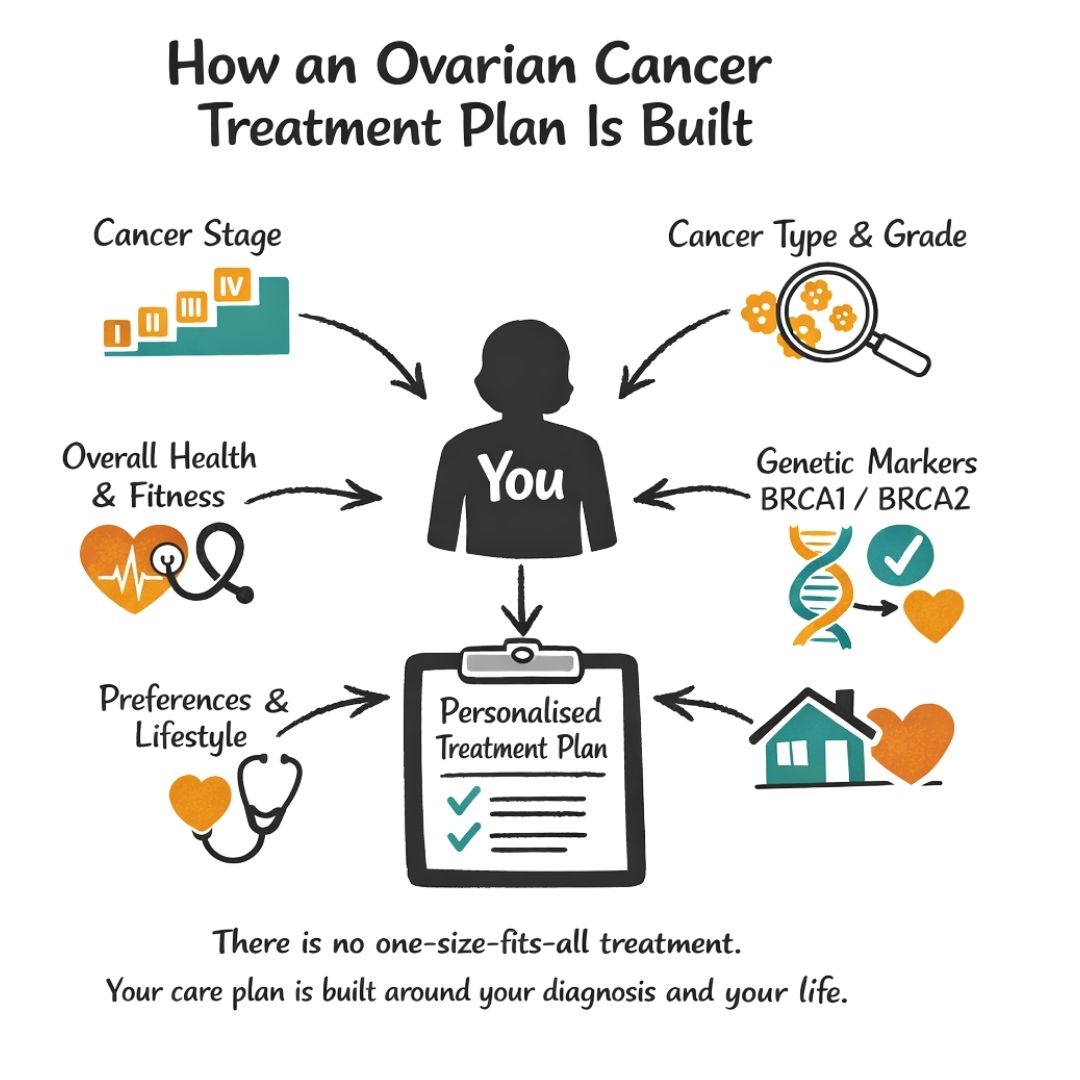
There's no single, "one-size-fits-all" recipe for treating ovarian cancer. Instead, your care will be a highly personalised strategy, carefully constructed by your specialists to give you the best possible outcome.
Think of your treatment plan as a bespoke blueprint. Your oncologist and surgical team will look at several key pieces of your health puzzle to decide on the most effective approach.
The main factors they'll consider are:
Your journey is entirely your own, shaped by your specific diagnosis and personal health. That's why the partnership between you and your oncology team is so vital. Together, you'll create a plan that’s not just based on the latest medical science, but also works for you as an individual.
This collaborative process ensures your treatment is both medically sound and manageable for you and your life.
For most women, the journey begins with surgery. This procedure has two critical goals: firstly, to confirm the exact stage of the cancer, and secondly, to remove as much of the visible tumour as possible in a process called 'debulking'.
After surgery, the next step is usually chemotherapy. This is designed to track down and destroy any microscopic cancer cells that might have been left behind or have spread elsewhere. This one-two punch of surgery followed by chemotherapy has long been the cornerstone of ovarian cancer care.
More recently, however, newer options like targeted therapy and immunotherapy have become game-changers. These modern medicines are often used as 'maintenance' treatments after chemo to help keep the cancer from coming back. They work by zeroing in on specific weaknesses in the cancer cells, which often means fewer side effects on your healthy tissues.
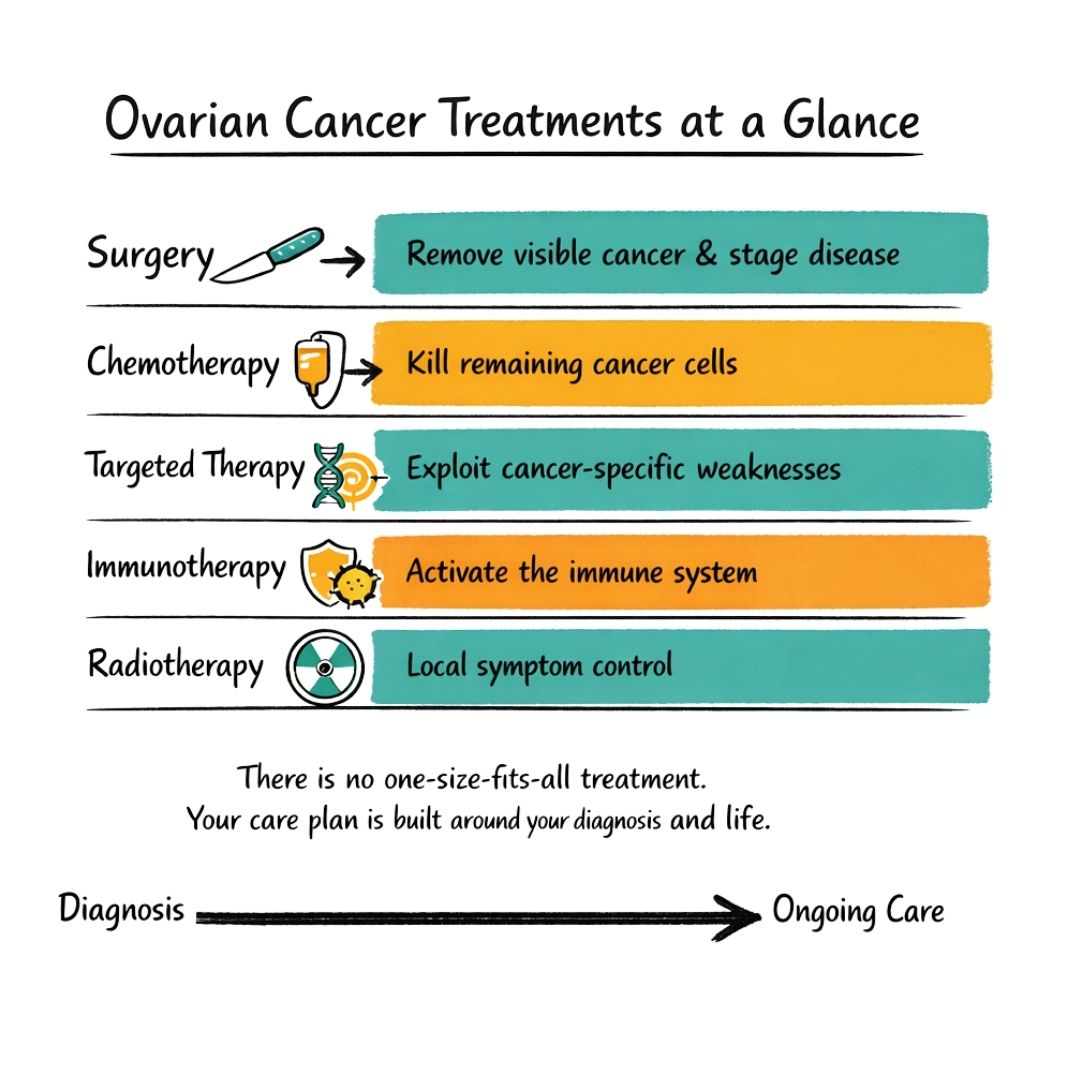
To give you a clearer picture, here’s a quick overview of how these different treatments fit together.
| Treatment Type | Primary Goal | Commonly Used For |
|---|---|---|
| Surgery | To remove as much of the tumour as possible (debulking) and accurately stage the cancer. | All stages, often the first step in treatment. |
| Chemotherapy | To kill any cancer cells remaining after surgery or to shrink tumours before surgery. | Nearly all stages, either after or before surgery. |
| Targeted Therapy | To block specific pathways that cancer cells use to grow and divide. | Often for advanced stages or as a maintenance therapy to prevent recurrence. |
| Immunotherapy | To help your own immune system recognise and attack cancer cells more effectively. | An option for some advanced or recurrent types, often in clinical trials. |
| Radiotherapy | To use high-energy rays to destroy cancer cells in a very specific area. | Used less often, but can help manage symptoms like pain from advanced cancer. |
This table provides a snapshot of the main tools in our arsenal against ovarian cancer. Each one has a distinct role to play, and your team will decide which combination is right for your unique situation.
For almost every woman diagnosed with ovarian cancer, surgery is the cornerstone of treatment. It’s often the very first step, serving two vital purposes: it helps doctors understand the cancer in detail, and it’s a powerful treatment in its own right. What happens in the operating theatre sets the stage for everything that follows, directly influencing how well other treatments like chemotherapy work.
This initial operation really has two main jobs. The first is staging, where the surgeon meticulously explores the abdomen and pelvis to see exactly where the cancer has spread. This detective work is absolutely essential for mapping out the most effective treatment plan after the surgery.
The second, and arguably the most important, goal is something called cytoreductive surgery, but most people know it as "debulking." This is where the surgeon works to remove as much of the visible tumour as possible.
Think of debulking surgery as a bit like meticulously weeding a garden. The aim is to clear out every visible trace of cancer, giving the healthy cells in your body the best chance to recover and thrive. It's an extensive procedure that nearly always involves removing the ovaries, fallopian tubes, and uterus (a total hysterectomy with bilateral salpingo-oophorectomy).
But the cancer can often spread. Depending on where it has travelled, the surgeon may also need to remove the lining of the abdominal wall (the omentum), lymph nodes, or even small sections of the bowel. The goal is always the same: leave behind no visible cancer, or at the very least, only tiny deposits.
The success of the surgery is ultimately measured by how much cancer is left behind. When a surgeon achieves "optimal debulking," it means no visible tumour larger than 1 cm remains. This is a critical milestone, as it's strongly linked to a better prognosis and a much better response to the chemotherapy that usually follows.
Reaching this goal is a huge factor in a patient's long-term outcome. It really highlights why it’s so important to be treated by a specialist gynaecological oncologist who has deep experience with these complex operations.
Knowing what’s coming can make a world of difference in easing the anxiety that naturally comes with major surgery. Your medical team will give you specific instructions, but most preparations involve a mix of practical and physical steps.
Common Pre-Surgical Preparations:
Taking care of these things beforehand helps ensure everything goes as smoothly as possible for you and your surgical team.
Recovery is a journey, not a race. It takes patience and a lot of self-compassion. For the first few days, you’ll be monitored very closely in the hospital. Your comfort is a top priority, so pain will be managed carefully, and the team will help you get up and moving as soon as it's safe.
Once you’re home, you will feel tired, and rest is non-negotiable. It’s so important to follow your surgeon's advice on activity levels, how to care for your wounds, and what you should be eating. Sleep can be particularly difficult for many people after an operation. We have a guide that offers practical tips on how to improve sleep and rest after cancer surgery.
Healing, both physically and emotionally, takes time—usually several weeks, and sometimes a few months. Be kind to yourself through this process and give your body the time it needs to recover properly before you move on to the next phase of your treatment.
After surgery, the next major step in treating ovarian cancer is usually chemotherapy. Think of it as a full-body mission to track down and eliminate any cancer cells that might be lingering. Unlike surgery, which is targeted to a specific area, chemotherapy is a systemic treatment, it travels through your bloodstream to reach every corner of your body, destroying cancer cells whether they're visible on a scan or are just microscopic stragglers.
The power of chemotherapy lies in its ability to attack cells that divide rapidly, a hallmark of cancer. While some healthy cells can get caught in the crossfire (which is what causes side effects), cancer cells are far more vulnerable to these powerful medicines.
For ovarian cancer, the gold standard is platinum-based chemotherapy. This almost always involves a combination of two drugs, carboplatin and paclitaxel (often known by its brand name, Taxol). This duo has proven incredibly effective over the years, particularly when given after surgery in what’s known as adjuvant therapy.
Chemotherapy isn't a single event but a carefully planned series of treatments called cycles. For ovarian cancer, a typical schedule involves one treatment session every three weeks, with a full course usually lasting for six cycles. This rhythm is crucial.
On treatment day, the drugs are delivered directly into a vein through an intravenous (IV) drip. This is followed by a few weeks of rest, giving your body’s healthy cells a much-needed chance to recover before the next round. This balance of attack and recovery is at the very heart of a successful chemotherapy plan. To get a better feel for the process, you can read our detailed guide on what chemotherapy involves.
This cycle of treatment and rest continues for several months. Throughout this time, your oncology team will be keeping a very close eye on you with regular blood tests and check-ins to manage any side effects and make sure the treatment is doing its job.
Starting chemotherapy soon after surgery is one of the most important factors in achieving the best possible outcome. Unfortunately, this isn't always straightforward. In many health systems, significant differences in waiting times can create a lot of anxiety and impact treatment journeys.
One study revealed that while a percentage of patients had surgery within a month of diagnosis, others had to wait three to four months, and a small percentage faced delays of five months or more. These aren't just numbers; they represent a critical window of opportunity. The combination of complete "debulking" surgery followed promptly by platinum-based chemotherapy is what gives patients the best chance of long-term survival.
Because chemo targets fast-growing cells, it can also affect healthy cells in places like your digestive tract, hair follicles, and bone marrow. This is why side effects happen, but it’s so important to remember that most are temporary and can be managed well with the right support.
Some common side effects from carboplatin and paclitaxel include:
Your oncology team is your greatest partner in managing side effects. Never hesitate to tell them exactly what you’re experiencing, no matter how small it seems. Open communication allows them to step in with the right support, whether that’s medication, a change in your treatment plan, or a referral to a dietitian or physiotherapist.
Beyond the traditional pillars of surgery and chemotherapy, we're now in an era of far more precise ways to tackle ovarian cancer. This is the world of targeted therapy, a sophisticated approach that marks a huge leap forward in how we treat the disease. These treatments are cleverly designed to find and attack specific features of cancer cells, which often means they can leave healthy cells alone.
If you think of chemotherapy as a sledgehammer, affecting any rapidly dividing cells it comes across, then targeted therapy is more like a precision key. It’s engineered to fit a specific ‘lock’ found only on cancer cells, effectively shutting down their ability to grow, divide, or repair themselves. This focused action is what makes it so powerful and, for many, a more tolerable treatment.
One of the most important breakthroughs in this field has been a class of drugs called PARP inhibitors. These medicines, which include olaparib and niraparib, have truly changed the game for managing certain types of ovarian cancer. Their secret lies in exploiting a key weakness in cancer cells.
Every cell, healthy or cancerous, has built-in mechanisms to repair damage to its DNA. But some ovarian cancers, especially those with a BRCA gene mutation, already have a faulty repair system. PARP inhibitors work by blocking a different repair pathway, essentially taking away the cancer cell’s last line of defence.
With no way to fix its own DNA damage, the cancer cell self-destructs. It’s a brilliant strategy that can stop the cancer in its tracks, and it’s why genetic testing has become so vital, it helps us identify exactly who is most likely to benefit from these drugs.
Targeted therapies like PARP inhibitors work by finding and exploiting a cancer cell's unique weaknesses. By blocking the cell's ability to repair its own DNA, these drugs can halt cancer growth, often with fewer side effects than traditional chemotherapy.
For many women, this approach is helping to shift ovarian cancer from an acute illness to a more manageable, long-term condition.
PARP inhibitors are most commonly used as a maintenance therapy. This means they are given after a patient has finished chemotherapy and is in remission. The goal is simple but incredibly meaningful: to extend that period of remission and delay, or even prevent, the cancer from returning.
For women with advanced ovarian cancer, this can mean taking a daily pill that keeps the disease under control for months or even years, offering a much better quality of life. It’s a proactive way to manage the cancer long-term.
While this approach has dramatically improved outcomes, its adoption can vary between different countries and healthcare systems. Despite this, the impact of these drugs is undeniable. Landmark clinical trials have shown that some patients who receive two years of PARP maintenance after their initial surgery and chemotherapy can remain recurrence-free for many years. You can read more about these crucial findings on ovarian cancer treatment advancements.
To better understand the difference, it helps to see these two approaches side-by-side. While both are powerful tools, they work in fundamentally different ways.
| Feature | Traditional Chemotherapy | Targeted Therapy (e.g., PARP Inhibitors) |
|---|---|---|
| Mechanism of Action | Attacks all rapidly dividing cells, both cancerous and healthy. | Identifies and attacks specific molecules or pathways unique to cancer cells. |
| Specificity | Non-specific, leading to more widespread side effects. | Highly specific, targeting the cancer's vulnerabilities. |
| Typical Side Effects | Nausea, hair loss, fatigue, increased infection risk. | Can include fatigue, nausea, and changes in blood counts, but often more manageable. |
| Best For | A broad range of cancers as a primary treatment. | Patients with specific genetic markers (like BRCA mutations) or after initial chemo. |
This table highlights how targeted therapies offer a more refined strategy, moving away from the broad-spectrum approach of chemotherapy towards a personalised plan based on the cancer's unique biology.
Not everyone with ovarian cancer is a suitable candidate for PARP inhibitors. The decision hinges on a few key factors.
Genetic testing of the tumour, and sometimes a blood sample, is essential. It tells your oncology team if your cancer has the molecular signature that makes it vulnerable to these drugs. This is personalised medicine in action, ensuring the right treatment is matched to the right person. While related, targeted therapy is a distinct field from other modern treatments; you can learn more about immunotherapy in our detailed guide to understand the differences.
There’s no one-size-fits-all approach to treating ovarian cancer. Instead, every treatment plan is carefully personalised around one critical piece of information: the stage of the cancer when it’s found.
Staging is simply a way for your medical team to understand how far the cancer has spread from where it first started. Think of it as the map that guides every decision, from the kind of surgery you’ll have to which combination of therapies will offer the best outcome. It explains why your treatment journey might look very different from someone else’s and provides the logic behind your oncologist's recommendations.
Put simply, the lower the stage number, the more localised the cancer is, which often means the path forward is more direct.
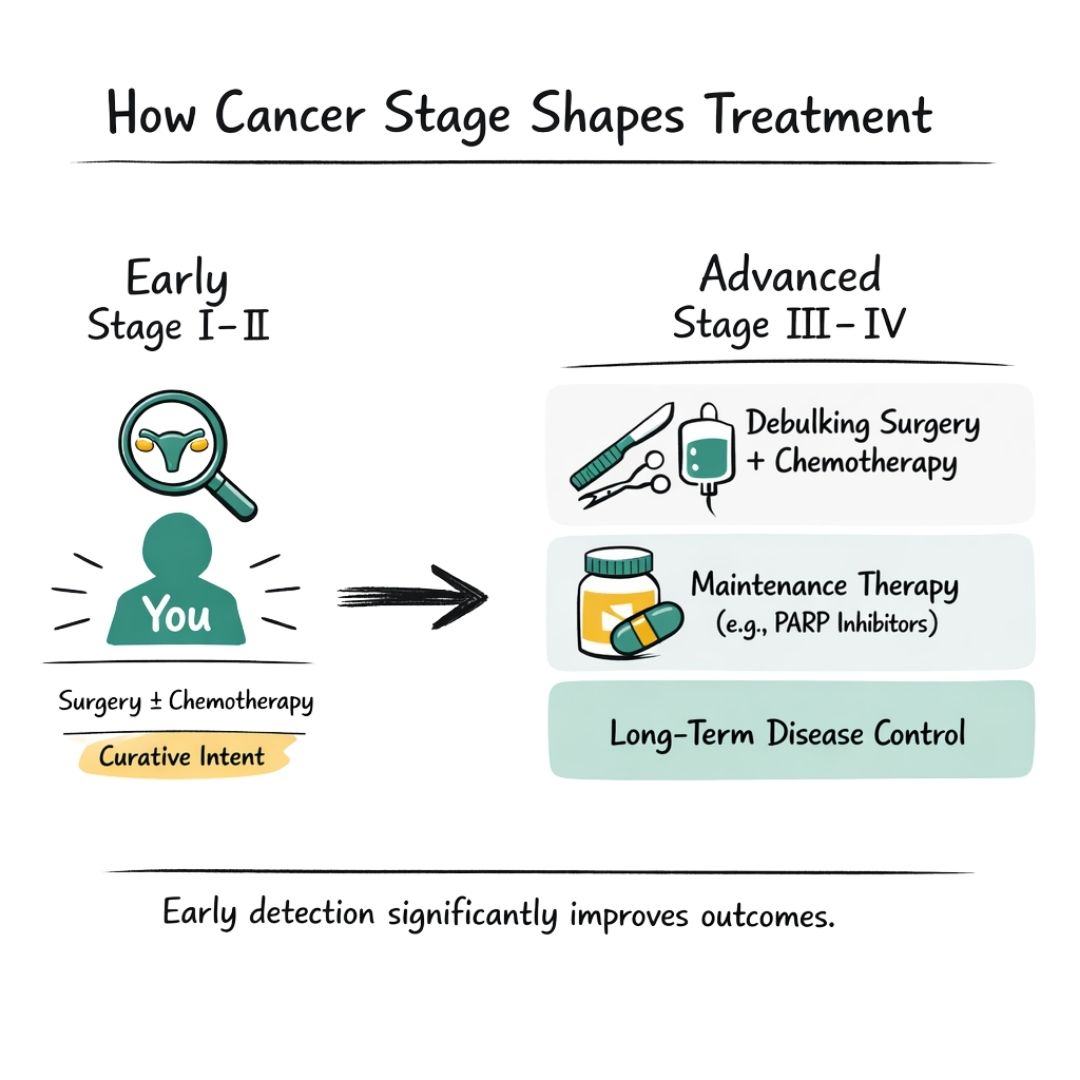
Catching ovarian cancer early, at Stage I or II, means the disease is still contained within the ovaries, fallopian tubes, or other nearby tissues in the pelvis. The primary goal here is usually a cure, so the treatment strategy is direct and highly focused.
Surgery is the absolute cornerstone of care for early-stage disease. A specialist gynaecological oncologist will perform staging surgery, which involves removing the uterus, fallopian tubes, and both ovaries. During the operation, they also take small tissue samples from the surrounding abdomen and pelvis to be certain the cancer hasn’t spread. For many women with Stage I cancer, this surgery might be all the treatment they need.
In some cases, however, chemotherapy is recommended after surgery. This is usually if the cancer is a higher grade (meaning the cells look more aggressive under a microscope) or has reached Stage II. Known as adjuvant chemotherapy, it works like an insurance policy, designed to wipe out any stray microscopic cancer cells that could have been left behind.
Unfortunately, most ovarian cancers are found at an advanced stage (Stage III or IV). This means the cancer has already moved beyond the pelvis and into the abdominal lining (Stage III) or has travelled to distant organs like the liver or lungs (Stage IV). Treating advanced cancer is more complex and calls for a combination of intensive therapies.
Surgery is still a vital first step, but the aim shifts to what's called "debulking" or cytoreductive surgery—the surgeon’s goal is to remove as much of the visible tumour as they possibly can. This is almost always followed by a demanding course of platinum-based chemotherapy. Sometimes, the order is flipped: chemotherapy may be given before surgery (neoadjuvant chemotherapy) to shrink the tumours first, making them easier to remove.
For many women with advanced ovarian cancer, treatment doesn’t stop there. Maintenance therapy, often using targeted drugs like PARP inhibitors, has become a key part of the long-term plan. These medications are taken after chemotherapy has successfully pushed the cancer into remission, helping to prevent or delay its return.
The impact of staging on survival is profound. Survival rates for ovarian cancer detected at stages I-II can be as high as 95%. This figure drops sharply for advanced stages, where many cases are first identified. This disparity highlights why early detection is so critical. For more details on this, you can explore in-depth statistics about UK ovarian cancer outcomes.
When cancer spreads to distant parts of the body, it is known as metastatic cancer, which is the defining characteristic of Stage IV. You can learn more by reading our guide on understanding metastatic cancer. Ultimately, your cancer's stage dictates the intensity and combination of treatments, shaping a plan designed to be as effective as possible for your specific situation.
The journey through ovarian cancer treatment is about so much more than just the medical side of things. It's a demanding path, physically and emotionally, and true care means supporting the whole person. Dealing with the mental weight of a diagnosis is every bit as crucial as managing the physical side effects of treatment.
This is where a solid support network really comes into its own. Think of it as your personal community – a mix of family, friends, healthcare professionals, and brilliant organisations that create a safety net, so you never have to feel like you're going through this alone.
The emotional ripple effect of a cancer diagnosis can be huge, often bringing a wave of anxiety, fear, and uncertainty. The first step is simply acknowledging that these feelings are real and valid. Many people find that getting some dedicated psychological support makes an enormous difference.
Remember, asking for emotional support is a sign of strength, not weakness. Your mental health is a critical component of your overall treatment and recovery.
Navigating the emotional landscape of cancer is a unique challenge. For a deeper dive, you might find our article on mental health support strategies really helpful.
Beyond the emotional toll, cancer treatment throws up some very real-world challenges that can turn daily life on its head. Juggling work, family, and finances all while undergoing treatment requires careful planning and knowing where to turn for help.
Some of the most common practical hurdles include:
Dozens of trusted charities and organisations are out there, offering everything from expert-led webinars to thoughtful care packages designed to provide comfort and practical help. They exist to make sure you have the support you need, whenever you need it.
When you're facing a diagnosis like ovarian cancer, it's natural to have a lot of questions. We've gathered some of the most common ones here to give you clear, straightforward answers and help you feel more prepared for the road ahead.
For most women, the initial treatment plan is a powerful one-two punch: surgery followed by chemotherapy.
The first goal is to surgically remove as much of the cancer as possible. This operation is often called cytoreductive or 'debulking' surgery, and its aim is to leave no visible tumours behind in the abdomen and pelvis.
After surgery, you'll typically start a course of platinum-based chemotherapy, usually a combination of carboplatin and paclitaxel. This is designed to track down and destroy any cancer cells that were too small to be seen and removed during the operation. Sometimes, if the cancer is more advanced, your doctors might decide to start with chemotherapy to shrink the tumours first, making the subsequent surgery more effective.
There's no single timeline, as everyone's journey is different and depends on the stage of the cancer and their personalised treatment plan. However, you can think of it in phases.
The initial, most intensive part of treatment, surgery plus the standard six cycles of chemotherapy, usually takes about six months.
After that, your oncologist might recommend what's called 'maintenance therapy'. This often involves a targeted drug, like a PARP inhibitor, which you might take for two years or even longer to help prevent the cancer from coming back. Beyond that, you'll move into a long-term follow-up phase with regular check-ups that will continue for many years.
It's a scary thought, but yes, there are absolutely effective options if ovarian cancer returns. The best path forward really depends on a few things, especially how long it's been since you finished your first round of treatment.
When cancer returns after being in remission, doctors call it recurrent cancer. Your oncology team will create a new plan tailored specifically to this new situation, and it may look quite different from your first treatment.
Depending on your circumstances, you might be offered another course of chemotherapy, perhaps using different drugs this time. Other powerful tools include targeted therapies, immunotherapy, or even joining a clinical trial to get access to the latest medical innovations. In some cases, another surgery might be a valuable option. Your team will look at everything carefully to map out the most effective strategy for you.
We strongly advise you to talk with a health care professional about specific medical conditions and treatments.
The information on our site is meant to be helpful and educational but is not a substitute for medical advice.
Despite PCOS And Cancer, Sarah Miraculously Conceived And Delivered A Healthy Baby, Showing Hope Thrives Against All Odds.
Explore the prognosis for ovarian cancer in our guide. Learn about survival rates, influencing factors, and what to expect after diagnosis.
Ovarian cancer what are the symptoms: Learn early signs, risk factors, and how to talk to your doctor.