When you first hear a term like the colorectal cancer cure rate, it’s completely normal to feel a mix of hope and confusion. But what does it actually mean? Put simply, it’s the percentage of people who, after completing their treatment, have no remaining signs of cancer and are not expected to see it return. But as with most things in medicine, the real story is a bit more delicate than a single number.
Getting a cancer diagnosis often feels like you're suddenly expected to learn a whole new language, one filled with complex medical terms and statistics. The first step in making sense of your own journey is to get to grips with what these numbers truly represent. It’s about turning abstract data into something you can understand and relate to.
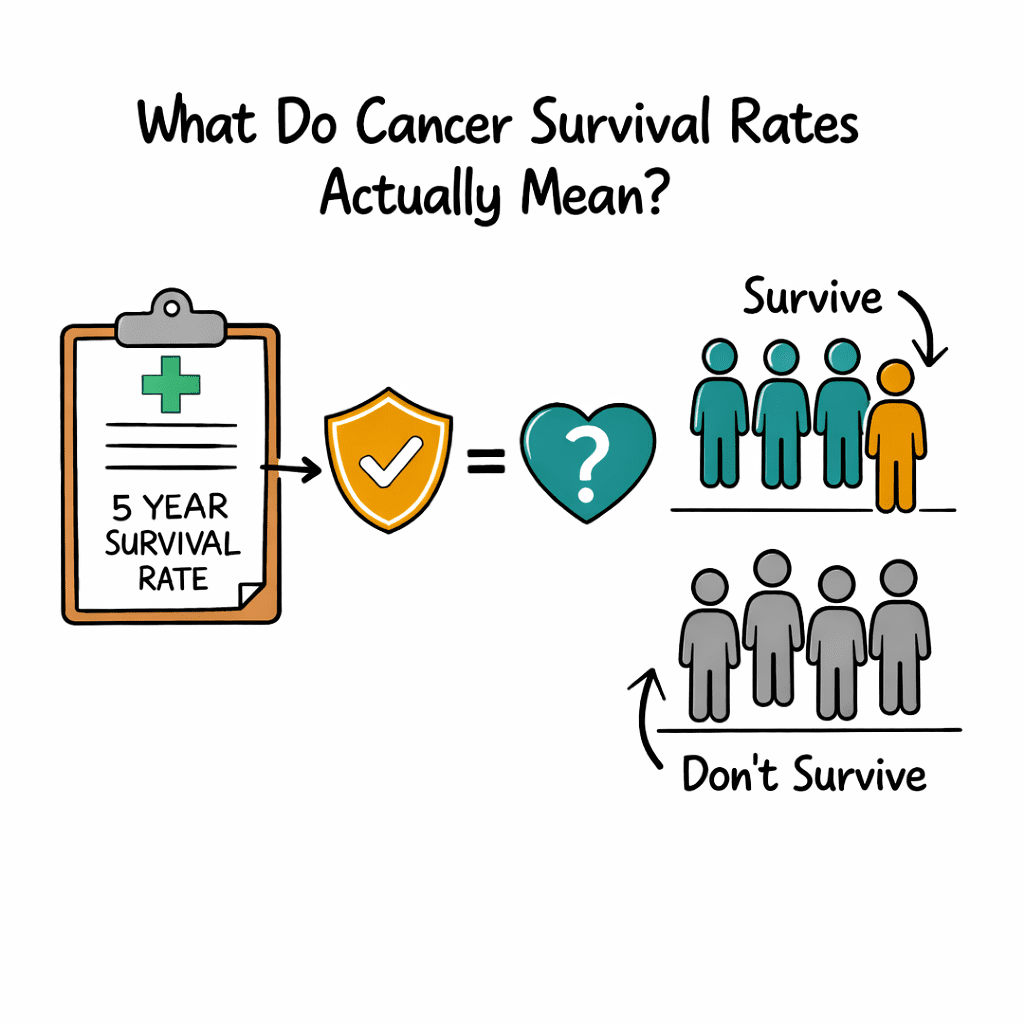
In oncology, the words doctors use are chosen with incredible care. You'll probably hear your team talk about remission far more often than a 'cure', especially in the first few years after treatment. It's an important distinction to grasp.
A good way to think about it is that remission is a major victory in the battle, whereas a cure suggests the war itself is considered won.
One of the most common statistics you’ll come across is the 5-year relative survival rate. It sounds complicated, but the idea behind it is fairly straightforward. This rate compares people who have the same type and stage of cancer with people in the general population.
For instance, if the 5-year relative survival rate for a certain stage of colorectal cancer is 90%, it means that people diagnosed with that cancer are, on average, about 90% as likely as people without the cancer to live for at least five years.
It’s very important to remember that these are just statistics, drawn from the experiences of thousands of people in the past. They are a guide, not a crystal ball that predicts your individual outcome. A diagnosis of cancer is not a death sentence. For more on this, our article explaining why a cancer diagnosis is not a death sentence can offer some valuable perspective.
Think of survival rates like a broad weather forecast for a whole region. It can tell you about the general climate, but it can’t predict the exact weather for your street on a specific day. Your personal journey will be shaped by many factors unique to you, and we’ll explore those throughout this guide.
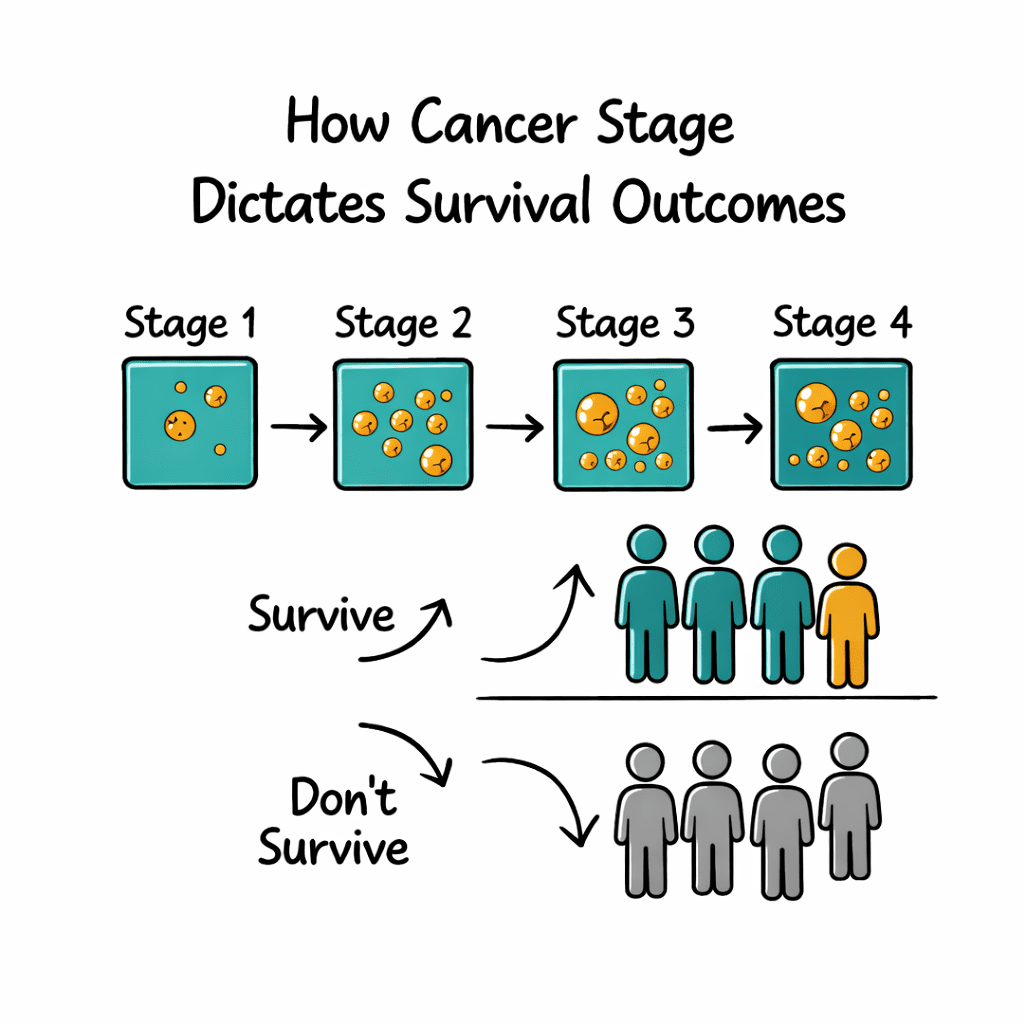
When we talk about the odds of beating colorectal cancer, one factor stands out above all others: the stage at which the disease is found. Staging is simply the process doctors use to map out how much cancer is in the body and where it has spread. It’s a universal language that allows your medical team to understand the disease’s footprint and plan the most effective line of attack.
Think of it like discovering a small fire. If you catch it while it's still in the wastepaper bin, it's contained and easy to handle. That’s like a Stage 1 cancer. But if that fire has already spread to the curtains, it’s a more serious problem requiring a much bigger response. And if it’s reached multiple rooms in the house, the situation is far more complex and dangerous. This is precisely what staging does. It assesses how far the cancer has travelled from where it first began.
Oncologists generally classify colorectal cancer into four main stages, from 1 (the least advanced) to 4 (the most advanced). Each one gives a clear snapshot of the tumour’s size and whether it has started to spread. Grasping what these stages mean is vital for understanding survival statistics and why catching it early is so critical.
This progression from a localised issue to a widespread one is exactly why the stage at diagnosis is the cornerstone of any prognosis. The earlier it's found, the more treatment options are on the table and the better the chance of a complete cure.
The relationship between cancer stage and survival is stark. When you look at the 5-year survival rates, the numbers drop significantly as the stage increases. The data shows just how different the outlook can be depending on when the cancer is caught.
It's important to remember that a diagnosis is not just a statistic, but statistics provide vital context. The most powerful message they send is this: early detection saves lives.
The table below gives a clear picture of how many people are likely to survive their cancer for five years or more, based on the stage when it was first diagnosed.
This table shows the estimated percentage of people who survive their cancer for five years or more, broken down by the stage at which it was diagnosed.
| Cancer Stage | Description | Approximate 5-Year Survival Rate |
|---|---|---|
| Stage 1 | Cancer is localised to the inner bowel wall. | Over 90% |
| Stage 2 | Cancer has grown through the bowel wall. | Around 80% |
| Stage 3 | Cancer has spread to nearby lymph nodes. | Around 65% |
| Stage 4 | Cancer has spread to distant organs (metastasised). | Less than 15% |
These figures tell a powerful story. For those diagnosed at Stage 1, the outlook is excellent. Unfortunately, some countries face real challenges here. Research reveals that in the UK, for instance, only 14.4% of bowel cancer cases are diagnosed at this earliest, most treatable stage.
Worryingly, 29.7% of cases in the UK aren't found until Stage 4, where the chance of surviving for five years plummets. You can read more about these findings from the International Cancer Benchmarking Partnership on the Bowel Cancer UK website.
This contrast is the single most important takeaway. It underscores why national screening programs and public awareness campaigns aren't just helpful, but are absolutely life-saving. Recognizing potential symptoms and getting them checked without delay gives you the very best chance of an early diagnosis and, with it, a successful cure.
When you're faced with a diagnosis, statistics can feel cold and overwhelming. But if we take a step back and look at the bigger picture, the story of colorectal cancer is actually one of incredible hope and medical progress. The survival rate isn't a fixed number; it’s a figure that has been climbing steadily for decades, a true testament to the dedication of researchers and doctors worldwide.
For anyone recently diagnosed, it’s vital to know that today's treatments and outcomes are a world away from what they were even ten or twenty years ago. The outlook has genuinely improved, thanks to major breakthroughs in how we find and fight this disease.
This progress isn't a happy accident. It's been built on key advances that have fundamentally changed our approach to colorectal cancer, with improved screening and more effective treatments leading the charge.
Think of it like upgrading a city's fire safety. First, you install better smoke detectors in every building (early screening) to catch fires when they’re small and manageable. At the same time, you give the firefighters more advanced tools and training (better treatments) to tackle any blaze that does break out. Both are crucial for saving lives, and the same principle applies to cancer care.
The narrative around colorectal cancer has moved from one of fear to one of proactive management and growing success. This isn't just a number on a chart; it represents millions of people who are living longer, fuller lives after their diagnosis.
The data tells a clear and encouraging story. In the UK, for instance, long-term survival for bowel cancer has soared over recent decades. Five-year survival rates for adults in England and Wales have more than doubled since the early 1970s. This remarkable increase is largely thanks to things like the NHS Bowel Cancer Screening Programme and huge innovations in chemotherapy and targeted therapies. You can explore more of these UK survival statistics on Cancer Research UK.
This isn't just a UK phenomenon, either. We see similar positive trends in many countries across the globe, proving that sustained investment in medical research and public health delivers real, life-saving results.
While the overall trend is positive, the speed of progress isn't the same everywhere. A few key factors explain these differences:
Understanding these variables helps fuel global efforts to close the gaps in care. As you navigate your own journey, our guide on choosing a cancer centre for precision treatment can offer some useful pointers. This spirit of global collaboration is what continues to push survival rates higher, bringing more hope to patients and their families with each passing year.
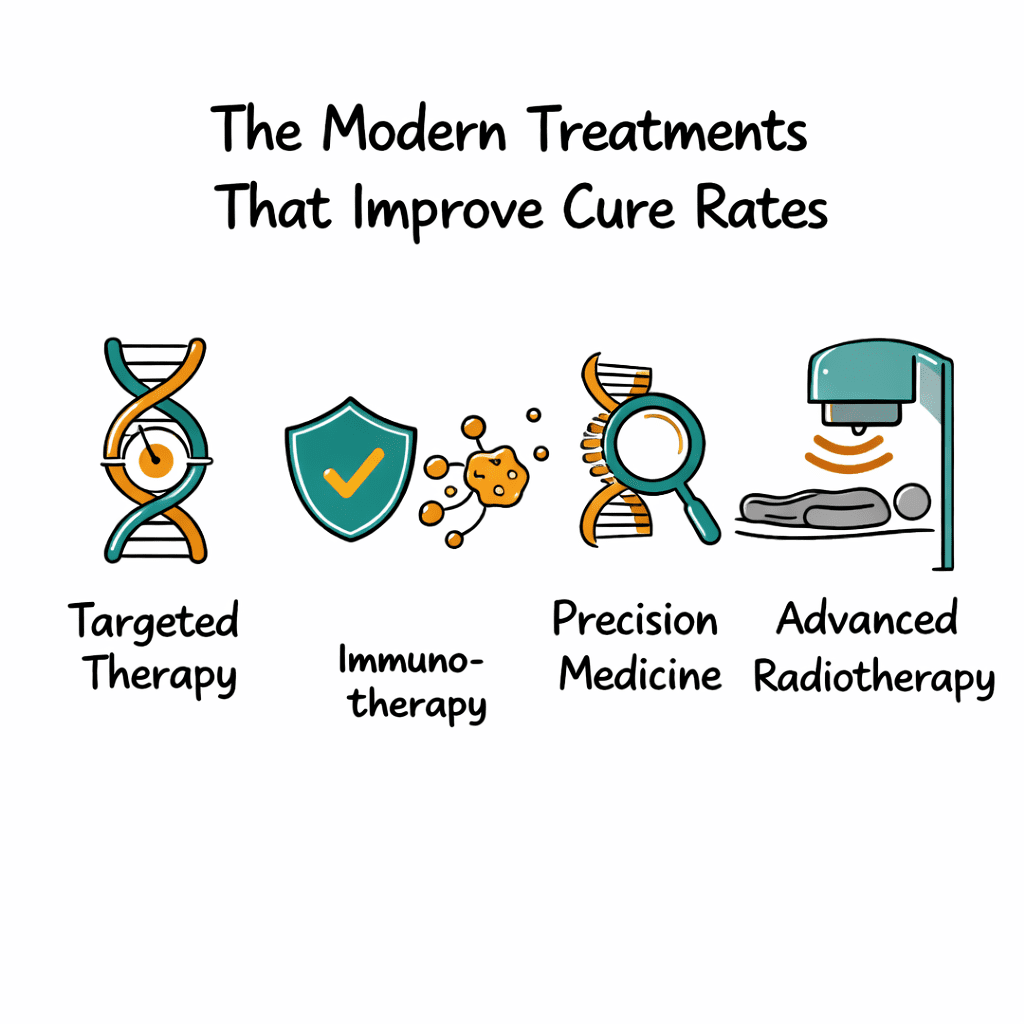
The encouraging rise in the colorectal cancer cure rate isn’t just a happy accident. It’s the direct result of a constantly evolving toolkit of medical treatments, each one designed to tackle the cancer in a specific way. Getting to grips with these therapies helps demystify the treatment plan your oncology team puts together and shows how everything works in concert towards the goal of a cure.
These treatments are what's powering those improving survival statistics. They represent decades of research put into practice, giving patients more effective options than ever before. Let’s break down the main tools in the fight against colorectal cancer.
For localised colorectal cancer, meaning Stages 1 to 3, surgery is the absolute cornerstone of treatment. It offers the best possible chance of a complete cure. The goal is straightforward but demands incredible skill: to remove the entire tumour, a small margin of healthy tissue around it, and any nearby lymph nodes to check if the cancer has started to spread.
Think of it like carefully cutting rot out of a piece of wood. You don't just scoop out the visibly damaged part; you also take a clean border around it to make sure no unseen decay is left behind. This is exactly what surgeons aim for to stop the cancer from coming back. For many people with early-stage disease, a successful operation might be the only treatment they need.
Even after a perfectly executed operation, it’s possible for microscopic cancer cells to remain, totally invisible to the naked eye or on scans. To tackle this risk, doctors often recommend adjuvant therapies. These are extra treatments given after the main one to hunt down any stray cells and lower the chance of the cancer returning.
They essentially act as a 'mop-up crew'. The main adjuvant therapies are:
A good way to think about it is to imagine surgery as weeding a garden. You’ve pulled out the main weed (the tumour), but you might then treat the soil with a weedkiller (chemotherapy or radiotherapy) to make sure no hidden roots or seeds can grow back.
If you or a loved one are facing chemotherapy, understanding the specific drugs is really helpful. Our guide offers more detail on the widely used Folfox chemo treatment for colorectal cancer, explaining exactly how it works and what to expect.
In recent years, the treatment landscape has expanded dramatically, especially for more advanced or difficult-to-treat cancers. These newer approaches are often much more precise, targeting the unique biological characteristics of the cancer cells themselves.
Two of the most important breakthroughs are:
It is these advanced treatments that are a key reason why the colorectal cancer cure rate continues to climb. By combining these powerful tools; surgery, chemotherapy, radiotherapy, and these newer precision agents, oncology teams can create a highly effective, multi-pronged attack plan, giving every patient the best possible chance of a cure.
While a cancer's stage gives us a solid starting point for understanding the colorectal cancer cure rate, it's far from the whole story. Population statistics are a powerful tool, but your personal journey is entirely unique, shaped by a distinct mix of factors.
Think of it this way: the stage is like the model of a car in a race. It’s a huge factor, of course, but the driver’s experience, the specific tuning of the engine, and even the weather on the day all play a massive part in the final outcome.
This is where the real power of personalised medicine shines. It allows us to move beyond broad categories and look at the intricate details of your cancer and your overall health. Understanding these elements is key to figuring out why two people with the exact same stage of cancer might follow very different treatment paths and see different results.
At a molecular level, not all colorectal cancers are created equal. Your oncologist will almost certainly run tests on the tumour tissue itself, searching for specific biological and genetic markers. These markers act like unique fingerprints, revealing how the cancer is likely to behave and which treatments might be its Achilles' heel.
Some of the key markers they look for include:
This detailed biological profile helps your medical team craft a strategy that’s specifically designed to exploit your cancer's unique weaknesses, rather than relying on a one-size-fits-all approach.
Your general health when you’re diagnosed, something doctors often call your performance status, is another critical piece of the puzzle. It stands to reason that someone who is otherwise fit and well will be better equipped to handle intensive treatments like major surgery or a tough chemotherapy regimen. On the other hand, a person with other serious health conditions—or comorbidities—might need a modified or gentler treatment plan.
Your age and health status don't just determine if you can have a certain treatment; they help your doctors balance the potential benefits against the possible side effects, ensuring the path forward is both effective and manageable for you.
For instance, an older person might have underlying heart or kidney issues that make certain chemo drugs too risky. In a case like this, the oncology team gets creative, finding alternative treatments that are just as effective but put less strain on the body.
Beyond the purely medical, your personal situation plays a real role. The support you have from family and friends, your own mental and emotional resilience, and your ability to access care all contribute to your overall wellbeing during what is undoubtedly a challenging time.
While the medical side is the priority, it's also wise to consider practical factors. Financial preparedness, for example, can make a significant difference, and options like critical illness insurance can provide crucial support during your treatment journey.
Ultimately, your prognosis is a dynamic picture, influenced by many interconnected elements. It’s a blend of the cancer’s specific characteristics and your own personal health landscape, all navigated by a skilled team of experts dedicated to finding the very best path forward for you.

Talking to your doctor about your prognosis can feel daunting. The room often fills with complex terms and statistics, and it's completely normal to feel a bit lost. But this conversation is one of the most important you’ll have—it’s where you become a true partner in your own care.
The idea is to get past that single, overwhelming question of "What are my chances?" and open up a real dialogue. With the right questions, you can help your care team translate broad statistics into information that actually makes sense for you and your life.
When you sit down with your oncology team, they have a wealth of information specific to your diagnosis. To get a clear picture, it helps to come prepared with a few questions. This way, you can make sure your biggest concerns are addressed and you understand how the general colorectal cancer cure rate applies to you personally.
Here are a few questions you might want to ask:
It’s a great idea to write these questions down before your appointment. When you’re in the room, it's so easy to forget what you wanted to ask. A simple list in your hand or on your phone can make all the difference, helping you leave with the clarity you need.
The way your doctor responds will give you crucial context. It's important to remember that no clinician can predict the future with 100% certainty. Their role is to interpret the evidence we have and explain how it applies to your case, giving you a sense of the most likely path forward.
Listen for the details that add colour to the numbers. For instance, they might explain that your good overall health makes you an excellent candidate for a more aggressive treatment that has a high success rate. Or, they might discuss how they're adjusting a plan to work around another health condition you have.
This isn't just about them giving you information; it's about understanding the 'why' behind your personalised treatment strategy. It’s your chance to feel confident in the plan and see how every decision is made to give you the best possible outcome. This kind of collaboration is key to navigating your cancer journey with confidence.
When you’re trying to understand a cancer prognosis, it’s completely normal for a lot of questions and worries to pop up. Let’s break down some of the most common queries with clear, straightforward answers to help you make sense of it all.
People often use the terms 'remission' and 'cure' interchangeably, but in the medical world, they mark different points on the cancer journey. Think of it like a major storm passing.
Remission is when the storm has stopped. It means the signs and symptoms of cancer have dramatically reduced or have vanished altogether. This is the primary goal of treatment and a huge milestone to reach.
A cure, on the other hand, is when experts are confident the storm season is well and truly over. Doctors are very careful with this word. They generally only consider someone cured after they have been in complete remission for at least five years. After this point, the chance of the cancer coming back is very small.
So, getting into remission is the crucial first step on the road to what can eventually be called a cure.
This is a really common and understandable point of confusion, but the answer is no, it doesn’t mean that directly. A 5-year survival rate is a population statistic, not a personal prediction.
What it really means is that, out of every 100 people with a similar stage and type of cancer, 60 are alive five years after their diagnosis. It’s a statistic that helps doctors understand the bigger picture, not a crystal ball for your individual future.
Your own outcome is influenced by all the unique factors we've discussed – the specific biology of your tumour, your general health, and how your body responds to treatment. Many people live well beyond five years, and successful treatment often leads to a full cure.
It's a complicated picture, but one of the biggest reasons comes down to when the cancer is found.
Countries with strong national screening programmes and widespread public awareness tend to catch more cancers at an earlier, more treatable stage. This single factor can make a massive difference to their national survival statistics.
Other things also play a part, like differences in healthcare systems, how easily people can access the latest treatments, and even the way data is recorded. There's a constant global effort to share knowledge and close these gaps so everyone can benefit from the best available care. If you're concerned about spotting potential issues, our guide on common colon cancer symptoms provides more detailed information.
We strongly advise you to talk with a health care professional about specific medical conditions and treatments.
The information on our site is meant to be helpful and educational but is not a substitute for medical advice.
Cancer doesn’t discriminate in age, and I want to be a young advocate for others to know that it can happen to anyone.
Learn the key bowel cancer symptoms, from common red flags to subtle signs. This guide explains when to see a doctor and what to expect next.
Is bowel leakage a sign of cancer? This guide helps you understand the causes of fecal incontinence, recognize warning signs, and know when to consult a doctor.