Knowing what to look for is the first and most critical step in catching bowel cancer early. The most common signs to be aware of are blood in your poo, a lasting change in your toilet habits, losing weight for no reason, feeling knackered all the time, and a pain or lump in your tummy. Spotting these and having a chat with your doctor can make all the difference.
Thinking about bowel cancer can feel a bit scary, but knowledge really is power. Getting to grips with the potential symptoms isn't about causing alarm; it's about empowering you to take control of your own health.
It helps to think of your body as a finely tuned machine, unusual signs are simply alerts that something might need a check-up. By learning what to look for, you can act early and with confidence.
This awareness is vital because catching bowel cancer in its initial stages dramatically improves the chances of successful treatment. It's often curable when found early. On the other hand, ignoring persistent changes gives the problem more time to grow. Our goal here is to replace fear with facts and help you tune in to what your body might be trying to tell you.
We'll dive into these in more detail later, but it's useful to start with the most common red flags. Keeping these five signs in mind gives you a solid foundation for being proactive about your health.
A major public health challenge is the worrying gap in public awareness. Recent research found that a high percentage of people can't name a single symptom of bowel cancer, even though it's one of the most common cancer killers in countries like the UK.
This startling statistic highlights just how crucial it is for everyone to understand these signs. When you see a doctor, they often use a structured template for review of systems to make sure nothing gets missed. Knowing the key symptoms yourself means you can have a much more informed conversation.
For more personal stories and practical advice, you can also read our guide on surviving bowel cancer and life after treatment.
When it comes to your health, knowing what to look out for is the first and most powerful step you can take. While the signs we're about to discuss can point to many other, less serious conditions, understanding them gives you the confidence to speak up and get checked out. Let's walk through the five most common symptoms of bowel cancer, breaking down what they might look and feel like day-to-day.
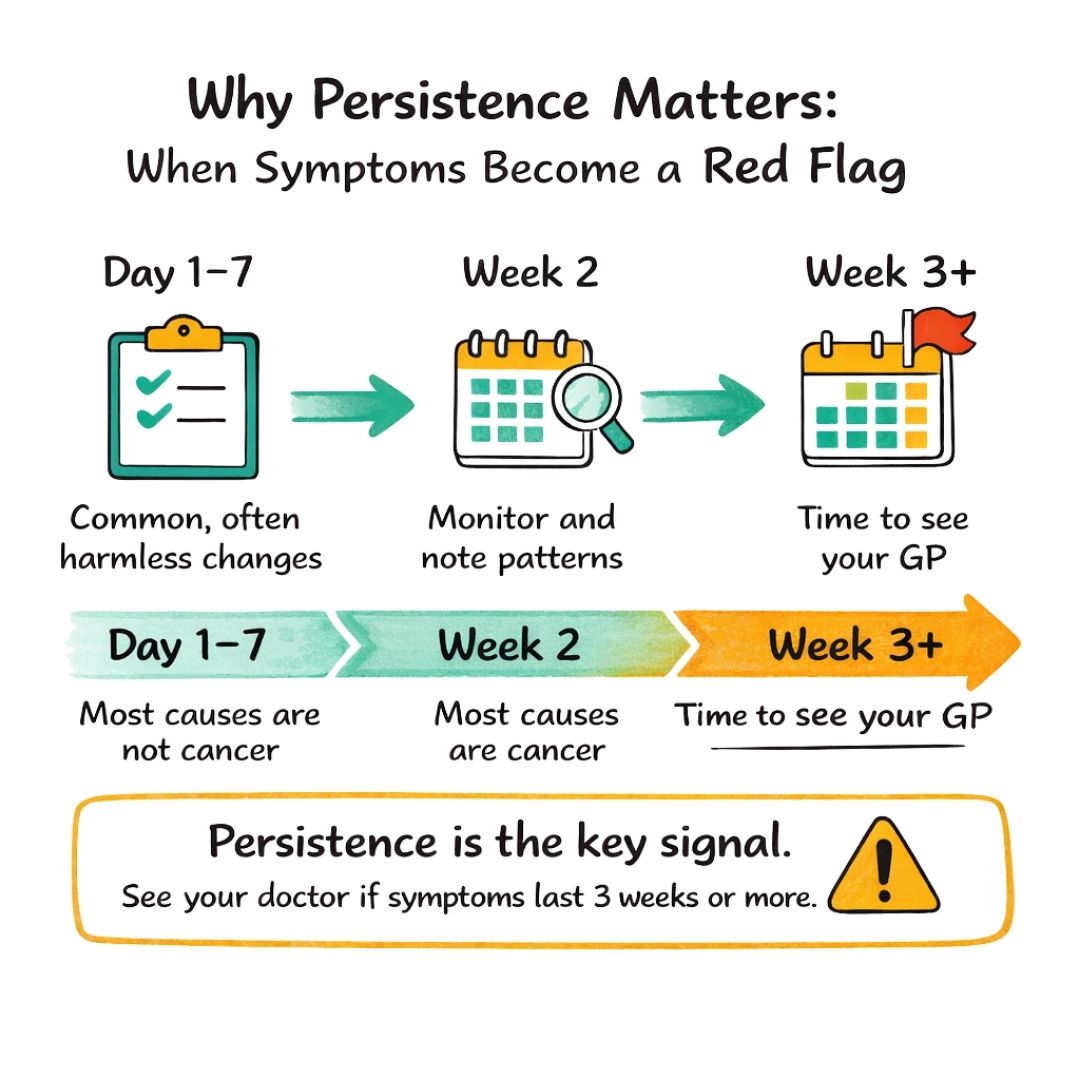
The single most important word to remember with any of these symptoms is persistence. A day or two of feeling off your game is perfectly normal. It’s when a change hangs around for three weeks or more that your body is signalling it's time to have a chat with a professional.
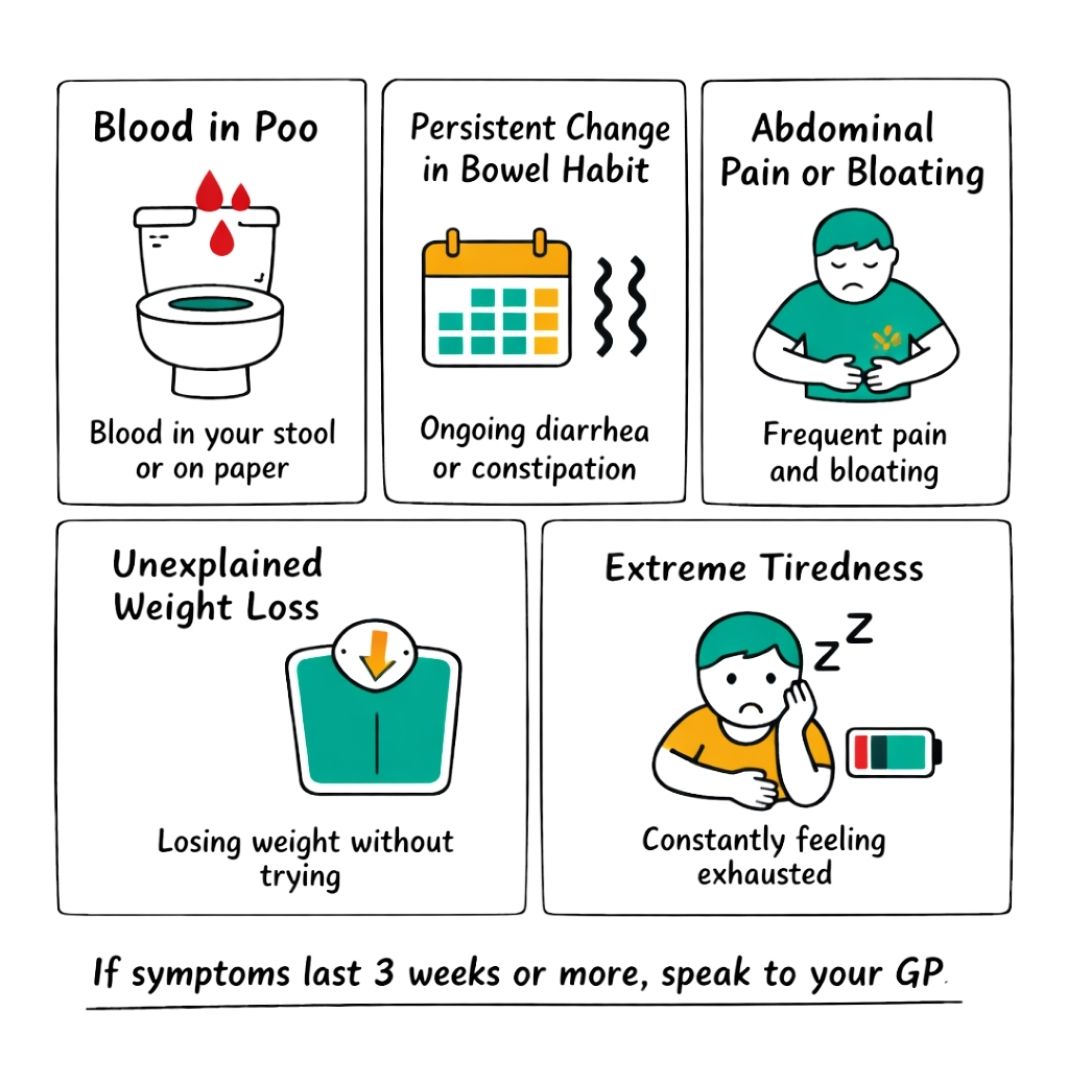
This table provides a quick-reference guide to the five main signs of bowel cancer. It's designed to help you understand what to look for and why each symptom is a potential red flag that shouldn't be ignored.
| Symptom | What to Look For | Why It Matters |
|---|---|---|
| A Persistent Change in Bowel Habit | Needing to go to the toilet more often, having looser stools (diarrhoea), or feeling like you haven't fully emptied your bowels. | A tumour can obstruct the bowel or affect its function, leading to noticeable and lasting changes in your normal toilet routine. |
| Blood in Your Stools | Seeing bright red or dark, almost black, blood mixed in with your poo or on the toilet paper after you wipe. | Bleeding is a direct sign of an issue in the bowel. While often caused by piles, it should always be investigated to rule out cancer. |
| Abdominal Pain or Discomfort | A lingering pain, ache, or cramp in your tummy area, often linked to eating. It might feel like bloating or trapped wind that won't go away. | A growing tumour can cause a blockage or inflammation in the abdomen, leading to persistent discomfort. |
| Unexplained Weight Loss | Losing a noticeable amount of weight over a few months without changing your diet or increasing your exercise. | The cancer can alter your body's metabolism, reduce your appetite, or interfere with nutrient absorption, causing you to lose weight. |
| Persistent Fatigue and Tiredness | An overwhelming sense of exhaustion that isn't helped by sleep or rest. You might also feel breathless or look pale. | A tumour can bleed slowly, leading to iron-deficiency anaemia. This lack of red blood cells starves your body of oxygen, causing extreme fatigue. |
Remember, seeing one of these signs doesn't automatically mean cancer. But it does mean it's time to get a professional opinion. Your GP is there to help you figure out what's going on.
This is often one of the first things people notice, but it's also one of the easiest to brush aside. "A change in bowel habit" is a pretty vague phrase, so what does it actually mean? Simply put, it’s any new pattern that is different from your normal.
Think of your usual routine as a personal baseline. A persistent change is when you deviate from that baseline and stay there.
This could show up in a few different ways:
We're not talking about a one-off bout of diarrhoea after a questionable curry. This is a consistent shift that doesn't seem to right itself after a few weeks.
Spotting blood in the toilet bowl or on the paper can be scary, but try not to panic. The most common culprit is actually haemorrhoids (piles). That said, it’s a symptom you should never, ever ignore.
When it's linked to bowel cancer, the blood can look different depending on where the bleeding is happening:
No matter the colour or the amount, any bleeding that you can't explain needs to be discussed with your doctor.
Key Takeaway: While piles are a very common reason for rectal bleeding, you can't assume that's the cause without getting checked. Always let a doctor make that call.
We all get tummy aches, but this is different. We're talking about a persistent pain, ache, or cramp in your abdominal area that sticks around or keeps coming back for no obvious reason.
This discomfort is often related to eating and can come with a side of bloating or feeling uncomfortably full. For some, it feels just like trapped wind that they can't seem to shift. The pain might be in one specific area or feel more spread out. If you've got a nagging pain that just won't quit, it's time to book that GP appointment.
If you're losing weight without trying, meaning no changes to your diet or exercise habits—it's a significant red flag for several health conditions, bowel cancer included. This isn't about a pound or two here or there; it’s a noticeable, unintentional drop in weight over several months.
A tumour can trigger weight loss by changing your metabolism, suppressing your appetite, or simply stopping your body from absorbing all the nutrients from your food. If you notice your clothes are getting looser and the number on the scales is dropping without any effort from you, it's vital to get it investigated.
This isn’t your standard end-of-a-long-week tiredness. The fatigue that can come with bowel cancer is a profound, overwhelming exhaustion that sleep and rest just don't seem to fix. It can be completely draining and make it tough to get through your normal daily activities.
Often, this deep-seated tiredness is a classic sign of anaemia. Tumours in the bowel can bleed slowly over a long period, causing a gradual loss of blood. This depletes your body's iron stores and leads to a low red blood cell count. Without enough red blood cells to carry oxygen around, you're left feeling exhausted. You can discover more about the link between anaemia and cancer in our detailed guide. Other signs of anaemia include looking pale and feeling breathless.
While we've covered the main red flags, it's important to know that they don't tell the whole story. Bowel cancer can sometimes show up in more subtle, less obvious ways that are just as crucial to recognise. Brushing these quieter signals aside can lead to a delay in getting a diagnosis, so it’s vital to be aware of the full picture.
Think of it like listening to an orchestra. It's easy to hear the loud, obvious instruments, the main symptoms, but sometimes the quietest ones are playing an equally important part. To really understand the music, you have to listen to all of it. These less common bowel cancer symptoms are your body's quieter signals that something isn’t quite right.
Beyond changes in what’s happening on the toilet, there are other physical clues you should never dismiss. They might seem a bit vague or unrelated at first, but if they stick around, they definitely warrant a chat with your doctor.
Here are a few less common symptoms to keep on your radar:
Key Insight: These symptoms might not scream 'bowel cancer' on their own, but their persistence is the real giveaway. A single off-day is rarely a concern, but a new symptom that hangs around for three weeks or more is your cue to seek medical advice.
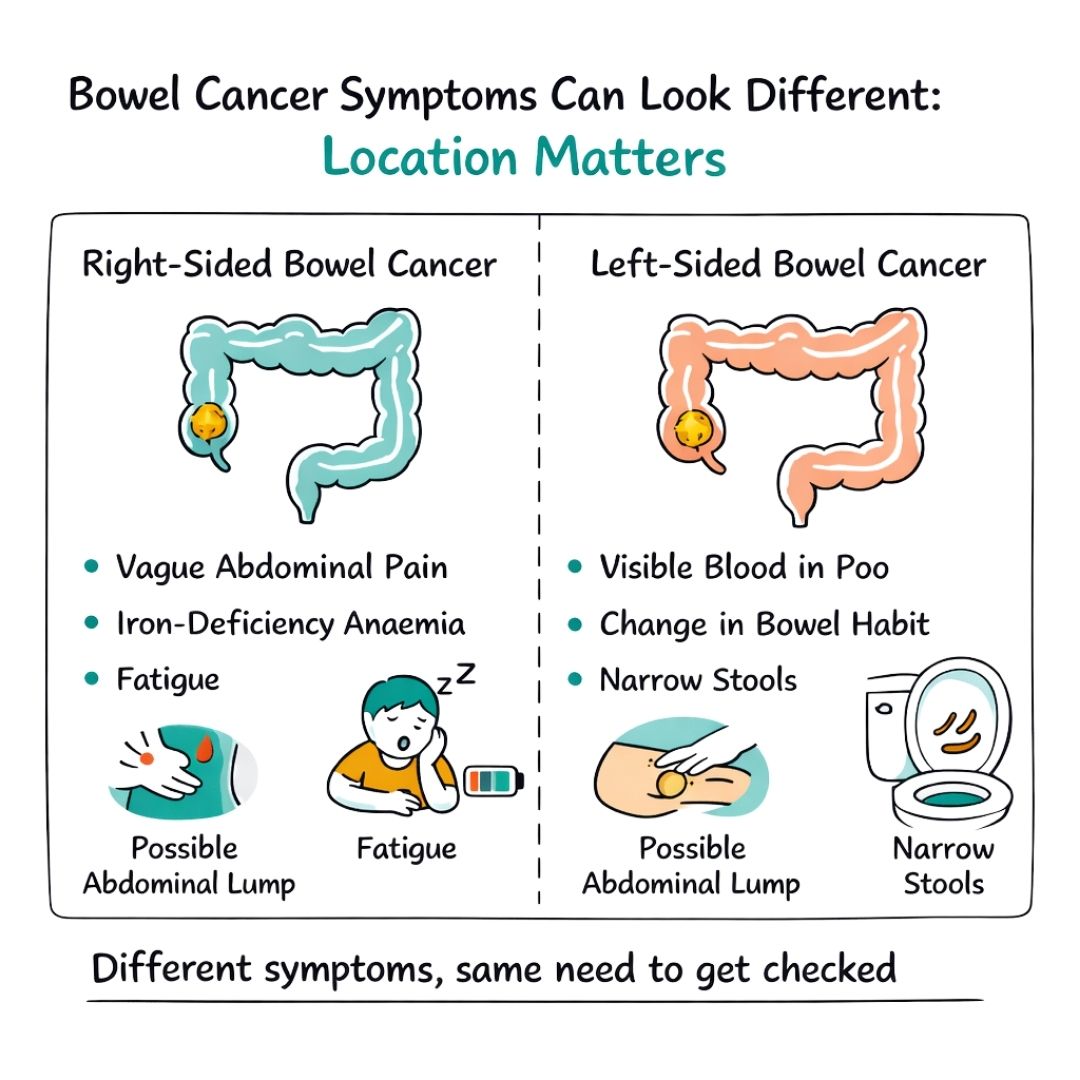
It’s also really helpful to understand that not all bowel cancers look and feel the same. The specific symptoms you experience can depend heavily on where in the bowel the tumour is actually growing. The large bowel is a long and winding tube, and a problem on one side can cause very different issues from a problem on the other.
This variation is a key reason why there isn't a single, universal checklist for bowel cancer symptoms. It’s why paying attention to any persistent change in your body is so important.
To make this clearer, let's look at the differences between cancers starting on the right and left sides of the colon.
Tumours on the Right Side
The right side of the colon is wider and more spacious. A tumour here has more room to grow, meaning it can get quite large before it starts causing obvious blockages or changes in your toilet habits.
Because of this, the symptoms are often more vague and can include:
Tumours on the Left Side
The left side of the colon is much narrower, so a tumour growing here is far more likely to cause an obstruction or noticeable changes more quickly.
The symptoms are often more "classic" and easier to spot:
Understanding this difference helps explain why one person's experience with bowel cancer can be completely different from another's. It all comes down to what's happening inside their body. The most important takeaway is to trust your instincts, if a change feels wrong and just isn't going away, it’s always worth getting it checked out.
There’s a dangerous myth floating around that bowel cancer is just an "old person's disease." This idea isn't just wrong; it can lead to devastating delays in diagnosis for younger adults. If you're under 50 and have that nagging feeling that something just isn't right with your health, please know your concerns are valid. You are not alone.
The truth is, the landscape of this disease is shifting. While bowel cancer does still predominantly affect people over 60, we're seeing a really worrying rise in cases among younger people. Since the mid-1990s, the rate of bowel cancer in adults under 50 has shot up significantly in many Western countries.
Globally, a notable percentage of bowel cancer cases are found in this younger age group. This means thousands of people under 50 are diagnosed every single year. Shockingly, research shows that a high number of younger people have to see their GP three or more times before they are finally referred for tests.
One of the biggest struggles for younger adults is getting their symptoms dismissed or put down to something else. Because bowel cancer is statistically less common in your 20s, 30s, and 40s, it’s not always the first thing a doctor considers.
Instead, many younger people are told their symptoms are probably caused by:
This can be incredibly frustrating. You know your body better than anyone. If you feel that something is persistently wrong, you have every right to be heard and taken seriously, no matter how old you are.
Being your own best health advocate is absolutely crucial. If you aren't getting the answers you need, you have to be persistent. This doesn't mean being confrontational; it just means being clear, prepared, and firm in your request for a proper investigation.
Your voice matters. Trust your gut feeling. If a symptom sticks around and starts affecting your life, don't let anyone, no matter their profession, make you feel like you're overreacting. Age is just a number, not a shield against disease.
To make sure your concerns are taken seriously, try these practical steps:
Remember, the goal is to work with your doctor as a team. By bringing them clear, documented evidence of your symptoms, you give them the tools they need to help you find answers. You are never too young to have bowel cancer, and you are never too young to fight for your health.
It’s completely normal to feel a bit unsettled when you notice a change in your body, but taking that next step is the best way to regain a sense of control. The most important rule of thumb is simple: if you’ve had any of the bowel cancer symptoms we've discussed for three weeks or more, it’s time to book an appointment with your GP.
That three-week marker is really important. It helps to separate a fleeting upset stomach from a persistent problem that needs a closer look. Acting on this is genuinely the most important thing you can do for your health and your peace of mind.
Going into your appointment prepared can make all the difference. It helps your doctor get a clear, accurate picture of what's been going on and makes sure your concerns are heard properly. A little bit of prep work goes a long way.
One of the most useful things you can do is keep a symptom diary. This doesn't need to be anything fancy – a simple notebook or even a note on your phone is perfect.
For a week or two before you go, try to jot down:
Bringing this along means you can give precise, factual information, which is exactly what your GP needs to figure out what to do next.
Knowing what lies ahead can really help take the edge off any anxiety you might be feeling. Your GP is your first port of call, and their first job is simply to listen.
They'll ask about your symptoms, your general health, and whether there's any family history of bowel trouble. They may also do a physical examination, which could involve gently feeling your tummy and possibly a quick and simple rectal examination. It's a standard procedure and is over very quickly.
Important Takeaway: The goal of this first appointment is just to gather information. It’s worth remembering that most people with these symptoms don’t have cancer, but getting checked is the only way to be sure and get the right treatment if needed.
Based on what you tell them and their initial findings, your doctor will decide on the next steps. This often involves a couple of initial tests to investigate further.
One of the first tests you'll likely be offered is the Faecal Immunochemical Test (FIT). This is a straightforward test you do in the privacy of your own home. It’s designed to find tiny, hidden traces of blood in your poo that you wouldn't be able to see, which can be an early sign of a problem. You’ll get a small kit to collect a sample, which you then pop in the post.
The FIT test results help your GP work out if you need to be referred for more detailed checks. If the test finds blood, or if your symptoms are particularly worrying, you’ll probably be referred to a specialist for a colonoscopy.
A colonoscopy really is the gold standard for checking the bowel. A specialist uses a thin, flexible tube with a tiny camera on the end to get a clear look at the entire inner lining of your large bowel. The preparation beforehand can be a bit of a pain, but the procedure itself is done under sedation to keep you comfortable. It lets the doctor spot any unusual areas, like polyps, and often remove them there and then. While other tools exist, you can discover how different scans are used and find out if an ultrasound can show cancer in our guide.
While knowing the symptoms is a vital piece of the puzzle, getting ahead of the game is even better. When you understand the things that might increase your risk of bowel cancer, you can start taking control of your health long before any signs appear. It’s all about being empowered with knowledge to make smart lifestyle choices and, crucially, to say "yes" to screening.
It's natural to wonder what makes one person more likely than another to develop the condition. Some risk factors are simply part of our genetic makeup, while others are tied to our daily habits. The key is to see this not as a reason to worry, but as a roadmap for staying vigilant and making positive changes where you can.
Knowing what might raise your personal risk helps you and your GP have more informed conversations about your long-term health. Think of it as building a complete picture.
The main factors to keep in mind are:
Bowel cancer is a significant global health issue. In the UK, for example, it is one of the most common cancers, with tens of thousands of new cases diagnosed each year. But here’s the really important part: survival rates are improving. When it is caught early, the cure rate is over 90%.
Screening is, without a doubt, our best weapon for catching bowel cancer at its earliest and most treatable stage—often long before you'd ever notice a symptom. This is why national screening programmes, like those in the UK and the US, are so incredibly important.
These programmes usually start with an at-home test kit that arrives in the post. It's typically a Faecal Immunochemical Test (FIT), which is surprisingly simple to use. You just collect a tiny sample of your poo and send it back to the lab. The test is designed to find tiny, invisible traces of blood that could be an early warning sign.
It is so important to do the test when you get it, even if you feel perfectly well. Screening doesn't just find cancer; it can find pre-cancerous growths (called polyps) which can be removed easily during a colonoscopy, stopping cancer before it even starts. The recommendations for who gets screened and when are based on robust clinical practice guidelines that doctors follow to provide the best care.
Taking a few minutes to complete that test is a simple, private action that could genuinely save your life. It’s not just about finding a problem, it’s about preventing one from ever happening.
It’s completely normal to have a lot of questions when you’re dealing with worrying health symptoms. To help put your mind at ease and give you some clarity, let’s run through some of the most common things people ask us about the signs of bowel cancer.
Yes, you can. It’s actually quite common, especially in the very early stages of the disease. A tumour can be tiny and not cause any changes you’d notice, which is exactly why screening programmes are so important.
Think of screening tests, like the home FIT kit, as a detective for your health. They’re designed to spot things the naked eye can’t see, like tiny traces of blood in your poo. This helps doctors catch potential problems long before they would ever cause a clear symptom, making treatment far more straightforward and successful.
No, the main symptoms of bowel cancer are the same for everyone, regardless of your gender. The classic warning signs don't change.
The key things to look out for are universal:
While everyone’s body is different, the fundamental signs that something might be wrong with the bowel itself are the same for men and women.
Absolutely not. This is probably the most important thing to remember. The vast majority of these symptoms are caused by other, much less serious, conditions.
Things like haemorrhoids (piles), irritable bowel syndrome (IBS), or even inflammatory bowel disease (IBD) can all mimic the signs of bowel cancer. But please, don’t try to diagnose yourself or just assume it's something minor.
If you’ve had any symptom that’s been worrying you for three weeks or more, the only way to get real answers and peace of mind is to see your doctor. It’s always, always better to get checked out. Sometimes, treatment may involve surgery resulting in a stoma, and you can learn more about what a colostomy is in our detailed guide.
We strongly advise you to talk with a health care professional about specific medical conditions and treatments.
The information on our site is meant to be helpful and educational but is not a substitute for medical advice.
Learn the key colon cancer symptoms, from early warning signs to less common indicators. Find out when to see a doctor for early detection and peace of mind.
Making sense of colostomy vs ileostomy? This guide for cancer patients compares surgery, care, diet, lifestyle for an informed decision.
My Advice For Anyone Undergoing Investigations Or Treatment Dont Let The Cancer Scare You Into A Corner, Stand Up And Come Out Fighting.