Let's get straight to the heart of your worry: is bowel leakage a sign of cancer? It's a question that can cause a lot of anxiety, but I can offer some reassurance. In most cases, bowel leakage on its own is rarely a sign of cancer. It’s a valid concern, but this symptom is far more likely to be connected to other, less serious health issues.
When you experience something as unexpected and distressing as bowel leakage (also known as faecal incontinence), it’s completely natural for your mind to jump to the worst-case scenario. For many, that fear is cancer. The good news is that the actual statistical link is very small.
In fact, one study found that just 0.3% of patients who presented with faecal incontinence were diagnosed with colorectal cancer within a year. It's a tiny number, but it’s not zero. That's why any new or persistent symptom should always be checked out by a doctor.
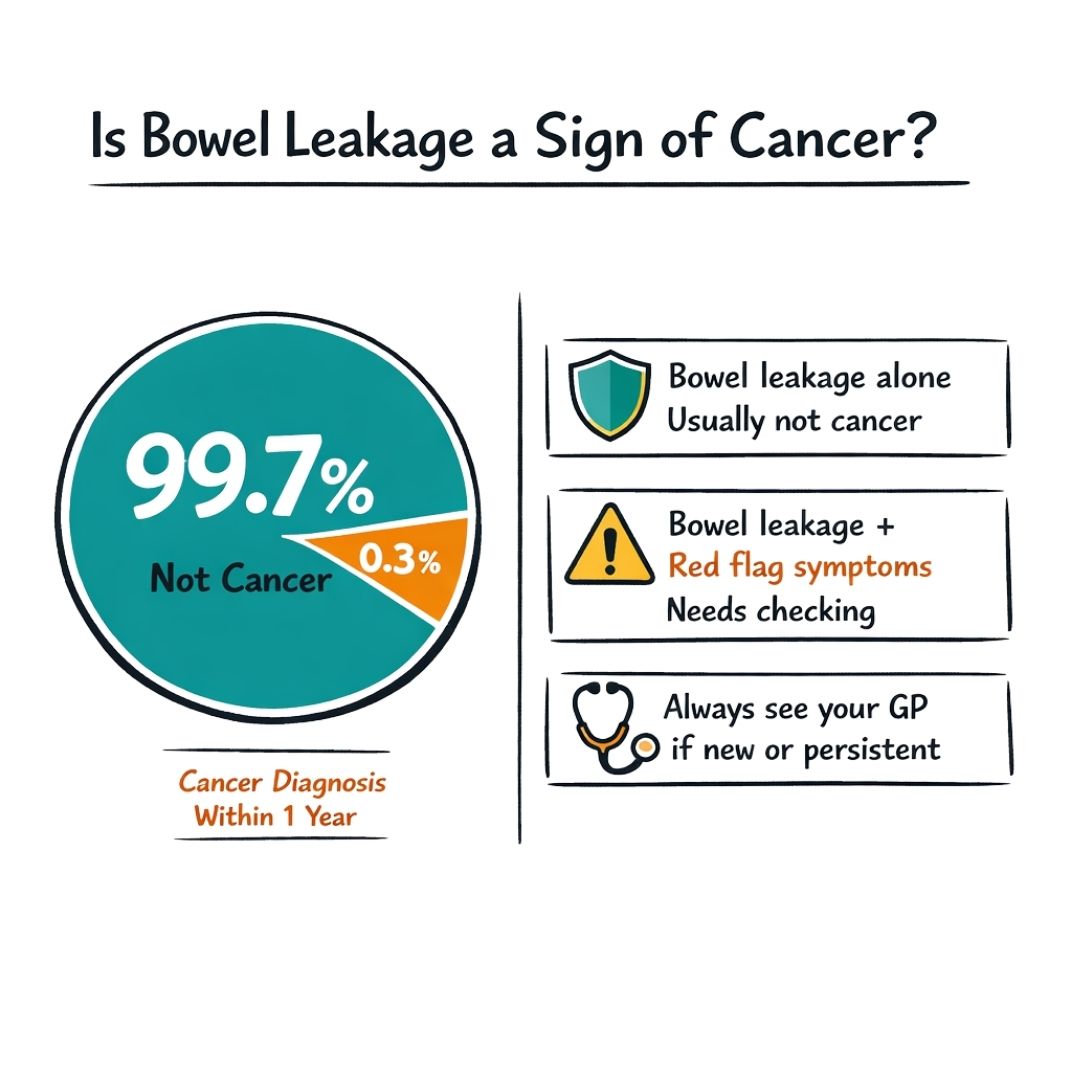
The real key to understanding what's going on isn't the leakage itself, but what other symptoms might be happening alongside it. Think of it like a detective story; a single clue is interesting, but a collection of clues is what solves the case. Your doctor will be looking at the complete picture of your health, paying close attention to any "red flag" symptoms that might point to a more serious issue.
This table can help you understand when bowel leakage might be more or less likely to be associated with a serious condition.
| Symptom Presentation | Likely Cause | Recommended Action |
|---|---|---|
| Bowel leakage as the only symptom. | Muscle or nerve damage, constipation, or dietary issues. | Schedule a non-urgent appointment with your GP to discuss. |
| Bowel leakage with other red flags. (e.g., blood in stool, weight loss, abdominal pain) | Could indicate a more serious condition, including inflammation or, rarely, cancer. | Seek a prompt medical evaluation to identify the underlying cause. |
Looking at the full context of your symptoms is the most important first step.
While a cancer diagnosis is a life-altering event, it is important to remember that it is not always a death sentence, especially with early detection and modern treatments.
This guide is designed to give you a clear, balanced perspective. We'll walk through the more common causes of bowel leakage, help you recognise when it’s time to see a doctor, and explain the diagnostic tests and treatments that can help you get back in control.
While it’s natural to worry about cancer when something feels wrong with your body, it’s important to know that the vast majority of bowel leakage cases have nothing to do with it. Most of the time, the root cause is a mechanical or functional problem within the body's intricate system for managing bowel movements.
Let's use an analogy. Think of your pelvic floor and anal sphincter muscles as a tap. For that tap to work perfectly and prevent drips, you need two things: a solid, well-fitting washer (your muscles) and a responsive handle you can turn on and off (your nerves). If either of those parts is damaged or stops working as it should, you’re likely to get a leak.
This section will walk you through these more common, non-cancerous culprits behind faecal incontinence. Getting to grips with them can help demystify the condition and hopefully show that, in most cases, the cause is manageable and not life-threatening.
The muscles of your anal sphincter and pelvic floor are the gatekeepers of continence. When these muscles become weak or get damaged, they simply can’t close tightly enough to hold back stool, especially if it’s on the looser, more watery side.
This kind of muscle damage is a very frequent reason for bowel leakage. It often happens as a result of a few common life events:
The ability to control our bowels is a finely tuned process. It really depends on a healthy partnership between our muscles, nerves, and the consistency of our stool. A problem in any one of these areas is enough to throw the whole system out of balance.
Even if your muscles are strong, they can’t do their job without clear instructions from your nerves. Your nerves act as the body’s communication network, sending a signal from your rectum to your brain that it’s filling up and then telling your sphincter muscles when to clamp down or when to relax. If these nerve signals get scrambled or interrupted, leakage can happen simply because the muscles never receive the right message.
This kind of communication breakdown can be caused by various health issues, such as:
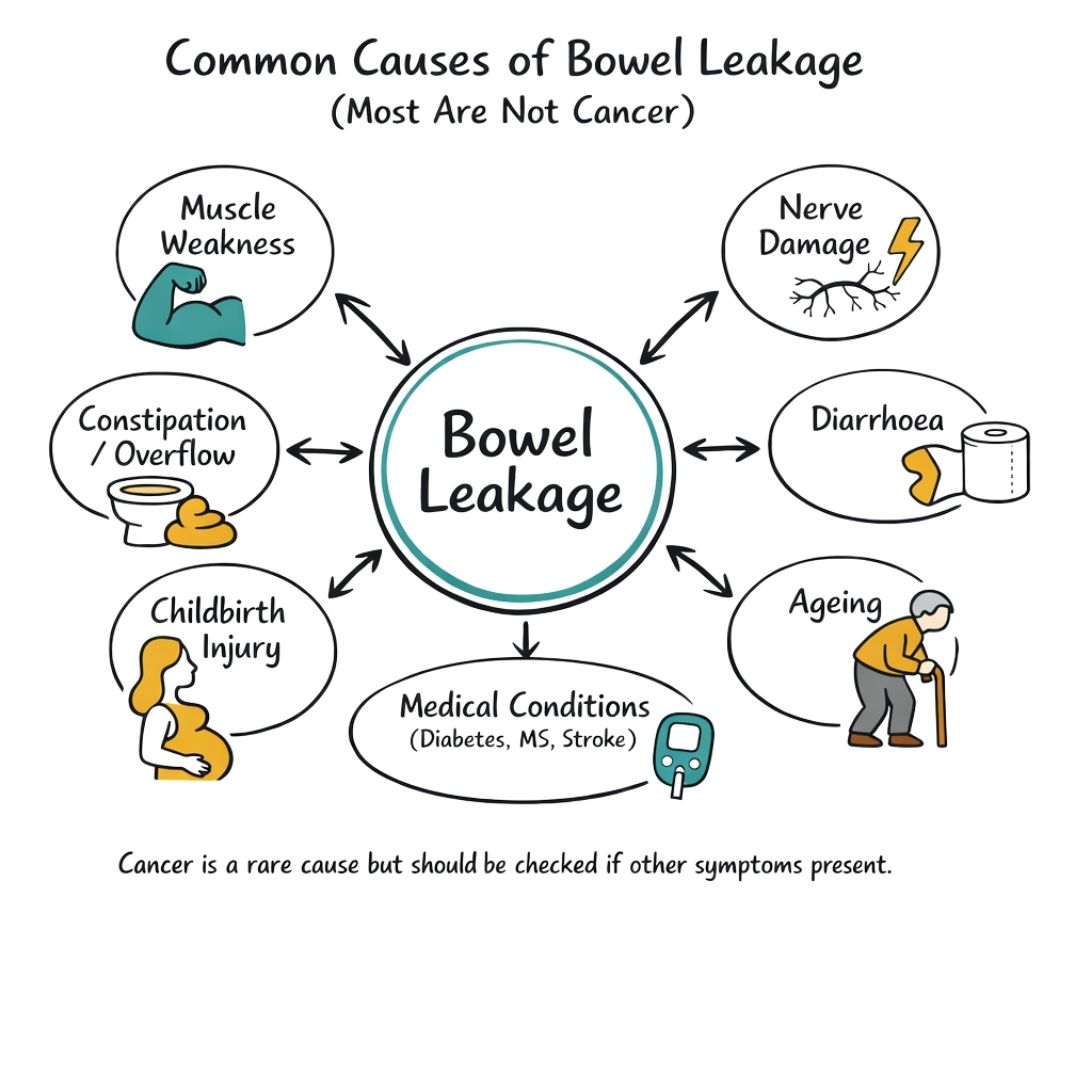
It sounds a bit strange, but chronic constipation is actually one of the main culprits behind bowel leakage. When hard, dry stool gets stuck (impacted) in the rectum, it can stretch the rectal walls and weaken the surrounding muscles over time. From there, new, watery stool can seep around this blockage, causing what we call overflow incontinence.
On the flip side, chronic diarrhoea brings its own set of problems. Loose, watery stool is much more difficult to control than a solid one, and it fills the rectum much faster. This can easily overwhelm even the strongest sphincter muscles, leading to urgent and sometimes unavoidable leaks. Keeping your gut healthy is a cornerstone of managing bowel function, a topic we explore further in our guide on the importance of gut health during cancer treatment.
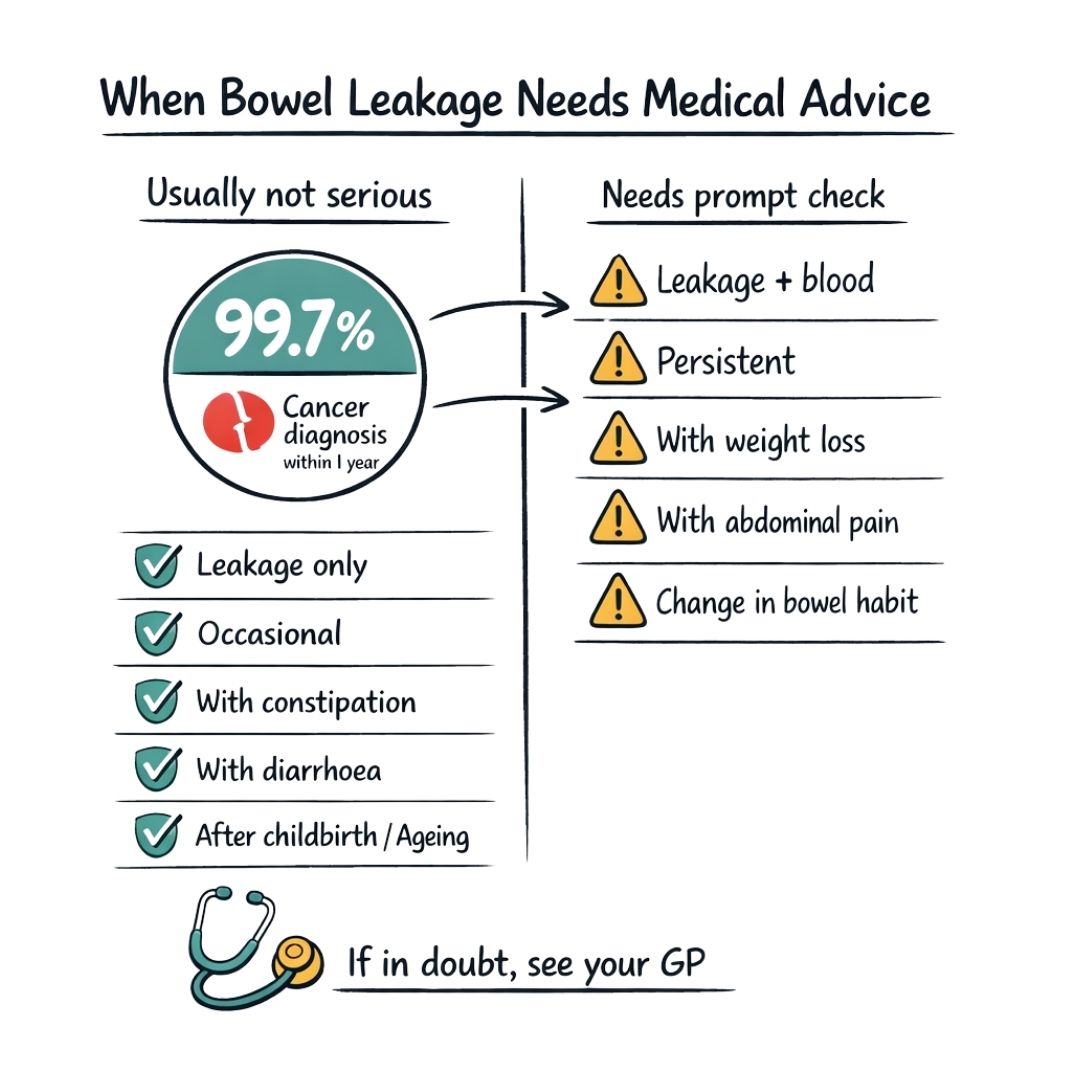
On its own, bowel leakage is very rarely a sign of cancer. But the picture changes completely when it shows up alongside other, more specific symptoms. It's really important to recognise these "red flag" combinations, as they’re your body’s way of signalling that it's time for a proper chat with your doctor.
Though it’s not common, a tumour in the colon or rectum can sometimes be the root cause of faecal incontinence. This can happen in a couple of ways. A growth might create a partial blockage, causing watery stool to seep around the obstruction – this is known as overflow incontinence. Alternatively, if a tumour starts to interfere with the nerves that control your sphincter muscles, it can directly weaken your ability to hold back stool.
The key is not to panic about the leakage itself, but to pay close attention to what else is happening in your body at the same time. Bowel cancer is a major health concern, yet it’s shocking how low public awareness of its symptoms can be. In fact, a survey found that many adults are unable to name a single symptom of bowel cancer.
The most telling signs that should have you booking a GP appointment aren't always dramatic. We’re often talking about things like a persistent change in your bowel habits that lasts for more than three weeks, losing weight without trying to, new or worsening pain in your abdomen, and seeing blood in your poo.
When you're trying to figure out what's going on with your health, context is everything. If you start experiencing bowel leakage alongside any of the following symptoms, it’s definitely time to get it checked out.
It’s so important to listen to your body. When a new symptom like bowel leakage turns up with other worrying changes, that’s a clear signal to get medical advice. Early detection is your most powerful tool for managing health problems successfully.
Having one or more of these signs with faecal incontinence doesn't automatically mean you have cancer. But it absolutely means your symptoms need a thorough investigation by a professional. Our guide on understanding bowel cancer symptoms has more detailed information that can help you feel more prepared for that conversation with your doctor.
Knowing what to expect can make a visit to the doctor feel much less daunting. If you’re dealing with bowel leakage, especially alongside other worrying symptoms, getting a proper medical diagnosis is the most important step you can take. Let's walk through what the typical diagnostic journey looks like so you can feel more prepared and in control.
It all starts with a conversation. Your doctor will want to know all about your symptoms, your general medical history, and your lifestyle. Coming prepared for this chat can make a world of difference.
Tip: Keep a Symptom Diary
Before your appointment, try tracking your symptoms for a week or two. Make a note of how often leakage happens, what your stool is like (e.g., solid, loose, watery), what you've been eating, and any other signs like pain or bloating. This kind of detailed information is gold dust for your doctor.
After you’ve talked through your symptoms, your doctor will likely need to perform a physical examination to check for any obvious causes. This will almost certainly include a digital rectal examination (DRE). It might sound a bit uncomfortable, but a DRE is a very quick and incredibly useful part of the assessment.
During the exam, the doctor gently inserts a lubricated, gloved finger into your rectum. This simple action allows them to:
In just a few moments, this test gives your doctor a lot of valuable information. Based on these initial findings, they might decide that further tests are needed to get a clearer picture of what's going on. For instance, specific screening tools like the QFIT test can be a crucial next step to detect hidden blood in your stool, which is a potential red flag for bowel cancer.
If a more detailed investigation is needed, your doctor has several options. Each of these tests is designed to look at a different piece of the puzzle to pinpoint the cause of the bowel leakage.
These tests help your medical team build a complete and accurate picture, ensuring that any treatment plan is targeted to the real cause of your symptoms. It can be really helpful to prepare a list of questions before you see a specialist. For some ideas, you might want to look over these questions to ask your oncologist, as many of the principles apply to any important medical consultation.
Getting a diagnosis for bowel leakage can feel like a turning point. Whether the cause is muscle weakness, nerve issues, or a side effect of cancer treatment, this is the moment you can start to regain control. The good news is that there’s a whole range of effective treatments and management strategies out there, offering real hope for a better quality of life.
The path to better control often starts with simple but surprisingly powerful changes to your diet and lifestyle. Your GP or a dietitian will likely suggest ways to help firm up your stool, which makes it much easier to manage.
This might mean gradually adding more soluble fibre to your diet from things like oats, bananas, and psyllium husks, which help add bulk to your poo. It also involves figuring out and avoiding personal trigger foods or drinks. For many, caffeine, alcohol, and artificial sweeteners are common culprits that can lead to looser stools and a sense of urgency.
Beyond what you eat and drink, physical therapies are vital for strengthening the body’s own continence mechanisms. These approaches focus on rebuilding muscle control and helping your body get back into a predictable rhythm.
For many people, a combination of dietary tweaks and targeted physical therapy can dramatically reduce or even stop bowel leakage altogether. Consistency is the secret, and these foundational strategies put you firmly in the driver's seat of your own care.
When lifestyle changes and physiotherapy aren’t quite enough, your doctor might suggest medical or surgical options. These more advanced treatments are usually for specific underlying issues and can bring significant relief.
Medicines like loperamide can help slow down bowel movements and firm up stool, reducing how often leakage happens. For more complex problems, there are other procedures. Sacral nerve stimulation, for example, involves implanting a small device—think of it as a pacemaker for the bowel—that sends gentle electrical pulses to the nerves controlling your bowel and bladder.
In cases where leakage is down to severe muscle damage or a rectal prolapse, surgery to correct the problem might be the best long-term solution. This could mean repairing the sphincter muscles or fixing the structural issue that's causing the trouble. To get a better sense of surgical options that may come up in a cancer context, you can read our guide on what a colostomy is and how it functions.
If you’re dealing with bowel leakage as a side effect of cancer treatments like radiotherapy, it’s so important to talk to your oncology team. They can offer specific advice and interventions to help manage it. While asking "is bowel leakage a sign of cancer" is the first critical step, learning to manage it as a side effect is just as crucial. With the right support, most people find their quality of life improves immensely.
Living with bowel leakage is tough, both emotionally and physically. But it’s crucial to remember you don't have to face it alone. Building a solid support network is just as important as any medical treatment when it comes to living a full, active life.
It's completely normal to feel embarrassed or anxious. Many people do. The real danger is letting those feelings isolate you, which only makes everything harder. Reaching out for the right kind of help can make a world of difference, restoring your confidence and sense of control. For anyone struggling with health anxiety or the emotional weight of a medical condition, professional counselling support can be an incredibly powerful step toward feeling like yourself again.
Beyond the emotional side of things, a few practical aids can significantly improve your day-to-day life. Modern incontinence products are surprisingly discreet and effective, and using specialised skincare can prevent irritation. These small things can give you the peace of mind you need to go about your day without worry.
Just as vital is connecting with people who genuinely understand what you're going through. You're not the only one, and there are some fantastic organisations out there ready to offer help and community.
Remember, the goal isn't just to manage a symptom. It's about arming yourself with the tools and the community you need to live confidently. A strong support system is a powerful reminder that one health issue doesn't have to define your life or your happiness.
Right, let's tackle some of the most common questions people have when they're dealing with bowel leakage. It’s natural to have a lot on your mind, so we'll get straight to the point with some clear, practical answers.
This table gives you some quick, at-a-glance answers to the questions we hear most often. We'll go into more detail on each one below.
| Question | Short Answer |
|---|---|
| Can stress or anxiety cause bowel leakage? | Yes, indirectly. While stress doesn't cause physical damage, it can seriously flare up conditions like IBS, leading to diarrhoea and urgency that can overwhelm your control. |
| How long should I wait before seeing a doctor? | You shouldn't wait at all. If it's a new or persistent problem, or it's causing you distress, book an appointment with your GP right away. |
| Is bowel leakage a side effect of cancer treatment? | Yes, unfortunately, it can be. Treatments like pelvic radiation or surgery for certain cancers can affect the muscles and nerves controlling the bowel. |
Now, let's unpack these a bit more.
Absolutely. There's a very real connection between your brain and your gut. While high levels of stress and anxiety won't directly cause physical damage to your bowel, they can wreak havoc on your digestive system.
Think of it like this: stress can flip the switch on conditions like Irritable Bowel Syndrome (IBS), often triggering sudden diarrhoea or an overwhelming sense of urgency. When that happens, the sheer force and speed can sometimes be too much for your sphincter muscles to handle, resulting in leakage.
The simple answer is: don't put it off. If bowel leakage is a new problem for you, if it keeps happening, or if it's simply making you miserable, it’s time to book an appointment with your GP.
It is particularly vital to get checked out if you also have any ‘red flag’ symptoms. These include things like blood in your poo, losing weight without trying, or severe pain in your stomach.
I know talking about bowel habits can feel incredibly embarrassing. But please remember, your doctor has heard it all before. Their job is to help you, not to judge. Getting a proper diagnosis is always the first step toward getting control back and feeling like yourself again.
Yes, unfortunately, this can be a difficult side effect for some people. Bowel leakage is a known complication of certain cancer treatments, especially for cancers in the pelvic area.
Treatments like pelvic radiation therapy, as well as some types of surgery or chemotherapy for colorectal or gynaecological cancers, can sometimes damage the delicate nerves or muscles that help you control your bowel. If you're experiencing this, it's so important to raise it with your oncology team. They will have seen it before and can offer many effective ways to manage the symptoms.
We strongly advise you to talk with a health care professional about specific medical conditions and treatments.
The information on our site is meant to be helpful and educational but is not a substitute for medical advice.
Facing a stage 4 bowel cancer diagnosis? This clear guide explains what it means, how it spreads, treatment options, managing symptoms, and ways to protect your quality of life, empowering you with facts and next steps.
Maintaining A Positive Attitude And Having Strong Faith Made A Significant Impact On My Ability To Overcome Adversity.
Anaemia is common during cancer and treatment. Learn why it happens, how to recognise symptoms, and how anaemia is managed safely during cancer care.