When you or a loved one receives a stage 4 lung cancer diagnosis, it means the cancer cells that originated in the lungs have travelled to other parts of the body. While this news is undoubtedly serious, it's important to know that significant medical advances have created many effective ways to manage the disease, control symptoms, and preserve your quality of life.
Understanding Your Diagnosis
Hearing the words "stage 4 lung cancer" can feel overwhelming. It’s a moment often clouded by complex medical terms and difficult emotions. This guide is designed to cut through the confusion, offering a clear and supportive starting point to help you and your family understand what this diagnosis truly means. The goal here is to build a solid foundation of knowledge, empowering you to face the road ahead.
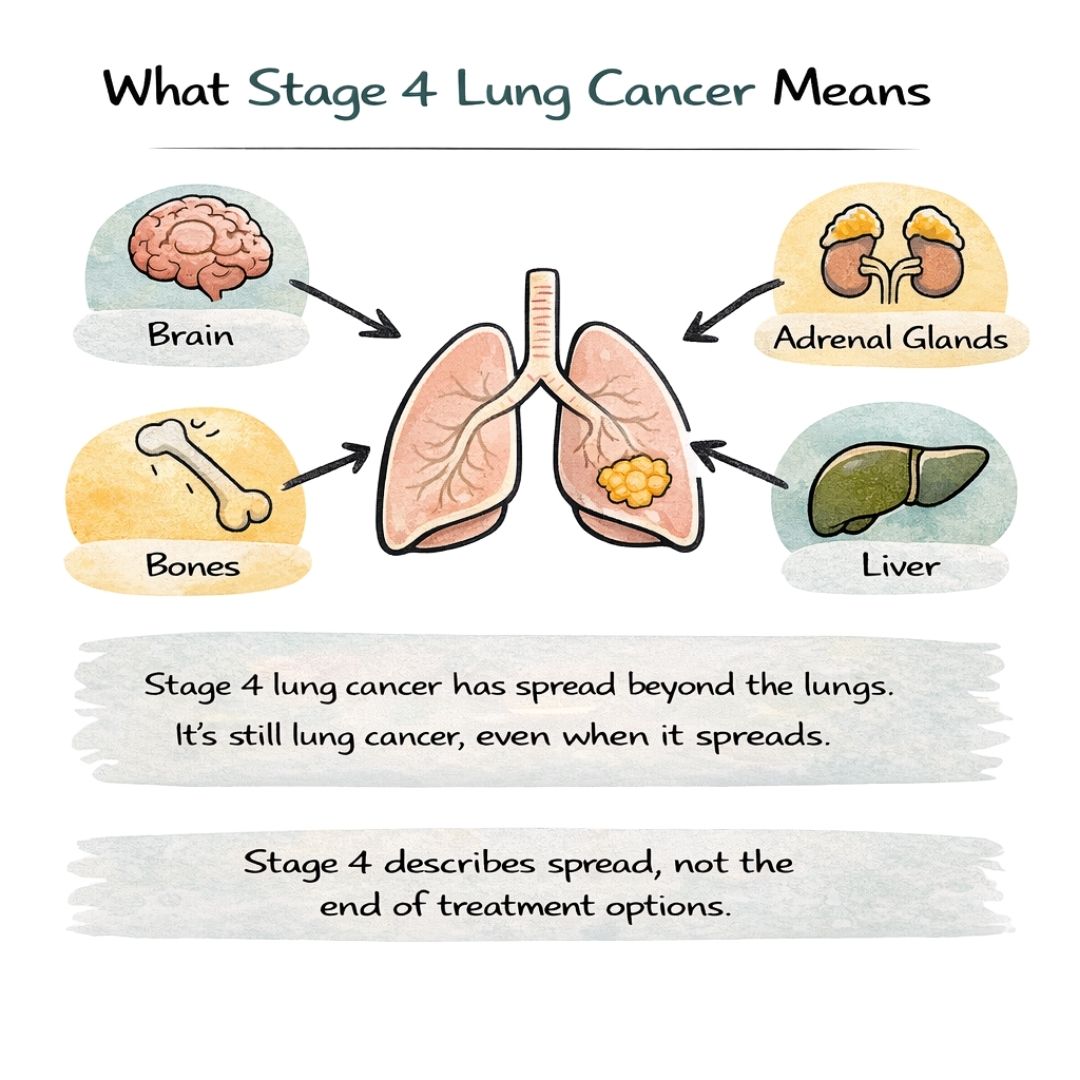
Stage 4 lung cancer is also called metastatic lung cancer. An easy way to think about it is like a dandelion that has gone to seed. The original plant was in one spot (the lung), but the wind has carried its seeds to other parts of the garden, where new dandelions have started to grow. These new cancer sites are called metastases.
The most common places for lung cancer to spread include the:
Brain
Bones
Liver
Adrenal glands
It’s a crucial distinction that even if lung cancer cells are found in the brain, it is still treated as lung cancer, not brain cancer. The cells in that new location are genetically the same as the ones from the original lung tumour.
Looking at the Path Forward
A stage 4 diagnosis naturally raises urgent questions about the future. While this advanced stage isn't typically considered curable, it is absolutely treatable. The focus of medical care shifts from complete eradication to managing the cancer as a long-term, chronic condition. This involves a strategic plan to slow its growth, ease symptoms, and help you maintain your daily life and well-being for as long as possible.
A diagnosis can feel all-consuming at first. But over time, living with cancer can shift your perspective on how you want to live your life. It becomes possible to focus on making today a good day and creating positive memories with loved ones.
You are not on this journey alone. Treatment breakthroughs now offer more effective and targeted options than ever before, enabling many people to live longer and more fulfilling lives with their diagnosis. Learning more about what happens when lung cancer spreads can give you a better framework for discussions with your medical team. We will walk through these treatments, symptom management techniques, and the network of support available to help you make informed decisions every step of the way.
How Doctors Diagnose and Stage Advanced Lung Cancer
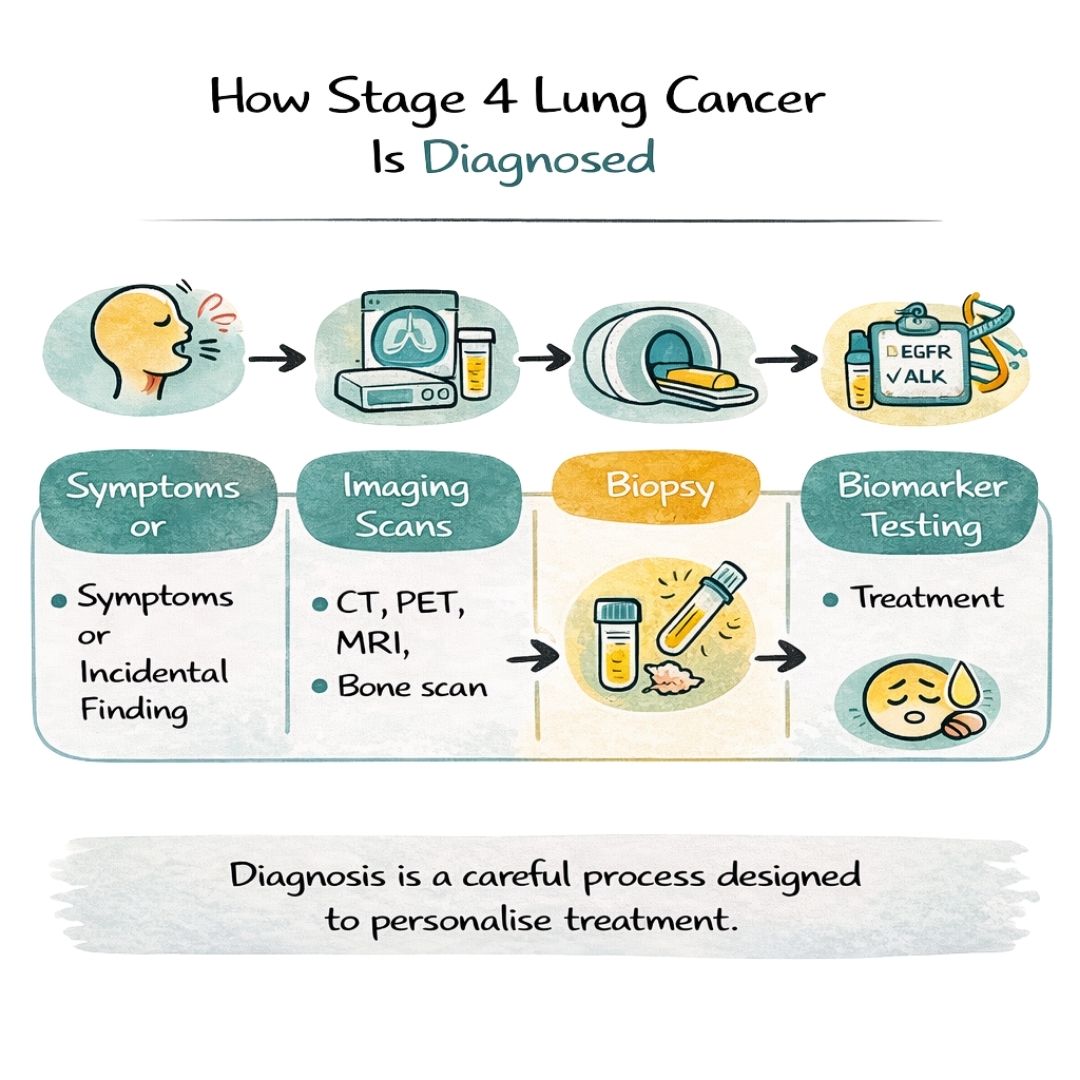
The path to a stage 4 lung cancer diagnosis often starts with something that feels just slightly wrong. It might be a persistent cough you can't shake, unexpected weight loss, or finding yourself breathless more often. Sometimes, the first clue has nothing to do with the lungs at all—it could be a nagging pain in your hip, which turns out to be from a cancerous lesion in the bone.
When these symptoms lead you to a doctor, it kicks off a careful investigative process. Your medical team will piece together clues from various tests to build a complete picture of what’s happening in your body. This isn't just about confirming a diagnosis; it's about understanding the cancer's specific characteristics, which is absolutely essential for planning the best possible course of treatment.
This journey, from the initial shock and confusion to a place of clarity, can feel overwhelming.
Moving through the diagnostic process with clear information is what helps transform that feeling of being overwhelmed into a sense of empowerment, allowing you to take an active role in your healthcare decisions.
Creating a Clear Picture with Imaging Scans
To figure out exactly where the cancer is and how far it has travelled, doctors turn to sophisticated imaging tests. Think of these scans as creating a detailed internal map, showing the primary tumour in the lung and pinpointing any other places in the body it may have spread to.
Some of the most common imaging techniques include:
CT (Computed Tomography) Scan: This technology uses X-rays taken from many different angles to build detailed, cross-sectional images of your chest, abdomen, and pelvis. It's excellent for measuring the primary tumour and checking for spread to nearby lymph nodes or organs like the liver.
PET (Positron Emission Tomography) Scan: This is a whole-body scan designed to spot cancer cells anywhere they might be hiding. You're given an injection of a safe, mildly radioactive sugar, which cancer cells—being very active—tend to absorb more quickly than healthy cells. The PET scanner then detects these "hot spots," highlighting potential areas of metastasis.
These scans are fundamental to the staging process. For lung cancer to be classified as stage 4, the results must show that the cancer has moved beyond the lung and its local lymph nodes to affect distant organs or tissues.
To help you understand the different tests you might encounter, we've put together a table summarising the key procedures.
Common Diagnostic Tests for Stage 4 Lung Cancer
Test/Procedure
Purpose
What It Involves
CT Scan
Provides detailed images of the tumour's size and location. Checks for spread to nearby lymph nodes and organs.
Lying on a table that slides into a large, ring-shaped scanner. A contrast dye may be injected to enhance the images.
PET Scan
Detects cancer cells throughout the body by identifying areas of high metabolic activity.
An injection of a radioactive sugar tracer, followed by a waiting period, and then lying still inside the scanner.
MRI Scan
Used to get clear images of specific areas, particularly the brain or spinal cord, to check for metastases.
Lying inside a tunnel-like machine that uses powerful magnets and radio waves. It can be noisy.
Bone Scan
Checks if the cancer has spread to the bones.
An injection of a small amount of radioactive material that collects in bone abnormalities, which are then detected by a scanner.
Biopsy
Confirms the cancer diagnosis and determines its specific cell type (e.g., NSCLC vs. SCLC).
A small tissue sample is removed from the tumour or a metastatic site using a needle, bronchoscope, or minor surgery.
Biomarker Testing
Analyses the biopsy sample for specific genetic mutations or proteins (e.g., EGFR, ALK, PD-L1).
A laboratory analysis performed on the tissue sample obtained during the biopsy.
Each of these tests provides another vital piece of the puzzle, helping your oncology team build a comprehensive understanding of the cancer.
Understanding what each diagnostic test is for turns a series of complex medical reports into meaningful information. It gives you the confidence to ask insightful questions and truly participate in conversations with your oncology team about your treatment plan.
The Decisive Role of a Biopsy and Biomarker Testing
While scans can show where suspicious areas are, a biopsy is the only way to be certain. This procedure involves taking a very small sample of tissue from the tumour itself or from a metastatic site. A specialist called a pathologist then examines this tissue under a microscope to confirm that it is cancer and to identify its specific type—most commonly non-small cell lung cancer (NSCLC) or small cell lung cancer (SCLC).
But the analysis doesn't stop there. Today, that same tissue sample undergoes biomarker testing, also known as molecular or genetic profiling. This step is a game-changer for stage 4 lung cancer. It’s a deep dive into the cancer's genetic makeup, looking for specific mutations or proteins on the surface of the cells, such as EGFR, ALK, or PD-L1.
Discovering these biomarkers can unlock powerful treatment options like targeted therapies or immunotherapy, which are often far more effective—and with fewer side effects—than traditional chemotherapy. Being prepared with the right questions after your diagnosis is crucial, and you can explore some of these by reading about questions to ask your doctor about a lung cancer diagnosis. This detailed analysis of the cancer’s unique biological identity is the very foundation of modern, personalised treatment.
Exploring Modern Treatments for Metastatic Lung Cancer
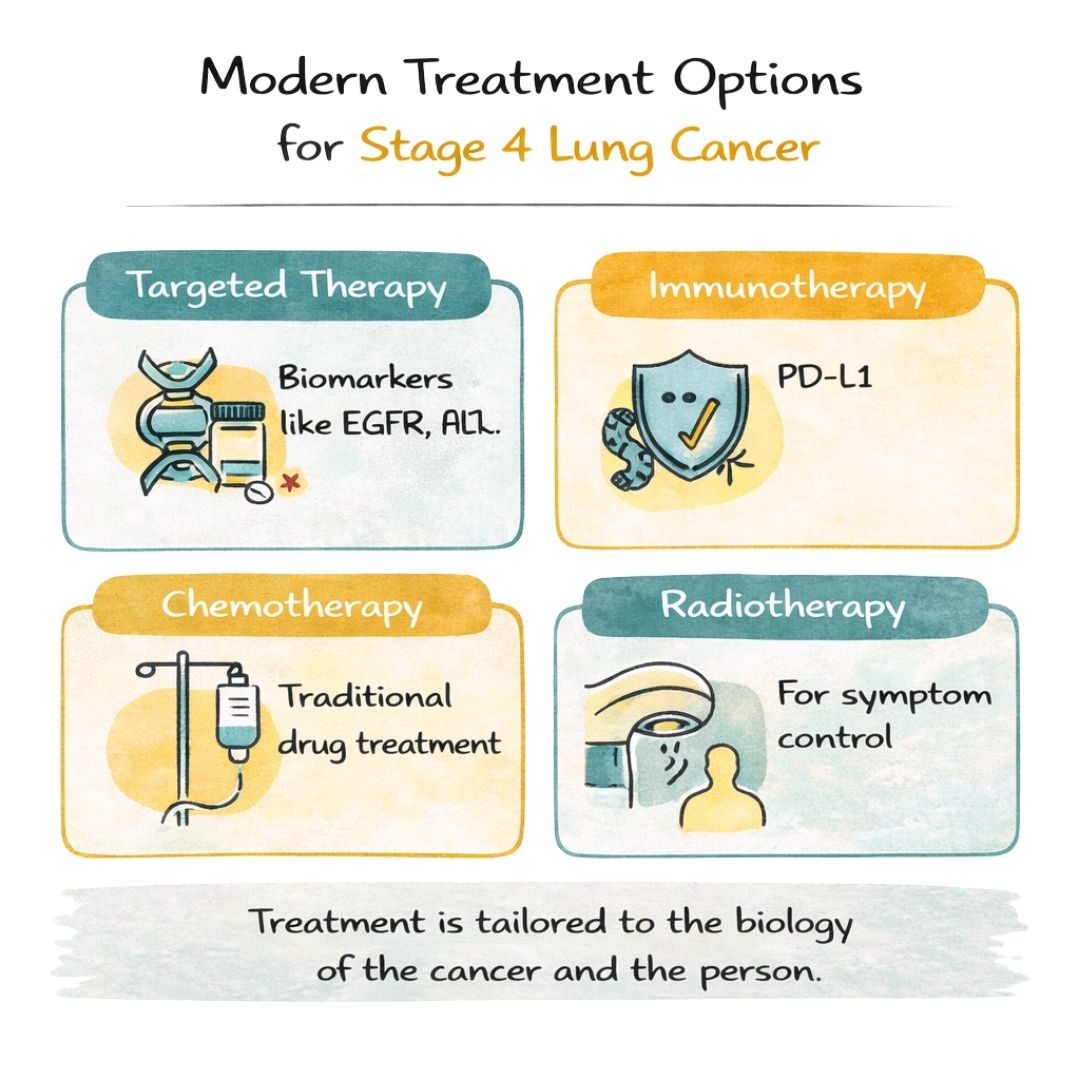
The landscape of treatment for stage 4 lung cancer has been completely reshaped in recent years. We’ve moved far beyond a one-size-fits-all approach and into an era of highly personalised medicine. When faced with a metastatic diagnosis, your oncology team's primary focus is to control the disease, slow its progression, and, most importantly, preserve your quality of life. This means using sophisticated treatments that are more precise and often better tolerated than older therapies.
The cornerstone of this modern approach is understanding the cancer's unique biological signature. As we covered in the diagnostic process, biomarker testing is crucial. It reveals the specific genetic mutations and proteins that are telling the cancer to grow. This isn't just abstract data; it's the very map that guides your team to the most effective treatment for you.
Unlocking Cancer's Code with Targeted Therapy
Think of a cancer cell as having a specific lock, and its genetic mutation is the keyhole. Targeted therapies are drugs engineered to be the precise key for that lock. Unlike traditional chemotherapy, which is a blunt instrument affecting all fast-growing cells (both cancerous and healthy), these therapies are designed to zero in on the exact molecules that the cancer depends on to survive and multiply.
For patients whose tumours have certain biomarkers, targeted therapy can be a game-changer. These treatments are often taken as a daily pill, which means you can manage your treatment from the comfort of your own home.
Common biomarkers and their corresponding targeted therapies include:
EGFR Mutations: Drugs like osimertinib (Tagrisso) can block the signals that EGFR-positive cancer cells use to grow and divide.
ALK Rearrangements: Medications such as alectinib (Alecensa) are designed to shut down the faulty ALK protein, a powerful engine for tumour growth in some non-small cell lung cancers.
ROS1, BRAF, MET, and RET Mutations: Each of these biomarkers has specific, purpose-built drugs designed to interrupt its unique growth pathway.
Because these treatments are so precise, their side effects are often different, and sometimes more manageable, than those from chemotherapy. For a more detailed look at the latest options, this comprehensive lung cancer treatment guide with research tips offers an excellent overview. This highly focused approach is exactly why molecular profiling is so fundamental to modern cancer care.
"My doctors performed comprehensive biomarker testing right away... the results said, ‘Never mind. You have the ALK biomarker and you’re going to start taking this targeted therapy drug instead.’ He was excited to tell me that having the ALK mutation was very good news." — Christina H., Living with ALK+ Lung Cancer
Activating the Immune System with Immunotherapy
Another powerful weapon in the modern arsenal is immunotherapy. This clever approach doesn't attack the cancer directly. Instead, it essentially takes the brakes off your own immune system, empowering it to recognise and destroy cancer cells.
Cancer cells can be sneaky. They often produce proteins on their surface that act like a disguise, telling immune cells to ignore them. One of the most important of these proteins is called PD-L1. Immunotherapy drugs, known as checkpoint inhibitors, work by blocking this "don't find me" signal. By doing so, they unleash your body's natural defences to do what they do best: fight the disease.
Common examples of these drugs include pembrolizumab (Keytruda) and atezolizumab (Tecentriq). The amount of PD-L1 found on your tumour cells during biomarker testing can help predict how well this treatment might work for you. For some people, immunotherapy can create durable, long-lasting responses and has become a standard first-line treatment, either on its own or alongside chemotherapy.
The Role of Traditional Chemotherapy and Radiotherapy
While personalised medicine often takes centre stage, traditional chemotherapy still has a crucial part to play in managing stage 4 lung cancer. It might be used with immunotherapy to boost its effectiveness or as the main treatment if no targetable biomarkers are found. It's also worth noting that modern chemotherapy regimens are often accompanied by better medications to manage side effects like nausea, making them more tolerable than in the past.
Radiotherapy (radiation treatment) is also an invaluable tool. While it can’t cure cancer that has spread, it is exceptionally good at providing relief from symptoms and improving comfort—what we call palliative care.
Here are a few examples of how it's used:
If cancer has spread to the bones, causing pain, a focused beam of radiation can shrink the tumour and provide significant relief.
If a tumour in the chest is pressing on an airway and making it hard to breathe, radiation can help open things back up.
For cancer that has spread to the brain, a highly precise form of radiation called stereotactic radiosurgery can treat the spots with minimal impact on surrounding healthy tissue.
Your oncology team will carefully weigh all these options—targeted therapy, immunotherapy, chemotherapy, and radiotherapy—to build a treatment plan tailored to your specific diagnosis, your overall health, and your personal priorities. This comprehensive strategy ensures you receive the most effective and supportive care available.
Prioritizing Your Comfort and Quality of Life
When you're navigating a diagnosis of stage 4 lung cancer, the focus isn't just on treating the disease itself—it’s about caring for you as a whole person. This means your comfort and day-to-day well-being are every bit as important as the treatments targeting the cancer. Central to this approach is a dedicated field of medicine called palliative care.
There’s a common and unfortunate misconception that palliative care is the same as end-of-life or hospice care. In reality, it’s a vital layer of support that should begin the day you're diagnosed. Think of the palliative care team as your personal comfort specialists, working hand-in-hand with your oncologists to improve your quality of life throughout your entire treatment journey.
What Is Palliative Care
At its core, the goal of palliative care is to provide relief from the symptoms and stress of a serious illness. This specialist team can help manage a huge range of physical and emotional challenges that often come with a stage 4 lung cancer diagnosis and its treatments.
This can include addressing things like:
Pain and discomfort
Shortness of breath
Fatigue and low energy
Nausea and loss of appetite
Anxiety and depression
By getting these symptoms under control, palliative care can significantly improve your ability to tolerate cancer treatments and keep up with your daily activities. To see just how valuable this support can be, you can learn about the many benefits of palliative care for cancer patients in our detailed guide. This integrated system empowers you to advocate for your own comfort, making sure you have the tools needed to live as well as possible.
Practical Steps for Managing Side Effects
Even though modern treatments are more precise than ever, they can still bring side effects that get in the way of daily life. Being proactive about managing them is absolutely key. Your most powerful tool here is open communication with your healthcare team; they need to know exactly what you're experiencing to be able to help you.
Here are some practical strategies that can make a real difference:
Nutrition: Good nutrition is crucial for maintaining strength and energy. If you're dealing with a poor appetite or nausea, try eating smaller, more frequent meals. Focus on foods that are packed with nutrients, and never hesitate to ask for a referral to a registered dietitian who specialises in oncology.
Gentle Movement: It sounds counterintuitive when you're feeling exhausted, but light activity like a short walk or some gentle stretching can actually boost your energy and lift your mood. The golden rule is to always listen to your body and check with your doctor before starting anything new.
Mind-Body Practices: Techniques like meditation, deep breathing exercises, or gentle yoga can be incredibly powerful for managing stress, anxiety, and even physical pain. Many cancer centres now offer classes or can point you towards helpful resources.
"I had always thought of [palliative care] as the equivalent of hospice—in other words, what I heard was I was dying and only had months, weeks, days to live. Now let’s be clear, he never said this, but it’s what my mind processed regardless of what he said." — Joel Stern, Living with Stage IV Cancer
This powerful quote gets to the heart of a common fear, highlighting just how important it is to see palliative care for what it truly is: a positive, life-affirming layer of support.
The Importance of a Holistic View
Looking after your well-being means seeing beyond the immediate medical needs. This is especially true when we consider the bigger picture. For example, recent projections for lung cancer mortality in UK women show a complex situation. While rates are expected to fall for some groups, this improvement is mainly seen in those under 65.
For stage 4 lung cancer, which makes up a large portion of advanced diagnoses, these trends reveal ongoing challenges in an ageing population. A significant number of all lung cancer deaths occur in those aged 85 and over, underscoring why a person-centred approach that considers every aspect of your life is so vital. It’s also why understanding the available end-of-life care services can be a crucial part of planning, ensuring comfort and dignity. By bringing together physical, emotional, and practical support, you and your care team can create a truly comprehensive plan that puts your quality of life first.
Making Sense of Prognosis and Future Planning
Talking about the future after a stage 4 lung cancer diagnosis is, for many, one of the hardest parts of the entire journey. These conversations often involve survival rates and statistics, which can feel cold, impersonal, and frankly, a bit frightening. It's so important to approach this topic with care and to understand what these numbers really mean—and what they don't.
Statistics are just averages drawn from huge groups of people. They give us a big-picture view, but they can't predict what will happen for any one person. Your journey is yours alone, shaped by details and strengths that a simple number could never capture.
Understanding Your Personal Outlook
So, what does influence an individual's outlook with metastatic lung cancer? It’s never just one thing. Your oncology team looks at a whole host of factors when discussing your specific situation.
These often include:
The type of lung cancer: Non-small cell and small cell lung cancers behave very differently and respond to different kinds of treatment.
Biomarker status: Finding specific genetic markers, such as EGFR or ALK, can unlock powerful and highly effective targeted therapies.
Response to initial treatment: How well the cancer responds to the first treatment you receive is a really significant indicator for the path ahead.
Your overall health: Your general fitness, age, and any other health conditions you might have all play a crucial role in how you tolerate treatment.
The real aim here is to equip you for open and honest conversations with your healthcare team about your personal goals and what you truly want from your treatment.
The Reality of Survival Statistics
Facing a stage 4 diagnosis brings enormous challenges, and learning how to cope with navigating adjustment and life transitions becomes a critical skill for both patients and their families. When it comes to survival rates in the UK, the numbers can be sobering. Overall, ten-year lung cancer survival is around 11.1%. For stage 4 specifically, where the cancer has already spread, five-year survival is closer to 3-9%.
These figures are also affected by wider societal factors; in more deprived areas, for instance, mortality can be up to 102% higher.
It is vital to remember that you are a person, not a percentage. While statistics provide context, they do not define your experience or limit what is possible with today's advanced treatments.
Taking Control with Advance Care Planning
Living with uncertainty can make you feel powerless. One of the most practical ways to regain a sense of control, however, is through advance care planning. This is simply the process of thinking about, discussing, and recording your wishes for future medical care, just in case you reach a point where you can't make those decisions for yourself.
It’s about making your voice heard. It involves clarifying what's most important to you—from specific treatments you would or would not want, to what comfort and quality of life look like for you. Putting these wishes in writing gives both you and your loved ones peace of mind, ensuring your values guide every step of your care.
Building Your Support System and Finding Resources
Receiving a diagnosis of stage 4 lung cancer is an immense challenge, but it's not one you should ever have to face on your own. While your medical team focuses on treatment, building a strong emotional and practical support system is just as crucial for your overall wellbeing. This network becomes your anchor, providing strength and stability through the toughest of times.
Often, the first people we turn to are family and friends. Don't be afraid to be open about what you need; sometimes people want to help but don't know how. Whether it's a lift to the hospital, someone to listen, or just having a friend sit with you in comfortable silence, letting loved ones in can lighten the load and bring you closer.
Connecting with Others Who Understand
As wonderful as family and friends are, there’s a unique comfort that comes from talking to people who are walking a similar path. Finding a peer support group, either in your local community or online, can create a safe haven where you can share openly, ask questions, and realise you aren't isolated in this experience.
This sense of community is incredibly powerful. Hearing how others are navigating the same treatments or emotional hurdles can normalise your own feelings and show you that you are not the only one wrestling with these difficult questions.
Connecting with others who share a similar diagnosis can be a game-changer. When you’re first diagnosed, it can seem impossible and you feel alone. Meeting people who are living with the same illness can provide immense hope and knowledge.
Finding Professional and Organisational Support
Looking beyond your immediate circle, you'll find a wide array of professional organisations ready to offer expert help. Reputable national and international charities provide everything from financial advice to practical assistance with day-to-day needs.
This professional support can take many forms:
Counselling and Therapy: An oncology social worker or a therapist can equip you with coping strategies to manage the emotional toll of a diagnosis, handle anxiety, and have difficult conversations with loved ones.
Charitable Organisations: Many charities are dedicated solely to lung cancer support. They run helplines, provide reliable educational materials, and can connect you with vital services in your area.
Caregiver Support: It's so important to remember that the people caring for you need support too. Many organisations recognise this and offer specific resources, respite care information, and dedicated support groups for caregivers to prevent burnout.
The impact of this disease is profound. In the UK, lung cancer is the leading cause of cancer-related death, accounting for around 33,100 deaths each year. You can find out more about UK lung cancer mortality rates from Cancer Research UK. This stark figure underscores just how essential comprehensive support is for every single person affected. Please know that this network of compassionate, knowledgeable help is there for you and your family.
Common Questions About Stage 4 Lung Cancer
Receiving a diagnosis of stage 4 lung cancer understandably brings a cascade of questions and a great deal of uncertainty. Finding your footing in this new reality is a challenge, and access to clear, straightforward information is vital.
Here, we address some of the most pressing questions we hear from patients and their families, offering answers to help bring some clarity during a very difficult time.
How Long Can You Live with Stage 4 Lung Cancer?
This is often the first, and most difficult, question on a person's mind. It's crucial to remember that survival statistics are just averages; they can't predict what will happen for any one individual. A person's prognosis is influenced by many unique factors, including the cancer's specific genetic profile, their overall health, and how well they respond to treatment.
The landscape has been profoundly changed by advances in targeted therapy and immunotherapy. For some people, these newer treatments can turn the cancer into a manageable, chronic condition, allowing them to live for many years while maintaining a good quality of life.
Can Stage 4 Lung Cancer Be Cured?
At present, stage 4 lung cancer isn't considered curable because the disease has already spread to other parts of the body. However, and this is a critical point, this does not mean it is untreatable. The goal of treatment simply shifts from aiming for a cure to achieving long-term control.
The focus becomes slowing the cancer's progression, managing symptoms to keep you comfortable, and preserving your wellbeing for as long as possible. Many people continue to lead full and meaningful lives while undergoing treatment.
Your medical team's primary objective is to map out the best possible treatment path for you—one that aligns with your personal health goals and what you value most. Open conversation is the key to ensuring your care truly reflects what is important to you.
What Are the Most Common Symptoms?
Symptoms can be incredibly varied and really depend on where the cancer has spread. While some people will have classic lung-related symptoms, such as a persistent cough or breathlessness, others might first notice problems in completely different areas of the body.
For instance, cancer that has spread to the bones can cause significant pain. If it has reached the brain, it might lead to headaches, dizziness, or weakness on one side. Managing these symptoms is a cornerstone of your care plan, so always report anything new or worsening to your oncology team. They have many effective ways to provide relief and improve your comfort.
We strongly advise you to talk with a health care professional about specific medical conditions and treatments. The information on our site is meant to be helpful and educational but is not a substitute for medical advice.
Written by Cancer Care Parcel
In a world full of conflicting and sometimes misleading information about cancer, Cancer Care Parcel stands out by offering resources backed by solid facts. Funded entirely by the sale of our products and donations, we ensure that every resource on our site is accurate, trustworthy, and focused on supporting the cancer community.
Cancer Dehydration Is A Risk For People Undergoing Cancer Treatments, This Can Be Life-Threatening If Left Untreated. Find Out More From Cancer Care Parcel.
Telling Your Children You Have Cancer Can Be Hard To Navigate. It Is Important To Be Honest With Them, And Not Be Afraid To Use The Word, “Cancer.” Prepare Yourself To Answer Their Questions, And Reassure Them While They Process Your Diagnosis.