When you first hear a diagnosis of lung cancer, it can feel overwhelming. Soon after, your medical team may begin discussing "stages", which can seem like a whole new language to understand.
In simple terms, the stage of your cancer describes its size and whether it has spread. This information helps your doctors choose the most appropriate treatment for you.
Understanding Your Lung Cancer Stage
After a diagnosis, one of the first questions many people ask is, "What does my stage mean?"
You can think of it like a satnav for your treatment journey. It shows where the cancer is, how large it is, and whether it has spread to other parts of the body.
This process, called staging, is a key part of planning your care. It helps your oncology team assess the extent of the cancer and decide on the most suitable treatments. Understanding your stage can also feel empowering, helping you play an active role in decisions about your care.
The Main Stages of Lung Cancer
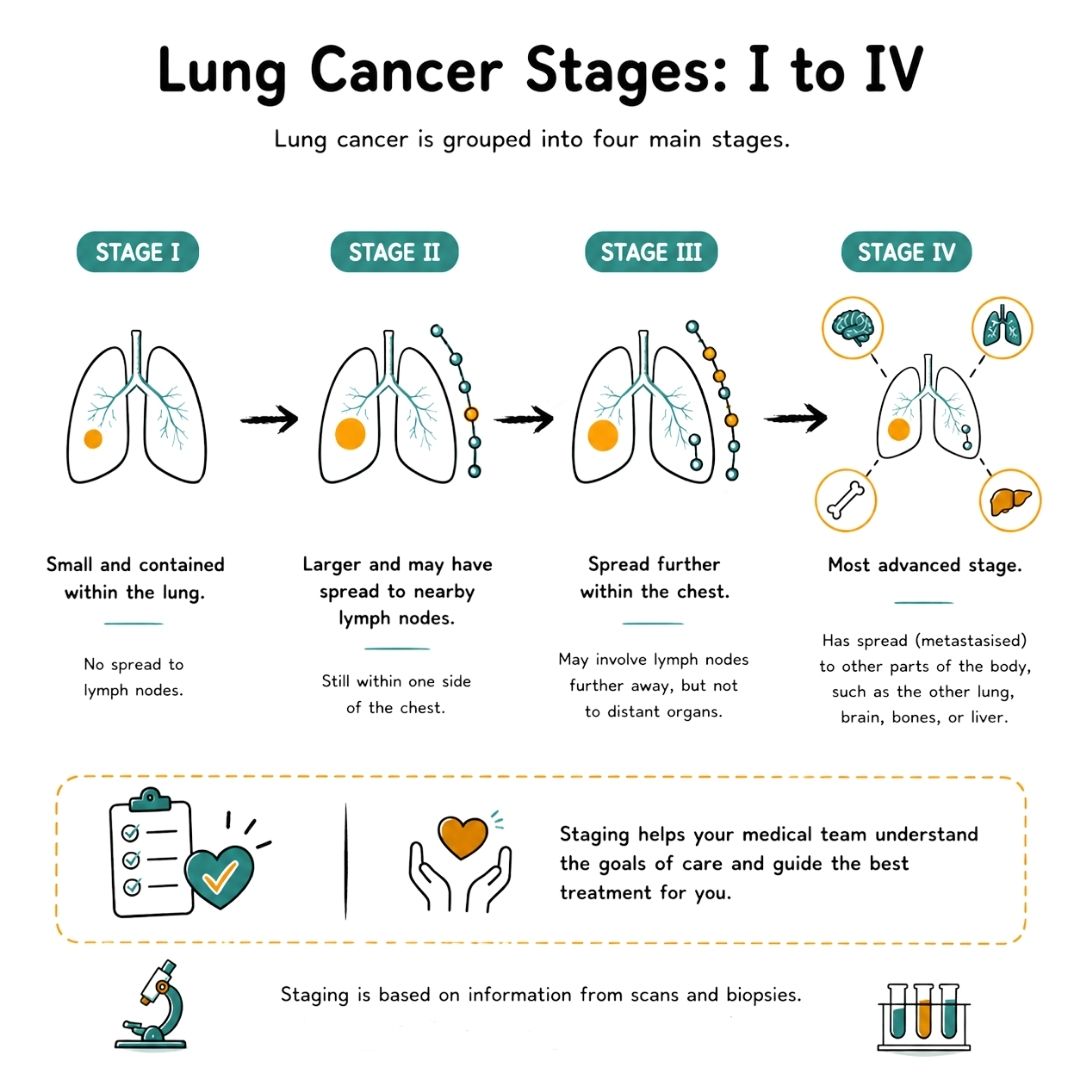
Lung cancer is usually grouped into four main stages, from I to IV.
Stage I: The cancer is small and contained within the lung. It has not spread to nearby lymph nodes.
Stage II: The cancer is a bit larger and may have spread to nearby lymph nodes, but it is still within one side of the chest.
Stage III: The cancer has spread further within the chest. It may involve lymph nodes that are further away, but it has not spread to distant parts of the body.
Stage IV: This is the most advanced stage. The cancer has spread (metastasised) to other parts of the body, such as the other lung, brain, bones, or liver. Our guide on the spread of lung cancer explains this in detail.
Staging is not just a label; it is a powerful tool that guides every step of your treatment. It helps to understand the goals of care, whether that is aiming to cure the cancer, control its growth, or manage symptoms to support your quality of life.
More cases of lung cancer are now being diagnosed at earlier stages, with national cancer registry data showing a steady improvement in early detection. This matters because earlier diagnosis often means more treatment options and better outcomes.
How Doctors Determine Your Lung Cancer Stage
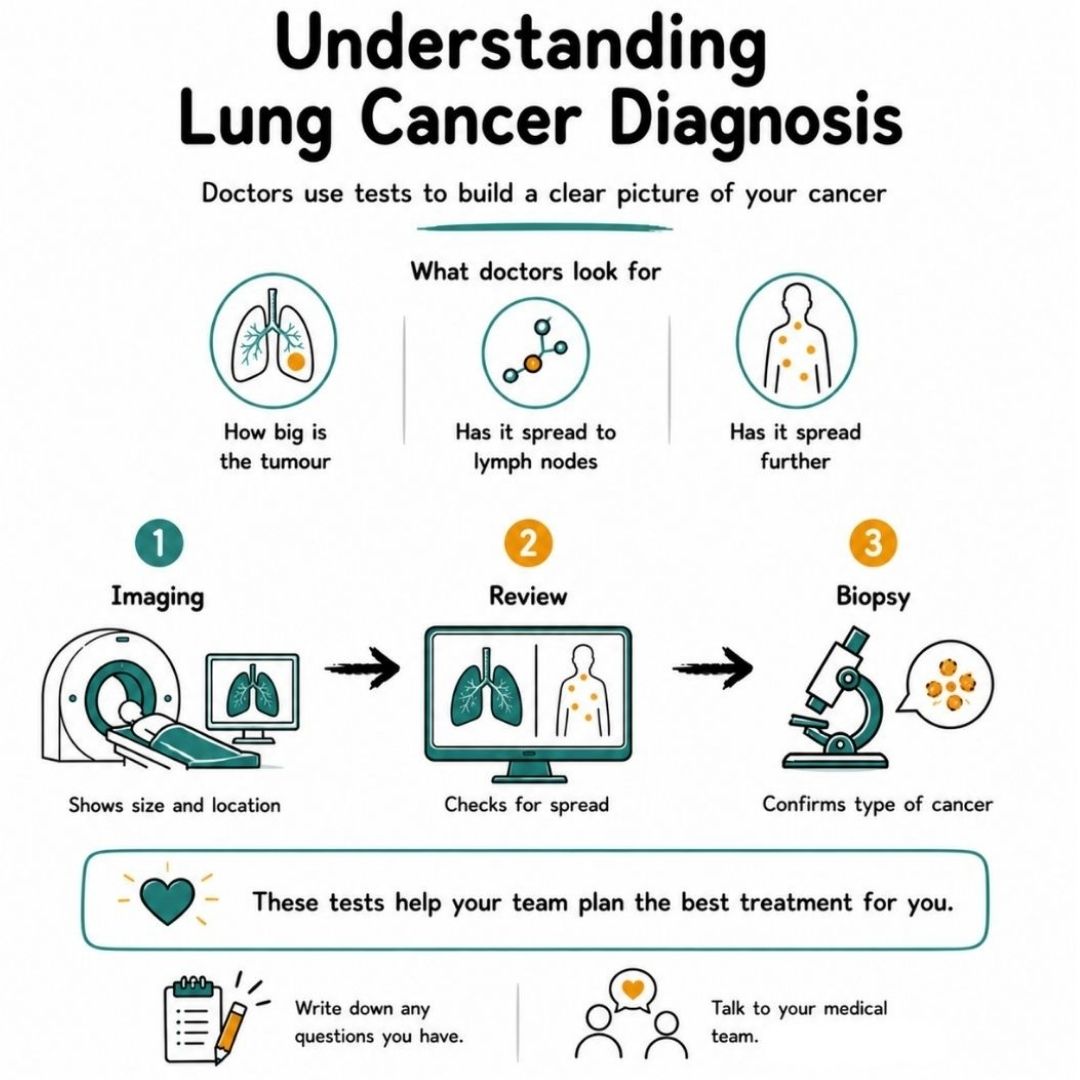
Determining the stage of lung cancer involves gathering information from several different tests. Your medical team will run a series of tests, piecing together clues to build a complete picture of what is going on inside your body. Together, these tests help your medical team create a treatment plan tailored to you.
These tests are designed to answer the following key questions:
How big is the main tumour?
Has it spread to nearby lymph nodes?
Has it spread to other parts of the body?
Imaging Scans: A Window to the Inside
One of the first steps in lung cancer staging is imaging. These scans are non-invasive and help doctors see inside your body in detail, giving them a clear understanding of the cancer.
CT (Computed Tomography) Scan: A CT scan creates detailed, cross-sectional images of your body using X-rays. It helps doctors see the size, shape, and exact location of the tumour. It can also show whether the cancer has spread to nearby lymph nodes or organs such as the liver.
PET (Positron Emission Tomography) Scan: While a CT scan shows structure, a PET scan reveals activity. Before the scan, you are given a small amount of a safe radioactive substance, usually a type of sugar. Cancer cells tend to use more energy than normal cells, so they absorb more of this sugar and appear brighter on the scan. This can help doctors identify areas where the cancer may have spread.
Often, these scans are combined into a PET-CT scan, which brings together detailed images and activity information in one test. This helps doctors assess the cancer more accurately.
Biopsy: Confirming the Diagnosis
Imaging scans can give your medical team a very strong idea of what is happening, but a biopsy is the only way to confirm the diagnosis. This involves taking a small sample of tissue from the area of concern. A specialist doctor, called a pathologist, then examines the sample under a microscope to check for cancer cells and identify the exact type of lung cancer.
A biopsy is the gold standard for diagnosis. As well as confirming cancer, it can also provide important information about the cancer’s genetic features. This can help your team decide whether more personalised or targeted treatments may be suitable for you.
There are several ways to take a biopsy, and your doctor will recommend the most appropriate option based on the location of the tumour.
Bronchoscopy: A thin, flexible tube with a small camera is gently passed through your nose or mouth, down into your lungs, to collect a tissue sample.
Needle Biopsy: Using imaging such as a CT scan for guidance, a fine needle is inserted through the chest to take a small sample from the tumour.
Surgical Biopsy: In some cases, a minor procedure is needed to remove a slightly larger sample for more detailed analysis.
Going through these tests can feel stressful, especially with new terms and multiple appointments. It may help to write down any questions you have and discuss them with your medical team.
The TNM Staging System Explained
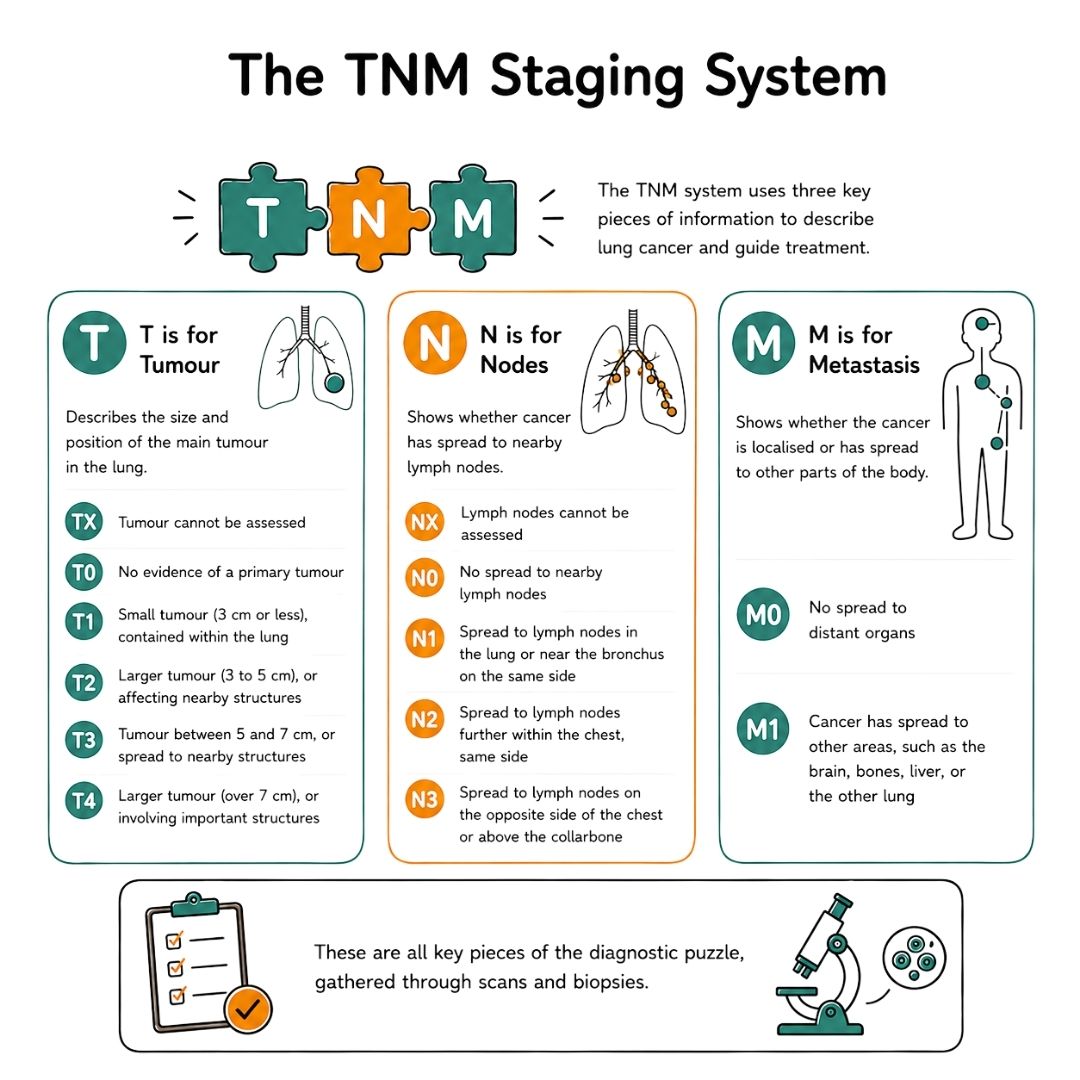
When your doctor talks about lung cancer staging, you may hear a combination of letters and numbers, such as T1, N0, and M0. At first, this can feel confusing. In reality, it is part of the TNM staging system, a widely used way for doctors to describe cancer clearly and consistently.
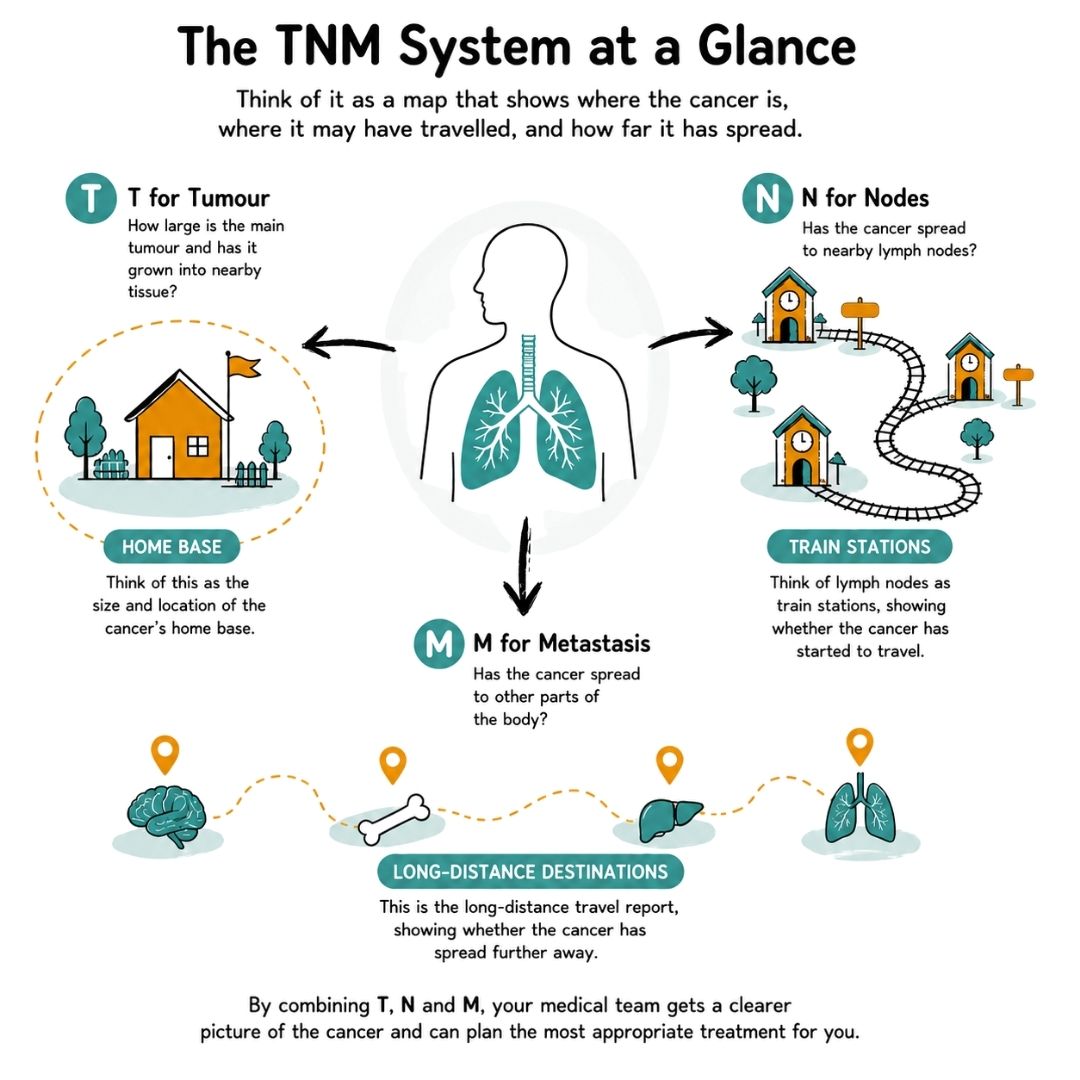
Think of it as your cancer’s unique address. Each part of the address, T, N, and M, tells your medical team something specific about the tumour. Together, they help determine the overall stage of lung cancer and guide treatment decisions.
Each part of the TNM system answers an important question, as shown in the image below.
Let us look at what each one means in more detail.
T is for Tumour
The T stage describes the size and position of the main tumour in the lung.
TX – The tumour cannot be assessed
T0 – No evidence of a primary tumour
T1 – Small tumour (3 cm or less), contained within the lung
T2 – Larger tumour (3 to 5 cm), or one affecting nearby structures such as the bronchus or lung lining
T3 – Tumour between 5 and 7 cm, or one that has spread to nearby structures such as the chest wall
T4 – Larger tumour (over 7 cm), or one involving important structures such as the heart, windpipe, or major blood vessels
N is for Nodes
The N stage shows whether cancer has spread to nearby lymph nodes, which are part of your immune system.
NX – Lymph nodes cannot be assessed
N0 – No spread to nearby lymph nodes
N1 – Spread to lymph nodes within the lung or near the bronchus on the same side
N2 – Spread to lymph nodes further within the chest, but still on the same side
N3 – Spread to lymph nodes on the opposite side of the chest or above the collarbone
M is for Metastasis
The M stage is important because it shows whether the cancer is localised or has spread to other parts of the body. This helps your medical team decide on the goals of treatment, whether that is aiming to cure the cancer or focusing on controlling it and supporting your quality of life.
M0 – No spread to distant organs
M1 – Cancer has spread to other areas, such as the brain, bones, liver, or the other lung
If you would like to understand how tissue samples are analysed, you can read about the role of laboratory medicine.
Lung Cancer Stages: Treatment and Outlook
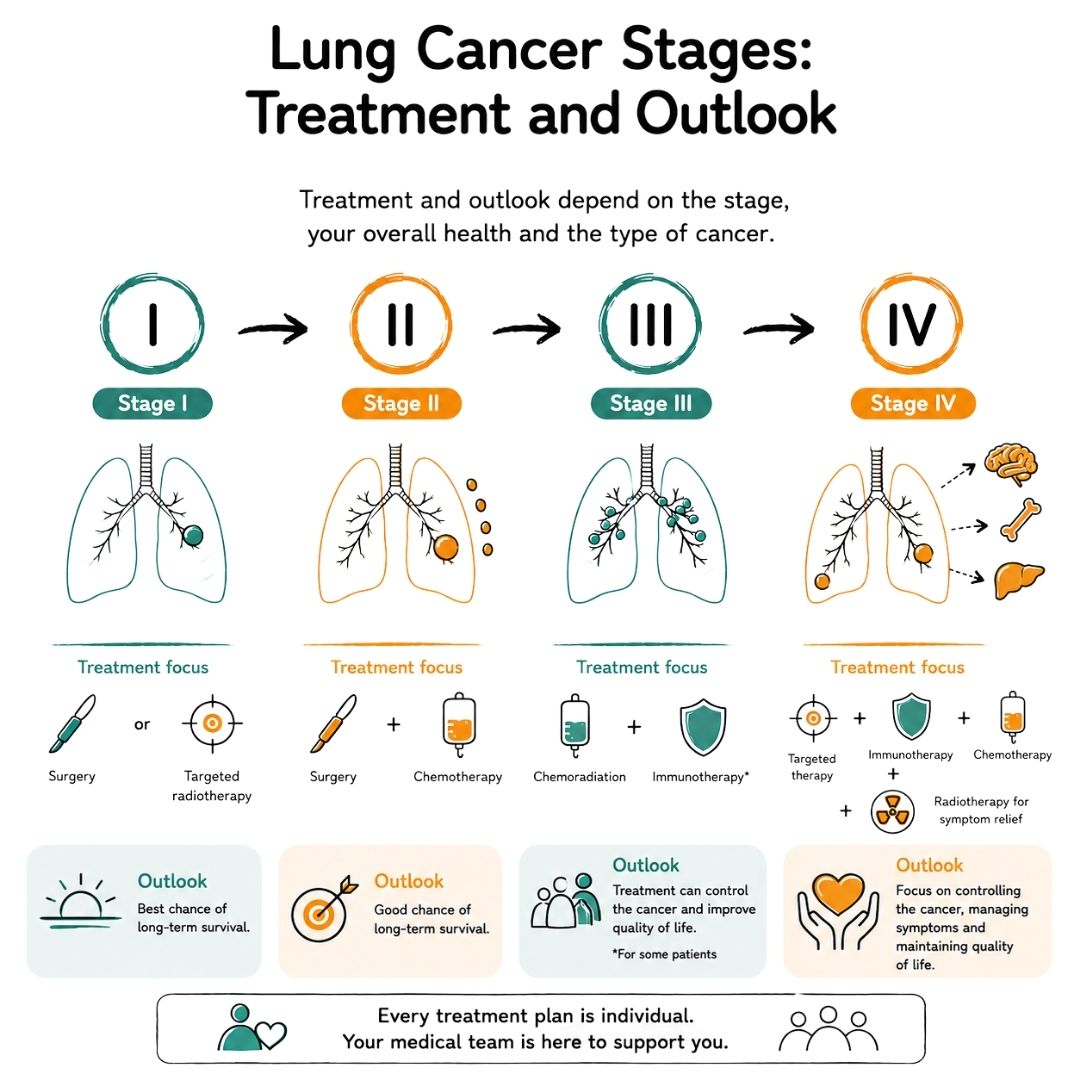
After a lung cancer diagnosis, understanding the stage of the cancer can help make sense of the treatment journey ahead. Each stage, from I to IV, helps describe where the cancer is and how far it has spread. This information guides conversations with your medical team and helps shape your treatment plan.
You can think of the stages as points on a map. Each one represents a different situation, with its own treatment approach. It is important to remember that these are general guides. Your care will always be tailored to you, taking into account your overall health, the type of cancer, and its specific characteristics.
Stage I Lung Cancer
Stage I is the earliest stage of lung cancer. Because the cancer is localised, treatment often aims to cure it.
Surgery is usually the main option, removing the tumour along with a small amount of surrounding healthy tissue.
If surgery is not suitable, a precise form of radiotherapy called stereotactic body radiotherapy (SBRT) may be used. This delivers targeted radiation to the tumour while limiting damage to nearby tissue.
Early diagnosis at this stage offers the best chance of successful treatment, which is why lung cancer screening for those at higher risk is so important.
Stage II Lung Cancer
In Stage II, the cancer is still within one side of the chest. Treatment still focuses on cure.
Surgery is often the first step and may involve removing one lobe of the lung (lobectomy) or, in some cases, the whole lung (pneumonectomy).
After surgery, your oncologist may recommend adjuvant chemotherapy. This treatment helps to destroy any remaining cancer cells and reduce the risk of the cancer returning.
This combined approach is designed to treat both the visible tumour and any cancer cells that may remain.
Stage III Lung Cancer
Stage III lung cancer is more advanced but remains within the chest. Treatment at this stage is more complex and usually involves a combination of therapies.
Surgery alone is often not enough. Chemotherapy and radiotherapy are often given together, known as chemoradiation.
After this, some patients may receive immunotherapy, which helps the immune system recognise and attack cancer cells. For a more detailed look at the options, our comprehensivelung cancer treatment guide is a great place to start your research.
Stage IV Lung Cancer
Stage IV is the most advanced stage. At this stage, treatment focuses on controlling the cancer, managing symptoms, and maintaining quality of life.
Many people receive treatments that work throughout the body, known as systemic therapies. They travel through the bloodstream to reach cancer cells wherever they are in the body.
These treatments may include
Targeted therapy for specific genetic changes
Immunotherapy to support the immune system
Chemotherapy to slow cancer growth
Radiotherapy may also be used to relieve symptoms, such as pain or breathing difficulties.
Although Stage IV lung cancer is not usually curable, advances in treatment mean that many people are living longer and maintaining a good quality of life.
A Realistic Look at Prognosis
It is natural to have questions about prognosis and what the future may look like. It can also help to understand what survival statistics really mean. Statistics are based on large groups of people and may reflect data collected several years ago. They cannot predict what will happen to you as an individual.
Your outlook is personal to you. It depends on many factors, including your overall health, the type of lung cancer, its stage, and how it responds to treatment.
Cancer care is continuing to improve, with advances such as immunotherapy and targeted treatments offering new options. As a result, many people are living longer and maintaining a good quality of life.
While statistics can provide general information, they do not reflect individual experiences. Your medical team is best placed to guide you, answer your questions, and help you understand what to expect.
Next Steps and Finding Support
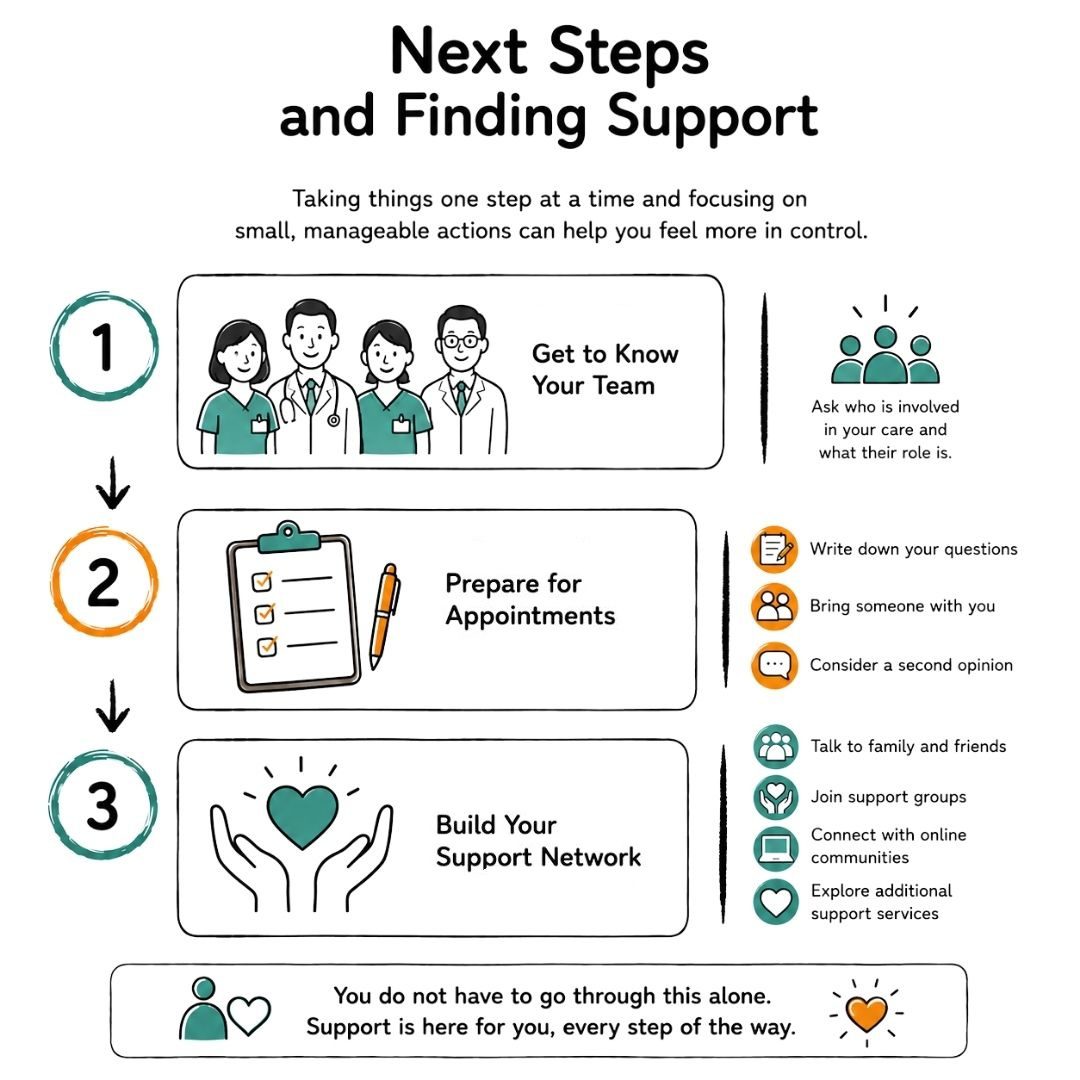
Receiving a lung cancer diagnosis and learning about its stage can bring many questions and uncertainties. Taking things one step at a time can help make the process feel more manageable.
Getting to know your medical team is an important first step. This team may include oncologists, radiologists, surgeons, and specialist nurses. They are there to support you. It can help to ask simple questions such as who is involved in your care and what each person’s role is.
Making the Most of Your Appointments
Preparing for appointments can help you feel more confident and ensure your concerns are addressed.
You may find it helpful to
Write down your questions This could include questions about your stage, treatment options, or possible side effects.
Bring someone with you A friend or family member can offer support, help you remember information, and take notes if needed.
Consider a second opinion This is common and can provide reassurance about your diagnosis and treatment plan.
Your medical team wants to help, and being an active voice in your own care is one of the most powerful things you can do for yourself.
Finding Emotional and Practical Support
You do not have to go through this alone. Connecting with people who understand what you are going through can be a lifeline. Support can come from different places, including healthcare professionals, support groups, online communities, or family and friends.
As you move forward with your treatment plan, it may also help to explore additional support services. For example, palliative care can provide support with symptoms and improve day-to-day quality of life, even from an early stage.
Building your support network is as crucial as the medical treatment. These connections offer a space to talk openly and learn from others with similar experiences. They can help you feel more confident and supported as you move forward.
Common Questions About Lung Cancer Staging
Many people have questions about staging after diagnosis. Let us walk through some of the questions we hear most often.
Can My Lung Cancer Stage Change Over Time?
This is a common source of confusion. The stage given at diagnosis is part of your medical record and does not change. It describes the cancer at the time it was first identified.
If the cancer grows or spreads after treatment, your doctors may describe this as progressive disease and will reassess your care. If treatment is effective, you may hear the term no evidence of disease. Even in these situations, the original stage remains the same.
How Is Staging Different for NSCLC and SCLC?
The two main types of lung cancer are staged differently because they behave in different ways.
Non-small cell lung cancer (NSCLC) is usually staged using the TNM system, which groups cancer into Stages I to IV.
Small cell lung cancer (SCLC) tends to grow and spread more quickly, so a simpler system is used:
Limited stage Cancer is confined to one side of the chest
Extensive stage Cancer has spread beyond that area
This approach helps doctors plan treatment more quickly and effectively.
Is Stage IV Lung Cancer Always Terminal?
Stage IV lung cancer is the most advanced stage, and it is not usually curable. However, it is treatable.
Many people receive treatments that can slow the cancer, manage symptoms, and support quality of life. Advances in treatments such as immunotherapy and targeted therapy mean that some people are living longer than before.
At this stage, care focuses on controlling the cancer and helping you live as well as possible.
We strongly advise you to talk with a health care professional about specific medical conditions and treatments. The information on our site is meant to be helpful and educational but is not a substitute for medical advice.
Written by Dr Steffie Mano
Steffie holds a PhD in Chemical and Biomolecular Engineering, where her research focused on developing innovative drug delivery approaches for biomedical applications, including cancer treatments.
Passionate about clear and compassionate communication, she translates complex medical and scientific information into language that patients and families can understand and trust. She combines analytical rigour with empathy, ensuring that information is accurate and accessible.
With experience in mentoring, teaching and scientific writing, she is committed to helping people feel informed, supported and empowered as they navigate their cancer journey.
Lung Cancer Affects Women Differently Than Men In Terms Of Symptoms, Treatment Response, And Survival Rates. Learn More About These Differences And What They Mean For Care.