Cancer changes everything.
It’s one of those moments that divides your life in two; there’s a “before”, and then there’s the “after”. For the millions of people touched by this disease, whether as patients or as caregivers, life after cancer isn’t about “going back” to normal. That version of life doesn’t exist anymore. The scars, some visible, others deeply buried, stay. The fear lingers in quiet moments. The grief for what was lost shows up in unexpected ways. But time and again, I’ve watched something extraordinary rise from this wreckage.
Survivors and caregivers, even in the aftermath of their own battles, find ways to reach back for others. They take their pain, their losses, their hard-won lessons, and transform them into projects, movements, and communities that light the path for people still navigating the darkness they once knew so intimately. This isn’t about romanticising cancer or glossing over its brutality. It’s about human resilience, the ability to create meaning out of chaos, to plant seeds in burnt soil and watch them bloom. It’s about ordinary people doing extraordinary things, not because they asked for this journey, but because they chose to make something from it.
Think about Nancy Brinker.
She didn’t plan to launch a global movement. She was a grieving sister, holding tight to a promise made to Susan, her sister lost to breast cancer: to do everything in her power to fight this disease and help others.
That promise became the Susan G. Komen Foundation. What began as a small tribute has grown into the world’s largest breast cancer organisation, investing billions into research, advocacy, and community programs in more than 30 countries. Nancy’s personal grief was channeled into a mission that has saved lives, offered hope, and amplified voices.
Or take Dr. Fitzhugh Mullan. A cancer survivor and physician, he was frustrated by how patients were seen as “victims”. In 1986, he and fellow survivors founded the National Coalition for Cancer Survivorship (NCCS). They didn’t just want better policies; they wanted to change the narrative entirely. They introduced a new word: “survivor”. That one shift in language brought dignity where there had been pity, and strength where there had been silence.
These aren’t isolated stories. They reflect a pattern I’ve seen in countless survivors: the impulse to give back, to ensure no one else faces what they endured alone.
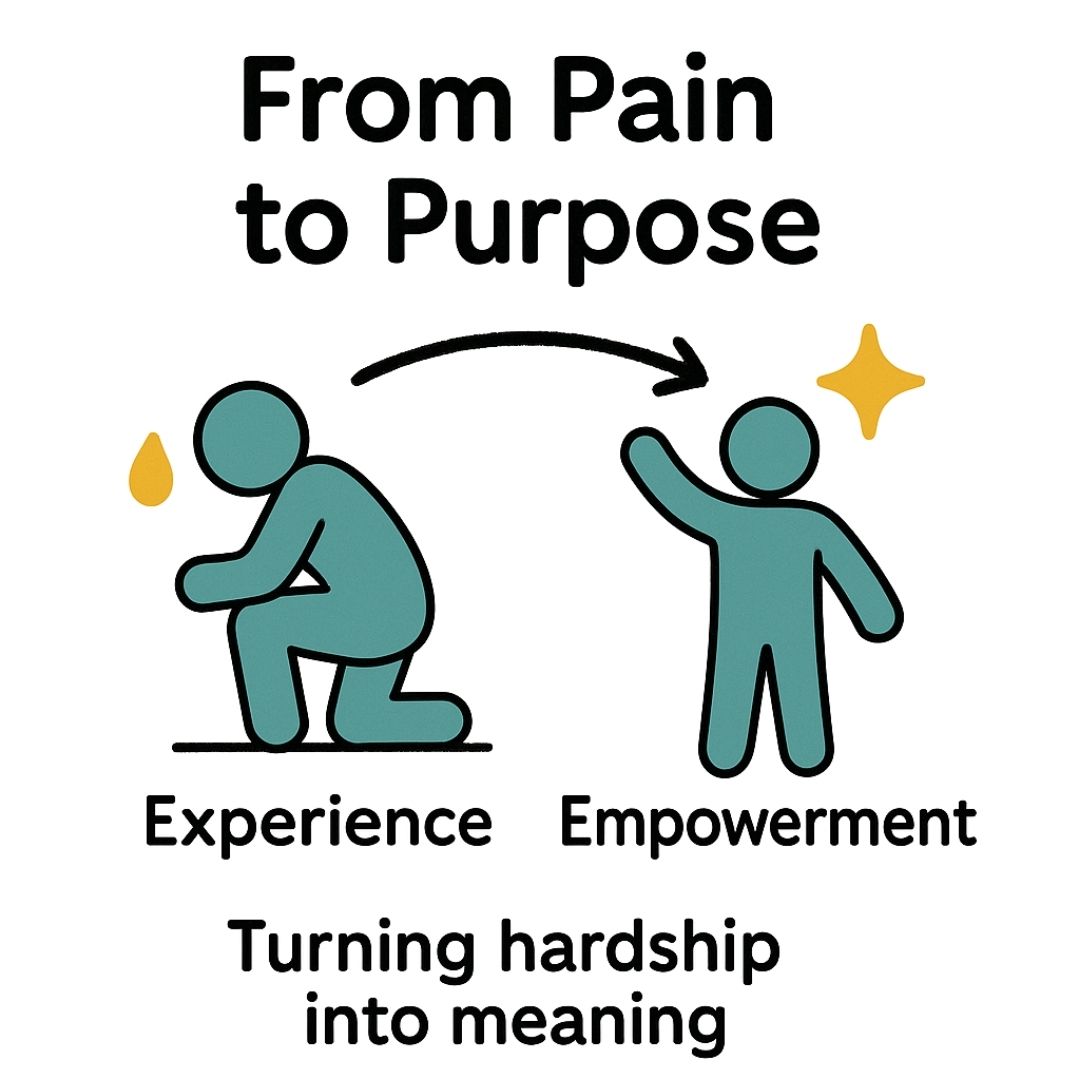
I’ve often wondered: after enduring so much, why do people choose to walk back into the fire for others?
I think it comes down to three things:
This doesn’t mean everyone touched by cancer must start a nonprofit or lead a movement. For many, purpose is quieter: offering a listening ear to a newly diagnosed friend, volunteering at a local hospital, or simply savouring the gift of another day with loved ones.
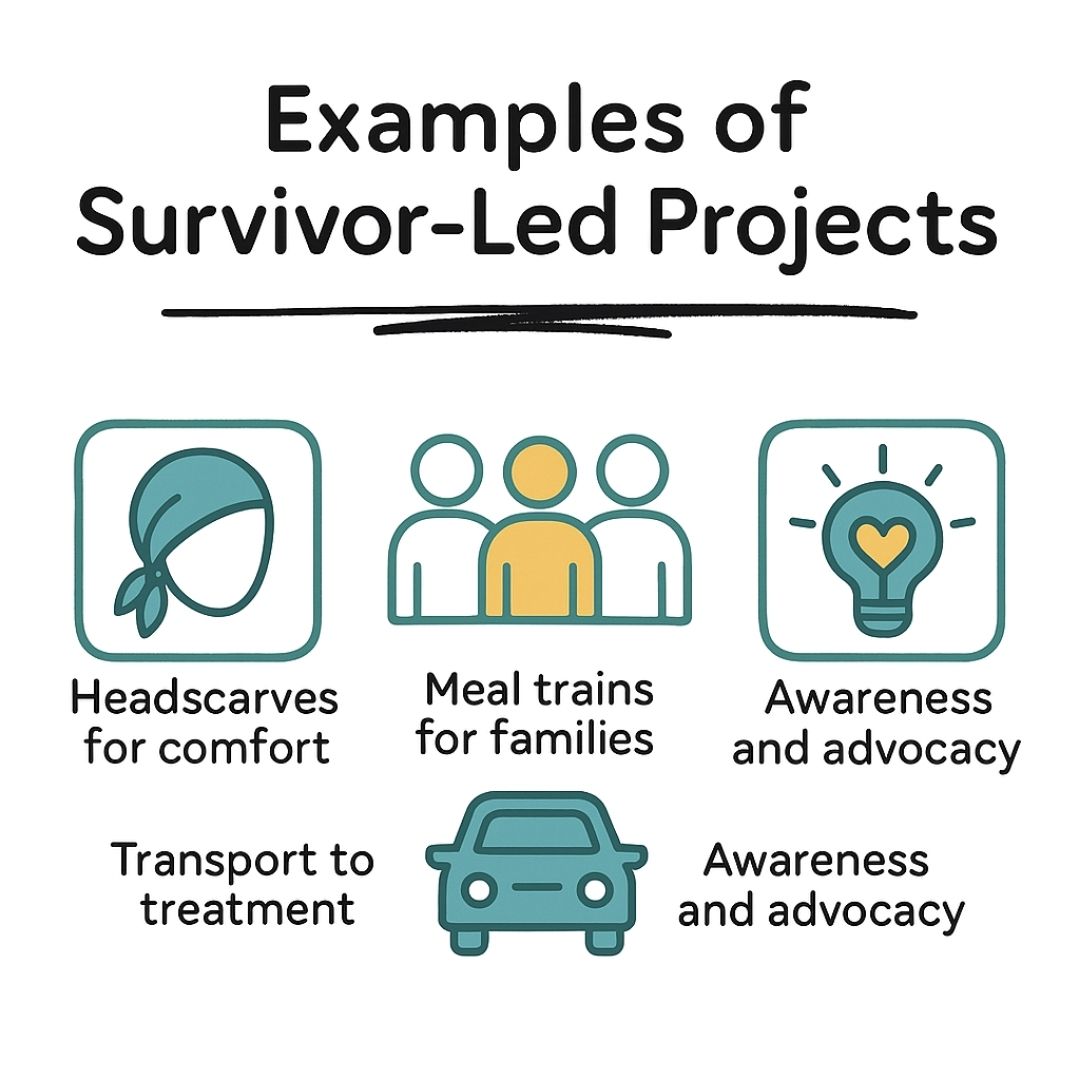
Not all survivor initiatives make headlines. Many begin as simple acts of kindness:
Some focus on direct services, such as transport, financial aid, and comfort items. Others fight for systemic change: better insurance policies, more inclusive clinical trials, and fair workplace accommodations. And many focus on education and awareness, breaking down stigma and encouraging early detection.
Each act, no matter how small, sends ripples.
The internet has given survivors new tools to scale their efforts. From crowdfunding research projects to building apps for symptom tracking, survivors are turning personal challenges into global solutions. On social media platforms, I see young survivors breaking taboos, talking openly about mastectomies, fertility struggles, and PTSD. These digital spaces have become lifelines, especially for people in underserved areas.
I’d be lying if I said this journey is easy or universal.
Not every survivor wants or is able to give back. Many are still navigating their own grief, fear of recurrence, or physical challenges. And that’s okay. Healing isn’t linear. Meaning doesn’t always come wrapped in a mission.
We have to honour each person’s pace and choice. Not everyone has to turn their pain into a project to live a meaningful post-cancer life.
So how do we support these survivor-led movements?
There’s a quote from a survivor advocate that I’ll never forget:
“Helping others gave me a reason to get out of bed. It didn’t fix me. But it saved me.”
That’s the power of these efforts. They help the helper. They create a ripple effect that touches families, communities, and even healthcare systems.
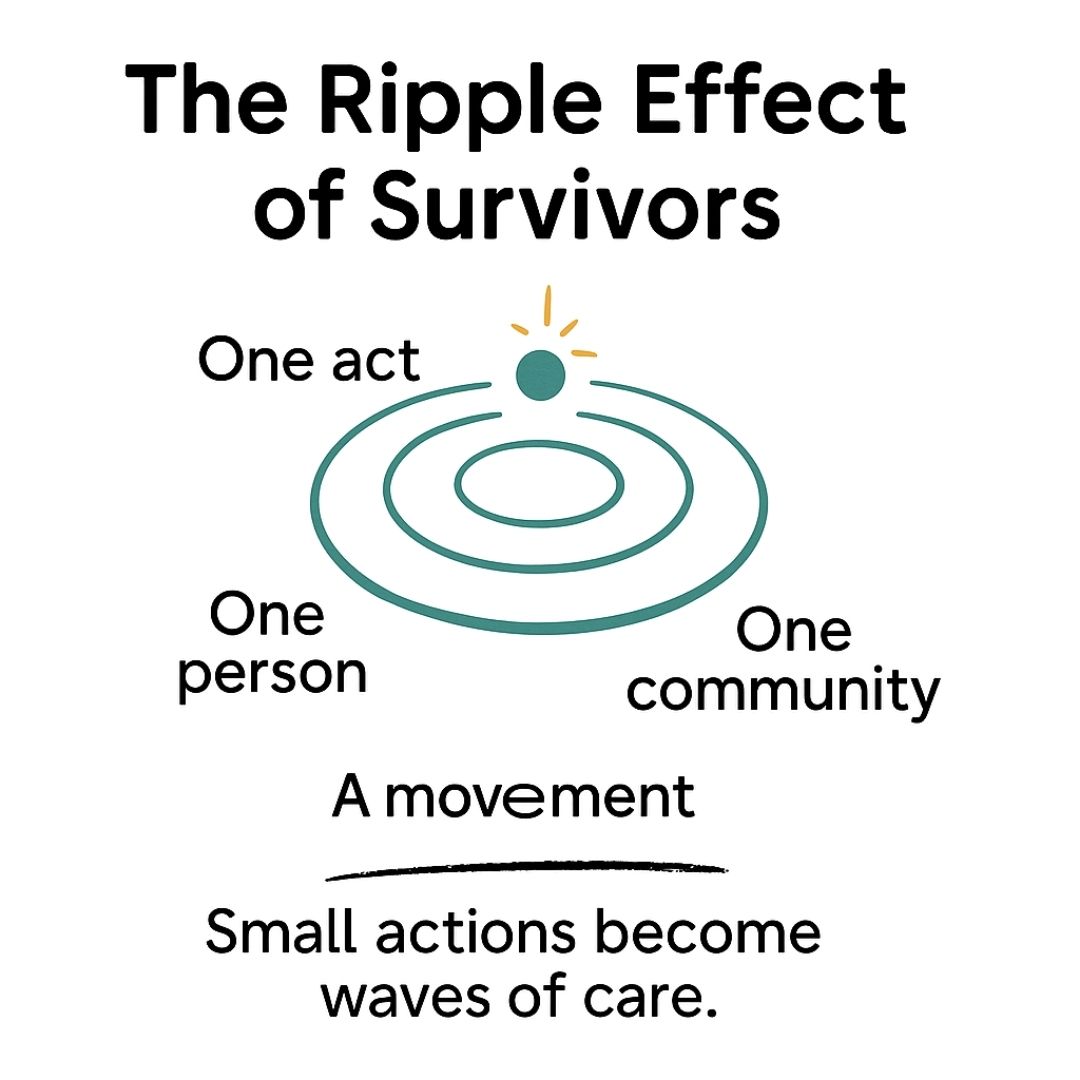
What strikes me most about these stories is how quiet most of them are. There are no bright lights or big speeches. The revolution happens in hospital waiting rooms, at kitchen tables, and in late-night text chains between survivors offering each other strength.
It’s not loud. But it’s transformative.
These are ordinary people who chose to turn their hardest moments into something that softens the road for those coming after. They’re proof that even in the face of cancer’s devastation, hope can be an action and empowerment, a legacy.
Cancer takes so much from us. It takes health. It takes time. It takes dreams carefully built over decades and scatters them like fragile glass. It takes the easy laughter we once knew and replaces it, at least for a while, with heavy silences in hospital rooms and long nights staring at the ceiling, wondering, Why me? Why us?
It takes, and takes, and takes until we think there’s nothing left to give.
And yet somehow it also leaves behind something unexpected.
In its wake, we see sparks of light. We see people rising not because they were unbroken, but because they were broken and rebuilt themselves anyway. We see movements born out of grief, out of love, and out of the simple but radical refusal to let others walk alone through the same darkness.
We see survivors who carry their scars like caregivers whose compassion became the blueprint for organisations, programmes, and initiatives that now touch lives across the globe. We see them turning their pain into purpose, their loss into legacy.
These individuals remind us of something powerful: rebuilding doesn’t have to mean returning to how things were. Sometimes, it means creating something entirely new, something more tender, more human, more filled with the kind of empathy you can only gain by walking through fire.
In their stories lies a quiet invitation for the rest of us.
The question isn’t just, What will they do next? It’s also, what can we do to stand with them?
Because while their journeys began in the solitude of diagnosis, their impact is collective. Their victories ripple outward, touching strangers they’ll never meet. The support group meeting where someone finally says, “I feel seen.” These ripples don’t happen by accident. They happen because ordinary people, survivors, caregivers, and allies decide to turn heartbreak into action.
But here’s the truth: they can’t do it alone.
We, too, have a role in this circle of care. We can choose to share their stories, amplifying voices that too often go unheard. We can volunteer our time, lend our skills, or donate to organisations born from lived experience. We can vote for policies that centre survivor voices and ensure equitable access to care. We can show up not perfectly, but consistently, because even small acts of solidarity matter more than we know.
Imagine what would happen if every single one of us joined that ripple. If every act of kindness, every dollar, every hour, every word of encouragement, were layered into a wave so powerful it reached every corner of the world.
Imagine a future where no one sits alone in a hospital room feeling terrified and invisible. Where they can sense, even in their darkest hour, the presence of a community built by those who came before them, those who turned pain into purpose and left the world better than they found it.
Cancer may take, but the human spirit gives. Again and again. Fiercely. Tenderly. Relentlessly.
And together, we can make sure that gift never stops flowing.1,2
Edited by: Katheeja Imani
We strongly advise you to talk with a health care professional about specific medical conditions and treatments.
The information on our site is meant to be helpful and educational but is not a substitute for medical advice.
Cancer Care Parcel Has Donated Some Cancer Gift Hampers To The Cansurvive Project To Help Them Support People Who Are Going Through Cancer Treatment.
Though most people are supportive about cancer research, there remains a small minority who upholds the idea that cancer research is just one big lie.
This article does not, in anyway endorse curing yourself of cancer. It is an explanation of how the medical profession helped cure me of my early stage breast cancer. In 6 months I will be off the drugs and told I am cancer free and I can't wait.