Cancer affects far more than the body, and that lasts much more than the treatment period itself. The emotional impact, whether you are currently receiving treatment or living after treatment has ended, can be just as heavy. Feelings of fear, intrusive thoughts, or constantly checking your body for signs of illness are very common. For many, these worries do not simply fade away once treatment is over. Instead, they may persist, creating ongoing anxiety or even post-traumatic stress and constant fear.
This article explores what research tells us about coping psychologically during and after treatment. It looks at how certain thought patterns and daily habits may affect both mind and body, and shares approaches that studies have found helpful in easing distress. The aim is not to give medical advice, but to provide information and reassurance that there are ways to live with less fear and more peace of mind, even through the most challenging parts of the treatment.
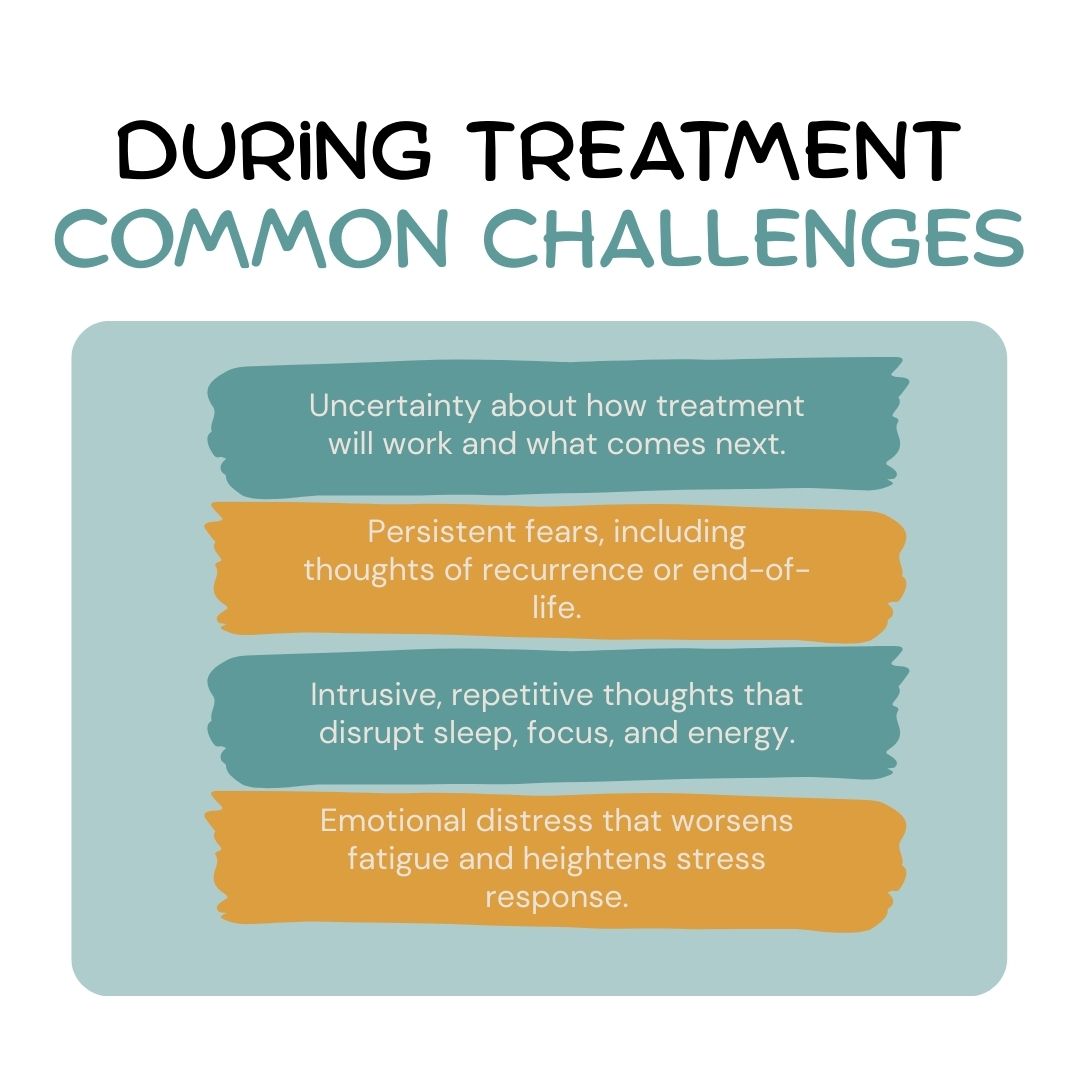
Depending on the individual, patients might experience different states of mind. However, during treatment, the most common natural things to experience are:
Research shows that these thoughts and emotions not only negatively affect mood but can also worsen fatigue, physical strength, disrupt sleep, and heighten the body’s stress response.1
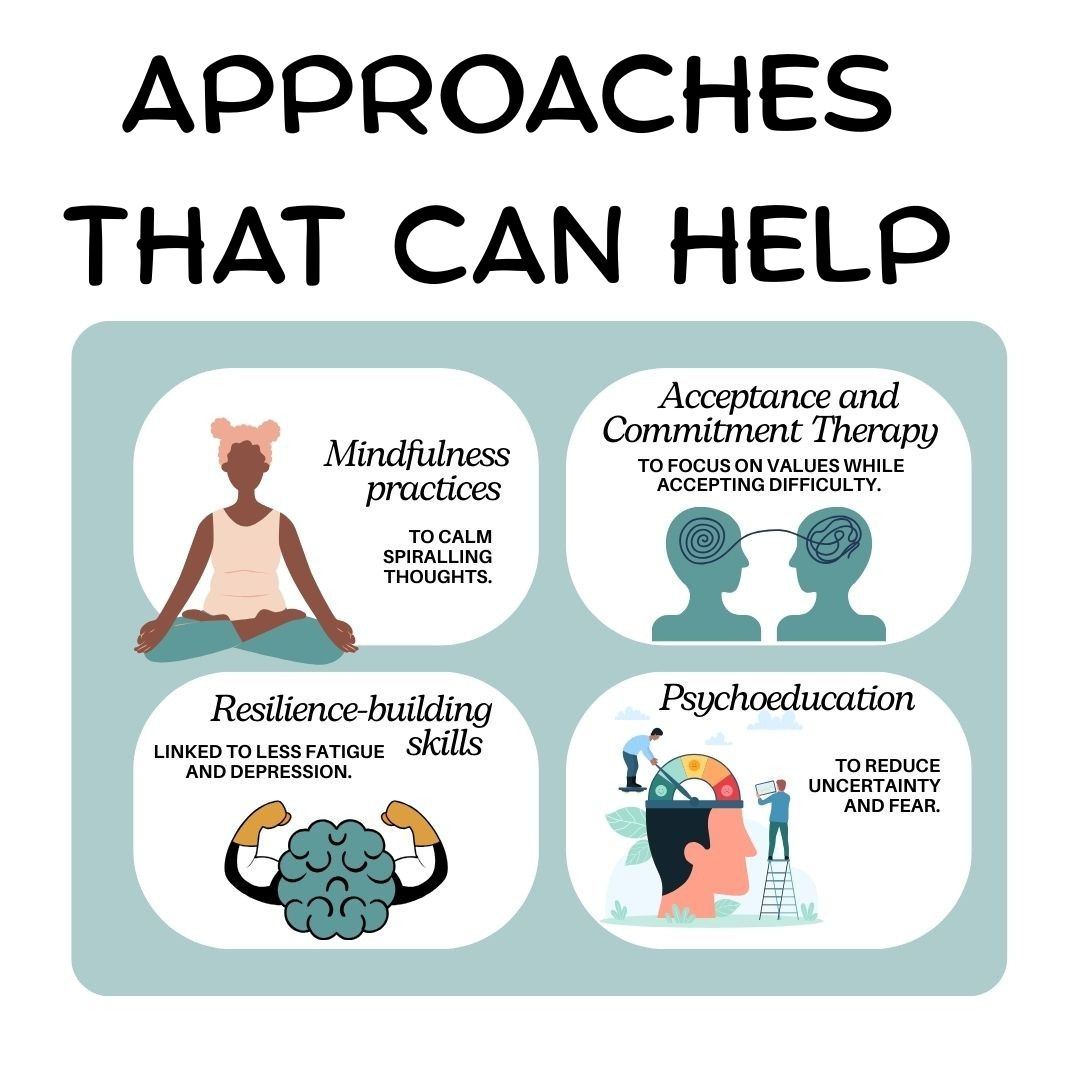
Structured mindfulness programmes have been shown to reduce anxiety, depression, and even trauma-like symptoms among people undergoing chemotherapy. Mindfulness helps you notice your thoughts without letting them spiral out of control.1
ACT encourages you to accept difficult feelings instead of battling them, while focusing on what matters most in your life. Studies suggest ACT can ease trauma-related distress in people with cancer.2
Resilience does not mean “staying strong” or in “superhero mode” in a forced way, but rather learning skills that help you accept the reality of the situation and life and adapt to it. Higher resilience is linked to less depression, less fatigue, and a better quality of life during treatment.3
Learning what to expect from treatment and understanding which symptoms are common side effects can reduce uncertainty and rumination. One study showed that lowering uncertainty can lessen the fear of recurrence.4
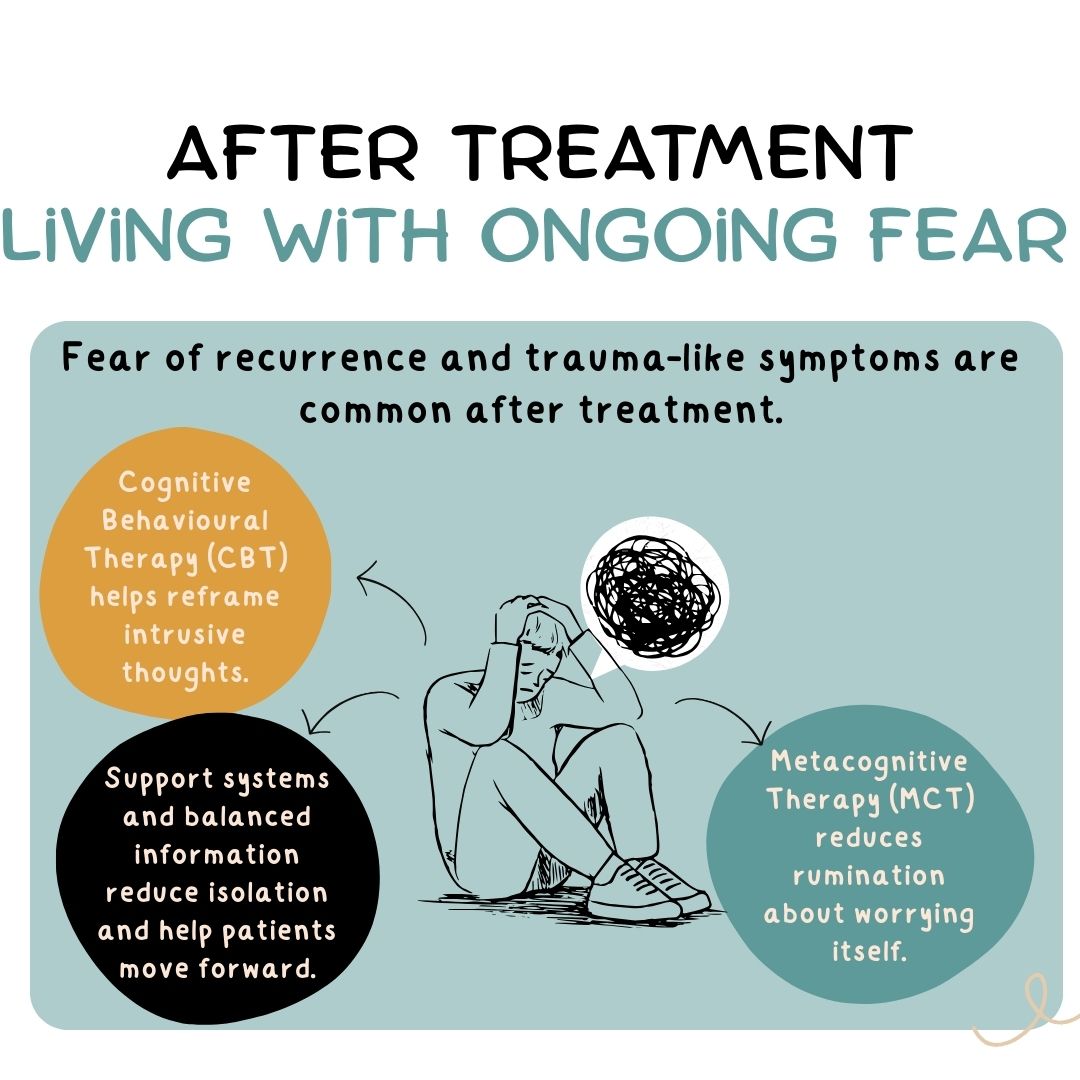
Many mistakenly expect that once treatment is over, life will quickly return to “normal.” Yet for many people, anxiety and distress continue. You may find yourself scanning your body for the smallest signs of illness, constantly searching online for explanations, or worrying that every ache means cancer has returned.
This experience, often called fear of recurrence, is very common.4 Some people also experience symptoms similar to post-traumatic stress, including unwanted memories of treatment, feeling on edge, or avoiding reminders of their illness.5
Getting familiar with this experience and how to cope with it is very important for the carers and family members of those who have completed treatment.
Ongoing worry does more than cloud your thoughts. It can:
CBT works by identifying unhelpful thought patterns (e.g., “This pain means my cancer is back”) and gently and effectively challenging them. Studies show CBT can reduce distress and intrusive thoughts in people who have completed cancer treatment.5
This approach focuses not on the thoughts themselves, but on beliefs about worrying (for example, “If I stop worrying, I won’t be prepared”). Research shows MCT helps reduce fear of recurrence and rumination.5
Just as during treatment, mindfulness can help after treatment by easing anxiety and preventing thoughts from spiralling. Consistent practice is linked with lower distress and improved well-being.7
Social support, from friends, family, or support groups, has been shown to reduce anxiety and PTSD-like symptoms.7 Sharing experiences in safe spaces that acknowledge and validate your feelings helps you feel less alone.
Reliable information from your care team helps reduce uncertainty. However, constant searching online can drown you in your fears and dark thoughts. Choosing trusted sources and setting limits around information-seeking can protect mental health and help you move on with your life in a better way.
While self-care and social support are important, sometimes professional support is the most effective way to manage ongoing fear or distress. There are thoughts and fears that you cannot share with anyone, or others might not be able to understand or acknowledge your feelings effectively. Therapists experienced in psycho-oncology can:
Whether you are currently in treatment or living after it, distressing thoughts and feelings are a common part of the cancer experience. They do not mean you are failing, or you are a weak person; they mean you are human.
Research shows there are ways to ease this burden. Mindfulness, acceptance, therapy, resilience, balanced information, and supportive relationships are just a few of the dozens of effective, tested ways that are out there to help you in this journey. These tools do not remove the uncertainty, but they can help you learn how to live with it more peacefully, as life itself is the land of uncertainties.
The good news is that you do not have to go through these challenges alone. Compassionate professionals, support groups, and evidence-based techniques are waiting to provide you with the guidance and relief you deserve.
Edited by: Katheeja Imani
We strongly advise you to talk with a health care professional about specific medical conditions and treatments.
The information on our site is meant to be helpful and educational but is not a substitute for medical advice.
Lung Cancer Affects Women Differently Than Men In Terms Of Symptoms, Treatment Response, And Survival Rates. Learn More About These Differences And What They Mean For Care.
Taking Part In A Clinical Trial Is Not A Simple Decision. Here Are 10 Pieces Of Advice To Help You Make A Thoughtful Choice.
Cancer doesn’t discriminate in age, and I want to be a young advocate for others to know that it can happen to anyone.