Imagine knowing how your body will react to chemotherapy before even starting the treatment. Thanks to a groundbreaking advancement in predictive medicine, this is now a reality. A new genetic tool, designed to analyze a patient's unique genetic makeup, promises to make chemotherapy more personalized and less brutal. It is not science fiction, it is the future happening right now. For anyone dealing with cancer, this could be life-changing.
Imagine having a detailed roadmap of your body's response to chemotherapy, designed specifically to your unique genetic makeup. That's precisely what the Antiblastic Drug Multipanel (ADM) Platform delivers. This cutting-edge technology is a pharmacogenetic tool, meaning it analyzes how your genes influence your response to medications. In this case, it's focused on chemotherapy drugs.
The ADM Platform represents a significant advancement in personalized cancer care, bringing us closer to a future where chemotherapy is more targeted, effective, and tolerable.
One of the biggest challenges with chemotherapy is its unpredictability, while some patients tolerate it well, others experience severe and sometimes life-threatening side effects. These adverse reactions can range from nausea, fatigue, and hair loss to more serious complications like organ damage, nerve issues, and immune system suppression. The reason for this variation lies in each person’s unique genetic makeup, which affects how their body absorbs, metabolizes, and eliminates chemotherapy drugs. Managing side effects of chemotherapy requires a multifaceted approach tailored to the individual patient. Healthcare providers often employ various strategies such as medication, nutritional support, and alternative therapies to mitigate these effects. Additionally, ongoing research is exploring how personalized treatment plans can enhance tolerance and improve the overall quality of life for patients undergoing cancer treatment.
By analyzing a patient’s genetic predisposition to side effects, doctors can predict how their body will react to different drugs. This allows them to personalize treatment plans, choosing the most effective medication at the safest dosage. If a patient is at high risk for severe side effects, doctors might adjust the dosage, switch to a different drug, or add supportive therapies to manage potential toxicities.
This approach not only reduces the physical and emotional burden of cancer treatment but also ensures that patients receive the maximum therapeutic benefit. When chemotherapy is tailored to a patient’s genetic profile, it increases the chances of successfully targeting cancer cells while minimizing harm to healthy tissues, ultimately leading to better treatment outcomes and improved quality of life. What chemotherapy involves for cancer includes a combination of drugs designed to target rapidly dividing cells, which is a hallmark of cancer. Patients may experience various side effects, but modern approaches aim to manage these effects effectively. Ongoing research continues to refine these treatments, making them more effective and personalized than ever before.
This innovation doesn’t involve guesswork. The ADM Platform uses a process that combines genetic testing with advanced computational analysis. Here’s how it works:
For example, some genetic markers might signal a higher likelihood of severe nausea or immune system suppression. By flagging these risks early, the doctor can take preemptive measures like lowering the dosage or opting for alternative treatments.
Although the Antiblastic Drug Multipanel (ADM) Platform has been successfully tested and validated in patients with non-small-cell lung cancer (NSCLC), its potential impact extends far beyond just one type of cancer. Since chemotherapy is used to treat a wide range of cancers, the ADM Platform could be a valuable tool for patients battling any form of the disease.
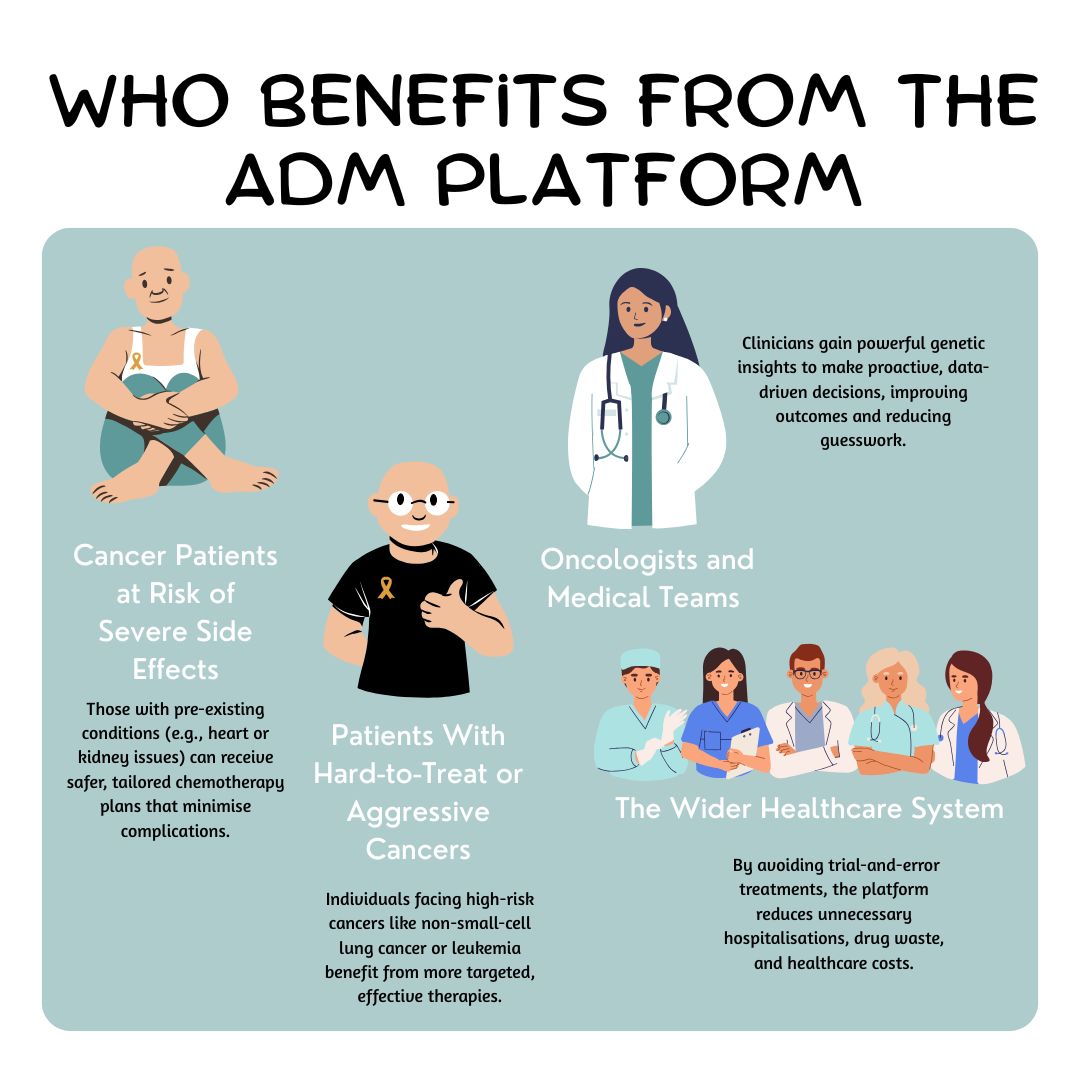
This is particularly important for patients who are already at high risk for severe side effects due to pre-existing health conditions, such as heart disease, kidney problems, or a weakened immune system. Certain cancer treatments can worsen these conditions, leading to serious complications that could have been prevented with a more personalized approach.
For example, patients undergoing leukemia treatments often face the risk of life-threatening drug toxicity, as some chemotherapy drugs can cause severe damage to vital organs. Without prior knowledge of a patient's genetic response to these drugs, doctors may only discover these risks after the patient has already suffered complications. However, by incorporating genetic testing through the ADM Platform, oncologists can predict potential toxic reactions in advance and take necessary precautions. They can adjust drug dosages, explore alternative treatments, or introduce protective medications to minimize harm before starting therapy.
This proactive approach ensures that patients receive the most effective and safest possible treatment, reducing unnecessary suffering and increasing the chances of successful cancer therapy. By broadening its application beyond NSCLC, the ADM Platform has the potential to revolutionize personalized cancer treatment across multiple cancer types, improving patient outcomes and overall quality of life.
What makes this technology so exciting isn’t just its immediate use for cancer care. The ADM Platform opens the door to more comprehensive healthcare innovations. Here's what’s on the horizon: As part of these innovations, we are seeing enhanced cancer support resources in California that leverage technology for better patient outcomes. These resources aim to provide personalized assistance and access to the latest treatment options. By focusing on collaboration between healthcare providers and tech developers, the future of cancer care looks more promising than ever.
The push to expand its use shows just how promising this mechanism is for improving outcomes across various medical fields. The ADM Platform isn't just a tool for cancer treatment; it's a catalyst for a paradigm shift in healthcare. Its potential to personalize medicine, promote proactive care, and enhance global accessibility makes it a crucial step towards a future where healthcare is more precise, effective, and patient-centered.
While the ADM Platform is making waves, other similar tools are also advancing the field. Researchers at the University of Florida, for example, have developed a predictive analytics tool that identifies chemotherapy risks using a mix of genetic testing and artificial intelligence (AI). This system generates toxicity risk scores for patients with acute lymphoblastic leukemia (ALL). Together, these tools are accelerating the shift toward precision medicine.
Another initiative in breast cancer research focuses on how nutrients interact with chemotherapy pathways. Understanding these interactions could allow doctors to give dietary recommendations alongside treatment adjustments, potentially improving patient outcomes.
While the ADM Platform has plenty of potential, it’s not without hurdles. One challenge is affordability. Genetic testing and advanced analytics can be expensive, limiting accessibility for some patients. Efforts are underway to reduce these costs, but widespread adoption may still take time.
Additionally, applying these findings in real-world clinical settings will require large-scale validation studies. The current research base is promising but needs expansion to cover more diverse patient populations.
The introduction of the ADM Platform is just the beginning. As researchers work to refine and expand its capabilities, healthcare providers are preparing for a new era of personalized cancer care. Beyond treatment optimization, this tool could transform patient-doctor relationships by giving individuals more control over their care plans.
Imagine walking into your oncologist’s office and leaving with a treatment plan perfectly tailored to your body, reducing unnecessary suffering and boosting your chances of recovery. That future is closer than ever. As researchers continue to explore personalized medicine, fast recovery strategies after chemotherapy are gaining attention for their potential to enhance patient outcomes. Integrating nutritional support and targeted therapies can lead to quicker healing and improved quality of life. Patients can look forward to a future where the roles of recovery and well-being are prioritized alongside cancer treatment.
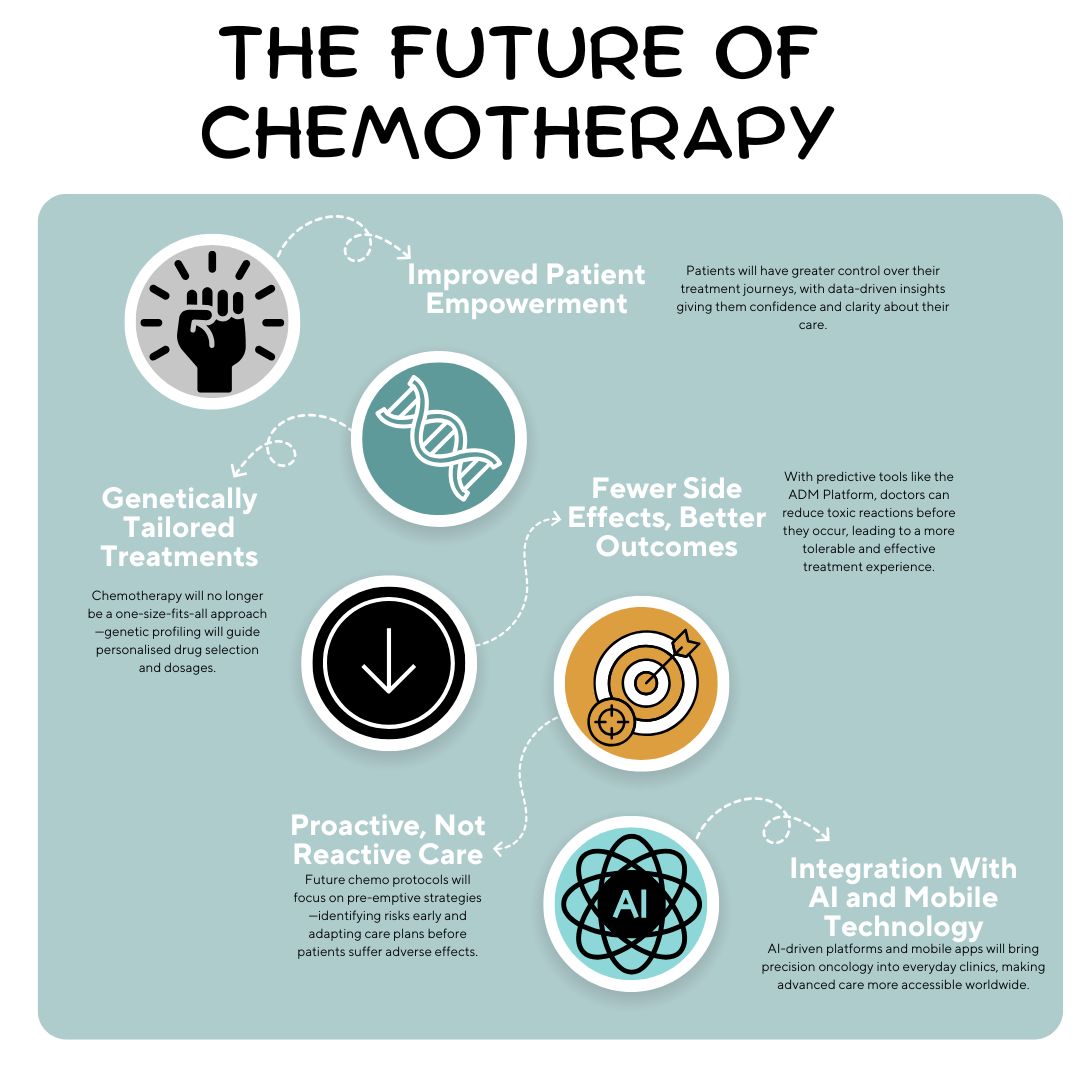
Cancer treatment has always been a balancing act between effectiveness and side effects. The ADM Platform is changing that narrative, offering a way to predict and prevent complications before they occur. By bringing the power of genetics into the equation, this tool isn’t just about treating cancer—it’s about revolutionizing how we approach medicine as a whole.
For patients and doctors alike, this innovation is a game plan for better results, fewer risks, and a far brighter outlook. If you or a loved one is facing chemotherapy, tools like this could someday make the road ahead much smoother. That’s the promise of personalized medicine, and it’s only getting started.
We strongly advise you to talk with a health care professional about specific medical conditions and treatments.
The information on our site is meant to be helpful and educational but is not a substitute for medical advice.
A woman with cancer is different. Her type of cancer, personality and support network are all unique, so what you give her should be too.
In December we partnered with Something To Look Forward To, a charity that supports people with cancer and their families to have a treat - perhaps a meal, an outing or a surprise gift.
Care During Cancer Treatment: Read Matthews Story On How A Cancer Care Parcel Donated To Him Helped During His Cancer Treatment.