Receiving a lung cancer diagnosis, whether for yourself or someone you care about, can be overwhelming. Beyond the initial shock, understanding how lung cancer uniquely affects women can be important in making informed decisions about treatment and care. While lung cancer is often seen as a universal disease, research shows that women experience lung cancer differently than men, influencing their symptoms, treatment response, and survival rates.
This article explores the unique aspects of lung cancer in women, offering insights into how gender plays a role in the disease’s progression and management.
Lung cancer primarily falls into two categories:
While both men and women can develop these types, their experiences with lung cancer can differ significantly, impacting treatment effectiveness and prognosis.
A significant number of non-smoking women develop lung cancer, and the same is less common in men.
Hormonal differences may contribute to variations in how lung cancer develops and progresses.
The symptoms of lung cancer can vary widely, but studies suggest that women often experience different or more subtle symptoms than men.
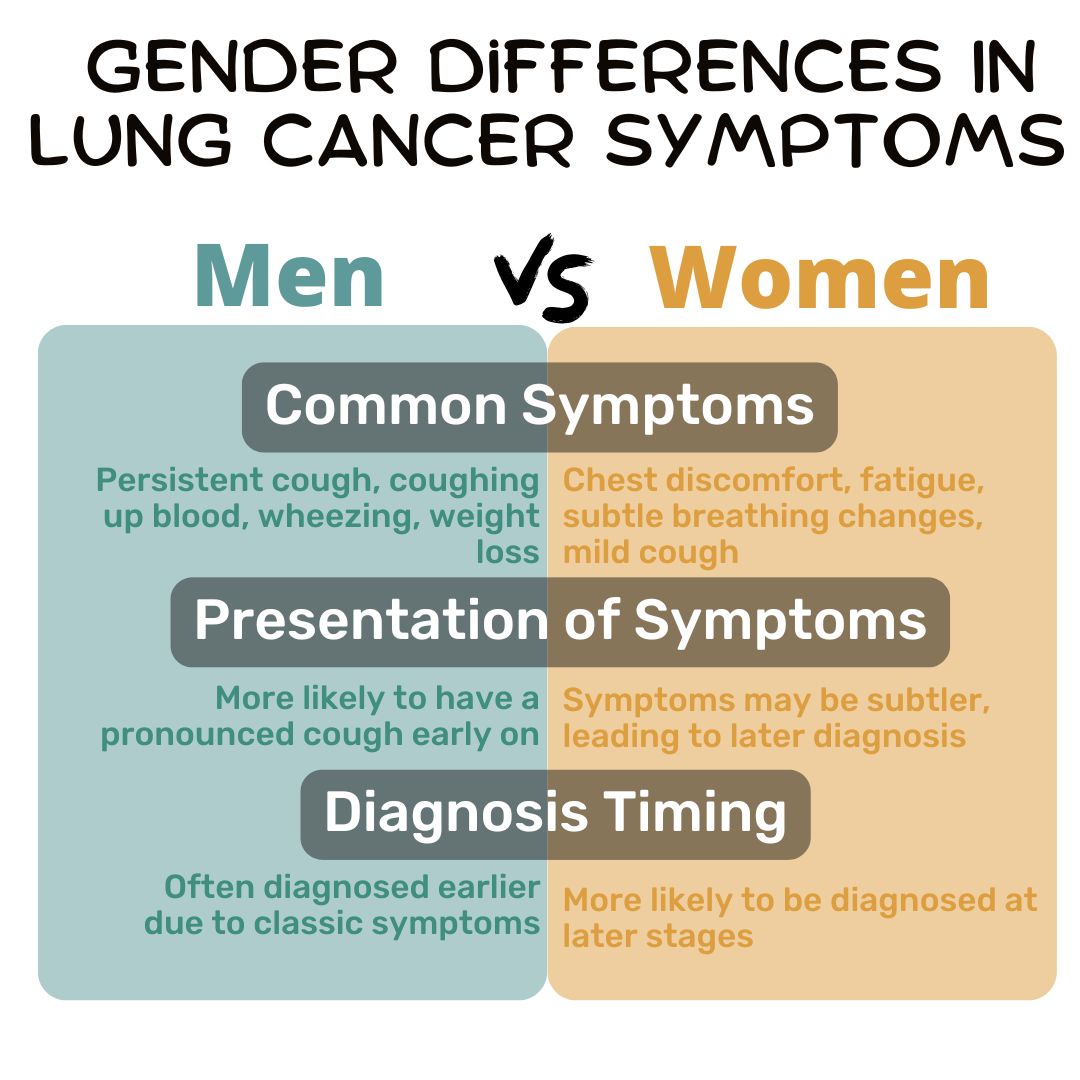
These differences in symptom presentation mean that lung cancer in women is sometimes diagnosed later than in men, leading to different treatment journeys.
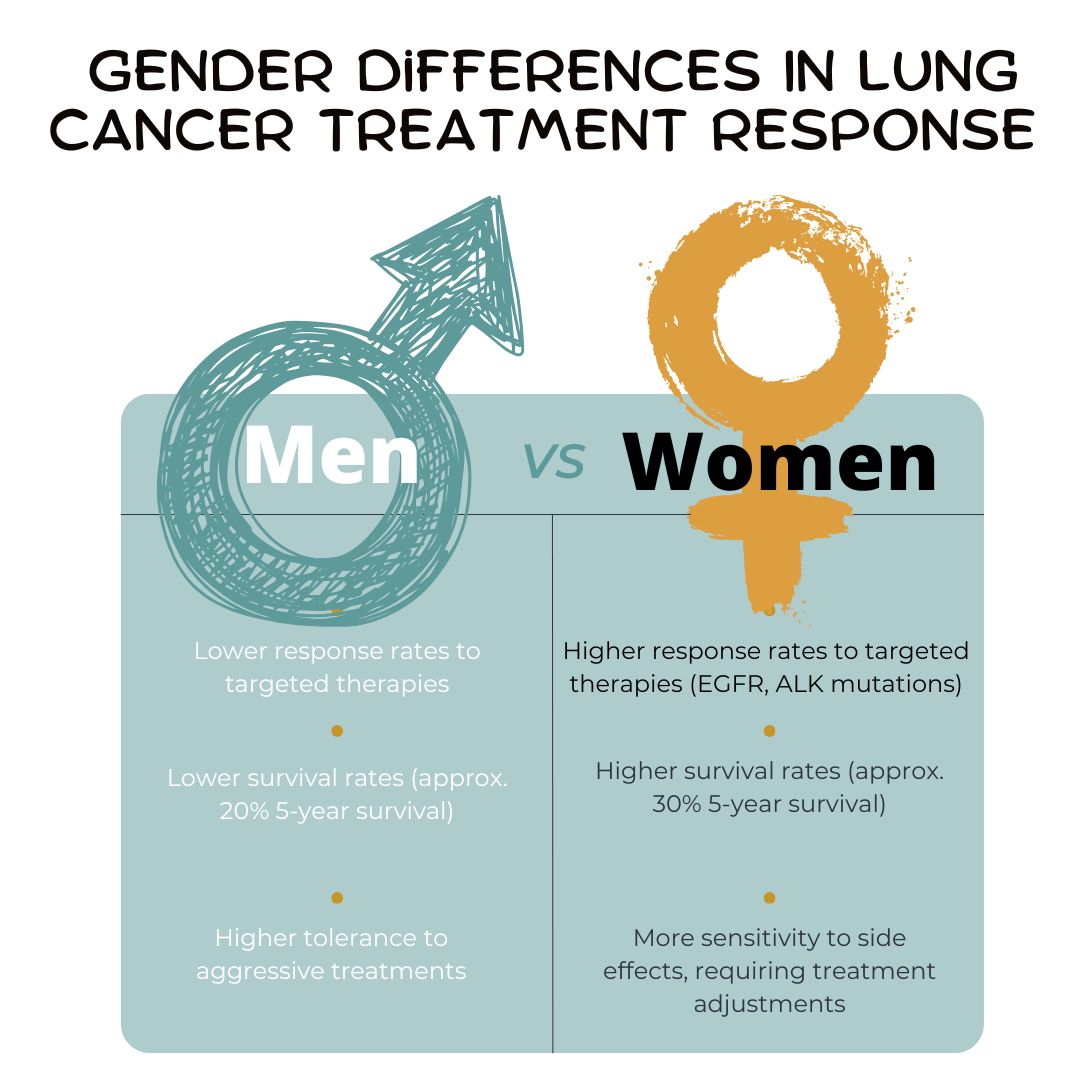
Studies have found that women tend to have better survival rates than men when diagnosed with lung cancer.
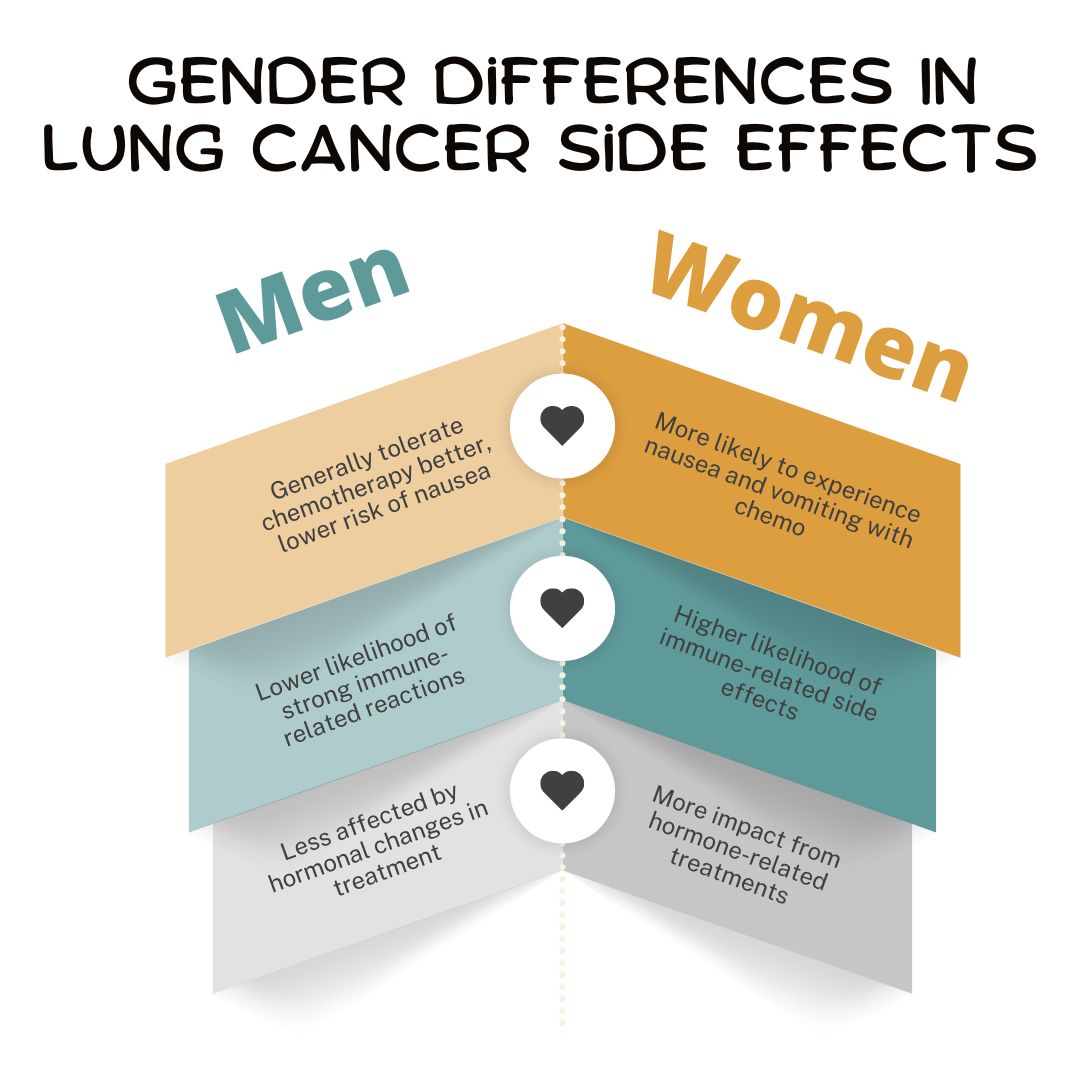
Women may experience different side effects than men when undergoing chemotherapy, radiation, or immunotherapy.
Women with lung cancer generally have higher survival rates than men.
This survival advantage may be due to biological factors, differences in tumor genetics, or the way women respond to treatment.
Living with lung cancer is a deeply personal journey, and knowing that your experience may differ from others’—including male patients—can help you advocate for personalized care.
Because women often respond differently to certain treatments, discussing options like targeted therapies or immunotherapy with your doctor can be beneficial. If you have EGFR or ALK mutations, your treatment plan may look different from someone without these genetic factors.
Since women often experience more side effects from chemotherapy and immunotherapy, working closely with your medical team to manage symptoms like nausea, fatigue, and hormonal changes is crucial.
Lung cancer can take an emotional toll. Many women find support in:
Lung cancer affects men and women differently in terms of risk factors, symptoms, treatment response, and survival rates. While a diagnosis can be overwhelming, knowing how gender plays a role in lung cancer can help women and their families navigate treatment more effectively and seek the most appropriate care.
Each journey is unique, but understanding these differences empowers women to make informed choices, discuss personalized treatment plans with their doctors, and advocate for the best possible care.
We strongly advise you to talk with a health care professional about specific medical conditions and treatments.
The information on our site is meant to be helpful and educational but is not a substitute for medical advice.
Compassionate Emotional Healing Tips To Bring Comfort, Strength, And Understanding During The Cancer Journey.
Understand radiotherapy for breast cancer with our clear guide. Learn about the process, how to manage side effects, and what to expect during treatment.
It’s a common misconception that Plastic Surgeons only perform cosmetic procedures. Plastic surgery is actually an incredibly broad speciality, covering a wide range of conditions.