A melanoma diagnosis can be overwhelming and frightening, but asking the right questions can help you understand your situation better and make informed decisions about your treatment and care. This guide will walk you through 20 essential questions to ask your healthcare provider when you have been diagnosed with melanoma, providing you with the knowledge and confidence to navigate this challenging time.
Before diving into specific questions, it's essential to understand what melanoma is. Melanoma is a type of skin cancer that begins in the melanocytes, the cells responsible for producing melanin, the pigment that gives skin its color. While it is less common than other types of skin cancer, melanoma is more dangerous because it is more likely to spread to other parts of the body if not caught early.
Every melanoma case is unique, so it’s crucial to gather detailed information about your specific diagnosis. Understanding the characteristics of your melanoma can guide your treatment and help you make informed decisions.
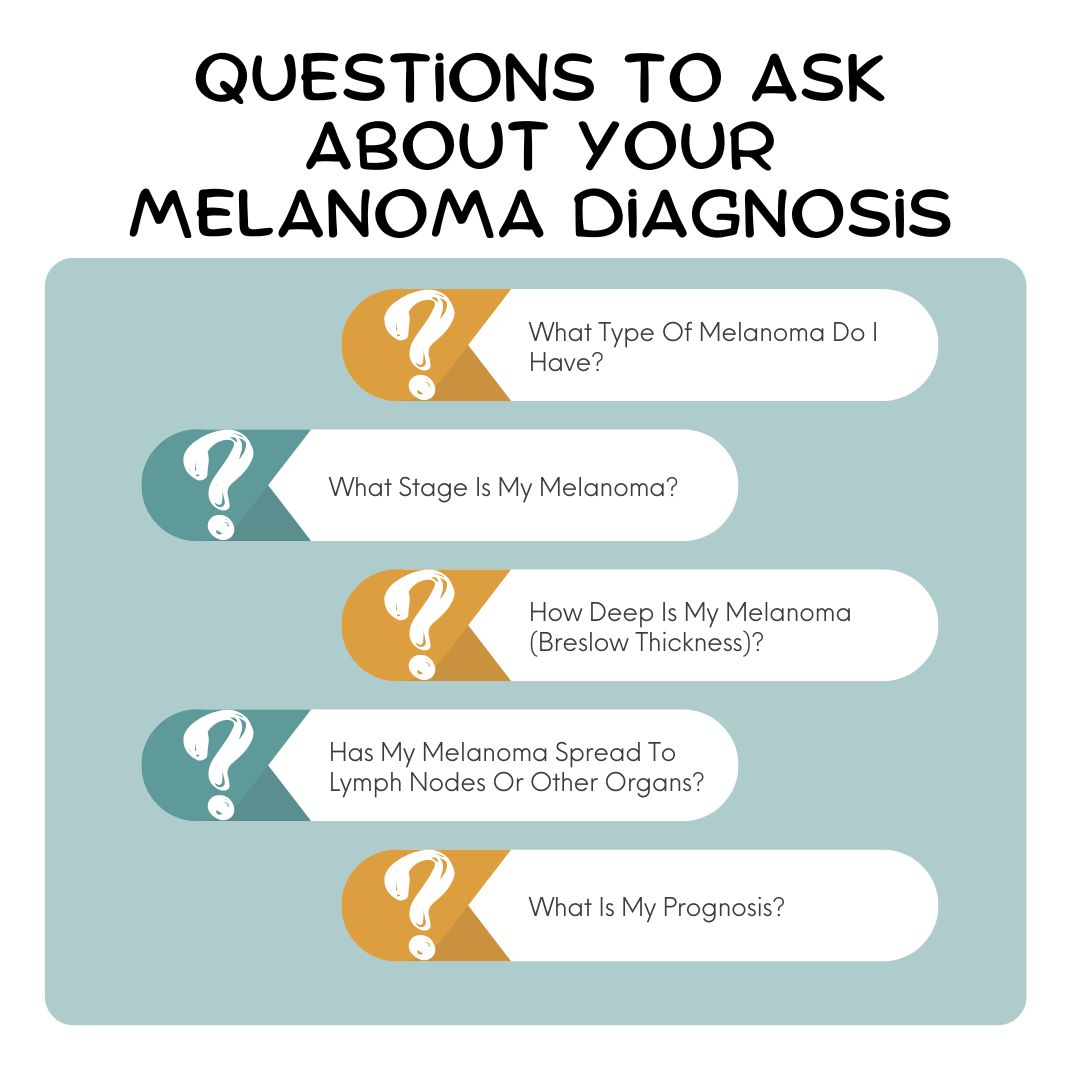
Melanoma can manifest in different forms, such as superficial spreading melanoma, nodular melanoma, lentigo maligna melanoma, or acral lentiginous melanoma. Knowing the specific type can help you understand your prognosis and treatment options.
The stage of your melanoma indicates how far the cancer has spread. This is typically determined by the size of the tumor, whether it has spread to lymph nodes, and whether it has metastasized to other organs. Understanding the stage is critical as it directly influences treatment decisions.
According to Cancer Research UK, melanoma is classified into stages 0-IV, with Stage 0 being in situ (localized to the outer layer of skin) and Stage IV indicating that the melanoma has spread to other parts of the body.
The Breslow thickness measures the depth of the melanoma in millimeters from the top of the skin to the deepest point of the tumor. It’s one of the most important factors in determining the severity of the melanoma and its likelihood of spreading.
If your melanoma has spread, or metastasized, it will affect your treatment options and prognosis. Your doctor might recommend additional tests such as a sentinel lymph node biopsy or imaging scans to determine if the cancer has spread.
While prognosis can vary based on many factors, your doctor can provide an estimate based on your melanoma’s stage, type, and other individual factors. It’s essential to ask about survival rates and expected outcomes to help you make informed decisions about your care.
Treatment for melanoma can include surgery, radiation therapy, immunotherapy, targeted therapy, or chemotherapy. Each option has its benefits and risks, and the choice of treatment depends on the stage and characteristics of your melanoma.
The American Cancer Society provides an overview of treatment options based on melanoma stages, helping patients understand the goals of each approach, whether it's curative or palliative.
Understanding the potential side effects and risks of treatment is crucial. This can include short-term effects like fatigue and nausea or long-term effects such as changes in skin appearance or increased risk of secondary cancers.
It’s important to know how treatment might impact your work, family life, and daily activities. This will help you prepare and make necessary adjustments during your treatment period.
Clinical trials can provide access to new and potentially more effective treatments that aren’t widely available. Ask your doctor if there are any trials you might be eligible for and what the benefits and risks might be.
Understanding the urgency of starting treatment can help you plan and also consider getting a second opinion if needed. Some melanoma cases may require immediate action, while others might allow some time for consideration.
Surgery is the most common treatment for melanoma, especially in the early stages. Understanding what the surgery will entail, how it will be performed, and what to expect during recovery is crucial.
Ask about the recovery process, including how long it will take, what limitations you might face, and when you can expect to return to your normal activities.
Since melanoma is often found on visible areas of the skin, it’s important to discuss the potential for scarring and options for minimizing or managing scars post-surgery.
In some cases, additional treatments might be necessary if surgery doesn’t achieve clear margins (meaning no cancer cells are found at the outer edge of the tissue removed). Ask about the next steps if this occurs.
Even after successful treatment, regular follow-ups are essential to monitor for any signs of recurrence. Ask about the schedule for follow-up visits and what tests or exams will be conducted.
The National Health Service (NHS) in the UK recommends regular skin checks and follow-up appointments, especially in the first few years after treatment, when the risk of recurrence is highest.
Understanding the signs of melanoma recurrence can help you catch it early if it happens. This might include new skin changes, lumps under the skin, or unexplained symptoms like fatigue.
Regular skin checks by a dermatologist are crucial after a melanoma diagnosis, as they can help detect new or recurrent melanomas early when they are most treatable.
Your doctor may recommend lifestyle changes to reduce your risk, such as using sunscreen daily, avoiding tanning beds, and wearing protective clothing. Diet, exercise, and avoiding smoking may also be discussed as ways to support overall health and reduce cancer risk.
The Melanoma Institute Australia emphasizes the importance of sun safety and lifestyle choices in preventing further skin damage and potential recurrences.
Melanoma can sometimes run in families. If you have a family history of melanoma or other skin cancers, your doctor might recommend that your relatives undergo regular skin checks.
Dealing with melanoma can be emotionally challenging. Ask your doctor for recommendations on support groups, counseling services, or educational resources to help you and your family cope with the diagnosis and treatment.
Organizations such as Macmillan Cancer Support in the UK and Cancer Council Australia offer extensive resources, including emotional support, financial advice, and practical tips for managing daily life during treatment.
Facing a melanoma diagnosis is daunting, but asking the right questions can empower you with the knowledge you need to navigate your treatment options and manage your health. By understanding your diagnosis, exploring treatment options, and seeking support, you can take an active role in your care and make decisions that align with your values and goals.
Remember, you don’t have to go through this journey alone. Reputable sources such as the American Cancer Society, Cancer Research UK, and Melanoma Institute Australia provide valuable information and support for melanoma patients and their families.
We strongly advise you to talk with a health care professional about specific medical conditions and treatments.
The information on our site is meant to be helpful and educational but is not a substitute for medical advice.
Discover the link between frequent urination and prostate cancer Learn about causes symptoms diagnosis and treatment in this comprehensive guide for better health
You May Think There Is No Hope – There Is Always Hope, You Are The Captain Of Your Ship So Steer It Towards The Light At The End Of The Tunnel! Good Luck!
As Strange As It Sounds, I Don’t Feel Bitter, Just Grateful That I Have Been Given Another Chance