For many people, surgery is presented as a milestone. The operation happens, the wound heals, the stitches are removed, and eventually the scar fades. From the outside, it can appear as though recovery is complete.
But for many individuals recovering from cancer surgery, the reality is far more complicated.
Long after treatment ends, people may continue experiencing stiffness, pulling sensations, swelling, tenderness, reduced mobility, altered sensation, fatigue, and discomfort linked to surgical scars and surrounding tissues. Some struggle with movement restrictions years later. Others avoid exercise, certain clothing, or even physical touch because their body no longer feels the same.
Despite this, scar recovery and long-term post-surgical rehabilitation often receive far less attention than diagnosis, surgery, chemotherapy, or radiotherapy themselves.
Scars are frequently treated as the final chapter of treatment. In reality, for many people, they represent the beginning of a completely different stage of recovery.
A scar is not simply a mark on the skin.
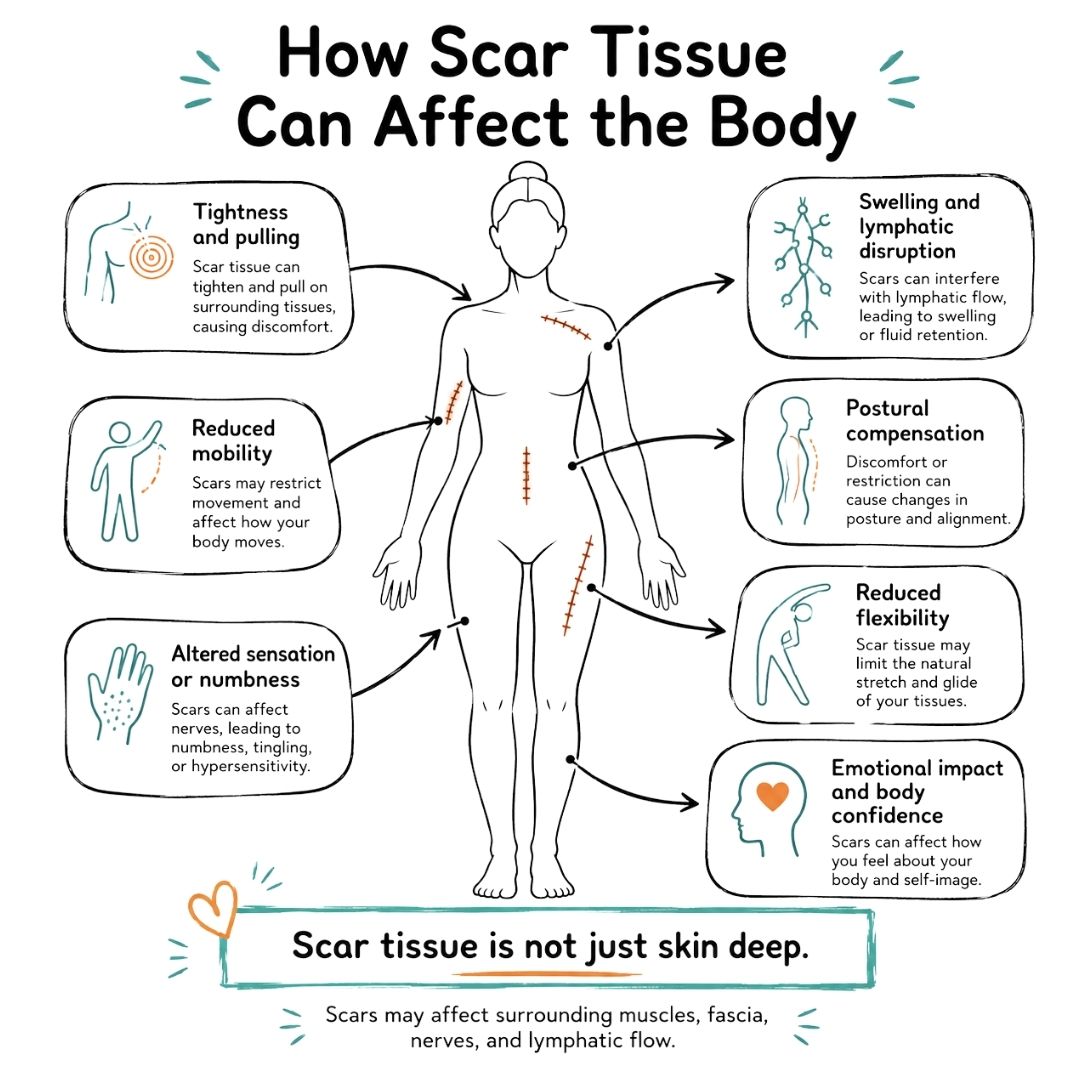
Scar tissue forms as part of the body’s natural healing response after injury or surgery. While this process is essential, scar tissue behaves differently from normal tissue. It may be less flexible, less elastic, more adherent, and more restrictive than the surrounding area.
This means scars can sometimes affect far more than appearance alone.
Depending on the location and extent of surgery, scar tissue may influence:
• Movement and mobility
• Posture
• Muscle function
• Breathing patterns
• Nerve sensation
• Lymphatic drainage
• Swelling
• Exercise tolerance
• Confidence and body image
For some individuals, scars remain relatively soft and symptom-free. For others, they may become tight, painful, raised, numb, hypersensitive, or restrictive.
Cancer surgeries in particular can involve extensive tissue disruption, lymph node removal, reconstruction procedures, radiotherapy exposure, or repeated operations, all of which may affect healing and long-term recovery.
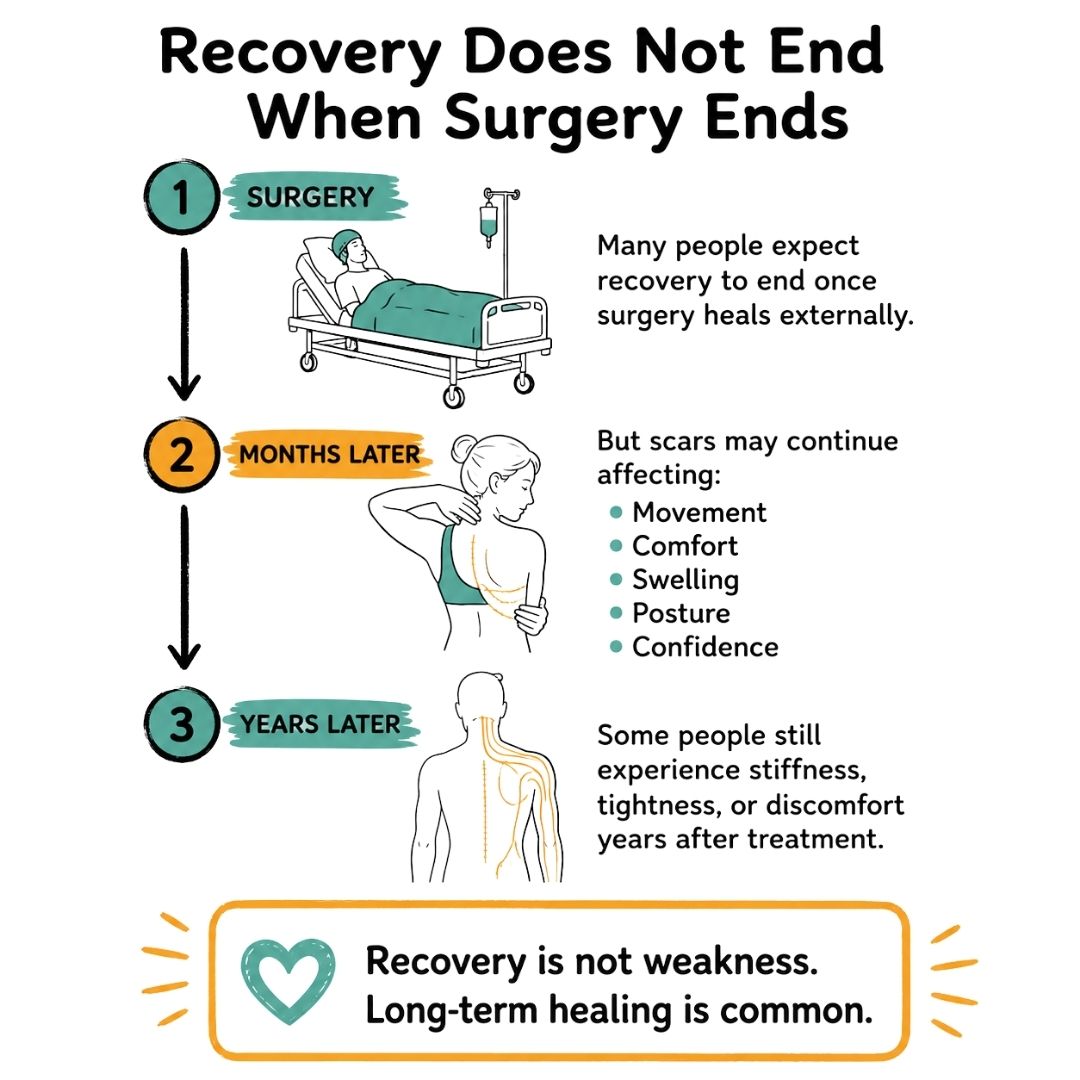
One of the biggest misconceptions around surgery recovery is the assumption that healing follows a predictable timeline.
Externally, a wound may appear healed within weeks or months. Internally, however, tissues may continue changing for much longer.
Some people experience:
• Persistent tightness around surgical areas
• Restricted shoulder or arm movement
• Abdominal pulling sensations
• Swelling or fluid retention
• Reduced flexibility
• Pain during movement
• Skin sensitivity or numbness
• Ongoing stiffness
• Difficulty returning to exercise
For individuals who have undergone cancer treatment, recovery may also be influenced by chemotherapy side effects, radiotherapy changes, fatigue, lymphatic disruption, or reduced physical conditioning during treatment.
What makes this particularly difficult is that many people are never fully prepared for these longer-term effects.
Patients often leave treatment relieved to have completed surgery or active therapy, only to discover months later that they are still physically struggling.
This can create confusion, frustration, and sometimes guilt. People may question whether they are “recovering properly” or feel isolated because others assume they should be “back to normal” once treatment has ended.
Scars do not only affect the body physically.
They can also have a substantial emotional and psychological impact.
For some individuals, scars serve as a visible reminder of illness, surgery, fear, or trauma. They may affect self-confidence, intimacy, clothing choices, social confidence, or the relationship somebody has with their body.
This is particularly true after cancer treatment, where scars may become associated with identity changes, altered body image, or ongoing anxiety around health and recurrence.
Some individuals avoid looking at or touching their scars entirely. Others become hyper-aware of asymmetry, texture changes, or movement limitations.
Importantly, these responses are not superficial or vain. Body confidence and physical comfort are closely linked to emotional wellbeing, quality of life, and confidence in returning to normal activities.
Yet these conversations are often absent from routine follow-up care.
One of the most important themes emerging in survivorship care is the role movement plays in long-term recovery.
After surgery, people frequently become fearful of movement. This is understandable. Pain, discomfort, drains, swelling, and uncertainty about healing can lead individuals to protect the surgical area excessively.
While rest is important initially, prolonged avoidance of movement may sometimes contribute to stiffness, reduced mobility, and loss of confidence.
Gentle rehabilitation and appropriate movement support can help individuals gradually reconnect with their body after treatment.
This does not mean pushing through pain or forcing recovery aggressively. In fact, overly aggressive approaches may worsen discomfort in some cases.
Instead, supportive rehabilitation often focuses on gradual mobility, tissue flexibility, posture, breathing, confidence-building, and restoring comfort over time.
For many people, simply understanding that ongoing stiffness or tightness is not unusual can already reduce anxiety significantly.
One area receiving increasing attention after cancer surgery is lymphatic health.
Certain cancer surgeries, particularly those involving lymph node removal or radiotherapy, may disrupt lymphatic drainage pathways. This can contribute to swelling, heaviness, discomfort, or lymphoedema.
Many people are unfamiliar with the lymphatic system until they experience complications themselves.
The lymphatic system plays an important role in fluid balance, immune function, and tissue health. When lymphatic drainage becomes impaired, swelling and tissue changes may occur.
Supportive therapies such as manual lymphatic drainage and specialist rehabilitation approaches are increasingly being explored to help individuals manage symptoms and improve comfort.
Importantly, early awareness and education can help individuals recognise symptoms sooner and seek appropriate professional guidance if needed.
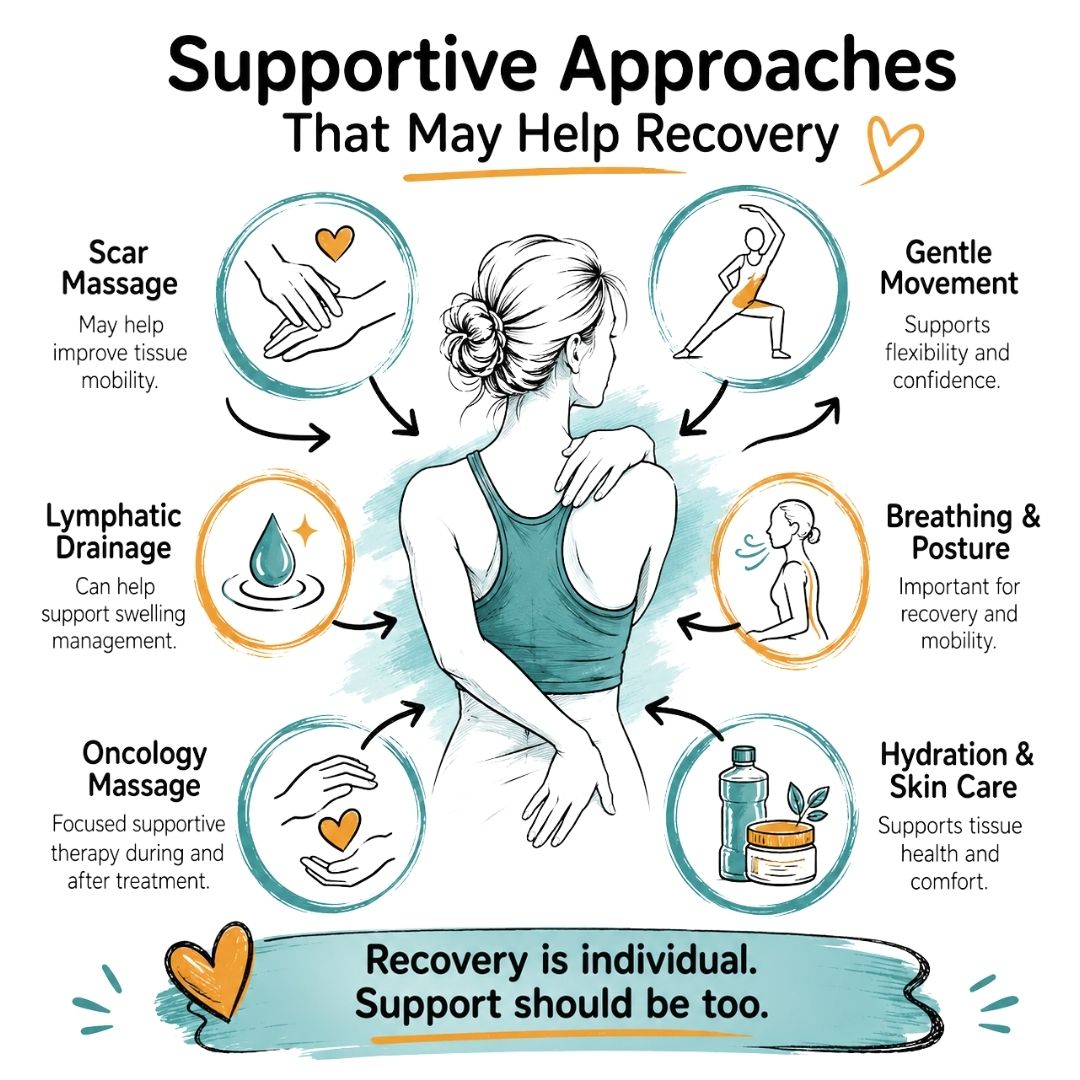
As awareness around survivorship care grows, more attention is being given to supportive therapies that may help improve comfort and mobility after surgery.
These approaches may include:
• Scar massage
• Oncology massage
• Gentle stretching
• Tissue mobilisation
• Movement rehabilitation
• Breathing exercises
• Postural support
• Lymphatic drainage therapies
• Hydration and skin care support
• Confidence rebuilding through gradual activity
It is important to recognise that no single approach works for everybody and that recovery experiences vary considerably between individuals.
Equally important is ensuring therapies are delivered safely by appropriately trained professionals, particularly for individuals recovering from cancer treatment or living with lymphatic complications.
The aim is not perfection or “erasing” scars. The focus is often on improving comfort, supporting function, reducing restriction, and helping individuals feel more confident and comfortable in their body again.
One of the most reassuring messages for many individuals recovering from surgery is that healing is rarely completely linear.
Some people improve steadily. Others experience setbacks, fluctuating symptoms, or delayed issues that emerge months or years later.
This does not necessarily mean something has gone wrong.
The body continues adapting and responding long after surgery itself. Scar tissue changes over time. Strength changes. Confidence changes. Physical activity levels change.
Recovery is often ongoing rather than fixed.
This is why education around survivorship and long-term rehabilitation matters so much. People need realistic information, not simply reassurance that they should “be grateful everything is over.”
Survival is important. Quality of life afterwards matters too.
Historically, cancer care has understandably focused heavily on diagnosis and treatment.
As survival rates improve, there is increasing recognition that survivorship itself requires greater attention.
Many individuals complete treatment while still facing:
• Physical rehabilitation challenges
• Fatigue
• Lymphatic complications
• Emotional adjustment difficulties
• Confidence loss
• Chronic discomfort
• Fear of recurrence
• Workplace reintegration challenges
• Relationship and intimacy concerns
Yet support services for these issues remain inconsistent.
This is why educational conversations around recovery, rehabilitation, movement, and scar management are becoming increasingly important.
People need accessible, compassionate, evidence-informed information that helps them understand what recovery may actually involve.
These issues were explored in greater depth during the recent Cancer Care Parcel webinar Beyond the Scar: Supporting Healing, Movement and Confidence After Surgery.
The session featured award-winning Clinical Massage Therapist Kirsty Wales, who specialises in supporting individuals navigating cancer treatment and recovery through oncology massage, scar therapy, lymphatic support therapies, and rehabilitation approaches.
Kirsty works extensively with individuals recovering from surgery, chemotherapy, radiotherapy, lymphoedema, and chronic health conditions. Her work focuses on helping people maintain the best possible physical wellbeing during and after treatment through hands-on therapies and specialist medical devices.
During the webinar, Kirsty discussed scar recovery, movement restriction, lymphatic health, swelling management, confidence after surgery, and supportive therapeutic approaches that may help improve comfort and mobility over time.
The webinar was moderated by Dr. Sahar Mashoor, an accomplished dermatologist with experience diagnosing and treating a wide range of dermatological conditions, including advanced dermatological procedures and patient-centred skin health support.
The discussion provided practical, compassionate, and evidence-informed insights into the long-term realities of recovery after surgery and cancer treatment.
Watch the webinare here:
Website: KWMassageTherapies.co.uk
We strongly advise you to talk with a health care professional about specific medical conditions and treatments.
The information on our site is meant to be helpful and educational but is not a substitute for medical advice.
Discover Dr. Judith Murray’s Insights On The Many Faces Of Loss Following A Cancer Diagnosis. Learn To Cope With Clarity And Resilience As She Redefines Loss In Cancer Care
This article explores common myths, explains how palliative care works alongside treatment, and highlights the emotional, physical, and family support it can provide throughout the cancer journey.
My appearance has definitely changed over the past twelve months that’s for sure but I’m getting to like the new me especially when I’m pain free.