Dealing with the side effects of radiotherapy is common, and it is completely normal to have questions. While they can range from mild skin redness to feeling more tired than usual, the specific effects often depend on the part of your body being treated.
Fatigue and skin irritation are hands-down the most common issues people experience straight away. Others, however, can crop up months or even years down the line. Getting your head around why these happen is the first step to managing them well.
When you begin radiation therapy, it's easy to feel a bit swamped with information. The simplest way to think about radiotherapy is to picture it as a very precise, high-energy beam. Its job is to target and destroy cancer cells by damaging their DNA, which is brilliant for shrinking tumours and stopping cancer from coming back.
But as powerful as this treatment is, it can't always perfectly distinguish between cancer cells and the healthy cells nearby. This "collateral damage" to healthy tissue is what causes side effects. The good news? Your healthy cells are incredible at repairing themselves, much better than cancer cells are, which is why most of these side effects don't last forever.
Your oncology team will probably talk about side effects in two main categories. This just helps you know what to look out for and when.
It’s so important to remember that everyone's journey is different. Your experience won't be exactly the same as someone else's, and your medical team has a whole toolkit of ways to help you feel more comfortable. Being armed with practical information is a massive part of navigating your radiotherapy treatment.
One of the biggest things people report is fatigue. This isn't just feeling a bit tired; it's a deep exhaustion that sleep doesn't seem to fix. It happens because your body is pouring energy into repairing the healthy cells that got caught in the crossfire.
It's estimated that fatigue affects up to 90% of patients having radiotherapy, and it can often get worse as you go through your sessions. It’s a major part of the experience, but it is manageable. Cancer charities and support organisations have excellent resources on coping with fatigue and other side effects.
When you're facing radiotherapy, one of the biggest sources of anxiety is the unknown. What will happen? When will it happen? Knowing that side effects don't just appear at random, but actually follow a fairly predictable pattern, can make a world of difference. It helps you get a clearer picture of the road ahead and feel more in control of your treatment journey.
Generally, we talk about side effects in two main phases. This timing all comes down to how quickly the different healthy tissues in your body react to the radiation. Understanding these phases helps you and your care team know what to look out for and when.
This simple flowchart shows how things typically progress from the day you start treatment through to the early and later phases.
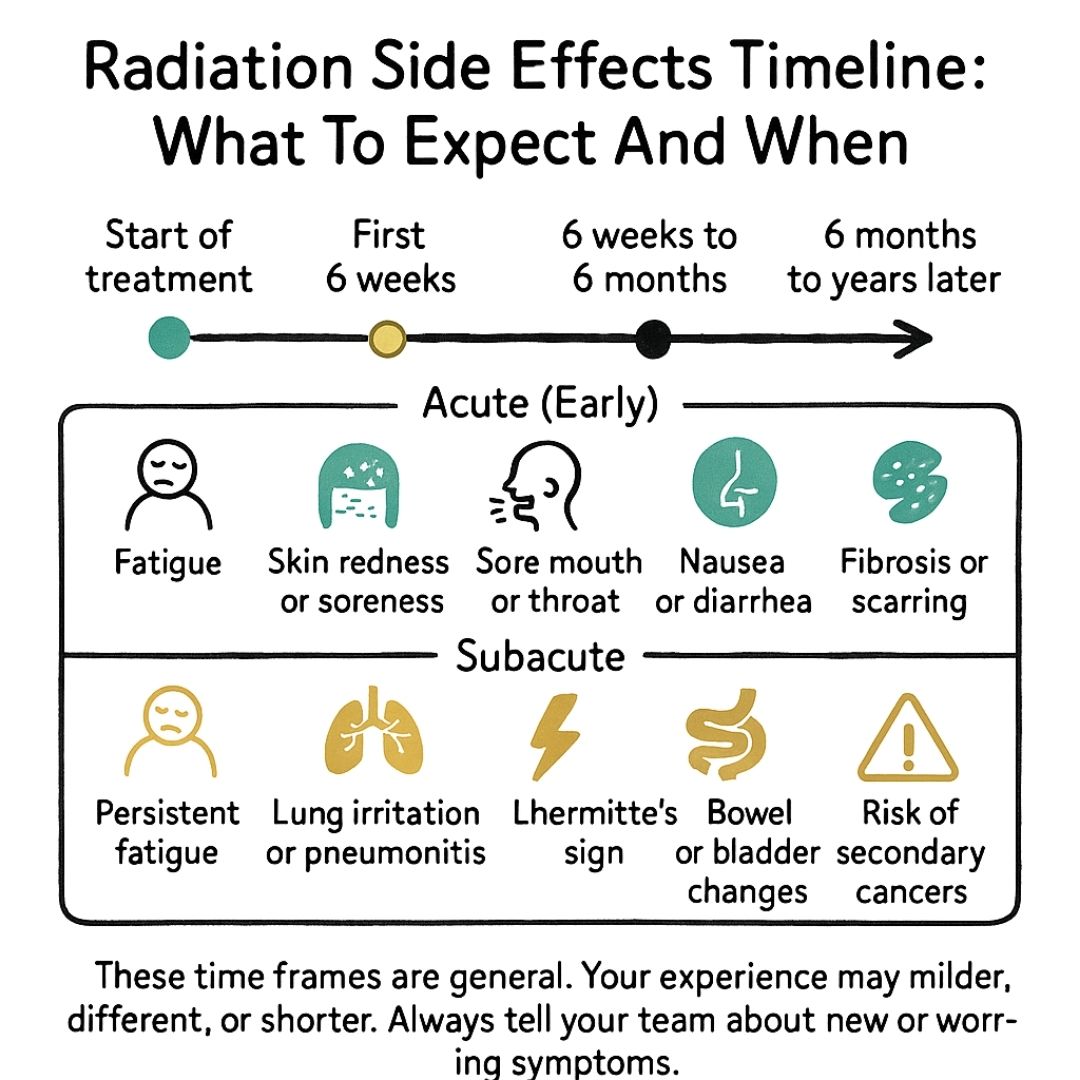
As you can see, early effects are a common and expected part of the treatment itself, while late effects are a possibility to be aware of much further down the line.
We often call these acute effects. These are the ones that tend to show up while you're still having your daily treatments, or in the first few weeks after you finish. They happen because radiation affects cells that divide and regenerate quickly, like your skin cells or the cells lining your mouth and digestive tract.
The best way to think of it is as a temporary disruption. The fantastic thing about these healthy, fast-dividing cells is that they’re also brilliant at repairing themselves. Once the treatment stops, they get right back to work, and most of these early side effects will slowly but surely fade away.
A few of the most common early effects include:
On the other hand, late effects are much less common and can pop up months, or sometimes even years, after your radiotherapy course has finished. These are caused by much slower, more gradual changes happening within the tissues that were treated. It's often linked to the slow formation of scar tissue (fibrosis) or changes to the tiny blood vessels in the area over a very long time.
For instance, someone who had radiation to their chest might develop a persistent cough years later. Because these issues can appear so long after the fact, it’s really important to let your medical team know about any new or unusual symptoms, no matter how much time has passed. Our detailed radiotherapy guides have more in-depth information to help you navigate these changes.
The bottom line is this: the side effects of radiotherapy follow a logical timeline. Early effects are your body's immediate, and usually temporary, reaction. Late effects are slower, longer-term changes that you just need to stay aware of.
To give you a clearer idea, here is a quick overview of when you might expect certain side effects to appear and how long they might stick around.
| Side Effect Category | Typical Onset | Common Examples | Typical Duration |
|---|---|---|---|
| Acute (Early) | Starts 2-3 weeks into treatment | Fatigue, skin redness/soreness, sore mouth or throat, nausea, diarrhoea, hair loss in the treated area | Usually resolves within 2-6 weeks after treatment ends |
| Subacute | 6 weeks to 6 months after treatment | Persistent fatigue, pneumonitis (lung inflammation), Lhermitte's sign (electric-shock sensation) | Can last several weeks or months but often resolves |
| Late (Chronic) | 6 months to many years after treatment | Fibrosis (scarring), lymphoedema (swelling), secondary cancers, heart or lung damage, bowel or bladder issues | Can be long-term or permanent, but are often manageable |
It's important to remember that this is just a general guide. Everyone's experience is unique, and you may have few side effects or different ones entirely, but knowing the typical pattern can help you feel more prepared for what's to come.
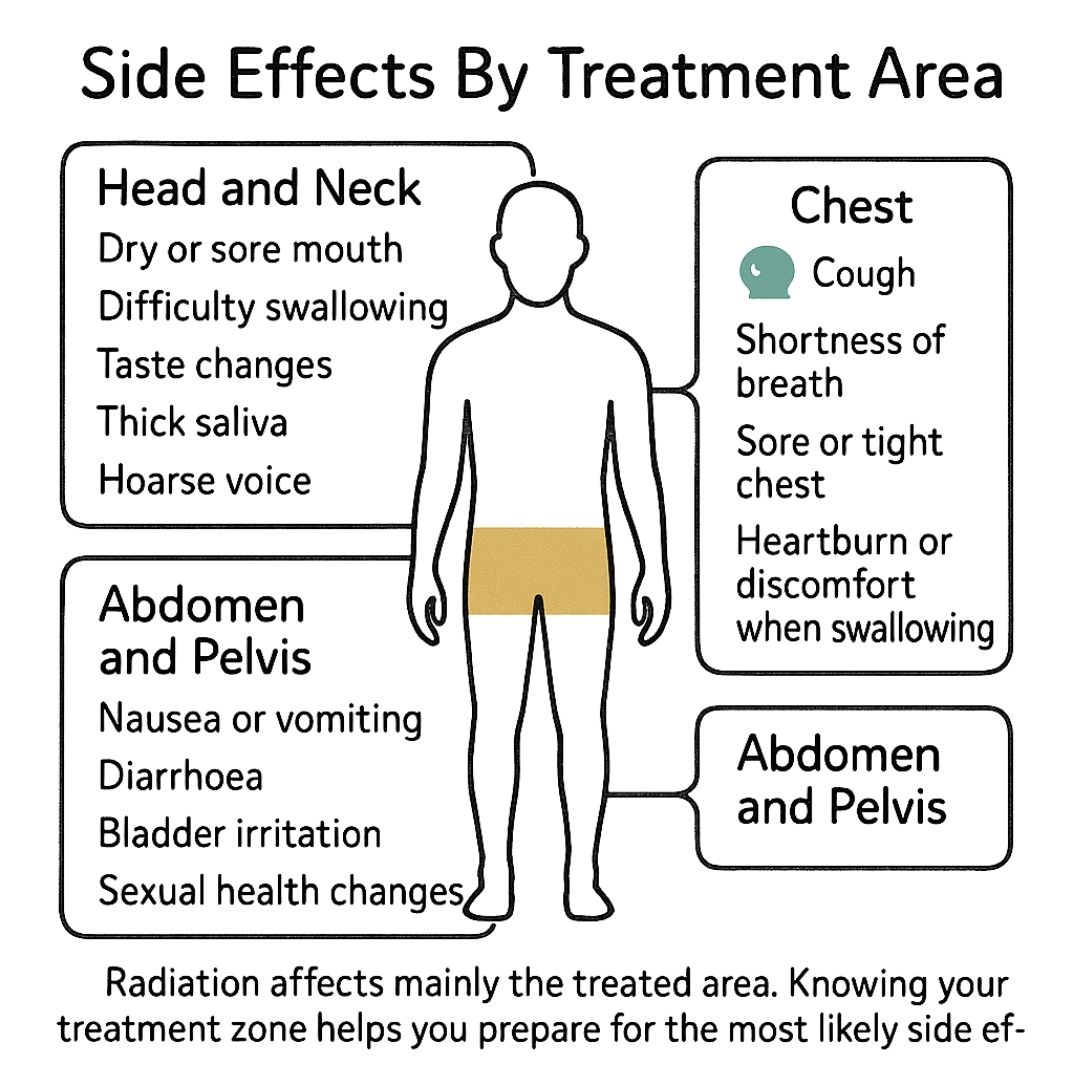
One of the first things to get your head around with radiotherapy is that its side effects aren't random. They are incredibly specific, almost always popping up only in the part of your body that’s being treated. Think of it like a focused beam of sunlight – only what’s in the direct path of the beam gets affected.
This is actually a good thing. It means you don’t have to brace yourself for every side effect in the book. Once you know which part of your body is in the treatment zone, you can get a much clearer picture of what to expect. This helps take away some of the uncertainty and lets you prepare for what’s ahead.
When radiotherapy is aimed at the head or neck, it often affects the sensitive, fast-growing cells that line your mouth and throat. This is a delicate area, and the side effects can be tough, but remember, they are almost always temporary.
You might notice things like:
These symptoms happen because the radiation can slow down your saliva glands and irritate the delicate mucous membranes. Your care team will be ready with things like special mouthwashes to help soothe the area and keep you comfortable.
If your treatment is focused on the chest for something like lung or oesophageal cancer, it can temporarily affect the nearby organs. Because this area is home to your lungs and food pipe, the side effects usually relate to breathing and digestion.
For instance, you might develop a bit of a cough or feel short of breath as your lungs can get slightly inflamed. If the radiation beam passes near your oesophagus (the tube connecting your throat and stomach), you could experience heartburn or find swallowing uncomfortable, much like with head and neck treatments. For more detail, you can read our specific guide to radiotherapy for breast cancer, which is a very common treatment involving the chest area.
When treating cancers in the tummy (like stomach or pancreatic) or pelvic area (prostate, bladder, or gynaecological cancers), the radiation has to pass by your digestive and urinary systems. As you can imagine, this can upset the normal rhythm of things for a little while.
Common side effects here often include:
It's really important to know that problems in the pelvic region can sometimes stick around long after treatment has finished. These long-term issues are grouped under the name Pelvic Radiation Disease.
It’s estimated that many thousands of people are living with ongoing issues caused by radiotherapy to the pelvis. These might be chronic bowel, bladder, or sexual problems that can surface months or even years down the line. If you notice any new or lasting symptoms, please talk to your doctor. There are many effective ways to manage them. You can find out more from patient advocacy groups and their detailed report on the condition.
Knowing about potential side effects is one thing, but feeling equipped to actually manage them is something else entirely. Think of this as your toolkit—a collection of practical, positive steps you can take to make your treatment journey a bit more comfortable. You’ll be surprised how much of a difference these small, consistent actions can make to how you feel each day.
The good news is that many common radiation side effects can be managed really effectively with simple strategies you can do at home. It all comes down to being gentle with your body, which helps soothe irritation, save your energy, and keep your strength up.
The skin in your treatment area can often get red, dry, and sensitive—a bit like a strong sunburn. Being extra kind to it is key to preventing more serious irritation and helping it heal.
For a deeper dive, our guide on looking after your skin during radiotherapy has some great extra tips. Taking these small steps can bring a lot of relief and stop a minor irritation from turning into a major one.
Your oncology nurse is your best friend when it comes to product recommendations. Always have a quick chat with them before trying any new creams or lotions on your treated skin, as some ingredients can actually interfere with the radiation.
Feeling overwhelmingly tired is probably one of the most common side effects of radiotherapy. At the same time, you might find your appetite has disappeared, which makes getting the fuel your body needs to heal a real challenge.
The trick is to find a gentle balance. Listen to your body and rest whenever you feel the need, but also try to weave in some light movement, like a short, slow walk. It sounds counterintuitive, but it can actually boost your energy more than staying completely still. When it comes to food, the mantra is "little and often."
Of course, managing the physical side is only half the battle. The mental and emotional strain of treatment is significant. Learning some practical techniques for how to stop worrying and calm your mind can be an incredibly valuable part of your self-care routine, helping you feel a bit more in control.
While you'll be able to manage many of the common side effects at home, it’s just as important to know when to pick up the phone. Think of your medical team as your partners on this journey. They need to hear from you to help, and letting them know what's going on can stop a small problem from turning into something more serious.
Open and honest communication is your most powerful tool. Your doctors and nurses expect you to get in touch if you're worried about anything, so please don't hesitate. Learning to spot the difference between a typical, manageable side effect and a real red flag will empower you to make that call with confidence. And remember, there is no such thing as a silly question when it comes to your health.
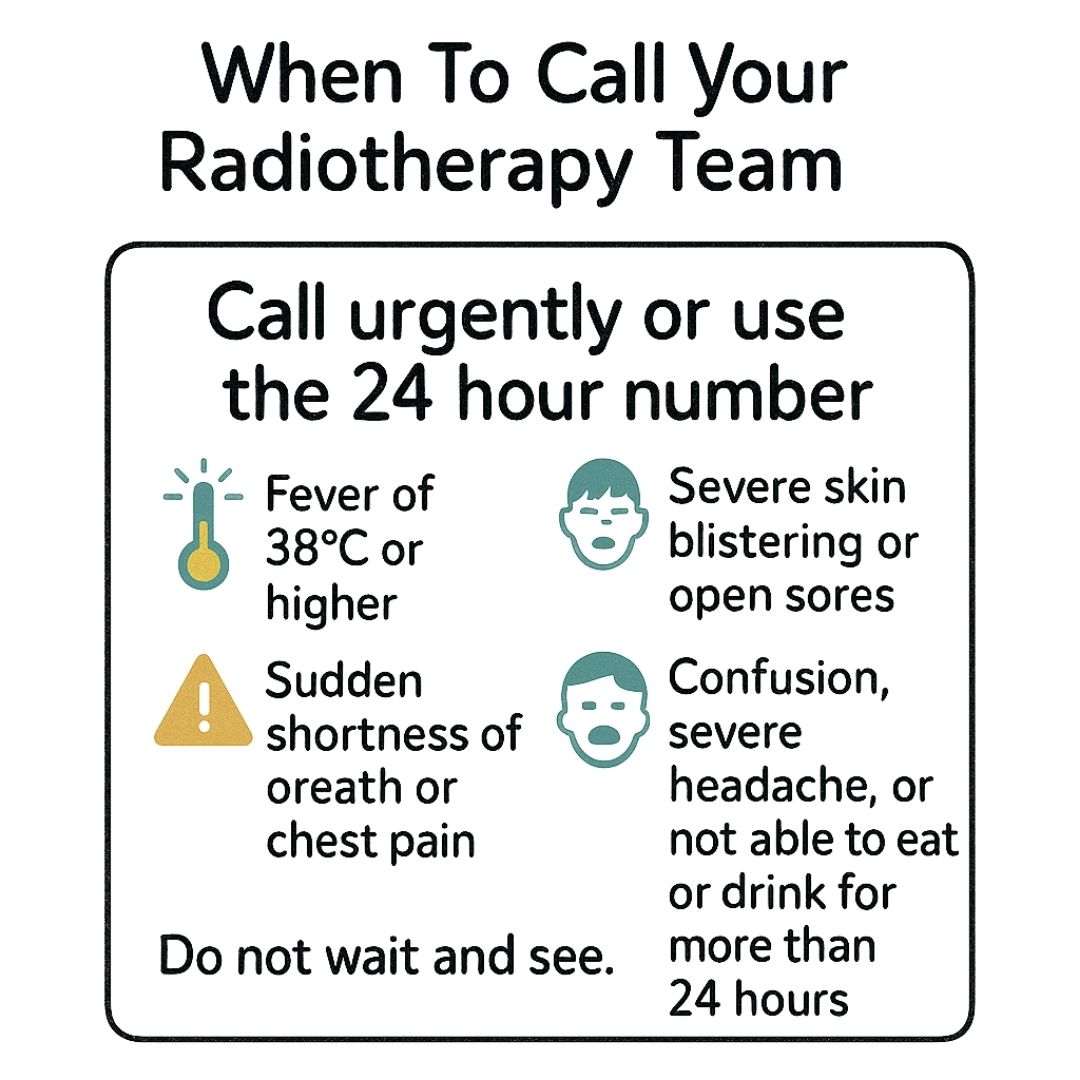
Some symptoms are more serious and should always trigger an immediate call to your oncology team or the 24-hour number they gave you. Don't just wait and hope these get better on their own.
Reach out straight away if you experience any of the following:
Your cancer care team is there to support you through every step. They have seen it all before and have effective treatments to manage more severe side effects, but early intervention is key to getting the best results and keeping you comfortable.
It’s worth remembering that radiotherapy is incredibly safe. National data shows that a significant adverse outcome is rare. The safety protocols and reporting guidelines are extremely strict to protect patients, which makes the whole system highly reliable. You can read more about these safety protocols and incident reporting. Trusting your team and reporting any severe symptoms promptly is the best way to ensure you receive the safest and most effective care.
When you’re facing radiotherapy, your mind is probably buzzing with questions. That's completely normal. Getting clear, honest answers is one of the best ways to feel more grounded and in control of what’s happening.
We’ve gathered some of the most common questions people ask, and our goal here is to give you the straightforward information you need. Let’s tackle these worries head-on.
This is a huge worry for many, so let’s clear it up right away: for the vast majority of people, the answer is a simple and definite no.
If you're having external beam radiotherapy (where a machine directs radiation at you from the outside), you are not radioactive at any point. Think of it like a light switch. When the machine is on, the radiation is delivered. The second it’s switched off, the radiation is gone completely.
It’s just like having an X-ray – you don’t carry any radiation with you afterwards. You are perfectly safe to be around anyone and everyone, including babies, young children, and pregnant women, as soon as your session is over.
The only exception is a much less common treatment called internal radiotherapy (or brachytherapy), where a radioactive source is placed inside your body. In that very specific situation, your care team will give you clear safety rules to follow. But for standard external treatment, you pose zero risk to others.
It’s a perfectly logical question to ask, but the severity of your side effects has absolutely nothing to do with how well the treatment is working. The success of radiotherapy is all about the carefully calculated dose being delivered to the tumour, not about how your healthy cells react along the way.
Every single person’s body is different. Some people sail through treatment with very few issues, while others find it much tougher. It all depends on things like the part of your body being treated, the total radiation dose, and your general health.
A mild reaction doesn't mean the treatment isn't doing its job, and a severe one doesn’t mean it’s working "extra hard". It’s just your body's unique response.
Your oncology team has very precise ways of measuring how well your treatment is working. They rely on scans and other clinical assessments, not on how tired you feel or how sore your skin is.
The exhaustion that comes with radiotherapy is no joke. It's a deep, physical tiredness, and it’s often one of the last side effects to fade away. For most people, the fatigue hits its peak near the end of the treatment course and then, slowly but surely, starts to get better.
Patience is key here, because it’s rarely a quick recovery. Here’s what you might expect:
The most important thing you can do is listen to your body. Rest when you need to rest, and try to balance that with gentle activity, like a short walk. Pushing yourself too hard will only set you back.
Yes, absolutely! While you can’t stop side effects from happening altogether, going into treatment in the best possible shape can make a real difference in how well you manage them.
Think of it as preparing your body for a marathon. Here’s what you can focus on before you start:
Have a chat with your care team about this before you begin. They can give you advice tailored specifically to you, helping you create a plan to get your radiotherapy journey off to the best possible start.
We strongly advise you to talk with a health care professional about specific medical conditions and treatments.
The information on our site is meant to be helpful and educational but is not a substitute for medical advice.
Discover how to arrange compassionate end of life care at home. Our guide explains hospice, palliative care, and practical support for families.
The bruised cervix guide discusses causes, symptoms and effective relief. Learn prevention tips and expert advice for cervical health.
This is my story of surviving cancer I was diagnosed with Non Hodgins Lymphoma back in 2006 my dad had died of the same marginal within 17th months which is unfortunately the normal. By 2007 I was told I had six months and treatment gave me 6 months more. The in 2008 I was told I had […]