When someone close to you is diagnosed with cancer, your world can change in an instant. Alongside concern and care, you might begin to feel something harder to name, a quiet, heavy sadness for things that haven't even happened. This is often referred to as pre-grief or anticipatory grief.
This article is written for family members and friends supporting someone with cancer. To face something as complex and personal as pre-grief, it must first be recognised. This guide is here to help you understand what you may be feeling, offering gentle support, clarity, and reassurance as you stand beside someone you care about.
Pre-grief is the emotional experience of grieving before a loss or change has occurred. For carers, friends, and loved ones of someone with cancer, it can begin with the diagnosis and continue through treatment and recovery. You may feel sadness for how things have changed already or worry about what might change next.
It’s a deeply human response to uncertainty. While your focus may be on being strong for the person you care about, it’s also normal to have your own feelings, including fear, helplessness, and sorrow. These feelings do not mean you’re giving up hope. They are part of loving someone through a life-altering experience.
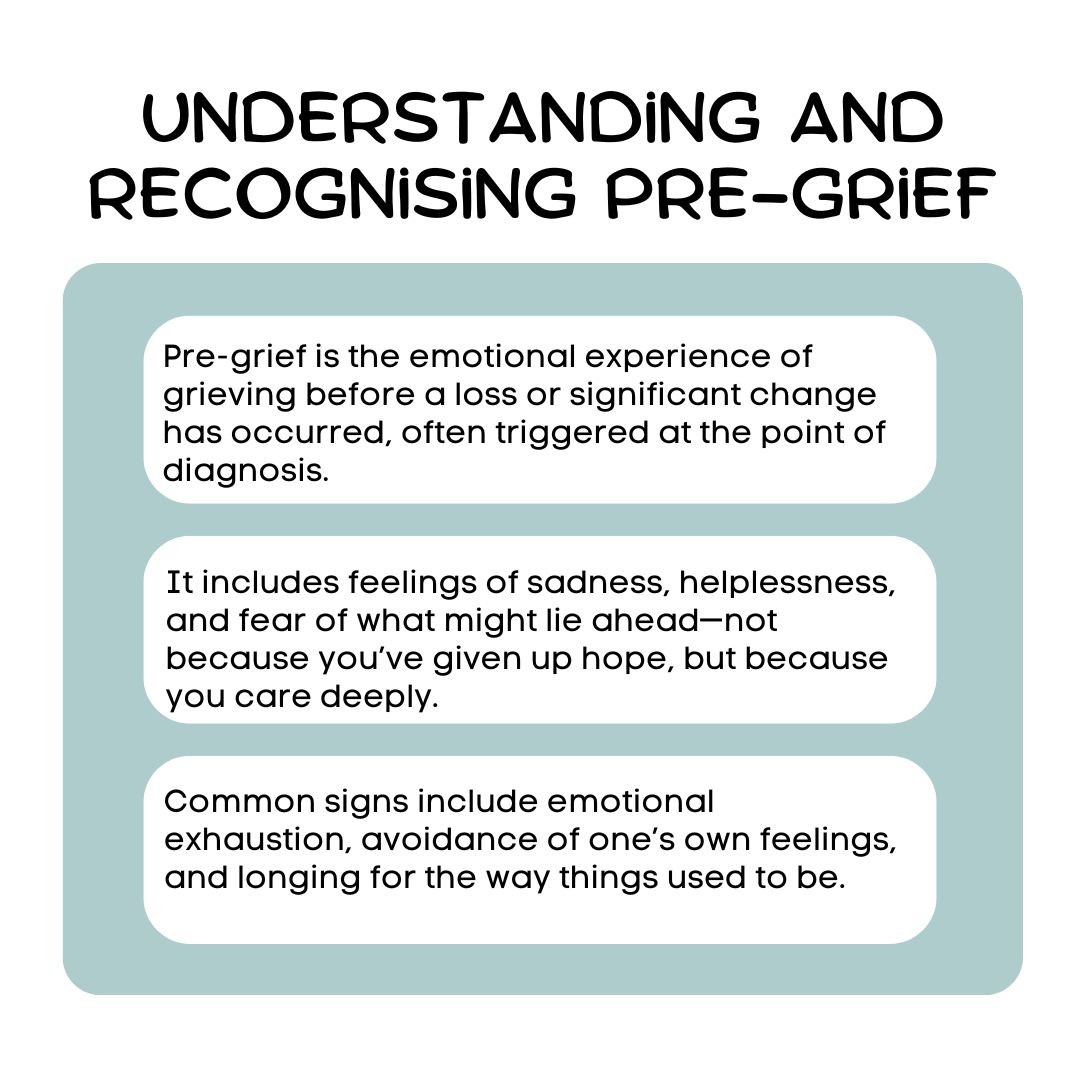
You may notice yourself:
It’s important to know that these reactions are not selfish or inappropriate; they are common signs of emotional strain and deep care.
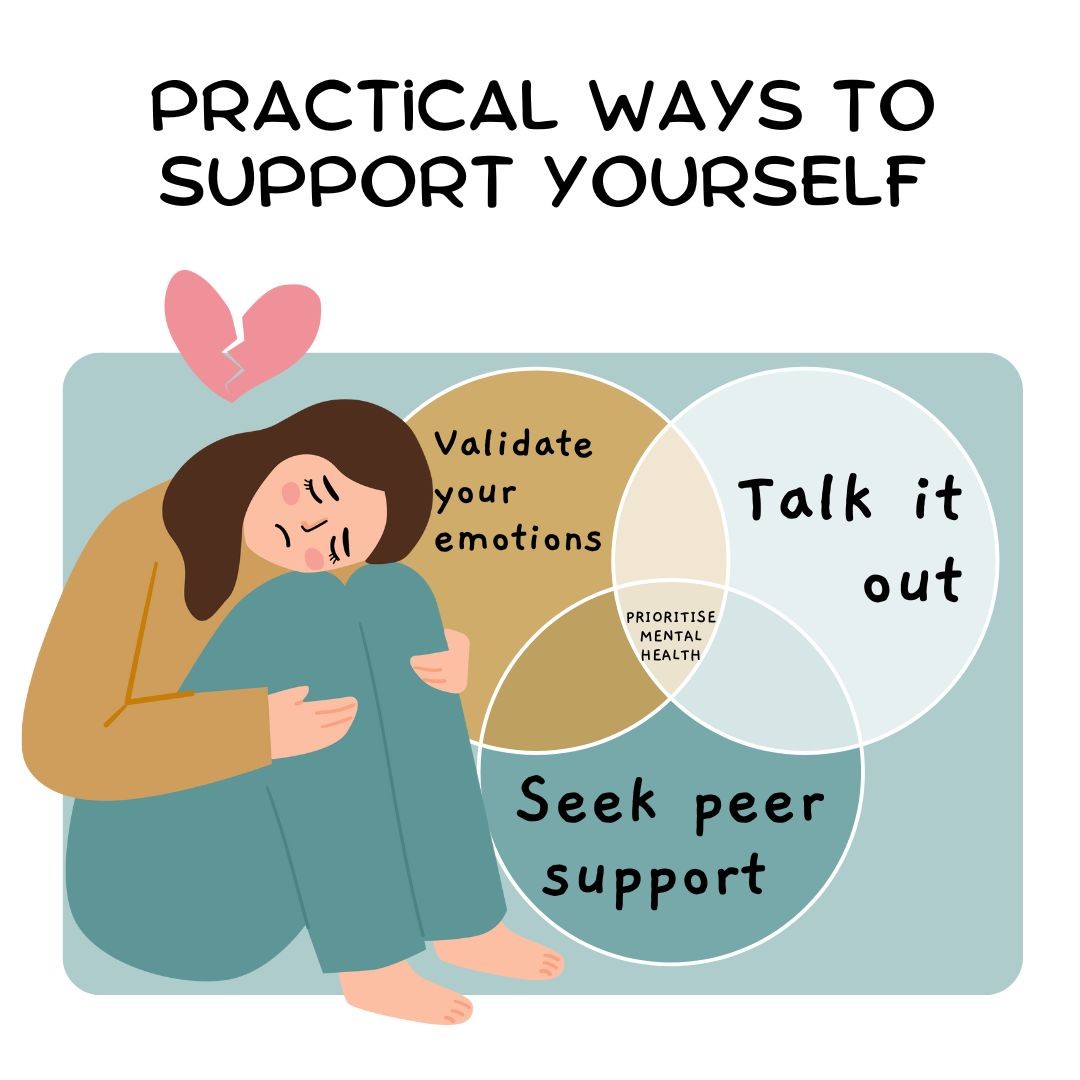
Supporting a loved one with cancer takes an emotional toll, and it’s important to look after your own well-being as well. Here are some ways to support yourself while you’re supporting them:
Your sadness, frustration, or confusion doesn’t make you a bad supporter. You are allowed to have emotions while being there for someone else. You don’t have to hide what you're feeling to show love.
Speaking to a friend, family member, or a mental health professional can help. Talking through your feelings can lighten the emotional load.
If you feel overwhelmed, taking small steps to care for your mental health can help you cope. Simple strategies like mindfulness or taking short breaks throughout your day can make a big difference.
Even brief moments of calm, like a walk, a hot drink, or a deep breath, can help your nervous system reset. Taking care of yourself is not a sign of weakness but of strength, allowing you to be there for your loved one when they need you most.
You don’t have to go through this alone. Connecting with others who are also supporting loved ones can offer emotional relief and a sense of solidarity.
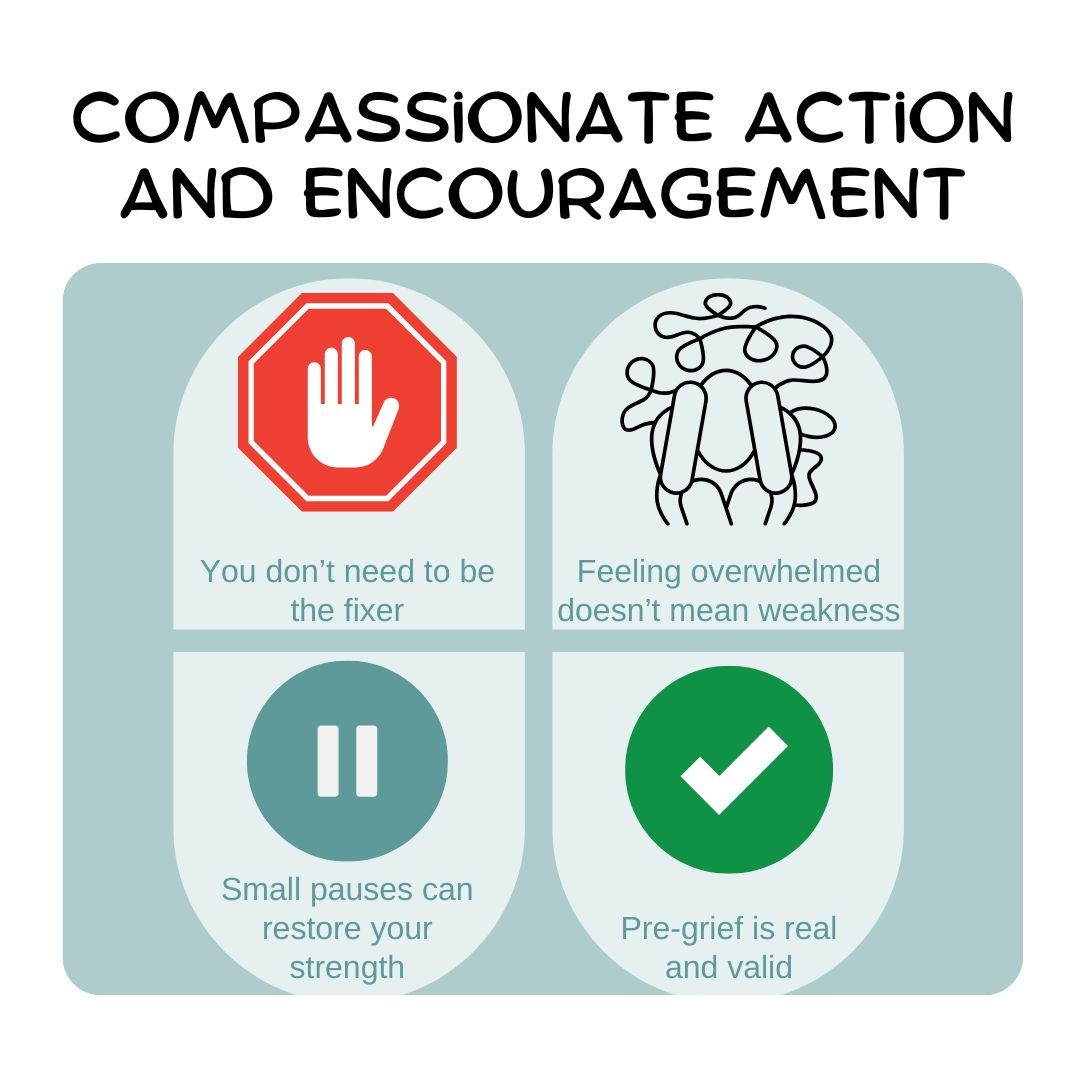
As a friend or family member, it’s easy to fall into a role of being the “strong one”, the “fixer”, or the “helper”. But supporting someone with cancer isn’t about doing everything perfectly. It’s about showing up, listening, and being present, even in uncertainty.
Let yourself be human. You do not need to have all the answers. A simple “I’m here for you” or “this must be hard” can be more powerful than trying to fix or solve. And remember, compassion also includes extending kindness to yourself.
If you're feeling weighed down by pre-grief, here are some small steps you can take:
These actions won’t erase the pain, but they can help carry it more gently.
Supporting someone with cancer is a profound act of love, and it is also emotionally demanding. If you’re feeling grief, fear, or sorrow before anything has happened, you are not alone, and you are not wrong.
Pre-grief is real, and it’s recognised as part of the emotional journey when someone you love is facing cancer. By caring for your own emotional wellbeing, you’re not stepping back from the person you love; you’re strengthening your ability to be there in the ways that matter most.
Be kind to yourself. You are doing something deeply human, walking alongside someone you love through uncertainty. That takes courage, and you do not have to do it alone.
If you're feeling overwhelmed or need someone to talk to, here are some helpful helplines:
These lines provide free, confidential support for both those diagnosed with cancer and their loved ones.
Senior Editor: Katheeja Imani
We strongly advise you to talk with a health care professional about specific medical conditions and treatments.
The information on our site is meant to be helpful and educational but is not a substitute for medical advice.
None of us expects to get cancer. Cancer is what happens to someone else.
Appreciating life in a way that I never have before. Not taking anything for granted, learning to live with the cancer, being thankful that I am alive. How often are we really and truly thankful for being alive? I never used to give it a second thought if I am being honest with you.
Learn How To Write A Successful Cancer Blog, Share Your Journey, And Inspire Others. Discover Tips For Creating Engaging, Impactful Content And Building Community.