Most of us have brushed off a raspy or weak voice as nothing serious, but did you know that hoarseness can sometimes be an early signal of lung cancer? Changes in your voice can reveal a lot about your lung health, and recognising symptoms early could make a significant difference.
This guide explains the real connection between hoarseness and lung cancer, arming you with the facts you need to spot the warning signs and take action. You will discover what causes voice changes, how to recognise when they might mean something more, and the steps you should take if you are concerned.
We’ll go through the key symptoms to watch for, the diagnosis process, available treatments, and the support options that can help you or your loved ones feel less alone on the journey.
Imagine waking up one morning and finding your voice raspy and weak. For most people, this is just a passing nuisance. But sometimes, hoarseness signals something deeper, especially when paired with other symptoms. Understanding how hoarseness develops is the first step to recognising when it might be linked to something as serious as lung cancer.
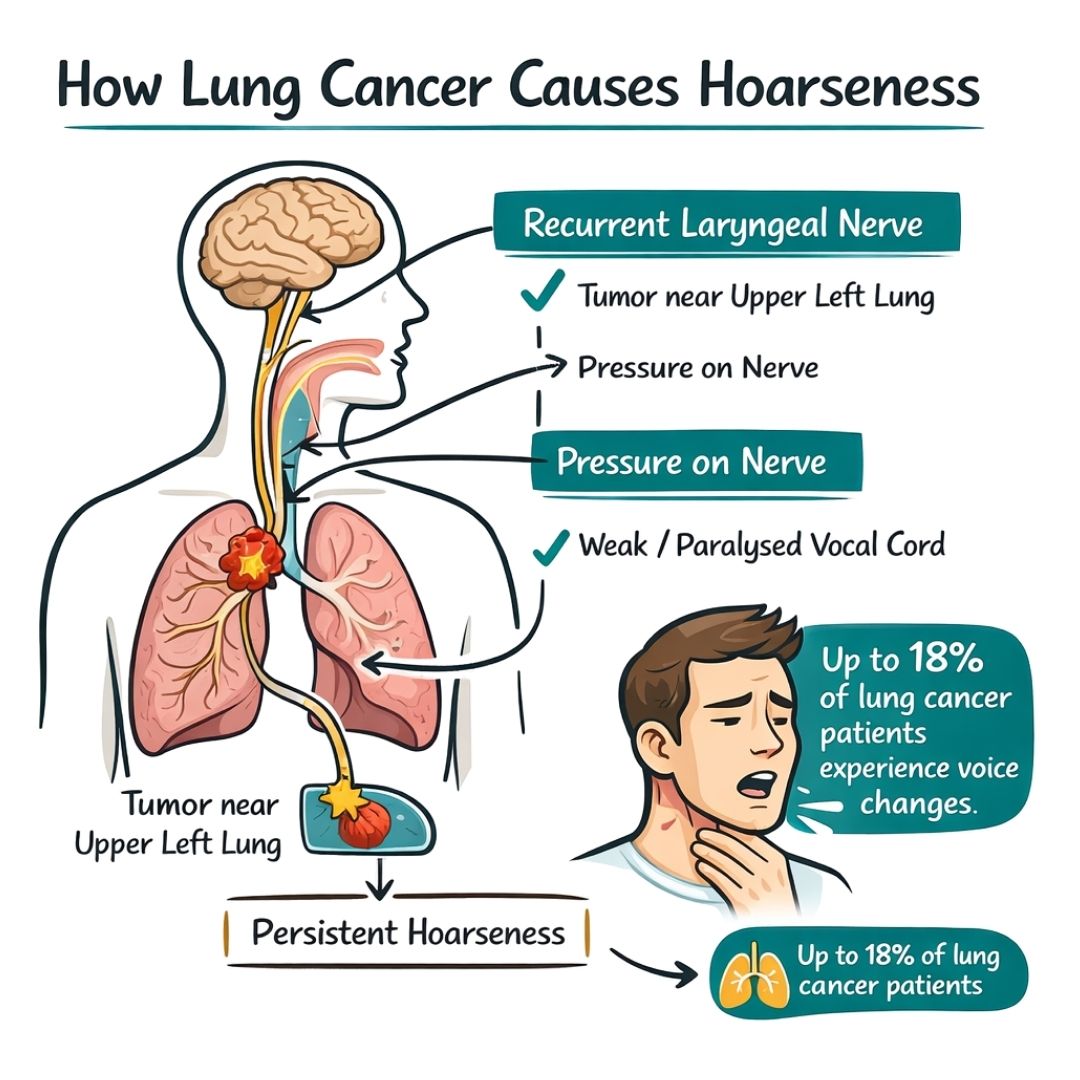
Hoarseness happens when your voice sounds breathy, raspy, or strained. It might be soft, rough, or even disappear completely. The main player in your voice is the larynx (voice box). When you speak, air from your lungs passes over your vocal cords, causing them to vibrate and produce sound.
Anything that irritates, swells, or damages the vocal cords can cause hoarseness. Common causes include:
For most people, hoarseness clears up in a week or two. But if it lasts longer, especially more than 2–3 weeks, it’s time to see a doctor.
The connection between hoarseness (or other vocal symptoms) and lung cancer lies deep in the chest. Your larynx (voice box) is controlled by nerves, especially the recurrent laryngeal nerve, which travels from the brain, loops down into the chest near the lungs, and back up to the larynx (voice box). If a tumour grows near the top of the left lung, it can press on this nerve.
When that happens, one vocal cord becomes weak or paralysed. The result is persistent hoarseness, often without any sign of pain, sore throat, or infection. In some studies, 2–18% of lung cancer patients experience voice changes before any other symptom.
Doctors have seen cases where a patient’s only warning sign was a change in voice. If you notice hoarseness that lingers, especially if you are in a high-risk group (smoker, ex-smoker, exposure to asbestos/radon, family history), it is wise to seek medical advice. For more detailed information on this symptom and its significance, see Hoarseness as a symptom of lung cancer.
While hoarseness as a sign of lung cancer is a possibility in some cases, other health issues can also be behind a persistent raspy voice. These include:
Here is a simple table comparing common and serious causes:
| Cause | Benign or Serious | Typical Duration | Other Clues |
|---|---|---|---|
| Viral infection | Benign | 1–2 weeks | Fever, sore throat, improves quickly |
| Allergies | Benign | Days to weeks | Sneezing, itchy eyes |
| Acid reflux | Benign (can be chronic) | Variable | Heartburn, throat clearing |
| Lung cancer | Serious | Persistent | Cough, weight loss, fatigue |
| Laryngeal cancer | Serious | Persistent | Pain swallowing, ear pain |
| Thyroid disorders | Serious | Persistent | Neck lump, swallowing issues |
Ignoring hoarseness that lasts more than 2–3 weeks is risky. Whether it is hoarseness related to lung cancer or another underlying condition, early attention and checks can make all the difference.
A raspy or weak voice can seem like a harmless nuisance, but sometimes it carries a deeper warning. For many, hoarseness is just a fleeting symptom. Yet, in some cases, it can be an early clue to something serious, such as voice changes linked to lung cancer. Let’s explore how to spot the difference between ordinary voice changes and those that could signal lung cancer.
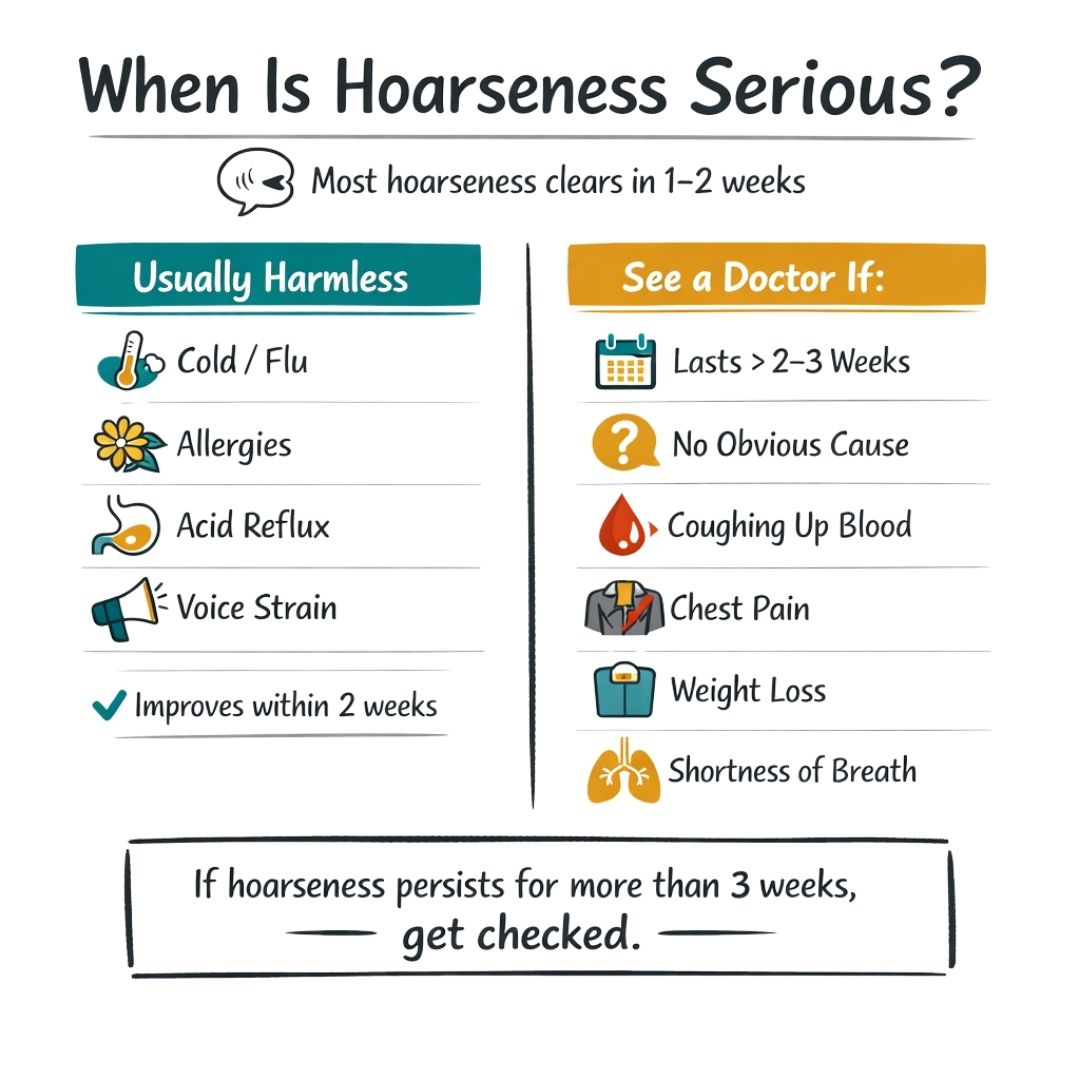
The earliest sign of hoarseness and lung cancer is often a voice that sounds different and does not get better. If your hoarseness lasts longer than two or three weeks, pay close attention. Alongside a persistent change in your voice, also look out for:
What sets hoarseness as a sign of lung cancer apart from other causes is that the hoarseness tends to develop gradually and does not improve with home remedies. In some studies, 2–18% of lung cancer cases involve persistent hoarseness. If you would like a deeper dive into the full spectrum of symptoms, the Lung cancer guide and overview offers clear, up-to-date information.
Certain people are more likely to experience vocal symptoms from lung cancer. If you are over 55, have a history of smoking, or have been exposed to asbestos or radon at work or home, your risk is higher. A family history of lung cancer can also play a role.
Smokers and those exposed to harmful substances should be more careful. The combination of risk factors makes it critical to notice even subtle symptoms. If you belong to a high-risk group, regular check-ups and early attention to voice changes can make a big difference.
If your hoarseness lasts more than three weeks, worsens, or is accompanied by any of the symptoms listed above, see your doctor immediately.
Some signs are more likely to be harmless, such as hoarseness after cheering at a match or a mild cold. But if there is no clear reason, or if you notice additional symptoms like difficulty swallowing or coughing up blood, do not delay. Early evaluation can be life-saving. Trust your instincts and seek support when things do not feel right.
A diagnosis can feel like a maze. For many people, the journey begins with a persistent change in their voice, a subtle warning that something deeper may be happening. Understanding how doctors unravel the link between hoarseness and lung cancer can empower you to seek help confidently and early.
Doctors start by listening. They ask when the hoarseness began, how it has changed over time, and whether other symptoms, like cough, breathlessness, or chest pain, have appeared. This careful, detailed history helps distinguish between simple causes and more serious ones, such as hoarseness related to lung cancer.
A physical examination follows. The doctor checks for signs in the neck, mouth, and chest. They may listen to your lungs with a stethoscope, searching for abnormal sounds or clues. Sometimes, they use a flexible camera, called a laryngoscope, to look directly at your vocal cords. This tool can reveal swelling, paralysis, or tumours affecting your voice.
Key points your doctor will consider:
Imaging tests are the detective tools in the search for answers. After the initial assessment, your doctor may order a chest X-ray to look for obvious lung abnormalities. If more detail is needed, a CT scan or MRI can help identify masses, lymph node changes, or nerve involvement leading to persistent hoarseness in lung cancer.
A PET (Positron Emission Tomography) scan may also be used, especially if cancer is suspected. These scans can detect even small tumours or spread to nearby tissues. Blood tests may be performed to assess overall health and detect markers linked to certain cancers.
Each test adds a piece to the puzzle, giving a clearer picture of whether hoarseness and lung cancer are connected in your case.
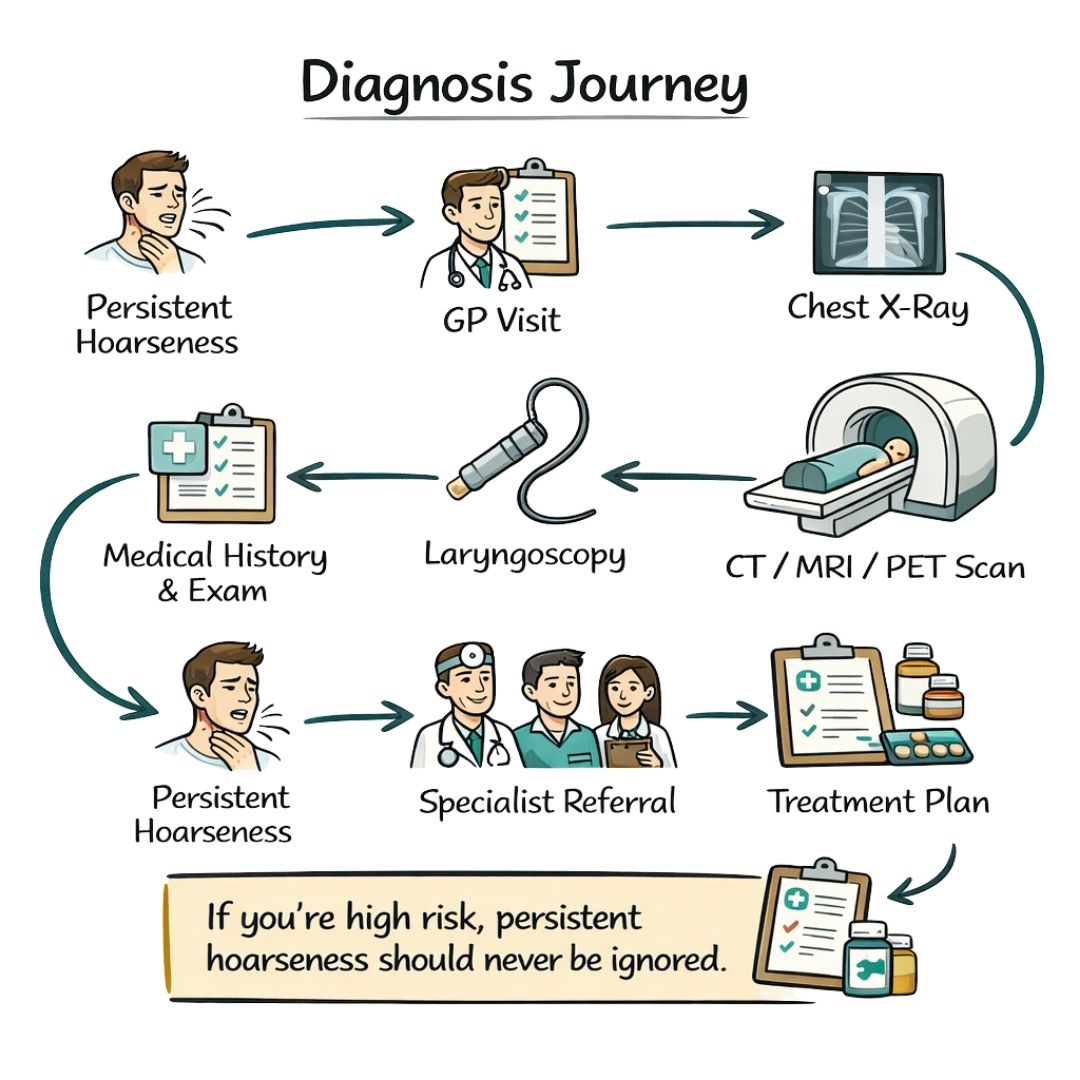
When persistent voice changes in lung cancer are suspected, your GP (General Practitioner) will refer you to specialists. Ear, nose, and ENT doctors or pulmonologists to confirm the diagnosis and plan next steps. Early referral is vital, as catching lung cancer at an early stage can boost survival rates by up to 50%.
The multidisciplinary team may include:
This collaborative approach ensures you get comprehensive care. Your journey may also lead to discussions about the latest treatments. For those wanting to learn more about what comes after diagnosis, see these Lung cancer treatment research tips for an overview of current care pathways.
Remember, the earlier hoarseness and lung cancer are recognised and acted upon, the better the chances for effective treatment and improved quality of life.
Facing voice changes linked to lung cancer can feel overwhelming, but understanding your treatment options gives you a sense of control. Each journey is unique, yet there are common approaches that aim to tackle both the cancer itself and the impact on your voice. Let’s explore the main strategies, blending medical innovation with personal support, to help you or your loved one find the best path forward.
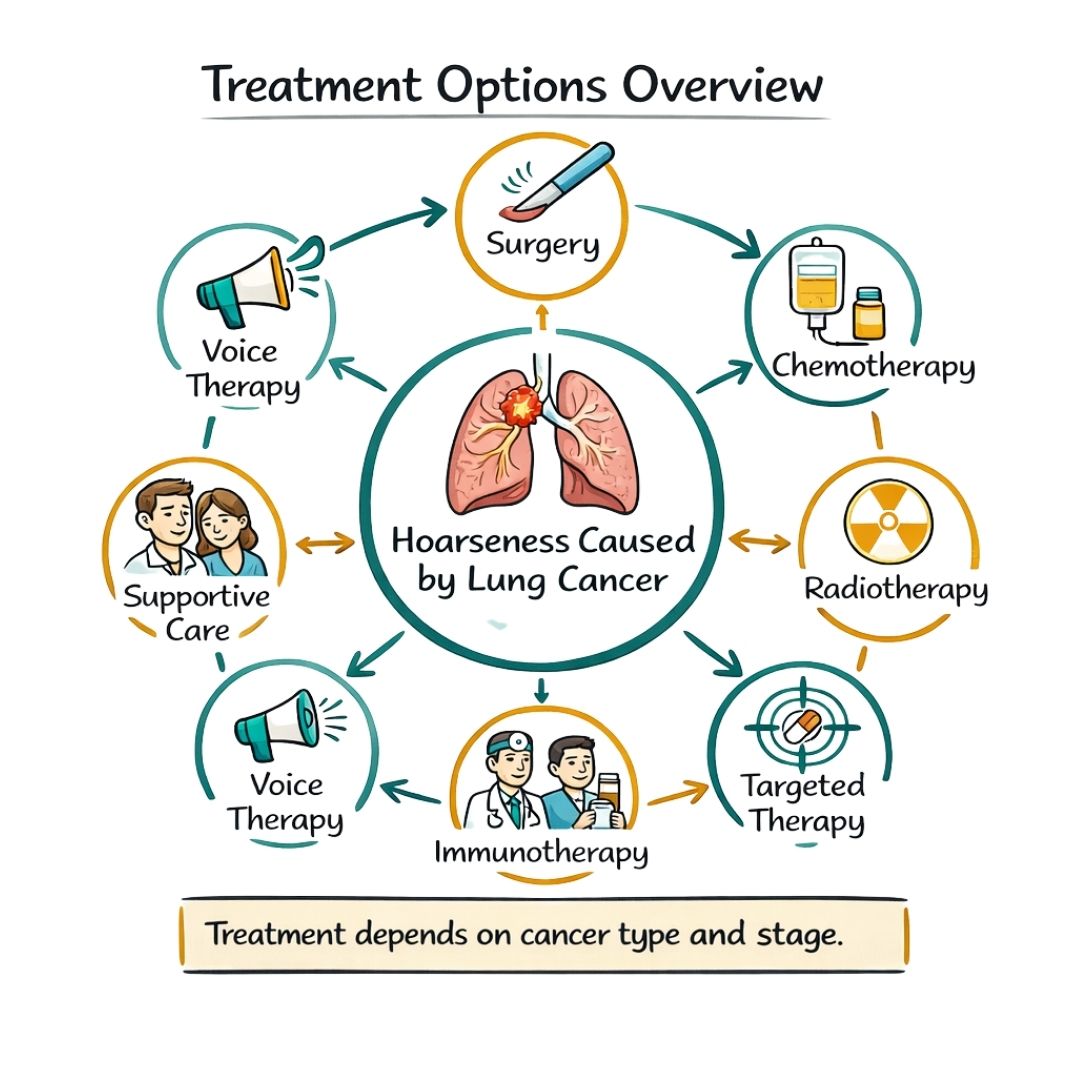
The first step in treating hoarseness and lung cancer is managing the cancer itself. Doctors consider the type and stage before recommending surgery, chemotherapy, radiotherapy, or targeted therapy. Sometimes, removing a tumour can quickly improve hoarseness, especially if it is pressing on the nerve controlling the vocal cords.
However, surgery can also lead to temporary or even persistent voice changes. For example, research on hoarseness after lung cancer surgery shows that some patients experience ongoing voice difficulties following certain procedures. Early conversations with your medical team can help set realistic expectations and prepare for possible changes.
Voice therapy plays a crucial role in recovery for people experiencing vocal symptoms from lung cancer. Speech and language therapists guide patients through targeted exercises that strengthen the vocal cords and help restore communication skills. These sessions can be empowering, providing tools (Voice amplification devices) to express yourself clearly, even if your voice sounds different.
Supportive care is more than just physical; it also addresses emotional well-being. Many find comfort in group sessions or family meetings, where stories and strategies are shared. If you are struggling, remember that help is available, and you are not alone in navigating hoarseness and lung cancer.
Managing the side effects of voice changes linked to lung cancer often involves a blend of medication and lifestyle changes. Doctors may prescribe anti-inflammatories or recommend humidifiers to soothe irritated throats. Simple habits like staying hydrated and avoiding irritants can make a noticeable difference in comfort.
Holistic support is key. Emotional well-being is just as important as physical health, so consider relaxation techniques or counselling. By taking small daily steps, you can ease the burden of hoarseness and lung cancer, improving your overall quality of life.
The future of hoarseness and lung cancer care looks brighter than ever. Immunotherapy is showing promise for select patients, helping the body’s immune system fight cancer more effectively. These less invasive surgeries are reducing recovery times and the risk of permanent voice changes.
Clinical trials continue to expand treatment options. Ask your doctor if you might benefit from the latest therapies or research studies. Staying informed and open to innovation ensures you receive the best possible care as treatment for hoarseness and lung cancer continues to evolve.
Living with vocal symptoms from lung cancer can feel like navigating a maze with no map. Imagine waking up one morning to find your voice barely more than a whisper, words catching in your throat. For many, this struggle becomes part of their daily life, but with the right tools and support, communication and well-being can be reclaimed.
Adjusting to hoarseness and lung cancer means finding new ways to express yourself. Simple changes can make a world of difference in daily interactions.
Tell family/friends you need them to speak clearly or face you when talking. Let them know that patience and eye contact matter more than ever. These small shifts can restore confidence, making daily conversations less daunting for those with hoarseness and lung cancer.
The emotional toll of hoarseness and lung cancer is often underestimated. Losing your natural voice can feel isolating, and the anxiety of a cancer diagnosis adds another layer of stress. Studies show that up to 40 percent of lung cancer patients experience anxiety or depression.
Seeking support from mental health professionals or counsellors can make a difference. Sharing feelings with loved ones or support groups can also lighten the emotional burden. Remember, you are not alone in facing hoarseness and lung cancer, and reaching out is a sign of strength.
Connecting with peers is vital for anyone living with hoarseness and lung cancer. Support groups, both online and in person, offer a safe space to share experiences and practical advice.
Helpful helplines and online communities can provide encouragement and information. For those supporting a loved one, resources such as How to support someone with cancer offer valuable guidance on compassion and effective help.
Peer support can transform the journey, making it easier to cope with the ups and downs of hoarseness and lung cancer. Many find that simply knowing others understand their challenges brings comfort and hope.
As lung cancer with associated hoarseness progresses, palliative care teams step in to focus on comfort and dignity. These specialists help manage symptoms like pain, breathlessness, and persistent voice changes, allowing individuals to maintain their quality of life.
Palliative care is not just for the final days. It can start early, providing physical, emotional, and spiritual support for patients and their families. Honest conversations about wishes and values ensure that care is tailored to the person, not just the illness.
Imagine catching a worrying symptom early and changing the story before it unfolds. When it comes to hoarseness and lung cancer, prevention and swift action can make all the difference. Many people do not realise that small changes and attentive habits can reduce their risk and potentially save lives.
Lifestyle choices are your first line of defence. Consider these proven steps:
Regular health checks are vital. If you notice persistent voice changes, do not ignore them. Early detection of hoarseness and lung cancer symptoms, like persistent cough or wheezing, can lead to faster diagnosis and better outcomes. For more information about respiratory warning signs, you can explore wheezing with lung cancer symptoms.
Early intervention improves survival rates and the quality of life. Public health campaigns have shown that people who act quickly after noticing unusual symptoms are more likely to have successful treatment. If something feels off, trust your instincts and speak to your GP (General Practitioner).
Above all, advocate for yourself. Listen to your body, take persistent changes seriously, and never hesitate to seek medical advice. Your voice could be telling you more than you think.
We strongly advise you to talk with a health care professional about specific medical conditions and treatments.
The information on our site is meant to be helpful and educational but is not a substitute for medical advice.
Learn how upper back pain and lung cancer are linked, recognise vital warning signs, understand diagnosis steps, treatments, and prevention.
Discover 1st stage lung cancer symptoms with our complete guide Learn to recognise early signs, understand risks, diagnosis, and get expert support
Explore lung cancer screening benefits, eligibility, process, results interpretation, and FAQs. Your formal guide to early detection and better outcomes.