When someone you care about is diagnosed with cancer, the urge to do something kind and immediate is almost universal. For many people, flowers feel like the obvious choice. They are familiar, socially accepted, and long associated with care, sympathy, and support during illness.
But when someone is undergoing chemotherapy, flowers are often not the thoughtful gift they appear to be.
In fact, many hospitals actively discourage or prohibit flowers in oncology units, and this guidance is based on clear medical reasoning rather than preference or superstition. While well intentioned, fresh flowers can pose genuine risks to people receiving chemotherapy and may unintentionally create emotional or physical discomfort at a time when energy and resilience are already limited.
This article explains why flowers are not recommended for chemotherapy patients, what is happening inside the body during treatment, and what more supportive alternatives look like in practice.
Flowers are powerful symbols. Across cultures, they communicate love, sympathy, celebration, and remembrance without requiring words. They brighten rooms and often feel like the appropriate response when someone is unwell.
For people undergoing chemotherapy, however, the context is very different.
What looks like a harmless bouquet can introduce avoidable risks into an already vulnerable environment. This is not about allergies or personal taste. It is about how chemotherapy affects the immune system and why everyday items can suddenly become sources of harm.
Understanding this difference helps ensure that gestures of support genuinely help rather than unintentionally add risk or burden.
The immune system is a highly complex network of cells, tissues, and signaling pathways designed to protect the body from infection and disease. Its job is to recognize what belongs in the body and what does not, responding to threats such as bacteria, viruses, fungi, and abnormal cells.
Cancer itself can already interfere with this system.
Some tumors actively suppress immune responses to avoid detection. Others disrupt normal immune signaling. As a result, many people with cancer experience some degree of immune compromise even before treatment begins.
Chemotherapy significantly increases this vulnerability.
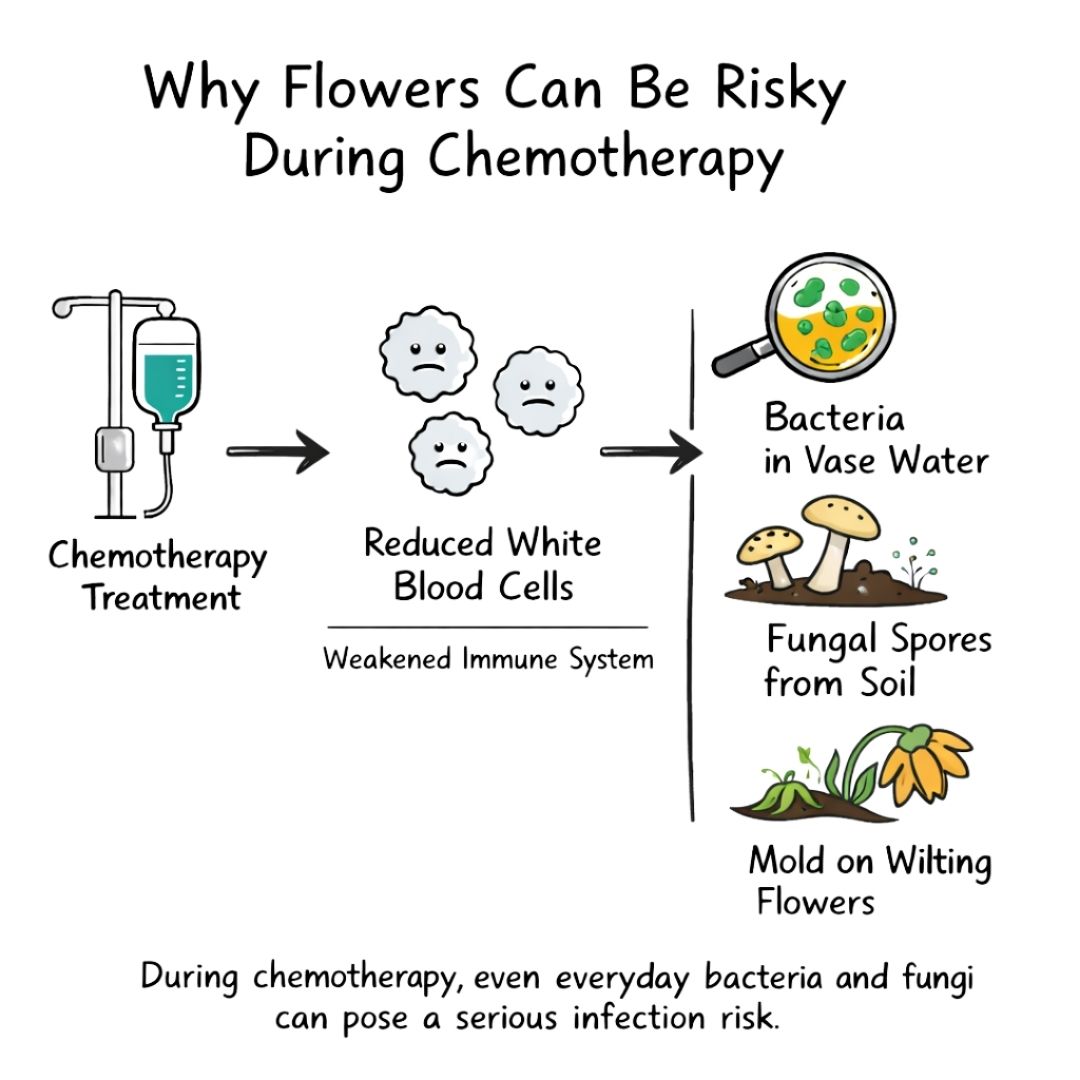
Chemotherapy works by targeting rapidly dividing cells. Cancer cells divide uncontrollably, which makes them susceptible to chemotherapy drugs. Unfortunately, the body also contains healthy cells that divide quickly and are affected by treatment.
These include cells in the bone marrow, blood, mouth, digestive tract, hair follicles, and the lining of the respiratory system.
The bone marrow is especially important because it produces white blood cells, which are essential for fighting infection. When chemotherapy damages these cells, white blood cell counts can drop sharply. This condition, often referred to as neutropenia, leaves patients far less able to fight infections that would normally be harmless.
During chemotherapy, even minor exposure to bacteria or fungi can lead to serious infections that require hospitalization, antibiotics, or delays in treatment. In some cases, infections can become life threatening.
Fresh flowers carry more than color and scent.
They also carry bacteria from soil and water, fungal spores, mold, pollen, and microorganisms that pose no risk to healthy individuals but can be dangerous to someone with a suppressed immune system.
Vases of standing water can quickly become breeding grounds for bacteria. Decaying plant matter releases spores into the air. Even with careful handling, these risks cannot be eliminated.
This is why many hospitals restrict or ban flowers in oncology wards, infusion centers, and transplant units. The concern is not aesthetic. It is infection control.
For someone undergoing chemotherapy, exposure to these microorganisms can lead to complications that disrupt treatment schedules and recovery.
A common misunderstanding is that flowers are avoided because of allergies.
Allergies occur when the immune system overreacts. Chemotherapy patients experience the opposite problem. Their immune systems are weakened and less able to respond to threats.
The concern is not sneezing or watery eyes. It is infection.
This distinction matters because it underscores that avoiding flowers is a medical precaution, not an arbitrary rule.
There is also an emotional dimension that deserves attention.
Fresh cut flowers are temporary. They wilt, decay, and are eventually thrown away. For some people undergoing chemotherapy, this can act as an uncomfortable reminder of fragility, loss of control, or uncertainty about the future.
Not everyone experiences this reaction, but many do.
Chemotherapy already brings constant reminders of vulnerability through physical changes, treatment schedules, and medical environments. A gift that unintentionally reinforces themes of decline may not provide the comfort intended.
Supportive gestures are most effective when they reduce emotional load rather than add to it.
Chemotherapy often alters sensory perception.
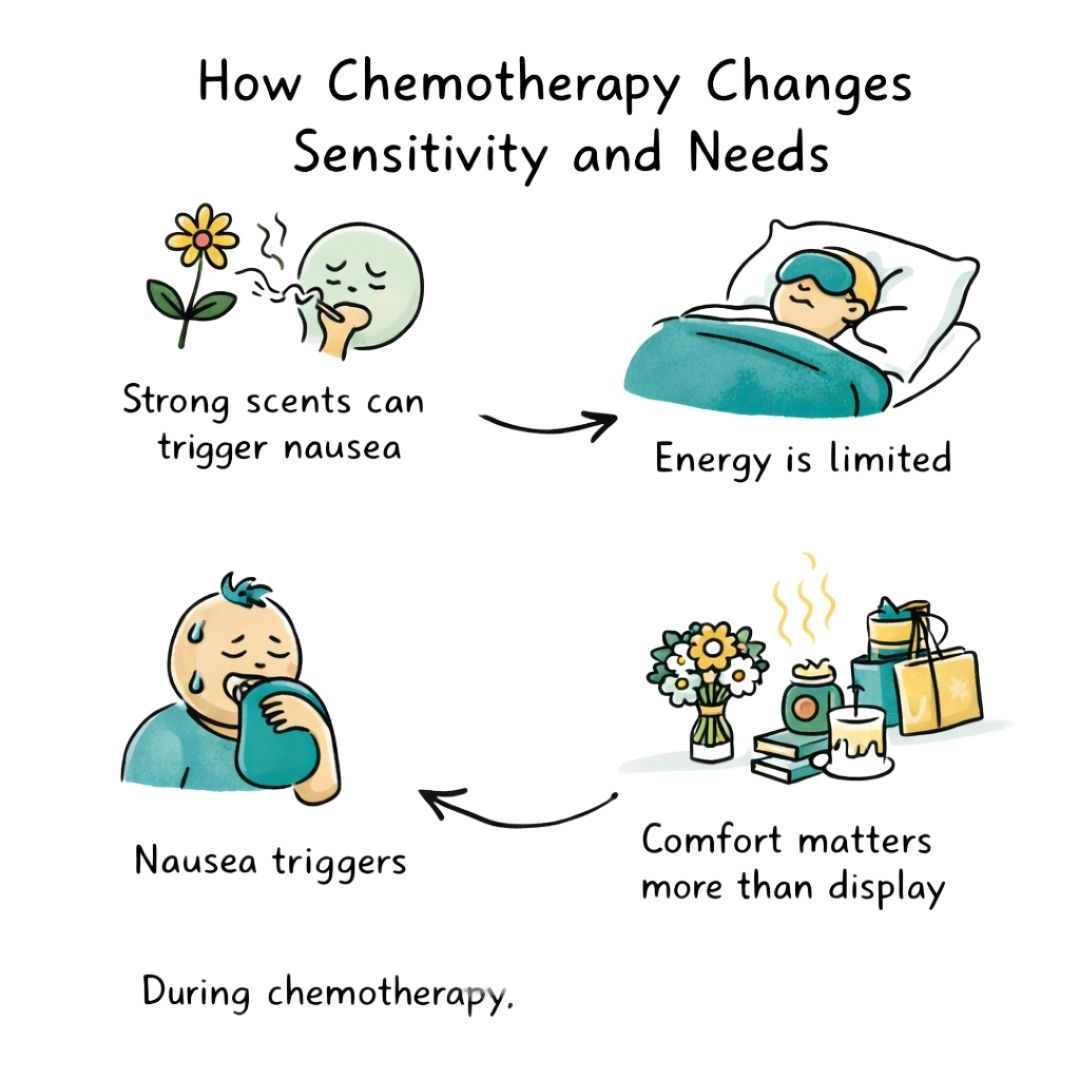
Smells can become overwhelming. Even pleasant fragrances may trigger nausea, headaches, or dizziness. Floral scents can be particularly problematic, especially during or shortly after treatment cycles.
Taste changes, fatigue, and nausea mean that many patients carefully manage sensory input to avoid discomfort. A strongly scented bouquet may unintentionally cause distress rather than comfort.
The most helpful gifts for chemotherapy patients tend to share several qualities.
They are safe for immunocompromised individuals.
They acknowledge the realities of treatment.
They prioritize comfort, practicality, and choice.
They respect fluctuating energy levels and emotional boundaries.
Thoughtful alternatives do not need to be elaborate. They need to be informed.
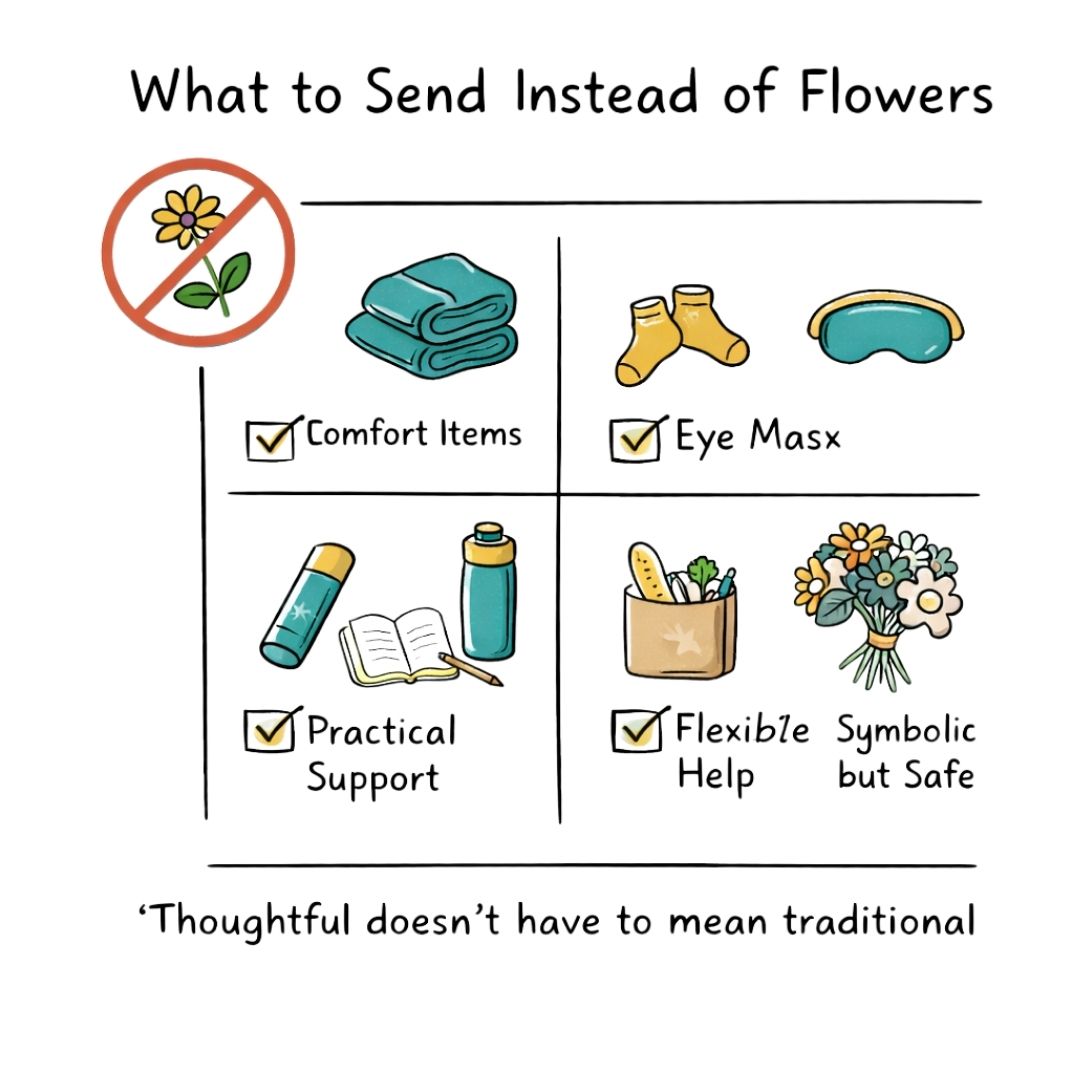
Comfort items can make a meaningful difference during long periods of rest and recovery.
Soft blankets, cozy socks, eye masks, and gentle wraps help address temperature sensitivity, which is common during chemotherapy. These items offer physical reassurance without demanding interaction or energy.
Comfort gifts are practical, not symbolic. Their usefulness often speaks louder than words.
Small, practical items can significantly improve daily comfort.
Examples include lip balm for dryness, gentle hand cream, refillable water bottles to encourage hydration, journals for reflection or symptom tracking, and puzzle books or quiet activities for infusion days.
These gifts communicate awareness of what chemotherapy involves without requiring explanation or conversation.
Food can be complicated during chemotherapy.
Strong smells, rich flavors, or unfamiliar textures can trigger nausea. However, gentle and flexible options are often welcome.
Instead of prepared meals or strongly flavored foods, consider grocery delivery credits, meal delivery vouchers, or carefully chosen snack boxes with mild options.
Vouchers are especially helpful because they restore a sense of control. They allow the recipient to choose what feels manageable at that moment.
If the symbolic nature of flowers feels important, there are safer substitutes.
Silk flowers, paper arrangements, or small keepsakes can convey care without introducing medical risk. These items do not decay, do not carry microorganisms, and can be enjoyed at the recipient’s pace.
The intention matters, but so does the form it takes.
Care packages designed specifically for chemotherapy patients exist because general gifts often miss the mark.
These packages are curated with immune safety, sensory sensitivity, and treatment side effects in mind. They combine comfort, practicality, and emotional support without overwhelming the recipient.
Importantly, they remove the burden of decision making from the patient at a time when cognitive and emotional energy may be limited.
Ultimately, the most meaningful support comes from paying attention.
Attention to changing needs, energy levels, medical realities, and emotional boundaries. What helps one week may not help the next. What feels comforting one day may feel intrusive the next.
Any gesture that reflects awareness of this uncertainty communicates care more effectively than tradition ever could.
Sending flowers to someone undergoing chemotherapy is rarely unkind. It comes from habit and a desire to help.
But kindness is most powerful when it is informed.
By choosing alternatives that prioritize safety, comfort, and autonomy, you are not withholding care. You are offering it in a form that truly supports the person receiving it.
Sometimes the most meaningful gift is the one that quietly fits into someone’s life without asking anything in return.
We strongly advise you to talk with a health care professional about specific medical conditions and treatments.
The information on our site is meant to be helpful and educational but is not a substitute for medical advice.
Discover How Leading Cancer Centres Integrate Research, Nutrition, Personalised Medicine, and AI to Deliver Holistic, Cutting-Edge Cancer Care in the US and UK.
Cancer Dehydration Is A Risk For People Undergoing Cancer Treatments, This Can Be Life-Threatening If Left Untreated. Find Out More From Cancer Care Parcel.
Celebrate Mother's Day After Cancer Surgery With Gentle, Meaningful Activities That Honor Your Healing, Embrace Love, And Bring Peace To Your Special Day.