Cancer treatment is an essential step in the fight against cancer. Whether it’s chemotherapy, radiotherapy, surgery, immunotherapy, or a combination of these, each therapy aims to destroy cancer cells and halt their growth. While these treatments are powerful, they can also impact your immune system; sometimes weakening it, sometimes activating it to help fight the disease.
In this article, we’ll explore how different cancer treatments interact with your immune system, what that means for your health, and how you can support your immune defences during your cancer journey.
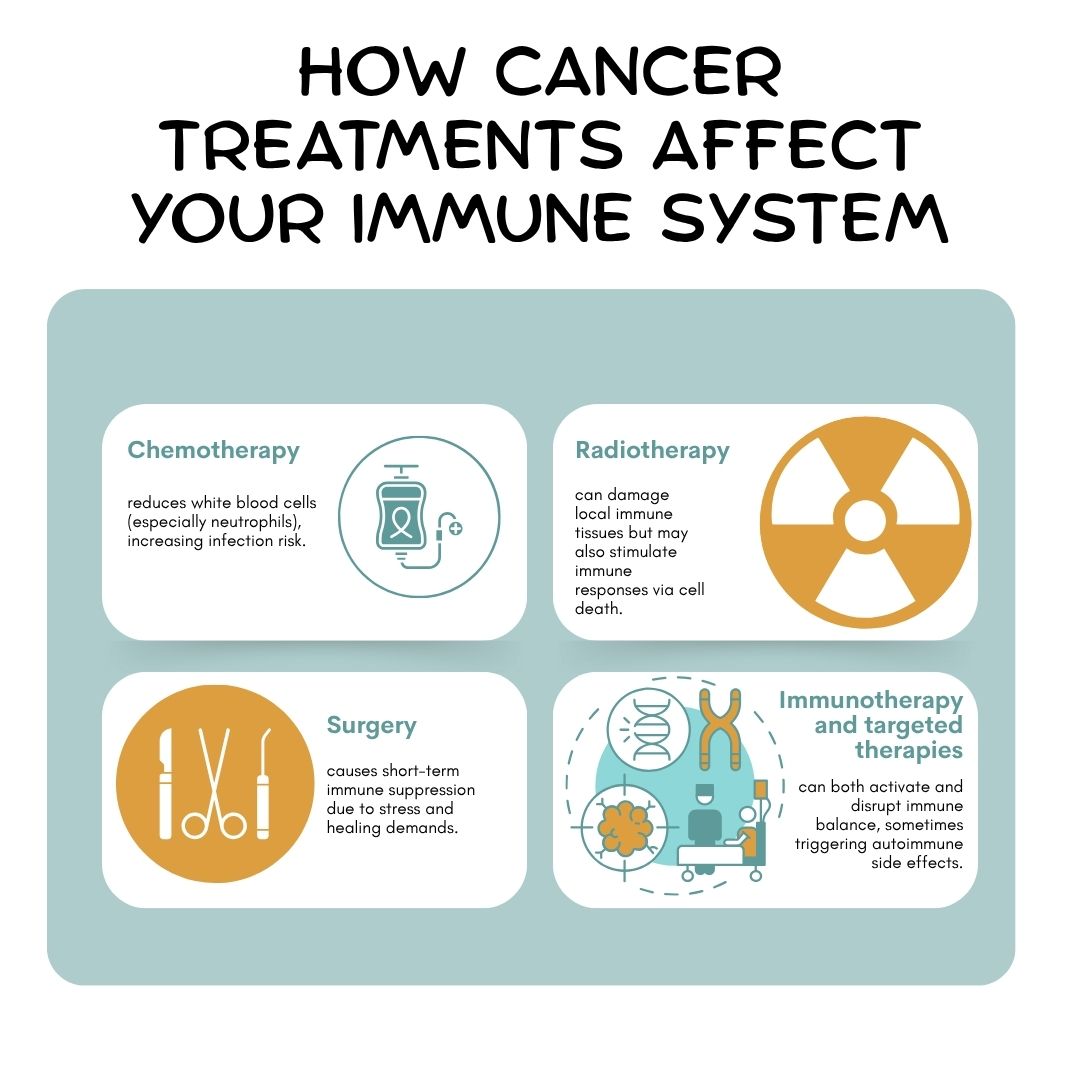
Chemotherapy is one of the most widely used treatments for cancer. It targets rapidly dividing cells—a hallmark of most cancer cells. However, some healthy cells, such as those in your bone marrow, mouth, gut, and hair follicles, also divide quickly. As a result, chemotherapy can damage these healthy cells, including those that produce white blood cells.
One of the most important impacts of chemotherapy on your immune system is neutropenia, a drop in neutrophils (white blood cells that fight infection). This makes you more vulnerable to bacterial, viral, and fungal infections, especially seven to fourteen days after a chemotherapy cycle when white blood cell levels are lowest. Additionally, chemotherapy can also affect the integrity of the skin, leading to dryness, rashes, and increased sensitivity. Understanding how chemotherapy impacts skin health is essential for managing these side effects effectively. Patients should work closely with their healthcare team to develop a skincare regimen that minimizes discomfort and promotes healing.
To protect yourself:
Despite these risks, chemotherapy remains a critical tool in fighting cancer. With the right precautions and guidance from your healthcare team, you can navigate these challenges and benefit from treatment.
Radiotherapy, or radiation therapy, uses high-energy rays to kill cancer cells. Unlike chemotherapy, it’s usually focused on a specific tumour site. Radiotherapy can also affect nearby healthy tissues, including immune cells in the treated area. For example, radiotherapy to the chest can impact lymph nodes, which are important centres of immune activity.
Interestingly, radiotherapy can sometimes stimulate the immune system. When cancer cells die from radiation, they release antigens that can attract immune cells—a process called immunogenic cell death. Some treatments even combine radiotherapy with immunotherapy to enhance this effect.
Surgery is often the first step in removing solid tumours. However, surgery itself is a form of stress on the body. Stress hormones like cortisol can temporarily suppress immune function. Wound healing also diverts immune resources away from fighting cancer.
Modern surgical techniques have reduced these effects, but it’s still important to understand how surgery may affect your immune system. Discuss strategies for recovery and infection prevention with your healthcare team.
Immunotherapy has revolutionised cancer treatment. Instead of directly attacking cancer cells, it empowers your immune system to fight the disease.
While powerful, immunotherapies can also cause the immune system to attack healthy tissues, leading to autoimmune-like side effects that may affect the skin, gut, liver, or lungs. Your healthcare team will monitor you closely for these reactions.
Targeted therapies focus on specific molecules involved in cancer growth. They generally have fewer side effects than chemotherapy, but can still affect immune cells. Some targeted therapies might suppress immune activity, while others could cause inflammation or autoimmune issues.
Your doctor will carefully balance the benefits of treatment against these risks, adjusting your plan as needed.
Your healthcare team will monitor your immune health with regular blood tests to check levels of white blood cells and other key immune markers. For example, measuring PD-L1 on tumour cells can help determine whether checkpoint inhibitors will work for you.
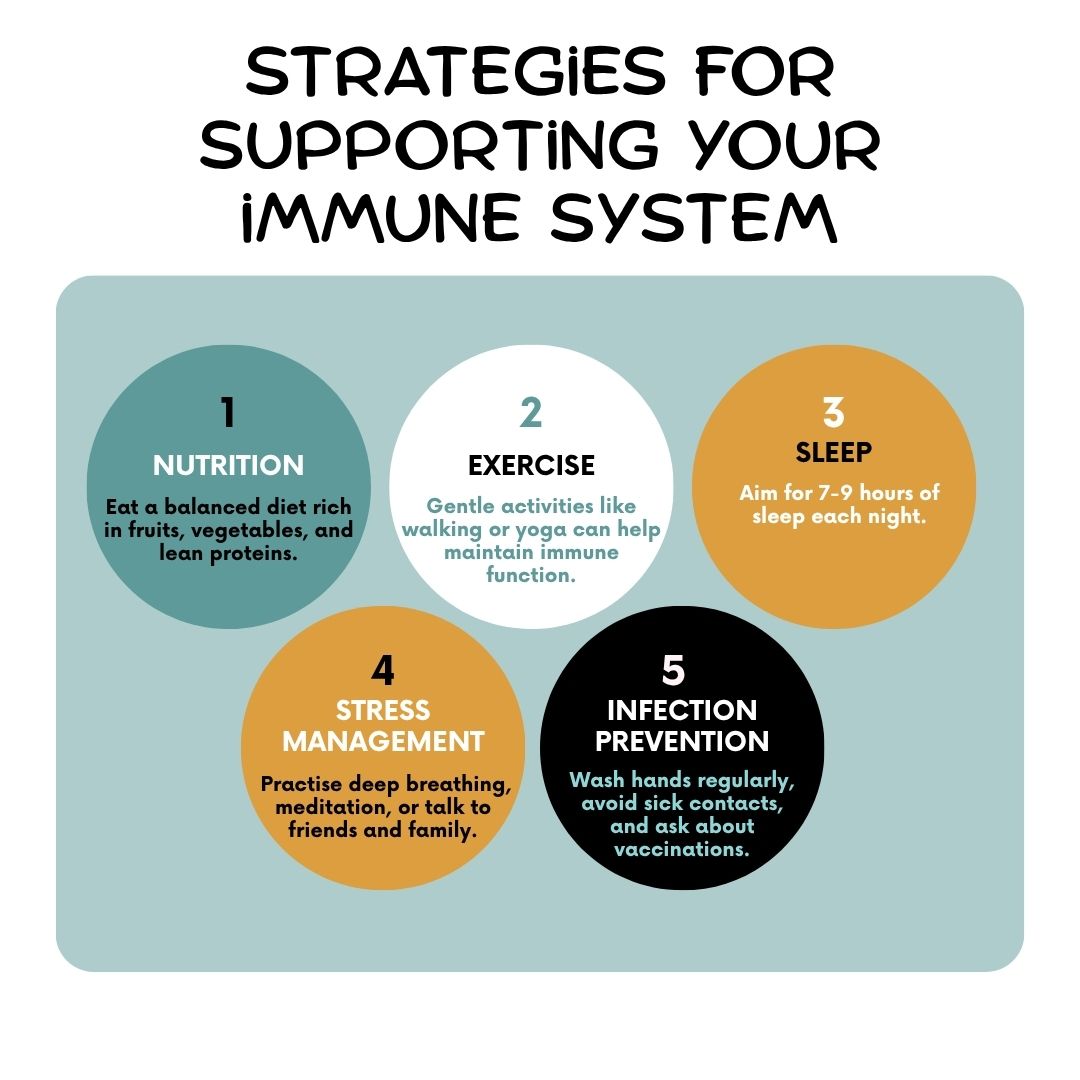
Key strategies for supporting your immune system:
Your oncologist, nurses, and other specialists are your partners in managing your immune health. Don’t hesitate to ask:
Cancer treatments are essential weapons against cancer, but each interacts with your immune system in unique ways. Understanding these effects empowers you to protect your immune defences, reduce the risk of infection, and stay strong throughout your treatment journey. By learning about how the immune system combats cancer, patients can make informed decisions about their care. This knowledge can also lead to proactive measures that support overall health, such as optimizing nutrition and managing stress. Ultimately, a well-supported immune system is crucial for enhancing the efficacy of cancer treatments and improving long-term outcomes.
Your immune system is not just a bystander—it’s an active ally. By working closely with your healthcare team and taking steps to support your immune health, you can build a foundation for resilience and recovery.
Edited by: Macey Tocher
We strongly advise you to talk with a health care professional about specific medical conditions and treatments.
The information on our site is meant to be helpful and educational but is not a substitute for medical advice.
Learn about wheezing with lung cancer, key symptoms, and when to seek help. Discover diagnosis, treatment, and support in this essential guide.
During Chemo, Cycling Gave Me The Strength To Ease My Mind And To Not Fall To Pieces. So I Developed Bike & Fight. To Fight Together.
Chiropractic Care Can Serve As A Complementary Treatment For Cancer Patients Experiencing Neck, Back, Or Joint Pain, Headaches & Anxiety.