A cancer diagnosis is a life-changing moment, often bringing with it a wave of complex information and uncertainty. But in the midst of this, incredible advancements in cancer research technology are offering new hope, paving the way for more effective and personalised treatments.
These aren't just abstract ideas from a science fiction film; they are real, practical tools that scientists and doctors are using right now to understand cancer on a deeper level.
If you or a loved one are navigating cancer treatment, the terminology can feel like a foreign language. This guide is here to act as your translator. We'll break down the key technologies shaping modern oncology, explaining what they are, how they work, and what they mean for patients today.
The central goal is to move beyond the old "one-size-fits-all" model of cancer care. For decades, treatments often affected the entire body, but new technologies allow doctors to pinpoint the unique features of a tumour and attack it directly.
This focus on precision is a game-changer. It means treatments can be much more effective and often come with fewer of the difficult side effects that many people associate with cancer therapy. It's about fighting smarter.
The more you understand the science behind your treatment, the more empowered you'll feel when talking to your healthcare team. It helps you ask the right questions and feel more confident in the decisions being made about your care.
We'll walk through several key innovations, including:
All these technologies are part of a wider ecosystem of care. Many of these breakthroughs are built on the foundational work done in hospital laboratories. You can explore this further in our guide to laboratory medicine.
By the time you finish reading, you'll have a much clearer picture of how cancer research technology is making a tangible difference for patients every single day.
Every cancer is unique. It’s driven by its own particular set of genetic mistakes, a sort of faulty instruction manual. One of the most significant steps forward in modern oncology has been learning how to read this manual. The technique is called genomic sequencing, and it gives us the power to peer inside a cancer cell and map out its unique genetic code.
Think of it like a detective arriving at a crime scene. A traditional approach might be to cordon off the whole area and search everywhere. The modern detective, however, looks for the culprit's specific blueprint—the one that reveals exactly how they operate and what their weaknesses are. Genomic sequencing gives us that blueprint for cancer, pinpointing the genetic mutations that are fuelling the tumour’s growth. This detailed information is what makes precision medicine possible.
At its core, precision medicine is about using the genetic information from a patient’s tumour to choose the treatments that are most likely to work for them. This represents a fundamental shift away from the one-size-fits-all approach of traditional chemotherapy, which often works by attacking any rapidly dividing cell in the body—both cancerous and healthy.
To put it another way, conventional chemotherapy can be like using a master key that unlocks every door in a building, causing a lot of disruption along the way. Precision medicine, on the other hand, is like having a smart key, designed to fit only one specific lock: the cancer cell itself.
By homing in on the precise mechanisms that cancer cells need to survive and grow, these targeted treatments can be far more effective, often with fewer side effects. This tailored strategy is now at the very heart of modern cancer care.
For a patient, the process is usually quite straightforward. It typically starts with a small tissue sample from a biopsy or even just a simple blood test. This sample is sent off to a lab, where its genetic material, its DNA and RNA—is sequenced. Scientists then analyse this sequence for specific mutations known to drive cancer. The technology behind this is always getting better; advanced methods like Nanopore Sequencing Technology Bioinformatics And Applications are making the analysis faster and more accurate than ever before.
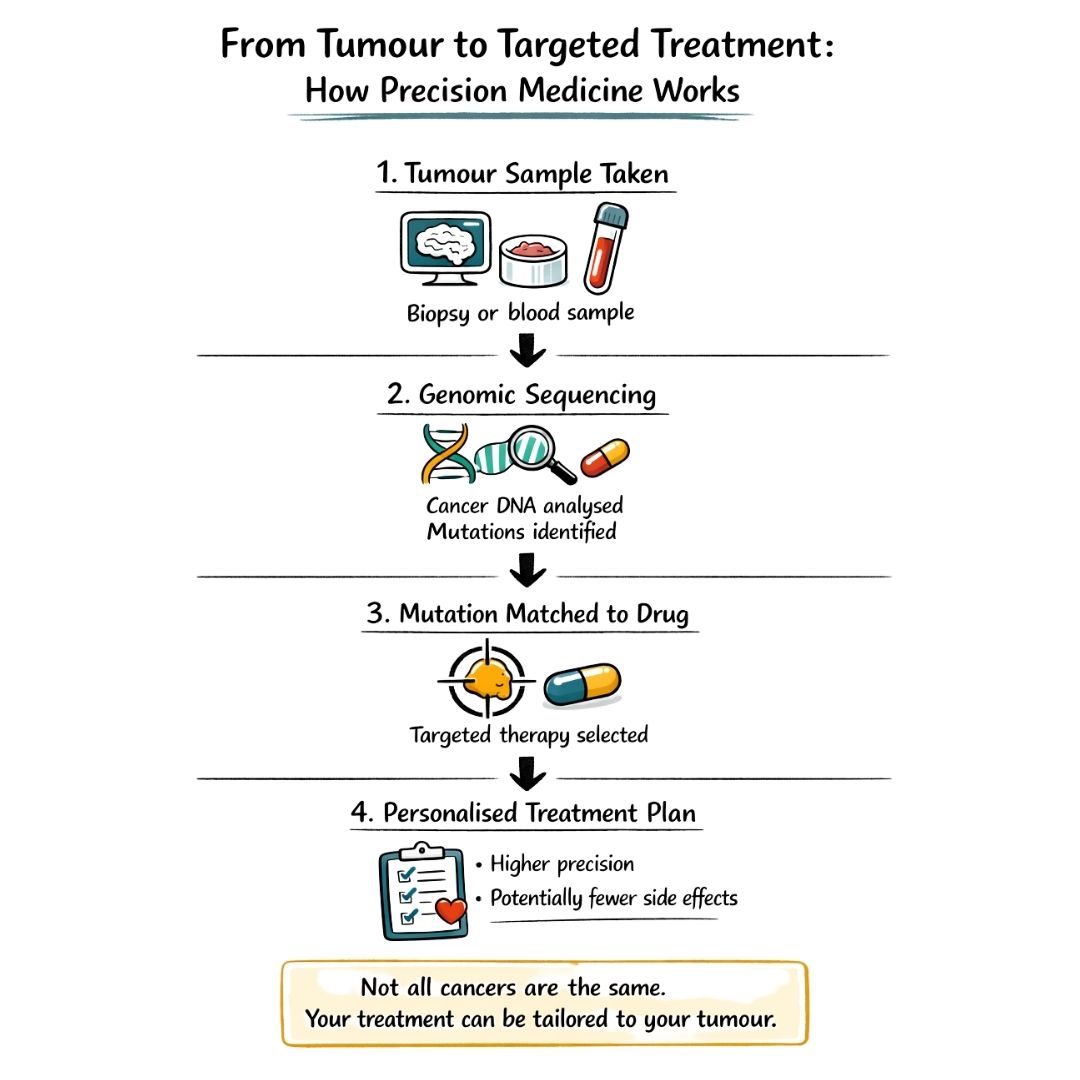
Genomic sequencing is already making a huge difference in the way we treat several types of cancer. The insights we get from a tumour's genetic profile can point doctors directly to a targeted drug designed to attack that very mutation.
Here are just a few examples of this in action:
The power of genomics goes beyond helping one patient at a time. When we gather and analyse this genetic data on a large scale, we start to see bigger patterns that can improve public health. Groups like Health Data Research UK (HDR UK) are at the forefront, using anonymised NHS data to uncover new trends in cancer treatment and outcomes.
This work has never been more important. With forecasts suggesting UK cancer cases could hit half a million a year by 2040, we need smarter, more efficient ways to manage care. The sheer volume of patients starting their first cancer treatment each year highlights the enormous need for these data-driven approaches. You can see more about these initiatives on the HDR UK website.
Of course, it’s important to be realistic. While genomic sequencing holds incredible promise, it isn't a silver bullet. Not every cancer has a known "targetable" mutation, and sometimes tumours are clever enough to develop resistance to these targeted therapies. But the research is moving at a breakneck pace. If you'd like to explore this further, you can read about how a groundbreaking tool is bringing personalised chemotherapy closer than ever.
Not so long ago, Artificial Intelligence (AI) felt like something out of a science fiction film. Now, it’s a very real and practical tool in medicine, especially in oncology. AI is fast becoming an invaluable partner for doctors, helping them make quicker, more informed decisions. It's crucial to understand that AI isn't here to replace your medical team, but to act as a super-powered assistant that can process vast amounts of information and spot patterns invisible to the human eye.
This powerful cancer research technology learns from huge databases of anonymised medical information—we’re talking millions of scans, patient records, and genetic profiles. By sifting through all this data, AI models learn to identify the subtle hallmarks of cancer or predict how a specific tumour might behave. This is driving major progress across several key areas of cancer care.
One of the most exciting uses for AI is in diagnostics, particularly in radiology. Picture a radiologist carefully examining a mammogram or a CT scan. They’re looking for tiny, often ambiguous, signs of a developing tumour—a task requiring immense skill and concentration.
Here, AI algorithms can serve as a second set of expert eyes. Trained on thousands upon thousands of previous scans, these tools can highlight suspicious areas that might need a closer look. This doesn’t mean the AI makes the final call; instead, it flags potential concerns for the radiologist to review, adding a safety net to ensure nothing is missed.
Studies have shown that using AI can improve both the speed and accuracy of spotting cancer. For patients, this could mean:
Making this happen in a real-world clinic requires a solid data infrastructure. Advanced AI/ML pipelines are the behind-the-scenes engineering that allows medical data to be processed securely and effectively. AI is even being explored for its ability to detect signs of cancer from surprising sources. For instance, you can read more about how AI is being used to help with the detection of voice box cancer.
Beyond just finding cancer, AI is also playing a vital role in shaping treatment plans. The reality is that every patient, and every cancer, is unique. A therapy that works wonders for one person might be far less effective for another, even with the same diagnosis. AI helps doctors navigate this incredible complexity.
By analysing a patient's entire medical profile—their genetics, tumour characteristics, and treatment history—AI can help predict which therapies are most likely to work. Think of it as a highly sophisticated matching service.
The AI sifts through all the available data and compares a patient's unique profile to thousands of others, identifying patterns that suggest which treatments have the best chance of being effective.
This predictive power is hugely valuable. It helps oncologists tailor treatment plans with much greater precision, helping to avoid therapies that are unlikely to work and come with punishing side effects. For example, some AI tools have shown they can more accurately predict which patients will respond to immunotherapy than certain current tests. This is a massive step towards getting the right patient the right treatment at the right time.
Developing new cancer drugs has traditionally been a slow and eye-wateringly expensive process, often taking over a decade and costing billions. AI is helping to speed this up dramatically. By analysing incredibly complex biological data, AI can identify promising new drug candidates or even find new uses for existing drugs far faster than human researchers could ever manage on their own.
This ability to rapidly process massive datasets is where AI truly shines. It lets researchers run "virtual experiments" on a computer, testing thousands of potential molecules to see which ones might work against cancer cells. This helps focus precious lab time and resources on the most promising options. Ultimately, this acceleration in cancer research technology means new, life-saving treatments can reach patients faster than ever before.
To help you keep track, here is a quick summary of the main technologies we've covered and what they mean for patients in a real-world context.
| Technology | What It Does | How It Helps Patients |
|---|---|---|
| Artificial Intelligence (AI) | Analyses vast medical datasets to find patterns, make predictions, and assist with decisions. | Leads to earlier diagnosis, more personalised treatment plans, and faster drug development. |
| Machine Learning (ML) | A type of AI that "learns" from data to identify cancer on scans or predict treatment responses. | Acts as a "second pair of eyes" for radiologists and helps oncologists choose the best therapy. |
| AI/ML Pipelines | The technical infrastructure that securely manages and processes data for AI tools. | Ensures patient data is handled safely and efficiently to power these advanced systems. |
Each of these components plays a part in a much larger ecosystem, all working towards the same goal: improving outcomes for people affected by cancer.
For decades, the only way to truly understand a tumour was to take a piece of it. This meant a traditional biopsy—a surgical procedure to remove tissue for analysis. While it gave doctors crucial information, it also came with discomfort, risks, and recovery time. But what if we could get the same vital intelligence from a simple blood test? That’s the reality now, thanks to a powerful technology known as a liquid biopsy.
Think of it like this: as tumours grow, they’re a bit messy. They constantly shed tiny fragments of their genetic material (DNA) and sometimes even whole cancer cells directly into the bloodstream. These microscopic clues are called circulating tumour DNA (ctDNA) or circulating tumour cells (CTCs). A liquid biopsy is essentially a blood test designed to find and analyse these traces, giving us a real-time snapshot of the cancer.
The jump from a surgical biopsy to a liquid one is massive for patients. First and foremost, it’s about comfort and safety. A quick blood draw is a world away from the physical demands of surgery, meaning it can be repeated regularly with almost no disruption to a person’s life.
This shift allows for near real-time monitoring of a cancer. Instead of waiting months for a scan or another biopsy, doctors can track a tumour’s response to treatment much more closely and make faster, more informed decisions.
This powerful tool has a role to play right across a patient's journey, from the first diagnosis to long-term follow-up. By opening a less invasive window into the body, liquid biopsies are changing the very rhythm of cancer care. If you're interested in the broader diagnostic landscape, our guide to improve cancer diagnosis offers more context.
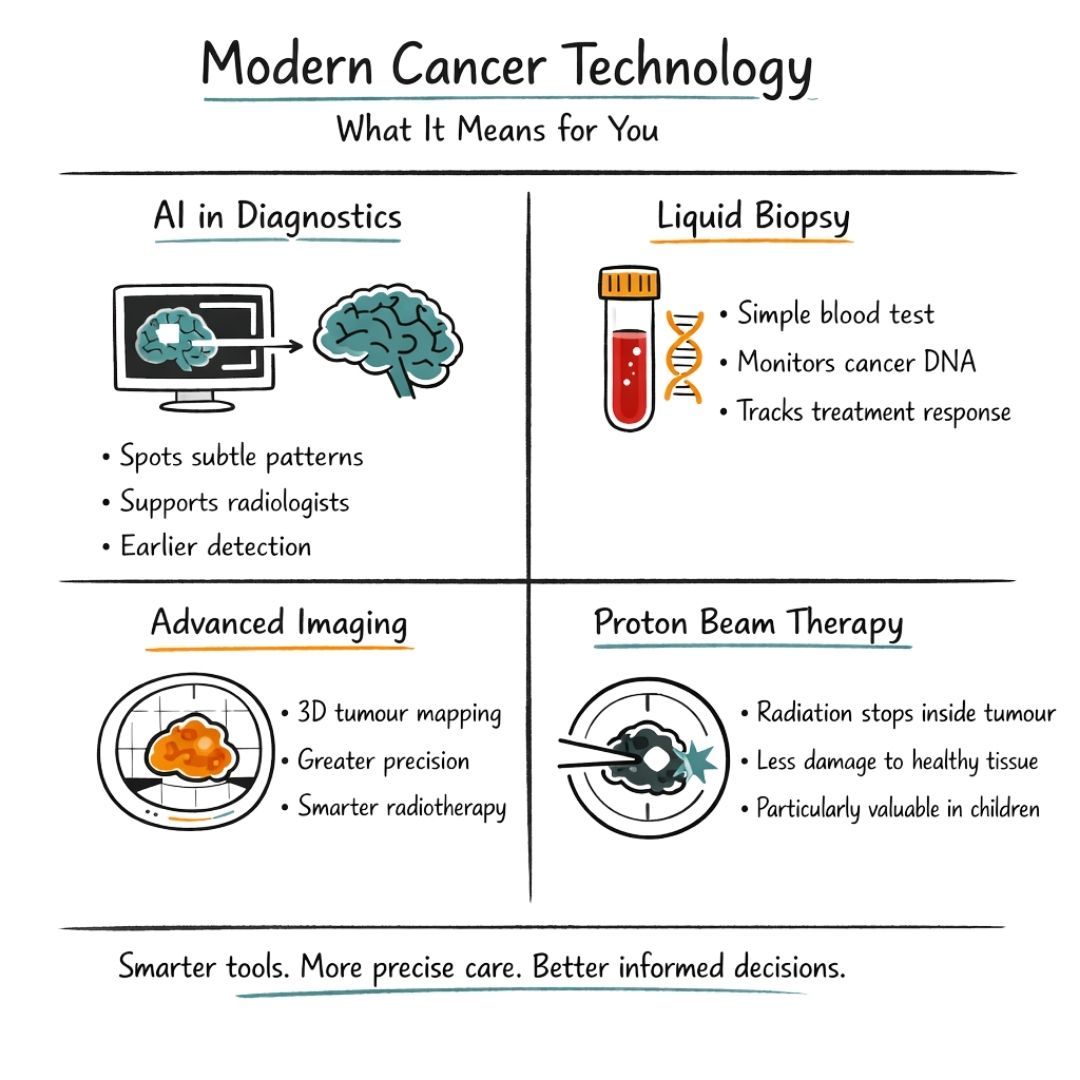
This isn’t just a single-use tool; it’s a versatile platform that helps doctors tailor care at every step.
Here are the main ways liquid biopsies are making a difference:
This cancer research technology is already being used to guide treatment for people with certain advanced cancers, including lung, breast, and colorectal cancer. It's not perfect—some tumours don't shed enough DNA to be detected—but it's a huge step forward. As the technology gets even more sensitive and reliable through clinical trials, its use is set to expand, making cancer care safer, smarter, and much less of an ordeal.
Being able to see a tumour clearly is the first, crucial step in fighting it. For a long time, doctors have used scans like X-rays and CTs, but the latest tools give us a view that’s simply breathtaking in its detail. It’s the difference between looking at a grainy, black-and-white photo and watching a high-definition, 3D film of what’s happening inside your body.
This newfound clarity is completely changing radiotherapy, making it smarter, more targeted, and far safer than it used to be.
Advanced imaging, like a combined PET/MRI scan, does more than just show a tumour’s size and location—it reveals how it behaves. A PET (Positron Emission Tomography) scan lights up areas with high metabolic activity. Think of it as a heat map for energy use; since cancer cells divide and grow rapidly, they glow brightly.
When you fuse that information with an MRI (Magnetic Resonance Imaging) scan, which gives crystal-clear pictures of soft tissues, your oncology team gets an incredibly detailed 3D map. This map shows not just the tumour, but exactly how it sits among nearby organs and tissues.
These highly detailed maps are the blueprint for a new generation of radiotherapy. Traditional radiotherapy uses powerful energy beams to destroy cancer cells, but there’s always a risk of damaging healthy tissue along the way. The modern goal is to hit the cancer with maximum force while causing minimal collateral damage.
This is where smarter techniques come into their own:
For patients, this precision translates into more effective treatment with fewer side effects. The ability to spare healthy tissues and vital organs dramatically lowers the risk of long-term complications, improving quality of life both during and after treatment.
Perhaps one of the most exciting developments in this field is Proton Beam Therapy. Standard radiotherapy uses X-rays (photons), which travel all the way through the body, exiting on the other side and depositing radiation along their entire path. Protons are different.
Imagine throwing a ball that you can command to stop in mid-air, right where you want it. That’s essentially what protons do. Scientists can control a proton beam so it stops at a very specific depth—right inside the tumour.
This physical property, known as the "Bragg Peak," means protons release almost all their cancer-killing energy directly within the tumour, with very little radiation dose spilling over into the healthy tissue behind it. This makes it an invaluable option for cancers near critical structures like the brain, spinal cord, or heart, and it's especially important when treating children, whose bodies are still developing.
Organisations are investing heavily to refine this kind of technology. For example, Cancer Research UK has committed to investing at least £1.5 billion over a five-year period to speed up progress in cancer care. A significant part of this funding goes towards developing smarter radiotherapy, helping to make treatments more precise and reduce side effects for patients. You can read more about how their investments are making a real-world impact in their latest progress reports.
If you’re scheduled for one of these treatments, your medical team will explain everything in detail. The experience itself is usually quite straightforward and feels much like having a CT scan. You’ll lie still on a table while the machine moves around you. The procedures are painless and each session is typically quite short. The real comfort comes from knowing that this incredible technology is targeting your cancer with remarkable accuracy.
While it’s easy to get excited about all the incredible new technologies changing cancer care, it’s also important to be realistic. Progress doesn’t happen at the same speed for every type of cancer, and a big part of the reason comes down to research funding. Some cancers simply don't get the same level of attention—or investment—as others.
Understanding this imbalance is key. It helps to explain why breakthroughs for certain cancers seem to come thick and fast, while for others, the pace can feel frustratingly slow. When funding is scarce, the entire innovation pipeline, from initial lab discoveries to patient clinical trials, grinds to a near halt. This has a direct and serious impact on people’s lives.
Brain tumours are a sobering, real-world example of this problem. Despite the devastation they cause, they receive a shockingly small slice of the research pie. This has left a major gap in the development of new technologies designed specifically to tackle brain cancer.
At its core, the reality is simple: the less we invest in the science for a particular cancer, the slower the progress will be. This directly translates into fewer treatment options and, tragically, poorer survival rates for patients.
This isn't just a number on a spreadsheet; it has profound consequences. In some countries, brain tumour research has been drastically underfunded, receiving just 1% of the national spend on cancer research historically. This is despite the fact that brain tumours kill more children and adults under 40 than any other cancer.
As experts from Brain Tumour Research have pointed out, progress in survival for brain cancer has stagnated compared to other cancers that have benefited from new screening and treatment technologies. You can read more about their warnings on the need for greater investment.
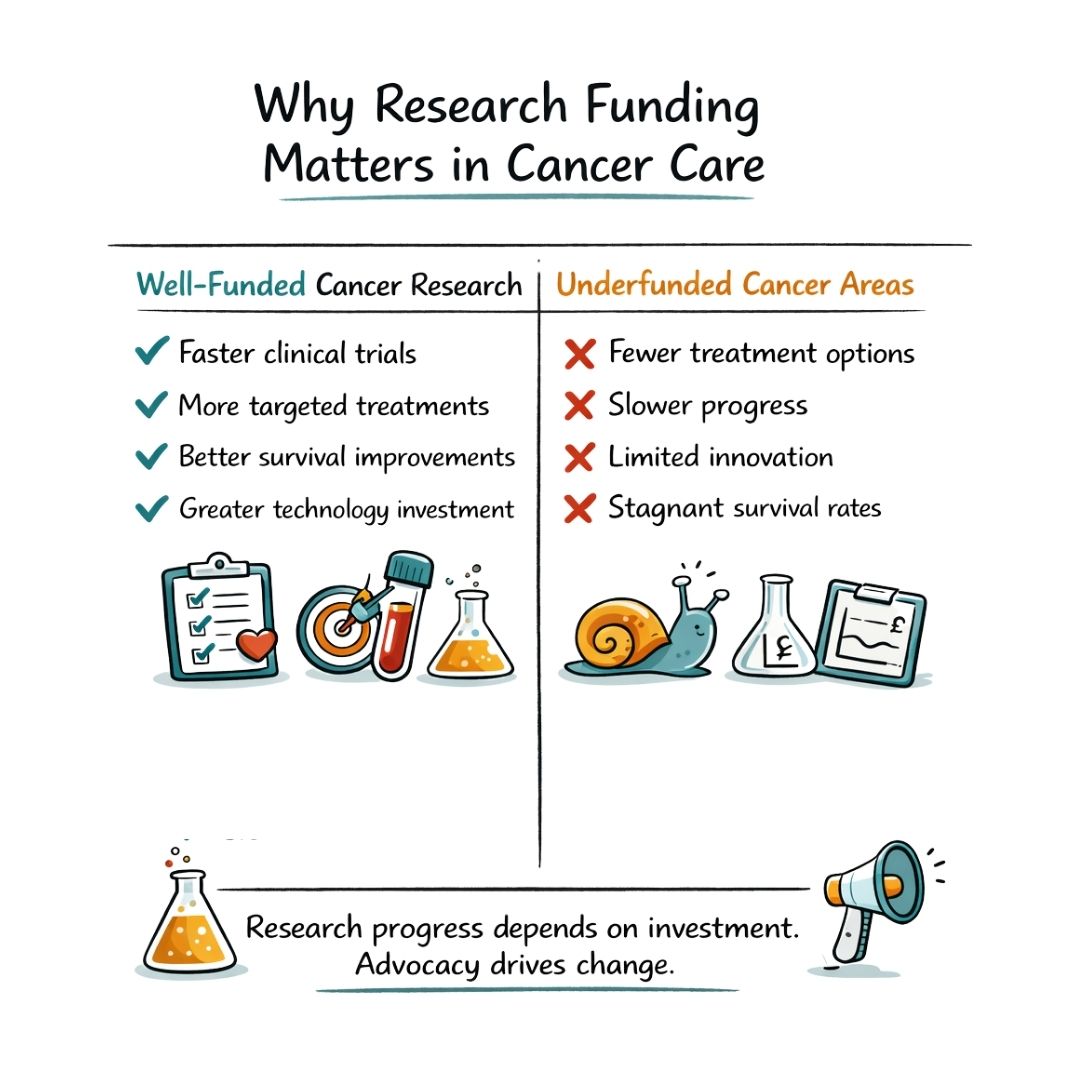
This is where the power of patient advocacy comes in. When faced with these funding deserts, charities, patient groups, and dedicated families step up to fill the void. Their work is absolutely vital for pushing things forward.
These groups are essential for:
By making sure the voices of patients and their families are heard loud and clear, these advocacy groups help ensure that no cancer is left in the shadows. Knowing about this wider context can help you understand why progress might seem uneven and see how we can all play a part in driving change.
With cancer research moving at such a blistering pace, staying on top of the latest developments can feel like a full-time job. But knowing where to look and what to ask can make all the difference, helping you feel more in control. This final section is all about practical advice: how to find reliable information and how to talk about clinical trials.
So, what exactly are clinical trials? At their core, they're simply research studies that involve people. They are the final, crucial step in proving whether a new approach—be it a targeted therapy or a smarter radiotherapy technique—is safe and works better than our current best options. It’s worth remembering that every single cancer treatment we use today had to first prove its worth in a clinical trial.
Your own oncology team should always be your first port of call. They have the full picture: your specific diagnosis, your treatment history, and your general health. This puts them in the best position to help you figure out if a trial is a viable option and to weigh up the potential pros and cons.
To get the conversation started, it helps to have a few questions ready:
Deciding to join a trial is a deeply personal choice. It could give you access to the very newest treatments, and at the same time, you’d be playing a part in improving care for everyone who comes after you.
Finding the right trial often hinges on the specific genetic markers found in your cancer. This is precisely why technologies like genomic sequencing are so vital—they can pinpoint the exact features that might make you eligible for a new, targeted drug.
The internet can be a minefield of cancer information, and not all of it is accurate or helpful. Sticking to trusted sources is the best way to arm yourself with good information and avoid unnecessary anxiety. The websites of major cancer organisations and research bodies are the gold standard.
Here are some globally recognised and trustworthy places to start:
Whenever you’re searching for answers online, take a moment to check your source. Is it a reputable medical institution, a government health agency, or a major cancer charity? This simple check ensures the advice you're reading is based on solid scientific evidence. And for a closer look at what’s just around the corner, our article on the future of cancer treatments offers some extra insight.
We strongly advise you to talk with a health care professional about specific medical conditions and treatments.
The information on our site is meant to be helpful and educational but is not a substitute for medical advice.
Learn how liquid biopsies, tumor markers, and other tests work; can cancer be checked by blood test, what they detect.
Discover How Your Immune System Naturally Fights Cancer, And How Treatments Like Immunotherapy, Lifestyle Changes, and Emotional Wellbeing Can Strengthen This Vital Defence.
An innovative project shows how the Zika virus might be able to be turned into an ally to fight brain cancer.