A preventable cancer still changes thousands of lives each year. In the UK alone, 3,200 women are diagnosed annually and around 850 die each year according to Everhope’s overview of cervical cancer awareness month. That’s why cervical cancer awareness month matters. It turns a topic many people avoid into one we can act on.
For patients and caregivers, this month isn’t about slogans. It’s about practical steps. Booking screening. Asking about HPV vaccination. Taking unusual bleeding seriously. Speaking up when something doesn’t feel right.
Many people delay because they’re embarrassed, busy, frightened, or unsure what counts as a warning sign. That’s understandable. If you’ve ever struggled to explain symptoms or felt dismissed, guidance on how to make yourself heard in healthcare settings can help you prepare for appointments and ask clearer questions.
Cervical cancer awareness month is observed every January to keep attention on a cancer that can often be prevented or found earlier. The month shines a light on three linked actions. Vaccination, screening, and prompt follow-up.
For many families, awareness starts with a small decision. A parent consents to an HPV vaccine at school. A woman books a screening test she has postponed. A partner notices bleeding after sex isn’t “probably nothing” and encourages a GP appointment.
Early action often looks ordinary at first. A booked test, a follow-up call, a question asked at the right time.
That’s what makes this month powerful. It helps people replace silence with action, and confusion with clear next steps.
A month of awareness can look symbolic on the surface. In practice, it works more like a yearly service reminder. It brings people back to the basics that prevent harm, spots gaps in access, and prompts health systems, families, and community groups to act before problems grow.
The history behind Cervical Cancer Awareness Month matters because progress in cervical health did not come from one discovery alone. It came in stages. First, screening gave clinicians a way to find cell changes earlier. Later, HPV vaccination added another layer of protection. More recent efforts have focused on a different problem. Getting those tools to people who face practical, cultural, or financial barriers.
Early public health efforts centred on the Pap test and organised screening programmes. That changed the story of cervical cancer from one of late diagnosis to one where earlier action became possible for many women.
The next major shift came with HPV vaccination. It moved prevention further upstream, much like fixing a leak at the source instead of placing buckets on the floor. Screening still matters, but vaccination helps reduce the chance that high-risk HPV will cause the cell changes screening is designed to catch.
Awareness campaigns now do more than spread facts. They ask a harder question. Who is still being missed?
That question matters to patients, caregivers, and organisations alike. A patient may need clear language and reassurance. A caregiver may be the person who books transport, explains a letter, or notices fear behind a missed appointment. An organisation may need to rethink clinic hours, translation support, outreach settings, or follow-up systems. January creates a shared moment to examine all three viewpoints at once.
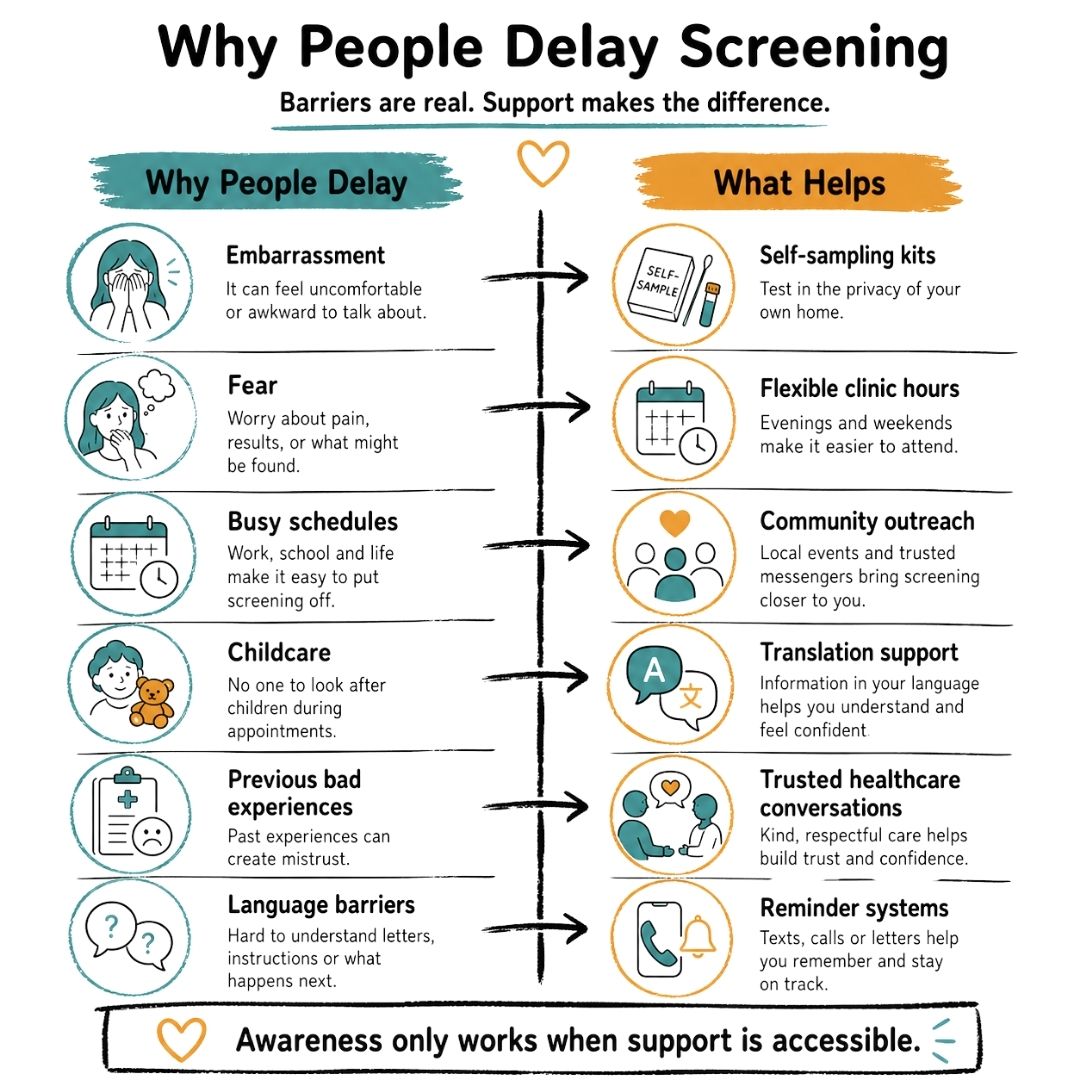
Progress has not reached every community in the same way. People living in deprived areas, rural settings, or places with limited health infrastructure often face more obstacles to screening, vaccination, and treatment follow-up. Those obstacles are not abstract. They can be as ordinary as childcare needs, distrust after a previous poor care experience, time off work, language barriers, or not understanding what an abnormal result means.
That is why awareness work needs cultural tailoring. A poster in a clinic helps some people. For others, the better route may be school-based education, faith-group outreach, translated materials, workplace campaigns, or community ambassadors who can answer questions without judgement. Broader context also matters in regions where cancer services are stretched, as discussed in this look at cancer care access and cancer outcomes in Africa.
For people trying to make sense of follow-up after screening, practical explanation is part of awareness too. The partner guide on understanding abnormal cells HPV and your cervical health can help turn unfamiliar terms into clearer next steps.
The goal is no longer simple visibility. The stronger goal is action people can use.
For patients, that may mean booking screening, asking what an HPV result means, or finishing follow-up care. For caregivers, it may mean helping a loved one prepare questions, arrange transport, or feel less alone. For organisations, it may mean designing campaigns that reflect real barriers instead of assuming information alone changes behaviour.
This is also where practical support matters. Cancer Care Parcel’s approach fits the month well because awareness is easier to act on when people also receive comfort, guidance, and resources that acknowledge the day-to-day reality of cancer care. Information opens the door. Support helps people walk through it.
The long-term impact of awareness month depends on one simple shift. Turning attention into timely, culturally sensitive action.
Cervical cancer usually starts with a virus called human papillomavirus, or HPV. According to the AACR page provided in the verified data, over 99% of cervical cancer cases are linked to persistent infection with high-risk HPV strains.
A simple way to picture this is to think of the cervix as a hallway with tiles that regularly renew themselves. HPV is like an uninvited guest that doesn’t leave. If it stays long enough, it can interfere with how some cells grow and repair.
These changes don’t become cancer overnight.
Doctors may talk about:
Screening is designed to catch trouble before it gets to that last stage. If you want a plain-English companion resource, this guide to understanding abnormal cells HPV and your cervical health can help make the terminology easier to follow.
People also get confused about symptoms after sex, discomfort, or bleeding and may wonder whether it’s always something serious. It isn’t always, but it should be checked. This article on a bruised cervix may help you understand one possible non-cancer explanation while still reinforcing the need for proper medical review.
A short visual explanation can make this biology easier to grasp:
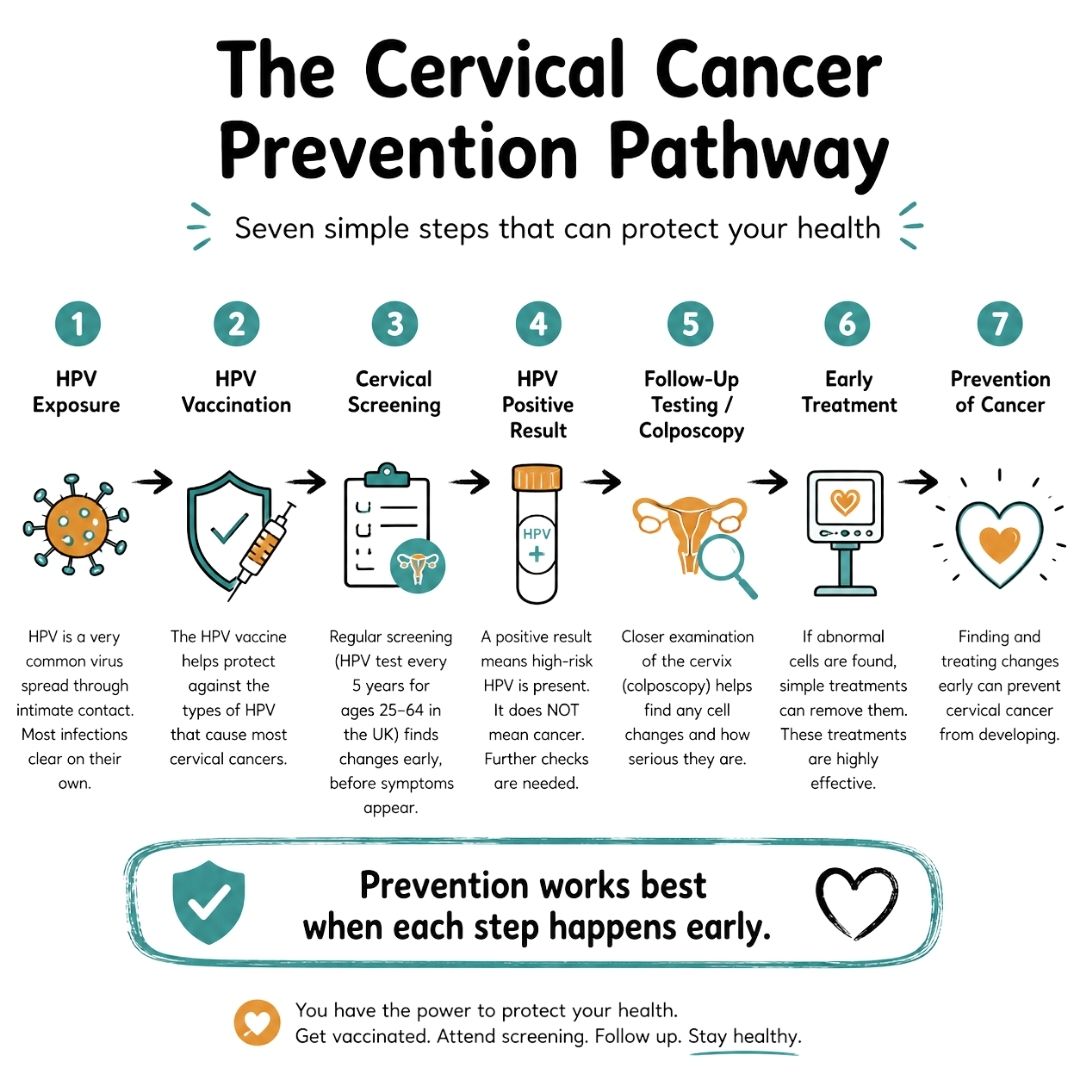
The most useful question isn’t “How do I avoid all risk?” It’s “What are the proven steps I can take?”” For cervical cancer, those steps are clear.
The AACR-based verified data states that in the UK, the NHS Cervical Screening Programme recommends primary HPV testing every five years for ages 25 to 64 and that HPV testing has 95% to 98% sensitivity compared with 60% to 70% for cytology alone. The same verified source also notes that positive results are followed by cytology triage, and that treatment for precancerous high-grade changes can achieve over 95% cure rates for precancer through appropriate management, detailed in the AACR awareness month page.
Get vaccinated if you're eligible
The verified data states that the UK vaccination programme targets girls aged 12 to 13, and vaccination was later extended to boys. It also reports strong protection against the HPV types most linked to cervical cancer.
Attend screening when invited
Screening doesn’t mean doctors expect cancer. It means they’re checking for high-risk HPV and early cell changes before symptoms appear.
Follow through after an abnormal result
An abnormal result can sound alarming, but it often means “we found a change that needs another look,” not “you have cancer.”
Practical rule: Screening is a safety check, not a verdict.
| Age Group | Screening Frequency | Vaccination Recommendation |
|---|---|---|
| 12 to 13 | Not part of routine cervical screening | Routine HPV vaccination is offered in the UK programme |
| 25 to 64 | Primary HPV testing every five years | Ask a clinician about eligibility if vaccination was missed earlier |
| After an abnormal result | Follow-up depends on HPV and cell findings | Vaccination discussions may still be relevant depending on history and local guidance |
Some people ask whether a blood test can check for cancer instead of screening. Blood tests can help in some parts of cancer care, but they don’t replace cervical screening. This overview of whether cancer can be checked by blood test explains the difference.
Symptoms can be subtle. That’s one reason cervical cancer awareness month keeps repeating the same message. Don’t ignore unusual bleeding.
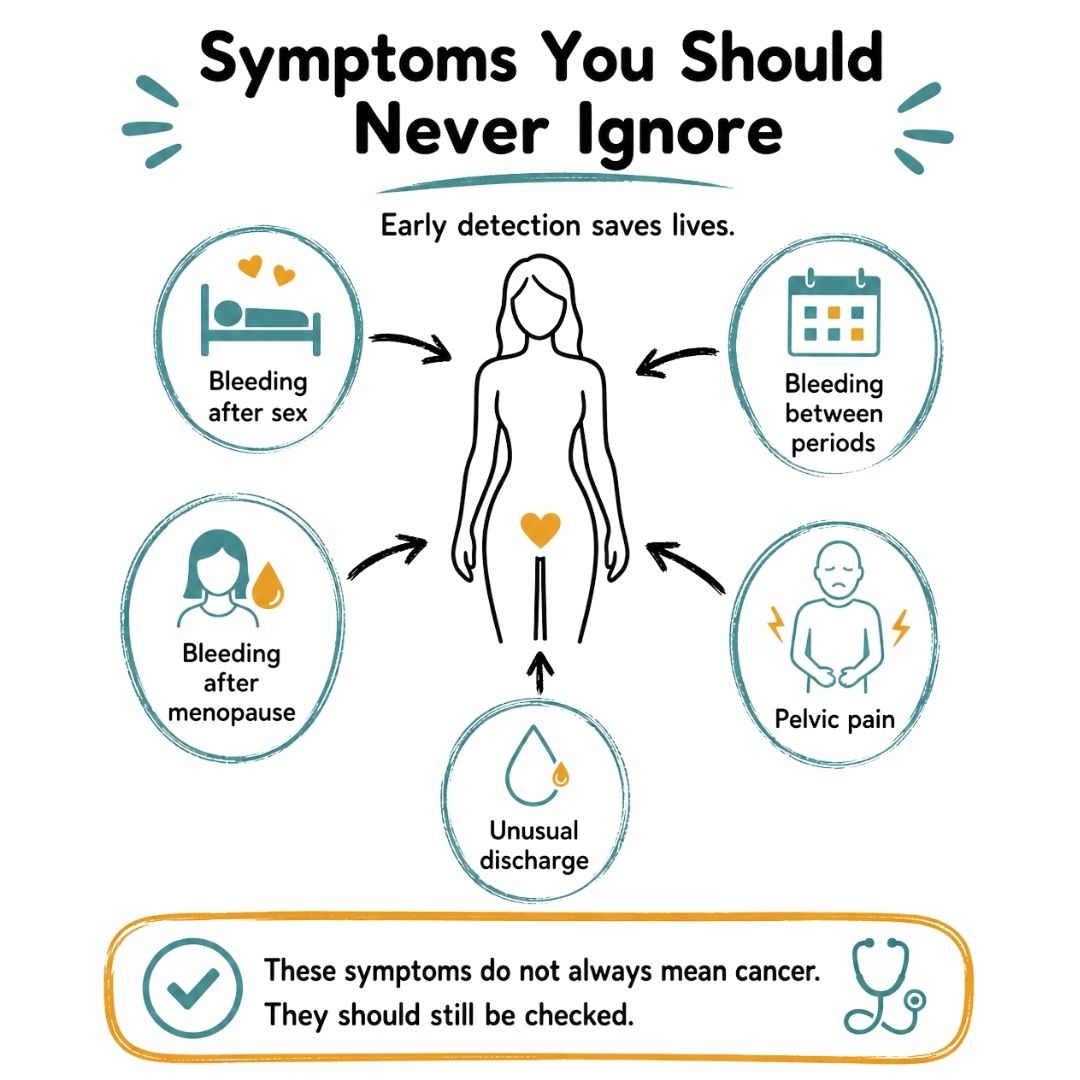
Warning signs can include bleeding after sex, bleeding between periods, bleeding after menopause, pelvic pain, or unusual discharge. None of these symptoms proves cancer, but each deserves medical attention.
The reason speed matters is simple. Five-year net survival is 97% for stage 1 and 18% for stage 4, according to the verified benchmark summary from Pillar Healthcare’s cervical cancer awareness month guide.
If you notice persistent symptoms, ask your GP what needs to happen next and whether urgent referral is appropriate. Bring dates, patterns, and examples. Clear details help clinicians act faster.
Awareness month is useful when it changes behaviour, not just knowledge. For patients and caregivers, that means turning reminders into appointments and questions into notes you can carry into the clinic.
The verified data reports that self-sampling kits launched in 2023 increased participation by 20% in deprived areas, although coverage still trails affluent regions by 10% to 15%, as noted in this discussion of deprivation and cervical screening. If attending in person has felt hard, ask your GP surgery whether self-sampling is available locally and what follow-up would happen after the result.
Try this during cervical cancer awareness month:
If you're supporting someone else, this guide on how to support someone with cancer offers practical ways to help without taking over.
Organisations can make cervical cancer awareness month more effective when they stop treating it as a one-size-fits-all campaign.
The verified data notes that community-led interventions in faith settings outperformed generic awareness campaigns by 2x in engagement, highlighting the value of culturally specific outreach for ethnic minority groups, as summarised in this cervical health awareness resource:
Generic messaging reaches people. Trusted messengers move people.
If you're building an event around awareness month, a practical resource like this planning a charity event checklist can help structure outreach, logistics, and follow-up.
Cervical cancer awareness month matters because it turns prevention into action. HPV vaccination lowers risk. Screening can spot problems before cancer develops or when it’s easier to treat. Symptoms such as unusual bleeding need attention, not delay.
If this article prompts one next step, make it concrete. Book your screening. Ask about HPV vaccination. Encourage someone you love to get checked. If you're part of a workplace, charity, or support group, use this month to start conversations people often postpone.
We strongly advise you to talk with a health care professional about specific medical conditions and treatments.
The information on our site is meant to be helpful and educational but is not a substitute for medical advice.