Of all the side effects associated with chemotherapy, hair loss is probably the most well-known. But understanding why it happens can be the first step in managing it. The reason is actually quite straightforward: chemotherapy drugs are designed to hunt down and stop cells that are dividing rapidly. While this is a brilliant way to fight cancer, it means some of our healthy, fast-growing cells get caught in the crossfire.
This includes the cells responsible for growing our hair, leading to what’s medically known as alopecia, which is almost always temporary.
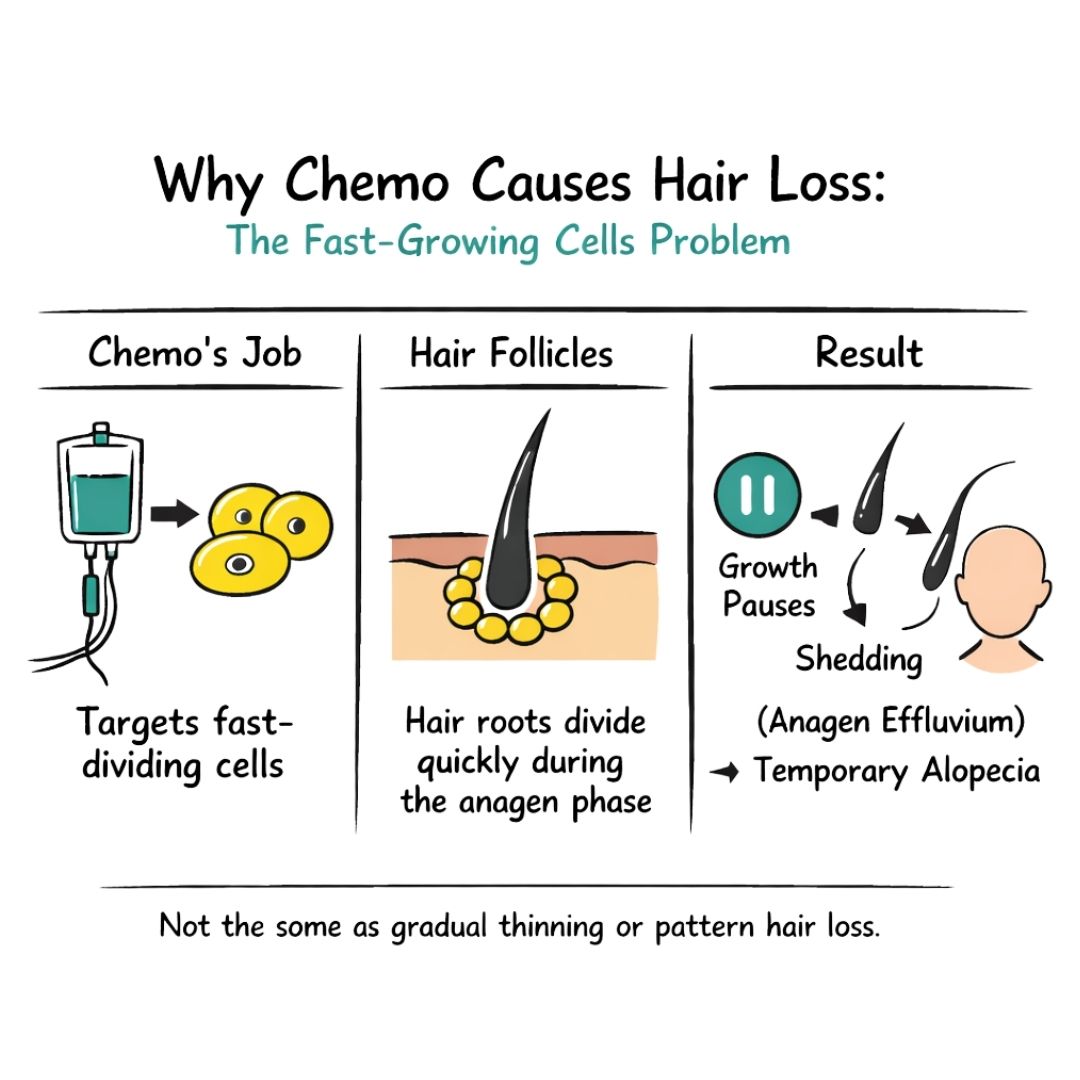
To really get to grips with hair loss and chemo, you have to look at how the treatment works. Its main job is to put a stop to cancer cells, which are notorious for their out-of-control growth. The drugs travel all through your body, seeking out any cells that are multiplying at high speed.w
The problem is, this powerful approach can’t really tell the difference between a cancer cell and a healthy cell that just happens to be dividing quickly. This "collateral damage" affects cells in your bone marrow, the lining of your mouth, and, of course, your hair follicles.
It helps to think of it like this: imagine you need to shut down one rogue factory in a city. Instead of a targeted strike, you pull the plug on the entire city's power grid. It gets the job done, but it also temporarily closes down all the other essential services—including the little "factories" in your scalp that produce hair.
Hair doesn't just grow continuously; it follows a cycle. The bit we're interested in is the active growth stage, called the anagen phase. During this time, the cells inside your hair follicles are dividing like mad to build new strands of hair. In fact, a huge 85-90% of the hair on your head is in this growth phase at any one time.
Because these follicle cells are among the fastest-growing in the body, they become an unintentional target for the chemo. The treatment simply interrupts their ability to divide, bringing hair production to a screeching halt.
This sudden stop is called anagen effluvium. It’s very different from gradual thinning like male-pattern baldness. Instead, it’s a much more rapid and widespread shedding that usually starts a couple of weeks after your treatment begins.
This is also why hair loss can happen all over your body. It’s not just the hair on your head, but also your eyebrows, eyelashes, and other body hair that can be affected, as they all have follicles that are busy making new hair.
It's a common assumption that starting chemo means you'll definitely lose all your hair, but that's not always the case. The reality is a lot more nuanced and really depends on the specific drugs being used in your treatment plan.
Some drugs are far more likely to cause significant hair loss than others. These often include:
On the other hand, many other chemo drugs might only cause mild thinning or, in some cases, no noticeable hair loss at all. Your oncology team will be able to give you the clearest picture based on your specific regimen—the type of drug, the dose, and how often you'll receive it.
It's important to know that hair loss is just one of many potential chemotherapy side effects that you should discuss with your care team. While chemotherapy is a primary example, it’s interesting to note there are other medications that can cause hair loss by disrupting the hair's natural growth cycle. Having this understanding of why it happens gives us a solid foundation as we move on to what you can expect and what you can do about it.
Knowing what’s coming can make a world of difference. When you're facing chemotherapy, understanding the typical journey of hair loss helps demystify the experience, giving you a sense of control when so much feels uncertain. It’s a process, not an overnight event, and for most people, it follows a predictable, albeit challenging, path.
First things first: your hair doesn't usually start falling out right after your first infusion. The process typically begins quite gradually, usually around two to four weeks after your treatment starts. This happens because chemotherapy targets rapidly dividing cells, including those in your hair roots. It takes a little while for these weakened hairs to shed from the follicle.
You’ll likely first spot the signs on your pillow in the morning, in your hairbrush, or gathering in the shower drain. It’s not uncommon for the scalp to feel tender or unusually sensitive right before the shedding really kicks in. This stage can be tough, as it's often the most visible and tangible sign that the treatment is underway.
The pattern of hair loss and chemo is different for everyone. Some people notice a slow, progressive thinning over several weeks. For others, it can happen much more quickly, with hair coming out in noticeable clumps.
Your experience is entirely individual. It’s shaped by the specific chemotherapy drugs you receive, the dosage, and your own body’s unique reaction. It's a physical sign that the treatment is working systemically to fight cancer cells.
It’s also crucial to remember that this isn't just about the hair on your head. Because chemotherapy travels throughout your body, it affects hair follicles everywhere. This means you might also lose hair from your:
Losing eyebrows and eyelashes can be especially difficult, as they play such a big role in our facial expressions and sense of self. But just like the hair on your head, this loss is almost always temporary.
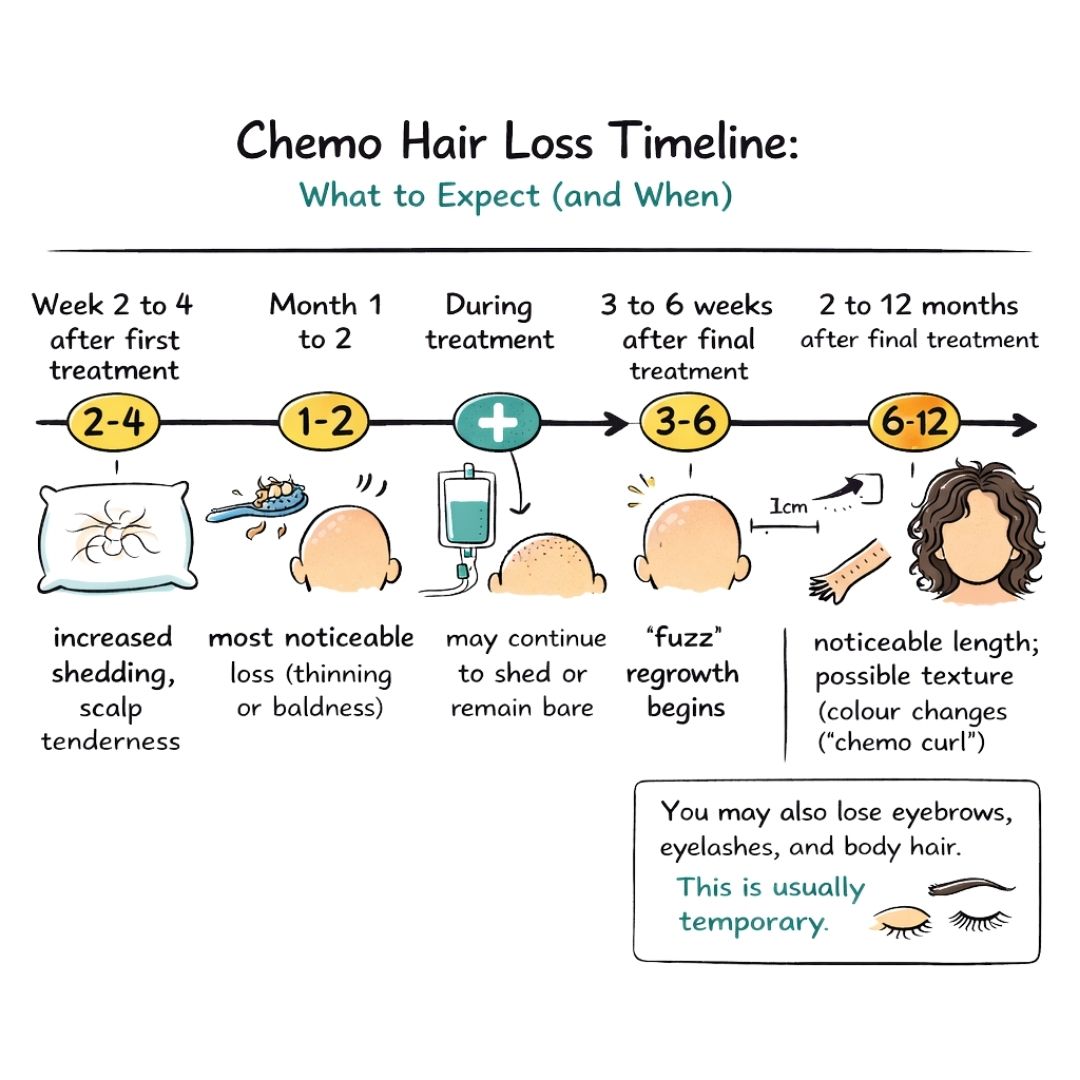
To give you a clearer picture of what to expect, we've put together a general timeline. Think of this as a rough map—your own journey might take a slightly different route, and that's completely normal.
| Stage | Timing | What to Expect |
|---|---|---|
| Initial Shedding | 2-4 weeks after first treatment | Hair begins to fall out, often starting with more shedding than usual. Your scalp might feel tender or sensitive. |
| Significant Loss | 1-2 months into treatment | This is often when the most substantial hair loss happens. Shedding can be rapid, leading to significant thinning or baldness. |
| Continued Treatment | Throughout the chemotherapy cycle | Hair may continue to shed, or your scalp may remain bare for the rest of your treatment schedule. |
| Initial Regrowth | 3-6 weeks after final treatment | As your follicles recover, the first signs of soft, "fuzzy" new hair may appear. |
| Visible Growth | 2-3 months after final treatment | Hair starts growing more steadily, often at about half an inch per month. It might be thick enough to start styling. |
| Noticeable Length | 6-12 months after final treatment | Your hair will have grown quite a bit. You might notice it has a different colour or texture—this is when many feel it's "back." |
This timeline shows that while hair loss is a significant part of the chemotherapy journey, regrowth is the final chapter. The body is remarkably resilient and starts the recovery process as soon as treatment ends, helping you move towards your new normal.
While many people see hair loss as an unavoidable part of chemotherapy, that isn't always the case. If you want to be proactive, there are a few medical strategies that can help you keep more of your hair during treatment. The best first step is always to talk things through with your oncology team, so you can figure out a plan that feels right for you and your specific medical situation.
By far, the most established and effective method for reducing chemotherapy-induced alopecia is scalp cooling. You might have heard it called a "cold cap," and it works on a surprisingly simple principle: vasoconstriction. In plain English, that just means it narrows the blood vessels in your scalp.
By cooling the scalp down to a very low temperature, the blood flow to your hair follicles is dramatically reduced. This is a big deal because it means less of the chemotherapy drug can actually reach those delicate follicle cells. The cold essentially creates a protective shield, buffering the follicles from the full force of the treatment. It also slows down the metabolism of the follicle cells, making them a less appealing target for chemo drugs, which are designed to attack rapidly dividing cells.
The process involves wearing a specially designed cap before, during, and for a while after each chemotherapy infusion. There are two main systems you'll come across:
Both types of cap aim to do the same job, but many find the refrigerated systems more convenient. If you want to dig deeper into how they compare, we have a complete guide on cold caps for chemotherapy.
It’s important to know that the success of scalp cooling can vary quite a bit. A lot depends on the specific chemotherapy drugs you’re receiving and the dosage. It generally has a better track record with taxane-based chemotherapies compared to others, like certain anthracycline regimens. For example, one promising smaller trial with patients on paclitaxel showed that an incredible 83.3% of them reported no hair loss whatsoever. It’s a great illustration of how powerful this approach can be and why more research is so vital.
It's crucial to have realistic expectations. Scalp cooling doesn't promise you'll keep every single strand of hair; some thinning is still quite common. For many people, though, it reduces the hair loss enough that they don't feel the need for a wig or head covering.
Scalp cooling is definitely the main player, but a couple of other medical options sometimes come up in conversation, even if their role isn't as clearly defined.
Minoxidil (Rogaine): You’ve probably seen this on the shelves as a treatment for common baldness. Some studies have looked at using it to kick-start hair regrowth after chemotherapy is finished. However, it's not something that's generally recommended for preventing hair loss during treatment, and you should only ever use it with a green light from your medical team.
Emerging Therapies: Scientists are always looking for new ways to protect hair follicles. One innovative option being explored is PRP treatment for hair growth, which could offer another way to encourage follicle activity after treatment has ended.
Ultimately, deciding whether to pursue a medical approach for hair loss is a very personal choice. Getting to grips with the evidence and the options available means you can have a really productive, informed conversation with your oncology team and decide if scalp cooling or another path is right for your cancer care plan.
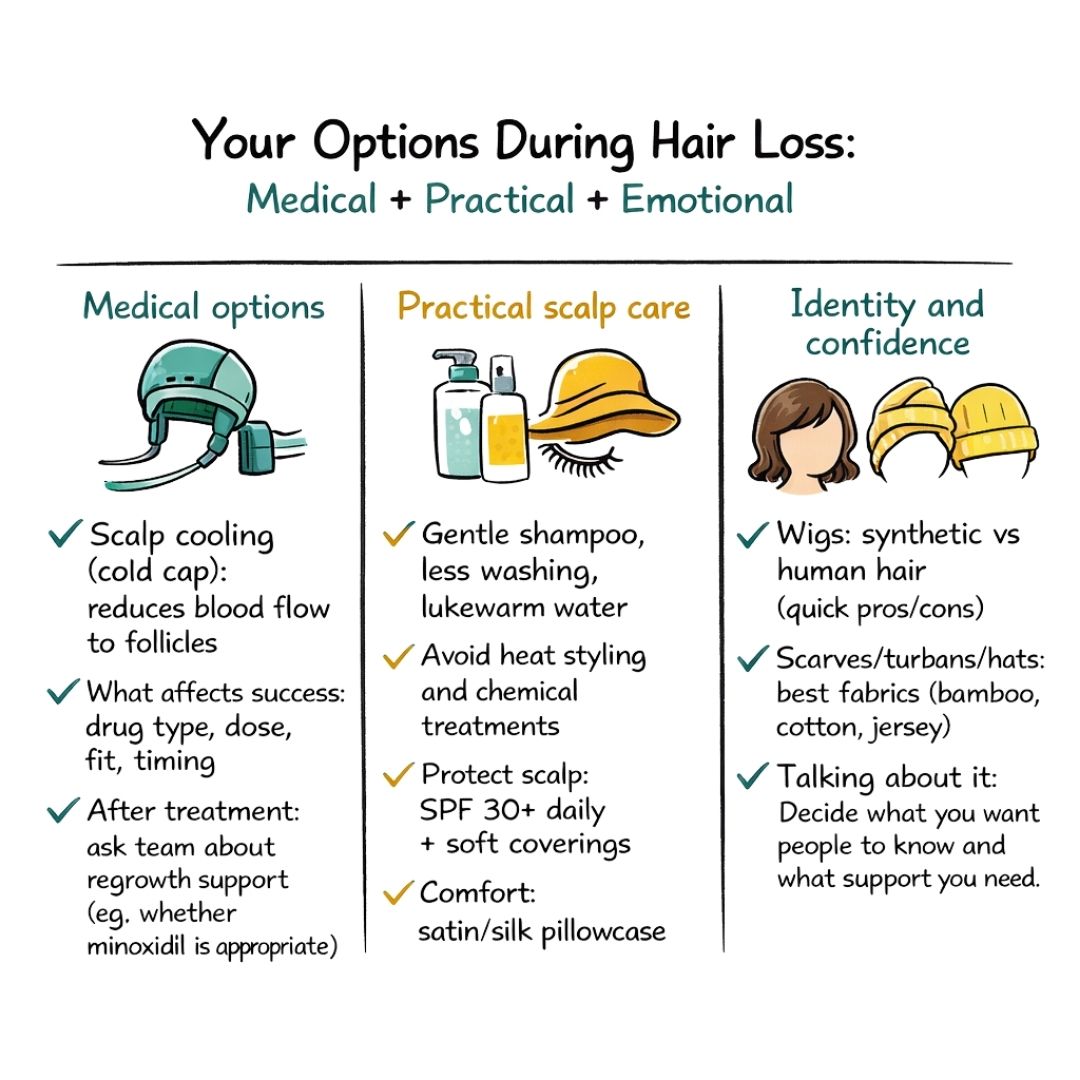
When you're dealing with hair loss and chemo, it’s easy to focus on just the hair. But really, it’s your scalp that needs the most careful attention. The skin on your head can become incredibly sensitive, dry, and delicate during treatment, so a gentle care routine is one of the most practical things you can do for your own comfort.
This isn't about adding complicated steps to your day. It’s about making small, thoughtful adjustments that minimise irritation and help keep your scalp healthy, paving the way for hair to eventually return. These simple changes can make a world of difference to how you feel.
As your hair begins to thin, and even before, it’s time to start treating your hair and scalp with kid gloves. What’s left of your hair will likely be more fragile, and your scalp itself can feel quite tender.
Here are a few gentle practices to adopt:
These principles of gentle care are just as important for the rest of your body. We have a full guide on managing the effects of chemotherapy on your skin that goes into more detail.
Think of your scalp as newly exposed skin. It needs the same protection you'd give your face, which means making sun protection and moisture top priorities to keep it comfortable and prevent damage.
Once your hair is gone, your scalp is suddenly exposed to the world in a way it never has been before. The sun is now a major concern, as the skin on your head can burn very easily.
It’s crucial to apply a broad-spectrum sunscreen with a high SPF—at least SPF 30—to your scalp every single day, even if it looks overcast. Soft head coverings like hats or scarves made from bamboo or cotton are also fantastic, as they provide a physical barrier without irritating sensitive skin. At night, you might find that a soft satin or silk pillowcase feels much more soothing against your scalp than cotton or other fabrics.
When your treatment finishes, it signals a new beginning for your hair follicles. The first signs of regrowth often appear as a soft fuzz, and you might be in for a few surprises. It’s incredibly common for new hair to come back with a completely different texture, or even a new colour.
Perhaps the most famous of these changes is the 'chemo curl'. Many people who had poker-straight hair their whole lives find it grows back curly or wavy. This happens because the chemotherapy drugs can temporarily change the shape of the hair follicles, which in turn alters the texture of the hair strands growing out of them.
These curls might be a temporary phase that straightens out as your hair gets longer and heavier, or they might be here to stay. Embracing your new texture usually means learning a new care routine. Curly hair is often drier, so you may find washing less—or even co-washing with just conditioner—helps it stay healthy and moisturised.
Figuring out what to do about head coverings is one of the most personal parts of dealing with hair loss and chemo. For so many people, it’s a way to take back a little bit of control and hang on to their personal style when everything else feels uncertain. From incredibly realistic wigs to beautiful headscarves, there are tons of options out there. The "right" choice is simply the one that makes you feel the most like yourself.
It can really help to start looking into these options before your hair starts to fall out. Giving yourself that time means you can make choices you feel good about, rather than feeling rushed into a decision. Think of it as putting together a new kind of wardrobe—one designed for comfort, protection, and expressing who you are.
For many, wigs are the first port of call, as they offer a sense of normality and a familiar look in the mirror. The main decision you’ll need to make is whether to go for synthetic or human hair, and both have their own pros and cons.
Synthetic Wigs: These are generally the more budget-friendly and low-maintenance option. They come ready-styled and cleverly hold their shape, even after you wash them. The quality of modern synthetic fibres is amazing, but they don't do well with heat styling tools and tend to have a shorter lifespan than human hair wigs.
Human Hair Wigs: As the name suggests, these are made from real hair and offer the most natural look and feel possible. You can colour them, cut them, and use heat stylers just like you would with your own hair, which gives you a huge amount of freedom. The trade-off is that they come with a higher price tag and require more care and attention.
No matter which you choose, getting it fitted properly is absolutely essential for it to feel comfortable and secure. Lots of specialist wig suppliers offer private, sensitive consultations to help you find the right style, colour, and fit, and they can also teach you how to look after it properly.
Your personal style doesn't have to change just because your hair has. A well-chosen wig or head covering can be a powerful accessory, allowing you to express your identity and feel like yourself throughout treatment.
Wigs aren't for everyone, and you might find you prefer the comfort and sheer versatility of other head coverings. The world of headscarves, turbans, and hats is full of different styles, fabrics, and colours.
When you're looking at these alternatives, the material is everything. Your scalp is likely to be very sensitive, so you'll want something soft, breathable, and gentle against the skin. Fabrics like bamboo, soft cotton, and jersey are fantastic because they don’t itch or rub. They’re also great at helping regulate your temperature, which is a real bonus.
Learning to tie a headscarf can also be a wonderful creative outlet. There are endless ways to wrap and style them, letting you switch up your look whenever you fancy. Turbans are another brilliant choice, offering a pre-styled, elegant look you can just slip on—perfect for those days when you need something quick and easy. For a closer look at some comfortable and fashionable choices, check out our guide to Hipheadwear for cancer patients.
In the end, many people find a mix-and-match approach works best. You might want a wig for going out, a super-soft beanie for relaxing at home, and a collection of colourful scarves for everyday wear. Having choices is what it's all about.
Let's be honest: losing your hair during chemotherapy is about so much more than just the physical act. For many of us, our hair is woven into our identity and how we present ourselves to the world. Seeing it fall out can feel like losing a piece of who you are, bringing up a complex mix of grief, anger, and sadness.
These feelings are completely normal. Hair loss is often one of the most visible and public signs of cancer treatment, a daily reminder of the journey you're on. The first step in managing this emotional weight is simply to acknowledge it, to give yourself permission to feel whatever you're feeling.
How, when, or even if you talk about your hair loss is entirely up to you. You are in the driver's seat. Some people find that opening up about it demystifies the experience for others and helps them reclaim a sense of control.
If you do decide to talk with friends and family, it helps to be upfront about what you need. Are you looking for a shoulder to cry on, practical help finding a wig, or just for things to feel as normal as possible? Setting those expectations can prevent a lot of awkwardness and ensures you receive the support that actually helps.
Explaining the situation to children, on the other hand, calls for a gentle, straightforward approach.
Remember, your hair doesn't define you. Your strength, your personality, and your spirit are all still there, completely unchanged. Giving yourself the space to process these emotions is a vital part of looking after yourself during treatment.
You absolutely do not have to go through this alone. Building a solid support network can make all the difference, offering everything from practical advice to the simple comfort of knowing someone else truly gets it.
Support can come from many places, and it's worth exploring what feels right for you. For a more in-depth look at building your emotional toolkit, our guide on mental health support strategies for cancer patients is a great place to start.
Consider exploring some of these resources:
Connecting with others, whether it's through a formal group or a quiet chat with a trusted friend, can lift a heavy emotional burden. It’s a powerful reminder that you are part of a community, and that shared experiences can bring a profound sense of hope and solidarity.
As you go through treatment, you're bound to have questions about what to expect with hair loss. It’s a common experience, and having clear answers can make a real difference. Let's tackle some of the things people ask most often.
Yes, for nearly everyone, hair does start to return a few months after treatment finishes. It's a gradual process, but it happens.
However, it's worth knowing that a small number of chemotherapy drugs, particularly taxanes like docetaxel, carry a slight risk of causing permanent hair loss. This isn't common, but it's important to be aware of. The best thing you can do is have a frank conversation with your oncology team about your specific treatment plan and what you can realistically expect.
This is a really personal decision, but many people find taking this step helps. Proactively cutting your hair short, or even shaving it, can give you a sense of taking back control in a situation that often feels uncontrollable.
For many, seeing clumps of long hair fall out can be quite traumatic. A shorter style can make the shedding process feel less dramatic and can also make the transition to wearing a wig or scarf feel a bit more natural.
Ultimately, there's no right or wrong answer. Do whatever feels most comfortable for you.
Losing your eyebrows and eyelashes can feel particularly tough, as they frame our faces and are so key to our expressions. Gentle makeup is your friend here. You can use soft eyebrow pencils, powders, or even stencils to add some definition back.
For your eyes, a soft, creamy eyeliner can create the illusion of a lash line without the irritation that can come from false eyelash glue. Some people look into semi-permanent options like microblading, but it's absolutely vital to speak with your care team before considering any procedure like that. And remember, your skin will be extra sensitive, so always patch-test any new makeup product first.
We strongly advise you to talk with a health care professional about specific medical conditions and treatments.
The information on our site is meant to be helpful and educational but is not a substitute for medical advice.
A clear guide to the side effects of chemotherapy drugs. Understand common and long-term effects, and learn practical strategies for managing your symptoms.
Help a cancer patient feel like themselves again. Learn how to donate hair: length rules, preparation steps, what happens next, and alternatives if you can't donate.
Learn how to manage peripheral neuropathy from chemo with practical tips, symptom relief strategies, and daily self-care to improve quality of life.