Cancer does not arrive as a single moment. It unfolds over time, reshaping daily life, relationships, work, identity, and health in ways that are often poorly understood by those outside the experience. While medical treatment rightly receives clinical focus, the quality of support surrounding a person with cancer can meaningfully influence wellbeing, resilience, and recovery trajectories.
Yet not all support helps. Some actions unintentionally cause harm. Others are absent altogether.
This article takes an evidence-led look at what genuinely supports people during cancer, what undermines them even when intentions are good, and where current support systems still fall short.
Cancer is both a medical and a lived experience. Research consistently shows that psychosocial support influences quality of life, mental health outcomes, and the ability to cope with treatment and its side effects.
Guidance across UK healthcare frameworks makes clear that emotional, practical, and informational support should sit alongside medical care. These elements are not optional extras. They shape how people experience treatment, recovery, and daily life during cancer.
However, formal healthcare systems are not designed to provide sustained, day-to-day support outside clinical settings. As a result, much of the responsibility for support falls to family members, friends, employers, and communities. Whether that support helps or harms depends on how well it aligns with the real needs of the person living with cancer.
One of the most consistently reported needs during cancer is practical help. Treatment schedules, fatigue, side effects, and cognitive changes can make routine tasks difficult or exhausting.
Support is most helpful when it is specific and predictable. General offers such as “let me know if you need anything” require the person with cancer to identify needs, ask for help, and manage coordination. This places additional cognitive and emotional load on someone who may already be depleted.
Support that genuinely helps includes pre-agreed meal deliveries, scheduled lifts to treatment, help with childcare, and assistance with household tasks. Thoughtful care packages that contain genuinely useful items can also reduce practical strain.
The key principle is that effective support removes decisions rather than creating more.
Emotional support does not require constant reassurance, advice, or positivity. In fact, evidence from psycho-oncology shows that validation and presence are often more beneficial than encouragement that attempts to reframe or minimise the experience.
Helpful emotional support involves listening without correcting, allowing uncertainty without rushing to optimism, and accepting emotional fluctuation without judgement. Cancer rarely follows a linear emotional path. Fear, hope, frustration, relief, and exhaustion can coexist.
Support that allows space for this reality reduces isolation and emotional fatigue.
After diagnosis, people are often exposed to an overwhelming volume of information, much of it conflicting. Well-meaning friends may share stories or advice that are not relevant or evidence-based, adding confusion rather than clarity.
What helps is access to clear, reliable information provided in manageable stages. People benefit from being signposted to trusted sources rather than being expected to filter anecdotal advice themselves.
Timing also matters. Information that is helpful at one stage may feel overwhelming at another. Good support respects this and adapts accordingly.
Cancer can significantly reduce a person’s sense of control. Appointments, treatment schedules, and physical effects are often dictated by necessity rather than choice.
Support is most effective when it actively preserves autonomy. This includes respecting decisions about treatment options, disclosure, work arrangements, appearance, and lifestyle changes.
Even well-intentioned pressure can undermine a person’s confidence and agency. Support should strengthen autonomy, not override it.
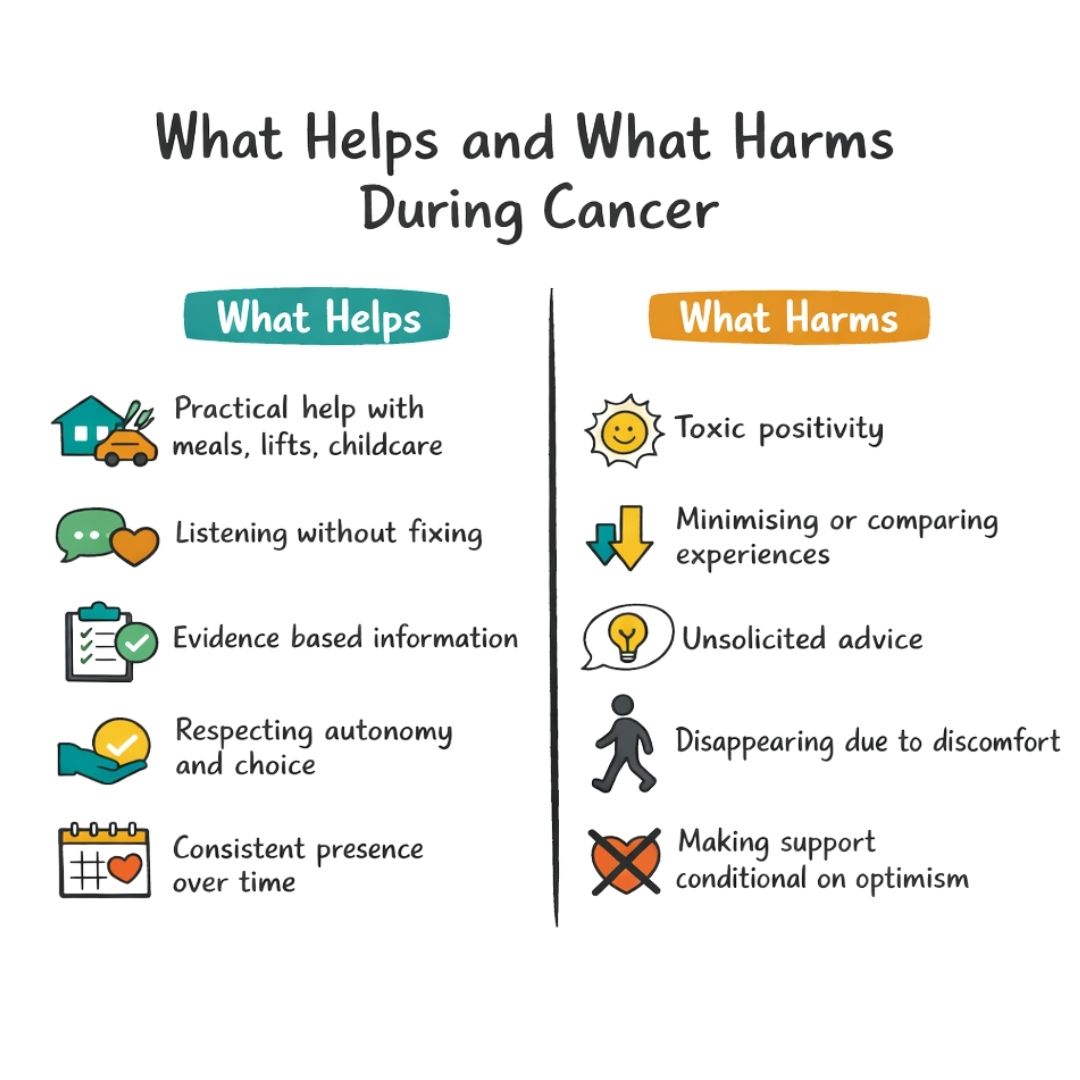
Pressure to remain optimistic can be deeply isolating. Statements intended to encourage, such as suggesting that everything will work out or that positive thinking is essential, can invalidate lived experience.
Research has linked forced positivity with emotional suppression and reduced willingness to seek help. People may feel unable to express fear, sadness, or uncertainty if these emotions are perceived as unwelcome.
Support should make space for reality, not attempt to replace it with reassurance.
Comments that minimise the experience of cancer can cause harm even when they are not intended to. Comparing one diagnosis to another, highlighting people who have it worse, or framing a diagnosis as fortunate because it is treatable can silence legitimate distress.
Each cancer experience carries its own physical, emotional, and practical burden. Comparison rarely comforts and often discourages openness.
Advice about diets, supplements, lifestyle changes, or alternative approaches is frequently shared without evidence. While some changes may support wellbeing, unsolicited recommendations can create guilt or anxiety, particularly if a person feels they are being blamed for their illness or outcomes.
Support should complement medical guidance, not compete with it. Evidence-based care relies on individual context, not generalised claims.
One of the most distressing experiences reported by people with cancer is social withdrawal by others. Friends or colleagues may distance themselves out of discomfort, fear of saying the wrong thing, or uncertainty about how to help.
Silence and absence often cause more harm than imperfect words. Consistent presence matters far more than knowing what to say.
Support often peaks immediately after diagnosis and declines as treatment progresses or ends. Yet many challenges intensify after active treatment finishes.
Fatigue, cognitive effects, emotional processing, and identity changes often persist long after regular medical appointments reduce. Many people report feeling abandoned at precisely the point when they are expected to resume normal life.
There remains a significant gap between treatment completion and feeling supported in recovery.
Not everyone with cancer looks unwell. Many continue working, parenting, and managing responsibilities while dealing with significant physical and emotional side effects privately.
This invisibility can lead to reduced empathy, increased expectations, and less practical support. Cancer support that relies solely on visible markers fails to reflect lived reality.
Support initiatives sometimes focus on symbolism rather than utility. While gestures matter, people consistently report needing items that support comfort, rest, hydration, skin care, and daily functioning.
Support is more effective when it reflects how people actually live through cancer rather than how others imagine they do.
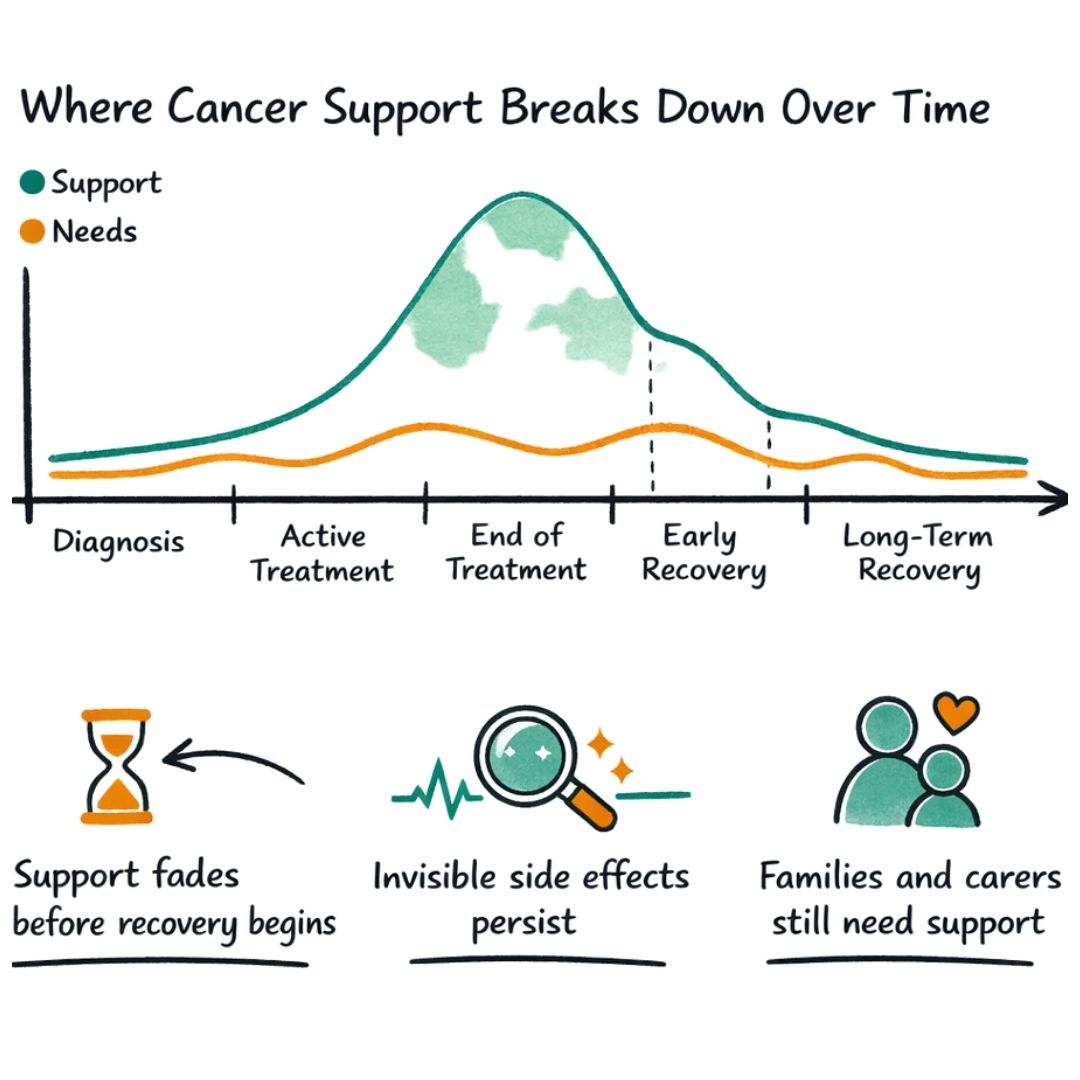
Cancer affects entire households. Partners, children, and carers often experience emotional strain, role changes, and burnout without adequate recognition.
Effective cancer support considers the wider family system, not just the individual diagnosed. Supporting carers indirectly supports the person living with cancer.
Cancer Care Parcel exists to address the gap between intention and impact. By curating evidence-informed care packages and resources, the focus is on practical usefulness, adaptability across treatment stages, and respect for individual experience.
The aim is not to replace medical care or personal relationships, but to complement both with tangible, thoughtful support that reduces burden rather than adding to it.
Support should feel grounding, not overwhelming.
Effective support during cancer is not about saying the perfect thing or fixing what cannot be fixed. It is about consistency, respect, practical help, reliable information, and allowing people to define what support means for them.
When support aligns with lived reality, it reduces isolation and preserves dignity. When it does not, it can unintentionally increase strain.
Cancer support deserves the same level of care, thought, and evidence as cancer treatment itself.
Support during cancer is not a single act. It is an ongoing process that evolves as needs change across diagnosis, treatment, recovery, and life beyond cancer.
Understanding what helps, what harms, and what remains missing is essential to offering support that truly makes a difference.
Cancer Care Parcel is committed to that understanding through listening, evidence, and lived experience.
Macmillan Cancer Support – psychological and emotional support research (UK) | Highlights how emotional and psychosocial care can improve wellbeing during and after cancer treatment. Macmillan Psychological Support PDF–Evidence and Impact (UK)
National Coalition for Cancer Survivorship (US) | A leading advocacy organisation focused on survivorship, supportive care, and the broader needs of people living with cancer. National Coalition for Cancer Survivorship (US)
Global unmet psychosocial needs in cancer care | A narrative review showing that emotional distress and unmet needs are common worldwide, underscoring gaps in supportive care across countries. Global review of psychosocial needs in cancer care (Lancet)
We strongly advise you to talk with a health care professional about specific medical conditions and treatments.
The information on our site is meant to be helpful and educational but is not a substitute for medical advice.
Ten Films That Portray The Impact Of Cancer On Loved Ones, Heart-warming Comedies And Heart-Wrenching Dramas.
Join Us For An Empowering And Informative Webinar, "Reclaiming Your Strength And Fitness After A Cancer Diagnosis," Featuring Beth, A Clinical Exercise Specialist And Cancer Rehab Instructor.
Chiropractic Care Can Serve As A Complementary Treatment For Cancer Patients Experiencing Neck, Back, Or Joint Pain, Headaches & Anxiety.