When you first hear you’ll be starting chemotherapy, it's easy to feel like you've been dropped into a whole new world with a language you don't speak. Taking small, concrete steps to prepare can make a world of difference, helping you feel a bit more grounded and in control. Think of it as packing for a big trip—a little prep work now saves a lot of stress later.
That period between getting your treatment plan and walking in for your first session can be a real emotional rollercoaster. It's totally normal to feel anxious, determined, scared, and even a little numb, all at once. The best way to navigate this is to focus your energy on small, practical tasks that will build a solid foundation for the road ahead. Don't try to conquer the mountain in one go; just take the first few steps.
What you're doing now is setting up your support systems. It’s less about knowing every single answer and more about creating organised ways to handle the information, questions, and logistics that are about to come your way.
One of the most empowering things you can do right now is get organised. Trust me, you're about to be handed a mountain of paperwork—appointment slips, blood test results, medication schedules, and leaflets galore. Keeping it all in one spot is a game-changer.
This isn't just about tidying up paperwork; it's about shifting your mindset. Walking into an appointment with your questions ready and your documents in order makes you feel less like a passenger and more like an active partner in your own care.
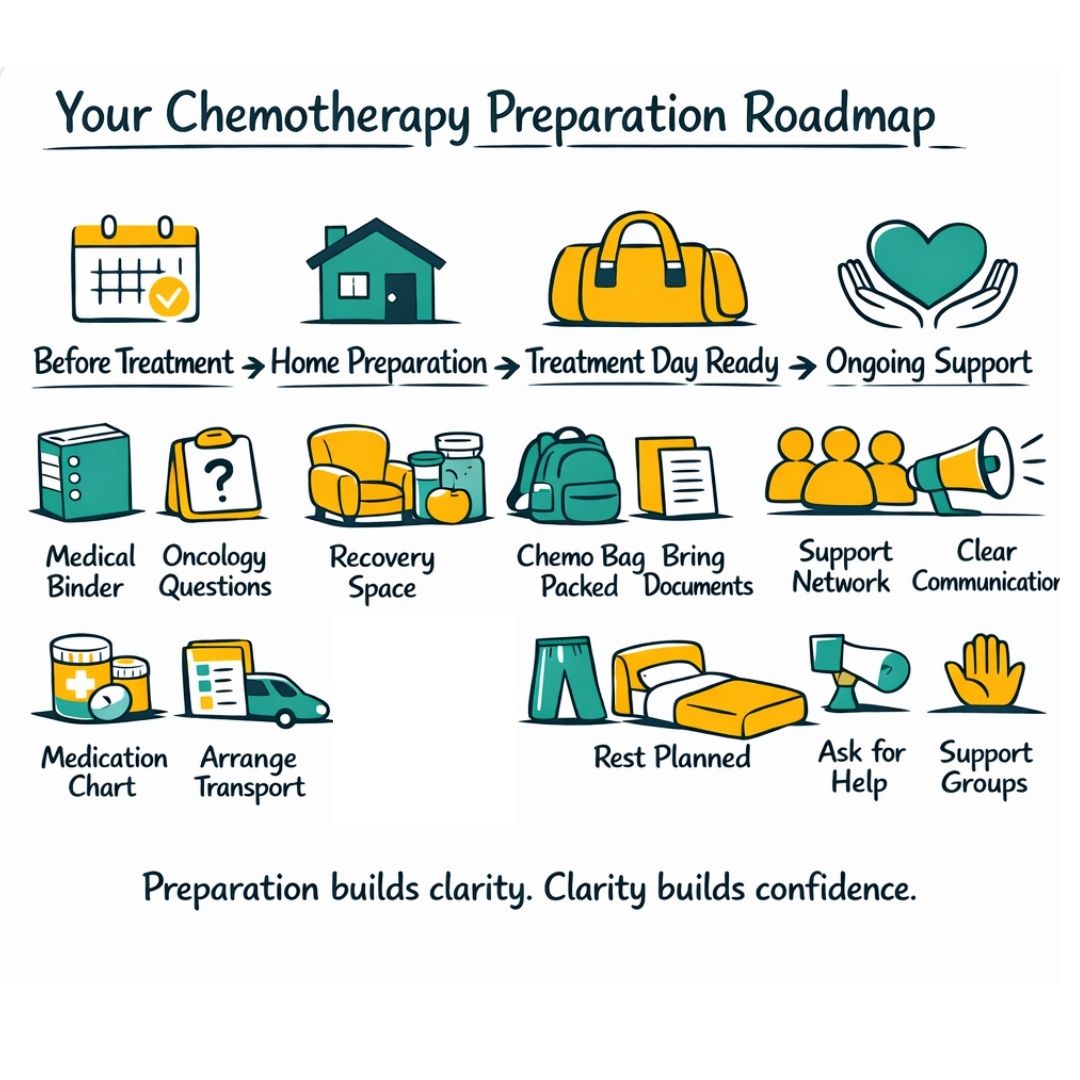
That first big meeting with your oncology team is a huge milestone. Being prepared helps you take in the flood of information without feeling completely overwhelmed. It's worth thinking about what to bring and what you really need to find out. For a different perspective, this practical guide on how to prepare for chemotherapy offers some great additional tips.
Demystifying the process can also really help with the nerves. Many people feel better after reading about what the first day is actually like. We've put together a detailed walkthrough in our guide on the first chemotherapy session and what to expect.
A little bit of organisation goes a long way. Having a dedicated place for all your medical information and a running list of questions can transform feelings of helplessness into a sense of control and preparedness.
To help you get started, here's a quick checklist of the key things to focus on right now.
This table breaks down the essential tasks to tackle before your first chemotherapy session. Ticking these off can help you feel organised, prepared, and ready to face treatment head-on.
| Preparation Area | Key Actions | Why It Matters |
|---|---|---|
| Information Central | Set up a medical binder with dividers. Start a dedicated notebook for questions, symptoms, and notes. | Keeps crucial information in one place, reducing stress and empowering you in appointments. |
| First Appointment Prep | Write down a list of your top 5-10 questions. Confirm the location, time, and who you can bring with you. | Ensures you get the most important answers and feel less anxious on the day. |
| Home Comfort | Stock your pantry with easy-to-prepare foods. Create a cosy rest area with blankets and pillows. | Makes it easier to look after yourself when you're feeling tired or unwell. |
| Support Network | Decide who you want to tell and how. Ask a friend or family member to be your point person for updates. | Reduces the emotional labour of repeating information and lets you focus on resting. |
Remember, the goal right now is just to take it one step at a time. Your chemotherapy journey is just beginning, and building these simple, organised habits now will be a massive help in the weeks and months to come. You've got this.
Alright, once you've got a bit of an organisational system going, it’s time to get into the nitty-gritty of the medical side of things. This is all about having clear, confident conversations with your doctors and nurses. Remember, you're the most important person in the room. Feeling like an active, informed partner in your own care is a game-changer as you get ready for chemo.
Your oncology team is there to guide you, but they can’t read your mind. It’s totally normal to feel a bit overwhelmed or forget everything you wanted to say the second the doctor walks in. This is where that notebook you started becomes your best friend—write everything down before you go.
Before your first infusion, you need a clear picture of what's ahead. Think of this chat as creating a map for your journey. Rocking up with a list of questions means you’ll leave the appointment feeling informed, not just flooded with information.
Here are a few key things to get straight:
Focusing on these three things helps turn a huge, scary process into a series of smaller, more manageable tasks. It puts you back in the driver's seat from day one.
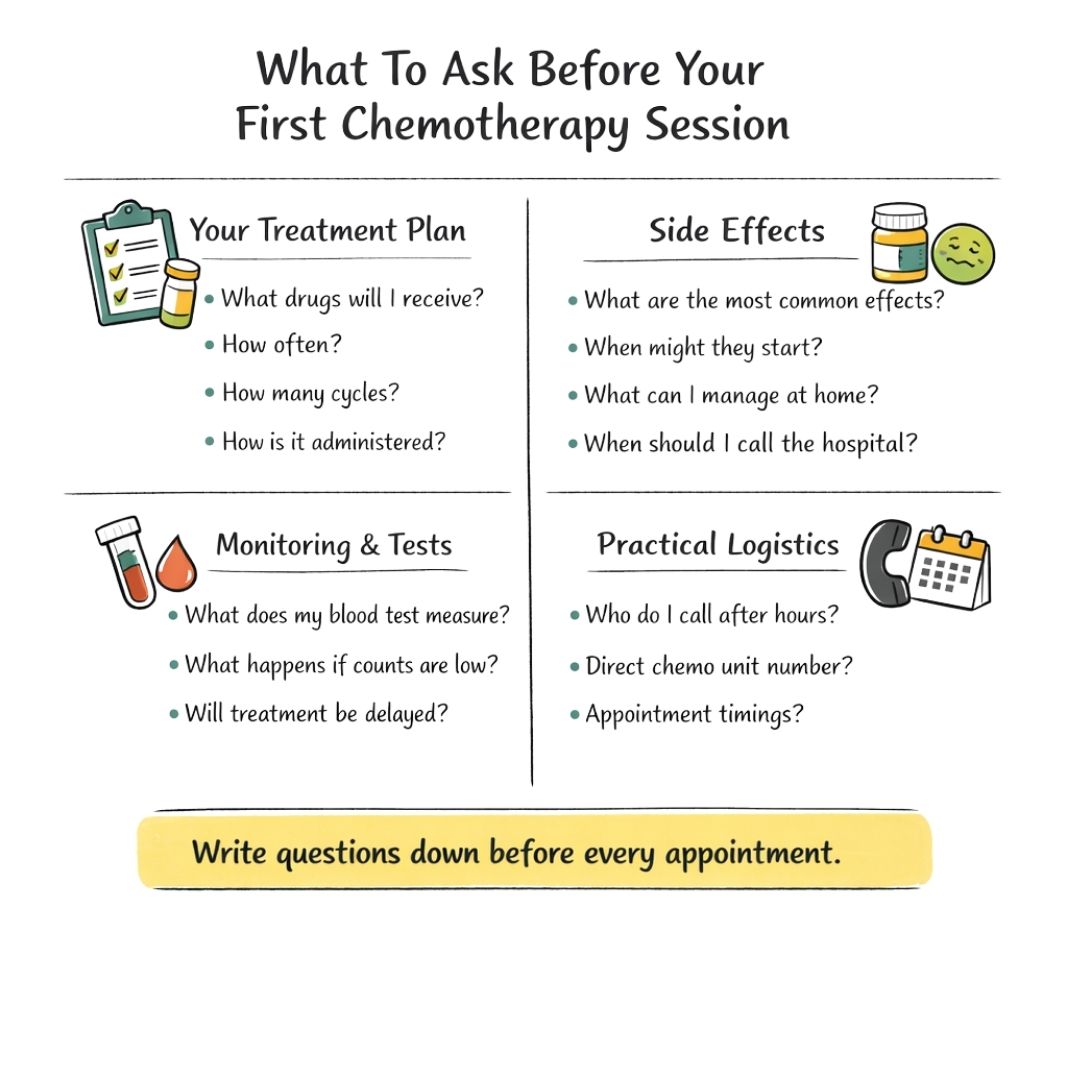
Before you even get started, your team will run a bunch of 'baseline' tests, usually blood tests. These aren't just a tick-box exercise; they create a vital snapshot of your health before treatment begins. Your doctors use these results as a benchmark to see how your body is handling the chemo as you go along.
The most common one is the Full Blood Count (FBC), which checks your red cells, white cells, and platelets. Getting your head around what a full blood test checks for can really help you feel more involved, as you'll be having these tests regularly. If your counts are too low, a treatment cycle might get delayed, so these tests are absolutely crucial for keeping you safe and your treatment on track.
Understanding the 'why' behind each test and appointment is incredibly empowering. It shifts your mindset from being a passive patient to being an engaged partner who gets why each step matters.
For those in the UK, knowing your health data is especially important because treatment timelines can vary. A study from University College London found significant regional differences in wait times. The average time to start chemo was 48 days in England but could be as long as 65 days in Scotland. This gap is your golden opportunity to prepare, ask questions, and get your baseline tests sorted. This is particularly relevant when you learn that low blood counts affect around 50% of patients starting chemotherapy. You can find more on these regional UK cancer treatment timelines in the study published in The Lancet Oncology.
Let’s be honest, some of the most important conversations are also the hardest to start. Chemotherapy can affect fertility in both men and women, so it’s a topic that needs to be brought up before treatment begins, if it's a concern for you.
Bringing up fertility preservation might feel awkward, but your oncology team is ready for this chat. Don't be afraid to just come out and say, "I'd like to talk about how this treatment might affect my ability to have children in the future." They can refer you to a fertility specialist to discuss options like egg or sperm freezing. To get a better feel for who's who, you can learn more about the roles within your cancer care team.
Finally, you'll be asked to sign consent forms. Please, take your time with them. These documents are simply confirming that you understand your treatment, its goals, and the potential risks. Ask your nurse or doctor to go through any part that feels unclear. Signing it isn't just a formality—it’s your way of saying you’re informed and ready to move forward.
Let’s be honest: chemotherapy isn't just something that happens at the hospital. It ripples through every part of your daily life, and getting a handle on the practical side of things can make a world of difference. Think of it as clearing the decks. By sorting out work, finances, travel, and your home life before you start, you free up so much mental energy to focus on what really matters: getting through this and healing.
Tackling the "life admin" now turns a mountain of worry into a series of smaller, more manageable molehills. Every little thing you arrange, whether it's a chat with your boss or asking a friend to help with the shopping, builds a safety net that will catch you on the tough days. This is all about making your world work for you, not against you, during treatment.
Worrying about your job and how you'll pay the bills is often one of the biggest anxieties. The key is to be proactive and have those slightly awkward conversations early on.
It’s a good idea to chat with your manager or someone in HR. You absolutely don't have to share every last medical detail, but being upfront about needing a bit of flexibility for appointments and the odd sick day is a smart move. Ask what might be possible.
On the money front, getting organised now will save you a lot of stress later. Pop everything into a simple spreadsheet or even just a dedicated notebook—track your medical bills, travel costs, and anything else related to treatment. Don't forget to look into what help is out there. Charities like Macmillan Cancer Support have grants and advisors who can help with everything from prescription costs to energy bills.
You really, truly don't have to do all this on your own. Now is the perfect time to let your guard down and say "yes" when people offer to help.
Getting to and from the hospital is a classic example. After chemo, you can feel wiped out, sick, or just a bit spacey, which makes driving a bad idea. Don’t be shy about asking a few friends or family members to set up a driving rota. If that’s not an option, many cancer charities have volunteer driver services that can be a lifesaver.
And what about life at home? Childcare and pet care are two huge areas where a little help goes a long way. Let a trusted friend coordinate a schedule for school runs, walking the dog, or just having the kids over for a few hours so you can have a proper nap. This gives you precious, protected time to rest without having to worry.
Letting others handle the practical stuff isn''t a sign of weakness. It's a strategic move to save your energy for the most important job you have right now—looking after yourself.
Your home should be your sanctuary, especially now. You want it to be a place that feels safe, comfortable, and low-stress. Making a few tweaks before your first session can make a massive difference in those first few days after an infusion.
Think about your daily routine. One brilliant tip I heard from a fellow patient was to go through your kitchen and move everything you use daily—mugs, plates, tea bags—from high shelves down to the counter. It’s a tiny change, but it means you’re not stretching or struggling when you’re feeling weak.
Why not set up a dedicated "recovery nest"? Find the most comfortable spot in your living room—maybe a soft recliner or the corner of the sofa—and make it your own. Pile it high with pillows and blankets and keep everything you need within arm's reach:
Getting your home ready like this means that when you walk through the door after treatment, you can just collapse and rest. It’s a simple but incredibly powerful act of self-care.
Once you’ve sorted out the practical stuff, it’s time to shift the focus back to you. Getting your body and mind ready for treatment isn’t about some impossible health kick. It’s about being kind to yourself and building up your strength, bit by bit.
Think of it this way: the small, gentle things you do for yourself now can make a real difference in how you cope during the chemo cycles ahead. This is your chance to put your own wellbeing first, recognising that how you feel physically and emotionally are completely intertwined.
What you eat suddenly becomes a huge part of the picture during chemotherapy. Your body is going through a lot, and giving it the right fuel helps manage side effects, keep your energy up, and support your recovery. Forget about strict diets; this is all about making smart, easy choices.
One of the biggest hurdles is that treatment can mess with your taste and smell, or bring on nausea, making food the last thing you want. The trick is to be ready with easy-to-eat, nutrient-packed options for when you need them most.
It's also a really good idea to ask your oncology team if you can speak with a dietitian. They can give you advice that’s specifically for you, your treatment plan, and any side effects you're dealing with.
When you think "chemo," exercise is probably the last thing on your mind. But honestly, a bit of gentle movement can be one of your best weapons against fatigue and low mood. We’re not talking about running a marathon here. The goal is simply to listen to your body and move in a way that feels good.
In fact, studies have shown that even light physical activity can slash treatment-related fatigue by 40-50%. A short, gentle walk, a few simple stretches, or a bit of chair yoga can work wonders for your energy and your headspace. Just find something you enjoy and aim for a little bit regularly, rather than pushing yourself too hard.
"Looking after your body isn't a luxury during cancer treatment; it's a necessity. Simple things, like eating a nourishing meal or taking a gentle walk, are powerful ways to feel more in control and play an active part in your own healing."
Getting ready for chemo is just as much a mental game as a physical one. It's completely normal to feel all sorts of things—anxiety, fear, confusion. The first step is just letting yourself feel it. The next is finding little ways to manage those feelings.
Things like mindfulness and simple relaxation techniques can be incredibly grounding. You don't need to become a meditation guru. Just taking a few minutes to focus on your breath, listen to some calming music, or sit quietly with a cuppa can help quiet a busy mind.
Your emotional toolkit might include things like:
Good sleep is the foundation for all of this. Chemo can throw your sleep schedule out of whack, so creating a relaxing bedtime routine can make a big difference. Turning off screens, having a warm bath, or reading a chapter of a book can signal to your body that it's time to rest. For more ideas on how to get ready, you might find our article on how to prepare for chemotherapy really useful.
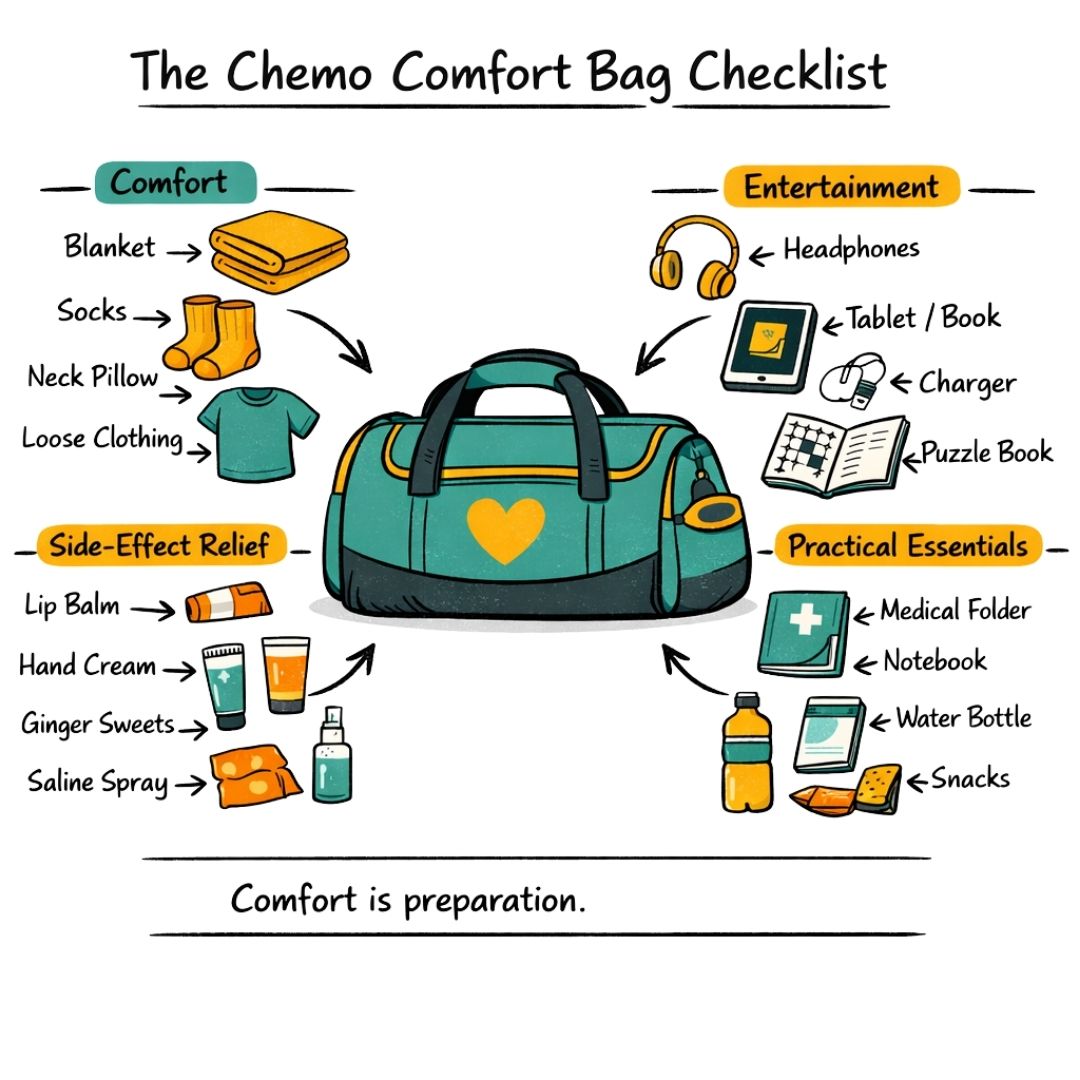
Treatment days can feel long and draining, and let's be honest, the hospital environment isn't exactly the cosiest. Your chemo bag is your secret weapon—a little slice of home you bring along to make those hours feel more human and a lot more comfortable.
Packing this bag isn't just another chore on the list; it's a way to take back a bit of control. It's about thinking ahead and giving yourself what you'll need, turning a sterile treatment chair into your own personal sanctuary.
Chemo wards are notoriously chilly, and sitting still for hours can make you feel stiff and cold. Making yourself physically comfortable should be your top priority. You'd be amazed what a difference a few creature comforts can make.
Think about packing:
Let’s face it, waiting around during treatment can be mind-numbingly dull. Having a few distractions up your sleeve is crucial to stop you from watching the clock. The trick is to bring a few different options, because you never know what you'll be in the mood for.
Load up your bag with things that will genuinely hold your attention. Maybe that's a tablet loaded with your favourite films, a good book you can get lost in, or noise-cancelling headphones to listen to music or a podcast. The headphones are especially great for creating your own peaceful bubble amidst the hospital beeps and buzz.
Packing a chemo bag is more than just a task—it's about anticipating your own needs and treating yourself with kindness. It’s a small way to reclaim a sense of control and comfort in an environment that can often feel overwhelming.
Side effects don't always wait until you get home. Having a small toolkit on hand to manage them as they pop up can be a lifesaver.
To help you get organised, we've put together a handy checklist. Think of it as a starting point—feel free to add or remove items to make it perfectly yours.
| Category | Essential Items | Nice-to-Have Extras |
|---|---|---|
| Comfort | Soft blanket, fluffy socks/slippers, loose clothing (zip-up/button-up). | Neck pillow, lower back cushion, eye mask. |
| Entertainment | Book/e-reader, headphones, tablet with downloaded shows. | Puzzle book (crossword/sudoku), adult colouring book & pencils. |
| Side-Effect Relief | Lip balm, unscented hand moisturiser, nausea remedies (ginger sweets, mints). | Saline nasal spray, hard sweets (for metallic taste), gentle wet wipes. |
| Practical Items | Medical folder/documents, phone & long charger, water bottle, healthy snacks. | Notebook & pen, reusable straw, hand sanitiser. |
This list covers the bases, but the best chemo bag is the one that's tailored specifically for you.
Finally, don't forget the practical bits and bobs. Always bring your medical folder, a notebook and pen to jot down questions for your team, a super-long phone charger (the sockets are never where you need them!), and some snacks and a water bottle to keep you going.
For even more ideas, check out our in-depth guide on what to pack in a chemo bag.
People often talk about chemotherapy as a journey, but let's be real—it's more like a marathon you didn't sign up for. And no one should have to run it alone. While your medical team is busy managing the treatment itself, your personal support system is there to look after you. This network of friends, family, and other resources will become your emotional and practical bedrock.
Putting this team together is one of the most important things you can do to prepare for what's ahead. It’s about surrounding yourself with people who can lift you up when you're feeling down and celebrate the small wins along the way. You are so much more than a patient, and you need that human connection now more than ever.
I get it. Asking for help can feel incredibly difficult. Most of us pride ourselves on being independent, and suddenly needing others can feel like you're losing control. But this is the time to completely reframe that thought. Accepting help isn’t a sign of weakness; it's a smart strategy for conserving your energy for the fight.
The people who love you will be desperate to help, but they often have no idea what you actually need. You'll hear a lot of "let me know if you need anything," which is kind but puts all the work back on you. The secret is to be specific.
Your support system isn't just for a shoulder to cry on—it's a practical tool. Learning to delegate things like cooking, cleaning, or running errands frees up your physical and mental energy for what really matters: healing.
Instead of just saying, "I'm so tired," try being direct: "Would you be able to drop off a simple dinner for us on Wednesday? That's usually my toughest day after treatment." This gives them a concrete, manageable task they can tick off their list. They feel genuinely useful, and you get a real weight lifted from your shoulders.
Clear communication is the glue that holds your support network together. This isn't just about asking someone to pick up your prescriptions; it’s about setting boundaries and being honest about how you're feeling.
Here are a few things that can make a huge difference:
If you're the one supporting a loved one through chemo, your role is absolutely vital, but it can also be incredibly demanding. You have to remember that you can't pour from an empty cup. Looking after your own well-being isn't selfish; it's what will allow you to provide consistent, meaningful support for the long haul.
Caregiver burnout is a very real risk. The emotional and physical toll of watching someone you love go through this is immense. It's crucial that you find your own support system, whether that's talking to friends, joining a caregiver support group, or speaking with a professional. For more on this, our guide to cancer support for family offers practical advice for navigating this tough role.
And remember, specific offers of help are always better than vague ones. Instead of "What can I do?", try "I'm going to the supermarket—what can I pick up for you?" or "I've got a free afternoon on Thursday to help with some cleaning."
Your friends and family are fantastic, but sometimes you need to talk to people who have walked this path before or are professionally trained to help.
Building this multi-layered support system is one of the most proactive steps you can take. It ensures that no matter what chemotherapy throws at you, you have a compassionate, capable team ready to catch you.
We strongly advise you to talk with a health care professional about specific medical conditions and treatments.
The information on our site is meant to be helpful and educational but is not a substitute for medical advice.
A clear guide to FOLFOX chemo. Understand how the treatment works, what to expect during each cycle, and how to manage common side effects effectively.
In This Article We Discuss Some Of The Major Impacts Chemotherapy Has On The Skin And Ways You Can Help Reduce The Effects.
Understand the key mistakes to avoid during chemotherapy and how small daily choices can impact your safety, comfort, and recovery throughout treatment.